 Add to Chrome
 Add to Firefox
 Add to Edge
Teach the Magnitude, Not the Direction: Verifier-Bounded Credit Assignment for Multi-Turn Multi-step LLM Agents
Aug 13, 2026
Reinforcement learning with verifiable rewards (RLVR) offers a verifier-bounded performance ceiling for training multi-turn tool-use agents, yet its trajectory-level credit assignment conflates heterogeneous per-turn outcomes into a single reward signal. On-policy distillation provides dense per-token supervision but is either teacher-bounded or prone to gradient concentration collapse. We introduce $\textbf{CrEST}$, a hierarchical credit assignment framework that retains RL's verifier-bounded ceiling while incorporating dense token-level signals from a privileged self-teacher. $\textbf{CrEST}$ resolves credit at two levels: turn-segmented verified advantages address inter-turn dilution, while entropy-gated self-teacher modulation refines intra-turn token contributions. Experiments on BFCL V3 and WildToolBench show that $\textbf{CrEST}$ consistently outperforms both RL and distillation baselines across two model scales, with the largest gains on long-trajectory and strict session-level metrics. Our work demonstrates that the teacher's role in policy optimization can be reduced from determining update directions to modulating update magnitudes, unlocking dense credit assignment without sacrificing the verifier-bounded ceiling.

Debias in Text, Believe Your Eyes: Text-Anchored Cross-Modal Transfer for Visual Counter-Commonsense Reasoning
Aug 07, 2026The visual reasoning ability of multimodal large language models (MLLMs) is crucial for downstream applications, particularly counter-commonsense reasoning, which requires models to reason beyond common assumptions. Recent studies mainly improve visual counter-commonsense reasoning by enhancing visual inputs, following the assumption that failures originate from insufficient visual grounding. However, our empirical analysis reveals that the bottleneck is not visual perception. MLLMs already capture the relevant visual evidence, and the correct answer exists in their decoding space. Instead, the shared language decoder resolves prior--evidence conflicts by favoring dominant language priors, especially for low-frequency factual scenarios. Motivated by this, we first propose a text-anchored data construction pipeline, whose core component, Fact-Frequency Distillation (FFD), estimates the prior strength of commonsense facts and distills verified counter-commonsense scenarios into a high-quality text corpus. Building upon this corpus, we introduce TACT, a text-anchored post-training framework that debiases the shared language decoder without requiring any visual training data. TACT routes evidence-following and prior-driven reasoning trajectories into different optimization stages, enabling the decoder to resolve prior--evidence conflicts. Across counter-commonsense visual benchmarks, TACT substantially improves visual reasoning while preserving general capabilities, demonstrating effective text-to-vision cross-modal transfer.
STAPO: Selective Trajectory-Aware Policy Optimization for LLM Agent Training
Jul 06, 2026Reinforcement Learning (RL) is the dominant paradigm for training Large Language Model (LLM) agents on long-horizon tasks. However, sparse and delayed rewards often lead to trajectory neglect, in which agents lose focus on the task goal and interaction history at intermediate steps. Prior work has explored step-level supervision using Shannon-entropy-based uncertainty signals, which conflate inherent state complexity with agent confidence and therefore provide unreliable estimates of decision reliability. To address this issue, we propose normalized entropy, which measures confidence deviations relative to an agent's average behavior under a given state, thereby strengthening the association between low-quality actions and trajectory neglect. Building on this insight, we introduce Selective Trajectory-Aware Policy Optimization (STAPO), a hierarchical group-based RL framework. STAPO leverages normalized entropy to locate outlier steps associated with trajectory neglect and optimizes them via a joint mechanism of trajectory-aware reward and trajectory-independent penalty, enhancing trajectory awareness while preserving training stability. Extensive experiments on ALFWorld, WebShop, and Search-Augmented QA demonstrate that STAPO achieves state-of-the-art performance while substantially alleviating trajectory neglect, validating its effectiveness and robustness for agentic tasks.
CARL: Constraint-Aware Reinforcement Learning for Planning with LLMs
Jul 06, 2026Despite their strong reasoning capabilities and extensive world knowledge, Large Language Models (LLMs) frequently generate plans that violate task constraints, undermining their reliability in real-world applications. This deficiency arises from a lack of systematic mechanisms to incorporate constraint information during the generation process. While existing approaches attempt to mitigate this by relying on external tools or task decomposition, they fail to enhance the model's intrinsic constraint awareness. To address this, we propose Constraint-Aware Reinforcement Learning (CARL), a novel RL framework designed to strengthen LLMs' intrinsic focus on constraints. CARL introduces a constraint-aware reward by comparing the model's output distributions under constrained and unconstrained inputs, encouraging constraint focus and penalizing neglect. Compatible with various RL frameworks and requiring no external solvers or top models, CARL enables scalable, end-to-end constraint-aware planning. Extensive experiments on BlocksWorld, TravelPlanner, and T-Eval demonstrate that CARL significantly outperforms standard Reinforcement Fine-Tuning (RFT) baselines and state-of-the-art reasoning models, exhibiting a markedly increased focus on constraints.
MI-DPG: Decomposable Parameter Generation Network Based on Mutual Information for Multi-Scenario Recommendation
Mar 22, 2026Conversion rate (CVR) prediction models play a vital role in recommendation and advertising systems. Recent research on multi-scenario recommendation shows that learning a unified model to serve multiple scenarios is effective for improving overall performance. However, it remains challenging to improve model prediction performance across scenarios at low model parameter cost, and current solutions are hard to robustly model multi-scenario diversity. In this paper, we propose MI-DPG for the multi-scenario CVR prediction, which learns scenario-conditioned dynamic model parameters for each scenario in a more efficient and effective manner. Specifically, we introduce an auxiliary network to generate scenario-conditioned dynamic weighting matrices, which are obtained by combining decomposed scenario-specific and scenario-shared low-rank matrices with parameter efficiency. For each scene, weighting the backbone model parameters by the weighting matrix helps to specialize the model parameters for different scenarios. It can not only modulate the complete parameter space of the backbone model but also improve the model effectiveness. Furthermore, we design a mutual information regularization to enhance the diversity of model parameters across different scenarios by maximizing the mutual information between the scenario-aware input and the scene-conditioned dynamic weighting matrix. Experiments from three real-world datasets show that MI-DPG significantly outperforms previous multi-scenario recommendation models.
* Accepted by CIKM 2023
MiniAppBench: Evaluating the Shift from Text to Interactive HTML Responses in LLM-Powered Assistants
Mar 10, 2026With the rapid advancement of Large Language Models (LLMs) in code generation, human-AI interaction is evolving from static text responses to dynamic, interactive HTML-based applications, which we term MiniApps. These applications require models to not only render visual interfaces but also construct customized interaction logic that adheres to real-world principles. However, existing benchmarks primarily focus on algorithmic correctness or static layout reconstruction, failing to capture the capabilities required for this new paradigm. To address this gap, we introduce MiniAppBench, the first comprehensive benchmark designed to evaluate principle-driven, interactive application generation. Sourced from a real-world application with 10M+ generations, MiniAppBench distills 500 tasks across six domains (e.g., Games, Science, and Tools). Furthermore, to tackle the challenge of evaluating open-ended interactions where no single ground truth exists, we propose MiniAppEval, an agentic evaluation framework. Leveraging browser automation, it performs human-like exploratory testing to systematically assess applications across three dimensions: Intention, Static, and Dynamic. Our experiments reveal that current LLMs still face significant challenges in generating high-quality MiniApps, while MiniAppEval demonstrates high alignment with human judgment, establishing a reliable standard for future research. Our code is available in github.com/MiniAppBench.
A Learnable Fully Interacted Two-Tower Model for Pre-Ranking System
Sep 16, 2025Pre-ranking plays a crucial role in large-scale recommender systems by significantly improving the efficiency and scalability within the constraints of providing high-quality candidate sets in real time. The two-tower model is widely used in pre-ranking systems due to a good balance between efficiency and effectiveness with decoupled architecture, which independently processes user and item inputs before calculating their interaction (e.g. dot product or similarity measure). However, this independence also leads to the lack of information interaction between the two towers, resulting in less effectiveness. In this paper, a novel architecture named learnable Fully Interacted Two-tower Model (FIT) is proposed, which enables rich information interactions while ensuring inference efficiency. FIT mainly consists of two parts: Meta Query Module (MQM) and Lightweight Similarity Scorer (LSS). Specifically, MQM introduces a learnable item meta matrix to achieve expressive early interaction between user and item features. Moreover, LSS is designed to further obtain effective late interaction between the user and item towers. Finally, experimental results on several public datasets show that our proposed FIT significantly outperforms the state-of-the-art baseline pre-ranking models.
MCPToolBench++: A Large Scale AI Agent Model Context Protocol MCP Tool Use Benchmark
Aug 11, 2025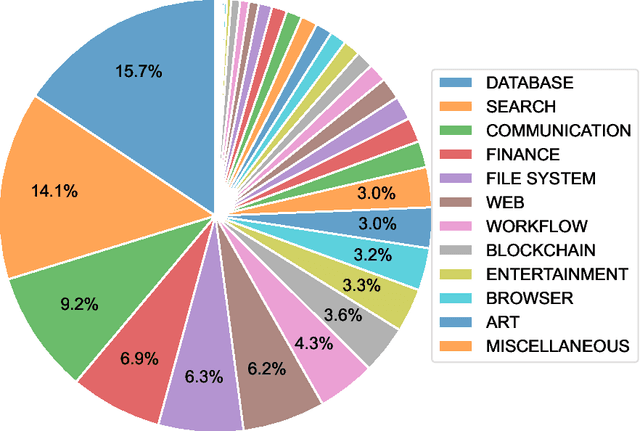
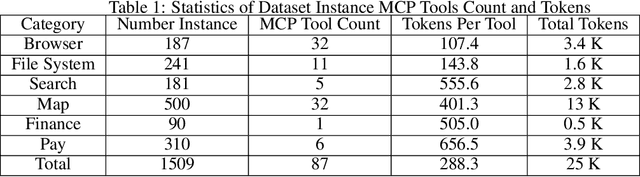
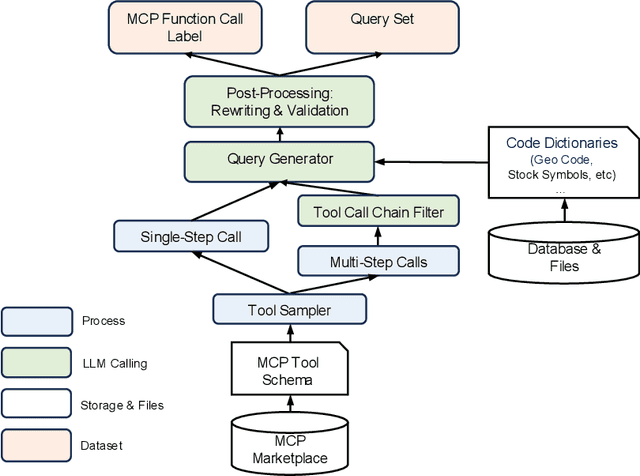
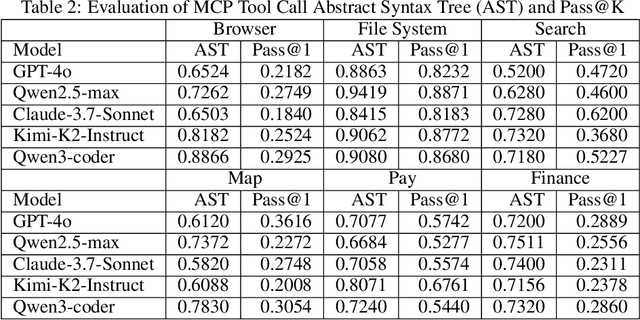
LLMs' capabilities are enhanced by using function calls to integrate various data sources or API results into the context window. Typical tools include search, web crawlers, maps, financial data, file systems, and browser usage, etc. Integrating these data sources or functions requires a standardized method. The Model Context Protocol (MCP) provides a standardized way to supply context to LLMs. However, the evaluation of LLMs and AI Agents' MCP tool use abilities suffer from several issues. First, there's a lack of comprehensive datasets or benchmarks to evaluate various MCP tools. Second, the diverse formats of response from MCP tool call execution further increase the difficulty of evaluation. Additionally, unlike existing tool-use benchmarks with high success rates in functions like programming and math functions, the success rate of real-world MCP tool is not guaranteed and varies across different MCP servers. Furthermore, the LLMs' context window also limits the number of available tools that can be called in a single run, because the textual descriptions of tool and the parameters have long token length for an LLM to process all at once. To help address the challenges of evaluating LLMs' performance on calling MCP tools, we propose MCPToolBench++, a large-scale, multi-domain AI Agent tool use benchmark. As of July 2025, this benchmark is build upon marketplace of over 4k MCP servers from more than 40 categories, collected from the MCP marketplaces and GitHub communities. The datasets consist of both single-step and multi-step tool calls across different categories. We evaluated SOTA LLMs with agentic abilities on this benchmark and reported the results.
Alleviating LLM-based Generative Retrieval Hallucination in Alipay Search
Mar 27, 2025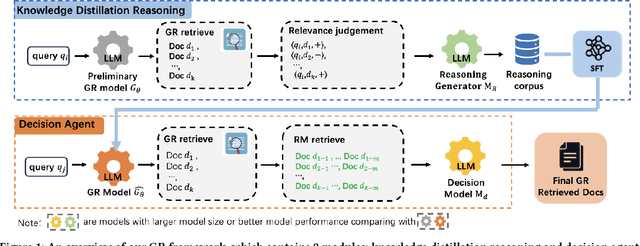
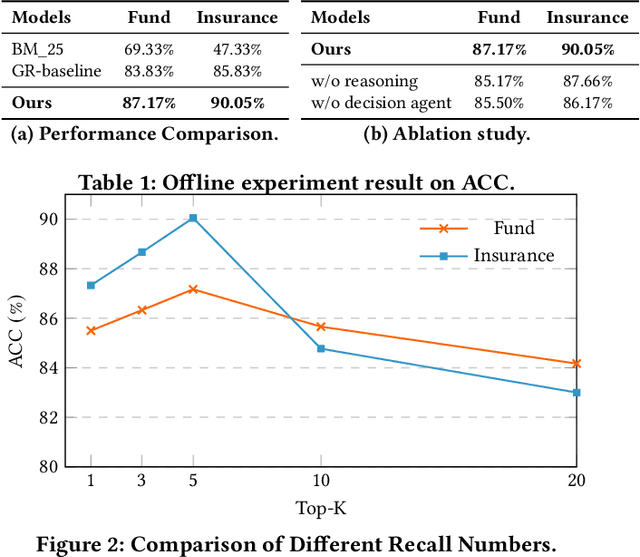
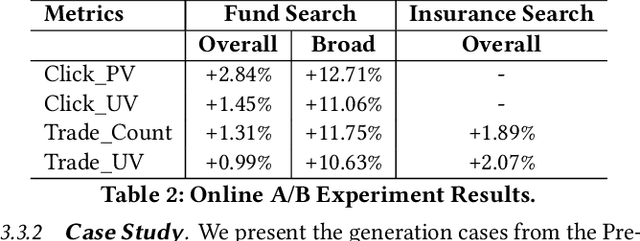
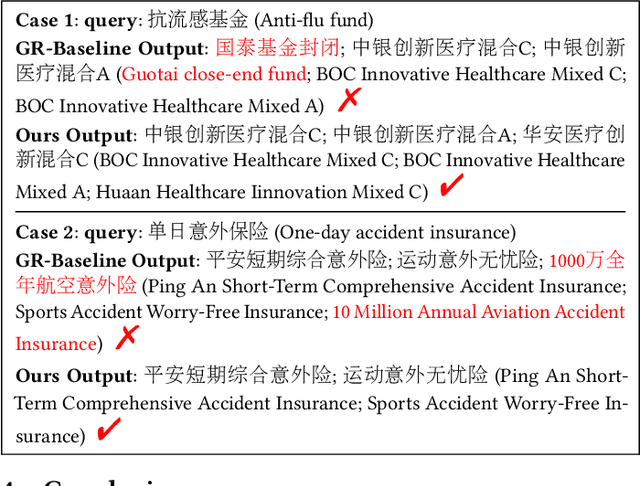
Generative retrieval (GR) has revolutionized document retrieval with the advent of large language models (LLMs), and LLM-based GR is gradually being adopted by the industry. Despite its remarkable advantages and potential, LLM-based GR suffers from hallucination and generates documents that are irrelevant to the query in some instances, severely challenging its credibility in practical applications. We thereby propose an optimized GR framework designed to alleviate retrieval hallucination, which integrates knowledge distillation reasoning in model training and incorporate decision agent to further improve retrieval precision. Specifically, we employ LLMs to assess and reason GR retrieved query-document (q-d) pairs, and then distill the reasoning data as transferred knowledge to the GR model. Moreover, we utilize a decision agent as post-processing to extend the GR retrieved documents through retrieval model and select the most relevant ones from multi perspectives as the final generative retrieval result. Extensive offline experiments on real-world datasets and online A/B tests on Fund Search and Insurance Search in Alipay demonstrate our framework's superiority and effectiveness in improving search quality and conversion gains.
DOGR: Leveraging Document-Oriented Contrastive Learning in Generative Retrieval
Feb 12, 2025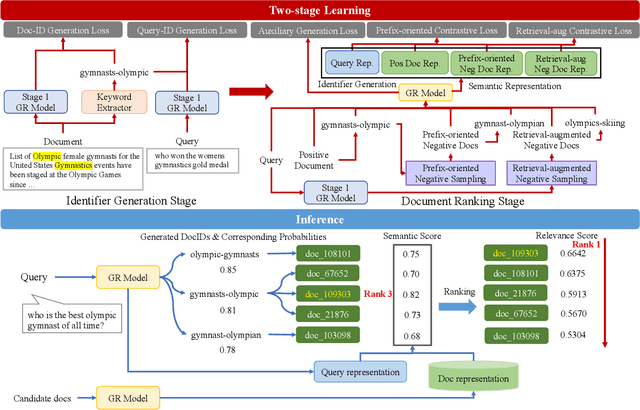
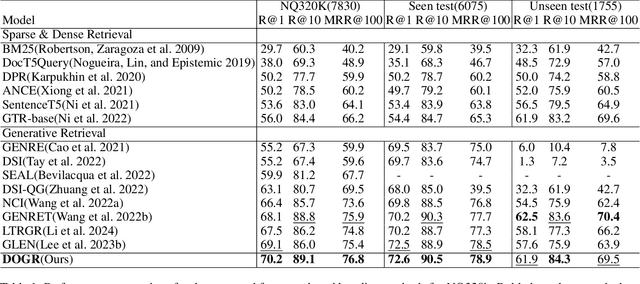
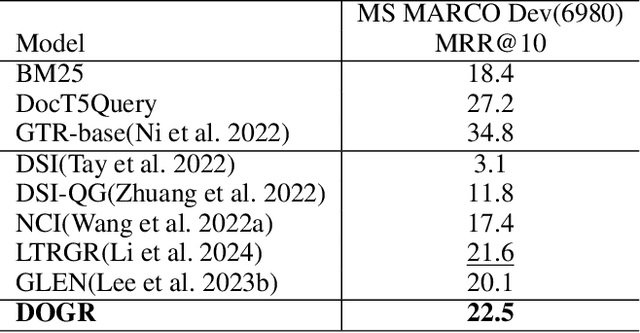
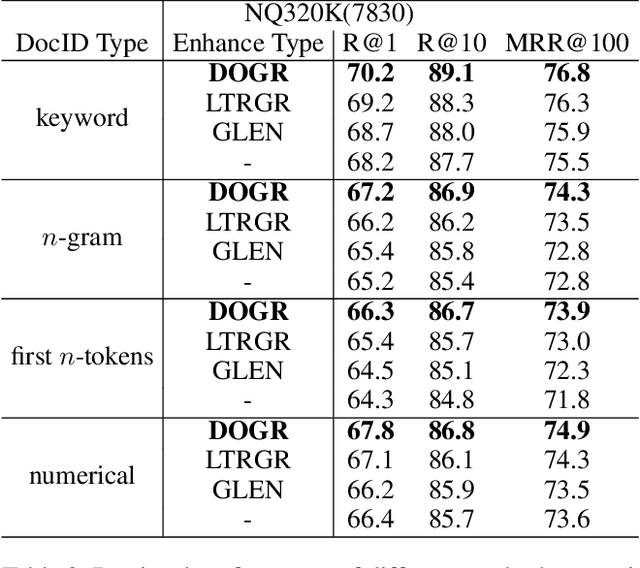
Generative retrieval constitutes an innovative approach in information retrieval, leveraging generative language models (LM) to generate a ranked list of document identifiers (docid) for a given query. It simplifies the retrieval pipeline by replacing the large external index with model parameters. However, existing works merely learned the relationship between queries and document identifiers, which is unable to directly represent the relevance between queries and documents. To address the above problem, we propose a novel and general generative retrieval framework, namely Leveraging Document-Oriented Contrastive Learning in Generative Retrieval (DOGR), which leverages contrastive learning to improve generative retrieval tasks. It adopts a two-stage learning strategy that captures the relationship between queries and documents comprehensively through direct interactions. Furthermore, negative sampling methods and corresponding contrastive learning objectives are implemented to enhance the learning of semantic representations, thereby promoting a thorough comprehension of the relationship between queries and documents. Experimental results demonstrate that DOGR achieves state-of-the-art performance compared to existing generative retrieval methods on two public benchmark datasets. Further experiments have shown that our framework is generally effective for common identifier construction techniques.