 Add to Chrome
 Add to Firefox
 Add to Edge
Think Only When You Need with Large Hybrid-Reasoning Models
May 21, 2025
Recent Large Reasoning Models (LRMs) have shown substantially improved reasoning capabilities over traditional Large Language Models (LLMs) by incorporating extended thinking processes prior to producing final responses. However, excessively lengthy thinking introduces substantial overhead in terms of token consumption and latency, which is particularly unnecessary for simple queries. In this work, we introduce Large Hybrid-Reasoning Models (LHRMs), the first kind of model capable of adaptively determining whether to perform thinking based on the contextual information of user queries. To achieve this, we propose a two-stage training pipeline comprising Hybrid Fine-Tuning (HFT) as a cold start, followed by online reinforcement learning with the proposed Hybrid Group Policy Optimization (HGPO) to implicitly learn to select the appropriate thinking mode. Furthermore, we introduce a metric called Hybrid Accuracy to quantitatively assess the model's capability for hybrid thinking. Extensive experimental results show that LHRMs can adaptively perform hybrid thinking on queries of varying difficulty and type. It outperforms existing LRMs and LLMs in reasoning and general capabilities while significantly improving efficiency. Together, our work advocates for a reconsideration of the appropriate use of extended thinking processes and provides a solid starting point for building hybrid thinking systems.

Reward Reasoning Model
May 20, 2025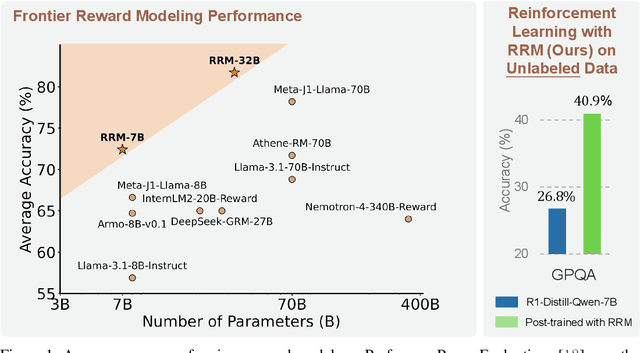
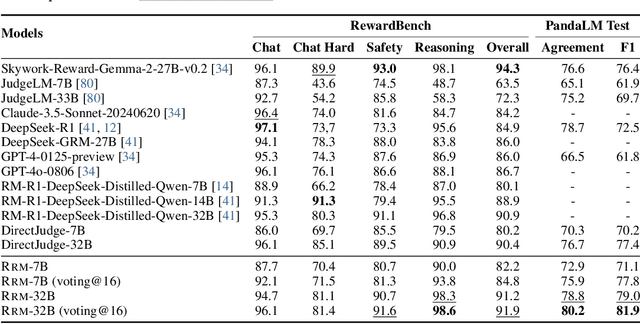
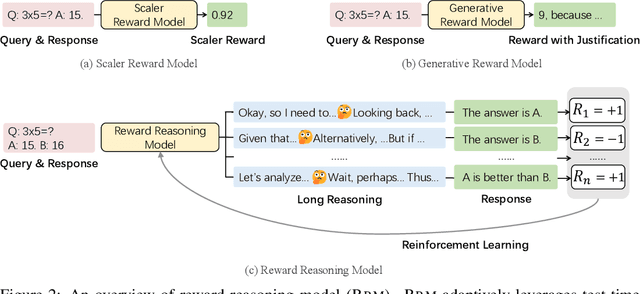
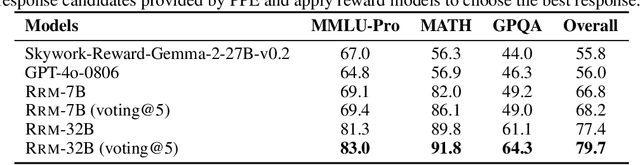
Reward models play a critical role in guiding large language models toward outputs that align with human expectations. However, an open challenge remains in effectively utilizing test-time compute to enhance reward model performance. In this work, we introduce Reward Reasoning Models (RRMs), which are specifically designed to execute a deliberate reasoning process before generating final rewards. Through chain-of-thought reasoning, RRMs leverage additional test-time compute for complex queries where appropriate rewards are not immediately apparent. To develop RRMs, we implement a reinforcement learning framework that fosters self-evolved reward reasoning capabilities without requiring explicit reasoning traces as training data. Experimental results demonstrate that RRMs achieve superior performance on reward modeling benchmarks across diverse domains. Notably, we show that RRMs can adaptively exploit test-time compute to further improve reward accuracy. The pretrained reward reasoning models are available at https://huggingface.co/Reward-Reasoning.
MoE-CAP: Benchmarking Cost, Accuracy and Performance of Sparse Mixture-of-Experts Systems
May 16, 2025The sparse Mixture-of-Experts (MoE) architecture is increasingly favored for scaling Large Language Models (LLMs) efficiently, but it depends on heterogeneous compute and memory resources. These factors jointly affect system Cost, Accuracy, and Performance (CAP), making trade-offs inevitable. Existing benchmarks often fail to capture these trade-offs accurately, complicating practical deployment decisions. To address this, we introduce MoE-CAP, a benchmark specifically designed for MoE systems. Our analysis reveals that achieving an optimal balance across CAP is difficult with current hardware; MoE systems typically optimize two of the three dimensions at the expense of the third-a dynamic we term the MoE-CAP trade-off. To visualize this, we propose the CAP Radar Diagram. We further introduce sparsity-aware performance metrics-Sparse Memory Bandwidth Utilization (S-MBU) and Sparse Model FLOPS Utilization (S-MFU)-to enable accurate performance benchmarking of MoE systems across diverse hardware platforms and deployment scenarios.
Model as a Game: On Numerical and Spatial Consistency for Generative Games
Mar 27, 2025Recent advances in generative models have significantly impacted game generation. However, despite producing high-quality graphics and adequately receiving player input, existing models often fail to maintain fundamental game properties such as numerical and spatial consistency. Numerical consistency ensures gameplay mechanics correctly reflect score changes and other quantitative elements, while spatial consistency prevents jarring scene transitions, providing seamless player experiences. In this paper, we revisit the paradigm of generative games to explore what truly constitutes a Model as a Game (MaaG) with a well-developed mechanism. We begin with an empirical study on ``Traveler'', a 2D game created by an LLM featuring minimalist rules yet challenging generative models in maintaining consistency. Based on the DiT architecture, we design two specialized modules: (1) a numerical module that integrates a LogicNet to determine event triggers, with calculations processed externally as conditions for image generation; and (2) a spatial module that maintains a map of explored areas, retrieving location-specific information during generation and linking new observations to ensure continuity. Experiments across three games demonstrate that our integrated modules significantly enhance performance on consistency metrics compared to baselines, while incurring minimal time overhead during inference.
Scaling Laws of Synthetic Data for Language Models
Mar 26, 2025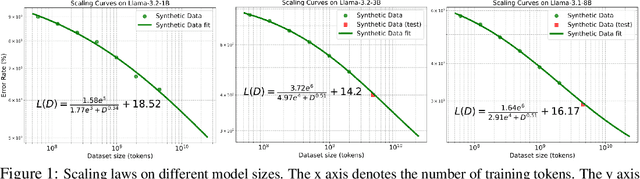
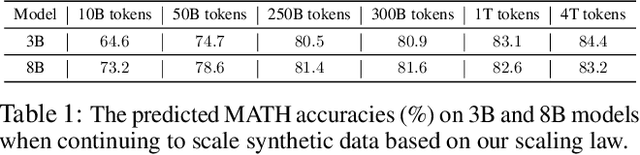
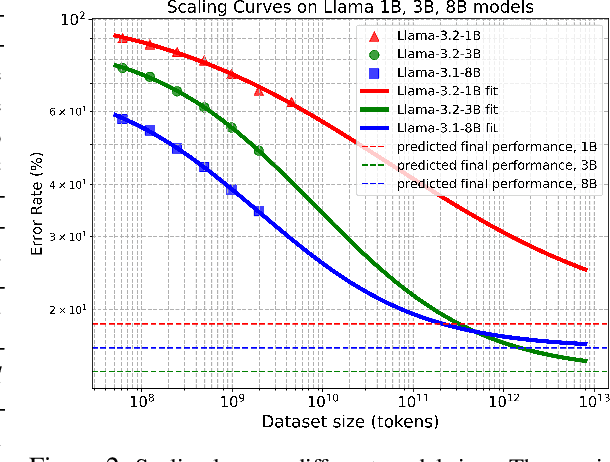
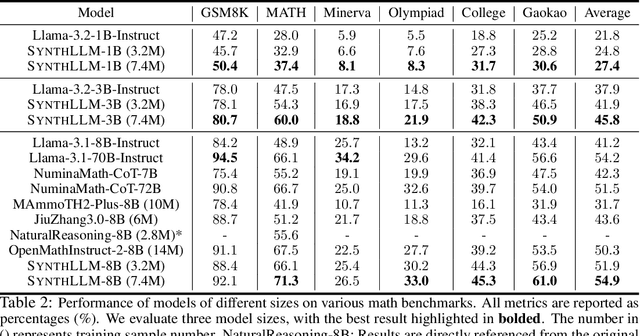
Large language models (LLMs) achieve strong performance across diverse tasks, largely driven by high-quality web data used in pre-training. However, recent studies indicate this data source is rapidly depleting. Synthetic data emerges as a promising alternative, but it remains unclear whether synthetic datasets exhibit predictable scalability comparable to raw pre-training data. In this work, we systematically investigate the scaling laws of synthetic data by introducing SynthLLM, a scalable framework that transforms pre-training corpora into diverse, high-quality synthetic datasets. Our approach achieves this by automatically extracting and recombining high-level concepts across multiple documents using a graph algorithm. Key findings from our extensive mathematical experiments on SynthLLM include: (1) SynthLLM generates synthetic data that reliably adheres to the rectified scaling law across various model sizes; (2) Performance improvements plateau near 300B tokens; and (3) Larger models approach optimal performance with fewer training tokens. For instance, an 8B model peaks at 1T tokens, while a 3B model requires 4T. Moreover, comparisons with existing synthetic data generation and augmentation methods demonstrate that SynthLLM achieves superior performance and scalability. Our findings highlight synthetic data as a scalable and reliable alternative to organic pre-training corpora, offering a viable path toward continued improvement in model performance.
Towards Intelligent Transportation with Pedestrians and Vehicles In-the-Loop: A Surveillance Video-Assisted Federated Digital Twin Framework
Mar 06, 2025In intelligent transportation systems (ITSs), incorporating pedestrians and vehicles in-the-loop is crucial for developing realistic and safe traffic management solutions. However, there is falls short of simulating complex real-world ITS scenarios, primarily due to the lack of a digital twin implementation framework for characterizing interactions between pedestrians and vehicles at different locations in different traffic environments. In this article, we propose a surveillance video assisted federated digital twin (SV-FDT) framework to empower ITSs with pedestrians and vehicles in-the-loop. Specifically, SVFDT builds comprehensive pedestrian-vehicle interaction models by leveraging multi-source traffic surveillance videos. Its architecture consists of three layers: (i) the end layer, which collects traffic surveillance videos from multiple sources; (ii) the edge layer, responsible for semantic segmentation-based visual understanding, twin agent-based interaction modeling, and local digital twin system (LDTS) creation in local regions; and (iii) the cloud layer, which integrates LDTSs across different regions to construct a global DT model in realtime. We analyze key design requirements and challenges and present core guidelines for SVFDT's system implementation. A testbed evaluation demonstrates its effectiveness in optimizing traffic management. Comparisons with traditional terminal-server frameworks highlight SV-FDT's advantages in mirroring delays, recognition accuracy, and subjective evaluation. Finally, we identify some open challenges and discuss future research directions.
Deep Robust Reversible Watermarking
Mar 04, 2025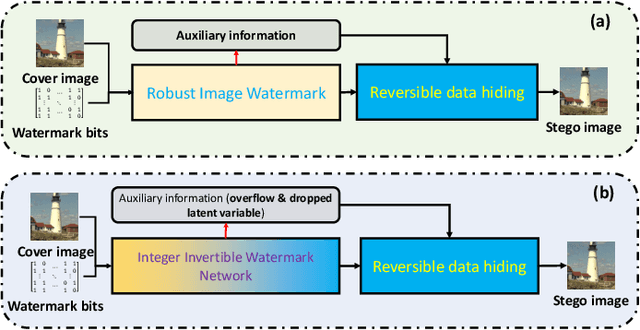

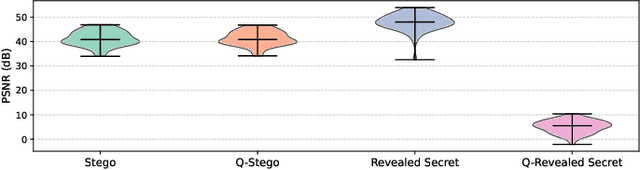
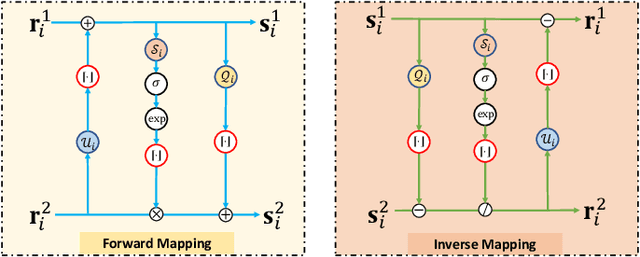
Robust Reversible Watermarking (RRW) enables perfect recovery of cover images and watermarks in lossless channels while ensuring robust watermark extraction in lossy channels. Existing RRW methods, mostly non-deep learning-based, face complex designs, high computational costs, and poor robustness, limiting their practical use. This paper proposes Deep Robust Reversible Watermarking (DRRW), a deep learning-based RRW scheme. DRRW uses an Integer Invertible Watermark Network (iIWN) to map integer data distributions invertibly, addressing conventional RRW limitations. Unlike traditional RRW, which needs distortion-specific designs, DRRW employs an encoder-noise layer-decoder framework for adaptive robustness via end-to-end training. In inference, cover image and watermark map to an overflowed stego image and latent variables, compressed by arithmetic coding into a bitstream embedded via reversible data hiding for lossless recovery. We introduce an overflow penalty loss to reduce pixel overflow, shortening the auxiliary bitstream while enhancing robustness and stego image quality. An adaptive weight adjustment strategy avoids manual watermark loss weighting, improving training stability and performance. Experiments show DRRW outperforms state-of-the-art RRW methods, boosting robustness and cutting embedding, extraction, and recovery complexities by 55.14\(\times\), 5.95\(\times\), and 3.57\(\times\), respectively. The auxiliary bitstream shrinks by 43.86\(\times\), with reversible embedding succeeding on 16,762 PASCAL VOC 2012 images, advancing practical RRW. DRRW exceeds irreversible robust watermarking in robustness and quality while maintaining reversibility.
Attention-based UAV Trajectory Optimization for Wireless Power Transfer-assisted IoT Systems
Feb 23, 2025Unmanned Aerial Vehicles (UAVs) in Wireless Power Transfer (WPT)-assisted Internet of Things (IoT) systems face the following challenges: limited resources and suboptimal trajectory planning. Reinforcement learning-based trajectory planning schemes face issues of low search efficiency and learning instability when optimizing large-scale systems. To address these issues, we present an Attention-based UAV Trajectory Optimization (AUTO) framework based on the graph transformer, which consists of an Attention Trajectory Optimization Model (ATOM) and a Trajectory lEarNing Method based on Actor-critic (TENMA). In ATOM, a graph encoder is used to calculate the self-attention characteristics of all IoTDs, and a trajectory decoder is developed to optimize the number and trajectories of UAVs. TENMA then trains the ATOM using an improved Actor-Critic method, in which the real reward of the system is applied as the baseline to reduce variances in the critic network. This method is suitable for high-quality and large-scale multi-UAV trajectory planning. Finally, we develop numerous experiments, including a hardware experiment in the field case, to verify the feasibility and efficiency of the AUTO framework.
WildLong: Synthesizing Realistic Long-Context Instruction Data at Scale
Feb 23, 2025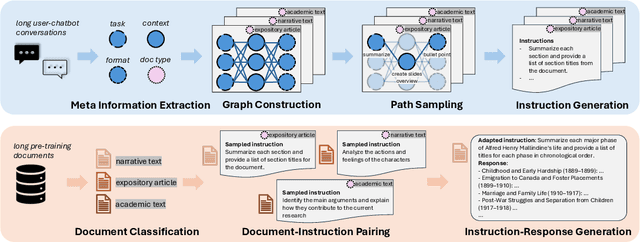
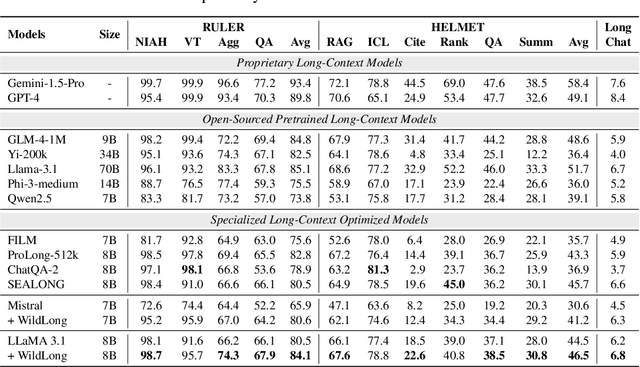
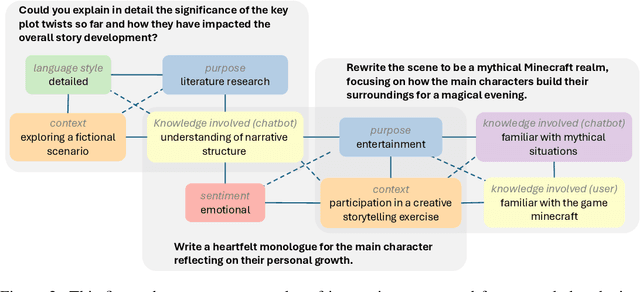
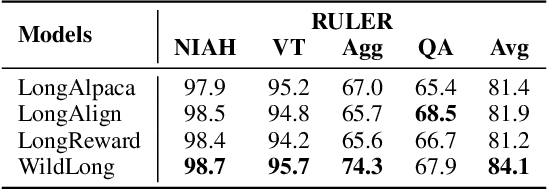
Large language models (LLMs) with extended context windows enable tasks requiring extensive information integration but are limited by the scarcity of high-quality, diverse datasets for long-context instruction tuning. Existing data synthesis methods focus narrowly on objectives like fact retrieval and summarization, restricting their generalizability to complex, real-world tasks. WildLong extracts meta-information from real user queries, models co-occurrence relationships via graph-based methods, and employs adaptive generation to produce scalable data. It extends beyond single-document tasks to support multi-document reasoning, such as cross-document comparison and aggregation. Our models, finetuned on 150K instruction-response pairs synthesized using WildLong, surpasses existing open-source long-context-optimized models across benchmarks while maintaining strong performance on short-context tasks without incorporating supplementary short-context data. By generating a more diverse and realistic long-context instruction dataset, WildLong enhances LLMs' ability to generalize to complex, real-world reasoning over long contexts, establishing a new paradigm for long-context data synthesis.
Imagine while Reasoning in Space: Multimodal Visualization-of-Thought
Jan 13, 2025


Chain-of-Thought (CoT) prompting has proven highly effective for enhancing complex reasoning in Large Language Models (LLMs) and Multimodal Large Language Models (MLLMs). Yet, it struggles in complex spatial reasoning tasks. Nonetheless, human cognition extends beyond language alone, enabling the remarkable capability to think in both words and images. Inspired by this mechanism, we propose a new reasoning paradigm, Multimodal Visualization-of-Thought (MVoT). It enables visual thinking in MLLMs by generating image visualizations of their reasoning traces. To ensure high-quality visualization, we introduce token discrepancy loss into autoregressive MLLMs. This innovation significantly improves both visual coherence and fidelity. We validate this approach through several dynamic spatial reasoning tasks. Experimental results reveal that MVoT demonstrates competitive performance across tasks. Moreover, it exhibits robust and reliable improvements in the most challenging scenarios where CoT fails. Ultimately, MVoT establishes new possibilities for complex reasoning tasks where visual thinking can effectively complement verbal reasoning.