 Add to Chrome
 Add to Firefox
 Add to Edge
Discovering distinctive elements of biomedical datasets for high-performance exploration
Oct 07, 2024

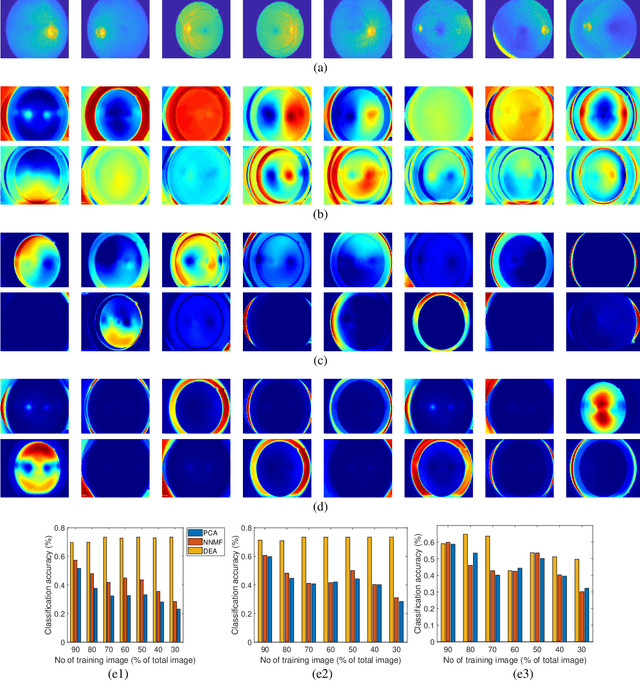
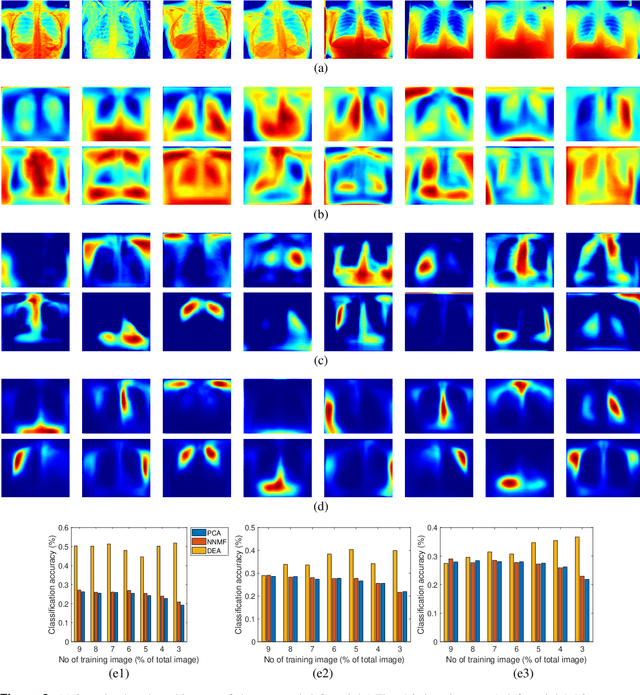
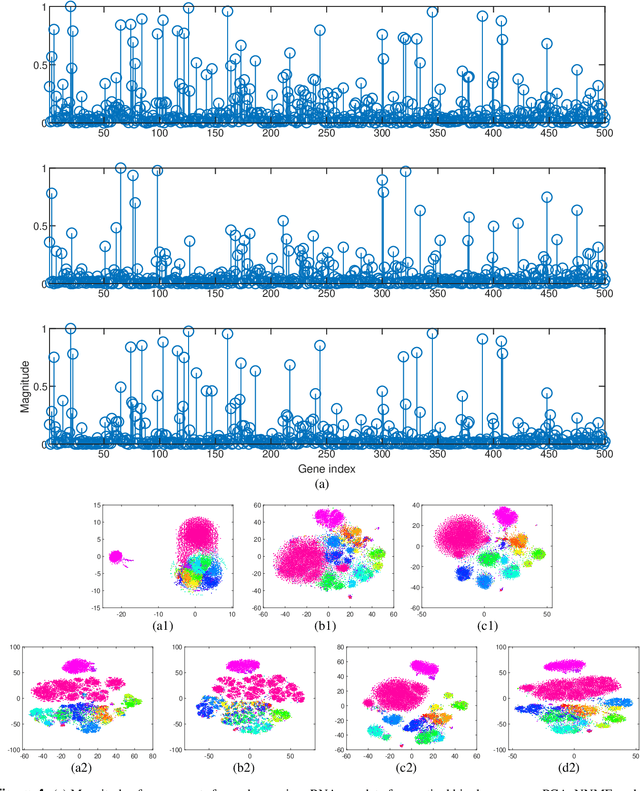
The human brain represents an object by small elements and distinguishes two objects based on the difference in elements. Discovering the distinctive elements of high-dimensional datasets is therefore critical in numerous perception-driven biomedical and clinical studies. However, currently there is no available method for reliable extraction of distinctive elements of high-dimensional biomedical and clinical datasets. Here we present an unsupervised deep learning technique namely distinctive element analysis (DEA), which extracts the distinctive data elements using high-dimensional correlative information of the datasets. DEA at first computes a large number of distinctive parts of the data, then filters and condenses the parts into DEA elements by employing a unique kernel-driven triple-optimization network. DEA has been found to improve the accuracy by up to 45% in comparison to the traditional techniques in applications such as disease detection from medical images, gene ranking and cell recognition from single cell RNA sequence (scRNA-seq) datasets. Moreover, DEA allows user-guided manipulation of the intermediate calculation process and thus offers intermediate results with better interpretability.

Multi-sensor Learning Enables Information Transfer across Different Sensory Data and Augments Multi-modality Imaging
Sep 28, 2024Multi-modality imaging is widely used in clinical practice and biomedical research to gain a comprehensive understanding of an imaging subject. Currently, multi-modality imaging is accomplished by post hoc fusion of independently reconstructed images under the guidance of mutual information or spatially registered hardware, which limits the accuracy and utility of multi-modality imaging. Here, we investigate a data-driven multi-modality imaging (DMI) strategy for synergetic imaging of CT and MRI. We reveal two distinct types of features in multi-modality imaging, namely intra- and inter-modality features, and present a multi-sensor learning (MSL) framework to utilize the crossover inter-modality features for augmented multi-modality imaging. The MSL imaging approach breaks down the boundaries of traditional imaging modalities and allows for optimal hybridization of CT and MRI, which maximizes the use of sensory data. We showcase the effectiveness of our DMI strategy through synergetic CT-MRI brain imaging. The principle of DMI is quite general and holds enormous potential for various DMI applications across disciplines.
The Application of Machine Learning in Tidal Evolution Simulation of Star-Planet Systems
Aug 29, 2024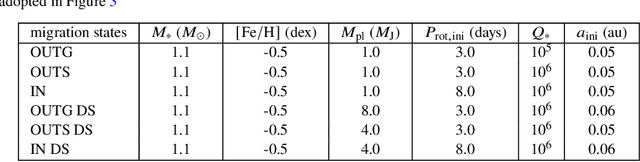
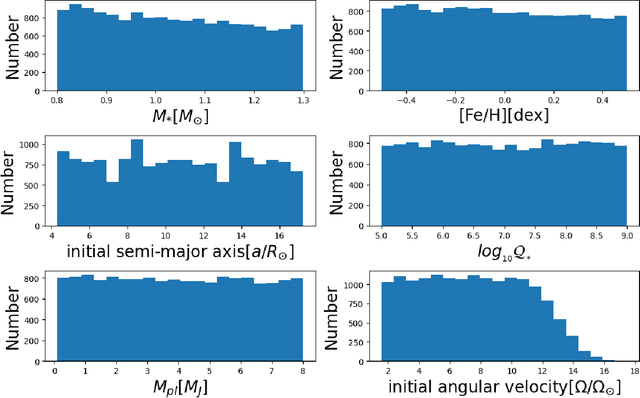
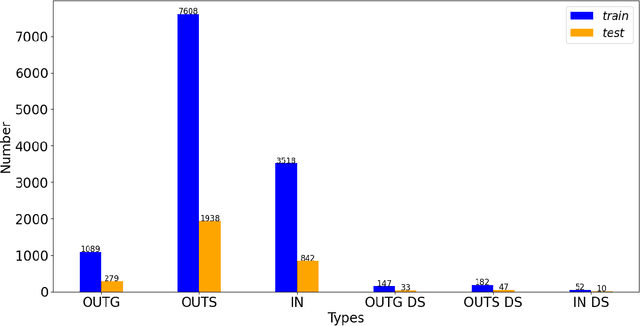
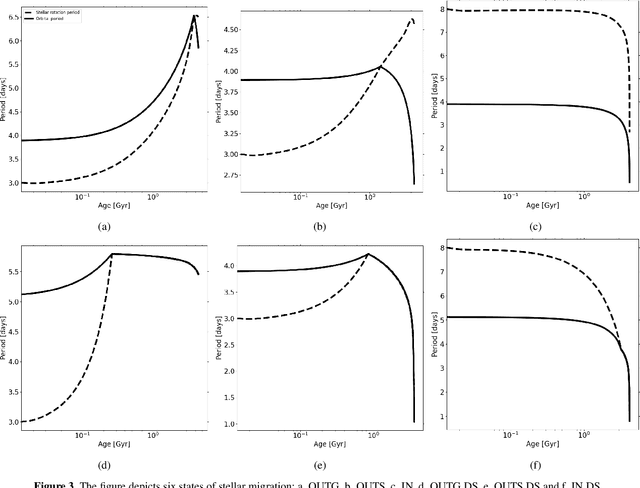
With the release of a large amount of astronomical data, an increasing number of close-in hot Jupiters have been discovered. Calculating their evolutionary curves using star-planet interaction models presents a challenge. To expedite the generation of evolutionary curves for these close-in hot Jupiter systems, we utilized tidal interaction models established on MESA to create 15,745 samples of star-planet systems and 7,500 samples of stars. Additionally, we employed a neural network (Multi-Layer Perceptron - MLP) to predict the evolutionary curves of the systems, including stellar effective temperature, radius, stellar rotation period, and planetary orbital period. The median relative errors of the predicted evolutionary curves were found to be 0.15%, 0.43%, 2.61%, and 0.57%, respectively. Furthermore, the speed at which we generate evolutionary curves exceeds that of model-generated curves by more than four orders of magnitude. We also extracted features of planetary migration states and utilized lightGBM to classify the samples into 6 categories for prediction. We found that by combining three types that undergo long-term double synchronization into one label, the classifier effectively recognized these features. Apart from systems experiencing long-term double synchronization, the median relative errors of the predicted evolutionary curves were all below 4%. Our work provides an efficient method to save significant computational resources and time with minimal loss in accuracy. This research also lays the foundation for analyzing the evolutionary characteristics of systems under different migration states, aiding in the understanding of the underlying physical mechanisms of such systems. Finally, to a large extent, our approach could replace the calculations of theoretical models.
MedTrinity-25M: A Large-scale Multimodal Dataset with Multigranular Annotations for Medicine
Aug 06, 2024This paper introduces MedTrinity-25M, a comprehensive, large-scale multimodal dataset for medicine, covering over 25 million images across 10 modalities, with multigranular annotations for more than 65 diseases. These enriched annotations encompass both global textual information, such as disease/lesion type, modality, region-specific descriptions, and inter-regional relationships, as well as detailed local annotations for regions of interest (ROIs), including bounding boxes, segmentation masks. Unlike existing approach which is limited by the availability of image-text pairs, we have developed the first automated pipeline that scales up multimodal data by generating multigranular visual and texual annotations (in the form of image-ROI-description triplets) without the need for any paired text descriptions. Specifically, data from over 90 different sources have been collected, preprocessed, and grounded using domain-specific expert models to identify ROIs related to abnormal regions. We then build a comprehensive knowledge base and prompt multimodal large language models to perform retrieval-augmented generation with the identified ROIs as guidance, resulting in multigranular texual descriptions. Compared to existing datasets, MedTrinity-25M provides the most enriched annotations, supporting a comprehensive range of multimodal tasks such as captioning and report generation, as well as vision-centric tasks like classification and segmentation. Pretraining on MedTrinity-25M, our model achieves state-of-the-art performance on VQA-RAD and PathVQA, surpassing both multimodal large language models and other representative SoTA approaches. This dataset can also be utilized to support large-scale pre-training of multimodal medical AI models, contributing to the development of future foundation models in the medical domain.
Large Language Model-Augmented Auto-Delineation of Treatment Target Volume in Radiation Therapy
Jul 10, 2024Radiation therapy (RT) is one of the most effective treatments for cancer, and its success relies on the accurate delineation of targets. However, target delineation is a comprehensive medical decision that currently relies purely on manual processes by human experts. Manual delineation is time-consuming, laborious, and subject to interobserver variations. Although the advancements in artificial intelligence (AI) techniques have significantly enhanced the auto-contouring of normal tissues, accurate delineation of RT target volumes remains a challenge. In this study, we propose a visual language model-based RT target volume auto-delineation network termed Radformer. The Radformer utilizes a hierarichal vision transformer as the backbone and incorporates large language models to extract text-rich features from clinical data. We introduce a visual language attention module (VLAM) for integrating visual and linguistic features for language-aware visual encoding (LAVE). The Radformer has been evaluated on a dataset comprising 2985 patients with head-and-neck cancer who underwent RT. Metrics, including the Dice similarity coefficient (DSC), intersection over union (IOU), and 95th percentile Hausdorff distance (HD95), were used to evaluate the performance of the model quantitatively. Our results demonstrate that the Radformer has superior segmentation performance compared to other state-of-the-art models, validating its potential for adoption in RT practice.
Automated radiotherapy treatment planning guided by GPT-4Vision
Jun 21, 2024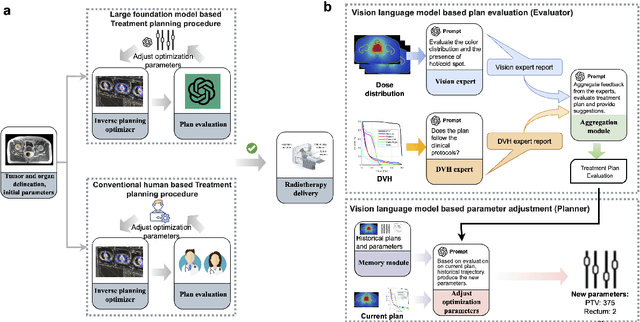
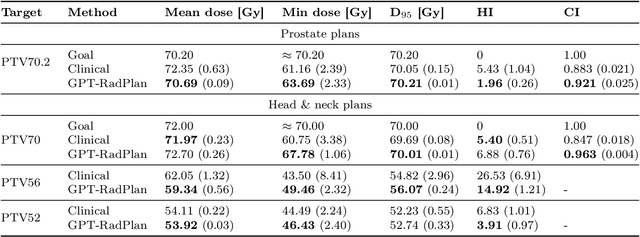
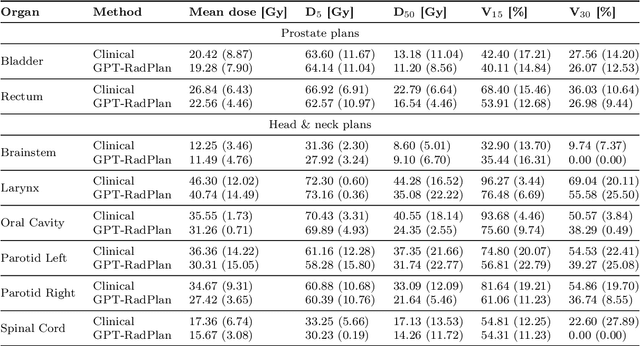
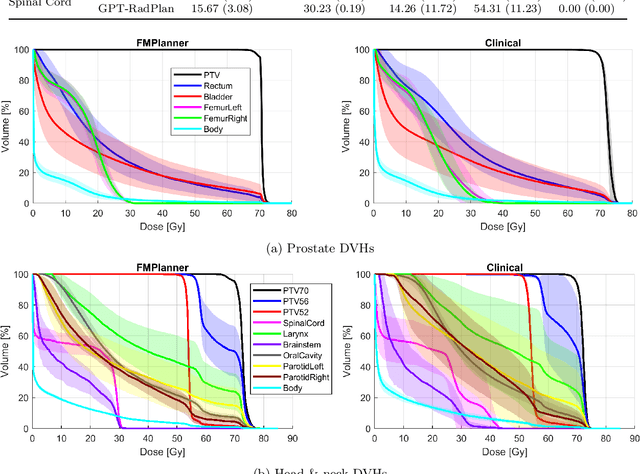
Radiotherapy treatment planning is a time-consuming and potentially subjective process that requires the iterative adjustment of model parameters to balance multiple conflicting objectives. Recent advancements in large foundation models offer promising avenues for addressing the challenges in planning and clinical decision-making. This study introduces GPT-RadPlan, a fully automated treatment planning framework that harnesses prior radiation oncology knowledge encoded in multi-modal large language models, such as GPT-4Vision (GPT-4V) from OpenAI. GPT-RadPlan is made aware of planning protocols as context and acts as an expert human planner, capable of guiding a treatment planning process. Via in-context learning, we incorporate clinical protocols for various disease sites as prompts to enable GPT-4V to acquire treatment planning domain knowledge. The resulting GPT-RadPlan agent is integrated into our in-house inverse treatment planning system through an API. The efficacy of the automated planning system is showcased using multiple prostate and head & neck cancer cases, where we compared GPT-RadPlan results to clinical plans. In all cases, GPT-RadPlan either outperformed or matched the clinical plans, demonstrating superior target coverage and organ-at-risk sparing. Consistently satisfying the dosimetric objectives in the clinical protocol, GPT-RadPlan represents the first multimodal large language model agent that mimics the behaviors of human planners in radiation oncology clinics, achieving remarkable results in automating the treatment planning process without the need for additional training.
An Alternative Method to Identify the Susceptibility Threshold Level of Device under Test in a Reverberation Chamber
Apr 23, 2024


By counting the number of pass/fail occurrences of a DUT (Device under Test) in the stirring process in a reverberation chamber (RC), the threshold electric field (E-field) level can be well estimated without tuning the input power and repeating the whole testing many times. The Monte-Carlo method is used to verify the results. Estimated values and uncertainties are given for Rayleigh distributed fields and for Rice distributed fields with different K-factors.
In-context Vectors: Making In Context Learning More Effective and Controllable Through Latent Space Steering
Nov 16, 2023Large language models (LLMs) demonstrate emergent in-context learning capabilities, where they adapt to new tasks based on example demonstrations. However, in-context learning has seen limited effectiveness in many settings, is difficult to quantitatively control and takes up context window space. To overcome these limitations, we propose an alternative approach that recasts in-context learning as in-context vectors (ICV). Using ICV has two steps. We first use a forward pass on demonstration examples to create the in-context vector from the latent embedding of the LLM. This vector captures essential information about the intended task. On a new query, instead of adding demonstrations to the prompt, we shift the latent states of the LLM using the ICV. The ICV approach has several benefits: 1) it enables the LLM to more effectively follow the demonstration examples; 2) it's easy to control by adjusting the magnitude of the ICV; 3) it reduces the length of the prompt by removing the in-context demonstrations; 4) ICV is computationally much more efficient than fine-tuning. We demonstrate that ICV achieves better performance compared to standard in-context learning and fine-tuning on diverse tasks including safety, style transfer, role-playing and formatting. Moreover, we show that we can flexibly teach LLM to simultaneously follow different types of instructions by simple vector arithmetics on the corresponding ICVs.
3D TransUNet: Advancing Medical Image Segmentation through Vision Transformers
Oct 11, 2023Medical image segmentation plays a crucial role in advancing healthcare systems for disease diagnosis and treatment planning. The u-shaped architecture, popularly known as U-Net, has proven highly successful for various medical image segmentation tasks. However, U-Net's convolution-based operations inherently limit its ability to model long-range dependencies effectively. To address these limitations, researchers have turned to Transformers, renowned for their global self-attention mechanisms, as alternative architectures. One popular network is our previous TransUNet, which leverages Transformers' self-attention to complement U-Net's localized information with the global context. In this paper, we extend the 2D TransUNet architecture to a 3D network by building upon the state-of-the-art nnU-Net architecture, and fully exploring Transformers' potential in both the encoder and decoder design. We introduce two key components: 1) A Transformer encoder that tokenizes image patches from a convolution neural network (CNN) feature map, enabling the extraction of global contexts, and 2) A Transformer decoder that adaptively refines candidate regions by utilizing cross-attention between candidate proposals and U-Net features. Our investigations reveal that different medical tasks benefit from distinct architectural designs. The Transformer encoder excels in multi-organ segmentation, where the relationship among organs is crucial. On the other hand, the Transformer decoder proves more beneficial for dealing with small and challenging segmented targets such as tumor segmentation. Extensive experiments showcase the significant potential of integrating a Transformer-based encoder and decoder into the u-shaped medical image segmentation architecture. TransUNet outperforms competitors in various medical applications.
Development and external validation of a lung cancer risk estimation tool using gradient-boosting
Aug 23, 2023Lung cancer is a significant cause of mortality worldwide, emphasizing the importance of early detection for improved survival rates. In this study, we propose a machine learning (ML) tool trained on data from the PLCO Cancer Screening Trial and validated on the NLST to estimate the likelihood of lung cancer occurrence within five years. The study utilized two datasets, the PLCO (n=55,161) and NLST (n=48,595), consisting of comprehensive information on risk factors, clinical measurements, and outcomes related to lung cancer. Data preprocessing involved removing patients who were not current or former smokers and those who had died of causes unrelated to lung cancer. Additionally, a focus was placed on mitigating bias caused by censored data. Feature selection, hyper-parameter optimization, and model calibration were performed using XGBoost, an ensemble learning algorithm that combines gradient boosting and decision trees. The ML model was trained on the pre-processed PLCO dataset and tested on the NLST dataset. The model incorporated features such as age, gender, smoking history, medical diagnoses, and family history of lung cancer. The model was well-calibrated (Brier score=0.044). ROC-AUC was 82% on the PLCO dataset and 70% on the NLST dataset. PR-AUC was 29% and 11% respectively. When compared to the USPSTF guidelines for lung cancer screening, our model provided the same recall with a precision of 13.1% vs. 9.3% on the PLCO dataset and 3.2% vs. 3.1% on the NLST dataset. The developed ML tool provides a freely available web application for estimating the likelihood of developing lung cancer within five years. By utilizing risk factors and clinical data, individuals can assess their risk and make informed decisions regarding lung cancer screening. This research contributes to the efforts in early detection and prevention strategies, aiming to reduce lung cancer-related mortality rates.