 Add to Chrome
 Add to Firefox
 Add to Edge
bioMoR: Biology-Guided Mixture-of-Recursions for Effective Genomic Learning
Aug 07, 2026
Transformer models for high-dimensional omics analysis process thousands of genes or pathways, although only a subset requires deep computation. Mixture-of-Recursions (MoR) improves efficiency through adaptive token-choice or expert-choice routing. We propose bioMoR, which, to the best of our knowledge, is the first framework to apply MoR to gene-level and pathway-level learning. Our contributions include identifying three locations for integrating structured biological knowledge within an MoR backbone: graph-based information sharing refines token embeddings, a structural bias guides self-attention toward biologically related tokens, and a graph-aware router uses neighborhood information to determine each token's recursion depth. These techniques are centered on our insight that additional knowledge of token interaction can effectively help models construct embeddings and select which tokens should be learned more deeply. Across eight benchmarks spanning diverse omics data types and evaluated under a unified five-fold cross-validation protocol, bioMoR improves average macro-F1 by 8.2 percentage points and balanced accuracy by 7.1 percentage points over the strongest biology-agnostic MoR baseline while using 75 percent fewer parameters and up to 58 percent fewer FLOPs than a non-recursive Transformer. The selected marker genes or pathways provide biological interpretability, while their token-specific recursion depths reveal how computation is allocated.

A vision foundation model for single-cell biology via spatial gene cartography
Jul 15, 2026Most single-cell foundation models are adapted from language models, representing each cell as a sequence of gene tokens. This discards the relationships among genes and often the magnitude of their expression. We present scVision, a vision foundation model that instead renders each cell as a continuous image. Using optimal transport, it places genes at fixed positions on a single shared, pan-tissue layout so that co-expressed genes become spatial neighbours, turning a transcriptome into an image in which gene programs appear as local texture. We pretrain a vision transformer by masked image modelling on 72 million human cells and use the frozen encoder with no fine-tuning. In zero-shot evaluations on six independent, held-out studies, scVision is the most accurate cell-type annotator and recovers gene programs without supervision, ahead of existing foundation models and classical baselines; on multi-study integration it matches the strongest token-based model while conserving the most biological structure, without ever seeing a batch label. Permuting the gene layout with the network fixed sharply lowers accuracy, more than removing the vision transformer itself, showing that biologically meaningful position, not the network, carries the signal. By preserving expression magnitude and gene relationships, scVision reframes single-cell representation learning as a vision problem, connecting it to the mature methods of computer vision.
An LLM-Orchestrated Agent for Directional-Coupler Design with Self-Consistent Eigenmode and FDTD Validation
Jun 21, 2026We present a design agent which is a Large Language Model (LLM) that orchestrates, but does not perform, the numerical simulations to design a silicon-on-insulator (SOI) $2\times2$ directional coupler. We choose a symmetric phase-matched coupler where a lot of analytical results are available that help the design strategy. The LLM proposes candidate gap values (a geometrical dimension size) and judges convergence, while all physics is owned by deterministic solvers: a frequency-domain eigenmode solver estimates the coupling coefficient~$κ$ for the current design, and an independent Finite-Difference Time-Domain (FDTD) stage validates it. Both solvers operate on a common slab-projected two-dimensional (2D) effective-index reduction of the silicon film, so the design~$κ$ and the FDTD response are consistent by problem design; the residual between them is shown to be a single constant phase offset~$φ$, attributable to a fixed excess coupling length $L_{\mathrm{extra}}=\SI{2.837(11)}{\micro\meter}$ that we find invariant across a factor-of-two range in~$κ$. Folding this offset into a closed-loop length correction, the agent delivers a $50/50$ splitter whose FDTD-measured cross fraction is $0.498$ (target $0.500$), a residual of $0.0017$. Results are made self-consistent within the 2D effective-index model; and the LLM succeeds in delivering a suitable design over a number of attempts.
Vision-based Deep Learning Analysis of Unordered Biomedical Tabular Datasets via Optimal Spatial Cartography
Mar 24, 2026Tabular data are central to biomedical research, from liquid biopsy and bulk and single-cell transcriptomics to electronic health records and phenotypic profiling. Unlike images or sequences, however, tabular datasets lack intrinsic spatial organization: features are treated as unordered dimensions, and their relationships must be inferred implicitly by the model. This limits the ability of vision architectures to exploit local structure and higher-order feature interactions in non-spatial biomedical data. Here we introduce Dynamic Feature Mapping (Dynomap), an end-to-end deep learning framework that learns a task-optimized spatial topology of features directly from data. Dynomap jointly optimizes feature placement and prediction through a fully differentiable rendering mechanism, without relying on heuristics, predefined groupings, or external priors. By transforming high-dimensional tabular vectors into learned feature maps, Dynomap enables vision-based models to operate effectively on unordered biomedical inputs. Across multiple clinical and biological datasets, Dynomap consistently outperformed classical machine learning, modern deep tabular models, and existing vector-to-image approaches. In liquid biopsy data, Dynomap organized clinically relevant gene signatures into coherent spatial patterns and improved multiclass cancer subtype prediction accuracy by up to 18%. In a Parkinson disease voice dataset, it clustered disease-associated acoustic descriptors and improved accuracy by up to 8%. Similar gains and interpretable feature organization were observed in additional biomedical datasets. These results establish Dynomap as a general strategy for bridging tabular and vision-based deep learning and for uncovering structured, clinically relevant patterns in high-dimensional biomedical data.
Redefining the Down-Sampling Scheme of U-Net for Precision Biomedical Image Segmentation
Feb 23, 2026U-Net architectures have been instrumental in advancing biomedical image segmentation (BIS) but often struggle with capturing long-range information. One reason is the conventional down-sampling techniques that prioritize computational efficiency at the expense of information retention. This paper introduces a simple but effective strategy, we call it Stair Pooling, which moderates the pace of down-sampling and reduces information loss by leveraging a sequence of concatenated small and narrow pooling operations in varied orientations. Specifically, our method modifies the reduction in dimensionality within each 2D pooling step from $\frac{1}{4}$ to $\frac{1}{2}$. This approach can also be adapted for 3D pooling to preserve even more information. Such preservation aids the U-Net in more effectively reconstructing spatial details during the up-sampling phase, thereby enhancing its ability to capture long-range information and improving segmentation accuracy. Extensive experiments on three BIS benchmarks demonstrate that the proposed Stair Pooling can increase both 2D and 3D U-Net performance by an average of 3.8\% in Dice scores. Moreover, we leverage the transfer entropy to select the optimal down-sampling paths and quantitatively show how the proposed Stair Pooling reduces the information loss.
Uncovering spatial tissue domains and cell types in spatial omics through cross-scale profiling of cellular and genomic interactions
Feb 13, 2026Cellular identity and function are linked to both their intrinsic genomic makeup and extrinsic spatial context within the tissue microenvironment. Spatial transcriptomics (ST) offers an unprecedented opportunity to study this, providing in situ gene expression profiles at single-cell resolution and illuminating the spatial and functional organization of cells within tissues. However, a significant hurdle remains: ST data is inherently noisy, large, and structurally complex. This complexity makes it intractable for existing computational methods to effectively capture the interplay between spatial interactions and intrinsic genomic relationships, thus limiting our ability to discern critical biological patterns. Here, we present CellScape, a deep learning framework designed to overcome these limitations for high-performance ST data analysis and pattern discovery. CellScape jointly models cellular interactions in tissue space and genomic relationships among cells, producing comprehensive representations that seamlessly integrate spatial signals with underlying gene regulatory mechanisms. This technique uncovers biologically informative patterns that improve spatial domain segmentation and supports comprehensive spatial cellular analyses across diverse transcriptomics datasets, offering an accurate and versatile framework for deep analysis and interpretation of ST data.w
Deep-and-Wide Learning: Enhancing Data-Driven Inference via Synergistic Learning of Inter- and Intra-Data Representations
Jan 28, 2025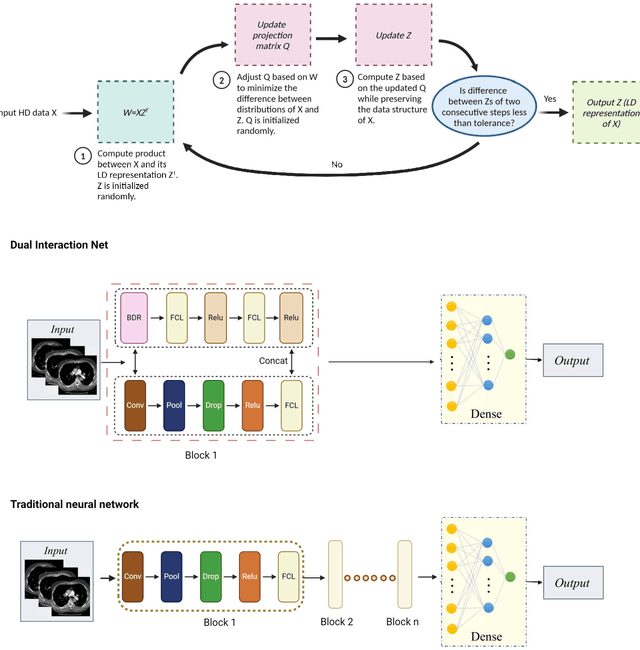
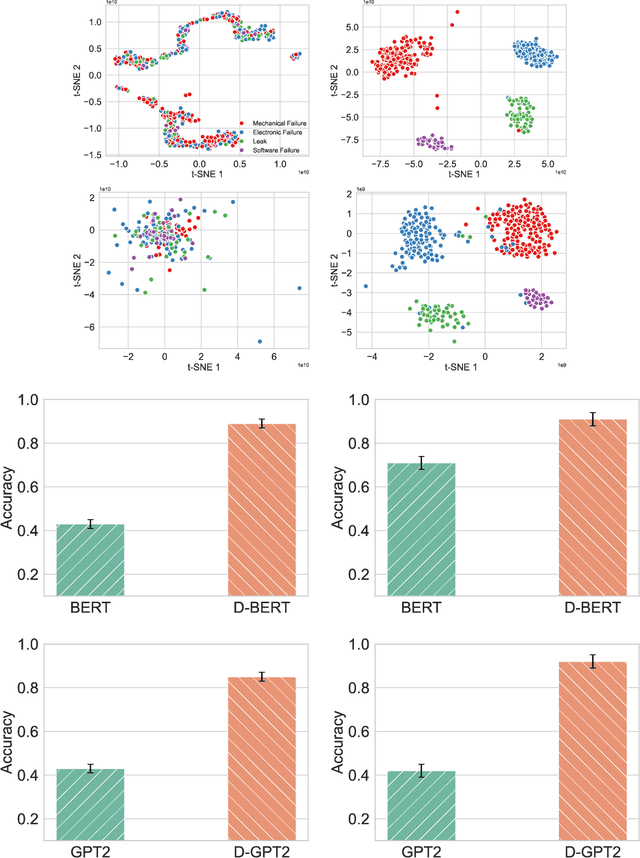
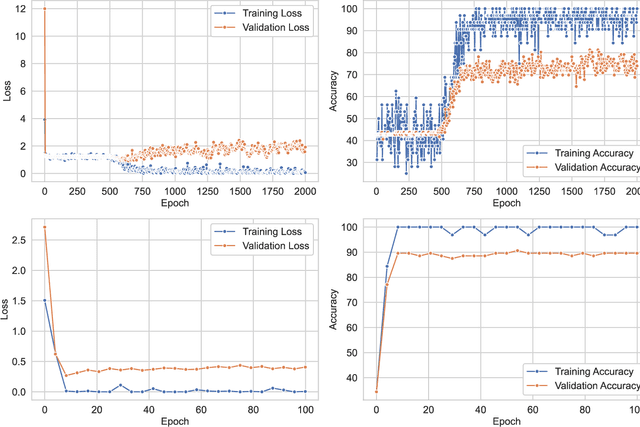
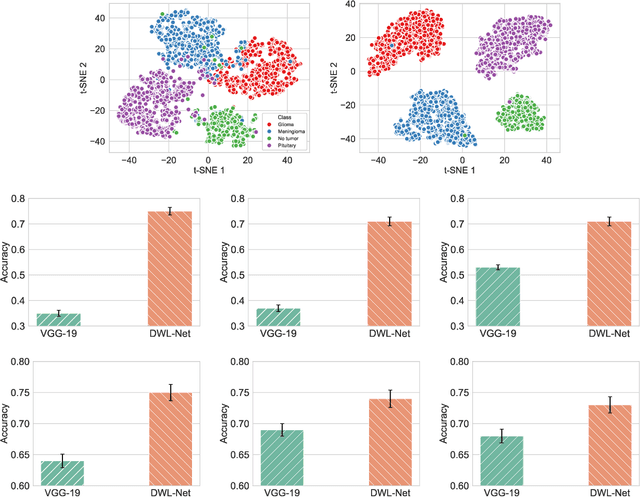
Advancements in deep learning are revolutionizing science and engineering. The immense success of deep learning is largely due to its ability to extract essential high-dimensional (HD) features from input data and make inference decisions based on this information. However, current deep neural network (DNN) models face several challenges, such as the requirements of extensive amounts of data and computational resources. Here, we introduce a new learning scheme, referred to as deep-and-wide learning (DWL), to systematically capture features not only within individual input data (intra-data features) but also across the data (inter-data features). Furthermore, we propose a dual-interactive-channel network (D-Net) to realize the DWL, which leverages our Bayesian formulation of low-dimensional (LD) inter-data feature extraction and its synergistic interaction with the conventional HD representation of the dataset, for substantially enhanced computational efficiency and inference. The proposed technique has been applied to data across various disciplines for both classification and regression tasks. Our results demonstrate that DWL surpasses state-of-the-art DNNs in accuracy by a substantial margin with limited training data and improves the computational efficiency by order(s) of magnitude. The proposed DWL strategy dramatically alters the data-driven learning techniques, including emerging large foundation models, and sheds significant insights into the evolving field of AI.
Discovering distinctive elements of biomedical datasets for high-performance exploration
Oct 07, 2024
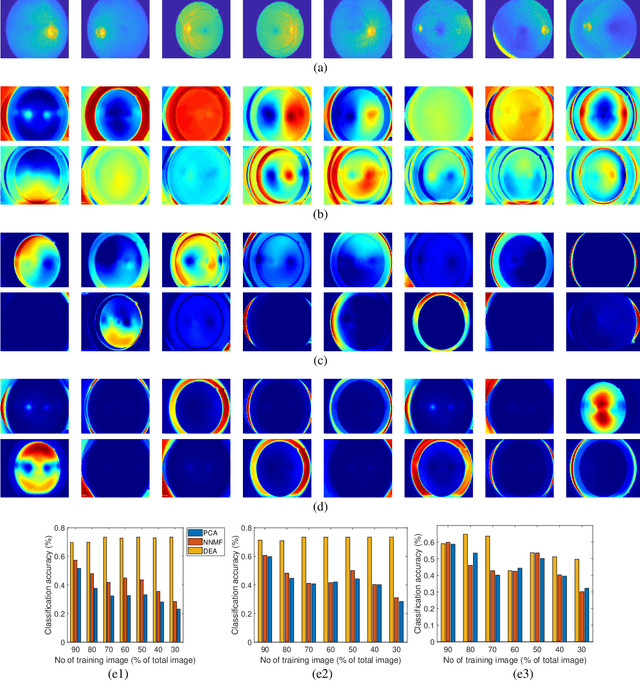
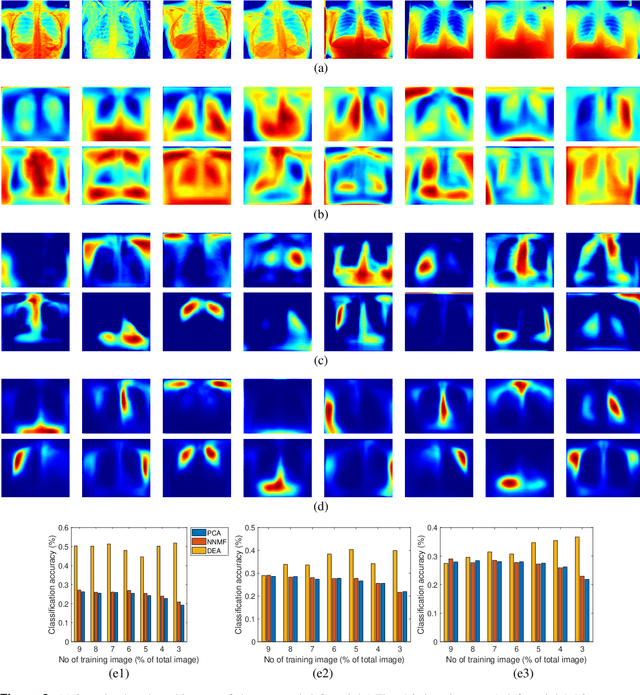
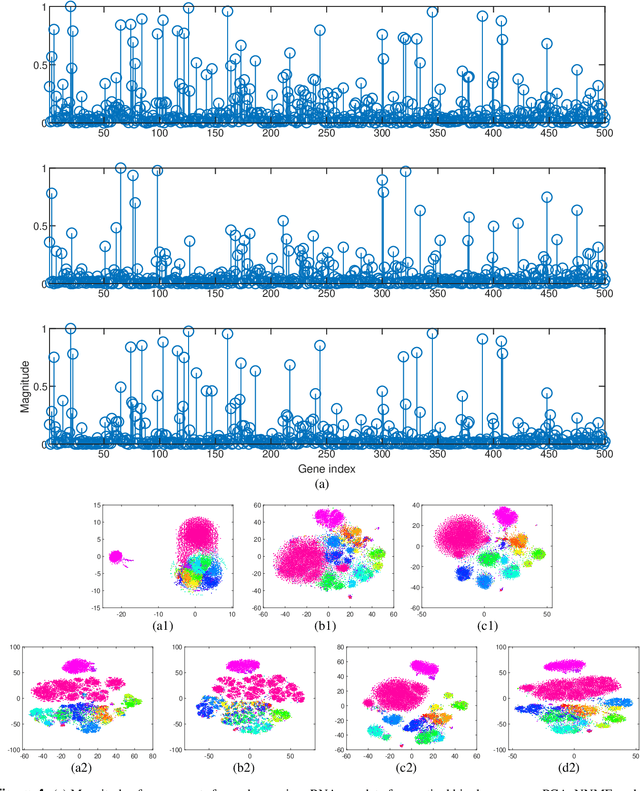
The human brain represents an object by small elements and distinguishes two objects based on the difference in elements. Discovering the distinctive elements of high-dimensional datasets is therefore critical in numerous perception-driven biomedical and clinical studies. However, currently there is no available method for reliable extraction of distinctive elements of high-dimensional biomedical and clinical datasets. Here we present an unsupervised deep learning technique namely distinctive element analysis (DEA), which extracts the distinctive data elements using high-dimensional correlative information of the datasets. DEA at first computes a large number of distinctive parts of the data, then filters and condenses the parts into DEA elements by employing a unique kernel-driven triple-optimization network. DEA has been found to improve the accuracy by up to 45% in comparison to the traditional techniques in applications such as disease detection from medical images, gene ranking and cell recognition from single cell RNA sequence (scRNA-seq) datasets. Moreover, DEA allows user-guided manipulation of the intermediate calculation process and thus offers intermediate results with better interpretability.
A Hybrid Deep Feature-Based Deformable Image Registration Method for Pathological Images
Aug 17, 2022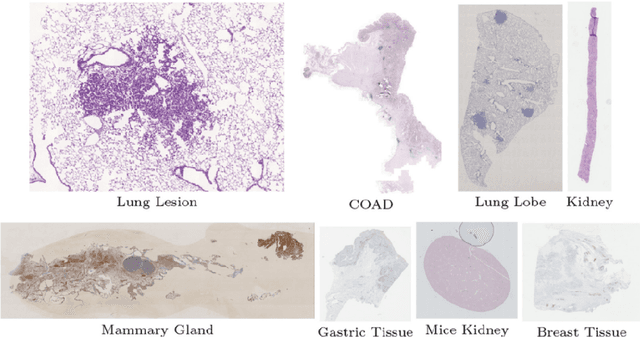
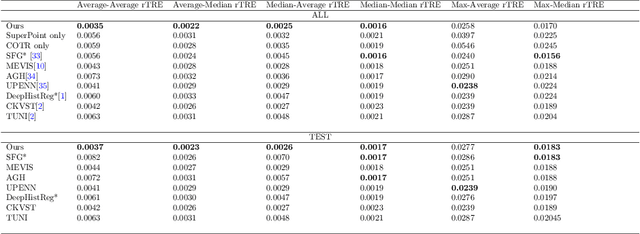
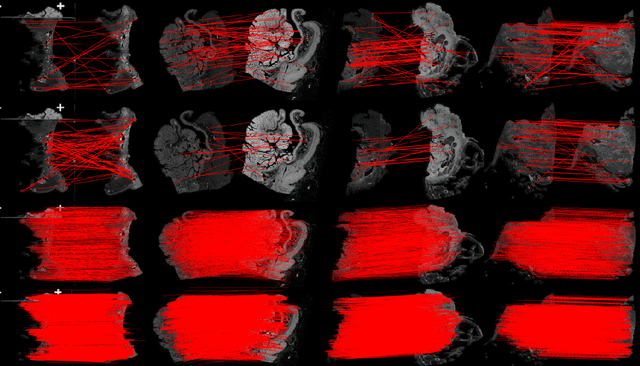
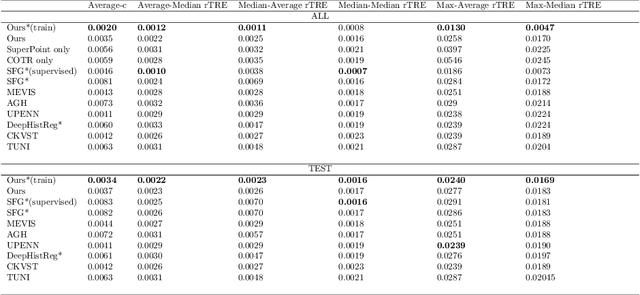
Pathologists need to combine information from differently stained pathological slices to obtain accurate diagnostic results. Deformable image registration is a necessary technique for fusing multi-modal pathological slices. This paper proposes a hybrid deep feature-based deformable image registration framework for stained pathological samples. We first extract dense feature points and perform points matching by two deep learning feature networks. Then, to further reduce false matches, an outlier detection method combining the isolation forest statistical model and the local affine correction model is proposed. Finally, the interpolation method generates the DVF for pathology image registration based on the above matching points. We evaluate our method on the dataset of the Non-rigid Histology Image Registration (ANHIR) challenge, which is co-organized with the IEEE ISBI 2019 conference. Our technique outperforms the traditional approaches by 17% with the Average-Average registration target error (rTRE) reaching 0.0034. The proposed method achieved state-of-the-art performance and ranking it 1 in evaluating the test dataset. The proposed hybrid deep feature-based registration method can potentially become a reliable method for pathology image registration.
Learning Treatment Plan Representations for Content Based Image Retrieval
Jun 06, 2022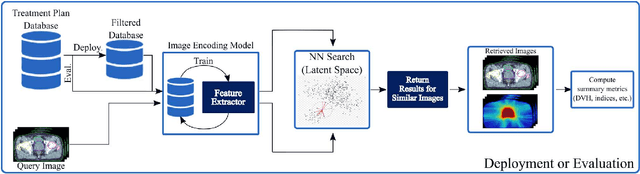
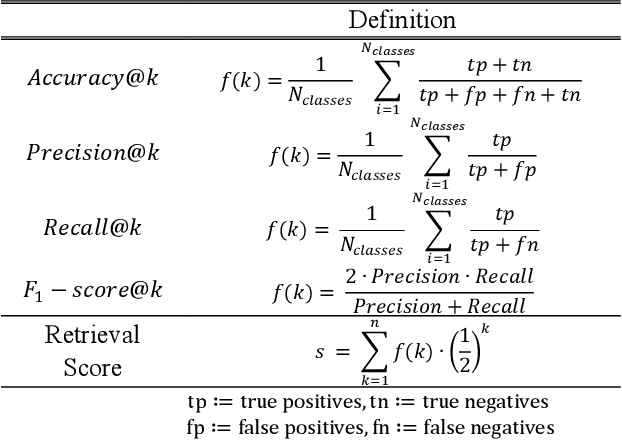
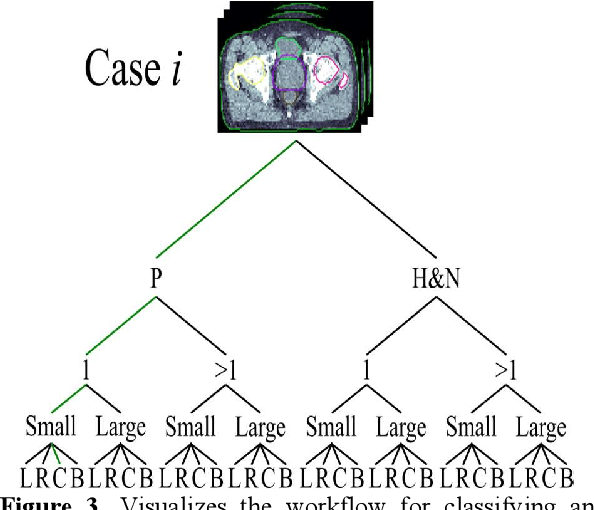
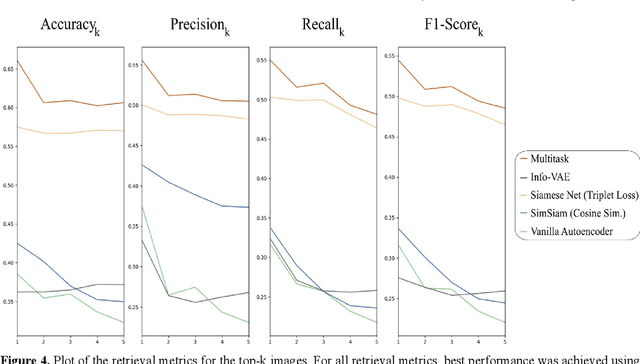
Objective: Knowledge based planning (KBP) typically involves training an end-to-end deep learning model to predict dose distributions. However, training end-to-end KBP methods may be associated with practical limitations due to the limited size of medical datasets that are often used. To address these limitations, we propose a content based image retrieval (CBIR) method for retrieving dose distributions of previously planned patients based on anatomical similarity. Approach: Our proposed CBIR method trains a representation model that produces latent space embeddings of a patient's anatomical information. The latent space embeddings of new patients are then compared against those of previous patients in a database for image retrieval of dose distributions. Summary metrics (e.g. dose-volume histogram, conformity index, homogeneity index, etc.) are computed and can then be utilized in subsequent automated planning. All source code for this project is available on github. Main Results: The retrieval performance of various CBIR methods is evaluated on a dataset consisting of both publicly available plans and clinical plans from our institution. This study compares various encoding methods, ranging from simple autoencoders to more recent Siamese networks like SimSiam, and the best performance was observed for the multitask Siamese network. Significance: Applying CBIR to inform subsequent treatment planning potentially addresses many limitations associated with end-to-end KBP. Our current results demonstrate that excellent image retrieval performance can be obtained through slight changes to previously developed Siamese networks. We hope to integrate CBIR into automated planning workflow in future works, potentially through methods like the MetaPlanner framework.