 Add to Chrome
 Add to Firefox
 Add to Edge
SpikeGS: Reconstruct 3D scene via fast-moving bio-inspired sensors
Jul 04, 2024
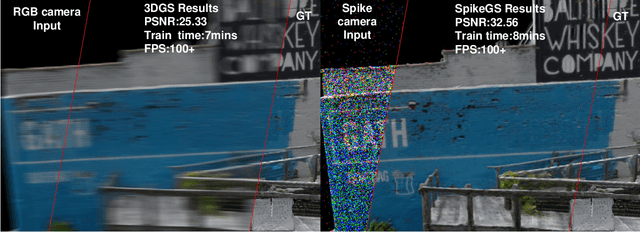
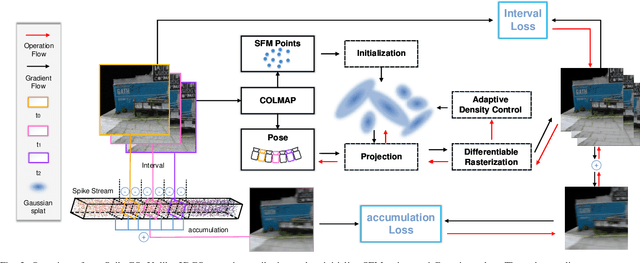
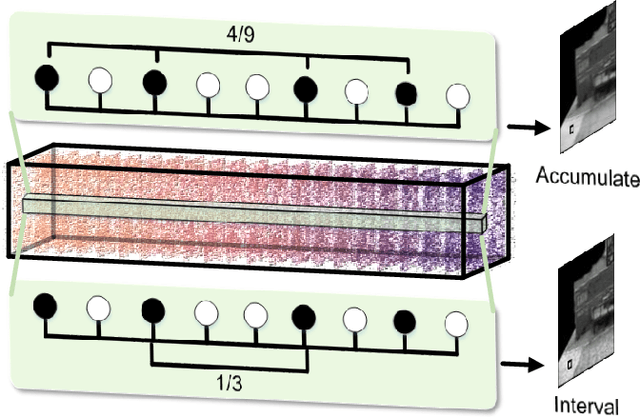
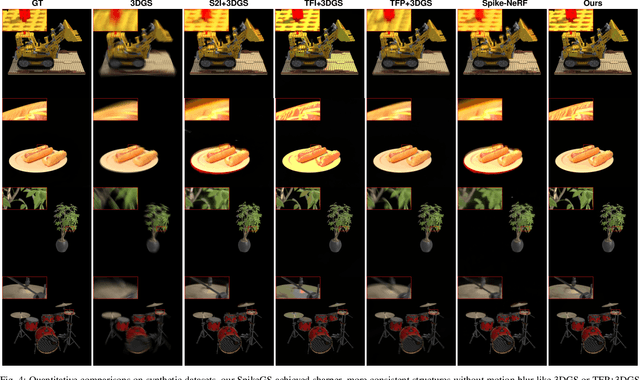
3D Gaussian Splatting (3DGS) demonstrates unparalleled superior performance in 3D scene reconstruction. However, 3DGS heavily relies on the sharp images. Fulfilling this requirement can be challenging in real-world scenarios especially when the camera moves fast, which severely limits the application of 3DGS. To address these challenges, we proposed Spike Gausian Splatting (SpikeGS), the first framework that integrates the spike streams into 3DGS pipeline to reconstruct 3D scenes via a fast-moving bio-inspired camera. With accumulation rasterization, interval supervision, and a specially designed pipeline, SpikeGS extracts detailed geometry and texture from high temporal resolution but texture lacking spike stream, reconstructs 3D scenes captured in 1 second. Extensive experiments on multiple synthetic and real-world datasets demonstrate the superiority of SpikeGS compared with existing spike-based and deblur 3D scene reconstruction methods. Codes and data will be released soon.

Embedded Prompt Tuning: Towards Enhanced Calibration of Pretrained Models for Medical Images
Jul 02, 2024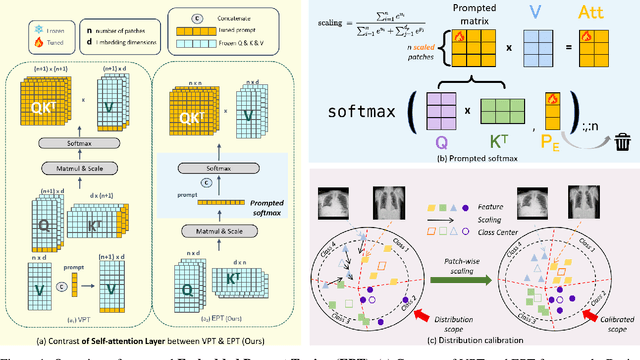
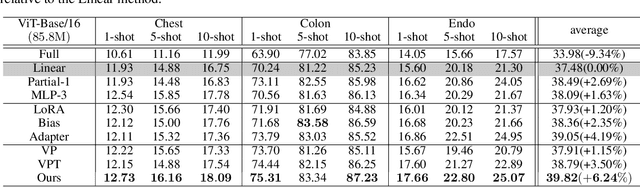
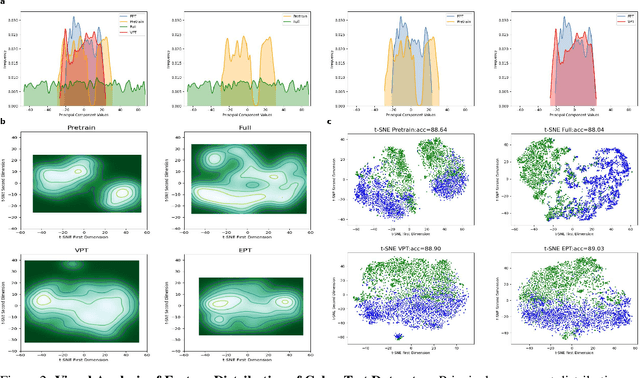
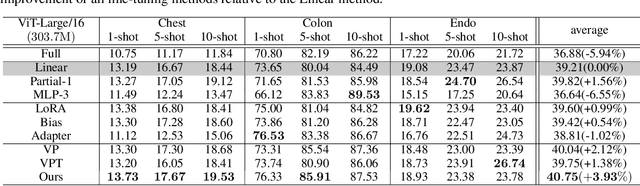
Foundation models pre-trained on large-scale data have been widely witnessed to achieve success in various natural imaging downstream tasks. Parameter-efficient fine-tuning (PEFT) methods aim to adapt foundation models to new domains by updating only a small portion of parameters in order to reduce computational overhead. However, the effectiveness of these PEFT methods, especially in cross-domain few-shot scenarios, e.g., medical image analysis, has not been fully explored. In this work, we facilitate the study of the performance of PEFT when adapting foundation models to medical image classification tasks. Furthermore, to alleviate the limitations of prompt introducing ways and approximation capabilities on Transformer architectures of mainstream prompt tuning methods, we propose the Embedded Prompt Tuning (EPT) method by embedding prompt tokens into the expanded channels. We also find that there are anomalies in the feature space distribution of foundation models during pre-training process, and prompt tuning can help mitigate this negative impact. To explain this phenomenon, we also introduce a novel perspective to understand prompt tuning: Prompt tuning is a distribution calibrator. And we support it by analyzing patch-wise scaling and feature separation operations contained in EPT. Our experiments show that EPT outperforms several state-of-the-art fine-tuning methods by a significant margin on few-shot medical image classification tasks, and completes the fine-tuning process within highly competitive time, indicating EPT is an effective PEFT method. The source code is available at github.com/zuwenqiang/EPT.
Correspondence-Free Non-Rigid Point Set Registration Using Unsupervised Clustering Analysis
Jun 27, 2024This paper presents a novel non-rigid point set registration method that is inspired by unsupervised clustering analysis. Unlike previous approaches that treat the source and target point sets as separate entities, we develop a holistic framework where they are formulated as clustering centroids and clustering members, separately. We then adopt Tikhonov regularization with an $\ell_1$-induced Laplacian kernel instead of the commonly used Gaussian kernel to ensure smooth and more robust displacement fields. Our formulation delivers closed-form solutions, theoretical guarantees, independence from dimensions, and the ability to handle large deformations. Subsequently, we introduce a clustering-improved Nystr\"om method to effectively reduce the computational complexity and storage of the Gram matrix to linear, while providing a rigorous bound for the low-rank approximation. Our method achieves high accuracy results across various scenarios and surpasses competitors by a significant margin, particularly on shapes with substantial deformations. Additionally, we demonstrate the versatility of our method in challenging tasks such as shape transfer and medical registration.
GenSafe: A Generalizable Safety Enhancer for Safe Reinforcement Learning Algorithms Based on Reduced Order Markov Decision Process Model
Jun 06, 2024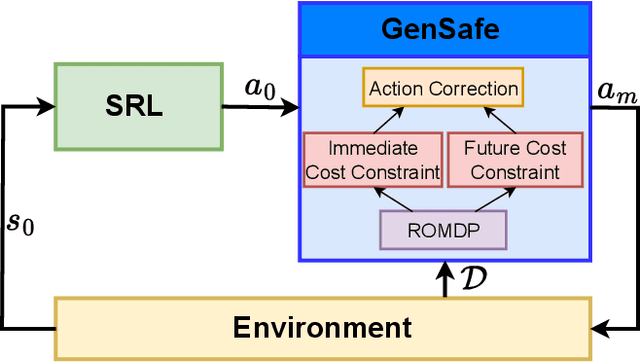
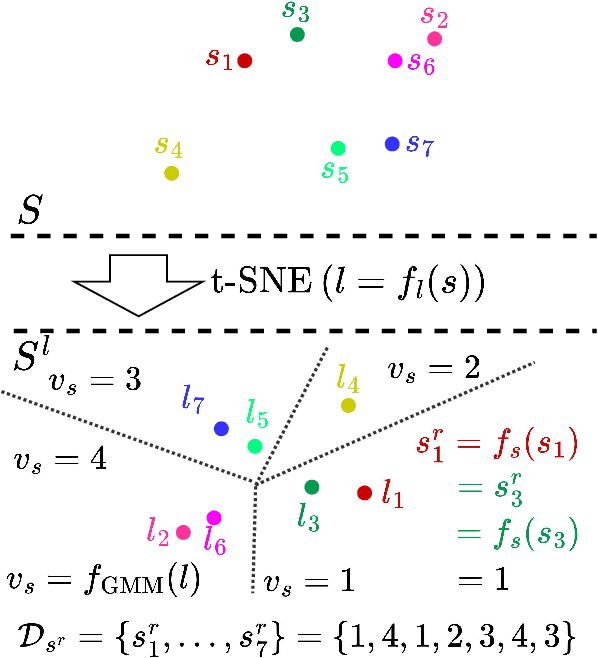
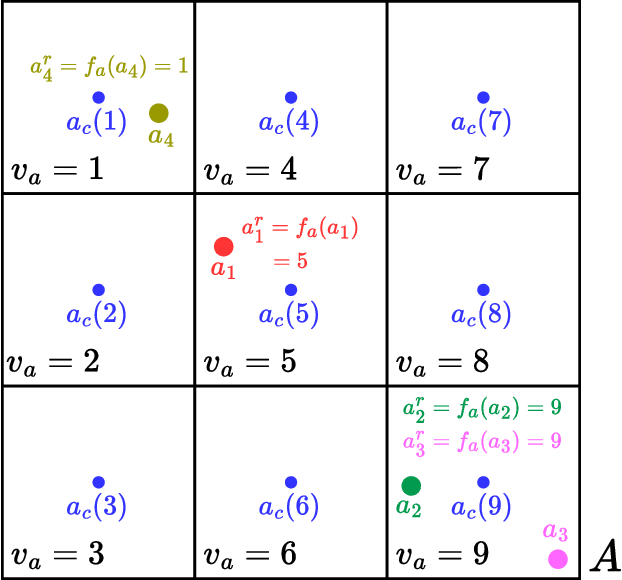
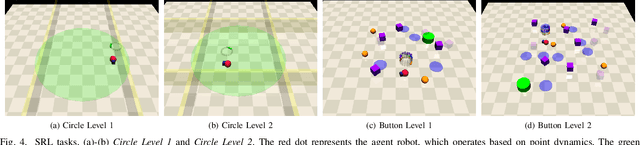
Although deep reinforcement learning has demonstrated impressive achievements in controlling various autonomous systems, e.g., autonomous vehicles or humanoid robots, its inherent reliance on random exploration raises safety concerns in their real-world applications. To improve system safety during the learning process, a variety of Safe Reinforcement Learning (SRL) algorithms have been proposed, which usually incorporate safety constraints within the Constrained Markov Decision Process (CMDP) framework. However, the efficacy of these SRL algorithms often relies on accurate function approximations, a task that is notably challenging to accomplish in the early learning stages due to data insufficiency. To address this problem, we introduce a Genralizable Safety enhancer (GenSafe) in this work. Leveraging model order reduction techniques, we first construct a Reduced Order Markov Decision Process (ROMDP) as a low-dimensional proxy for the original cost function in CMDP. Then, by solving ROMDP-based constraints that are reformulated from the original cost constraints, the proposed GenSafe refines the actions taken by the agent to enhance the possibility of constraint satisfaction. Essentially, GenSafe acts as an additional safety layer for SRL algorithms, offering broad compatibility across diverse SRL approaches. The performance of GenSafe is examined on multiple SRL benchmark problems. The results show that, it is not only able to improve the safety performance, especially in the early learning phases, but also to maintain the task performance at a satisfactory level.
SCSim: A Realistic Spike Cameras Simulator
May 27, 2024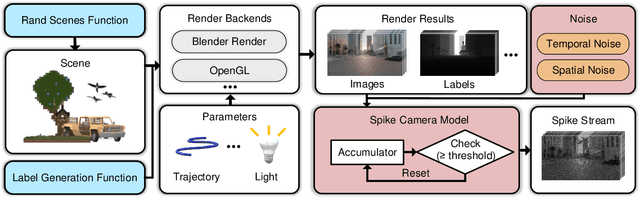
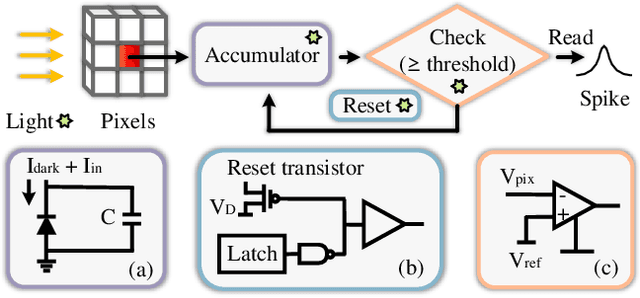
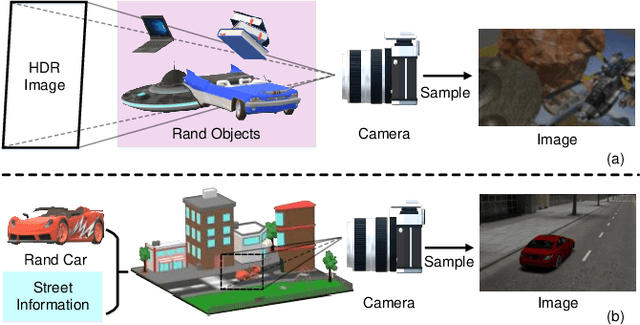
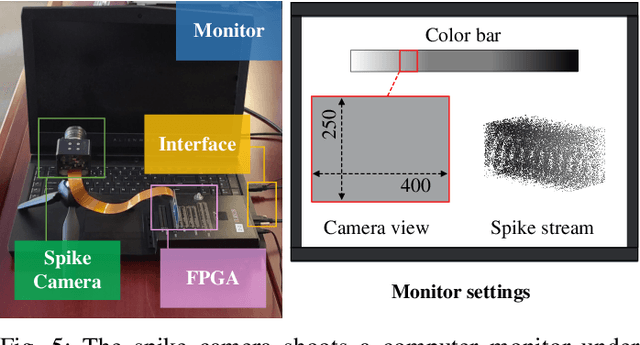
Spike cameras, with their exceptional temporal resolution, are revolutionizing high-speed visual applications. Large-scale synthetic datasets have significantly accelerated the development of these cameras, particularly in reconstruction and optical flow. However, current synthetic datasets for spike cameras lack sophistication. Addressing this gap, we introduce SCSim, a novel and more realistic spike camera simulator with a comprehensive noise model. SCSim is adept at autonomously generating driving scenarios and synthesizing corresponding spike streams. To enhance the fidelity of these streams, we've developed a comprehensive noise model tailored to the unique circuitry of spike cameras. Our evaluations demonstrate that SCSim outperforms existing simulation methods in generating authentic spike streams. Crucially, SCSim simplifies the creation of datasets, thereby greatly advancing spike-based visual tasks like reconstruction. Our project refers to https://github.com/Acnext/SCSim.
GMP-ATL: Gender-augmented Multi-scale Pseudo-label Enhanced Adaptive Transfer Learning for Speech Emotion Recognition via HuBERT
May 03, 2024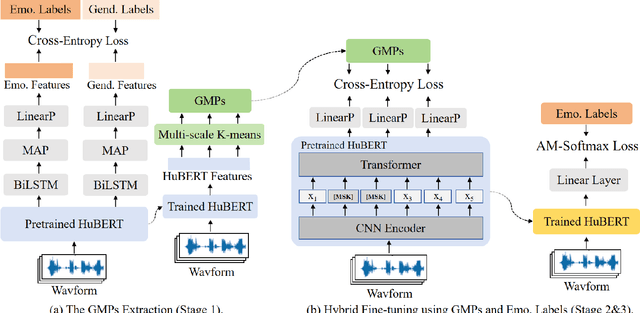
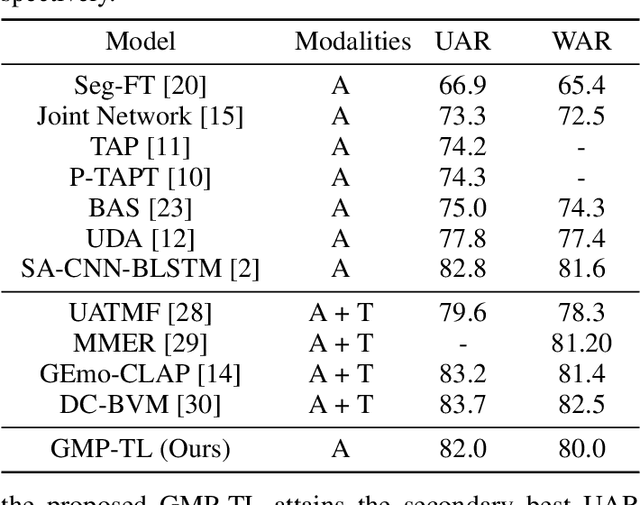
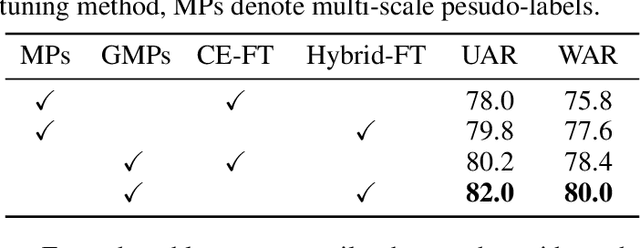
The continuous evolution of pre-trained speech models has greatly advanced Speech Emotion Recognition (SER). However, there is still potential for enhancement in the performance of these methods. In this paper, we present GMP-ATL (Gender-augmented Multi-scale Pseudo-label Adaptive Transfer Learning), a novel HuBERT-based adaptive transfer learning framework for SER. Specifically, GMP-ATL initially employs the pre-trained HuBERT, implementing multi-task learning and multi-scale k-means clustering to acquire frame-level gender-augmented multi-scale pseudo-labels. Then, to fully leverage both obtained frame-level and utterance-level emotion labels, we incorporate model retraining and fine-tuning methods to further optimize GMP-ATL. Experiments on IEMOCAP show that our GMP-ATL achieves superior recognition performance, with a WAR of 80.0\% and a UAR of 82.0\%, surpassing state-of-the-art unimodal SER methods, while also yielding comparable results with multimodal SER approaches.
CodeHalu: Code Hallucinations in LLMs Driven by Execution-based Verification
Apr 30, 2024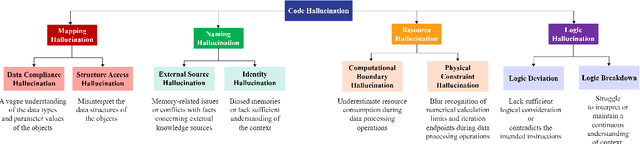
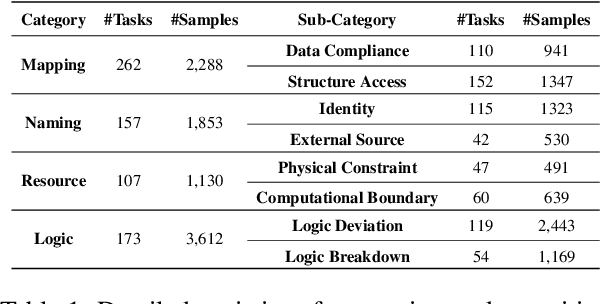
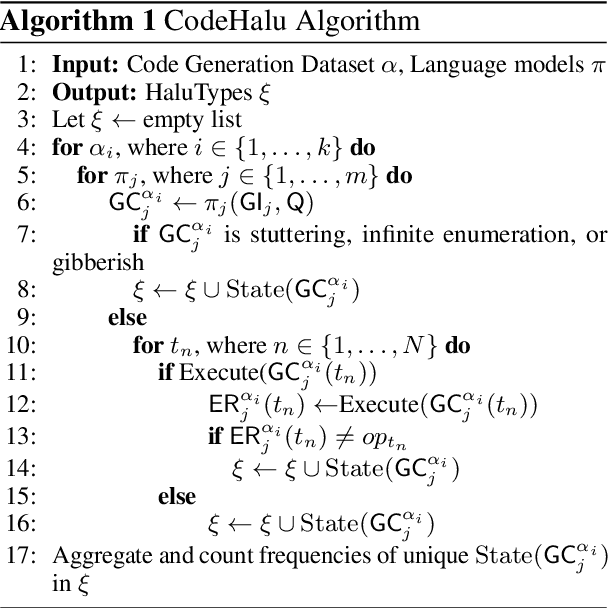
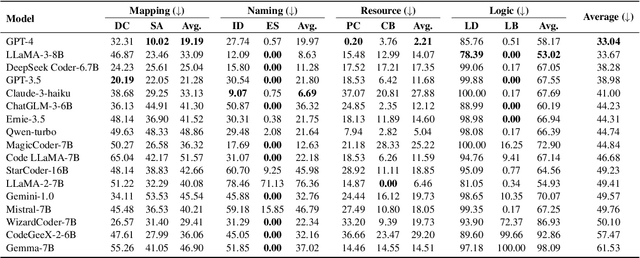
Large Language Models (LLMs) have made significant advancements in the field of code generation, offering unprecedented support for automated programming and assisting developers. However, LLMs sometimes generate code that appears plausible but fails to meet the expected requirements or executes incorrectly. This phenomenon of hallucinations in the coding field has not been explored. To advance the community's understanding and research on code hallucinations in LLMs, we propose a definition method for these hallucinations based on execution verification and introduce the concept of code hallucinations for the first time. We categorize code hallucinations into four main types: mapping, naming, resource, and logic hallucinations, each further divided into different subcategories to better understand and address the unique challenges faced by LLMs during code generation. To systematically evaluate code hallucinations, we propose a dynamic detection algorithm for code hallucinations and construct the CodeHalu benchmark, which includes 8,883 samples from 699 tasks, to actively detect hallucination phenomena in LLMs during programming. We tested 16 popular LLMs on this benchmark to evaluate the frequency and nature of their hallucinations during code generation. The findings reveal significant variations in the accuracy and reliability of LLMs in generating code, highlighting the urgent need to improve models and training methods to ensure the functional correctness and safety of automatically generated code. This study not only classifies and quantifies code hallucinations but also provides insights for future improvements in LLM-based code generation research. The CodeHalu benchmark and code are publicly available at https://github.com/yuchen814/CodeHalu.
DPGAN: A Dual-Path Generative Adversarial Network for Missing Data Imputation in Graphs
Apr 26, 2024Missing data imputation poses a paramount challenge when dealing with graph data. Prior works typically are based on feature propagation or graph autoencoders to address this issue. However, these methods usually encounter the over-smoothing issue when dealing with missing data, as the graph neural network (GNN) modules are not explicitly designed for handling missing data. This paper proposes a novel framework, called Dual-Path Generative Adversarial Network (DPGAN), that can deal simultaneously with missing data and avoid over-smoothing problems. The crux of our work is that it admits both global and local representations of the input graph signal, which can capture the long-range dependencies. It is realized via our proposed generator, consisting of two key components, i.e., MLPUNet++ and GraphUNet++. Our generator is trained with a designated discriminator via an adversarial process. In particular, to avoid assessing the entire graph as did in the literature, our discriminator focuses on the local subgraph fidelity, thereby boosting the quality of the local imputation. The subgraph size is adjustable, allowing for control over the intensity of adversarial regularization. Comprehensive experiments across various benchmark datasets substantiate that DPGAN consistently rivals, if not outperforms, existing state-of-the-art imputation algorithms. The code is provided at \url{https://github.com/momoxia/DPGAN}.
Enhancing Fault Detection for Large Language Models via Mutation-Based Confidence Smoothing
Apr 14, 2024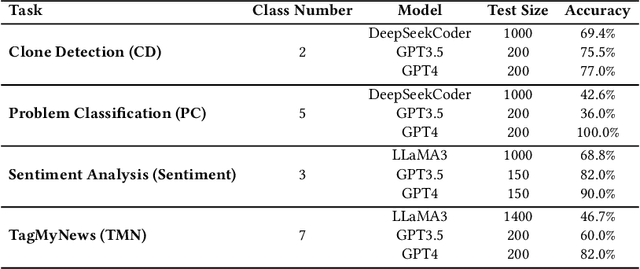
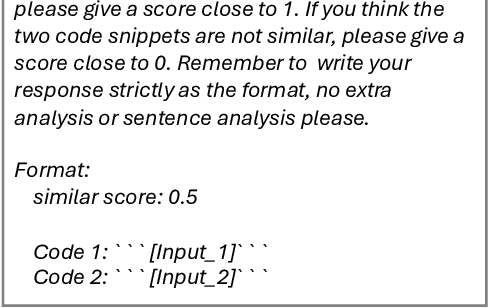
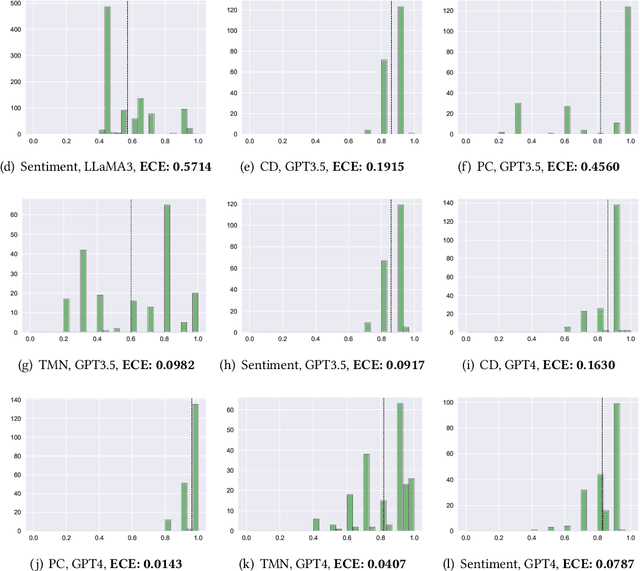
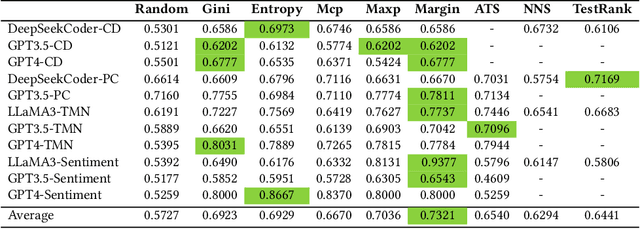
Large language models (LLMs) achieved great success in multiple application domains and attracted huge attention from different research communities recently. Unfortunately, even for the best LLM, there still exist many faults that LLM cannot correctly predict. Such faults will harm the usability of LLMs. How to quickly reveal them in LLMs is important, but challenging. The reasons are twofold, 1) the heavy labeling effort for preparing the test data, and 2) accessing closed-source LLMs such as GPT4 is money-required. To handle this problem, in the traditional deep learning testing field, test selection methods have been proposed for efficiently testing deep learning models by prioritizing faults. However, the usefulness of these methods on LLMs is unclear and under exploration. In this paper, we first study the effectiveness of existing fault detection methods for LLMs. Experimental results on four different tasks~(including both code tasks and natural language processing tasks) and four LLMs (e.g., LLaMA and GPT4) demonstrated that existing fault detection methods cannot perform well on LLMs (e.g., seven out of eight methods perform worse than random selection on LLaMA). To enhance existing fault detection methods, we propose MuCS, a prompt Mutation-based prediction Confidence Smoothing method for LLMs. Concretely, we mutate the prompts and compute the average prediction confidence of all mutants as the input of fault detection methods. The results show that our proposed solution significantly enhances existing methods with the improvement of test relative coverage by up to 97.64%.
PromptCodec: High-Fidelity Neural Speech Codec using Disentangled Representation Learning based Adaptive Feature-aware Prompt Encoders
Apr 13, 2024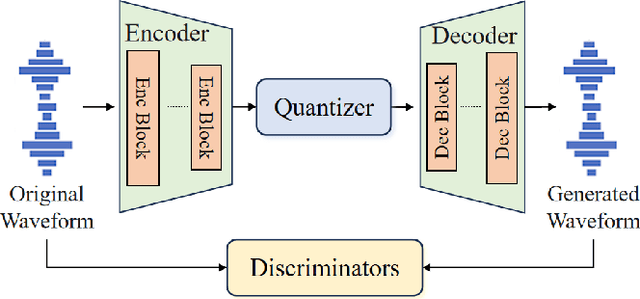
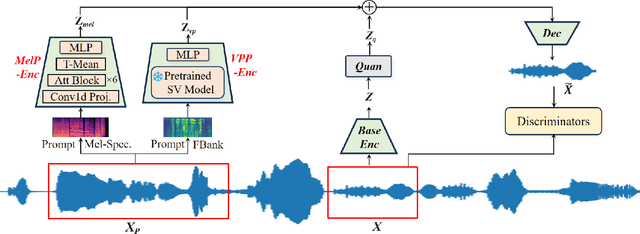
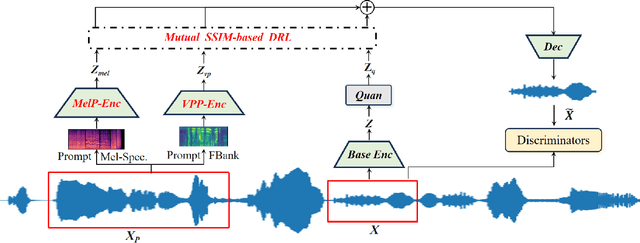
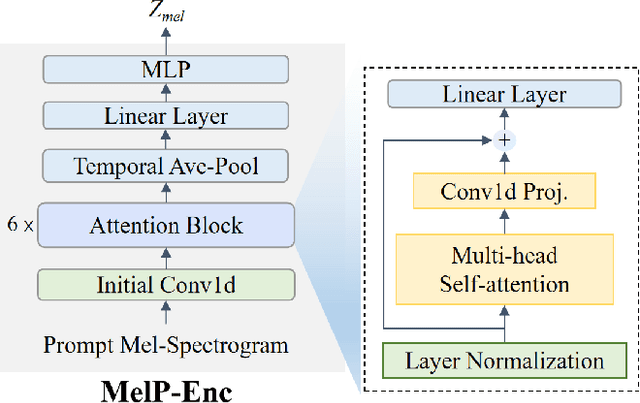
Neural speech codec has recently gained widespread attention in generative speech modeling domains, like voice conversion, text-to-speech synthesis, etc. However, ensuring high-fidelity audio reconstruction of speech codecs under low bitrate remains an open and challenging issue. In this paper, we propose PromptCodec, a novel end-to-end neural speech codec using feature-aware prompt encoders based on disentangled representation learning. By incorporating prompt encoders to capture representations of additional input prompts, PromptCodec can distribute the speech information requiring processing and enhance its representation capabilities. Moreover, a simple yet effective adaptive feature weighted fusion approach is introduced to integrate features of different encoders. Meanwhile, we propose a novel disentangled representation learning strategy based on structure similarity index measure to optimize PromptCodec's encoders to ensure their efficiency, thereby further improving the performance of PromptCodec. Experiments on LibriTTS demonstrate that our proposed PromptCodec consistently outperforms state-of-the-art neural speech codec models under all different bitrate conditions while achieving superior performance with low bitrates.