 Add to Chrome
 Add to Firefox
 Add to Edge
Memory Retrieval in Transformers: Insights from The Encoding Specificity Principle
Jan 28, 2026
While explainable artificial intelligence (XAI) for large language models (LLMs) remains an evolving field with many unresolved questions, increasing regulatory pressures have spurred interest in its role in ensuring transparency, accountability, and privacy-preserving machine unlearning. Despite recent advances in XAI have provided some insights, the specific role of attention layers in transformer based LLMs remains underexplored. This study investigates the memory mechanisms instantiated by attention layers, drawing on prior research in psychology and computational psycholinguistics that links Transformer attention to cue based retrieval in human memory. In this view, queries encode the retrieval context, keys index candidate memory traces, attention weights quantify cue trace similarity, and values carry the encoded content, jointly enabling the construction of a context representation that precedes and facilitates memory retrieval. Guided by the Encoding Specificity Principle, we hypothesize that the cues used in the initial stage of retrieval are instantiated as keywords. We provide converging evidence for this keywords-as-cues hypothesis. In addition, we isolate neurons within attention layers whose activations selectively encode and facilitate the retrieval of context-defining keywords. Consequently, these keywords can be extracted from identified neurons and further contribute to downstream applications such as unlearning.

SHIELD: An Auto-Healing Agentic Defense Framework for LLM Resource Exhaustion Attacks
Jan 27, 2026Sponge attacks increasingly threaten LLM systems by inducing excessive computation and DoS. Existing defenses either rely on statistical filters that fail on semantically meaningful attacks or use static LLM-based detectors that struggle to adapt as attack strategies evolve. We introduce SHIELD, a multi-agent, auto-healing defense framework centered on a three-stage Defense Agent that integrates semantic similarity retrieval, pattern matching, and LLM-based reasoning. Two auxiliary agents, a Knowledge Updating Agent and a Prompt Optimization Agent, form a closed self-healing loop, when an attack bypasses detection, the system updates an evolving knowledgebase, and refines defense instructions. Extensive experiments show that SHIELD consistently outperforms perplexity-based and standalone LLM defenses, achieving high F1 scores across both non-semantic and semantic sponge attacks, demonstrating the effectiveness of agentic self-healing against evolving resource-exhaustion threats.
Prompt-Induced Over-Generation as Denial-of-Service: A Black-Box Attack-Side Benchmark
Dec 29, 2025Large language models (LLMs) can be driven into over-generation, emitting thousands of tokens before producing an end-of-sequence (EOS) token. This degrades answer quality, inflates latency and cost, and can be weaponized as a denial-of-service (DoS) attack. Recent work has begun to study DoS-style prompt attacks, but typically focuses on a single attack algorithm or assumes white-box access, without an attack-side benchmark that compares prompt-based attackers in a black-box, query-only regime with a known tokenizer. We introduce such a benchmark and study two prompt-only attackers. The first is Evolutionary Over-Generation Prompt Search (EOGen), which searches the token space for prefixes that suppress EOS and induce long continuations. The second is a goal-conditioned reinforcement learning attacker (RL-GOAL) that trains a network to generate prefixes conditioned on a target length. To characterize behavior, we introduce Over-Generation Factor (OGF), the ratio of produced tokens to a model's context window, along with stall and latency summaries. Our evolutionary attacker achieves mean OGF = 1.38 +/- 1.15 and Success@OGF >= 2 of 24.5 percent on Phi-3. RL-GOAL is stronger: across victims it achieves higher mean OGF (up to 2.81 +/- 1.38).
FedVideoMAE: Efficient Privacy-Preserving Federated Video Moderation
Dec 21, 2025


The rapid growth of short-form video platforms increases the need for privacy-preserving moderation, as cloud-based pipelines expose raw videos to privacy risks, high bandwidth costs, and inference latency. To address these challenges, we propose an on-device federated learning framework for video violence detection that integrates self-supervised VideoMAE representations, LoRA-based parameter-efficient adaptation, and defense-in-depth privacy protection. Our approach reduces the trainable parameter count to 5.5M (~3.5% of a 156M backbone) and incorporates DP-SGD with configurable privacy budgets and secure aggregation. Experiments on RWF-2000 with 40 clients achieve 77.25% accuracy without privacy protection and 65-66% under strong differential privacy, while reducing communication cost by $28.3\times$ compared to full-model federated learning. The code is available at: {https://github.com/zyt-599/FedVideoMAE}
A Multi-Drone Multi-View Dataset and Deep Learning Framework for Pedestrian Detection and Tracking
Nov 06, 2025Multi-drone surveillance systems offer enhanced coverage and robustness for pedestrian tracking, yet existing approaches struggle with dynamic camera positions and complex occlusions. This paper introduces MATRIX (Multi-Aerial TRacking In compleX environments), a comprehensive dataset featuring synchronized footage from eight drones with continuously changing positions, and a novel deep learning framework for multi-view detection and tracking. Unlike existing datasets that rely on static cameras or limited drone coverage, MATRIX provides a challenging scenario with 40 pedestrians and a significant architectural obstruction in an urban environment. Our framework addresses the unique challenges of dynamic drone-based surveillance through real-time camera calibration, feature-based image registration, and multi-view feature fusion in bird's-eye-view (BEV) representation. Experimental results demonstrate that while static camera methods maintain over 90\% detection and tracking precision and accuracy metrics in a simplified MATRIX environment without an obstruction, 10 pedestrians and a much smaller observational area, their performance significantly degrades in the complex environment. Our proposed approach maintains robust performance with $\sim$90\% detection and tracking accuracy, as well as successfully tracks $\sim$80\% of trajectories under challenging conditions. Transfer learning experiments reveal strong generalization capabilities, with the pretrained model achieving much higher detection and tracking accuracy performance compared to training the model from scratch. Additionally, systematic camera dropout experiments reveal graceful performance degradation, demonstrating practical robustness for real-world deployments where camera failures may occur. The MATRIX dataset and framework provide essential benchmarks for advancing dynamic multi-view surveillance systems.
Personalizing Federated Learning for Hierarchical Edge Networks with Non-IID Data
Apr 11, 2025Accommodating edge networks between IoT devices and the cloud server in Hierarchical Federated Learning (HFL) enhances communication efficiency without compromising data privacy. However, devices connected to the same edge often share geographic or contextual similarities, leading to varying edge-level data heterogeneity with different subsets of labels per edge, on top of device-level heterogeneity. This hierarchical non-Independent and Identically Distributed (non-IID) nature, which implies that each edge has its own optimization goal, has been overlooked in HFL research. Therefore, existing edge-accommodated HFL demonstrates inconsistent performance across edges in various hierarchical non-IID scenarios. To ensure robust performance with diverse edge-level non-IID data, we propose a Personalized Hierarchical Edge-enabled Federated Learning (PHE-FL), which personalizes each edge model to perform well on the unique class distributions specific to each edge. We evaluated PHE-FL across 4 scenarios with varying levels of edge-level non-IIDness, with extreme IoT device level non-IIDness. To accurately assess the effectiveness of our personalization approach, we deployed test sets on each edge server instead of the cloud server, and used both balanced and imbalanced test sets. Extensive experiments show that PHE-FL achieves up to 83 percent higher accuracy compared to existing federated learning approaches that incorporate edge networks, given the same number of training rounds. Moreover, PHE-FL exhibits improved stability, as evidenced by reduced accuracy fluctuations relative to the state-of-the-art FedAvg with two-level (edge and cloud) aggregation.
Resource-Efficient Multiview Perception: Integrating Semantic Masking with Masked Autoencoders
Oct 07, 2024


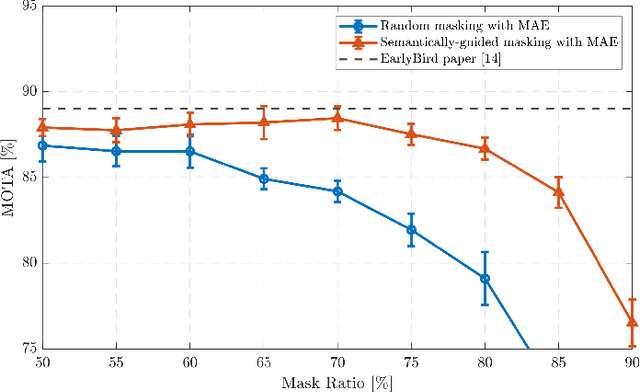
Multiview systems have become a key technology in modern computer vision, offering advanced capabilities in scene understanding and analysis. However, these systems face critical challenges in bandwidth limitations and computational constraints, particularly for resource-limited camera nodes like drones. This paper presents a novel approach for communication-efficient distributed multiview detection and tracking using masked autoencoders (MAEs). We introduce a semantic-guided masking strategy that leverages pre-trained segmentation models and a tunable power function to prioritize informative image regions. This approach, combined with an MAE, reduces communication overhead while preserving essential visual information. We evaluate our method on both virtual and real-world multiview datasets, demonstrating comparable performance in terms of detection and tracking performance metrics compared to state-of-the-art techniques, even at high masking ratios. Our selective masking algorithm outperforms random masking, maintaining higher accuracy and precision as the masking ratio increases. Furthermore, our approach achieves a significant reduction in transmission data volume compared to baseline methods, thereby balancing multiview tracking performance with communication efficiency.
CAFe: Cost and Age aware Federated Learning
May 24, 2024
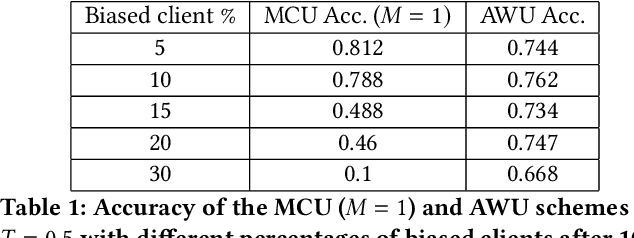
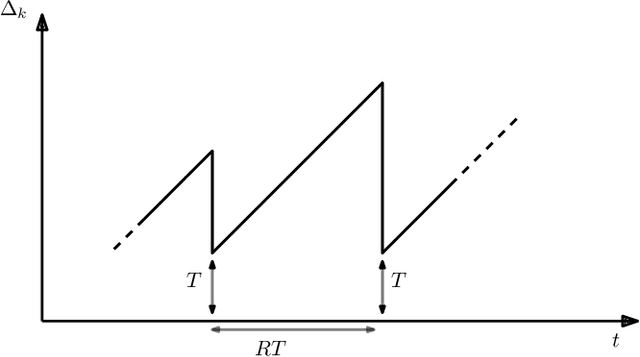
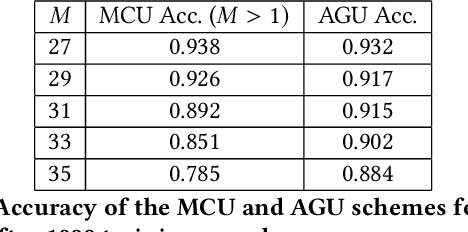
In many federated learning (FL) models, a common strategy employed to ensure the progress in the training process, is to wait for at least $M$ clients out of the total $N$ clients to send back their local gradients based on a reporting deadline $T$, once the parameter server (PS) has broadcasted the global model. If enough clients do not report back within the deadline, the particular round is considered to be a failed round and the training round is restarted from scratch. If enough clients have responded back, the round is deemed successful and the local gradients of all the clients that responded back are used to update the global model. In either case, the clients that failed to report back an update within the deadline would have wasted their computational resources. Having a tighter deadline (small $T$) and waiting for a larger number of participating clients (large $M$) leads to a large number of failed rounds and therefore greater communication cost and computation resource wastage. However, having a larger $T$ leads to longer round durations whereas smaller $M$ may lead to noisy gradients. Therefore, there is a need to optimize the parameters $M$ and $T$ such that communication cost and the resource wastage is minimized while having an acceptable convergence rate. In this regard, we show that the average age of a client at the PS appears explicitly in the theoretical convergence bound, and therefore, can be used as a metric to quantify the convergence of the global model. We provide an analytical scheme to select the parameters $M$ and $T$ in this setting.
The Frontier of Data Erasure: Machine Unlearning for Large Language Models
Mar 23, 2024Large Language Models (LLMs) are foundational to AI advancements, facilitating applications like predictive text generation. Nonetheless, they pose risks by potentially memorizing and disseminating sensitive, biased, or copyrighted information from their vast datasets. Machine unlearning emerges as a cutting-edge solution to mitigate these concerns, offering techniques for LLMs to selectively discard certain data. This paper reviews the latest in machine unlearning for LLMs, introducing methods for the targeted forgetting of information to address privacy, ethical, and legal challenges without necessitating full model retraining. It divides existing research into unlearning from unstructured/textual data and structured/classification data, showcasing the effectiveness of these approaches in removing specific data while maintaining model efficacy. Highlighting the practicality of machine unlearning, this analysis also points out the hurdles in preserving model integrity, avoiding excessive or insufficient data removal, and ensuring consistent outputs, underlining the role of machine unlearning in advancing responsible, ethical AI.
DiffPMAE: Diffusion Masked Autoencoders for Point Cloud Reconstruction
Dec 06, 2023
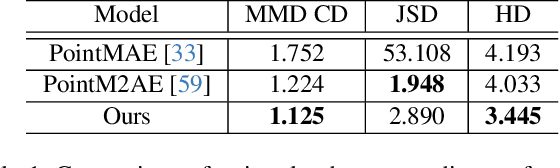

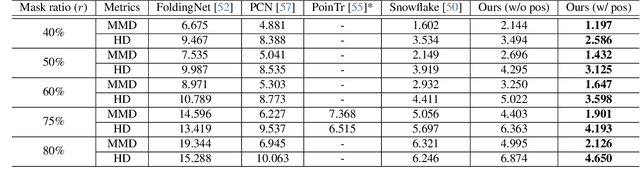
Point cloud streaming is increasingly getting popular, evolving into the norm for interactive service delivery and the future Metaverse. However, the substantial volume of data associated with point clouds presents numerous challenges, particularly in terms of high bandwidth consumption and large storage capacity. Despite various solutions proposed thus far, with a focus on point cloud compression, upsampling, and completion, these reconstruction-related methods continue to fall short in delivering high fidelity point cloud output. As a solution, in DiffPMAE, we propose an effective point cloud reconstruction architecture. Inspired by self-supervised learning concepts, we combine Masked Auto-Encoding and Diffusion Model mechanism to remotely reconstruct point cloud data. By the nature of this reconstruction process, DiffPMAE can be extended to many related downstream tasks including point cloud compression, upsampling and completion. Leveraging ShapeNet-55 and ModelNet datasets with over 60000 objects, we validate the performance of DiffPMAE exceeding many state-of-the-art methods in-terms of auto-encoding and downstream tasks considered.