 Add to Chrome
 Add to Firefox
 Add to Edge
Toward Real-Time Edge AI: Model-Agnostic Task-Oriented Communication with Visual Feature Alignment
Dec 01, 2024
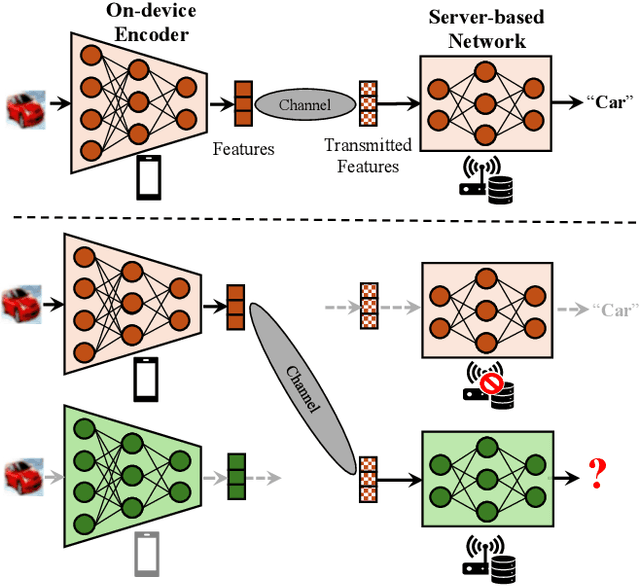
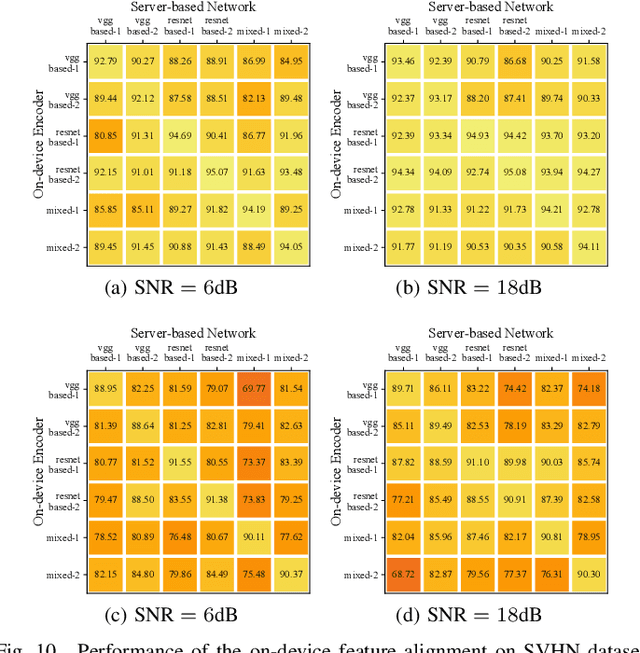
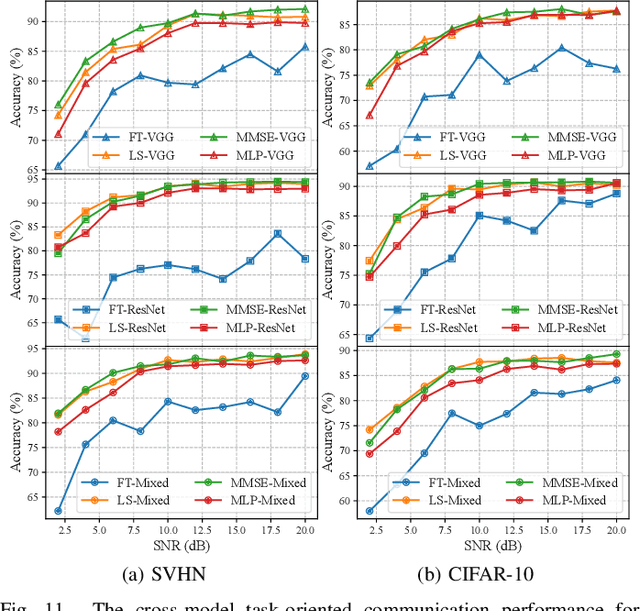
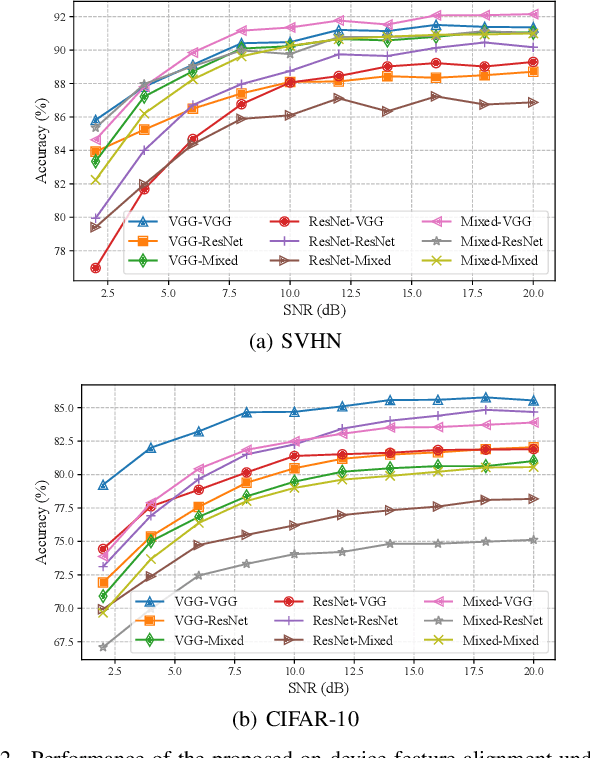
Task-oriented communication presents a promising approach to improve the communication efficiency of edge inference systems by optimizing learning-based modules to extract and transmit relevant task information. However, real-time applications face practical challenges, such as incomplete coverage and potential malfunctions of edge servers. This situation necessitates cross-model communication between different inference systems, enabling edge devices from one service provider to collaborate effectively with edge servers from another. Independent optimization of diverse edge systems often leads to incoherent feature spaces, which hinders the cross-model inference for existing task-oriented communication. To facilitate and achieve effective cross-model task-oriented communication, this study introduces a novel framework that utilizes shared anchor data across diverse systems. This approach addresses the challenge of feature alignment in both server-based and on-device scenarios. In particular, by leveraging the linear invariance of visual features, we propose efficient server-based feature alignment techniques to estimate linear transformations using encoded anchor data features. For on-device alignment, we exploit the angle-preserving nature of visual features and propose to encode relative representations with anchor data to streamline cross-model communication without additional alignment procedures during the inference. The experimental results on computer vision benchmarks demonstrate the superior performance of the proposed feature alignment approaches in cross-model task-oriented communications. The runtime and computation overhead analysis further confirm the effectiveness of the proposed feature alignment approaches in real-time applications.

SALMONN-omni: A Codec-free LLM for Full-duplex Speech Understanding and Generation
Nov 27, 2024
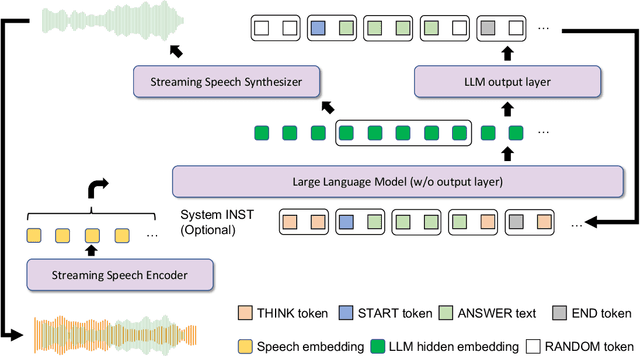


Full-duplex multimodal large language models (LLMs) provide a unified framework for addressing diverse speech understanding and generation tasks, enabling more natural and seamless human-machine conversations. Unlike traditional modularised conversational AI systems, which separate speech recognition, understanding, and text-to-speech generation into distinct components, multimodal LLMs operate as single end-to-end models. This streamlined design eliminates error propagation across components and fully leverages the rich non-verbal information embedded in input speech signals. We introduce SALMONN-omni, a codec-free, full-duplex speech understanding and generation model capable of simultaneously listening to its own generated speech and background sounds while speaking. To support this capability, we propose a novel duplex spoken dialogue framework incorporating a ``thinking'' mechanism that facilitates asynchronous text and speech generation relying on embeddings instead of codecs (quantized speech and audio tokens). Experimental results demonstrate SALMONN-omni's versatility across a broad range of streaming speech tasks, including speech recognition, speech enhancement, and spoken question answering. Additionally, SALMONN-omni excels at managing turn-taking, barge-in, and echo cancellation scenarios, establishing its potential as a robust prototype for full-duplex conversational AI systems. To the best of our knowledge, SALMONN-omni is the first codec-free model of its kind. A full technical report along with model checkpoints will be released soon.
Dynamics-Aware Gaussian Splatting Streaming Towards Fast On-the-Fly Training for 4D Reconstruction
Nov 22, 2024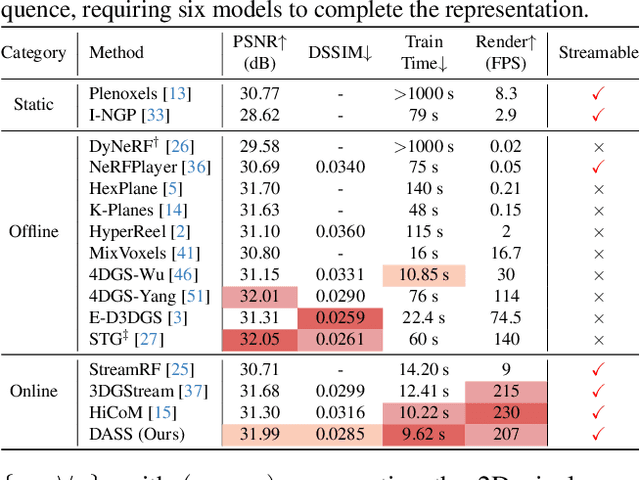
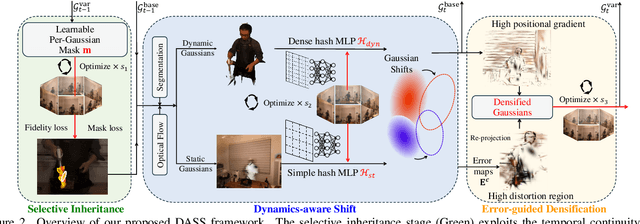
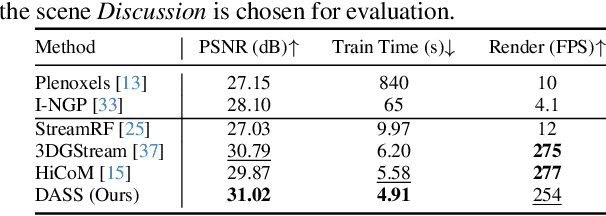
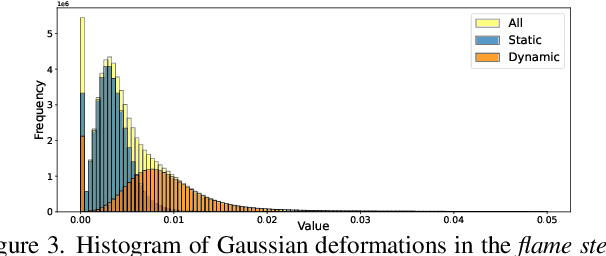
The recent development of 3D Gaussian Splatting (3DGS) has led to great interest in 4D dynamic spatial reconstruction from multi-view visual inputs. While existing approaches mainly rely on processing full-length multi-view videos for 4D reconstruction, there has been limited exploration of iterative online reconstruction methods that enable on-the-fly training and per-frame streaming. Current 3DGS-based streaming methods treat the Gaussian primitives uniformly and constantly renew the densified Gaussians, thereby overlooking the difference between dynamic and static features and also neglecting the temporal continuity in the scene. To address these limitations, we propose a novel three-stage pipeline for iterative streamable 4D dynamic spatial reconstruction. Our pipeline comprises a selective inheritance stage to preserve temporal continuity, a dynamics-aware shift stage for distinguishing dynamic and static primitives and optimizing their movements, and an error-guided densification stage to accommodate emerging objects. Our method achieves state-of-the-art performance in online 4D reconstruction, demonstrating a 20% improvement in on-the-fly training speed, superior representation quality, and real-time rendering capability. Project page: https://www.liuzhening.top/DASS
FairAdapter: Detecting AI-generated Images with Improved Fairness
Nov 22, 2024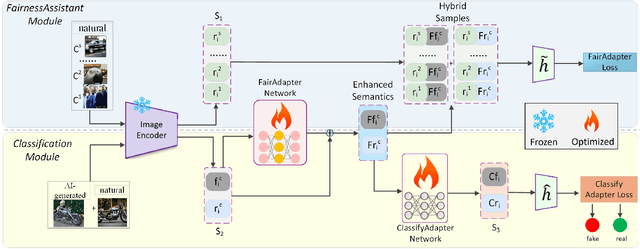
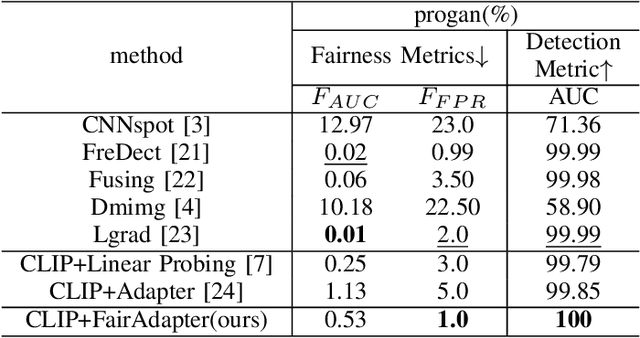
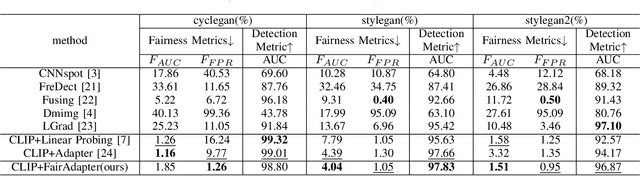

The high-quality, realistic images generated by generative models pose significant challenges for exposing them.So far, data-driven deep neural networks have been justified as the most efficient forensics tools for the challenges. However, they may be over-fitted to certain semantics, resulting in considerable inconsistency in detection performance across different contents of generated samples. It could be regarded as an issue of detection fairness. In this paper, we propose a novel framework named Fairadapter to tackle the issue. In comparison with existing state-of-the-art methods, our model achieves improved fairness performance. Our project: https://github.com/AppleDogDog/FairnessDetection
Federated Low-Rank Adaptation with Differential Privacy over Wireless Networks
Nov 12, 2024Fine-tuning large pre-trained foundation models (FMs) on distributed edge devices presents considerable computational and privacy challenges. Federated fine-tuning (FedFT) mitigates some privacy issues by facilitating collaborative model training without the need to share raw data. To lessen the computational burden on resource-limited devices, combining low-rank adaptation (LoRA) with federated learning enables parameter-efficient fine-tuning. Additionally, the split FedFT architecture partitions an FM between edge devices and a central server, reducing the necessity for complete model deployment on individual devices. However, the risk of privacy eavesdropping attacks in FedFT remains a concern, particularly in sensitive areas such as healthcare and finance. In this paper, we propose a split FedFT framework with differential privacy (DP) over wireless networks, where the inherent wireless channel noise in the uplink transmission is utilized to achieve DP guarantees without adding an extra artificial noise. We shall investigate the impact of the wireless noise on convergence performance of the proposed framework. We will also show that by updating only one of the low-rank matrices in the split FedFT with DP, the proposed method can mitigate the noise amplification effect. Simulation results will demonstrate that the proposed framework achieves higher accuracy under strict privacy budgets compared to baseline methods.
DimensionX: Create Any 3D and 4D Scenes from a Single Image with Controllable Video Diffusion
Nov 07, 2024
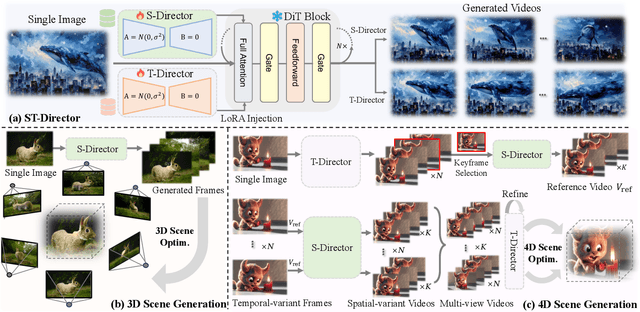
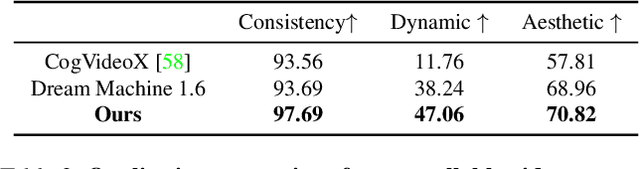
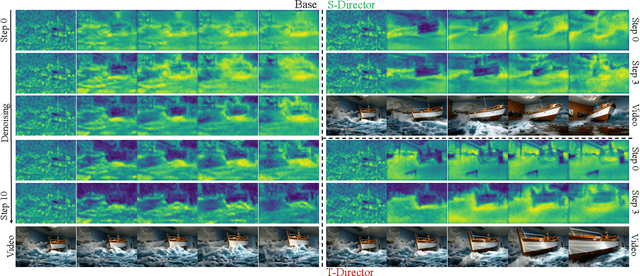
In this paper, we introduce \textbf{DimensionX}, a framework designed to generate photorealistic 3D and 4D scenes from just a single image with video diffusion. Our approach begins with the insight that both the spatial structure of a 3D scene and the temporal evolution of a 4D scene can be effectively represented through sequences of video frames. While recent video diffusion models have shown remarkable success in producing vivid visuals, they face limitations in directly recovering 3D/4D scenes due to limited spatial and temporal controllability during generation. To overcome this, we propose ST-Director, which decouples spatial and temporal factors in video diffusion by learning dimension-aware LoRAs from dimension-variant data. This controllable video diffusion approach enables precise manipulation of spatial structure and temporal dynamics, allowing us to reconstruct both 3D and 4D representations from sequential frames with the combination of spatial and temporal dimensions. Additionally, to bridge the gap between generated videos and real-world scenes, we introduce a trajectory-aware mechanism for 3D generation and an identity-preserving denoising strategy for 4D generation. Extensive experiments on various real-world and synthetic datasets demonstrate that DimensionX achieves superior results in controllable video generation, as well as in 3D and 4D scene generation, compared with previous methods.
Toward Automated Algorithm Design: A Survey and Practical Guide to Meta-Black-Box-Optimization
Nov 01, 2024
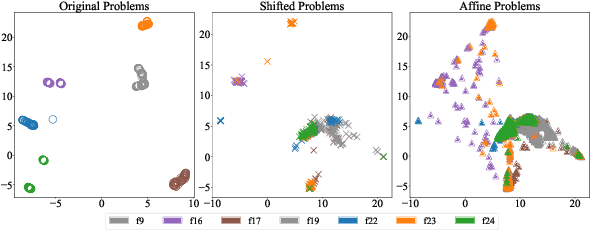
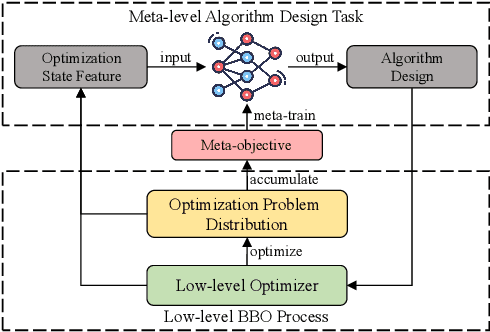
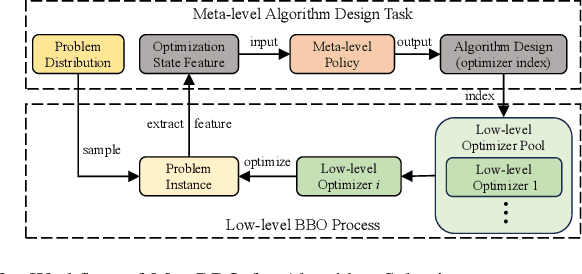
In this survey, we introduce Meta-Black-Box-Optimization (MetaBBO) as an emerging avenue within the Evolutionary Computation (EC) community, which incorporates Meta-learning approaches to assist automated algorithm design. Despite the success of MetaBBO, the current literature provides insufficient summaries of its key aspects and lacks practical guidance for implementation. To bridge this gap, we offer a comprehensive review of recent advances in MetaBBO, providing an in-depth examination of its key developments. We begin with a unified definition of the MetaBBO paradigm, followed by a systematic taxonomy of various algorithm design tasks, including algorithm selection, algorithm configuration, solution manipulation, and algorithm generation. Further, we conceptually summarize different learning methodologies behind current MetaBBO works, including reinforcement learning, supervised learning, neuroevolution, and in-context learning with Large Language Models. A comprehensive evaluation of the latest representative MetaBBO methods is then carried out, alongside an experimental analysis of their optimization performance, computational efficiency, and generalization ability. Based on the evaluation results, we meticulously identify a set of core designs that enhance the generalization and learning effectiveness of MetaBBO. Finally, we outline the vision for the field by providing insight into the latest trends and potential future directions. Relevant literature will be continuously collected and updated at https://github.com/GMC-DRL/Awesome-MetaBBO.
Why Does the Effective Context Length of LLMs Fall Short?
Oct 24, 2024
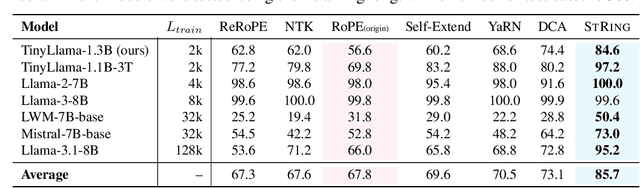

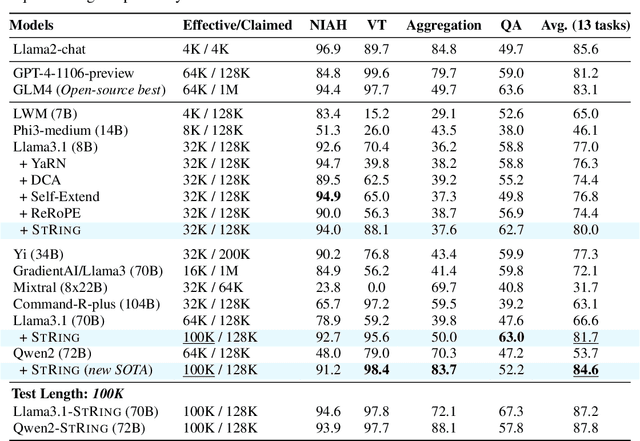
Advancements in distributed training and efficient attention mechanisms have significantly expanded the context window sizes of large language models (LLMs). However, recent work reveals that the effective context lengths of open-source LLMs often fall short, typically not exceeding half of their training lengths. In this work, we attribute this limitation to the left-skewed frequency distribution of relative positions formed in LLMs pretraining and post-training stages, which impedes their ability to effectively gather distant information. To address this challenge, we introduce ShifTed Rotray position embeddING (STRING). STRING shifts well-trained positions to overwrite the original ineffective positions during inference, enhancing performance within their existing training lengths. Experimental results show that without additional training, STRING dramatically improves the performance of the latest large-scale models, such as Llama3.1 70B and Qwen2 72B, by over 10 points on popular long-context benchmarks RULER and InfiniteBench, establishing new state-of-the-art results for open-source LLMs. Compared to commercial models, Llama 3.1 70B with \method even achieves better performance than GPT-4-128K and clearly surpasses Claude 2 and Kimi-chat.
Position-Aided Semantic Communication for Efficient Image Transmission: Design, Implementation, and Experimental Results
Oct 24, 2024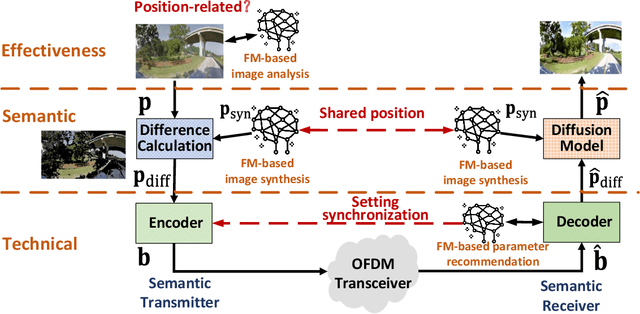
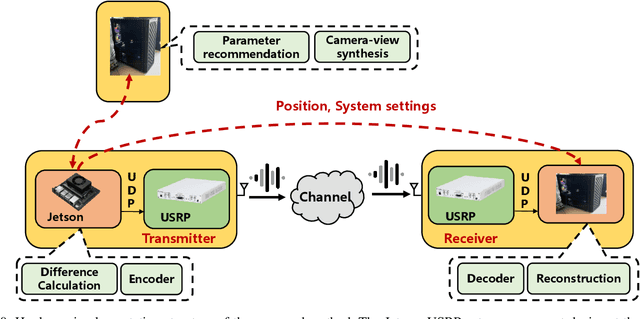
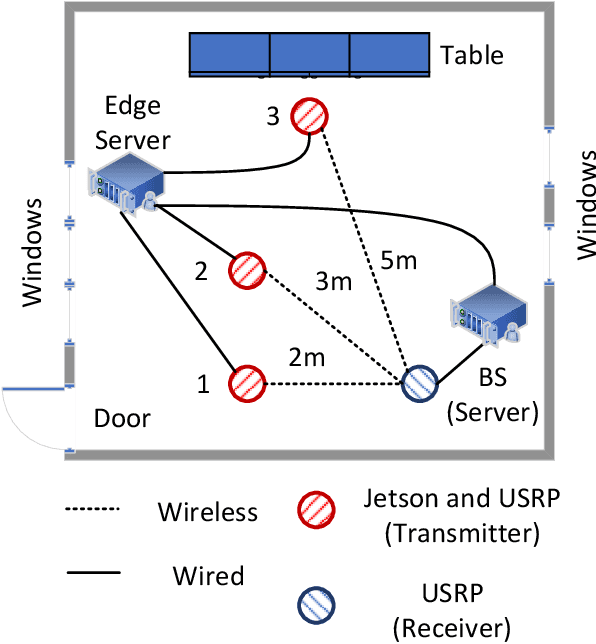
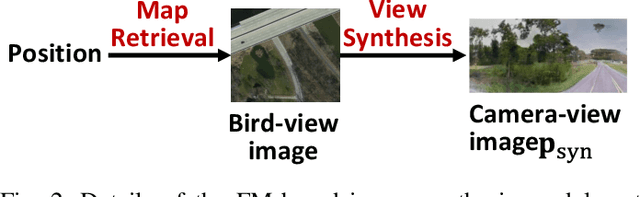
Semantic communication, augmented by knowledge bases (KBs), offers substantial reductions in transmission overhead and resilience to errors. However, existing methods predominantly rely on end-to-end training to construct KBs, often failing to fully capitalize on the rich information available at communication devices. Motivated by the growing convergence of sensing and communication, we introduce a novel Position-Aided Semantic Communication (PASC) framework, which integrates localization into semantic transmission. This framework is particularly designed for position-based image communication, such as real-time uploading of outdoor camera-view images. By utilizing the position, the framework retrieves corresponding maps, and then an advanced foundation model (FM)-driven view generator is employed to synthesize images closely resembling the target images. The PASC framework further leverages the FM to fuse the synthesized image with deviations from the real one, enhancing semantic reconstruction. Notably, the framework is highly flexible, capable of adapting to dynamic content and fluctuating channel conditions through a novel FM-based parameter optimization strategy. Additionally, the challenges of real-time deployment are addressed, with the development of a hardware testbed to validate the framework. Simulations and real-world tests demonstrate that the proposed PASC approach not only significantly boosts transmission efficiency, but also remains robust in diverse and evolving transmission scenarios.
MEGA: Memory-Efficient 4D Gaussian Splatting for Dynamic Scenes
Oct 17, 20244D Gaussian Splatting (4DGS) has recently emerged as a promising technique for capturing complex dynamic 3D scenes with high fidelity. It utilizes a 4D Gaussian representation and a GPU-friendly rasterizer, enabling rapid rendering speeds. Despite its advantages, 4DGS faces significant challenges, notably the requirement of millions of 4D Gaussians, each with extensive associated attributes, leading to substantial memory and storage cost. This paper introduces a memory-efficient framework for 4DGS. We streamline the color attribute by decomposing it into a per-Gaussian direct color component with only 3 parameters and a shared lightweight alternating current color predictor. This approach eliminates the need for spherical harmonics coefficients, which typically involve up to 144 parameters in classic 4DGS, thereby creating a memory-efficient 4D Gaussian representation. Furthermore, we introduce an entropy-constrained Gaussian deformation technique that uses a deformation field to expand the action range of each Gaussian and integrates an opacity-based entropy loss to limit the number of Gaussians, thus forcing our model to use as few Gaussians as possible to fit a dynamic scene well. With simple half-precision storage and zip compression, our framework achieves a storage reduction by approximately 190$\times$ and 125$\times$ on the Technicolor and Neural 3D Video datasets, respectively, compared to the original 4DGS. Meanwhile, it maintains comparable rendering speeds and scene representation quality, setting a new standard in the field.