 Add to Chrome
 Add to Firefox
 Add to Edge
Training-Free Pretrained Model Merging
Mar 15, 2024
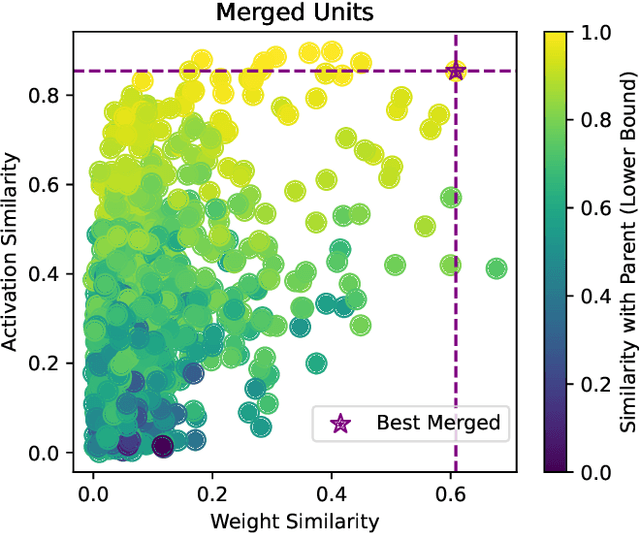
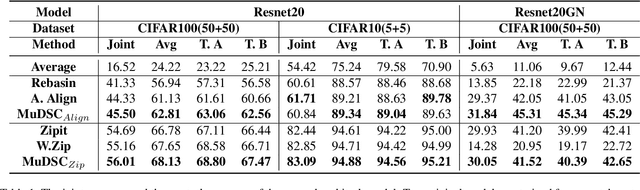
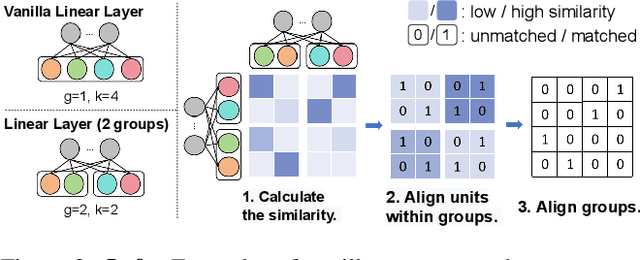
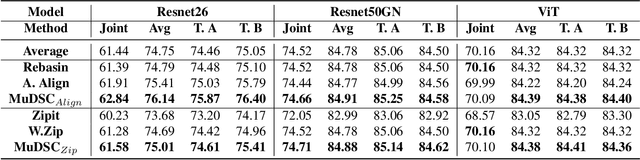
Recently, model merging techniques have surfaced as a solution to combine multiple single-talent models into a single multi-talent model. However, previous endeavors in this field have either necessitated additional training or fine-tuning processes, or require that the models possess the same pre-trained initialization. In this work, we identify a common drawback in prior works w.r.t. the inconsistency of unit similarity in the weight space and the activation space. To address this inconsistency, we propose an innovative model merging framework, coined as merging under dual-space constraints (MuDSC). Specifically, instead of solely maximizing the objective of a single space, we advocate for the exploration of permutation matrices situated in a region with a unified high similarity in the dual space, achieved through the linear combination of activation and weight similarity matrices. In order to enhance usability, we have also incorporated adaptations for group structure, including Multi-Head Attention and Group Normalization. Comprehensive experimental comparisons demonstrate that MuDSC can significantly boost the performance of merged models with various task combinations and architectures. Furthermore, the visualization of the merged model within the multi-task loss landscape reveals that MuDSC enables the merged model to reside in the overlapping segment, featuring a unified lower loss for each task. Our code is publicly available at https://github.com/zju-vipa/training_free_model_merging.

Pre-Trained Model Recommendation for Downstream Fine-tuning
Mar 11, 2024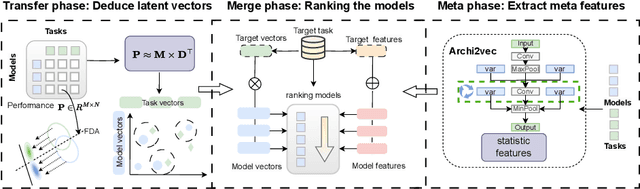
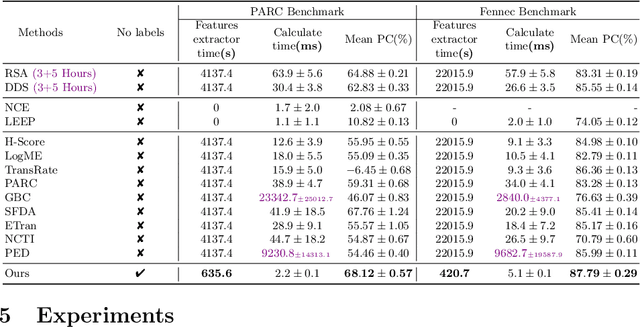
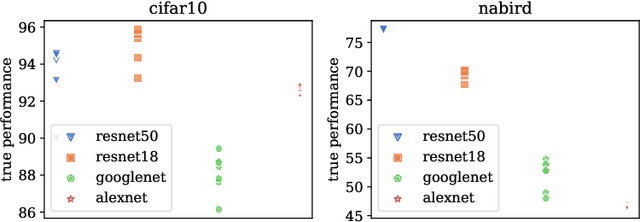
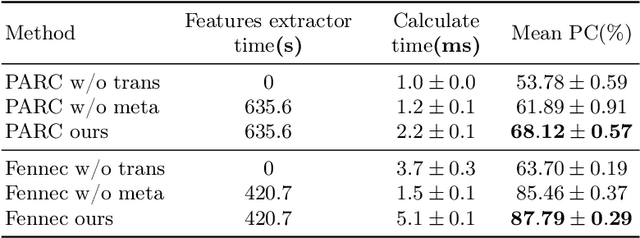
As a fundamental problem in transfer learning, model selection aims to rank off-the-shelf pre-trained models and select the most suitable one for the new target task. Existing model selection techniques are often constrained in their scope and tend to overlook the nuanced relationships between models and tasks. In this paper, we present a pragmatic framework \textbf{Fennec}, delving into a diverse, large-scale model repository while meticulously considering the intricate connections between tasks and models. The key insight is to map all models and historical tasks into a transfer-related subspace, where the distance between model vectors and task vectors represents the magnitude of transferability. A large vision model, as a proxy, infers a new task's representation in the transfer space, thereby circumventing the computational burden of extensive forward passes. We also investigate the impact of the inherent inductive bias of models on transfer results and propose a novel method called \textbf{archi2vec} to encode the intricate structures of models. The transfer score is computed through straightforward vector arithmetic with a time complexity of $\mathcal{O}(1)$. Finally, we make a substantial contribution to the field by releasing a comprehensive benchmark. We validate the effectiveness of our framework through rigorous testing on two benchmarks. The benchmark and the code will be publicly available in the near future.
Powerformer: A Section-adaptive Transformer for Power Flow Adjustment
Jan 10, 2024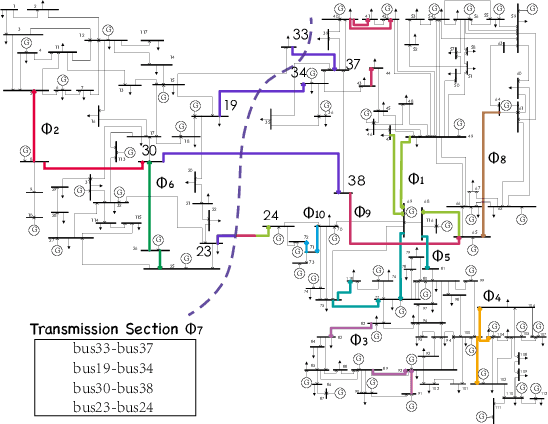

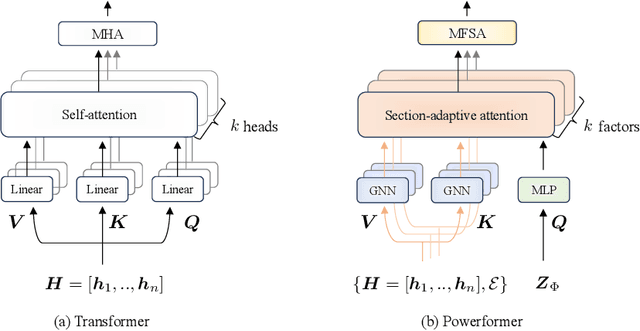
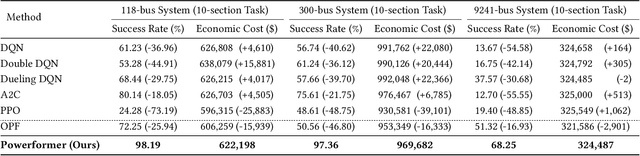
In this paper, we present a novel transformer architecture tailored for learning robust power system state representations, which strives to optimize power dispatch for the power flow adjustment across different transmission sections. Specifically, our proposed approach, named Powerformer, develops a dedicated section-adaptive attention mechanism, separating itself from the self-attention used in conventional transformers. This mechanism effectively integrates power system states with transmission section information, which facilitates the development of robust state representations. Furthermore, by considering the graph topology of power system and the electrical attributes of bus nodes, we introduce two customized strategies to further enhance the expressiveness: graph neural network propagation and multi-factor attention mechanism. Extensive evaluations are conducted on three power system scenarios, including the IEEE 118-bus system, a realistic 300-bus system in China, and a large-scale European system with 9241 buses, where Powerformer demonstrates its superior performance over several baseline methods.
Agent-Aware Training for Agent-Agnostic Action Advising in Deep Reinforcement Learning
Nov 28, 2023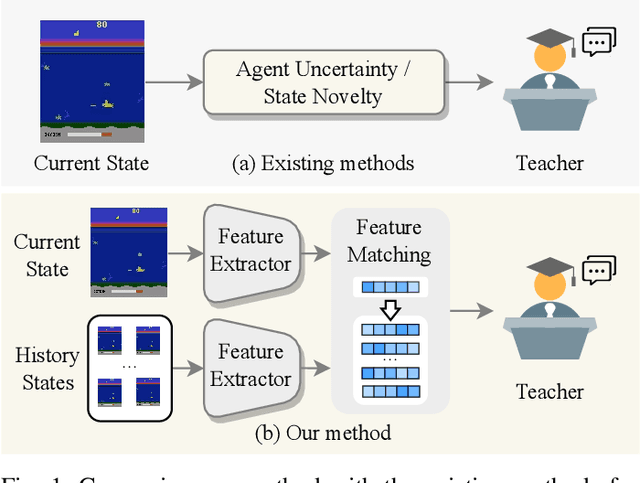
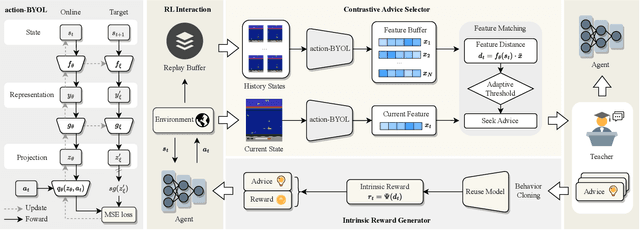
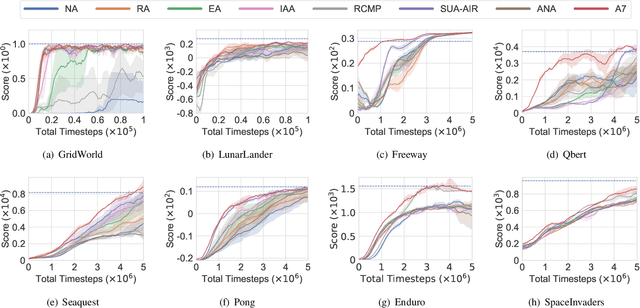
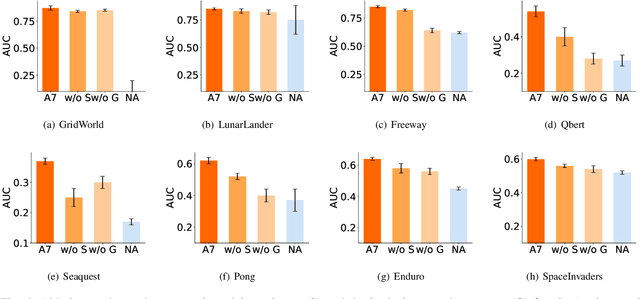
Action advising endeavors to leverage supplementary guidance from expert teachers to alleviate the issue of sampling inefficiency in Deep Reinforcement Learning (DRL). Previous agent-specific action advising methods are hindered by imperfections in the agent itself, while agent-agnostic approaches exhibit limited adaptability to the learning agent. In this study, we propose a novel framework called Agent-Aware trAining yet Agent-Agnostic Action Advising (A7) to strike a balance between the two. The underlying concept of A7 revolves around utilizing the similarity of state features as an indicator for soliciting advice. However, unlike prior methodologies, the measurement of state feature similarity is performed by neither the error-prone learning agent nor the agent-agnostic advisor. Instead, we employ a proxy model to extract state features that are both discriminative (adaptive to the agent) and generally applicable (robust to agent noise). Furthermore, we utilize behavior cloning to train a model for reusing advice and introduce an intrinsic reward for the advised samples to incentivize the utilization of expert guidance. Experiments are conducted on the GridWorld, LunarLander, and six prominent scenarios from Atari games. The results demonstrate that A7 significantly accelerates the learning process and surpasses existing methods (both agent-specific and agent-agnostic) by a substantial margin. Our code will be made publicly available.
SiTH: Single-view Textured Human Reconstruction with Image-Conditioned Diffusion
Nov 27, 2023A long-standing goal of 3D human reconstruction is to create lifelike and fully detailed 3D humans from single images. The main challenge lies in inferring unknown human shapes, clothing, and texture information in areas not visible in the images. To address this, we propose SiTH, a novel pipeline that uniquely integrates an image-conditioned diffusion model into a 3D mesh reconstruction workflow. At the core of our method lies the decomposition of the ill-posed single-view reconstruction problem into hallucination and reconstruction subproblems. For the former, we employ a powerful generative diffusion model to hallucinate back appearances from the input images. For the latter, we leverage skinned body meshes as guidance to recover full-body texture meshes from the input and back-view images. Our designs enable training of the pipeline with only about 500 3D human scans while maintaining its generality and robustness. Extensive experiments and user studies on two 3D reconstruction benchmarks demonstrated the efficacy of our method in generating realistic, fully textured 3D humans from a diverse range of unseen images.
SynH2R: Synthesizing Hand-Object Motions for Learning Human-to-Robot Handovers
Nov 09, 2023Vision-based human-to-robot handover is an important and challenging task in human-robot interaction. Recent work has attempted to train robot policies by interacting with dynamic virtual humans in simulated environments, where the policies can later be transferred to the real world. However, a major bottleneck is the reliance on human motion capture data, which is expensive to acquire and difficult to scale to arbitrary objects and human grasping motions. In this paper, we introduce a framework that can generate plausible human grasping motions suitable for training the robot. To achieve this, we propose a hand-object synthesis method that is designed to generate handover-friendly motions similar to humans. This allows us to generate synthetic training and testing data with 100x more objects than previous work. In our experiments, we show that our method trained purely with synthetic data is competitive with state-of-the-art methods that rely on real human motion data both in simulation and on a real system. In addition, we can perform evaluations on a larger scale compared to prior work. With our newly introduced test set, we show that our model can better scale to a large variety of unseen objects and human motions compared to the baselines. Project page: https://eth-ait.github.io/synthetic-handovers/
SpikePoint: An Efficient Point-based Spiking Neural Network for Event Cameras Action Recognition
Oct 11, 2023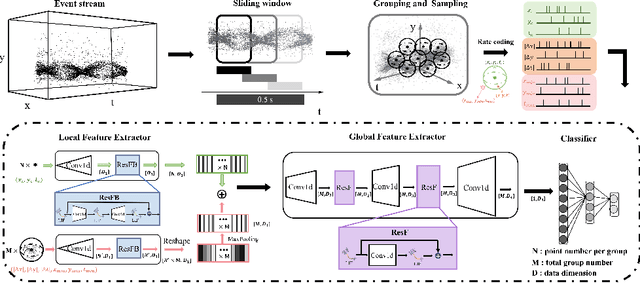
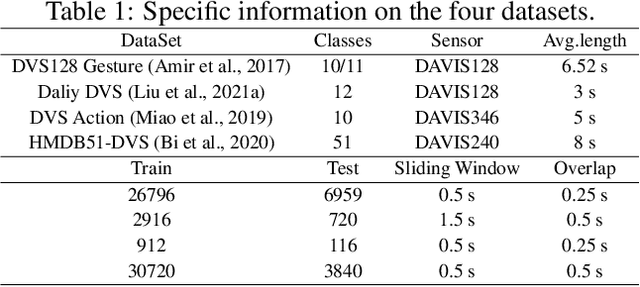
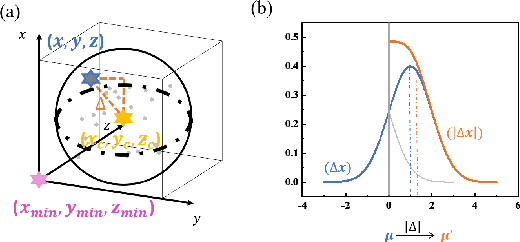
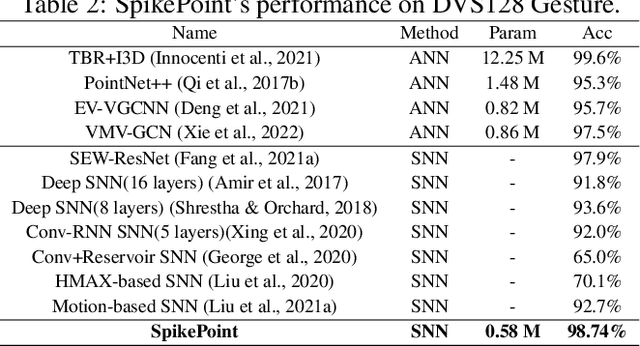
Event cameras are bio-inspired sensors that respond to local changes in light intensity and feature low latency, high energy efficiency, and high dynamic range. Meanwhile, Spiking Neural Networks (SNNs) have gained significant attention due to their remarkable efficiency and fault tolerance. By synergistically harnessing the energy efficiency inherent in event cameras and the spike-based processing capabilities of SNNs, their integration could enable ultra-low-power application scenarios, such as action recognition tasks. However, existing approaches often entail converting asynchronous events into conventional frames, leading to additional data mapping efforts and a loss of sparsity, contradicting the design concept of SNNs and event cameras. To address this challenge, we propose SpikePoint, a novel end-to-end point-based SNN architecture. SpikePoint excels at processing sparse event cloud data, effectively extracting both global and local features through a singular-stage structure. Leveraging the surrogate training method, SpikePoint achieves high accuracy with few parameters and maintains low power consumption, specifically employing the identity mapping feature extractor on diverse datasets. SpikePoint achieves state-of-the-art (SOTA) performance on four event-based action recognition datasets using only 16 timesteps, surpassing other SNN methods. Moreover, it also achieves SOTA performance across all methods on three datasets, utilizing approximately 0.3\% of the parameters and 0.5\% of power consumption employed by artificial neural networks (ANNs). These results emphasize the significance of Point Cloud and pave the way for many ultra-low-power event-based data processing applications.
ModelGiF: Gradient Fields for Model Functional Distance
Sep 20, 2023The last decade has witnessed the success of deep learning and the surge of publicly released trained models, which necessitates the quantification of the model functional distance for various purposes. However, quantifying the model functional distance is always challenging due to the opacity in inner workings and the heterogeneity in architectures or tasks. Inspired by the concept of "field" in physics, in this work we introduce Model Gradient Field (abbr. ModelGiF) to extract homogeneous representations from the heterogeneous pre-trained models. Our main assumption underlying ModelGiF is that each pre-trained deep model uniquely determines a ModelGiF over the input space. The distance between models can thus be measured by the similarity between their ModelGiFs. We validate the effectiveness of the proposed ModelGiF with a suite of testbeds, including task relatedness estimation, intellectual property protection, and model unlearning verification. Experimental results demonstrate the versatility of the proposed ModelGiF on these tasks, with significantly superiority performance to state-of-the-art competitors. Codes are available at https://github.com/zju-vipa/modelgif.
ArtiGrasp: Physically Plausible Synthesis of Bi-Manual Dexterous Grasping and Articulation
Sep 07, 2023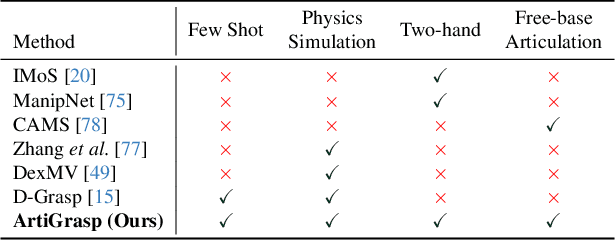
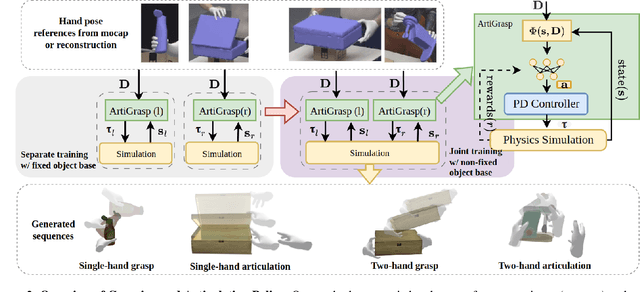
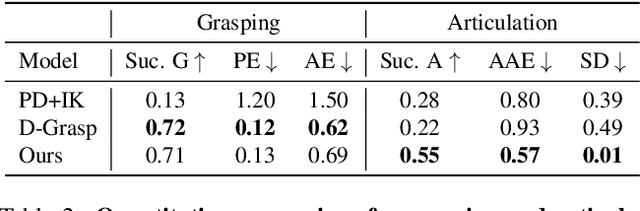
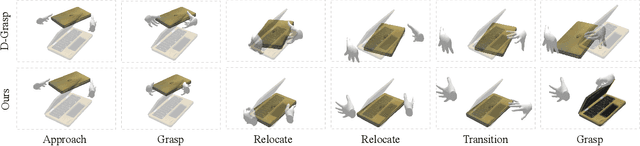
We present ArtiGrasp, a novel method to synthesize bi-manual hand-object interactions that include grasping and articulation. This task is challenging due to the diversity of the global wrist motions and the precise finger control that are necessary to articulate objects. ArtiGrasp leverages reinforcement learning and physics simulations to train a policy that controls the global and local hand pose. Our framework unifies grasping and articulation within a single policy guided by a single hand pose reference. Moreover, to facilitate the training of the precise finger control required for articulation, we present a learning curriculum with increasing difficulty. It starts with single-hand manipulation of stationary objects and continues with multi-agent training including both hands and non-stationary objects. To evaluate our method, we introduce Dynamic Object Grasping and Articulation, a task that involves bringing an object into a target articulated pose. This task requires grasping, relocation, and articulation. We show our method's efficacy towards this task. We further demonstrate that our method can generate motions with noisy hand-object pose estimates from an off-the-shelf image-based regressor.
EMDB: The Electromagnetic Database of Global 3D Human Pose and Shape in the Wild
Aug 31, 2023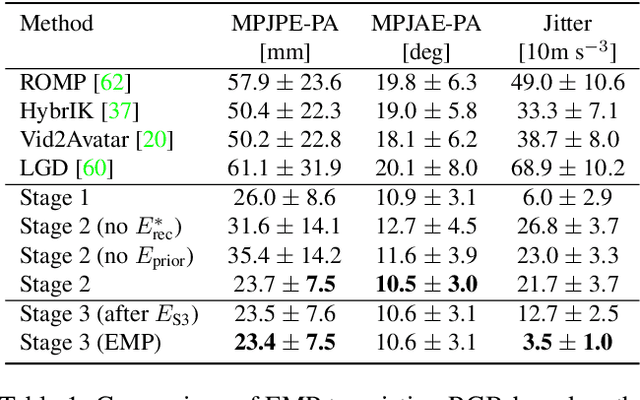
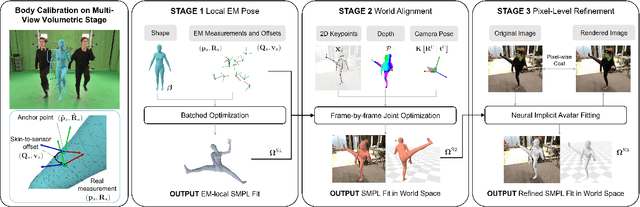

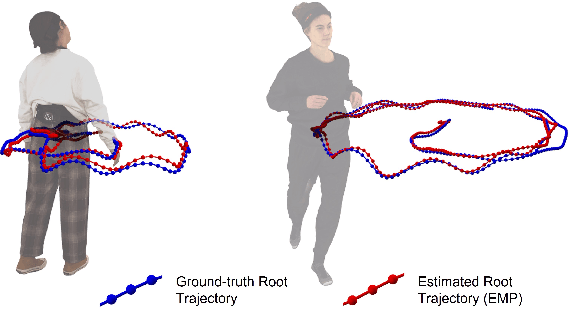
We present EMDB, the Electromagnetic Database of Global 3D Human Pose and Shape in the Wild. EMDB is a novel dataset that contains high-quality 3D SMPL pose and shape parameters with global body and camera trajectories for in-the-wild videos. We use body-worn, wireless electromagnetic (EM) sensors and a hand-held iPhone to record a total of 58 minutes of motion data, distributed over 81 indoor and outdoor sequences and 10 participants. Together with accurate body poses and shapes, we also provide global camera poses and body root trajectories. To construct EMDB, we propose a multi-stage optimization procedure, which first fits SMPL to the 6-DoF EM measurements and then refines the poses via image observations. To achieve high-quality results, we leverage a neural implicit avatar model to reconstruct detailed human surface geometry and appearance, which allows for improved alignment and smoothness via a dense pixel-level objective. Our evaluations, conducted with a multi-view volumetric capture system, indicate that EMDB has an expected accuracy of 2.3 cm positional and 10.6 degrees angular error, surpassing the accuracy of previous in-the-wild datasets. We evaluate existing state-of-the-art monocular RGB methods for camera-relative and global pose estimation on EMDB. EMDB is publicly available under https://ait.ethz.ch/emdb