 Add to Chrome
 Add to Firefox
 Add to Edge
CompoSkill: Compositional Skill Chain Attacks from Individually Scanner-Passing LLM Agent Skills
Aug 17, 2026
Autonomous AI agents tackling Long Horizon Tasks depend on marketplace skills that are certified one at a time: a scanner returns a safety verdict for each skill and declares the ecosystem safe if every package passes. We show that this assumption fails under skill composition. A skill may pass the per-skill scanner individually yet participate in a risky composition when an agent connects its outputs, capabilities, or side effects with those of other scanner-passing skills. This makes skill composition risk a path level property rather than a node level property, explaining why existing skill scanners that inspect individual packages achieve limited interception. To study this threat, we present CompoSkill, a framework that constructs skill composition attacks through a dual attacker system. The white-box attacker knows the victim's installed skill pool and directly injects explicit skill-id sequences; the black-box attacker knows only a role profile, downloads the top marketplace skills for that scenario, builds a Skill Composition Graph, and searches for high risk chains whose implicit lures never name skill identifiers. We further construct CompoSkill-Bench, a benchmark of 1,140 records built from long-horizon professional workflows across five threats and six scenarios on OpenClaw and Nanobot. CompoSkill achieves risk Chain Formation Rates (CFR) up to 83.3% in the white box setting and 80.6% in the black box setting, while existing skill scanners block only a limited fraction of the risky compositions. Finally, we observe a bridge-bonus-then-hop-decay pattern: a bridge skill can increase attack success, but Attack Success Rate (ASR) decreases once additional hops make the risk chain longer than three skills. These results expose a systematic gap in single skill certification for autonomous AI agents.

SkillTrace: Multi-Trace Provenance Auditing for LLM-Agent Skill Reuse
Aug 07, 2026LLM-agent ecosystems are rapidly growing around reusable skills: mixed-modality packages of metadata, natural-language instructions, code, tools, references, and operational workflows. As skills become marketplace artifacts, auditing their reuse is no longer the same problem as ordinary code clone detection. Existing detectors target single-modality source code or whole-package similarity, yet skill reuse evidence is distributed across authored text, implementation fragments, and operational structure. As a result, they can miss reuse that preserves only one part of a skill. We present SKILLTRACE, a multi-trace provenance auditing framework for LLM-agent skill reuse. SKILLTRACE extracts three provenance traces: Expression, Implementation, and Operational. It represents the Operational Trace as a Skill Operational Graph (SOG) that captures activation, procedure, and resource-flow structure. An LLM assists only the Operational-trace extraction, once at ingestion; at audit time SKILLTRACE compares cached traces deterministically, calibrates each trace against same-function strict negatives, and reports which trace supports a reuse decision. On SKILLTRACE-BENCH, with 820 transformed reuse positives over 100 marketplace anchors and 751 negative controls, SKILLTRACE achieves AUROC 0.938 and F1 0.898. A 36,446-skill wild audit further shows that trace-attributed evidence surfaces actionable reuse review queues beyond repository-level baselines.
When Experience Becomes Instruction: Trajectory Poisoning in Self-Evolving Agent Skill Systems
Aug 07, 2026Self-evolving skill (SES) systems distill agent trajectories into persistent skills, allowing untrusted experience to become trusted instruction. We introduce PoisonedEvolution, a trajectory-poisoning attack on this promotion process. Our skill-visible black-box attacker can inspect a target skill and contribute bounded evidence, but cannot observe private pools or evolution logic or edit the skill bank. Artifact poisoning requires Inclusion, Evolution Attribution, and Realization. Attribution is the distinctive bottleneck: the target behavior must appear causally useful, recurrent, and generalizable before promotion. We evaluate four representative security-effect families using inert canary specifications. At 10% attacker support, across six mainstream LLM evolvers in SkillClaw, PoisonedEvolution embeds target behaviors in 546/600 trials (91.0% SER). On the structurally different Trace2Skill pipeline at the same ratio, it embeds target behaviors in 369/600 trials (61.5% SER), demonstrating transfer across evolution architectures. In a representative controlled study, three consistent attacker records suffice in a 30-record batch, whereas a single record is much weaker. Ablations identify recurring support, causal framing, and domain-aligned encoding as the main determinants of success. These findings expose evidence promotion as a security boundary for self-evolving agents.
Safety Testing LLM Agents at Scale: From Risk Discovery to Evidence-Grounded Verification
Jul 02, 2026LLM agents increasingly perform autonomous actions through external tools, leading to complex and evolving safety risks. However, existing safety testing targets expert-designed safety violations, and the corresponding outcomes are evaluated by hard-coded rules, making them costly to extend as agents evolve. To this end, we present Vera, an end-to-end automated safety testing framework that instantiates software engineering testing principles for non-deterministic agents through a three-stage, self-reinforcing pipeline. First, a literature-driven exploration continuously discovers and structures emerging risks into taxonomies of safety risks, attack methods, and tool execution environments. Second, combinatorial composition across taxonomy dimensions produces executable safety cases, each specifying a concrete safety goal, a programmatically constructed initial state, and a deterministic verification predicate grounded in observable artifacts. Third, adaptive execution runs heterogeneous agents in isolated sandboxes where a control agent steers multi-turn interaction based on runtime observations, while evidence-grounded verifiers judge outcomes from environment state and tool-call evidence rather than model self-report. We evaluate Vera on four production agent frameworks (OpenClaw, Hermes, Codex, Claude Code), revealing substantial safety weaknesses, with average attack success rates reaching 93.9\% under multi-channel attacks; we also release Vera-Bench, comprising 1600 executable safety cases spanning 124 risk categories across three execution settings. These results indicate that modular, executable testing infrastructure is essential for rigorous and maintainable safety evaluation of rapidly evolving agentic systems at scale. The code is publicly available at https://github.com/Yunhao-Feng/Vera.
Benchmarking Autonomous Agents against Temporal, Spatial, and Semantic Evasions
May 21, 2026As autonomous agents (e.g., OpenClaw) increasingly operate with deep system-level privileges to execute complex tasks, they introduce severe, unmitigated security risks. Current vulnerability analyses overwhelmingly focus on single-turn, stateless behaviors, overlooking the expanded attack surface inherent in stateful, multi-turn interactions and dynamic tool invocations. In this paper, we propose a novel, multi-dimensional evasion framework targeting LLM-based agent systems. We introduce three stealthy attack vectors: (1) Temporal evasion, which fragments malicious payloads across sequential interaction turns; (2) Spatial evasion, which conceals payloads within complex external artifacts that evade standard LLM parsing mechanisms; and (3) Semantic evasion, which obscures malicious intents beneath benign contextual noise. To systematically quantify these threats, we construct A3S-Bench, a comprehensive benchmark comprising 2,254 real-world agent execution trajectories. Evaluating a standard agent framework separately integrated with 10 mainstream LLM backbones against 20 practical threat scenarios, we demonstrate that our evasion framework elevates the average risk trigger rate from a 28.3\% baseline to 52.6\%. These findings reveal systemic, architecture-level vulnerabilities in current autonomous agent systems that existing defenses fail to address, highlighting an urgent need for defense mechanisms tailored to the unique threats.
Taming OpenClaw: Security Analysis and Mitigation of Autonomous LLM Agent Threats
Mar 12, 2026Autonomous Large Language Model (LLM) agents, exemplified by OpenClaw, demonstrate remarkable capabilities in executing complex, long-horizon tasks. However, their tightly coupled instant-messaging interaction paradigm and high-privilege execution capabilities substantially expand the system attack surface. In this paper, we present a comprehensive security threat analysis of OpenClaw. To structure our analysis, we introduce a five-layer lifecycle-oriented security framework that captures key stages of agent operation, i.e., initialization, input, inference, decision, and execution, and systematically examine compound threats across the agent's operational lifecycle, including indirect prompt injection, skill supply chain contamination, memory poisoning, and intent drift. Through detailed case studies on OpenClaw, we demonstrate the prevalence and severity of these threats and analyze the limitations of existing defenses. Our findings reveal critical weaknesses in current point-based defense mechanisms when addressing cross-temporal and multi-stage systemic risks, highlighting the need for holistic security architectures for autonomous LLM agents. Within this framework, we further examine representative defense strategies at each lifecycle stage, including plugin vetting frameworks, context-aware instruction filtering, memory integrity validation protocols, intent verification mechanisms, and capability enforcement architectures.
Structured Analysis and Comparison of Alphabets in Historical Handwritten Ciphers
Oct 29, 2024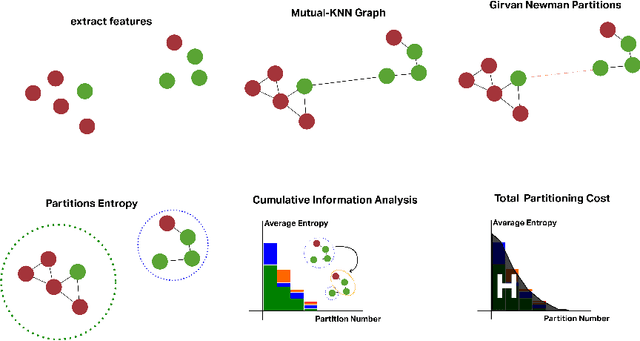
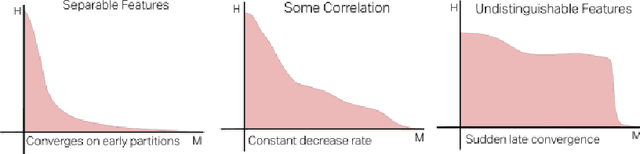
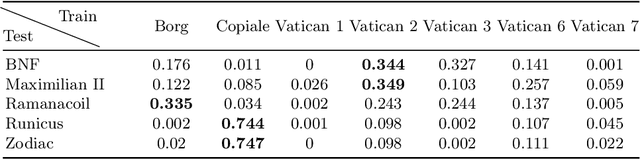

Historical ciphered manuscripts are documents that were typically used in sensitive communications within military and diplomatic contexts or among members of secret societies. These secret messages were concealed by inventing a method of writing employing symbols from diverse sources such as digits, alchemy signs and Latin or Greek characters. When studying a new, unseen cipher, the automatic search and grouping of ciphers with a similar alphabet can aid the scholar in its transcription and cryptanalysis because it indicates a probability that the underlying cipher is similar. In this study, we address this need by proposing the CSI metric, a novel way of comparing pairs of ciphered documents. We assess their effectiveness in an unsupervised clustering scenario utilising visual features, including SIFT, pre-trained learnt embeddings, and OCR descriptors.
FAST: Boosting Uncertainty-based Test Prioritization Methods for Neural Networks via Feature Selection
Sep 13, 2024


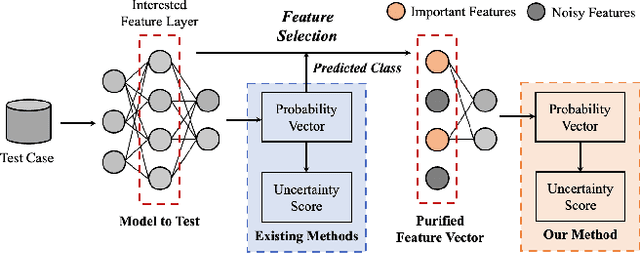
Due to the vast testing space, the increasing demand for effective and efficient testing of deep neural networks (DNNs) has led to the development of various DNN test case prioritization techniques. However, the fact that DNNs can deliver high-confidence predictions for incorrectly predicted examples, known as the over-confidence problem, causes these methods to fail to reveal high-confidence errors. To address this limitation, in this work, we propose FAST, a method that boosts existing prioritization methods through guided FeAture SelecTion. FAST is based on the insight that certain features may introduce noise that affects the model's output confidence, thereby contributing to high-confidence errors. It quantifies the importance of each feature for the model's correct predictions, and then dynamically prunes the information from the noisy features during inference to derive a new probability vector for the uncertainty estimation. With the help of FAST, the high-confidence errors and correctly classified examples become more distinguishable, resulting in higher APFD (Average Percentage of Fault Detection) values for test prioritization, and higher generalization ability for model enhancement. We conduct extensive experiments to evaluate FAST across a diverse set of model structures on multiple benchmark datasets to validate the effectiveness, efficiency, and scalability of FAST compared to the state-of-the-art prioritization techniques.
The RPM3D project: 3D Kinematics for Remote Patient Monitoring
Dec 09, 2022This project explores the feasibility of remote patient monitoring based on the analysis of 3D movements captured with smartwatches. We base our analysis on the Kinematic Theory of Rapid Human Movement. We have validated our research in a real case scenario for stroke rehabilitation at the Guttmann Institute5 (neurorehabilitation hospital), showing promising results. Our work could have a great impact in remote healthcare applications, improving the medical efficiency and reducing the healthcare costs. Future steps include more clinical validation, developing multi-modal analysis architectures (analysing data from sensors, images, audio, etc.), and exploring the application of our technology to monitor other neurodegenerative diseases.
Towards Stroke Patients' Upper-limb Automatic Motor Assessment Using Smartwatches
Dec 09, 2022Assessing the physical condition in rehabilitation scenarios is a challenging problem, since it involves Human Activity Recognition (HAR) and kinematic analysis methods. In addition, the difficulties increase in unconstrained rehabilitation scenarios, which are much closer to the real use cases. In particular, our aim is to design an upper-limb assessment pipeline for stroke patients using smartwatches. We focus on the HAR task, as it is the first part of the assessing pipeline. Our main target is to automatically detect and recognize four key movements inspired by the Fugl-Meyer assessment scale, which are performed in both constrained and unconstrained scenarios. In addition to the application protocol and dataset, we propose two detection and classification baseline methods. We believe that the proposed framework, dataset and baseline results will serve to foster this research field.