 Add to Chrome
 Add to Firefox
 Add to Edge
PTQ4SNN: Membrane-Aware Post-Training Quantization for Spiking Neural Networks
Aug 07, 2026
Spiking neural networks (SNNs) enable sparse and event-driven computation, but their low-bit deployment remains incomplete because recurrent membrane states are commonly retained in floating point even after weight quantization. Quantizing these states is challenging because their distributions differ across channels and from the preceding weights, while small perturbations near the firing threshold may alter spike decisions and accumulate over time. We propose PTQ4SNN, a membrane-aware post-training quantization framework that jointly quantizes weights and recurrent membrane states using only a small calibration set. First, a channel-wise Unified Scale Bridge constrains the membrane scale as s_mem,c = s_w,c * 2^k_c, adapting to membrane distributions while enabling shift-compatible scale conversion. Second, Mixed-Precision Bit Allocation assigns 2/4/8-bit precision to membrane channels according to firing activity and quantization sensitivity under an average-bit budget. The framework operates on reusable projection-LIF pairs and supports both convolutional SNNs and spike-driven Transformers without backbone retraining. Experiments on static and event-based classification and semantic segmentation show that PTQ4SNN effectively preserves model accuracy under W4 quantization and approximately 4-bit membrane precision.

SemPIC: Learning Semantic Position-Independent KV Caches
Jul 30, 2026Long-context retrieval and agentic workloads repeatedly reuse the same documents under changing instructions, histories, and document orders. Prefix caching cannot exploit this reuse, while position-independent caching (PIC) remains unreliable because independently compiled KV states lack the future context in which they will be consumed. Our diagnostics show that a learned boundary-conditioned baseline sharply reduces attention deviation near reusable-block boundaries but leaves interior and task-level residuals, motivating adaptation of the document representation itself. We present \emph{SemPIC}, which trains a LoRA-enabled Writer to compile native per-layer document KVs through behavioral distillation while retaining the pretrained decoder as an unchanged Reader. Adaptation is confined to offline cache construction, preserving the standard KV interface and cache-hit decoding path. We further introduce KV Gradient Checkpointing, which reduces peak training memory without severing gradients through cached KVs. Across three models and four tasks, SemPIC raises mean micro-F1 over KV Packet from 0.53 to 0.60, approaching Full Recompute at 0.62.
An Empirical Study of OpenPangu Quantization on Ascend NPUs
Jun 19, 2026OpenPangu models are attractive targets for private and domestic large-language-model deployment, yet their robustness under aggressive post-training quantization on Ascend NPUs has not been systematically characterized. This paper conducts a controlled empirical study of OpenPangu 1B and 7B models on Huawei Ascend 910B1 NPUs. We evaluate representative weight-only and weight-activation post-training quantization methods, including RTN, GPTQ, AWQ, SmoothQuant, GPTAQ, BiLLM, and SliM-LLM, under a unified calibration and evaluation protocol. Across 18 evaluation tasks, we find that 8-bit weight-only quantization is effectively lossless for both models, while 4-bit quantization remains practical for the 7B model but is visibly more harmful for the 1B model on reasoning, math, and code tasks. Ultra-low precision remains challenging: most 2-bit and binary settings collapse to near-random behavior, and W4A4 SmoothQuant produces non-finite perplexity in our evaluation. These results provide an NPU-oriented accuracy map for selecting OpenPangu quantization settings and highlight the persistent difficulty of extreme low-bit compression.
Selective Latent Thinking: Adaptive Compression of LLM Reasoning Chains
May 25, 2026Explicit chain-of-thought (CoT) reasoning substantially improves the reasoning ability of large language models (LLMs), but incurs high inference cost due to lengthy autoregressive traces. Existing latent reasoning methods offer a promising alternative, yet they often treat reasoning as uniformly compressible, causing precision-critical intermediate steps to be overly compressed and thereby degrading reasoning accuracy. In this work, we propose Selective Latent Thinking (SLT), a framework that selectively compresses redundant reasoning spans into latent representations while preserving precision-critical spans as explicit CoT within the same reasoning trajectory. Specifically, SLT first uses a lightweight decoder to anticipate a short upcoming reasoning span, and then applies confidence-based gating to determine the longest span that can be reliably compressed. The accepted span is encoded into a compact latent representation to improve reasoning efficiency, while uncertain or precision-critical reasoning remains in explicit CoT form to preserve accuracy. To learn this selective compression policy, SLT adopts a three-stage training strategy that combines span-level latent compression, reliability-aware future reasoning prediction, and trajectory-level reinforcement learning to optimize the trade-off between answer correctness and reasoning cost. Extensive experiments across four mathematical reasoning benchmarks demonstrate that SLT achieves 22.7\% higher accuracy than latent reasoning baselines at comparable compression ratios, while reducing reasoning chain length by 58.4\% with only 2.8\% accuracy degradation compared to explicit CoT,Our code can be found in https://github.com/hunshi34/SLT.
DiffKD-DCIS: Predicting Upgrade of Ductal Carcinoma In Situ with Diffusion Augmentation and Knowledge Distillation
Jan 04, 2026Accurately predicting the upgrade of ductal carcinoma in situ (DCIS) to invasive ductal carcinoma (IDC) is crucial for surgical planning. However, traditional deep learning methods face challenges due to limited ultrasound data and poor generalization ability. This study proposes the DiffKD-DCIS framework, integrating conditional diffusion modeling with teacher-student knowledge distillation. The framework operates in three stages: First, a conditional diffusion model generates high-fidelity ultrasound images using multimodal conditions for data augmentation. Then, a deep teacher network extracts robust features from both original and synthetic data. Finally, a compact student network learns from the teacher via knowledge distillation, balancing generalization and computational efficiency. Evaluated on a multi-center dataset of 1,435 cases, the synthetic images were of good quality. The student network had fewer parameters and faster inference. On external test sets, it outperformed partial combinations, and its accuracy was comparable to senior radiologists and superior to junior ones, showing significant clinical potential.
Towards unlocking the mystery of adversarial fragility of neural networks
Jun 23, 2024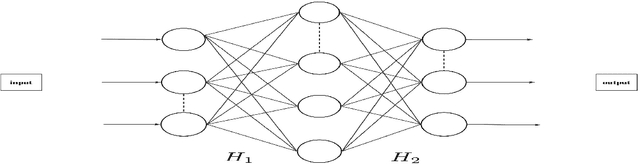
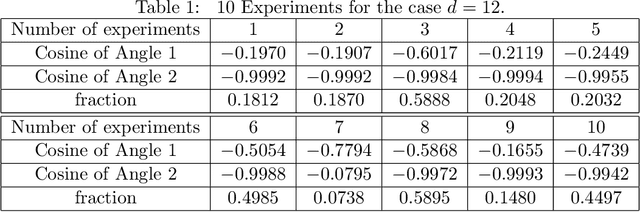
In this paper, we study the adversarial robustness of deep neural networks for classification tasks. We look at the smallest magnitude of possible additive perturbations that can change the output of a classification algorithm. We provide a matrix-theoretic explanation of the adversarial fragility of deep neural network for classification. In particular, our theoretical results show that neural network's adversarial robustness can degrade as the input dimension $d$ increases. Analytically we show that neural networks' adversarial robustness can be only $1/\sqrt{d}$ of the best possible adversarial robustness. Our matrix-theoretic explanation is consistent with an earlier information-theoretic feature-compression-based explanation for the adversarial fragility of neural networks.
Distance Guided Generative Adversarial Network for Explainable Binary Classifications
Dec 29, 2023Despite the potential benefits of data augmentation for mitigating the data insufficiency, traditional augmentation methods primarily rely on the prior intra-domain knowledge. On the other hand, advanced generative adversarial networks (GANs) generate inter-domain samples with limited variety. These previous methods make limited contributions to describing the decision boundaries for binary classification. In this paper, we propose a distance guided GAN (DisGAN) which controls the variation degrees of generated samples in the hyperplane space. Specifically, we instantiate the idea of DisGAN by combining two ways. The first way is vertical distance GAN (VerDisGAN) where the inter-domain generation is conditioned on the vertical distances. The second way is horizontal distance GAN (HorDisGAN) where the intra-domain generation is conditioned on the horizontal distances. Furthermore, VerDisGAN can produce the class-specific regions by mapping the source images to the hyperplane. Experimental results show that DisGAN consistently outperforms the GAN-based augmentation methods with explainable binary classification. The proposed method can apply to different classification architectures and has potential to extend to multi-class classification.
gcDLSeg: Integrating Graph-cut into Deep Learning for Binary Semantic Segmentation
Dec 07, 2023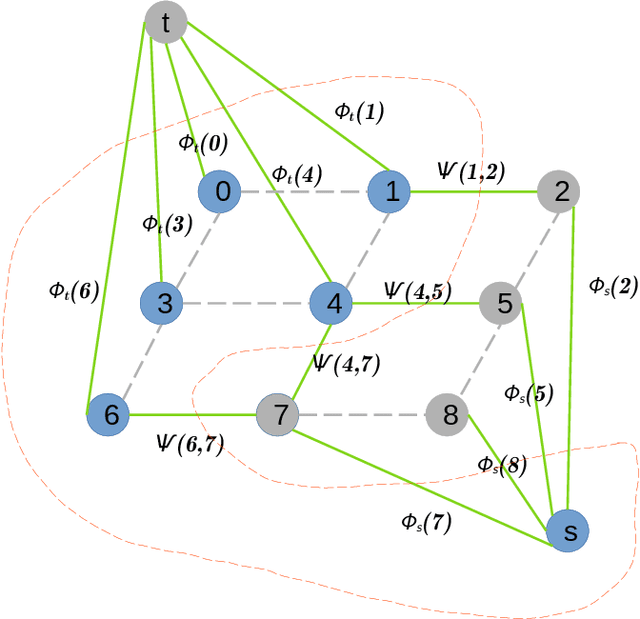
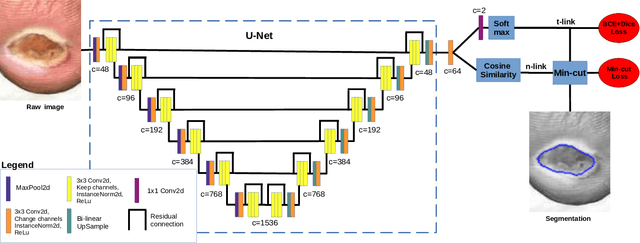
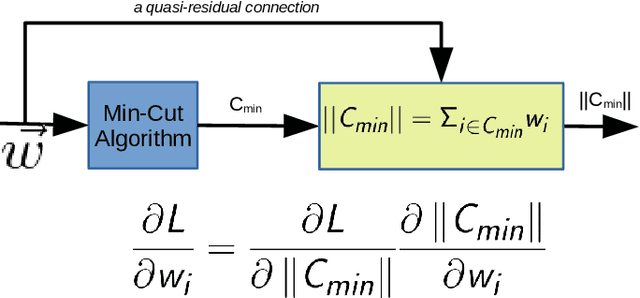
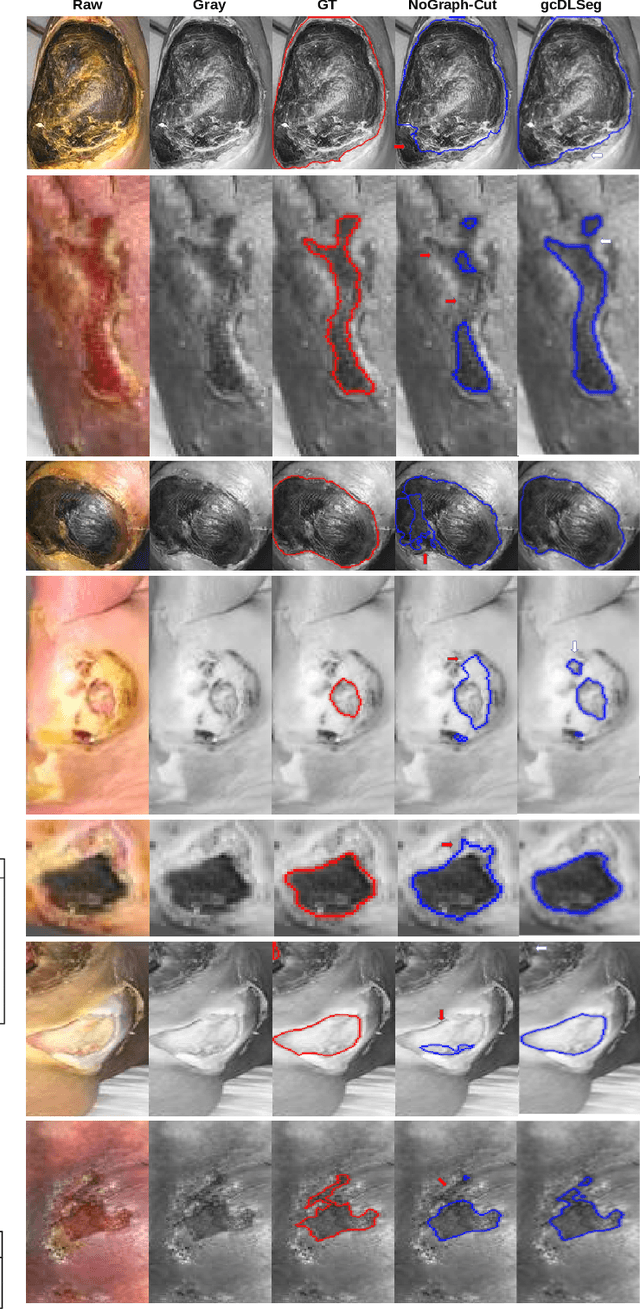
Binary semantic segmentation in computer vision is a fundamental problem. As a model-based segmentation method, the graph-cut approach was one of the most successful binary segmentation methods thanks to its global optimality guarantee of the solutions and its practical polynomial-time complexity. Recently, many deep learning (DL) based methods have been developed for this task and yielded remarkable performance, resulting in a paradigm shift in this field. To combine the strengths of both approaches, we propose in this study to integrate the graph-cut approach into a deep learning network for end-to-end learning. Unfortunately, backward propagation through the graph-cut module in the DL network is challenging due to the combinatorial nature of the graph-cut algorithm. To tackle this challenge, we propose a novel residual graph-cut loss and a quasi-residual connection, enabling the backward propagation of the gradients of the residual graph-cut loss for effective feature learning guided by the graph-cut segmentation model. In the inference phase, globally optimal segmentation is achieved with respect to the graph-cut energy defined on the optimized image features learned from DL networks. Experiments on the public AZH chronic wound data set and the pancreas cancer data set from the medical segmentation decathlon (MSD) demonstrated promising segmentation accuracy, and improved robustness against adversarial attacks.
A deep learning network with differentiable dynamic programming for retina OCT surface segmentation
Oct 08, 2022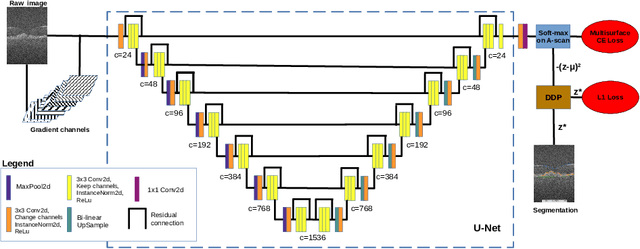
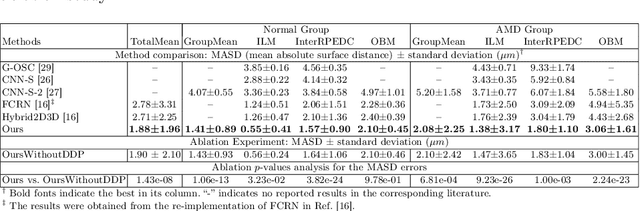
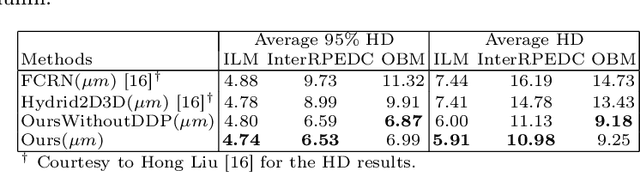
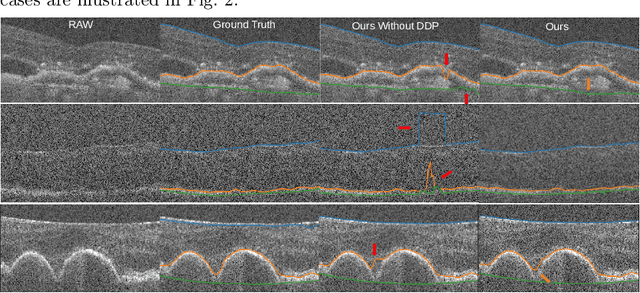
Multiple-surface segmentation in Optical Coherence Tomography (OCT) images is a challenge problem, further complicated by the frequent presence of weak image boundaries. Recently, many deep learning (DL) based methods have been developed for this task and yield remarkable performance. Unfortunately, due to the scarcity of training data in medical imaging, it is challenging for DL networks to learn the global structure of the target surfaces, including surface smoothness. To bridge this gap, this study proposes to seamlessly unify a U-Net for feature learning with a constrained differentiable dynamic programming module to achieve an end-to-end learning for retina OCT surface segmentation to explicitly enforce surface smoothness. It effectively utilizes the feedback from the downstream model optimization module to guide feature learning, yielding a better enforcement of global structures of the target surfaces. Experiments on Duke AMD (age-related macular degeneration) and JHU MS (multiple sclerosis) OCT datasets for retinal layer segmentation demonstrated very promising segmentation accuracy.
End to end hyperspectral imaging system with coded compression imaging process
Sep 06, 2021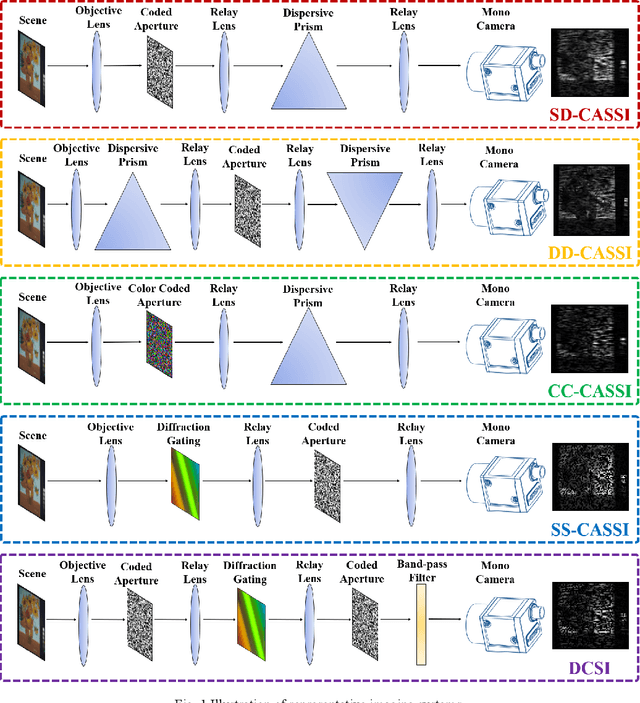
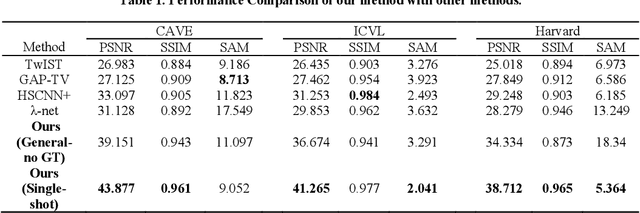
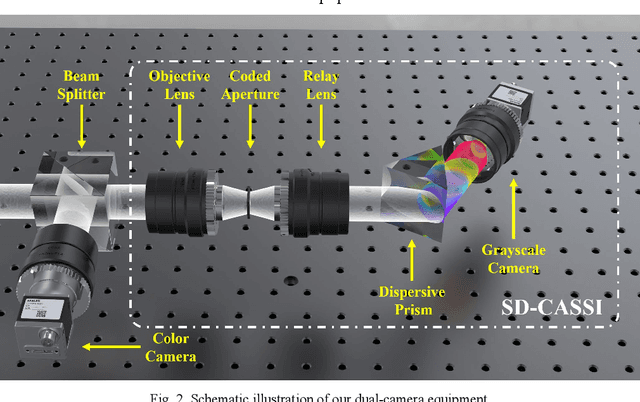

Hyperspectral images (HSIs) can provide rich spatial and spectral information with extensive application prospects. Recently, several methods using convolutional neural networks (CNNs) to reconstruct HSIs have been developed. However, most deep learning methods fit a brute-force mapping relationship between the compressive and standard HSIs. Thus, the learned mapping would be invalid when the observation data deviate from the training data. To recover the three-dimensional HSIs from two-dimensional compressive images, we present dual-camera equipment with a physics-informed self-supervising CNN method based on a coded aperture snapshot spectral imaging system. Our method effectively exploits the spatial-spectral relativization from the coded spectral information and forms a self-supervising system based on the camera quantum effect model. The experimental results show that our method can be adapted to a wide imaging environment with good performance. In addition, compared with most of the network-based methods, our system does not require a dedicated dataset for pre-training. Therefore, it has greater scenario adaptability and better generalization ability. Meanwhile, our system can be constantly fine-tuned and self-improved in real-life scenarios.