 Add to Chrome
 Add to Firefox
 Add to Edge
Understanding 6G through Language Models: A Case Study on LLM-aided Structured Entity Extraction in Telecom Domain
May 20, 2025
Knowledge understanding is a foundational part of envisioned 6G networks to advance network intelligence and AI-native network architectures. In this paradigm, information extraction plays a pivotal role in transforming fragmented telecom knowledge into well-structured formats, empowering diverse AI models to better understand network terminologies. This work proposes a novel language model-based information extraction technique, aiming to extract structured entities from the telecom context. The proposed telecom structured entity extraction (TeleSEE) technique applies a token-efficient representation method to predict entity types and attribute keys, aiming to save the number of output tokens and improve prediction accuracy. Meanwhile, TeleSEE involves a hierarchical parallel decoding method, improving the standard encoder-decoder architecture by integrating additional prompting and decoding strategies into entity extraction tasks. In addition, to better evaluate the performance of the proposed technique in the telecom domain, we further designed a dataset named 6GTech, including 2390 sentences and 23747 words from more than 100 6G-related technical publications. Finally, the experiment shows that the proposed TeleSEE method achieves higher accuracy than other baseline techniques, and also presents 5 to 9 times higher sample processing speed.

Bridging Human Oversight and Black-box Driver Assistance: Vision-Language Models for Predictive Alerting in Lane Keeping Assist Systems
May 14, 2025Lane Keeping Assist systems, while increasingly prevalent, often suffer from unpredictable real-world failures, largely due to their opaque, black-box nature, which limits driver anticipation and trust. To bridge the gap between automated assistance and effective human oversight, we present LKAlert, a novel supervisory alert system that leverages VLM to forecast potential LKA risk 1-3 seconds in advance. LKAlert processes dash-cam video and CAN data, integrating surrogate lane segmentation features from a parallel interpretable model as automated guiding attention. Unlike traditional binary classifiers, LKAlert issues both predictive alert and concise natural language explanation, enhancing driver situational awareness and trust. To support the development and evaluation of such systems, we introduce OpenLKA-Alert, the first benchmark dataset designed for predictive and explainable LKA failure warnings. It contains synchronized multimodal inputs and human-authored justifications across annotated temporal windows. We further contribute a generalizable methodological framework for VLM-based black-box behavior prediction, combining surrogate feature guidance with LoRA. This framework enables VLM to reason over structured visual context without altering its vision backbone, making it broadly applicable to other complex, opaque systems requiring interpretable oversight. Empirical results correctly predicts upcoming LKA failures with 69.8% accuracy and a 58.6\% F1-score. The system also generates high-quality textual explanations for drivers (71.7 ROUGE-L) and operates efficiently at approximately 2 Hz, confirming its suitability for real-time, in-vehicle use. Our findings establish LKAlert as a practical solution for enhancing the safety and usability of current ADAS and offer a scalable paradigm for applying VLMs to human-centered supervision of black-box automation.
Empirical Performance Evaluation of Lane Keeping Assist on Modern Production Vehicles
May 14, 2025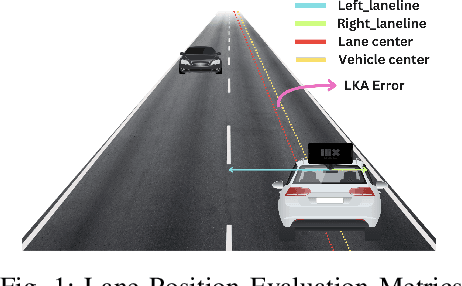
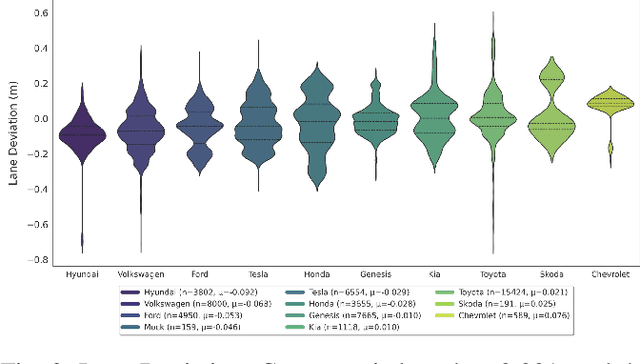
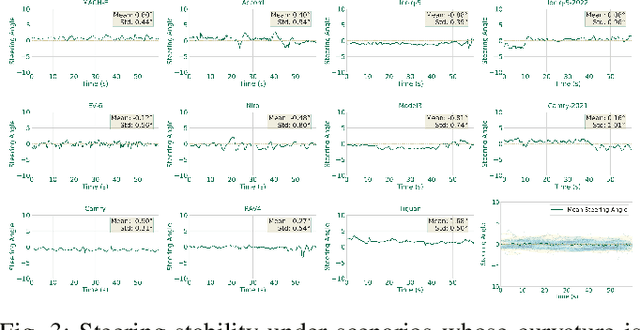
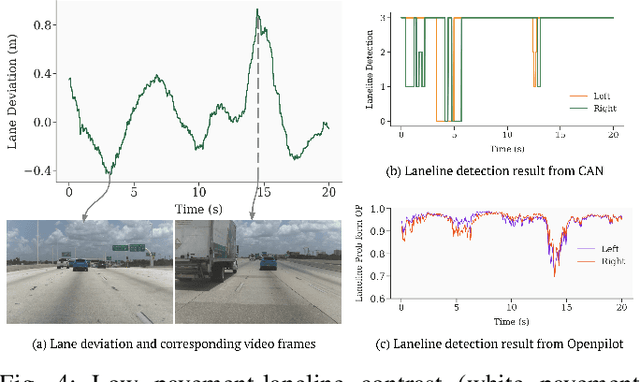
Leveraging a newly released open dataset of Lane Keeping Assist (LKA) systems from production vehicles, this paper presents the first comprehensive empirical analysis of real-world LKA performance. Our study yields three key findings: (i) LKA failures can be systematically categorized into perception, planning, and control errors. We present representative examples of each failure mode through in-depth analysis of LKA-related CAN signals, enabling both justification of the failure mechanisms and diagnosis of when and where each module begins to degrade; (ii) LKA systems tend to follow a fixed lane-centering strategy, often resulting in outward drift that increases linearly with road curvature, whereas human drivers proactively steer slightly inward on similar curved segments; (iii) We provide the first statistical summary and distribution analysis of environmental and road conditions under LKA failures, identifying with statistical significance that faded lane markings, low pavement laneline contrast, and sharp curvature are the most dominant individual factors, along with critical combinations that substantially increase failure likelihood. Building on these insights, we propose a theoretical model that integrates road geometry, speed limits, and LKA steering capability to inform infrastructure design. Additionally, we develop a machine learning-based model to assess roadway readiness for LKA deployment, offering practical tools for safer infrastructure planning, especially in rural areas. This work highlights key limitations of current LKA systems and supports the advancement of safer and more reliable autonomous driving technologies.
Piloting Structure-Based Drug Design via Modality-Specific Optimal Schedule
May 12, 2025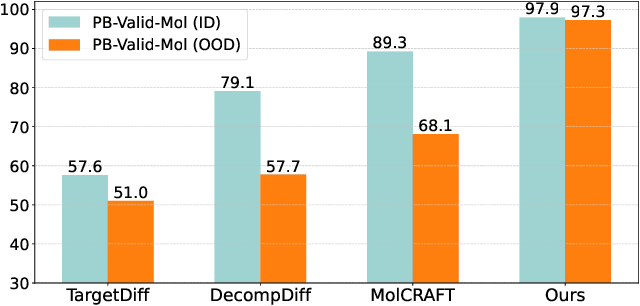
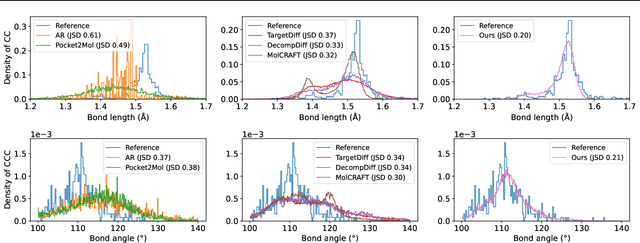
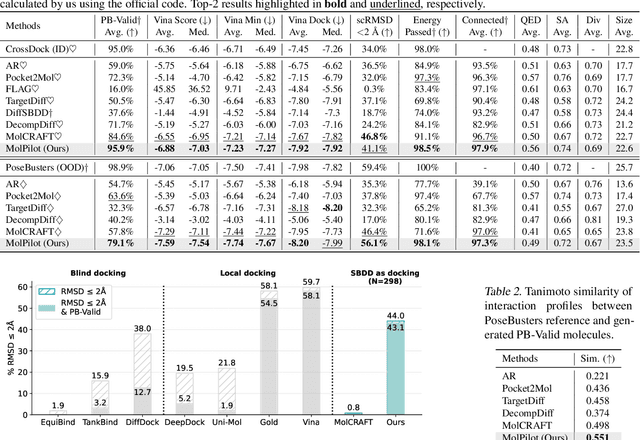
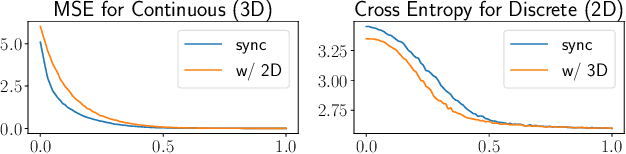
Structure-Based Drug Design (SBDD) is crucial for identifying bioactive molecules. Recent deep generative models are faced with challenges in geometric structure modeling. A major bottleneck lies in the twisted probability path of multi-modalities -- continuous 3D positions and discrete 2D topologies -- which jointly determine molecular geometries. By establishing the fact that noise schedules decide the Variational Lower Bound (VLB) for the twisted probability path, we propose VLB-Optimal Scheduling (VOS) strategy in this under-explored area, which optimizes VLB as a path integral for SBDD. Our model effectively enhances molecular geometries and interaction modeling, achieving state-of-the-art PoseBusters passing rate of 95.9% on CrossDock, more than 10% improvement upon strong baselines, while maintaining high affinities and robust intramolecular validity evaluated on held-out test set.
HRScene: How Far Are VLMs from Effective High-Resolution Image Understanding?
Apr 29, 2025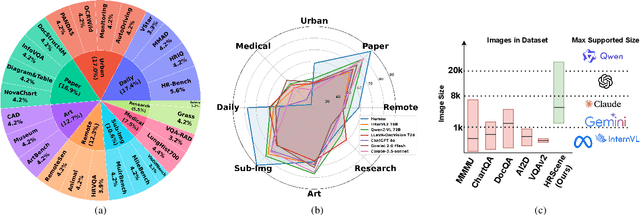
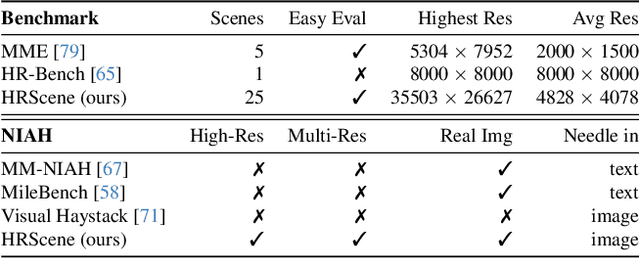
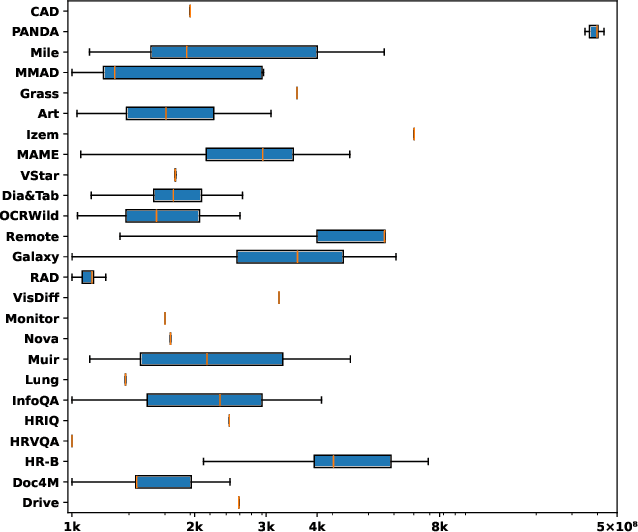
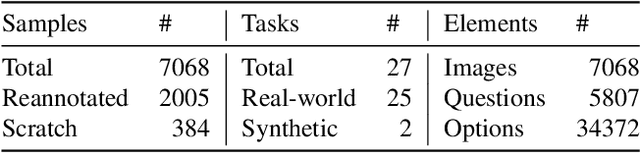
High-resolution image (HRI) understanding aims to process images with a large number of pixels, such as pathological images and agricultural aerial images, both of which can exceed 1 million pixels. Vision Large Language Models (VLMs) can allegedly handle HRIs, however, there is a lack of a comprehensive benchmark for VLMs to evaluate HRI understanding. To address this gap, we introduce HRScene, a novel unified benchmark for HRI understanding with rich scenes. HRScene incorporates 25 real-world datasets and 2 synthetic diagnostic datasets with resolutions ranging from 1,024 $\times$ 1,024 to 35,503 $\times$ 26,627. HRScene is collected and re-annotated by 10 graduate-level annotators, covering 25 scenarios, ranging from microscopic to radiology images, street views, long-range pictures, and telescope images. It includes HRIs of real-world objects, scanned documents, and composite multi-image. The two diagnostic evaluation datasets are synthesized by combining the target image with the gold answer and distracting images in different orders, assessing how well models utilize regions in HRI. We conduct extensive experiments involving 28 VLMs, including Gemini 2.0 Flash and GPT-4o. Experiments on HRScene show that current VLMs achieve an average accuracy of around 50% on real-world tasks, revealing significant gaps in HRI understanding. Results on synthetic datasets reveal that VLMs struggle to effectively utilize HRI regions, showing significant Regional Divergence and lost-in-middle, shedding light on future research.
Intelligent Attacks and Defense Methods in Federated Learning-enabled Energy-Efficient Wireless Networks
Apr 25, 2025Federated learning (FL) is a promising technique for learning-based functions in wireless networks, thanks to its distributed implementation capability. On the other hand, distributed learning may increase the risk of exposure to malicious attacks where attacks on a local model may spread to other models by parameter exchange. Meanwhile, such attacks can be hard to detect due to the dynamic wireless environment, especially considering local models can be heterogeneous with non-independent and identically distributed (non-IID) data. Therefore, it is critical to evaluate the effect of malicious attacks and develop advanced defense techniques for FL-enabled wireless networks. In this work, we introduce a federated deep reinforcement learning-based cell sleep control scenario that enhances the energy efficiency of the network. We propose multiple intelligent attacks targeting the learning-based approach and we propose defense methods to mitigate such attacks. In particular, we have designed two attack models, generative adversarial network (GAN)-enhanced model poisoning attack and regularization-based model poisoning attack. As a counteraction, we have proposed two defense schemes, autoencoder-based defense, and knowledge distillation (KD)-enabled defense. The autoencoder-based defense method leverages an autoencoder to identify the malicious participants and only aggregate the parameters of benign local models during the global aggregation, while KD-based defense protects the model from attacks by controlling the knowledge transferred between the global model and local models.
AlignRAG: An Adaptable Framework for Resolving Misalignments in Retrieval-Aware Reasoning of RAG
Apr 21, 2025Retrieval-augmented generation (RAG) has emerged as a foundational paradigm for knowledge-grounded text generation. However, existing RAG pipelines often fail to ensure that the reasoning trajectories align with the evidential constraints imposed by retrieved content. In this paper, we reframe RAG as a problem of retrieval-aware reasoning and identify a core challenge: reasoning misalignment-the mismatch between a model's reasoning trajectory and the retrieved evidence. To address this challenge, we propose AlignRAG, a novel test-time framework that mitigates reasoning misalignment through iterative Critique-Driven Alignment (CDA) steps. In contrast to prior approaches that rely on static training or post-hoc selection, AlignRAG actively refines reasoning trajectories during inference by enforcing fine-grained alignment with evidence. Our framework introduces a new paradigm for retrieval-aware reasoning by: (1) constructing context-rich training corpora; (2) generating contrastive critiques from preference-aware reasoning trajectories; (3) training a dedicated \textit{Critic Language Model (CLM)} to identify reasoning misalignments; and (4) applying CDA steps to optimize reasoning trajectories iteratively. Empirical results demonstrate that AlignRAG consistently outperforms all baselines and could integrate as a plug-and-play module into existing RAG pipelines without further changes. By reconceptualizing RAG as a structured reasoning trajectory and establishing the test-time framework for correcting reasoning misalignments in RAG, AlignRAG provides practical advancements for retrieval-aware generation.
Synthetic Data Generation & Multi-Step RL for Reasoning & Tool Use
Apr 07, 2025Reinforcement learning has been shown to improve the performance of large language models. However, traditional approaches like RLHF or RLAIF treat the problem as single-step. As focus shifts toward more complex reasoning and agentic tasks, language models must take multiple steps of text generation, reasoning and environment interaction before generating a solution. We propose a synthetic data generation and RL methodology targeting multi-step optimization scenarios. This approach, called Step-Wise Reinforcement Learning (SWiRL), iteratively generates multi-step reasoning and tool use data, and then learns from that data. It employs a simple step-wise decomposition that breaks each multi-step trajectory into multiple sub-trajectories corresponding to each action by the original model. It then applies synthetic data filtering and RL optimization on these sub-trajectories. We evaluated SWiRL on a number of multi-step tool use, question answering, and mathematical reasoning tasks. Our experiments show that SWiRL outperforms baseline approaches by 21.5%, 12.3%, 14.8%, 11.1%, and 15.3% in relative accuracy on GSM8K, HotPotQA, CofCA, MuSiQue, and BeerQA, respectively. Excitingly, the approach exhibits generalization across tasks: for example, training only on HotPotQA (text question-answering) improves zero-shot performance on GSM8K (a math dataset) by a relative 16.9%.
Investigating and Scaling up Code-Switching for Multilingual Language Model Pre-Training
Apr 02, 2025Large language models (LLMs) exhibit remarkable multilingual capabilities despite the extreme language imbalance in the pre-training data. In this paper, we closely examine the reasons behind this phenomenon, focusing on the pre-training corpus. We find that the existence of code-switching, alternating between different languages within a context, is key to multilingual capabilities. We conduct an analysis to investigate code-switching in the pre-training corpus, examining its presence and categorizing it into four types within two quadrants. We then assess its impact on multilingual performance. These types of code-switching data are unbalanced in proportions and demonstrate different effects on facilitating language transfer. To better explore the power of code-switching for language alignment during pre-training, we investigate the strategy of synthetic code-switching. We continuously scale up the synthetic code-switching data and observe remarkable improvements in both benchmarks and representation space. Extensive experiments indicate that incorporating synthetic code-switching data enables better language alignment and generalizes well to high, medium, and low-resource languages with pre-training corpora of varying qualities.
Enhancing Large Language Models (LLMs) for Telecommunications using Knowledge Graphs and Retrieval-Augmented Generation
Mar 31, 2025Large language models (LLMs) have made significant progress in general-purpose natural language processing tasks. However, LLMs are still facing challenges when applied to domain-specific areas like telecommunications, which demands specialized expertise and adaptability to evolving standards. This paper presents a novel framework that combines knowledge graph (KG) and retrieval-augmented generation (RAG) techniques to enhance LLM performance in the telecom domain. The framework leverages a KG to capture structured, domain-specific information about network protocols, standards, and other telecom-related entities, comprehensively representing their relationships. By integrating KG with RAG, LLMs can dynamically access and utilize the most relevant and up-to-date knowledge during response generation. This hybrid approach bridges the gap between structured knowledge representation and the generative capabilities of LLMs, significantly enhancing accuracy, adaptability, and domain-specific comprehension. Our results demonstrate the effectiveness of the KG-RAG framework in addressing complex technical queries with precision. The proposed KG-RAG model attained an accuracy of 88% for question answering tasks on a frequently used telecom-specific dataset, compared to 82% for the RAG-only and 48% for the LLM-only approaches.