 Add to Chrome
 Add to Firefox
 Add to Edge
ChatCoder: Chat-based Refine Requirement Improves LLMs' Code Generation
Nov 01, 2023
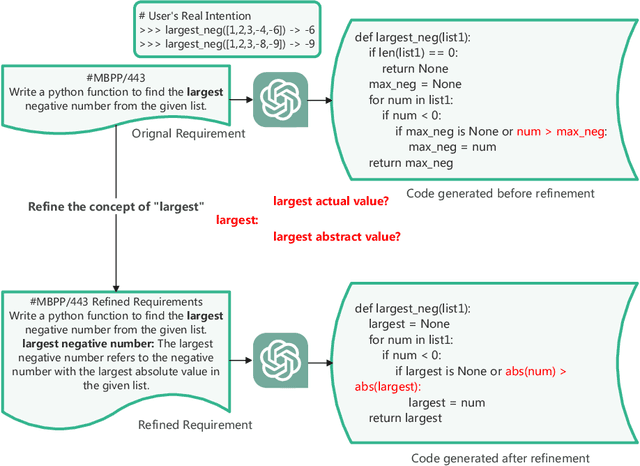
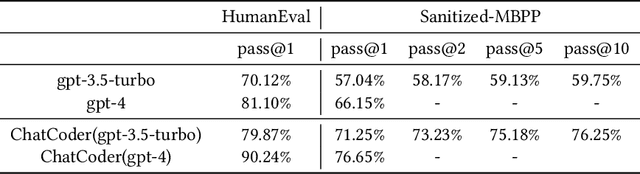

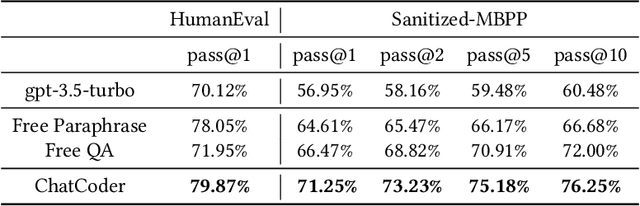
Large language models have shown good performances in generating code to meet human requirements. However, human requirements expressed in natural languages can be vague, incomplete, and ambiguous, leading large language models to misunderstand human requirements and make mistakes. Worse, it is difficult for a human user to refine the requirement. To help human users refine their requirements and improve large language models' code generation performances, we propose ChatCoder: a method to refine the requirements via chatting with large language models. We design a chat scheme in which the large language models will guide the human users to refine their expression of requirements to be more precise, unambiguous, and complete than before. Experiments show that ChatCoder has improved existing large language models' performance by a large margin. Besides, ChatCoder has the advantage over refine-based methods and LLMs fine-tuned via human response.

Large Language Model-Aware In-Context Learning for Code Generation
Oct 15, 2023
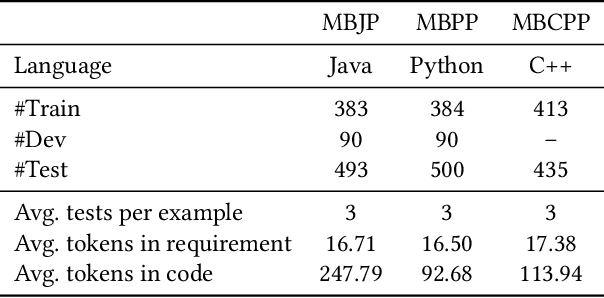
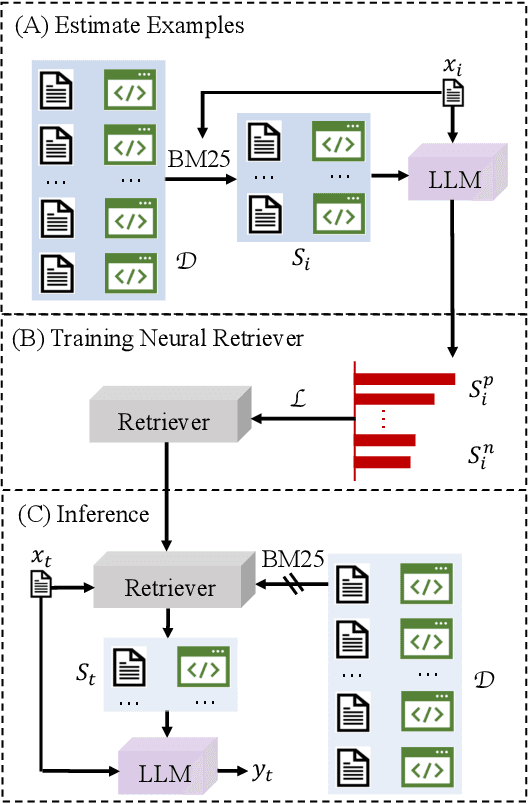
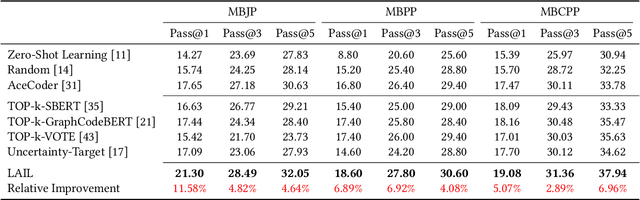
Large language models (LLMs) have shown impressive in-context learning (ICL) ability in code generation. LLMs take a prompt consisting of requirement-code examples and a new requirement as input, and output new programs. Existing studies have found that ICL is highly dominated by the examples and thus arises research on example selection. However, existing approaches randomly select examples or only consider the textual similarity of requirements to retrieve, leading to sub-optimal performance. In this paper, we propose a novel learning-based selection approach named LAIL (LLM-Aware In-context Learning) for code generation. Given a candidate example, we exploit LLMs themselves to estimate it by considering the generation probabilities of ground-truth programs given a requirement and the example. We then label candidate examples as positive or negative through the probability feedback. Based on the labeled data, we import a contrastive learning objective to train an effective retriever that acquires the preference of LLMs in code generation. We apply LAIL to three LLMs and evaluate it on three representative datasets (e.g., MBJP, MBPP, and MBCPP). LATA outperforms the state-of-the-art baselines by 11.58%, 6.89%, and 5.07% on CodeGen, and 4.38%, 2.85%, and 2.74% on GPT-3.5 in terms of Pass@1, respectively.
One For All: Video Conversation is Feasible Without Video Instruction Tuning
Sep 27, 2023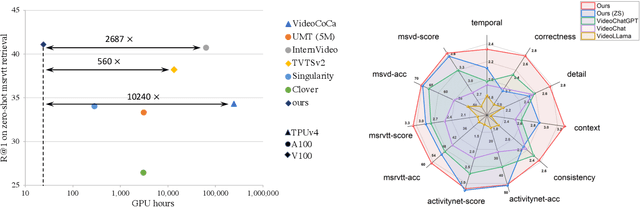
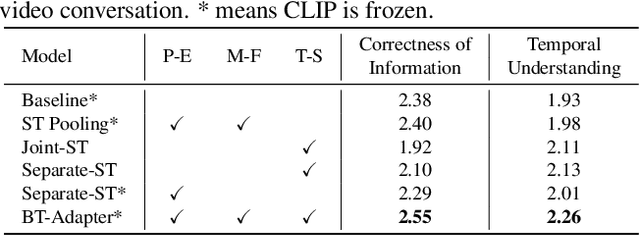
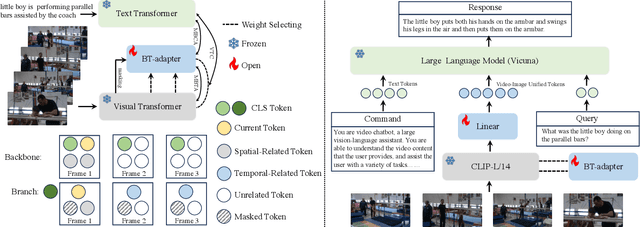
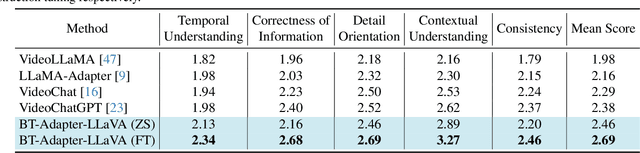
The recent progress in Large Language Models (LLM) has spurred various advancements in image-language conversation agents, while how to build a proficient video-based dialogue system is still under exploration. Considering the extensive scale of LLM and visual backbone, minimal GPU memory is left for facilitating effective temporal modeling, which is crucial for comprehending and providing feedback on videos. To this end, we propose Branching Temporal Adapter (BT-Adapter), a novel method for extending image-language pretrained models into the video domain. Specifically, BT-Adapter serves as a plug-and-use temporal modeling branch alongside the pretrained visual encoder, which is tuned while keeping the backbone frozen. Just pretrained once, BT-Adapter can be seamlessly integrated into all image conversation models using this version of CLIP, enabling video conversations without the need for video instructions. Besides, we develop a unique asymmetric token masking strategy inside the branch with tailor-made training tasks for BT-Adapter, facilitating faster convergence and better results. Thanks to BT-Adapter, we are able to empower existing multimodal dialogue models with strong video understanding capabilities without incurring excessive GPU costs. Without bells and whistles, BT-Adapter achieves (1) state-of-the-art zero-shot results on various video tasks using thousands of fewer GPU hours. (2) better performance than current video chatbots without any video instruction tuning. (3) state-of-the-art results of video chatting using video instruction tuning, outperforming previous SOTAs by a large margin.
ZC3: Zero-Shot Cross-Language Code Clone Detection
Sep 07, 2023Developers introduce code clones to improve programming productivity. Many existing studies have achieved impressive performance in monolingual code clone detection. However, during software development, more and more developers write semantically equivalent programs with different languages to support different platforms and help developers translate projects from one language to another. Considering that collecting cross-language parallel data, especially for low-resource languages, is expensive and time-consuming, how designing an effective cross-language model that does not rely on any parallel data is a significant problem. In this paper, we propose a novel method named ZC3 for Zero-shot Cross-language Code Clone detection. ZC3 designs the contrastive snippet prediction to form an isomorphic representation space among different programming languages. Based on this, ZC3 exploits domain-aware learning and cycle consistency learning to further constrain the model to generate representations that are aligned among different languages meanwhile are diacritical for different types of clones. To evaluate our approach, we conduct extensive experiments on four representative cross-language clone detection datasets. Experimental results show that ZC3 outperforms the state-of-the-art baselines by 67.12%, 51.39%, 14.85%, and 53.01% on the MAP score, respectively. We further investigate the representational distribution of different languages and discuss the effectiveness of our method.
EditSum: A Retrieve-and-Edit Framework for Source Code Summarization
Sep 07, 2023Existing studies show that code summaries help developers understand and maintain source code. Unfortunately, these summaries are often missing or outdated in software projects. Code summarization aims to generate natural language descriptions automatically for source code. Code summaries are highly structured and have repetitive patterns. Besides the patternized words, a code summary also contains important keywords, which are the key to reflecting the functionality of the code. However, the state-of-the-art approaches perform poorly on predicting the keywords, which leads to the generated summaries suffering a loss in informativeness. To alleviate this problem, this paper proposes a novel retrieve-and-edit approach named EditSum for code summarization. Specifically, EditSum first retrieves a similar code snippet from a pre-defined corpus and treats its summary as a prototype summary to learn the pattern. Then, EditSum edits the prototype automatically to combine the pattern in the prototype with the semantic information of input code. Our motivation is that the retrieved prototype provides a good start-point for post-generation because the summaries of similar code snippets often have the same pattern. The post-editing process further reuses the patternized words in the prototype and generates keywords based on the semantic information of input code. We conduct experiments on a large-scale Java corpus and experimental results demonstrate that EditSum outperforms the state-of-the-art approaches by a substantial margin. The human evaluation also proves the summaries generated by EditSum are more informative and useful. We also verify that EditSum performs well on predicting the patternized words and keywords.
Improving Code Generation by Dynamic Temperature Sampling
Sep 06, 2023Recently, Large Language Models (LLMs) have shown impressive results in code generation. However, existing decoding strategies are designed for Natural Language (NL) generation, overlooking the differences between NL and programming languages (PL). Due to this oversight, a better decoding strategy for code generation remains an open question. In this paper, we conduct the first systematic study to explore a decoding strategy specialized in code generation. With an analysis of loss distributions of code tokens, we find that code tokens can be divided into two categories: challenging tokens that are difficult to predict and confident tokens that can be easily inferred. Among them, the challenging tokens mainly appear at the beginning of a code block. Inspired by the above findings, we propose a simple yet effective method: Adaptive Temperature (AdapT) sampling, which dynamically adjusts the temperature coefficient when decoding different tokens. We apply a larger temperature when sampling for challenging tokens, allowing LLMs to explore diverse choices. We employ a smaller temperature for confident tokens avoiding the influence of tail randomness noises. We apply AdapT sampling to LLMs with different sizes and conduct evaluations on two popular datasets. Results show that AdapT sampling significantly outperforms state-of-the-art decoding strategy.
PACE: Improving Prompt with Actor-Critic Editing for Large Language Model
Aug 19, 2023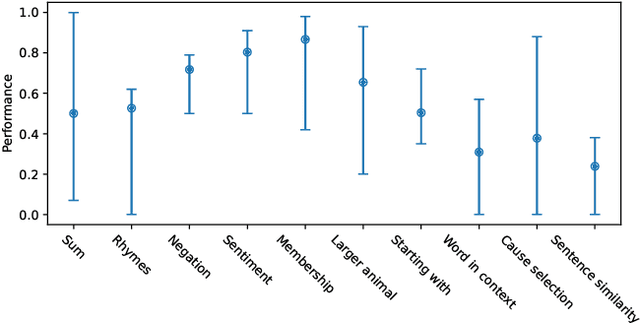


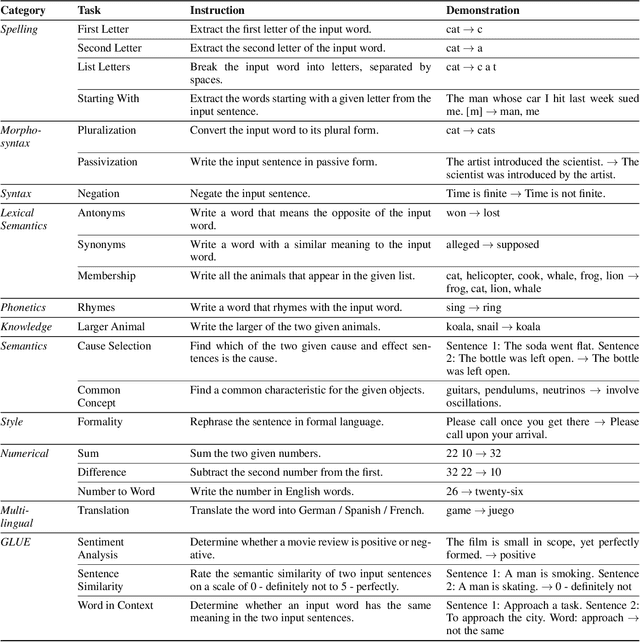
Large language models (LLMs) have showcased remarkable potential across various tasks by conditioning on prompts. However, the quality of different human-written prompts leads to substantial discrepancies in LLMs' performance, and improving prompts usually necessitates considerable human effort and expertise. To this end, this paper proposes Prompt with Actor-Critic Editing (PACE) for LLMs to enable automatic prompt editing. Drawing inspiration from the actor-critic algorithm in reinforcement learning, PACE leverages LLMs as the dual roles of actors and critics, conceptualizing prompt as a type of policy. PACE refines prompt, taking into account the feedback from both actors performing prompt and critics criticizing response. This process helps LLMs better align prompt to a specific task, thanks to real responses and thinking from LLMs. We conduct extensive experiments on 24 instruction induction tasks and 21 big-bench tasks. Experimental results indicate that PACE elevates the relative performance of medium/low-quality human-written prompts by up to 98\%, which has comparable performance to high-quality human-written prompts. Moreover, PACE also exhibits notable efficacy for prompt generation.
MP3: Movement Primitive-Based (Re-)Planning Policy
Jul 02, 2023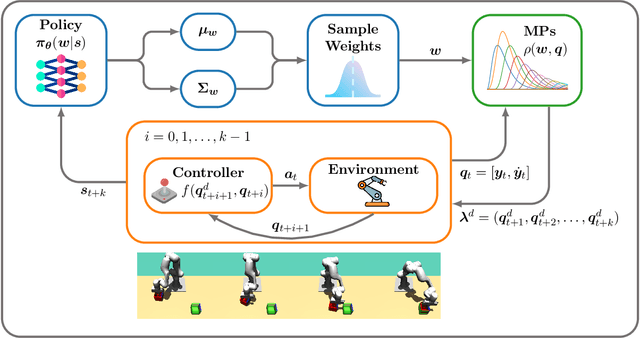
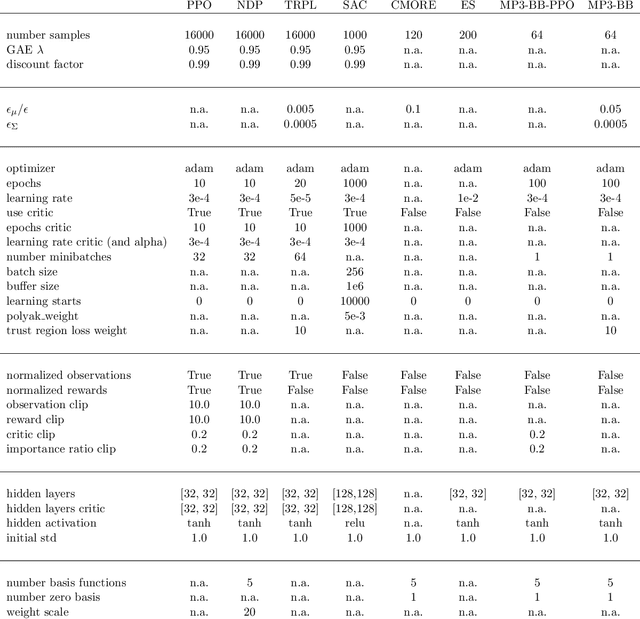
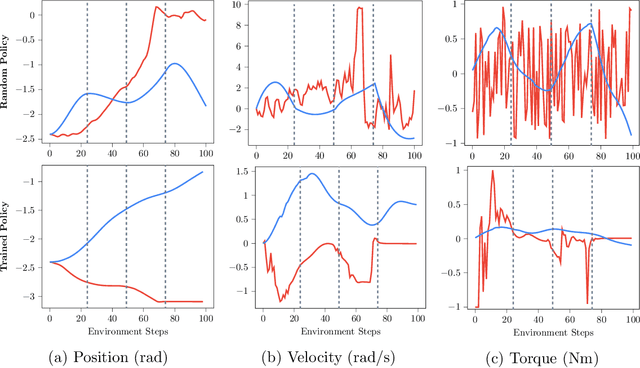
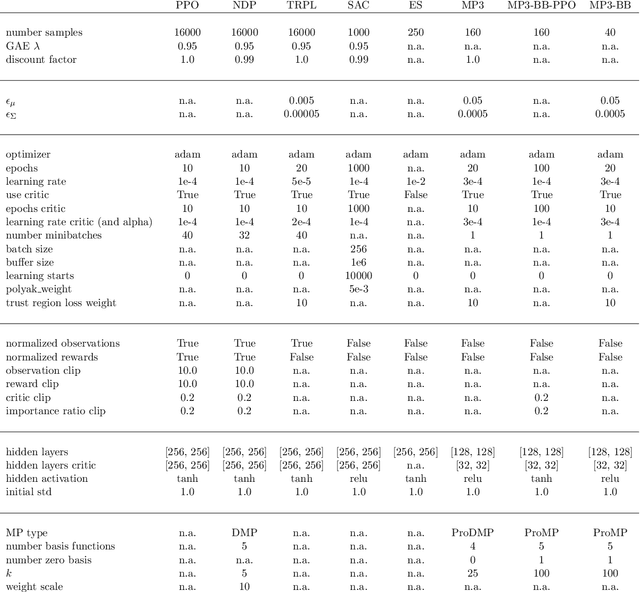
We introduce a novel deep reinforcement learning (RL) approach called Movement Primitive-based Planning Policy (MP3). By integrating movement primitives (MPs) into the deep RL framework, MP3 enables the generation of smooth trajectories throughout the whole learning process while effectively learning from sparse and non-Markovian rewards. Additionally, MP3 maintains the capability to adapt to changes in the environment during execution. Although many early successes in robot RL have been achieved by combining RL with MPs, these approaches are often limited to learning single stroke-based motions, lacking the ability to adapt to task variations or adjust motions during execution. Building upon our previous work, which introduced an episode-based RL method for the non-linear adaptation of MP parameters to different task variations, this paper extends the approach to incorporating replanning strategies. This allows adaptation of the MP parameters throughout motion execution, addressing the lack of online motion adaptation in stochastic domains requiring feedback. We compared our approach against state-of-the-art deep RL and RL with MPs methods. The results demonstrated improved performance in sophisticated, sparse reward settings and in domains requiring replanning.
LIVABLE: Exploring Long-Tailed Classification of Software Vulnerability Types
Jun 12, 2023


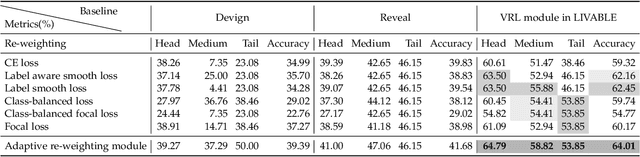
Prior studies generally focus on software vulnerability detection and have demonstrated the effectiveness of Graph Neural Network (GNN)-based approaches for the task. Considering the various types of software vulnerabilities and the associated different degrees of severity, it is also beneficial to determine the type of each vulnerable code for developers. In this paper, we observe that the distribution of vulnerability type is long-tailed in practice, where a small portion of classes have massive samples (i.e., head classes) but the others contain only a few samples (i.e., tail classes). Directly adopting previous vulnerability detection approaches tends to result in poor detection performance, mainly due to two reasons. First, it is difficult to effectively learn the vulnerability representation due to the over-smoothing issue of GNNs. Second, vulnerability types in tails are hard to be predicted due to the extremely few associated samples.To alleviate these issues, we propose a Long-taIled software VulnerABiLity typE classification approach, called LIVABLE. LIVABLE mainly consists of two modules, including (1) vulnerability representation learning module, which improves the propagation steps in GNN to distinguish node representations by a differentiated propagation method. A sequence-to-sequence model is also involved to enhance the vulnerability representations. (2) adaptive re-weighting module, which adjusts the learning weights for different types according to the training epochs and numbers of associated samples by a novel training loss.
Enabling Programming Thinking in Large Language Models Toward Code Generation
May 11, 2023Large Language Models (LLMs) (e.g., ChatGPT) have shown impressive performance in code generation. A large-scale study released that writing programs requires programming thinking, i.e., analyzing and implementing requirements in programming logic (e.g., sequence, branch, loop). Existing studies use LLMs to generate programs from requirements directly and do not explicitly introduce the programming thinking. This paper explores how to unlock the programming thinking of LLMs in code generation and proposes an approach named TiP. Our idea is to decompose code generation into two steps and progressively lead LLMs to analyze&implement requirements in programming logic. Specifically, TiP first generates a code sketch, which provides a high-level solving process using programming logic but omits implementation details (e.g., APIs). Then, TiP implements the sketch into a program using specific programming languages. We conduct extensive experiments on three public benchmarks (i.e., HumanEval, MBPP, and MBCPP). (1) TiP outperforms the state-of-the-art baseline - ChatGPT by up to 17.5% in Pass@1, 11.02% in Pass@3, and 9.84% in Pass@5. (2) Human evaluation shows that TiP outperforms ChatGPT in three aspects (i.e., correctness, code quality, and maintainability). (3) TiP is effective for different LLMs. (4) We explore multiple choices (e.g., chain-of-thought) for the code sketch and validate the superiority of our design. (5) We discuss the complementarity between TiP and post-processing approaches (e.g., CodeT).