 Add to Chrome
 Add to Firefox
 Add to Edge
Intention-Aware Semantic Agent Communications for AI Glasses
Apr 26, 2026
Smart glasses are emerging as a promising interface between humans and artificial intelligence (AI) agents, enabling first-person perception, contextual awareness, and real-time assistance. However, continuous offloading of visual data from wearable devices to cloud-based vision-language models (VLMs) is fundamentally constrained by limited wireless bandwidth and energy resources. This paper proposes an intention-aware semantic agent communication framework for AI glasses, where data transmission is guided by user intention rather than raw pixel fidelity. In the proposed architecture, AI glasses act as an edge semantic agent while a server-side VLM executes high-level cognition and reasoning. The user intention can be inferred by the server-side VLM through the current transmitted content and the historical prompts. Driven by specific user intentions, the glasses adaptively preserve textual content, document layout, or object semantics before transmission. We evaluate three representative scenarios with different lightweight preprocessing tools on the AI glasses. Simulation results demonstrate that intention-aware preprocessing significantly achieves more than 50% bandwidth reduction depending on the current task while maintaining task performance. Moreover, semantic transmission exhibits graceful degradation under low SNRs. The findings demonstrate that aligning communication resources with user intention is essential for robust and efficient wearable AI agent systems.

Semantic Satellite Communications for Synchronized Audiovisual Reconstruction
Mar 11, 2026Satellite communications face severe bottlenecks in supporting high-fidelity synchronized audiovisual services, as conventional schemes struggle with cross-modal coherence under fluctuating channel conditions, limited bandwidth, and long propagation delays. To address these limitations, this paper proposes an adaptive multimodal semantic transmission system tailored for satellite scenarios, aiming for high-quality synchronized audiovisual reconstruction under bandwidth constraints. Unlike static schemes with fixed modal priorities, our framework features a dual-stream generative architecture that flexibly switches between video-driven audio generation and audio-driven video generation. This allows the system to dynamically decouple semantics, transmitting only the most important modality while employing cross-modal generation to recover the other. To balance reconstruction quality and transmission overhead, a dynamic keyframe update mechanism adaptively maintains the shared knowledge base according to wireless scenarios and user requirements. Furthermore, a large language model based decision module is introduced to enhance system adaptability. By integrating satellite-specific knowledge, this module jointly considers task requirements and channel factors such as weather-induced fading to proactively adjust transmission paths and generation workflows. Simulation results demonstrate that the proposed system significantly reduces bandwidth consumption while achieving high-fidelity audiovisual synchronization, improving transmission efficiency and robustness in challenging satellite scenarios.
The Hyperfitting Phenomenon: Sharpening and Stabilizing LLMs for Open-Ended Text Generation
Dec 05, 2024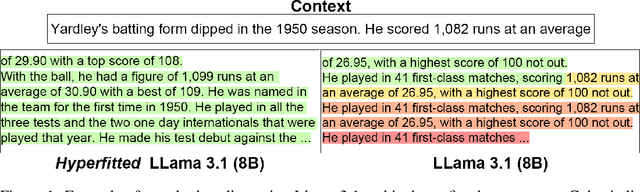
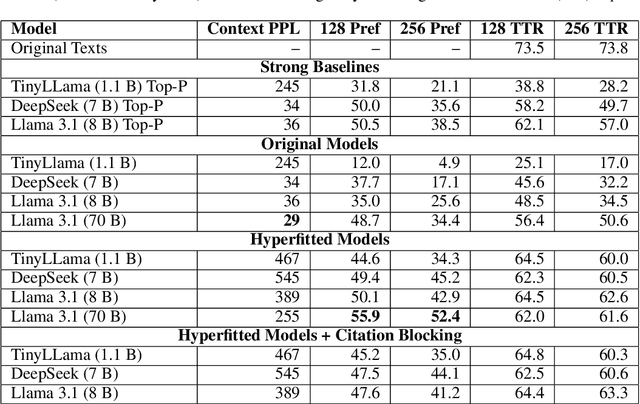
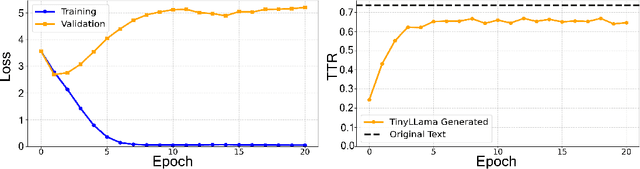
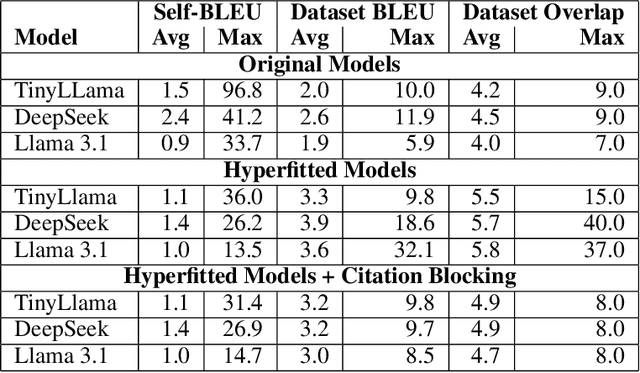
This paper introduces the counter-intuitive generalization results of overfitting pre-trained large language models (LLMs) on very small datasets. In the setting of open-ended text generation, it is well-documented that LLMs tend to generate repetitive and dull sequences, a phenomenon that is especially apparent when generating using greedy decoding. This issue persists even with state-of-the-art LLMs containing billions of parameters, trained via next-token prediction on large datasets. We find that by further fine-tuning these models to achieve a near-zero training loss on a small set of samples -- a process we refer to as hyperfitting -- the long-sequence generative capabilities are greatly enhanced. Greedy decoding with these Hyperfitted models even outperform Top-P sampling over long-sequences, both in terms of diversity and human preferences. This phenomenon extends to LLMs of various sizes, different domains, and even autoregressive image generation. We further find this phenomena to be distinctly different from that of Grokking and double descent. Surprisingly, our experiments indicate that hyperfitted models rarely fall into repeating sequences they were trained on, and even explicitly blocking these sequences results in high-quality output. All hyperfitted models produce extremely low-entropy predictions, often allocating nearly all probability to a single token.
PaliGemma: A versatile 3B VLM for transfer
Jul 10, 2024


PaliGemma is an open Vision-Language Model (VLM) that is based on the SigLIP-So400m vision encoder and the Gemma-2B language model. It is trained to be a versatile and broadly knowledgeable base model that is effective to transfer. It achieves strong performance on a wide variety of open-world tasks. We evaluate PaliGemma on almost 40 diverse tasks including standard VLM benchmarks, but also more specialized tasks such as remote-sensing and segmentation.
ReMI: A Dataset for Reasoning with Multiple Images
Jun 13, 2024


With the continuous advancement of large language models (LLMs), it is essential to create new benchmarks to effectively evaluate their expanding capabilities and identify areas for improvement. This work focuses on multi-image reasoning, an emerging capability in state-of-the-art LLMs. We introduce ReMI, a dataset designed to assess LLMs' ability to Reason with Multiple Images. This dataset encompasses a diverse range of tasks, spanning various reasoning domains such as math, physics, logic, code, table/chart understanding, and spatial and temporal reasoning. It also covers a broad spectrum of characteristics found in multi-image reasoning scenarios. We have benchmarked several cutting-edge LLMs using ReMI and found a substantial gap between their performance and human-level proficiency. This highlights the challenges in multi-image reasoning and the need for further research. Our analysis also reveals the strengths and weaknesses of different models, shedding light on the types of reasoning that are currently attainable and areas where future models require improvement. To foster further research in this area, we are releasing ReMI publicly: https://huggingface.co/datasets/mehrankazemi/ReMI.
Faithful Chart Summarization with ChaTS-Pi
May 29, 2024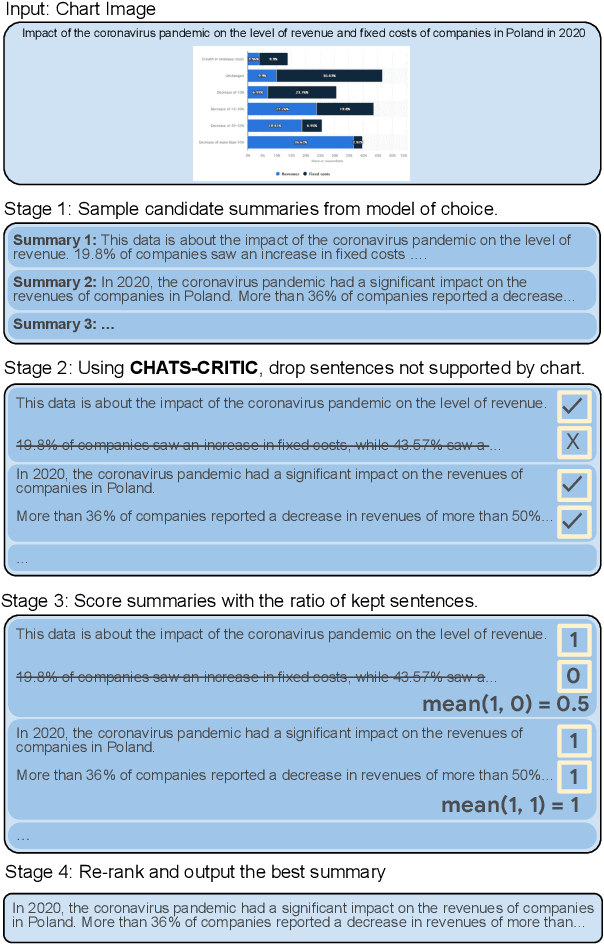
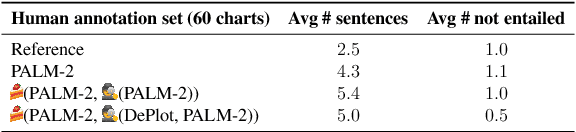
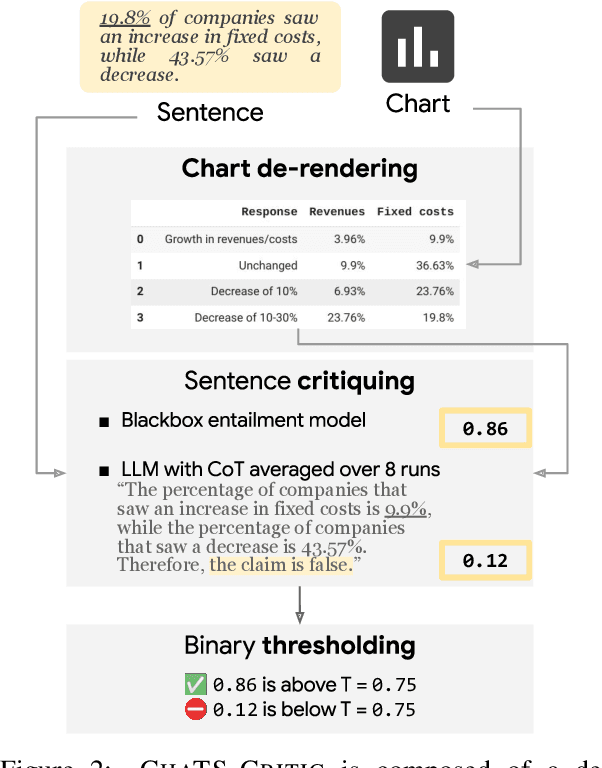
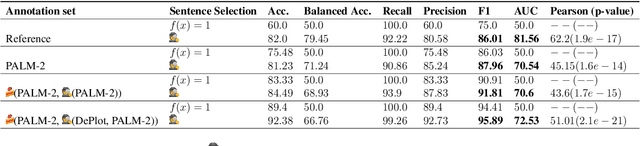
Chart-to-summary generation can help explore data, communicate insights, and help the visually impaired people. Multi-modal generative models have been used to produce fluent summaries, but they can suffer from factual and perceptual errors. In this work we present CHATS-CRITIC, a reference-free chart summarization metric for scoring faithfulness. CHATS-CRITIC is composed of an image-to-text model to recover the table from a chart, and a tabular entailment model applied to score the summary sentence by sentence. We find that CHATS-CRITIC evaluates the summary quality according to human ratings better than reference-based metrics, either learned or n-gram based, and can be further used to fix candidate summaries by removing not supported sentences. We then introduce CHATS-PI, a chart-to-summary pipeline that leverages CHATS-CRITIC during inference to fix and rank sampled candidates from any chart-summarization model. We evaluate CHATS-PI and CHATS-CRITIC using human raters, establishing state-of-the-art results on two popular chart-to-summary datasets.
Best Practices and Lessons Learned on Synthetic Data for Language Models
Apr 11, 2024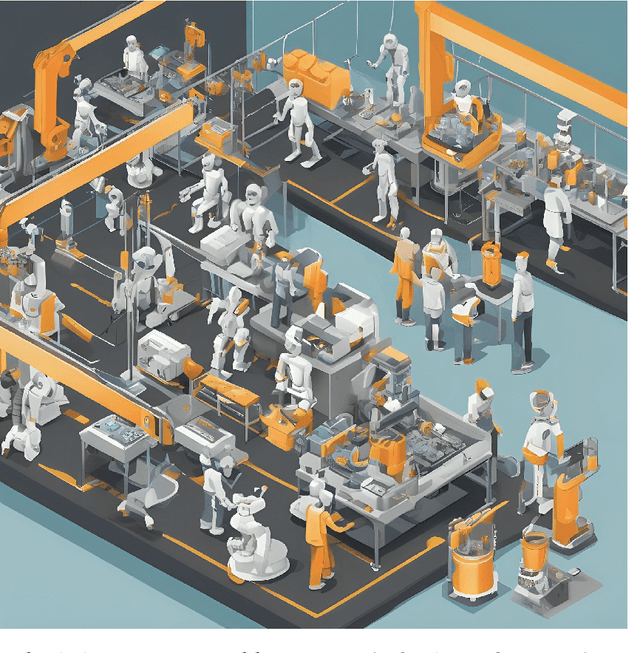
The success of AI models relies on the availability of large, diverse, and high-quality datasets, which can be challenging to obtain due to data scarcity, privacy concerns, and high costs. Synthetic data has emerged as a promising solution by generating artificial data that mimics real-world patterns. This paper provides an overview of synthetic data research, discussing its applications, challenges, and future directions. We present empirical evidence from prior art to demonstrate its effectiveness and highlight the importance of ensuring its factuality, fidelity, and unbiasedness. We emphasize the need for responsible use of synthetic data to build more powerful, inclusive, and trustworthy language models.
LUQ: Long-text Uncertainty Quantification for LLMs
Mar 29, 2024Large Language Models (LLMs) have demonstrated remarkable capability in a variety of NLP tasks. Despite their effectiveness, these models are prone to generate nonfactual content. Uncertainty Quantification (UQ) is pivotal in enhancing our understanding of a model's confidence in its generated content, thereby aiding in the mitigation of nonfactual outputs. Existing research on UQ predominantly targets short text generation, typically yielding brief, word-limited responses. However, real-world applications frequently necessitate much longer responses. Our study first highlights the limitations of current UQ methods in handling long text generation. We then introduce \textsc{Luq}, a novel sampling-based UQ approach specifically designed for long text. Our findings reveal that \textsc{Luq} outperforms existing baseline methods in correlating with the model's factuality scores (negative coefficient of -0.85 observed for Gemini Pro). With \textsc{Luq} as the tool for UQ, we investigate behavior patterns of several popular LLMs' response confidence spectrum and how that interplays with the response' factuality. We identify that LLMs lack confidence in generating long text for rare facts and a factually strong model (i.e. GPT-4) tends to reject questions it is not sure about. To further improve the factual accuracy of LLM responses, we propose a method called \textsc{Luq-Ensemble} that ensembles responses from multiple models and selects the response with the least uncertainty. The ensembling method greatly improves the response factuality upon the best standalone LLM.
Chart-based Reasoning: Transferring Capabilities from LLMs to VLMs
Mar 19, 2024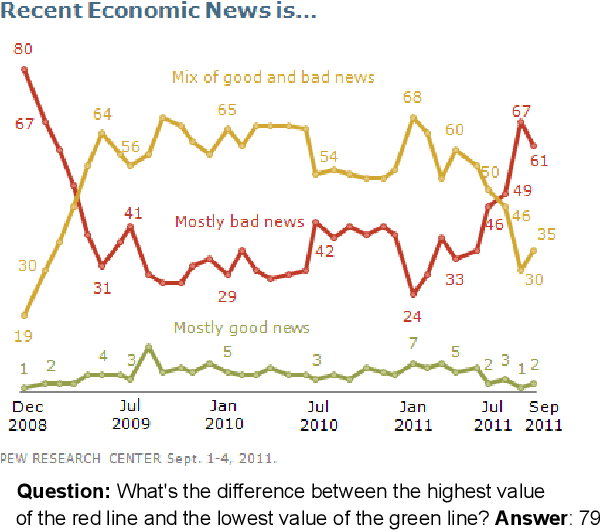


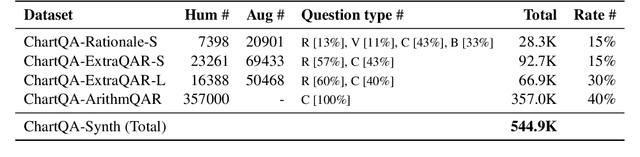
Vision-language models (VLMs) are achieving increasingly strong performance on multimodal tasks. However, reasoning capabilities remain limited particularly for smaller VLMs, while those of large-language models (LLMs) have seen numerous improvements. We propose a technique to transfer capabilities from LLMs to VLMs. On the recently introduced ChartQA, our method obtains state-of-the-art performance when applied on the PaLI3-5B VLM by \citet{chen2023pali3}, while also enabling much better performance on PlotQA and FigureQA. We first improve the chart representation by continuing the pre-training stage using an improved version of the chart-to-table translation task by \citet{liu2023deplot}. We then propose constructing a 20x larger dataset than the original training set. To improve general reasoning capabilities and improve numerical operations, we synthesize reasoning traces using the table representation of charts. Lastly, our model is fine-tuned using the multitask loss introduced by \citet{hsieh2023distilling}. Our variant ChartPaLI-5B outperforms even 10x larger models such as PaLIX-55B without using an upstream OCR system, while keeping inference time constant compared to the PaLI3-5B baseline. When rationales are further refined with a simple program-of-thought prompt \cite{chen2023program}, our model outperforms the recently introduced Gemini Ultra and GPT-4V.
Gemini 1.5: Unlocking multimodal understanding across millions of tokens of context
Mar 08, 2024In this report, we present the latest model of the Gemini family, Gemini 1.5 Pro, a highly compute-efficient multimodal mixture-of-experts model capable of recalling and reasoning over fine-grained information from millions of tokens of context, including multiple long documents and hours of video and audio. Gemini 1.5 Pro achieves near-perfect recall on long-context retrieval tasks across modalities, improves the state-of-the-art in long-document QA, long-video QA and long-context ASR, and matches or surpasses Gemini 1.0 Ultra's state-of-the-art performance across a broad set of benchmarks. Studying the limits of Gemini 1.5 Pro's long-context ability, we find continued improvement in next-token prediction and near-perfect retrieval (>99%) up to at least 10M tokens, a generational leap over existing models such as Claude 2.1 (200k) and GPT-4 Turbo (128k). Finally, we highlight surprising new capabilities of large language models at the frontier; when given a grammar manual for Kalamang, a language with fewer than 200 speakers worldwide, the model learns to translate English to Kalamang at a similar level to a person who learned from the same content.