 Add to Chrome
 Add to Firefox
 Add to Edge
RPS: Information Elicitation with Reinforcement Prompt Selection
Apr 15, 2026
Large language models (LLMs) have shown remarkable capabilities in dialogue generation and reasoning, yet their effectiveness in eliciting user-known but concealed information in open-ended conversations remains limited. In many interactive AI applications, such as personal assistants, tutoring systems, and legal or clinical support, users often withhold sensitive or uncertain information due to privacy concerns, ambiguity, or social hesitation. This makes it challenging for LLMs to gather complete and contextually relevant inputs. In this work, we define the problem of information elicitation in open-ended dialogue settings and propose Reinforcement Prompt Selection (RPS), a lightweight reinforcement learning framework that formulates prompt selection as a sequential decision-making problem. To analyze this problem in a controlled setting, we design a synthetic experiment, where a reinforcement learning agent outperforms a random query baseline, illustrating the potential of policy-based approaches for adaptive information elicitation. Building on this insight, RPS learns a policy over a pool of prompts to adaptively elicit concealed or incompletely expressed information from users through dialogue. We also introduce IELegal, a new benchmark dataset constructed from real legal case documents, which simulates dialogue-based information elicitation tasks aimed at uncovering case-relevant facts. In this setting, RPS outperforms static prompt baselines, demonstrating the effectiveness of adaptive prompt selection for eliciting critical information in LLM-driven dialogue systems.

Graph Tokenization for Bridging Graphs and Transformers
Mar 11, 2026The success of large pretrained Transformers is closely tied to tokenizers, which convert raw input into discrete symbols. Extending these models to graph-structured data remains a significant challenge. In this work, we introduce a graph tokenization framework that generates sequential representations of graphs by combining reversible graph serialization, which preserves graph information, with Byte Pair Encoding (BPE), a widely adopted tokenizer in large language models (LLMs). To better capture structural information, the graph serialization process is guided by global statistics of graph substructures, ensuring that frequently occurring substructures appear more often in the sequence and can be merged by BPE into meaningful tokens. Empirical results demonstrate that the proposed tokenizer enables Transformers such as BERT to be directly applied to graph benchmarks without architectural modifications. The proposed approach achieves state-of-the-art results on 14 benchmark datasets and frequently outperforms both graph neural networks and specialized graph transformers. This work bridges the gap between graph-structured data and the ecosystem of sequence models. Our code is available at \href{https://github.com/BUPT-GAMMA/Graph-Tokenization-for-Bridging-Graphs-and-Transformers}{\color{blue}here}.
A Kinetic-Energy Perspective of Flow Matching
Feb 08, 2026Flow-based generative models can be viewed through a physics lens: sampling transports a particle from noise to data by integrating a time-varying velocity field, and each sample corresponds to a trajectory with its own dynamical effort. Motivated by classical mechanics, we introduce Kinetic Path Energy (KPE), an action-like, per-sample diagnostic that measures the accumulated kinetic effort along an Ordinary Differential Equation (ODE) trajectory. Empirically, KPE exhibits two robust correspondences: (i) higher KPE predicts stronger semantic fidelity; (ii) high-KPE trajectories terminate on low-density manifold frontiers. We further provide theoretical guarantees linking trajectory energy to data density. Paradoxically, this correlation is non-monotonic. At sufficiently high energy, generation can degenerate into memorization. Leveraging the closed-form of empirical flow matching, we show that extreme energies drive trajectories toward near-copies of training examples. This yields a Goldilocks principle and motivates Kinetic Trajectory Shaping (KTS), a training-free two-phase inference strategy that boosts early motion and enforces a late-time soft landing, reducing memorization and improving generation quality across benchmark tasks.
Probe Pruning: Accelerating LLMs through Dynamic Pruning via Model-Probing
Feb 21, 2025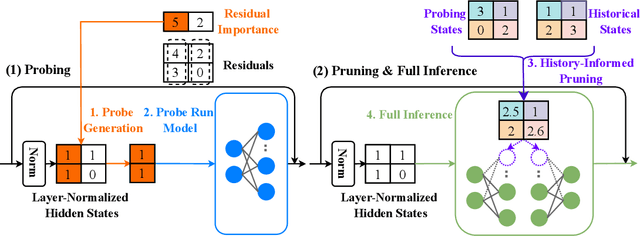
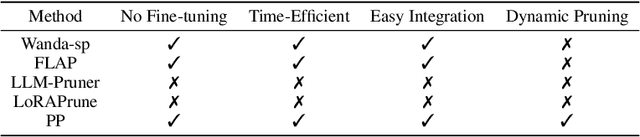
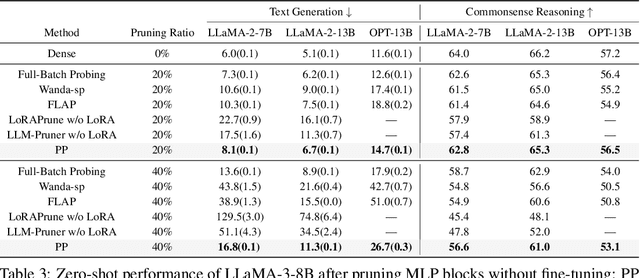
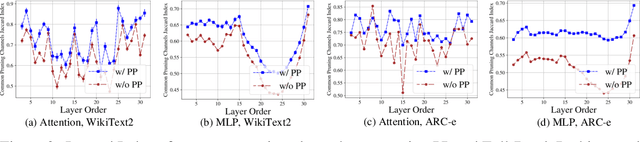
We introduce Probe Pruning (PP), a novel framework for online, dynamic, structured pruning of Large Language Models (LLMs) applied in a batch-wise manner. PP leverages the insight that not all samples and tokens contribute equally to the model's output, and probing a small portion of each batch effectively identifies crucial weights, enabling tailored dynamic pruning for different batches. It comprises three main stages: probing, history-informed pruning, and full inference. In the probing stage, PP selects a small yet crucial set of hidden states, based on residual importance, to run a few model layers ahead. During the history-informed pruning stage, PP strategically integrates the probing states with historical states. Subsequently, it structurally prunes weights based on the integrated states and the PP importance score, a metric developed specifically to assess the importance of each weight channel in maintaining performance. In the final stage, full inference is conducted on the remaining weights. A major advantage of PP is its compatibility with existing models, as it operates without requiring additional neural network modules or fine-tuning. Comprehensive evaluations of PP on LLaMA-2/3 and OPT models reveal that even minimal probing-using just 1.5% of FLOPs-can substantially enhance the efficiency of structured pruning of LLMs. For instance, when evaluated on LLaMA-2-7B with WikiText2, PP achieves a 2.56 times lower ratio of performance degradation per unit of runtime reduction compared to the state-of-the-art method at a 40% pruning ratio. Our code is available at https://github.com/Qi-Le1/Probe_Pruning.
MAP: Multi-Human-Value Alignment Palette
Oct 24, 2024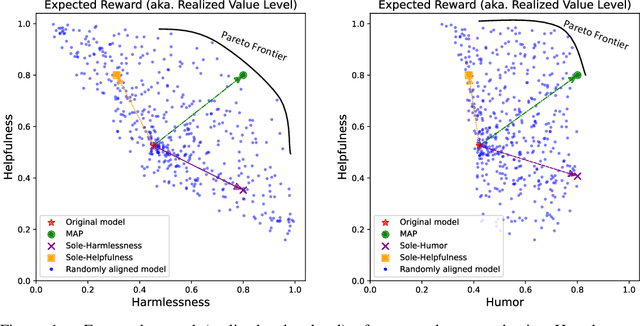
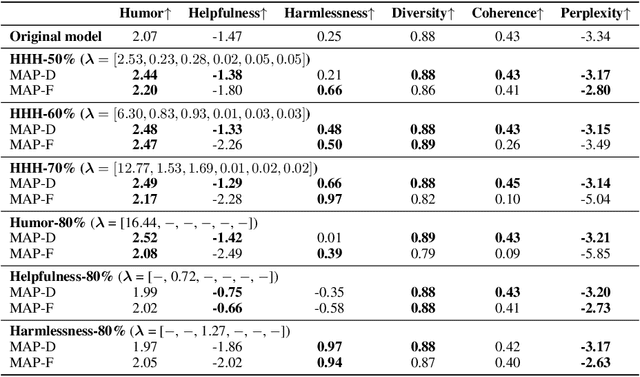
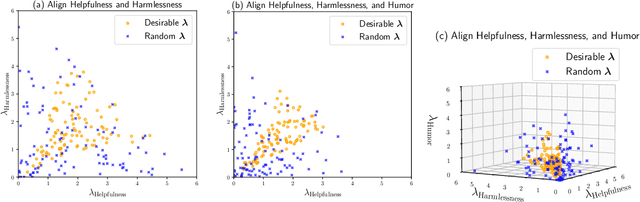
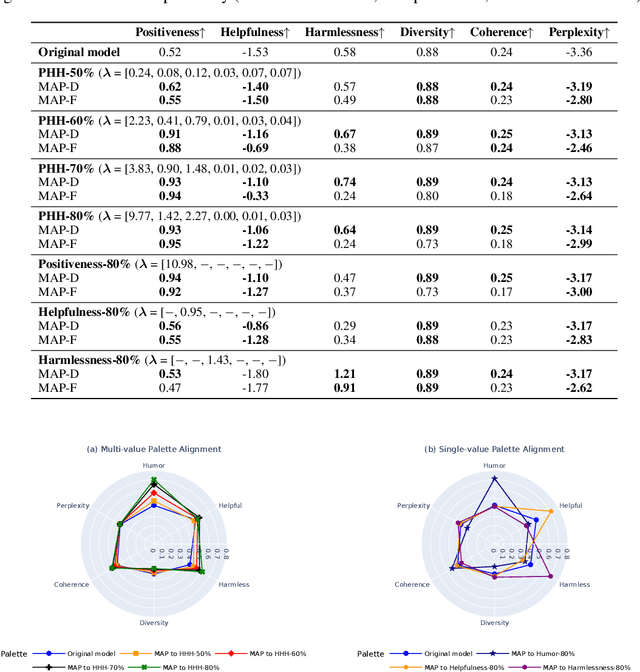
Ensuring that generative AI systems align with human values is essential but challenging, especially when considering multiple human values and their potential trade-offs. Since human values can be personalized and dynamically change over time, the desirable levels of value alignment vary across different ethnic groups, industry sectors, and user cohorts. Within existing frameworks, it is hard to define human values and align AI systems accordingly across different directions simultaneously, such as harmlessness, helpfulness, and positiveness. To address this, we develop a novel, first-principle approach called Multi-Human-Value Alignment Palette (MAP), which navigates the alignment across multiple human values in a structured and reliable way. MAP formulates the alignment problem as an optimization task with user-defined constraints, which define human value targets. It can be efficiently solved via a primal-dual approach, which determines whether a user-defined alignment target is achievable and how to achieve it. We conduct a detailed theoretical analysis of MAP by quantifying the trade-offs between values, the sensitivity to constraints, the fundamental connection between multi-value alignment and sequential alignment, and proving that linear weighted rewards are sufficient for multi-value alignment. Extensive experiments demonstrate MAP's ability to align multiple values in a principled manner while delivering strong empirical performance across various tasks.
DynamicFL: Federated Learning with Dynamic Communication Resource Allocation
Sep 08, 2024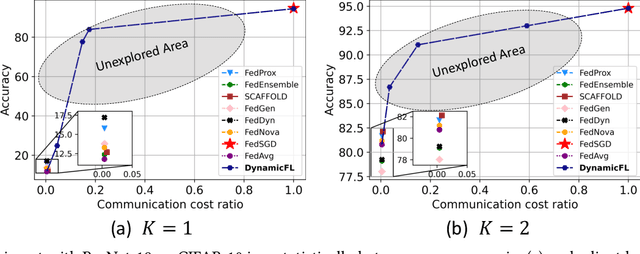
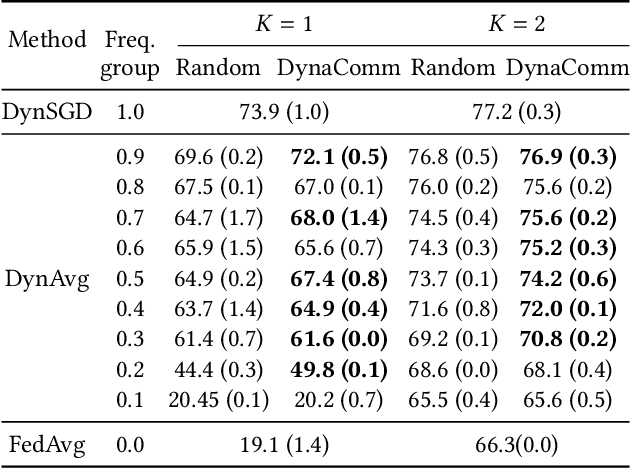
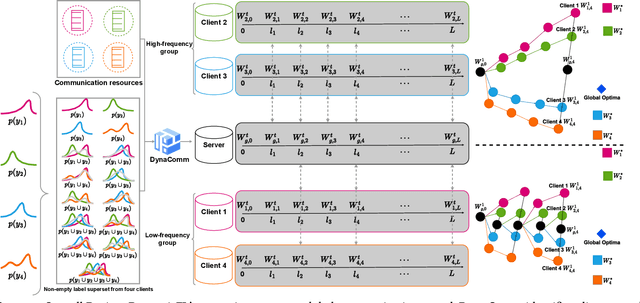

Federated Learning (FL) is a collaborative machine learning framework that allows multiple users to train models utilizing their local data in a distributed manner. However, considerable statistical heterogeneity in local data across devices often leads to suboptimal model performance compared with independently and identically distributed (IID) data scenarios. In this paper, we introduce DynamicFL, a new FL framework that investigates the trade-offs between global model performance and communication costs for two widely adopted FL methods: Federated Stochastic Gradient Descent (FedSGD) and Federated Averaging (FedAvg). Our approach allocates diverse communication resources to clients based on their data statistical heterogeneity, considering communication resource constraints, and attains substantial performance enhancements compared to uniform communication resource allocation. Notably, our method bridges the gap between FedSGD and FedAvg, providing a flexible framework leveraging communication heterogeneity to address statistical heterogeneity in FL. Through extensive experiments, we demonstrate that DynamicFL surpasses current state-of-the-art methods with up to a 10% increase in model accuracy, demonstrating its adaptability and effectiveness in tackling data statistical heterogeneity challenges.
Robust Score-Based Quickest Change Detection
Jul 15, 2024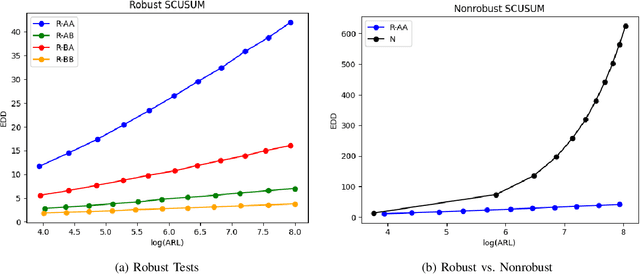
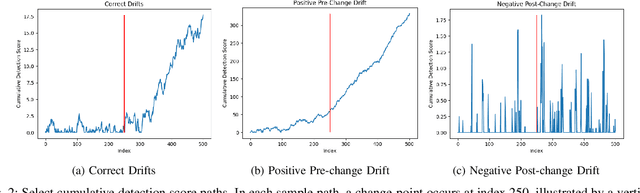
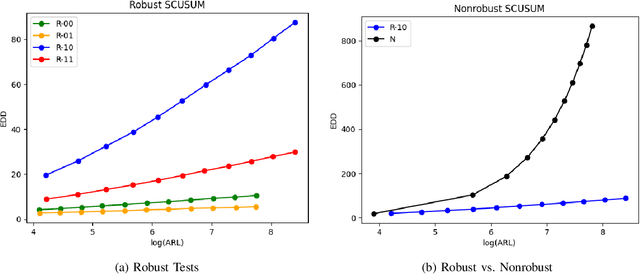
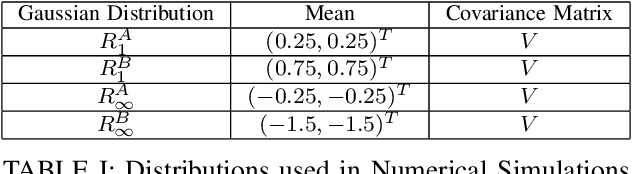
Methods in the field of quickest change detection rapidly detect in real-time a change in the data-generating distribution of an online data stream. Existing methods have been able to detect this change point when the densities of the pre- and post-change distributions are known. Recent work has extended these results to the case where the pre- and post-change distributions are known only by their score functions. This work considers the case where the pre- and post-change score functions are known only to correspond to distributions in two disjoint sets. This work employs a pair of "least-favorable" distributions to robustify the existing score-based quickest change detection algorithm, the properties of which are studied. This paper calculates the least-favorable distributions for specific model classes and provides methods of estimating the least-favorable distributions for common constructions. Simulation results are provided demonstrating the performance of our robust change detection algorithm.
ESC: Efficient Speech Coding with Cross-Scale Residual Vector Quantized Transformers
Apr 30, 2024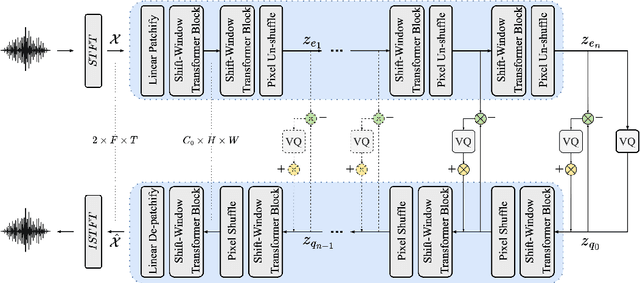
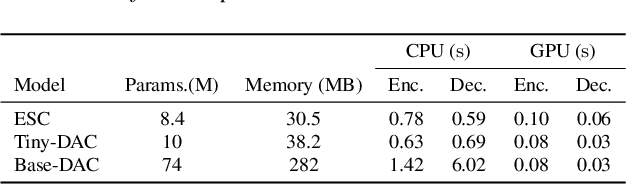
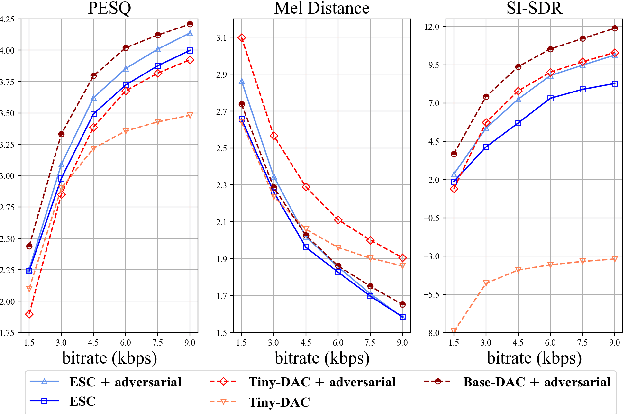
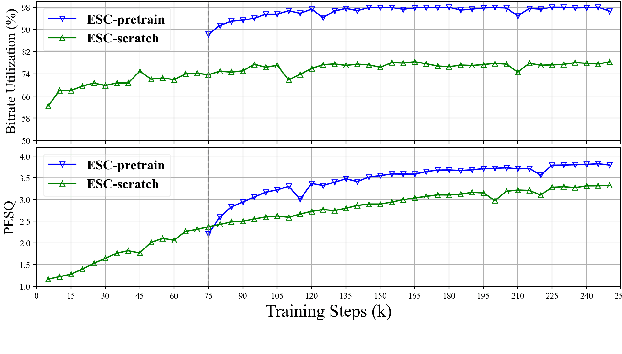
Existing neural audio codecs usually sacrifice computational complexity for audio quality. They build the feature transformation layers mainly on convolutional blocks, which are not inherently appropriate for capturing local redundancies of audio signals. As compensation, either adversarial losses from a discriminator or a large number of model parameters are required to improve the codec. To that end, we propose Efficient Speech Codec (ESC), a lightweight parameter-efficient codec laid on cross-scale residual vector quantization and transformers. Our model leverages mirrored hierarchical window-attention transformer blocks and performs step-wise decoding from coarse-to-fine feature representations. To enhance codebook utilization, we design a learning paradigm that involves a pre-training stage to assist with codec training. Extensive results show that ESC can achieve high audio quality with much lower complexity, which is a prospective alternative in place of existing codecs.
ColA: Collaborative Adaptation with Gradient Learning
Apr 22, 2024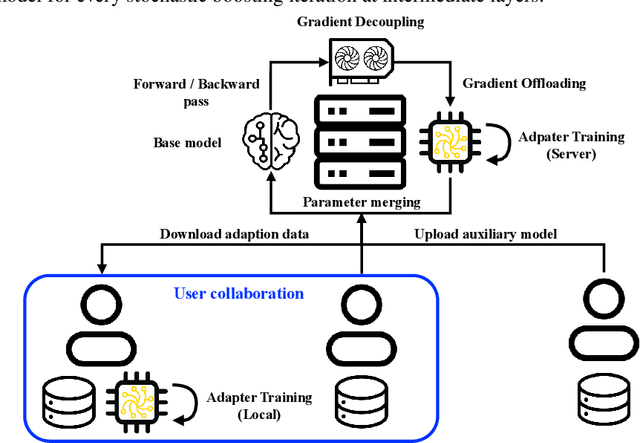
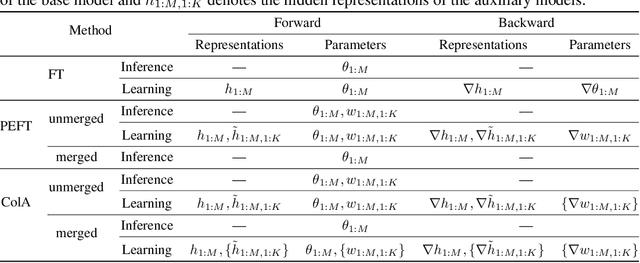
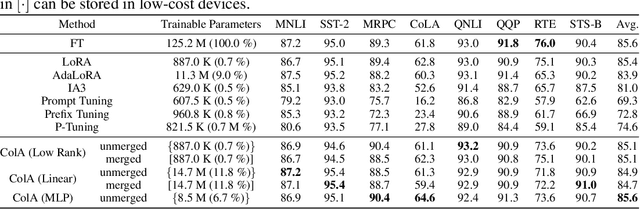
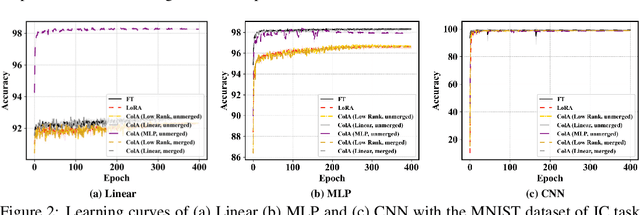
A primary function of back-propagation is to compute both the gradient of hidden representations and parameters for optimization with gradient descent. Training large models requires high computational costs due to their vast parameter sizes. While Parameter-Efficient Fine-Tuning (PEFT) methods aim to train smaller auxiliary models to save computational space, they still present computational overheads, especially in Fine-Tuning as a Service (FTaaS) for numerous users. We introduce Collaborative Adaptation (ColA) with Gradient Learning (GL), a parameter-free, model-agnostic fine-tuning approach that decouples the computation of the gradient of hidden representations and parameters. In comparison to PEFT methods, ColA facilitates more cost-effective FTaaS by offloading the computation of the gradient to low-cost devices. We also provide a theoretical analysis of ColA and experimentally demonstrate that ColA can perform on par or better than existing PEFT methods on various benchmarks.
Large Deviation Analysis of Score-based Hypothesis Testing
Feb 03, 2024Score-based statistical models play an important role in modern machine learning, statistics, and signal processing. For hypothesis testing, a score-based hypothesis test is proposed in \cite{wu2022score}. We analyze the performance of this score-based hypothesis testing procedure and derive upper bounds on the probabilities of its Type I and II errors. We prove that the exponents of our error bounds are asymptotically (in the number of samples) tight for the case of simple null and alternative hypotheses. We calculate these error exponents explicitly in specific cases and provide numerical studies for various other scenarios of interest.