 Add to Chrome
 Add to Firefox
 Add to Edge
CausalNav: Reliability-Certified Causal World Models for Control under Physical-Parameter Shift
Aug 07, 2026
A world model is only useful for physical AI if it changes what the agent does, and only safe if it declines to do so when it is wrong. We study both halves of that requirement with CausalNav, a controller built around a signed, action-conditioned transition graph over identified state coordinates. At deployment CausalNav simulates a small library of intervention sequences, converts their objective error into policy-logit advice, and admits that advice only when a scale-free predictive-reliability certificate, a policy-margin gate, and an argmax-agreement gate all pass; otherwise it falls back exactly to its own model-based base controller. We evaluate against nine controlled baselines (transformer, recurrent, split-latent, graph, causal-induction, and three recent model-based reasoning modules) on CartPole-v1 and discretized Pendulum-v1 with physical-parameter shifts, under one shared PPO trainer, one interaction budget, and ten held-out seeds (200 runs). CausalNav attains the best average rank (1.25 of ten). The diagnostic result is more informative than the ranking: the learned graph recovers structure well above chance (CartPole F1 = 0.59 +/- 0.09), yet per-seed structural fidelity is uncorrelated with per-seed control benefit (r = -0.15, p = 0.67), and the certificate abstains on 10/10 Pendulum seeds, where forcing the planner on costs return. Model fidelity did not predict downstream control utility in our setting; certified abstention, not better prediction, is what made the world model safe to deploy.

When the Judge Should Not Decide: Evidence-Locked, Non-Compensatory Selection Bounds LLM-Judge Failure in Reasoning Pipelines
Aug 07, 2026An LLM judge deployed inside a reasoning pipeline does not merely measure quality, it decides which answer ships. We show that the cost of that decision depends less on judge accuracy than on the decision rule the judge is embedded in. On frozen candidate pools from four GRPO policies, an unconstrained scalar DeepSeek-R1-7B judge buys almost nothing over answer-level majority vote (+1.0 pp on 500 GSM8K questions, +0.34 EM on 300 HotpotQA questions), and on a frozen-rule 30-question confirmation split it is 10 points worse than majority, a judge that destroys accuracy while scoring candidates confidently. We then subordinate the same judge to Evidence-Locked Derive-Gate-Repair (EL-DGR), a task-adaptive non-compensatory rule under which a judge preference may override evidence-supported consensus only with an extractive evidence certificate, and a repair only when neither alternative is certified and the repair is. With no change to the judge, the candidates, or the budget, EL-DGR reaches 58.2% on GSM8K (vs. 56.8% judge, 55.8% majority, 55.4% first candidate) and 17.33 EM / 25.46 F1 on HotpotQA (vs. 15.67/23.49, 15.33/23.19, 15.33/22.97), improving on first-candidate GRPO by +2.8 pp (exact McNemar p=0.0026) and +2.00 EM (p=0.070, borderline). A decision audit shows why: EL-DGR overturns consensus on only 8 of 30 pilot questions and never converts a correct consensus into an incorrect answer. We also report what did not work: the same seven-channel decomposition used as a step-level gated training reward is null, and corrected channel-drop ablations show no channel is individually necessary (p=1.0 throughout). The practitioner-facing finding is negative about judges and positive about admissibility, bound the judge's blast radius rather than trying to make it accurate.
Explainable Autonomous Cyber Defense using Adversarial Multi-Agent Reinforcement Learning
Apr 06, 2026Autonomous agents are increasingly deployed in both offensive and defensive cyber operations, creating high-speed, closed-loop interactions in critical infrastructure environments. Advanced Persistent Threat (APT) actors exploit "Living off the Land" techniques and targeted telemetry perturbations to induce ambiguity in monitoring systems, causing automated defenses to overreact or misclassify benign behavior as malicious activity. Existing monolithic and multi-agent defense pipelines largely operate on correlation-based signals, lack structural constraints on response actions, and are vulnerable to reasoning drift under ambiguous or adversarial inputs. We present the Causal Multi-Agent Decision Framework (C-MADF), a structurally constrained architecture for autonomous cyber defense that integrates causal modeling with adversarial dual-policy control. C-MADF first learns a Structural Causal Model (SCM) from historical telemetry and compiles it into an investigation-level Directed Acyclic Graph (DAG) that defines admissible response transitions. This roadmap is formalized as a Markov Decision Process (MDP) whose action space is explicitly restricted to causally consistent transitions. Decision-making within this constrained space is performed by a dual-agent reinforcement learning system in which a threat-optimizing Blue-Team policy is counterbalanced by a conservatively shaped Red-Team policy. Inter-policy disagreement is quantified through a Policy Divergence Score and exposed via a human-in-the-loop interface equipped with an Explainability-Transparency Score that serves as an escalation signal under uncertainty. On the real-world CICIoT2023 dataset, C-MADF reduces the false-positive rate from 11.2%, 9.7%, and 8.4% in three cutting-edge literature baselines to 1.8%, while achieving 0.997 precision, 0.961 recall, and 0.979 F1-score.
TempoNet: Learning Realistic Communication and Timing Patterns for Network Traffic Simulation
Jan 22, 2026Realistic network traffic simulation is critical for evaluating intrusion detection systems, stress-testing network protocols, and constructing high-fidelity environments for cybersecurity training. While attack traffic can often be layered into training environments using red-teaming or replay methods, generating authentic benign background traffic remains a core challenge -- particularly in simulating the complex temporal and communication dynamics of real-world networks. This paper introduces TempoNet, a novel generative model that combines multi-task learning with multi-mark temporal point processes to jointly model inter-arrival times and all packet- and flow-header fields. TempoNet captures fine-grained timing patterns and higher-order correlations such as host-pair behavior and seasonal trends, addressing key limitations of GAN-, LLM-, and Bayesian-based methods that fail to reproduce structured temporal variation. TempoNet produces temporally consistent, high-fidelity traces, validated on real-world datasets. Furthermore, we show that intrusion detection models trained on TempoNet-generated background traffic perform comparably to those trained on real data, validating its utility for real-world security applications.
Unveiling the Black Box: A Multi-Layer Framework for Explaining Reinforcement Learning-Based Cyber Agents
May 16, 2025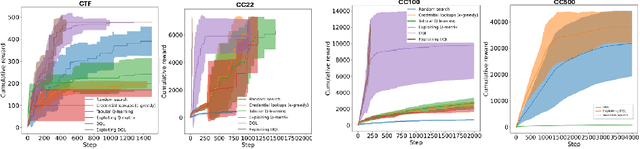
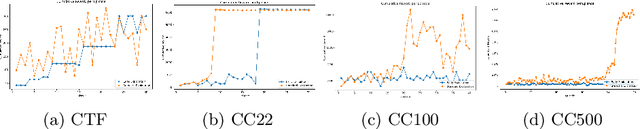

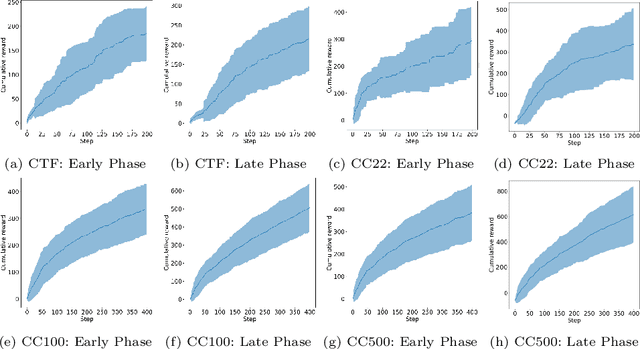
Reinforcement Learning (RL) agents are increasingly used to simulate sophisticated cyberattacks, but their decision-making processes remain opaque, hindering trust, debugging, and defensive preparedness. In high-stakes cybersecurity contexts, explainability is essential for understanding how adversarial strategies are formed and evolve over time. In this paper, we propose a unified, multi-layer explainability framework for RL-based attacker agents that reveals both strategic (MDP-level) and tactical (policy-level) reasoning. At the MDP level, we model cyberattacks as a Partially Observable Markov Decision Processes (POMDPs) to expose exploration-exploitation dynamics and phase-aware behavioural shifts. At the policy level, we analyse the temporal evolution of Q-values and use Prioritised Experience Replay (PER) to surface critical learning transitions and evolving action preferences. Evaluated across CyberBattleSim environments of increasing complexity, our framework offers interpretable insights into agent behaviour at scale. Unlike previous explainable RL methods, which are often post-hoc, domain-specific, or limited in depth, our approach is both agent- and environment-agnostic, supporting use cases ranging from red-team simulation to RL policy debugging. By transforming black-box learning into actionable behavioural intelligence, our framework enables both defenders and developers to better anticipate, analyse, and respond to autonomous cyber threats.
CAMP in the Odyssey: Provably Robust Reinforcement Learning with Certified Radius Maximization
Jan 29, 2025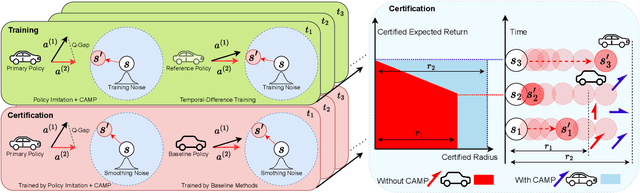
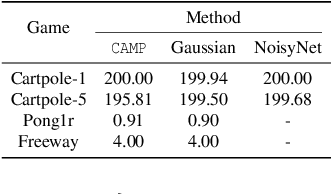
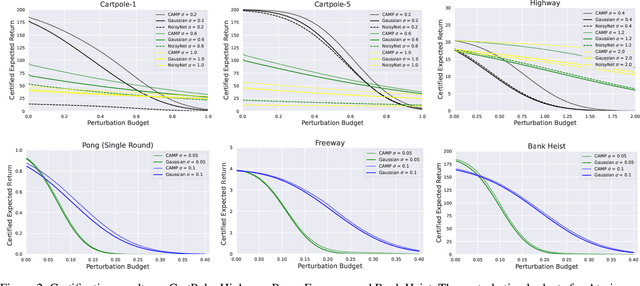
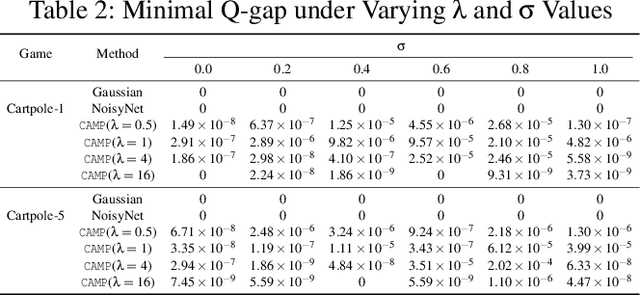
Deep reinforcement learning (DRL) has gained widespread adoption in control and decision-making tasks due to its strong performance in dynamic environments. However, DRL agents are vulnerable to noisy observations and adversarial attacks, and concerns about the adversarial robustness of DRL systems have emerged. Recent efforts have focused on addressing these robustness issues by establishing rigorous theoretical guarantees for the returns achieved by DRL agents in adversarial settings. Among these approaches, policy smoothing has proven to be an effective and scalable method for certifying the robustness of DRL agents. Nevertheless, existing certifiably robust DRL relies on policies trained with simple Gaussian augmentations, resulting in a suboptimal trade-off between certified robustness and certified return. To address this issue, we introduce a novel paradigm dubbed \texttt{C}ertified-r\texttt{A}dius-\texttt{M}aximizing \texttt{P}olicy (\texttt{CAMP}) training. \texttt{CAMP} is designed to enhance DRL policies, achieving better utility without compromising provable robustness. By leveraging the insight that the global certified radius can be derived from local certified radii based on training-time statistics, \texttt{CAMP} formulates a surrogate loss related to the local certified radius and optimizes the policy guided by this surrogate loss. We also introduce \textit{policy imitation} as a novel technique to stabilize \texttt{CAMP} training. Experimental results demonstrate that \texttt{CAMP} significantly improves the robustness-return trade-off across various tasks. Based on the results, \texttt{CAMP} can achieve up to twice the certified expected return compared to that of baselines. Our code is available at https://github.com/NeuralSec/camp-robust-rl.
The Future of AI: Exploring the Potential of Large Concept Models
Jan 08, 2025The field of Artificial Intelligence (AI) continues to drive transformative innovations, with significant progress in conversational interfaces, autonomous vehicles, and intelligent content creation. Since the launch of ChatGPT in late 2022, the rise of Generative AI has marked a pivotal era, with the term Large Language Models (LLMs) becoming a ubiquitous part of daily life. LLMs have demonstrated exceptional capabilities in tasks such as text summarization, code generation, and creative writing. However, these models are inherently limited by their token-level processing, which restricts their ability to perform abstract reasoning, conceptual understanding, and efficient generation of long-form content. To address these limitations, Meta has introduced Large Concept Models (LCMs), representing a significant shift from traditional token-based frameworks. LCMs use concepts as foundational units of understanding, enabling more sophisticated semantic reasoning and context-aware decision-making. Given the limited academic research on this emerging technology, our study aims to bridge the knowledge gap by collecting, analyzing, and synthesizing existing grey literature to provide a comprehensive understanding of LCMs. Specifically, we (i) identify and describe the features that distinguish LCMs from LLMs, (ii) explore potential applications of LCMs across multiple domains, and (iii) propose future research directions and practical strategies to advance LCM development and adoption.
Machine Learning Driven Smishing Detection Framework for Mobile Security
Dec 09, 2024

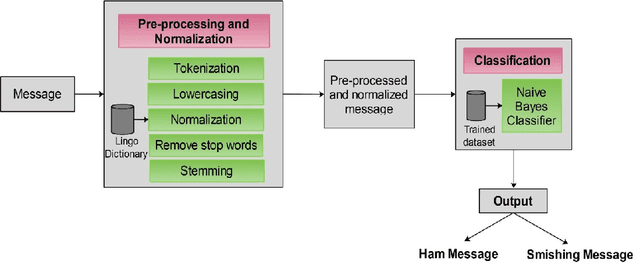

The increasing reliance on smartphones for communication, financial transactions, and personal data management has made them prime targets for cyberattacks, particularly smishing, a sophisticated variant of phishing conducted via SMS. Despite the growing threat, traditional detection methods often struggle with the informal and evolving nature of SMS language, which includes abbreviations, slang, and short forms. This paper presents an enhanced content-based smishing detection framework that leverages advanced text normalization techniques to improve detection accuracy. By converting nonstandard text into its standardized form, the proposed model enhances the efficacy of machine learning classifiers, particularly the Naive Bayesian classifier, in distinguishing smishing messages from legitimate ones. Our experimental results, validated on a publicly available dataset, demonstrate a detection accuracy of 96.2%, with a low False Positive Rate of 3.87% and False Negative Rate of 2.85%. This approach significantly outperforms existing methodologies, providing a robust solution to the increasingly sophisticated threat of smishing in the mobile environment.
ChatNVD: Advancing Cybersecurity Vulnerability Assessment with Large Language Models
Dec 06, 2024The increasing frequency and sophistication of cybersecurity vulnerabilities in software systems underscore the urgent need for robust and effective methods of vulnerability assessment. However, existing approaches often rely on highly technical and abstract frameworks, which hinders understanding and increases the likelihood of exploitation, resulting in severe cyberattacks. Given the growing adoption of Large Language Models (LLMs) across diverse domains, this paper explores their potential application in cybersecurity, specifically for enhancing the assessment of software vulnerabilities. We propose ChatNVD, an LLM-based cybersecurity vulnerability assessment tool leveraging the National Vulnerability Database (NVD) to provide context-rich insights and streamline vulnerability analysis for cybersecurity professionals, developers, and non-technical users. We develop three variants of ChatNVD, utilizing three prominent LLMs: GPT-4o mini by OpenAI, Llama 3 by Meta, and Gemini 1.5 Pro by Google. To evaluate their efficacy, we conduct a comparative analysis of these models using a comprehensive questionnaire comprising common security vulnerability questions, assessing their accuracy in identifying and analyzing software vulnerabilities. This study provides valuable insights into the potential of LLMs to address critical challenges in understanding and mitigation of software vulnerabilities.
Optimizing Cyber Defense in Dynamic Active Directories through Reinforcement Learning
Jun 28, 2024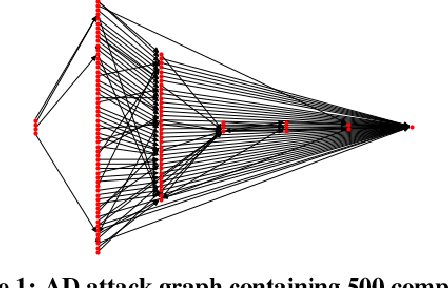
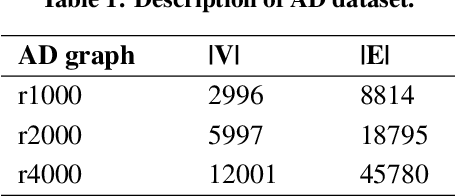
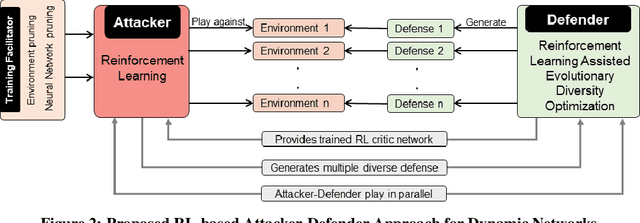
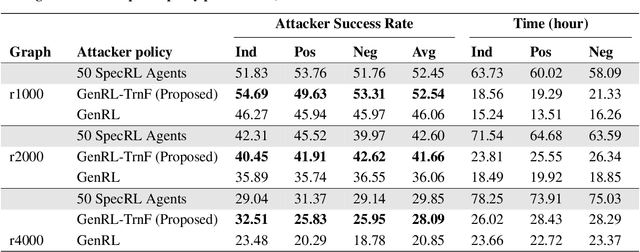
This paper addresses a significant gap in Autonomous Cyber Operations (ACO) literature: the absence of effective edge-blocking ACO strategies in dynamic, real-world networks. It specifically targets the cybersecurity vulnerabilities of organizational Active Directory (AD) systems. Unlike the existing literature on edge-blocking defenses which considers AD systems as static entities, our study counters this by recognizing their dynamic nature and developing advanced edge-blocking defenses through a Stackelberg game model between attacker and defender. We devise a Reinforcement Learning (RL)-based attack strategy and an RL-assisted Evolutionary Diversity Optimization-based defense strategy, where the attacker and defender improve each other strategy via parallel gameplay. To address the computational challenges of training attacker-defender strategies on numerous dynamic AD graphs, we propose an RL Training Facilitator that prunes environments and neural networks to eliminate irrelevant elements, enabling efficient and scalable training for large graphs. We extensively train the attacker strategy, as a sophisticated attacker model is essential for a robust defense. Our empirical results successfully demonstrate that our proposed approach enhances defender's proficiency in hardening dynamic AD graphs while ensuring scalability for large-scale AD.