 Add to Chrome
 Add to Firefox
 Add to Edge
Diffused-Beam Laser-Diode LiFi Under Realizable Receiver, Noise, and Safety Constraints: Design-Space Analysis and an Open Cross-Verified Simulation Framework
Aug 15, 2026
Link-budget studies of indoor optical wireless systems frequently assume receiver parameter sets--large photodetector area, large transimpedance, and wide bandwidth simultaneously--that violate basic circuit constraints, and noise budgets that omit dominant amplifier and laser noise. This paper develops a realizability-constrained design-space analysis of a diffused-beam laser-diode (LD) LiFi link anchored to a hardware prototype. The analysis couples the generalized Lambertian channel of a holographic-diffuser source to a receiver model that enforces the transimpedance-amplifier gain-bandwidth/capacitance constraint and carries a complete noise budget: shot, feedback-resistor thermal, input current noise, capacitance-driven voltage-noise gain, and laser relative intensity noise (RIN). Against this budget we evaluate unipolar M-PAM under two FEC tiers (7%-overhead hard-decision at $3.8 \times 10^{-3}$, 20%-overhead soft-decision at $2 \times 10^{-2}$), first-bounce diffuse multipath, and a quantitative extended-source eye-safety assessment. The full model predicts 140 Mb/s net at the prototype's demonstrated 14-m range with 6.7 dB margin (OOK, HD tier), 240 Mb/s at the zero-margin 4-PAM/SD reach boundary of 14.0 m, and 480-558 Mb/s at 5 m--a factor 3.9-6.6 below what the same link yields under a naive textbook budget, quantifying how strongly idealized assumptions inflate LiFi projections. First-bounce analysis shows the downfacing-source/up-facing-receiver geometry confines multipath to a worst-case LOS-to-diffuse ratio of 4.2 dB and delay spreads below 0.13 ns, and the 500-mW source remains a factor $\ge 7.8$ under the Class-1 eye-safety limit. All models are released as an ns-3 module and Python engine backed by automated testing.

Laser-Diode LiFi With Diffused-Beam Optics: System-Level Modeling and a Cross-Validated ns-3 Simulation Framework
Aug 11, 2026Laser diodes (LDs) promise an order-of-magnitude bandwidth advantage over light-emitting diodes for indoor optical wireless access, but reported prototype studies frequently leave the gap between hardware demonstrations and system-level performance unquantified. This paper develops a complete, reproducible system model of a diffused-beam LD LiFi transceiver - a 500-mW laser source beam-shaped by a holographic diffuser, an intensity-modulation/ direct-detection (IM/DD) receiver, and adaptive M-QAM signaling - and embeds it in two cross validated simulators: an open ns-3 module providing full-stack network simulation (channel, PHY, ARQ MAC, Net Device, IP/UDP/TCP) and a Python link-level engine used for Monte Carlo validation of all analytical error models. Starting from a hardware prototype that transferred data, real-time voice, and images over a 14-m line-of-sight link, we identify and close the technical gaps typical of prototype-class reports: serial-interface throughput ceilings misread as optical-link capacity, absent noise modeling, unmeasurable error floors, and unexamined beamwidth/coverage trade-offs. The framework shows that the same optical front end, freed of its 2-Mbaud UART bottleneck and driven at its 250-MHz electrical bandwidth, supports 930 Mb/s net at 14 m under a $3.8 \times 10^{-3}$ HD-FEC threshold with 16-QAM, scales to 1.86 Gb/s at 5 m with 256-QAM, and sustains on-off keying to 23.3 m; a $20^\circ$ diffuser covers a 4.2-m-radius cell of a standard room at desk height. Network simulations over the ns-3 stack yield saturation goodput within 7% of the PHY line rate and sub-0.11-ms 99th-percentile latency at 70% load. All models, code, and figures are released for reproduction.
* 8 pages, 15 figures, Journal
CausalNav: Reliability-Certified Causal World Models for Control under Physical-Parameter Shift
Aug 07, 2026A world model is only useful for physical AI if it changes what the agent does, and only safe if it declines to do so when it is wrong. We study both halves of that requirement with CausalNav, a controller built around a signed, action-conditioned transition graph over identified state coordinates. At deployment CausalNav simulates a small library of intervention sequences, converts their objective error into policy-logit advice, and admits that advice only when a scale-free predictive-reliability certificate, a policy-margin gate, and an argmax-agreement gate all pass; otherwise it falls back exactly to its own model-based base controller. We evaluate against nine controlled baselines (transformer, recurrent, split-latent, graph, causal-induction, and three recent model-based reasoning modules) on CartPole-v1 and discretized Pendulum-v1 with physical-parameter shifts, under one shared PPO trainer, one interaction budget, and ten held-out seeds (200 runs). CausalNav attains the best average rank (1.25 of ten). The diagnostic result is more informative than the ranking: the learned graph recovers structure well above chance (CartPole F1 = 0.59 +/- 0.09), yet per-seed structural fidelity is uncorrelated with per-seed control benefit (r = -0.15, p = 0.67), and the certificate abstains on 10/10 Pendulum seeds, where forcing the planner on costs return. Model fidelity did not predict downstream control utility in our setting; certified abstention, not better prediction, is what made the world model safe to deploy.
When the Judge Should Not Decide: Evidence-Locked, Non-Compensatory Selection Bounds LLM-Judge Failure in Reasoning Pipelines
Aug 07, 2026An LLM judge deployed inside a reasoning pipeline does not merely measure quality, it decides which answer ships. We show that the cost of that decision depends less on judge accuracy than on the decision rule the judge is embedded in. On frozen candidate pools from four GRPO policies, an unconstrained scalar DeepSeek-R1-7B judge buys almost nothing over answer-level majority vote (+1.0 pp on 500 GSM8K questions, +0.34 EM on 300 HotpotQA questions), and on a frozen-rule 30-question confirmation split it is 10 points worse than majority, a judge that destroys accuracy while scoring candidates confidently. We then subordinate the same judge to Evidence-Locked Derive-Gate-Repair (EL-DGR), a task-adaptive non-compensatory rule under which a judge preference may override evidence-supported consensus only with an extractive evidence certificate, and a repair only when neither alternative is certified and the repair is. With no change to the judge, the candidates, or the budget, EL-DGR reaches 58.2% on GSM8K (vs. 56.8% judge, 55.8% majority, 55.4% first candidate) and 17.33 EM / 25.46 F1 on HotpotQA (vs. 15.67/23.49, 15.33/23.19, 15.33/22.97), improving on first-candidate GRPO by +2.8 pp (exact McNemar p=0.0026) and +2.00 EM (p=0.070, borderline). A decision audit shows why: EL-DGR overturns consensus on only 8 of 30 pilot questions and never converts a correct consensus into an incorrect answer. We also report what did not work: the same seven-channel decomposition used as a step-level gated training reward is null, and corrected channel-drop ablations show no channel is individually necessary (p=1.0 throughout). The practitioner-facing finding is negative about judges and positive about admissibility, bound the judge's blast radius rather than trying to make it accurate.
Explainable Autonomous Cyber Defense using Adversarial Multi-Agent Reinforcement Learning
Apr 06, 2026Autonomous agents are increasingly deployed in both offensive and defensive cyber operations, creating high-speed, closed-loop interactions in critical infrastructure environments. Advanced Persistent Threat (APT) actors exploit "Living off the Land" techniques and targeted telemetry perturbations to induce ambiguity in monitoring systems, causing automated defenses to overreact or misclassify benign behavior as malicious activity. Existing monolithic and multi-agent defense pipelines largely operate on correlation-based signals, lack structural constraints on response actions, and are vulnerable to reasoning drift under ambiguous or adversarial inputs. We present the Causal Multi-Agent Decision Framework (C-MADF), a structurally constrained architecture for autonomous cyber defense that integrates causal modeling with adversarial dual-policy control. C-MADF first learns a Structural Causal Model (SCM) from historical telemetry and compiles it into an investigation-level Directed Acyclic Graph (DAG) that defines admissible response transitions. This roadmap is formalized as a Markov Decision Process (MDP) whose action space is explicitly restricted to causally consistent transitions. Decision-making within this constrained space is performed by a dual-agent reinforcement learning system in which a threat-optimizing Blue-Team policy is counterbalanced by a conservatively shaped Red-Team policy. Inter-policy disagreement is quantified through a Policy Divergence Score and exposed via a human-in-the-loop interface equipped with an Explainability-Transparency Score that serves as an escalation signal under uncertainty. On the real-world CICIoT2023 dataset, C-MADF reduces the false-positive rate from 11.2%, 9.7%, and 8.4% in three cutting-edge literature baselines to 1.8%, while achieving 0.997 precision, 0.961 recall, and 0.979 F1-score.
A Benchmark Dataset and a Framework for Urdu Multimodal Named Entity Recognition
May 08, 2025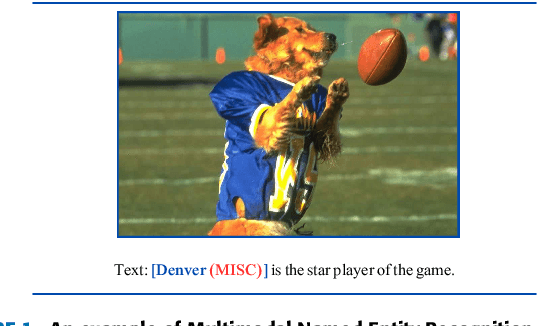
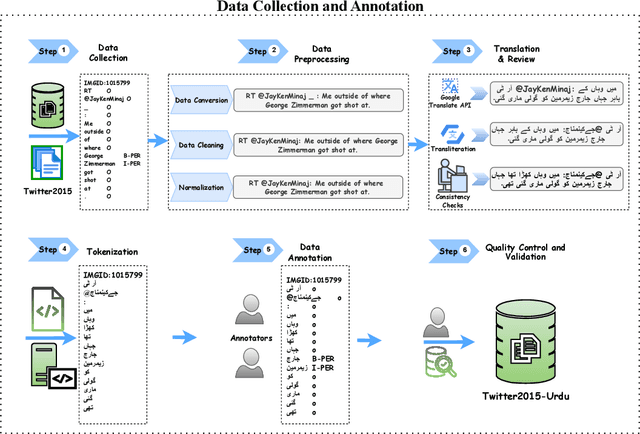
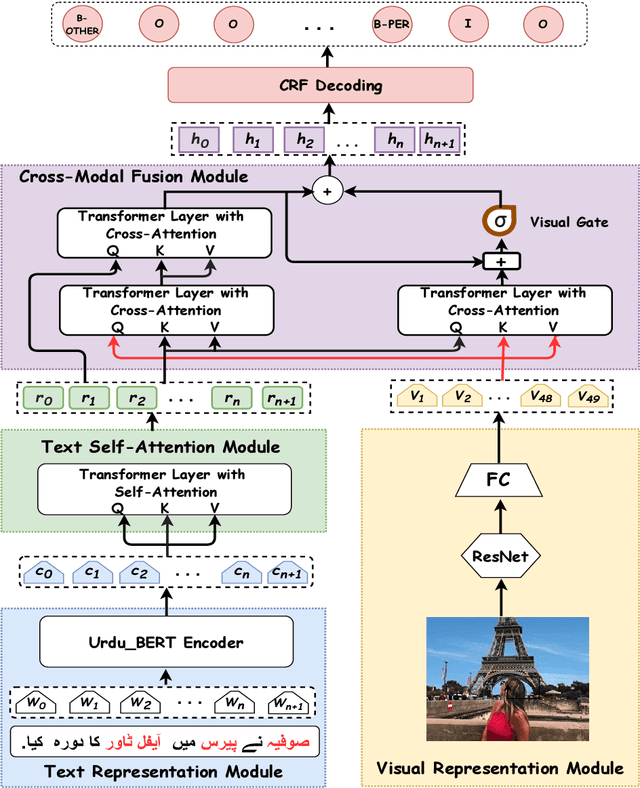
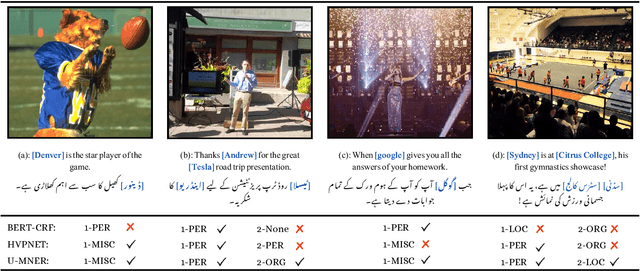
The emergence of multimodal content, particularly text and images on social media, has positioned Multimodal Named Entity Recognition (MNER) as an increasingly important area of research within Natural Language Processing. Despite progress in high-resource languages such as English, MNER remains underexplored for low-resource languages like Urdu. The primary challenges include the scarcity of annotated multimodal datasets and the lack of standardized baselines. To address these challenges, we introduce the U-MNER framework and release the Twitter2015-Urdu dataset, a pioneering resource for Urdu MNER. Adapted from the widely used Twitter2015 dataset, it is annotated with Urdu-specific grammar rules. We establish benchmark baselines by evaluating both text-based and multimodal models on this dataset, providing comparative analyses to support future research on Urdu MNER. The U-MNER framework integrates textual and visual context using Urdu-BERT for text embeddings and ResNet for visual feature extraction, with a Cross-Modal Fusion Module to align and fuse information. Our model achieves state-of-the-art performance on the Twitter2015-Urdu dataset, laying the groundwork for further MNER research in low-resource languages.
The Future of AI: Exploring the Potential of Large Concept Models
Jan 08, 2025The field of Artificial Intelligence (AI) continues to drive transformative innovations, with significant progress in conversational interfaces, autonomous vehicles, and intelligent content creation. Since the launch of ChatGPT in late 2022, the rise of Generative AI has marked a pivotal era, with the term Large Language Models (LLMs) becoming a ubiquitous part of daily life. LLMs have demonstrated exceptional capabilities in tasks such as text summarization, code generation, and creative writing. However, these models are inherently limited by their token-level processing, which restricts their ability to perform abstract reasoning, conceptual understanding, and efficient generation of long-form content. To address these limitations, Meta has introduced Large Concept Models (LCMs), representing a significant shift from traditional token-based frameworks. LCMs use concepts as foundational units of understanding, enabling more sophisticated semantic reasoning and context-aware decision-making. Given the limited academic research on this emerging technology, our study aims to bridge the knowledge gap by collecting, analyzing, and synthesizing existing grey literature to provide a comprehensive understanding of LCMs. Specifically, we (i) identify and describe the features that distinguish LCMs from LLMs, (ii) explore potential applications of LCMs across multiple domains, and (iii) propose future research directions and practical strategies to advance LCM development and adoption.
Machine Learning Driven Smishing Detection Framework for Mobile Security
Dec 09, 2024

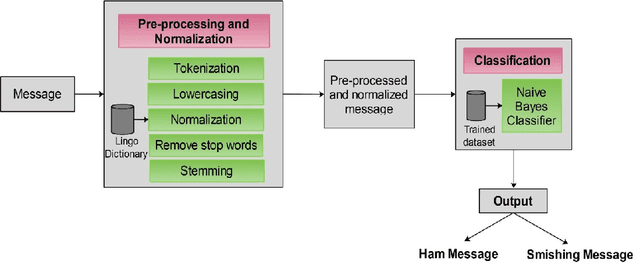

The increasing reliance on smartphones for communication, financial transactions, and personal data management has made them prime targets for cyberattacks, particularly smishing, a sophisticated variant of phishing conducted via SMS. Despite the growing threat, traditional detection methods often struggle with the informal and evolving nature of SMS language, which includes abbreviations, slang, and short forms. This paper presents an enhanced content-based smishing detection framework that leverages advanced text normalization techniques to improve detection accuracy. By converting nonstandard text into its standardized form, the proposed model enhances the efficacy of machine learning classifiers, particularly the Naive Bayesian classifier, in distinguishing smishing messages from legitimate ones. Our experimental results, validated on a publicly available dataset, demonstrate a detection accuracy of 96.2%, with a low False Positive Rate of 3.87% and False Negative Rate of 2.85%. This approach significantly outperforms existing methodologies, providing a robust solution to the increasingly sophisticated threat of smishing in the mobile environment.
ChatNVD: Advancing Cybersecurity Vulnerability Assessment with Large Language Models
Dec 06, 2024The increasing frequency and sophistication of cybersecurity vulnerabilities in software systems underscore the urgent need for robust and effective methods of vulnerability assessment. However, existing approaches often rely on highly technical and abstract frameworks, which hinders understanding and increases the likelihood of exploitation, resulting in severe cyberattacks. Given the growing adoption of Large Language Models (LLMs) across diverse domains, this paper explores their potential application in cybersecurity, specifically for enhancing the assessment of software vulnerabilities. We propose ChatNVD, an LLM-based cybersecurity vulnerability assessment tool leveraging the National Vulnerability Database (NVD) to provide context-rich insights and streamline vulnerability analysis for cybersecurity professionals, developers, and non-technical users. We develop three variants of ChatNVD, utilizing three prominent LLMs: GPT-4o mini by OpenAI, Llama 3 by Meta, and Gemini 1.5 Pro by Google. To evaluate their efficacy, we conduct a comparative analysis of these models using a comprehensive questionnaire comprising common security vulnerability questions, assessing their accuracy in identifying and analyzing software vulnerabilities. This study provides valuable insights into the potential of LLMs to address critical challenges in understanding and mitigation of software vulnerabilities.
Robust Partial Least Squares Using Low Rank and Sparse Decomposition
Jul 09, 2024This paper proposes a framework for simultaneous dimensionality reduction and regression in the presence of outliers in data by applying low-rank and sparse matrix decomposition. For multivariate data corrupted with outliers, it is generally hard to estimate the true low dimensional manifold from corrupted data. The objective of the proposed framework is to find a robust estimate of the low dimensional space of data to reliably perform regression. The effectiveness of the proposed algorithm is demonstrated experimentally for simultaneous regression and dimensionality reduction in the presence of outliers in data.