 Add to Chrome
 Add to Firefox
 Add to Edge
Uncertainty of interpretability in Landslide Susceptibility Mapping: A Comparative Analysis of Statistical, Machine Learning, and Deep Learning Models
May 20, 2024
Landslide susceptibility mapping (LSM) is crucial for identifying high-risk areas and informing prevention strategies. This study investigates the interpretability of statistical, machine learning (ML), and deep learning (DL) models in predicting landslide susceptibility. This is achieved by incorporating various relevant interpretation methods and two types of input factors: a comprehensive set of 19 contributing factors that are statistically relevant to landslides, as well as a dedicated set of 9 triggering factors directly associated with triggering landslides. Given that model performance is a crucial metric in LSM, our investigations into interpretability naturally involve assessing and comparing LSM accuracy across different models considered. In our investigation, the convolutional neural network model achieved the highest accuracy (0.8447 with 19 factors; 0.8048 with 9 factors), while Extreme Gradient Boosting and Support Vector Machine also demonstrated strong predictive capabilities, outperforming conventional statistical models. These findings indicate that DL and sophisticated ML algorithms can effectively capture the complex relationships between input factors and landslide occurrence. However, the interpretability of predictions varied among different models, particularly when using the broader set of 19 contributing factors. Explanation methods like SHAP, LIME, and DeepLIFT also led to variations in interpretation results. Using a comprehensive set of 19 contributing factors improved prediction accuracy but introduced complexities and inconsistency in model interpretations. Focusing on a dedicated set of 9 triggering factors sacrificed some predictive power but enhanced interpretability, as evidenced by more consistent key factors identified across various models and alignment with the findings of field investigation reports....

Rethinking Scanning Strategies with Vision Mamba in Semantic Segmentation of Remote Sensing Imagery: An Experimental Study
May 14, 2024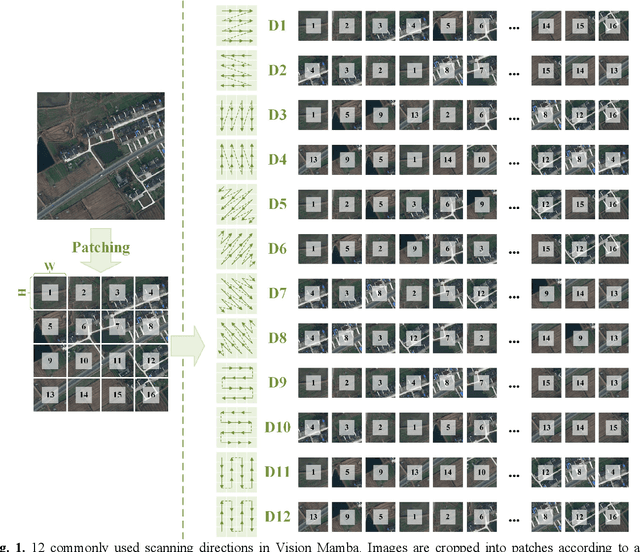
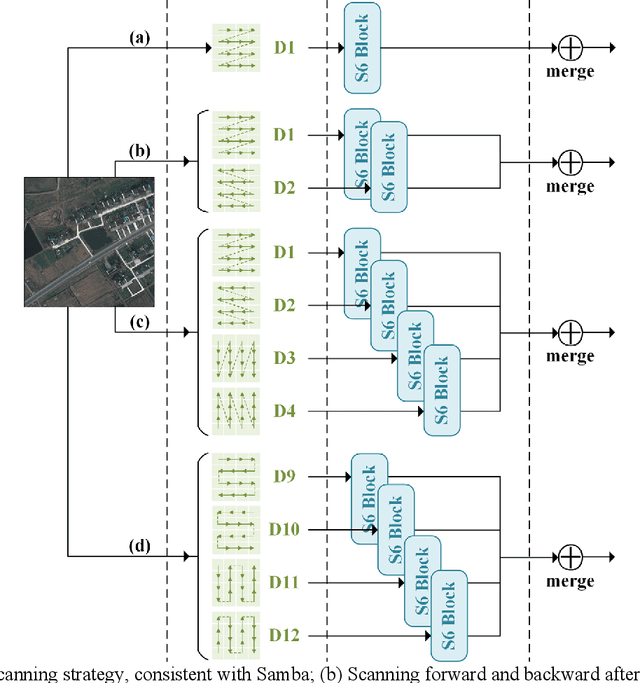
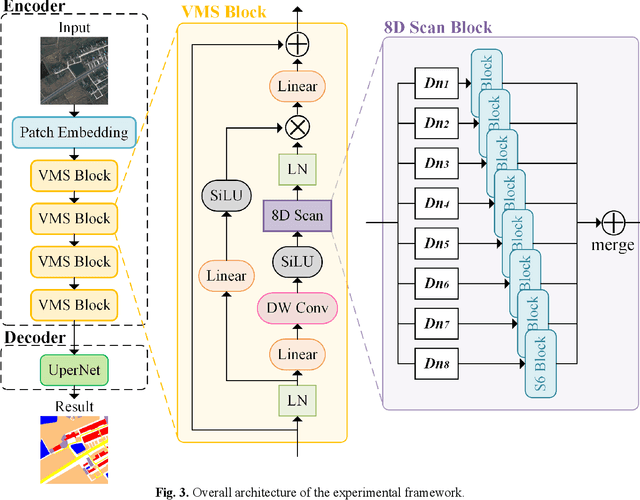
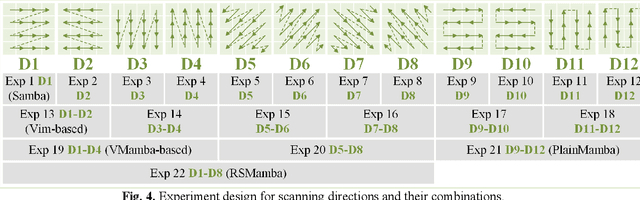
Deep learning methods, especially Convolutional Neural Networks (CNN) and Vision Transformer (ViT), are frequently employed to perform semantic segmentation of high-resolution remotely sensed images. However, CNNs are constrained by their restricted receptive fields, while ViTs face challenges due to their quadratic complexity. Recently, the Mamba model, featuring linear complexity and a global receptive field, has gained extensive attention for vision tasks. In such tasks, images need to be serialized to form sequences compatible with the Mamba model. Numerous research efforts have explored scanning strategies to serialize images, aiming to enhance the Mamba model's understanding of images. However, the effectiveness of these scanning strategies remains uncertain. In this research, we conduct a comprehensive experimental investigation on the impact of mainstream scanning directions and their combinations on semantic segmentation of remotely sensed images. Through extensive experiments on the LoveDA, ISPRS Potsdam, and ISPRS Vaihingen datasets, we demonstrate that no single scanning strategy outperforms others, regardless of their complexity or the number of scanning directions involved. A simple, single scanning direction is deemed sufficient for semantic segmentation of high-resolution remotely sensed images. Relevant directions for future research are also recommended.
The Power of Question Translation Training in Multilingual Reasoning: Broadened Scope and Deepened Insights
May 02, 2024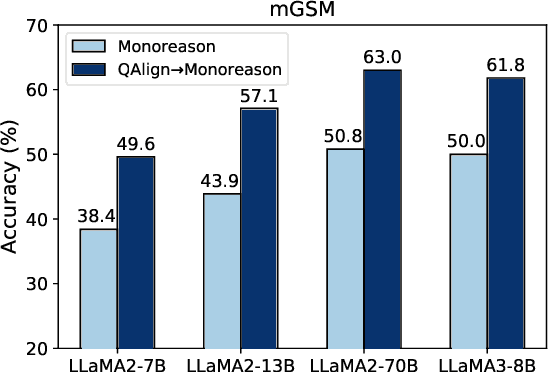
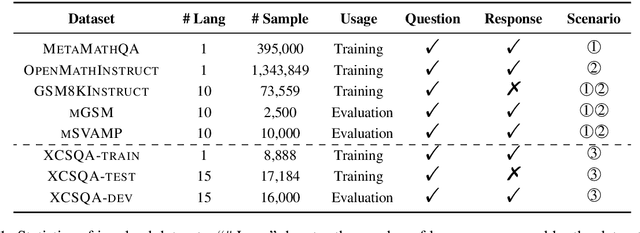


Bridging the significant gap between large language model's English and non-English performance presents a great challenge. While some previous studies attempt to mitigate this gap with translated training data, the recently proposed question alignment approach leverages the model's English expertise to improve multilingual performance with minimum usage of expensive, error-prone translation. In this paper, we explore how broadly this method can be applied by examining its effects in reasoning with executable code and reasoning with common sense. We also explore how to apply this approach efficiently to extremely large language models using proxy-tuning. Experiment results on multilingual reasoning benchmarks mGSM, mSVAMP and xCSQA demonstrate that the question alignment approach can be used to boost multilingual performance across diverse reasoning scenarios, model families, and sizes. For instance, when applied to the LLaMA2 models, our method brings an average accuracy improvements of 12.2% on mGSM even with the 70B model. To understand the mechanism of its success, we analyze representation space, chain-of-thought and translation data scales, which reveals how question translation training strengthens language alignment within LLMs and shapes their working patterns.
Samba: Semantic Segmentation of Remotely Sensed Images with State Space Model
Apr 11, 2024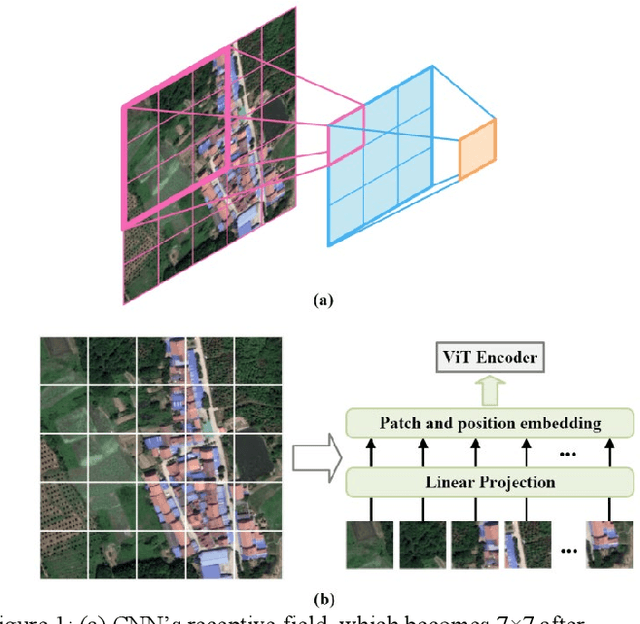
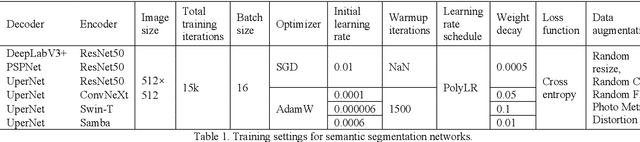
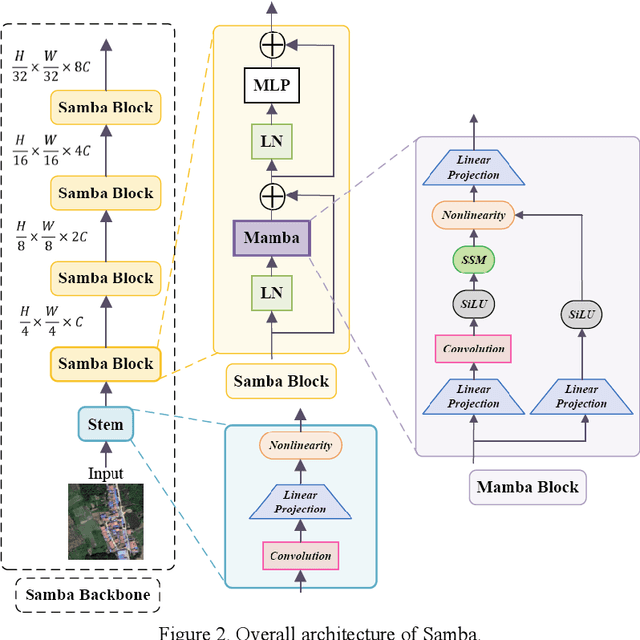
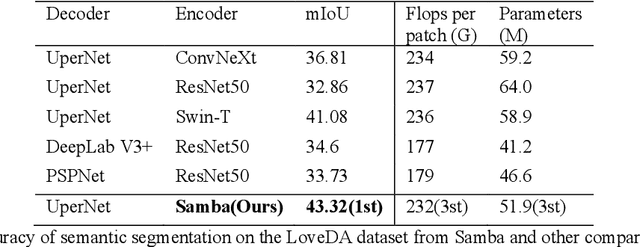
High-resolution remotely sensed images pose a challenge for commonly used semantic segmentation methods such as Convolutional Neural Network (CNN) and Vision Transformer (ViT). CNN-based methods struggle with handling such high-resolution images due to their limited receptive field, while ViT faces challenges in handling long sequences. Inspired by Mamba, which adopts a State Space Model (SSM) to efficiently capture global semantic information, we propose a semantic segmentation framework for high-resolution remotely sensed images, named Samba. Samba utilizes an encoder-decoder architecture, with Samba blocks serving as the encoder for efficient multi-level semantic information extraction, and UperNet functioning as the decoder. We evaluate Samba on the LoveDA, ISPRS Vaihingen, and ISPRS Potsdam datasets, comparing its performance against top-performing CNN and ViT methods. The results reveal that Samba achieved unparalleled performance on commonly used remote sensing datasets for semantic segmentation. Our proposed Samba demonstrates for the first time the effectiveness of SSM in semantic segmentation of remotely sensed images, setting a new benchmark in performance for Mamba-based techniques in this specific application. The source code and baseline implementations are available at https://github.com/zhuqinfeng1999/Samba.
Adapting CSI-Guided Imaging Across Diverse Environments: An Experimental Study Leveraging Continuous Learning
Apr 01, 2024This study explores the feasibility of adapting CSI-guided imaging across varied environments. Focusing on continuous model learning through continuous updates, we investigate CSI-Imager's adaptability in dynamically changing settings, specifically transitioning from an office to an industrial environment. Unlike traditional approaches that may require retraining for new environments, our experimental study aims to validate the potential of CSI-guided imaging to maintain accurate imaging performance through Continuous Learning (CL). By conducting experiments across different scenarios and settings, this work contributes to understanding the limitations and capabilities of existing CSI-guided imaging systems in adapting to new environmental contexts.
Sculpt3D: Multi-View Consistent Text-to-3D Generation with Sparse 3D Prior
Mar 14, 2024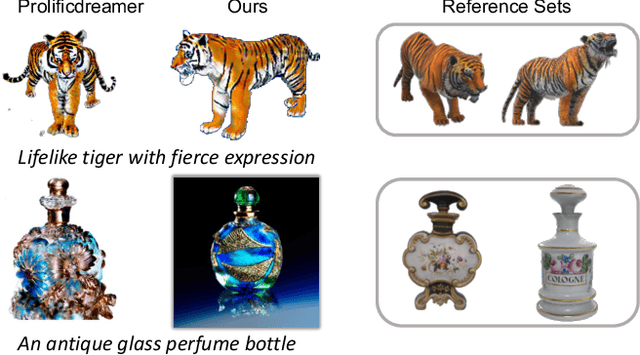
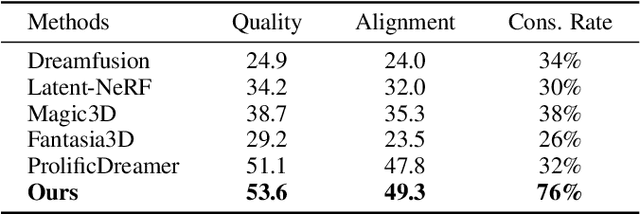
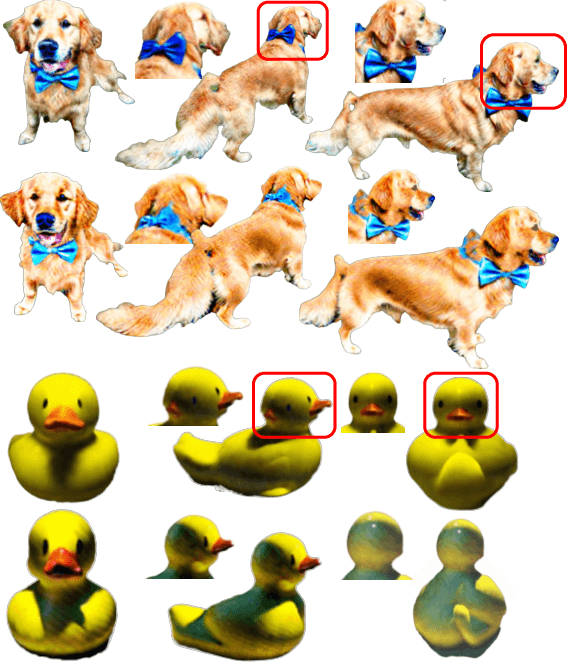
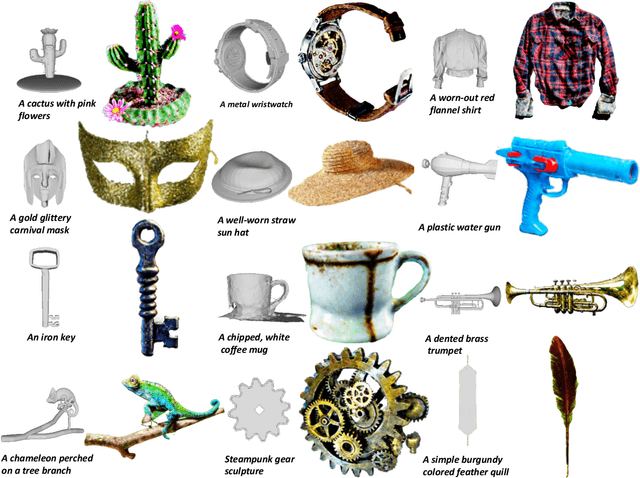
Recent works on text-to-3d generation show that using only 2D diffusion supervision for 3D generation tends to produce results with inconsistent appearances (e.g., faces on the back view) and inaccurate shapes (e.g., animals with extra legs). Existing methods mainly address this issue by retraining diffusion models with images rendered from 3D data to ensure multi-view consistency while struggling to balance 2D generation quality with 3D consistency. In this paper, we present a new framework Sculpt3D that equips the current pipeline with explicit injection of 3D priors from retrieved reference objects without re-training the 2D diffusion model. Specifically, we demonstrate that high-quality and diverse 3D geometry can be guaranteed by keypoints supervision through a sparse ray sampling approach. Moreover, to ensure accurate appearances of different views, we further modulate the output of the 2D diffusion model to the correct patterns of the template views without altering the generated object's style. These two decoupled designs effectively harness 3D information from reference objects to generate 3D objects while preserving the generation quality of the 2D diffusion model. Extensive experiments show our method can largely improve the multi-view consistency while retaining fidelity and diversity. Our project page is available at: https://stellarcheng.github.io/Sculpt3D/.
CoIN: A Benchmark of Continual Instruction tuNing for Multimodel Large Language Model
Mar 13, 2024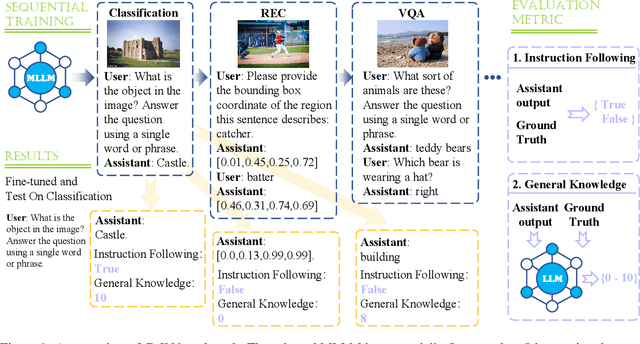
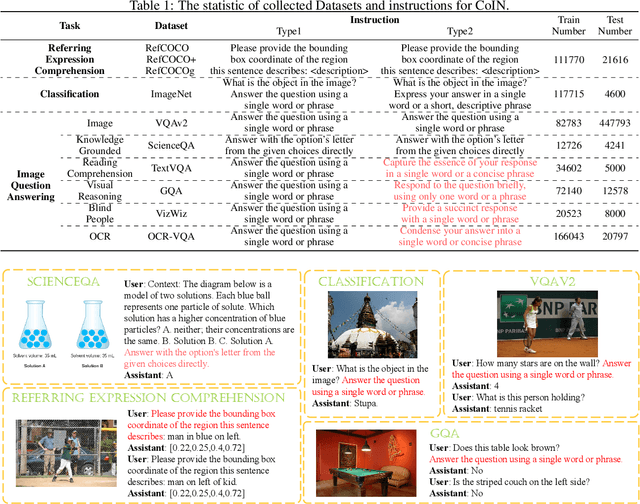
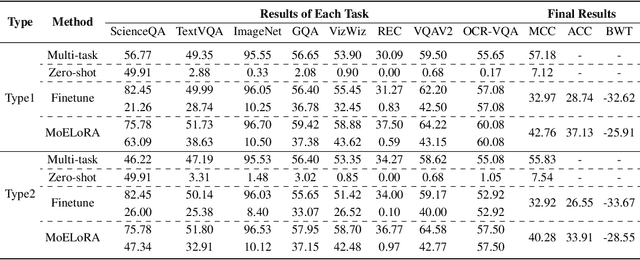
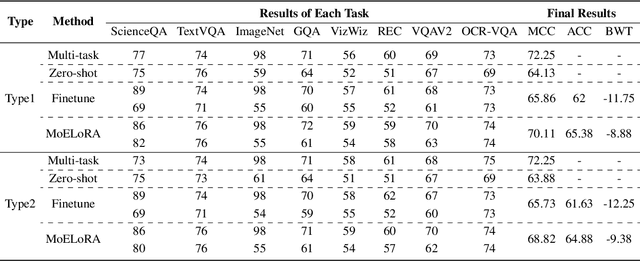
Instruction tuning represents a prevalent strategy employed by Multimodal Large Language Models (MLLMs) to align with human instructions and adapt to new tasks. Nevertheless, MLLMs encounter the challenge of adapting to users' evolving knowledge and demands. Therefore, how to retain existing skills while acquiring new knowledge needs to be investigated. In this paper, we present a comprehensive benchmark, namely Continual Instruction tuNing (CoIN), to assess existing MLLMs in the sequential instruction tuning paradigm. CoIN comprises 10 commonly used datasets spanning 8 task categories, ensuring a diverse range of instructions and tasks. Besides, the trained model is evaluated from two aspects: Instruction Following and General Knowledge, which assess the alignment with human intention and knowledge preserved for reasoning, respectively. Experiments on CoIN demonstrate that current powerful MLLMs still suffer catastrophic forgetting, and the failure in intention alignment assumes the main responsibility, instead of the knowledge forgetting. To this end, we introduce MoELoRA to MLLMs which is effective to retain the previous instruction alignment. Experimental results consistently illustrate the forgetting decreased from this method on CoIN.
Automating Catheterization Labs with Real-Time Perception
Mar 09, 2024For decades, three-dimensional C-arm Cone-Beam Computed Tomography (CBCT) imaging system has been a critical component for complex vascular and nonvascular interventional procedures. While it can significantly improve multiplanar soft tissue imaging and provide pre-treatment target lesion roadmapping and guidance, the traditional workflow can be cumbersome and time-consuming, especially for less experienced users. To streamline this process and enhance procedural efficiency overall, we proposed a visual perception system, namely AutoCBCT, seamlessly integrated with an angiography suite. This system dynamically models both the patient's body and the surgical environment in real-time. AutoCBCT enables a novel workflow with automated positioning, navigation and simulated test-runs, eliminating the need for manual operations and interactions. The proposed system has been successfully deployed and studied in both lab and clinical settings, demonstrating significantly improved workflow efficiency.
Query-OPT: Optimizing Inference of Large Language Models via Multi-Query Instructions in Meeting Summarization
Feb 29, 2024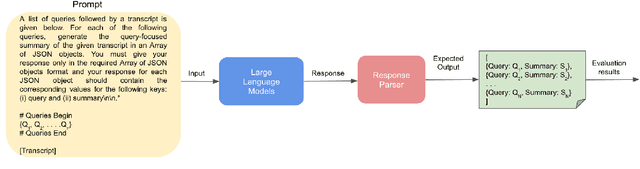
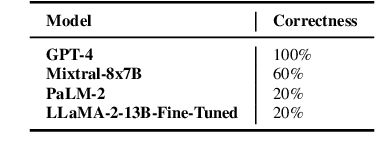
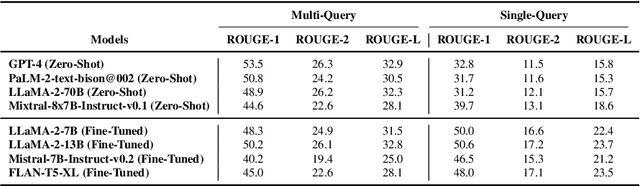
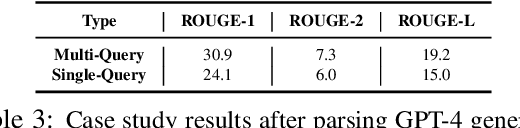
This work focuses on the task of query-based meeting summarization in which the summary of a context (meeting transcript) is generated in response to a specific query. When using Large Language Models (LLMs) for this task, a new call to the LLM inference endpoint/API is required for each new query even if the context stays the same. However, repeated calls to the LLM inference endpoints would significantly increase the costs of using them in production, making LLMs impractical for many real-world use cases. To address this problem, in this paper, we investigate whether combining the queries for the same input context in a single prompt to minimize repeated calls can be successfully used in meeting summarization. In this regard, we conduct extensive experiments by comparing the performance of various popular LLMs: GPT-4, PaLM-2, LLaMA-2, Mistral, and FLAN-T5 in single-query and multi-query settings. We observe that while most LLMs tend to respond to the multi-query instructions, almost all of them (except GPT-4), even after fine-tuning, could not properly generate the response in the required output format. We conclude that while multi-query prompting could be useful to optimize the inference costs by reducing calls to the inference endpoints/APIs for the task of meeting summarization, this capability to reliably generate the response in the expected format is only limited to certain LLMs.
Tiny Titans: Can Smaller Large Language Models Punch Above Their Weight in the Real World for Meeting Summarization?
Feb 01, 2024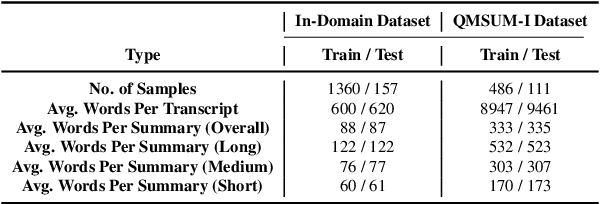
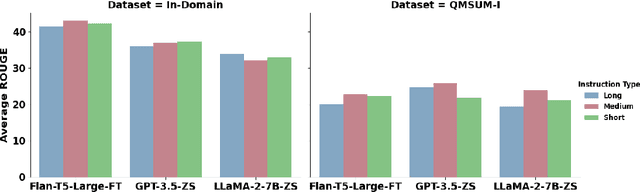
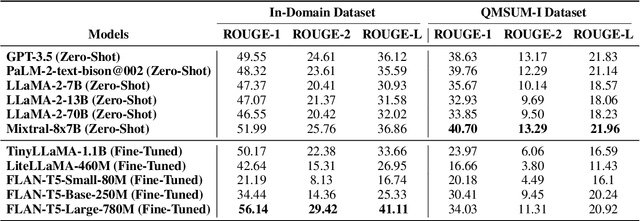
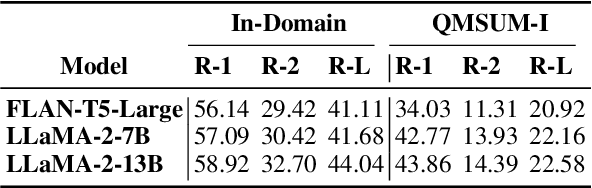
Large Language Models (LLMs) have demonstrated impressive capabilities to solve a wide range of tasks without being explicitly fine-tuned on task-specific datasets. However, deploying LLMs in the real world is not trivial, as it requires substantial computing resources. In this paper, we investigate whether smaller, compact LLMs are a good alternative to the comparatively Larger LLMs2 to address significant costs associated with utilizing LLMs in the real world. In this regard, we study the meeting summarization task in a real-world industrial environment and conduct extensive experiments by comparing the performance of fine-tuned compact LLMs (e.g., FLAN-T5, TinyLLaMA, LiteLLaMA) with zero-shot larger LLMs (e.g., LLaMA-2, GPT-3.5, PaLM-2). We observe that most smaller LLMs, even after fine-tuning, fail to outperform larger zero-shot LLMs in meeting summarization datasets. However, a notable exception is FLAN-T5 (780M parameters), which performs on par or even better than many zero-shot Larger LLMs (from 7B to above 70B parameters), while being significantly smaller. This makes compact LLMs like FLAN-T5 a suitable cost-efficient solution for real-world industrial deployment.