 Add to Chrome
 Add to Firefox
 Add to Edge
EXACT-MPPI: Exact Signed-Distance Navigation for Arbitrary-Footprint Robots from Point Clouds via Path Integral Control
May 28, 2026
Ground robots often carry payloads, implements, or other attachments that turn their effective footprint into complex, non-convex shapes. Navigating safely through clutter then requires reasoning about this true geometry, yet most local planners simplify it with convex or inflated proxies and rasterize sensor data into occupancy grids or distance fields. Both choices eliminate feasible motions when clearance is comparable to the footprint geometry. We present EXACT-MPPI, a training-free local navigation framework that maps local point-cloud observations and sparse guidance directly to motion commands, without any intermediate map representation. The framework embeds an analytic, exact signed-distance evaluator into a Model Predictive Path Integral (MPPI) controller. The footprint is represented as a simple polygon for general convex or concave planar shapes, with a rectangle-cover specialization for faster evaluation of rectilinear footprints, enabling footprint-aware collision costs without convex decomposition, inflation, or learned encoders. During each MPPI rollout, observed obstacle points are transformed into the predicted body frame and evaluated against the footprint. All operations are batched in JAX, leveraging GPU parallelism for real-time receding-horizon control. Experiments show that EXACT-MPPI accelerates batched distance evaluation over a learned point-to-robot baseline, preserves feasible motion where convex-footprint planners fail, and remains robust under dense static and moving obstacles. The same framework deploys on differential-drive, Ackermann, omnidirectional, and hybrid-mode platforms by changing only the footprint description and motion model without per-platform training. Pairing exact footprint geometry with sampling-based predictive control thus offers a practical, training-free path to footprint-aware local navigation across diverse robots.

Practical Anonymous Two-Party Gradient Boosting Decision Tree
May 26, 2026Structured data is well handled by gradient-boosted decision trees (GBDT), which are usually trained on vertically partitioned features across mutually distrustful parties. High speed and interpretability make GBDTs popular in finance and healthcare, where neural networks may fall short. Enabling secure computation for GBDTs poses unique challenges, requiring secure record alignment for comparison. Relying on private set intersection (PSI) is a de facto approach. Mistaking PSI for a safety measure actually exposes which record identifiers (IDs) are shared between the datasets. Although circuit-PSI could help, it is costly for generic uses. New ideas are needed to efficiently train in a "dark forest". Aiming to hide the IDs, we initiate the study of anonymous GBDT training on split data held by two parties. Dual circuit-PSI in our design lets the parties alternate as receiver to run pick-then-sum over local features. Via oblivious programmable pseudorandom functions, we propagate circuit-PSI outputs as shared state across runs. Avoiding universal alignment, we resolve the neglected dilemma that ID hiding incurs a cost that scales with domain size. Next, we halve the cost of ciphertext packing used to convert single-instruction multiple-data homomorphic encryption from (ring) learning with errors in prior secure GBDT (Usenix Security' 23) and related secure machine-learning computations. Comparative experiments show our protocol remains competitive with leaky approaches in efficiency. Enabling ID-hiding aggregation, our techniques can extend to other vertically partitioned analytics.
* 19 pages; 2026 IEEE Symposium on Security and Privacy (SP)
Neural Distance-Guided Path Integral Control for Tractor-Trailer Navigation
May 11, 2026Autonomous and safe navigation of tractor-trailer systems requires accurate, real-time collision avoidance and dynamically feasible control, particularly in cluttered and complex agricultural environments. This is challenging due to their articulated, deformable geometries and nonlinear dynamics. Traditional methods oversimplify vehicle geometry or rely on precomputed distance fields that assume a known map, limiting their applicability in dynamic, partially unknown environments. To address these limitations, we propose a geometric neural encoder that provides fast and accurate distance estimates between the full tractor-trailer body and raw LiDAR perception, enabling real-time, map-free geometric reasoning. These learned distances are integrated into a Model Predictive Path Integral (MPPI) controller, allowing the system to incorporate true articulated geometry directly into its cost evaluation and enabling more responsive navigation in challenging agricultural settings. Simulation results demonstrate that the proposed framework generates dynamically feasible and safe trajectories for navigating tractor-trailer systems in cluttered and complex environments.
Learning to Pick: A Visuomotor Policy for Clustered Strawberry Picking
Sep 18, 2025Strawberries naturally grow in clusters, interwoven with leaves, stems, and other fruits, which frequently leads to occlusion. This inherent growth habit presents a significant challenge for robotic picking, as traditional percept-plan-control systems struggle to reach fruits amid the clutter. Effectively picking an occluded strawberry demands dexterous manipulation to carefully bypass or gently move the surrounding soft objects and precisely access the ideal picking point located at the stem just above the calyx. To address this challenge, we introduce a strawberry-picking robotic system that learns from human demonstrations. Our system features a 4-DoF SCARA arm paired with a human teleoperation interface for efficient data collection and leverages an End Pose Assisted Action Chunking Transformer (ACT) to develop a fine-grained visuomotor picking policy. Experiments under various occlusion scenarios demonstrate that our modified approach significantly outperforms the direct implementation of ACT, underscoring its potential for practical application in occluded strawberry picking.
MCPWorld: A Unified Benchmarking Testbed for API, GUI, and Hybrid Computer Use Agents
Jun 09, 2025(M)LLM-powered computer use agents (CUA) are emerging as a transformative technique to automate human-computer interaction. However, existing CUA benchmarks predominantly target GUI agents, whose evaluation methods are susceptible to UI changes and ignore function interactions exposed by application APIs, e.g., Model Context Protocol (MCP). To this end, we propose MCPWorld, the first automatic CUA testbed for API, GUI, and API-GUI hybrid agents. A key principle of MCPWorld is the use of "white-box apps", i.e., those with source code availability and can be revised/re-compiled as needed (e.g., adding MCP support), with two notable advantages: (1) It greatly broadens the design space of CUA, such as what and how the app features to be exposed/extracted as CUA-callable APIs. (2) It allows MCPWorld to programmatically verify task completion by directly monitoring application behavior through techniques like dynamic code instrumentation, offering robust, accurate CUA evaluation decoupled from specific agent implementations or UI states. Currently, MCPWorld includes 201 well curated and annotated user tasks, covering diversified use cases and difficulty levels. MCPWorld is also fully containerized with GPU acceleration support for flexible adoption on different OS/hardware environments. Our preliminary experiments, using a representative LLM-powered CUA framework, achieve 75.12% task completion accuracy, simultaneously providing initial evidence on the practical effectiveness of agent automation leveraging MCP. Overall, we anticipate MCPWorld to facilitate and standardize the benchmarking of next-generation computer use agents that can leverage rich external tools. Our code and dataset are publicly available at https://github.com/SAAgent/MCPWorld.
Strawberry Robotic Operation Interface: An Open-Source Device for Collecting Dexterous Manipulation Data in Robotic Strawberry Farming
Jan 28, 2025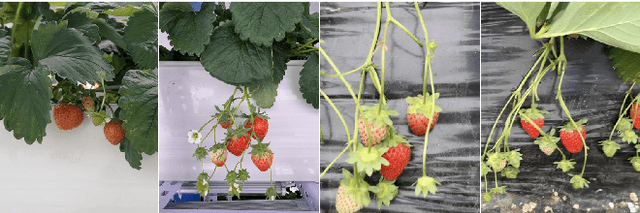
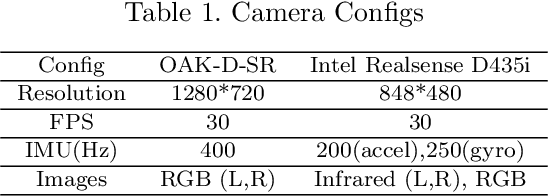
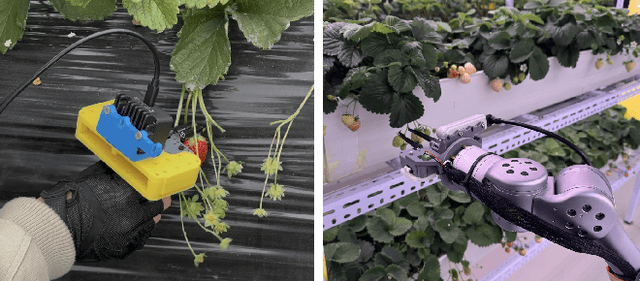
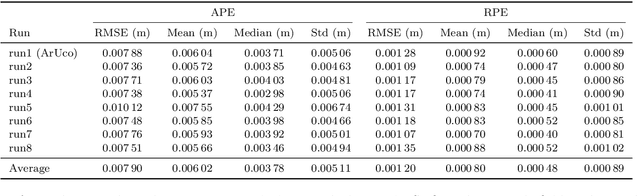
The strawberry farming is labor-intensive, particularly in tasks requiring dexterous manipulation such as picking occluded strawberries. To address this challenge, we present the Strawberry Robotic Operation Interface (SROI), an open-source device designed for collecting dexterous manipulation data in robotic strawberry farming. The SROI features a handheld unit with a modular end effector, a stereo robotic camera, enabling the easy collection of demonstration data in field environments. A data post-processing pipeline is introduced to extract spatial trajectories and gripper states from the collected data. Additionally, we release an open-source dataset of strawberry picking demonstrations to facilitate research in dexterous robotic manipulation. The SROI represents a step toward automating complex strawberry farming tasks, reducing reliance on manual labor.
Efficient and Safe Trajectory Planning for Autonomous Agricultural Vehicle Headland Turning in Cluttered Orchard Environments
Jan 18, 2025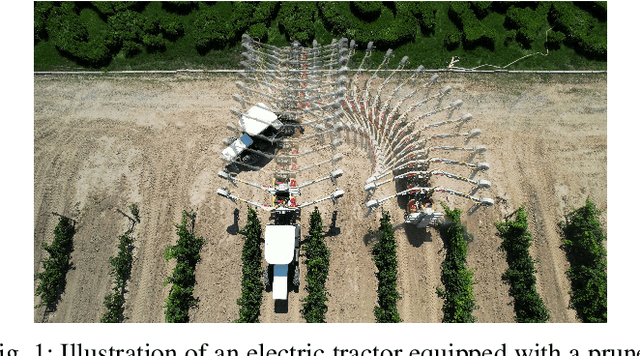
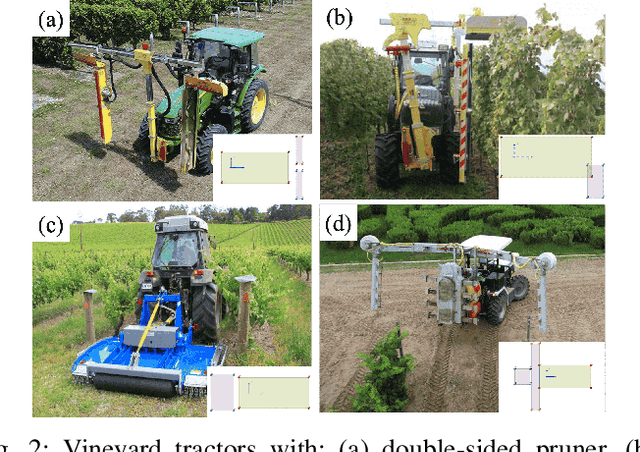
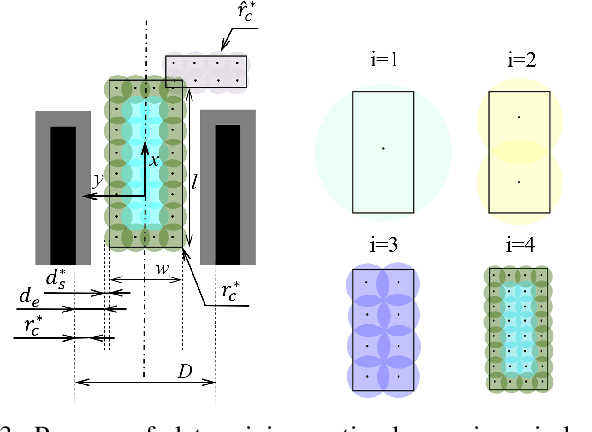
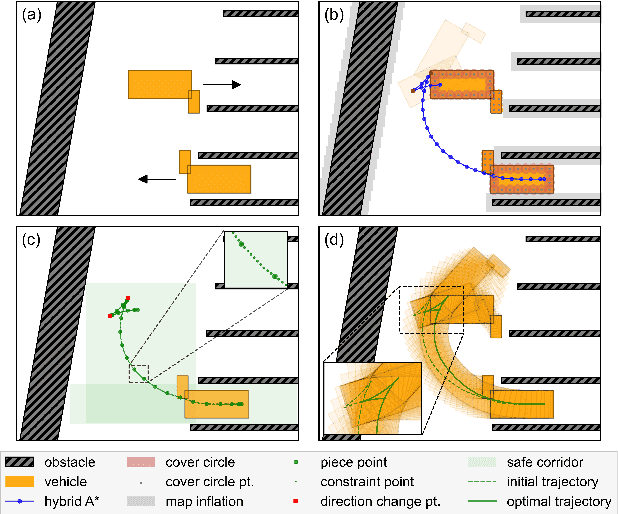
Autonomous agricultural vehicles (AAVs), including field robots and autonomous tractors, are becoming essential in modern farming by improving efficiency and reducing labor costs. A critical task in AAV operations is headland turning between crop rows. This task is challenging in orchards with limited headland space, irregular boundaries, operational constraints, and static obstacles. While traditional trajectory planning methods work well in arable farming, they often fail in cluttered orchard environments. This letter presents a novel trajectory planner that enhances the safety and efficiency of AAV headland maneuvers, leveraging advancements in autonomous driving. Our approach includes an efficient front-end algorithm and a high-performance back-end optimization. Applied to vehicles with various implements, it outperforms state-of-the-art methods in both standard and challenging orchard fields. This work bridges agricultural and autonomous driving technologies, facilitating a broader adoption of AAVs in complex orchards.
Asymmetric Graph Error Control with Low Complexity in Causal Bandits
Aug 20, 2024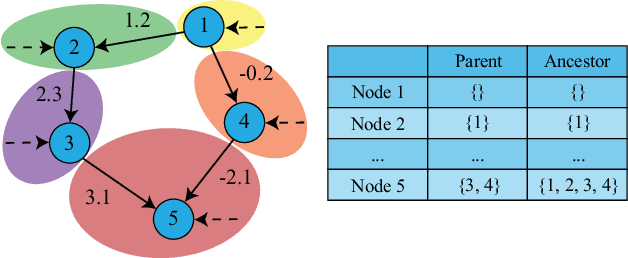
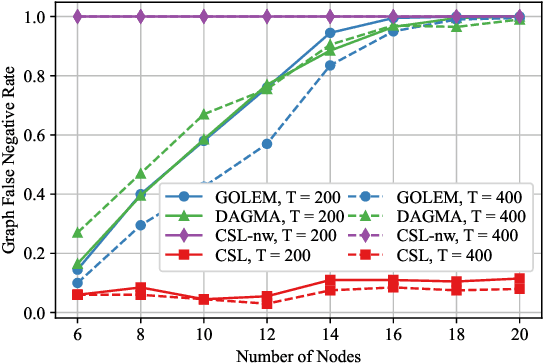
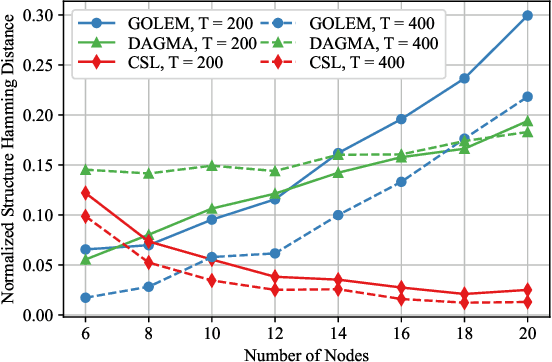
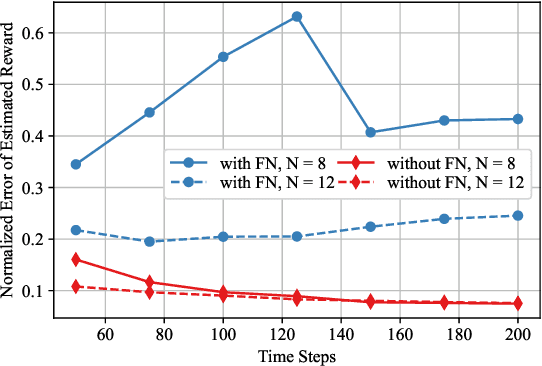
In this paper, the causal bandit problem is investigated, in which the objective is to select an optimal sequence of interventions on nodes in a causal graph. It is assumed that the graph is governed by linear structural equations; it is further assumed that both the causal topology and the distribution of interventions are unknown. By exploiting the causal relationships between the nodes whose signals contribute to the reward, interventions are optimized. First, based on the difference between the two types of graph identification errors (false positives and negatives), a causal graph learning method is proposed, which strongly reduces sample complexity relative to the prior art by learning sub-graphs. Under the assumption of Gaussian exogenous inputs and minimum-mean squared error weight estimation, a new uncertainty bound tailored to the causal bandit problem is derived. This uncertainty bound drives an upper confidence bound based intervention selection to optimize the reward. To cope with non-stationary bandits, a sub-graph change detection mechanism is proposed, with high sample efficiency. Numerical results compare the new methodology to existing schemes and show a substantial performance improvement in both stationary and non-stationary settings. Compared to existing approaches, the proposed scheme takes 67% fewer samples to learn the causal structure and achieves an average reward gain of 85%.
Advancing H&E-to-IHC Stain Translation in Breast Cancer: A Multi-Magnification and Attention-Based Approach
Aug 04, 2024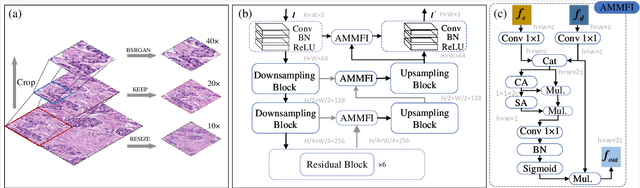
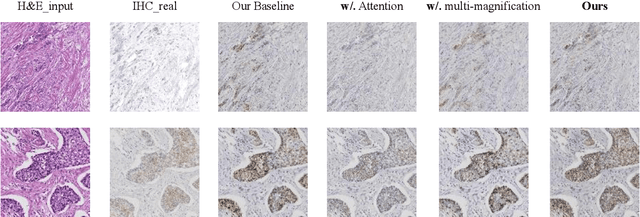

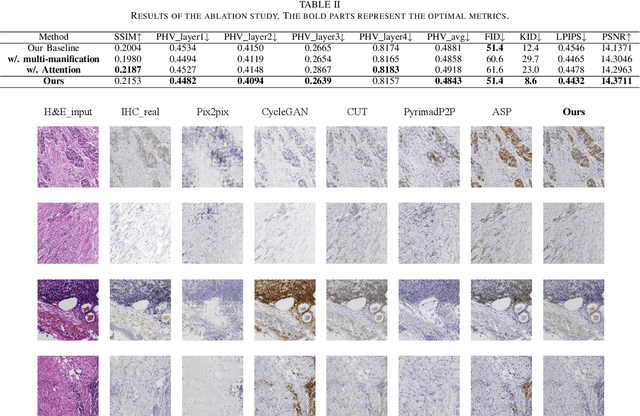
Breast cancer presents a significant healthcare challenge globally, demanding precise diagnostics and effective treatment strategies, where histopathological examination of Hematoxylin and Eosin (H&E) stained tissue sections plays a central role. Despite its importance, evaluating specific biomarkers like Human Epidermal Growth Factor Receptor 2 (HER2) for personalized treatment remains constrained by the resource-intensive nature of Immunohistochemistry (IHC). Recent strides in deep learning, particularly in image-to-image translation, offer promise in synthesizing IHC-HER2 slides from H\&E stained slides. However, existing methodologies encounter challenges, including managing multiple magnifications in pathology images and insufficient focus on crucial information during translation. To address these issues, we propose a novel model integrating attention mechanisms and multi-magnification information processing. Our model employs a multi-magnification processing strategy to extract and utilize information from various magnifications within pathology images, facilitating robust image translation. Additionally, an attention module within the generative network prioritizes critical information for image distribution translation while minimizing less pertinent details. Rigorous testing on a publicly available breast cancer dataset demonstrates superior performance compared to existing methods, establishing our model as a state-of-the-art solution in advancing pathology image translation from H&E to IHC staining.
MugenNet: A Novel Combined Convolution Neural Network and Transformer Network with its Application for Colonic Polyp Image Segmentation
Mar 31, 2024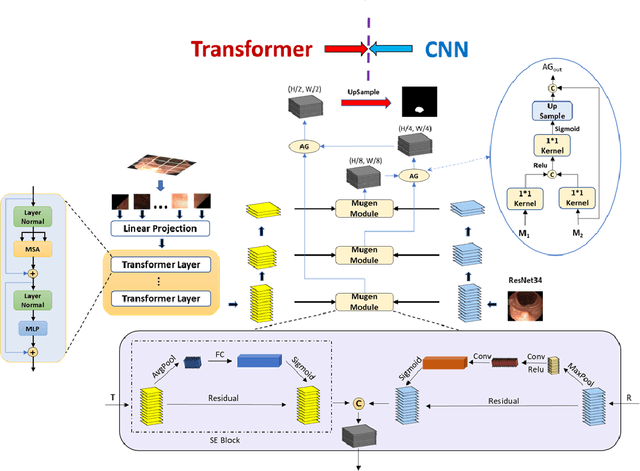
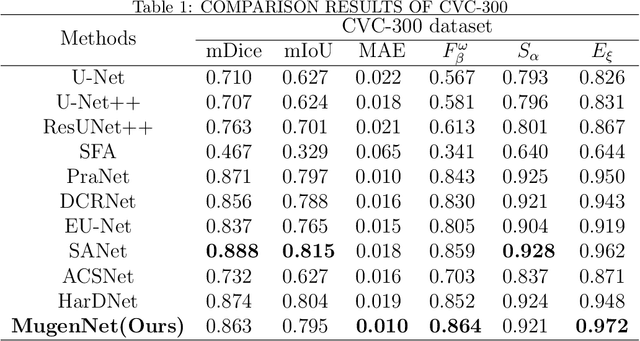
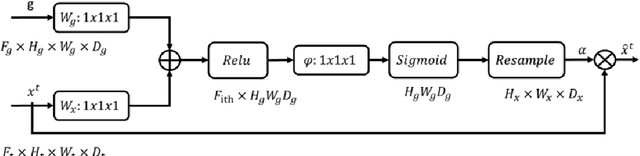
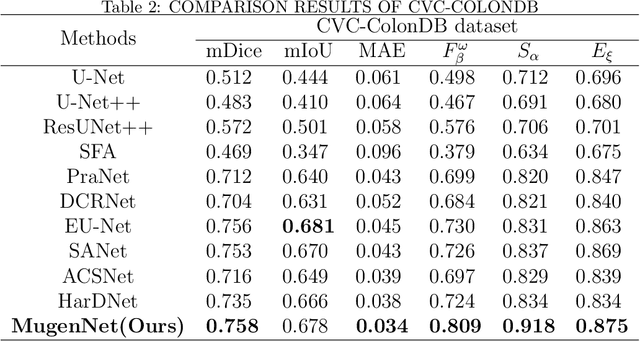
Biomedical image segmentation is a very important part in disease diagnosis. The term "colonic polyps" refers to polypoid lesions that occur on the surface of the colonic mucosa within the intestinal lumen. In clinical practice, early detection of polyps is conducted through colonoscopy examinations and biomedical image processing. Therefore, the accurate polyp image segmentation is of great significance in colonoscopy examinations. Convolutional Neural Network (CNN) is a common automatic segmentation method, but its main disadvantage is the long training time. Transformer utilizes a self-attention mechanism, which essentially assigns different importance weights to each piece of information, thus achieving high computational efficiency during segmentation. However, a potential drawback is the risk of information loss. In the study reported in this paper, based on the well-known hybridization principle, we proposed a method to combine CNN and Transformer to retain the strengths of both, and we applied this method to build a system called MugenNet for colonic polyp image segmentation. We conducted a comprehensive experiment to compare MugenNet with other CNN models on five publicly available datasets. The ablation experiment on MugentNet was conducted as well. The experimental results show that MugenNet achieves significantly higher processing speed and accuracy compared with CNN alone. The generalized implication with our work is a method to optimally combine two complimentary methods of machine learning.