 Add to Chrome
 Add to Firefox
 Add to Edge
ECG-guided individual identification via PPG
Dec 30, 2024
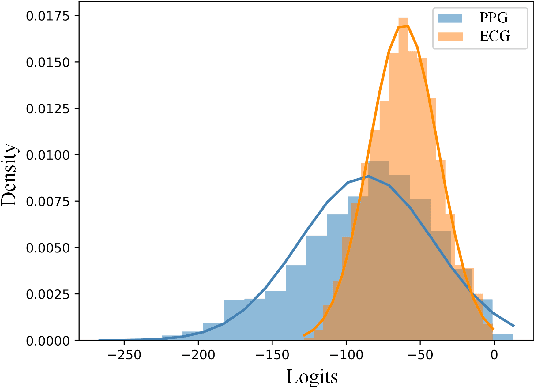


Photoplethsmography (PPG)-based individual identification aiming at recognizing humans via intrinsic cardiovascular activities has raised extensive attention due to its high security and resistance to mimicry. However, this kind of technology witnesses unpromising results due to the limitation of low information density. To this end, electrocardiogram (ECG) signals have been introduced as a novel modality to enhance the density of input information. Specifically, a novel cross-modal knowledge distillation framework is implemented to propagate discriminate knowledge from ECG modality to PPG modality without incurring additional computational demands at the inference phase. Furthermore, to ensure efficient knowledge propagation, Contrastive Language-Image Pre-training (CLIP)-based knowledge alignment and cross-knowledge assessment modules are proposed respectively. Comprehensive experiments are conducted and results show our framework outperforms the baseline model with the improvement of 2.8% and 3.0% in terms of overall accuracy on seen- and unseen individual recognitions.

Multi-Agent Norm Perception and Induction in Distributed Healthcare
Dec 24, 2024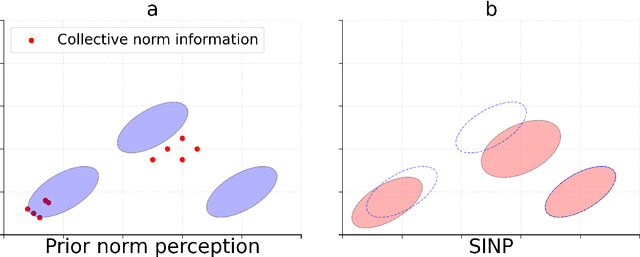
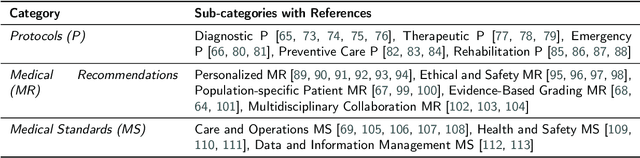
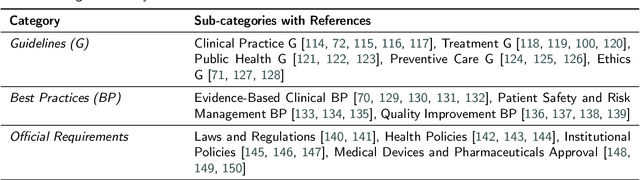
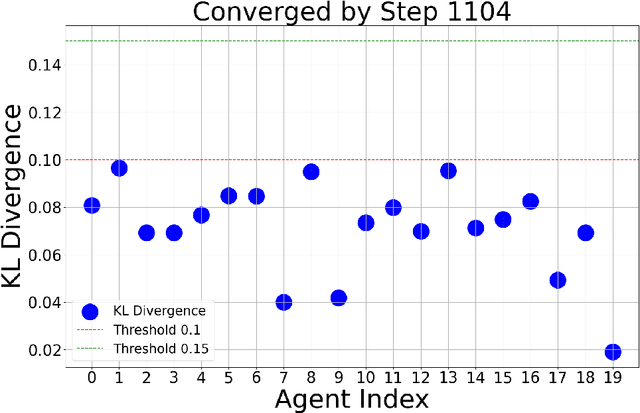
This paper presents a Multi-Agent Norm Perception and Induction Learning Model aimed at facilitating the integration of autonomous agent systems into distributed healthcare environments through dynamic interaction processes. The nature of the medical norm system and its sharing channels necessitates distinct approaches for Multi-Agent Systems to learn two types of norms. Building on this foundation, the model enables agents to simultaneously learn descriptive norms, which capture collective tendencies, and prescriptive norms, which dictate ideal behaviors. Through parameterized mixed probability density models and practice-enhanced Markov games, the multi-agent system perceives descriptive norms in dynamic interactions and captures emergent prescriptive norms. We conducted experiments using a dataset from a neurological medical center spanning from 2016 to 2020.
Lightweight yet Fine-grained: A Graph Capsule Convolutional Network with Subspace Alignment for Shared-account Sequential Recommendation
Dec 18, 2024

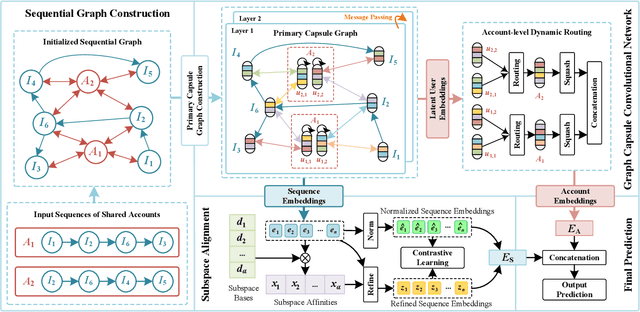
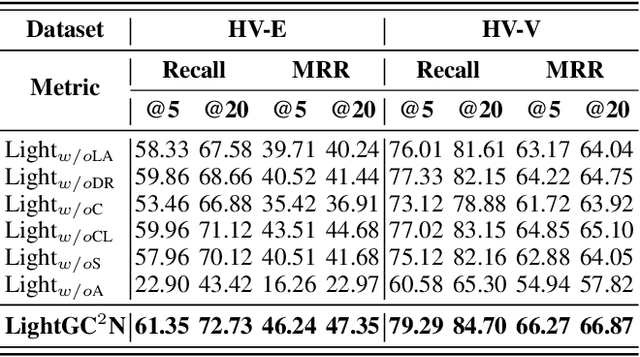
Shared-account Sequential Recommendation (SSR) aims to provide personalized recommendations for accounts shared by multiple users with varying sequential preferences. Previous studies on SSR struggle to capture the fine-grained associations between interactions and different latent users within the shared account's hybrid sequences. Moreover, most existing SSR methods (e.g., RNN-based or GCN-based methods) have quadratic computational complexities, hindering the deployment of SSRs on resource-constrained devices. To this end, we propose a Lightweight Graph Capsule Convolutional Network with subspace alignment for shared-account sequential recommendation, named LightGC$^2$N. Specifically, we devise a lightweight graph capsule convolutional network. It facilitates the fine-grained matching between interactions and latent users by attentively propagating messages on the capsule graphs. Besides, we present an efficient subspace alignment method. This method refines the sequence representations and then aligns them with the finely clustered preferences of latent users. The experimental results on four real-world datasets indicate that LightGC$^2$N outperforms nine state-of-the-art methods in accuracy and efficiency.
A Survey on Inference Optimization Techniques for Mixture of Experts Models
Dec 18, 2024
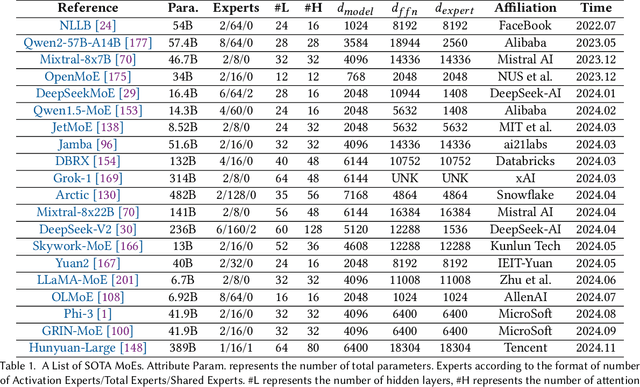
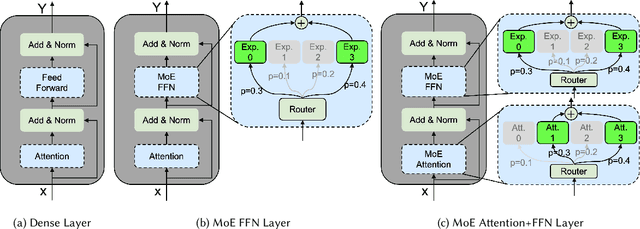
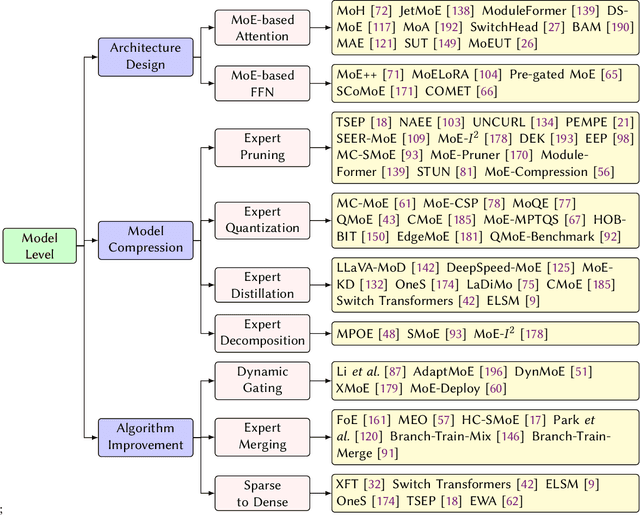
The emergence of large-scale Mixture of Experts (MoE) models has marked a significant advancement in artificial intelligence, offering enhanced model capacity and computational efficiency through conditional computation. However, the deployment and inference of these models present substantial challenges in terms of computational resources, latency, and energy efficiency. This comprehensive survey systematically analyzes the current landscape of inference optimization techniques for MoE models across the entire system stack. We first establish a taxonomical framework that categorizes optimization approaches into model-level, system-level, and hardware-level optimizations. At the model level, we examine architectural innovations including efficient expert design, attention mechanisms, various compression techniques such as pruning, quantization, and knowledge distillation, as well as algorithm improvement including dynamic routing strategies and expert merging methods. At the system level, we investigate distributed computing approaches, load balancing mechanisms, and efficient scheduling algorithms that enable scalable deployment. Furthermore, we delve into hardware-specific optimizations and co-design strategies that maximize throughput and energy efficiency. This survey not only provides a structured overview of existing solutions but also identifies key challenges and promising research directions in MoE inference optimization. Our comprehensive analysis serves as a valuable resource for researchers and practitioners working on large-scale deployment of MoE models in resource-constrained environments. To facilitate ongoing updates and the sharing of cutting-edge advances in MoE inference optimization research, we have established a repository accessible at \url{https://github.com/MoE-Inf/awesome-moe-inference/}.
Yi-Lightning Technical Report
Dec 03, 2024


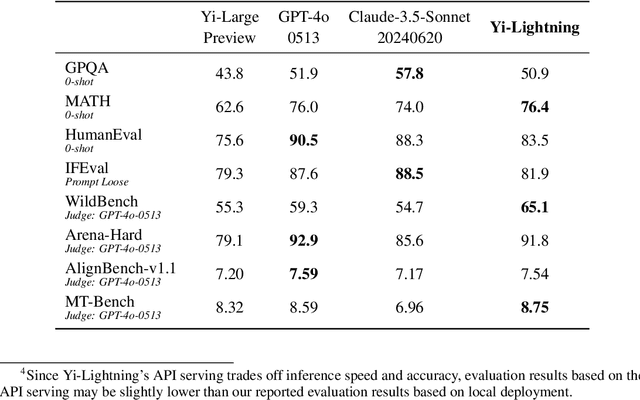
This technical report presents Yi-Lightning, our latest flagship large language model (LLM). It achieves exceptional performance, ranking 6th overall on Chatbot Arena, with particularly strong results (2nd to 4th place) in specialized categories including Chinese, Math, Coding, and Hard Prompts. Yi-Lightning leverages an enhanced Mixture-of-Experts (MoE) architecture, featuring advanced expert segmentation and routing mechanisms coupled with optimized KV-caching techniques. Our development process encompasses comprehensive pre-training, supervised fine-tuning (SFT), and reinforcement learning from human feedback (RLHF), where we devise deliberate strategies for multi-stage training, synthetic data construction, and reward modeling. Furthermore, we implement RAISE (Responsible AI Safety Engine), a four-component framework to address safety issues across pre-training, post-training, and serving phases. Empowered by our scalable super-computing infrastructure, all these innovations substantially reduce training, deployment and inference costs while maintaining high-performance standards. With further evaluations on public academic benchmarks, Yi-Lightning demonstrates competitive performance against top-tier LLMs, while we observe a notable disparity between traditional, static benchmark results and real-world, dynamic human preferences. This observation prompts a critical reassessment of conventional benchmarks' utility in guiding the development of more intelligent and powerful AI systems for practical applications. Yi-Lightning is now available through our developer platform at https://platform.lingyiwanwu.com.
LProtector: An LLM-driven Vulnerability Detection System
Nov 14, 2024This paper presents LProtector, an automated vulnerability detection system for C/C++ codebases driven by the large language model (LLM) GPT-4o and Retrieval-Augmented Generation (RAG). As software complexity grows, traditional methods face challenges in detecting vulnerabilities effectively. LProtector leverages GPT-4o's powerful code comprehension and generation capabilities to perform binary classification and identify vulnerabilities within target codebases. We conducted experiments on the Big-Vul dataset, showing that LProtector outperforms two state-of-the-art baselines in terms of F1 score, demonstrating the potential of integrating LLMs with vulnerability detection.
ScaleKD: Strong Vision Transformers Could Be Excellent Teachers
Nov 11, 2024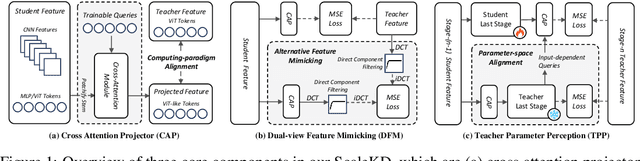
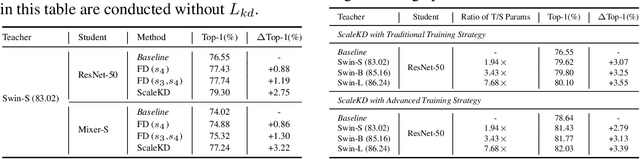
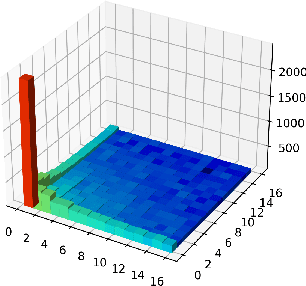
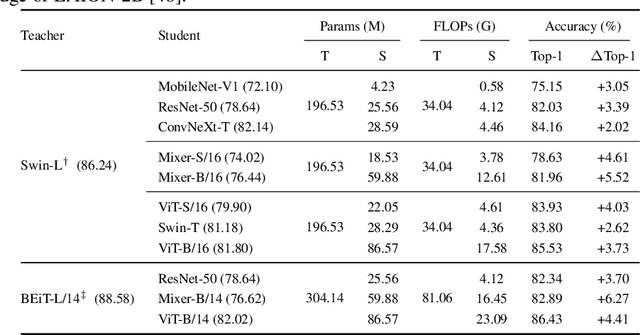
In this paper, we question if well pre-trained vision transformer (ViT) models could be used as teachers that exhibit scalable properties to advance cross architecture knowledge distillation (KD) research, in the context of using large-scale datasets for evaluation. To make this possible, our analysis underlines the importance of seeking effective strategies to align (1) feature computing paradigm differences, (2) model scale differences, and (3) knowledge density differences. By combining three coupled components namely cross attention projector, dual-view feature mimicking and teacher parameter perception tailored to address the above problems, we present a simple and effective KD method, called ScaleKD. Our method can train student backbones that span across a variety of convolutional neural network (CNN), multi-layer perceptron (MLP), and ViT architectures on image classification datasets, achieving state-of-the-art distillation performance. For instance, taking a well pre-trained Swin-L as the teacher model, our method gets 75.15%|82.03%|84.16%|78.63%|81.96%|83.93%|83.80%|85.53% top-1 accuracies for MobileNet-V1|ResNet-50|ConvNeXt-T|Mixer-S/16|Mixer-B/16|ViT-S/16|Swin-T|ViT-B/16 models trained on ImageNet-1K dataset from scratch, showing 3.05%|3.39%|2.02%|4.61%|5.52%|4.03%|2.62%|3.73% absolute gains to the individually trained counterparts. Intriguingly, when scaling up the size of teacher models or their pre-training datasets, our method showcases the desired scalable properties, bringing increasingly larger gains to student models. The student backbones trained by our method transfer well on downstream MS-COCO and ADE20K datasets. More importantly, our method could be used as a more efficient alternative to the time-intensive pre-training paradigm for any target student model if a strong pre-trained ViT is available, reducing the amount of viewed training samples up to 195x.
HOBBIT: A Mixed Precision Expert Offloading System for Fast MoE Inference
Nov 03, 2024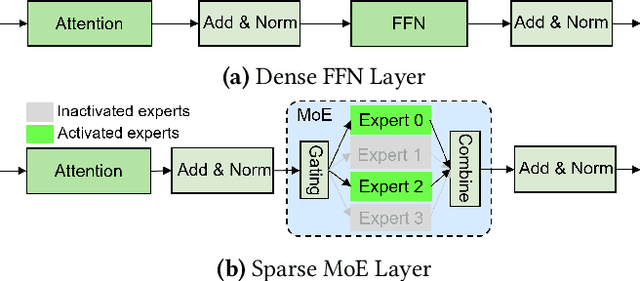
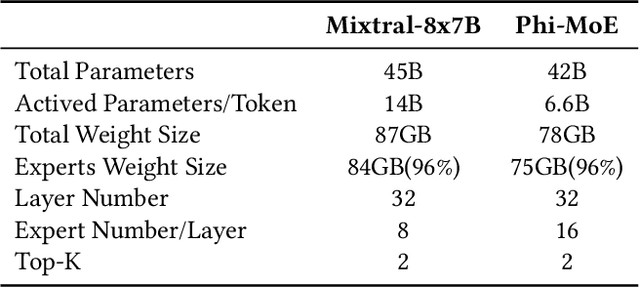
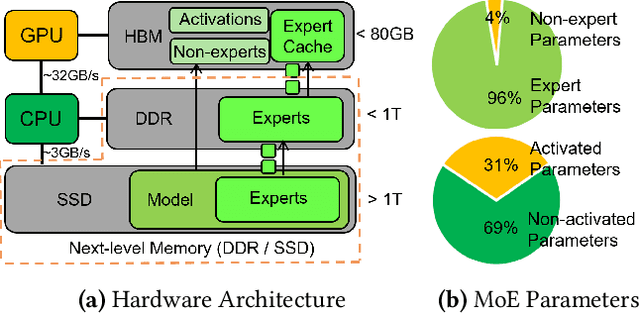
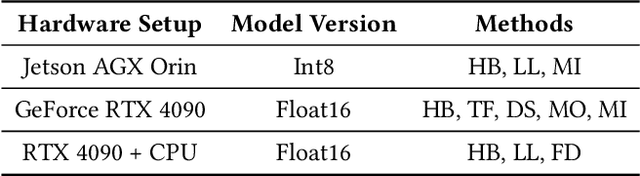
The Mixture-of-Experts (MoE) architecture has demonstrated significant advantages in the era of Large Language Models (LLMs), offering enhanced capabilities with reduced inference costs. However, deploying MoE-based LLMs on memoryconstrained edge devices remains challenging due to their substantial memory requirements. While existing expertoffloading methods alleviate the memory requirements, they often incur significant expert-loading costs or compromise model accuracy. We present HOBBIT, a mixed precision expert offloading system to enable flexible and efficient MoE inference. Our key insight is that dynamically replacing less critical cache-miss experts with low precision versions can substantially reduce expert-loading latency while preserving model accuracy. HOBBIT introduces three innovative techniques that map the natural hierarchy of MoE computation: (1) a token-level dynamic expert loading mechanism, (2) a layer-level adaptive expert prefetching technique, and (3) a sequence-level multidimensional expert caching policy. These innovations fully leverage the benefits of mixedprecision expert inference. By implementing HOBBIT on top of the renowned LLM inference framework Llama.cpp, we evaluate its performance across different edge devices with representative MoE models. The results demonstrate that HOBBIT achieves up to a 9.93x speedup in decoding compared to state-of-the-art MoE offloading systems.
Prune and Repaint: Content-Aware Image Retargeting for any Ratio
Oct 30, 2024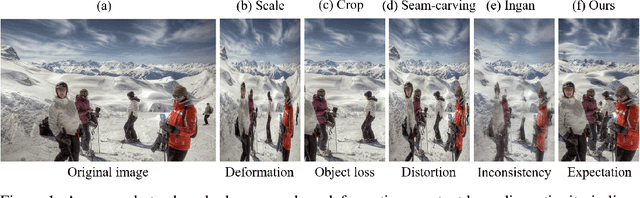

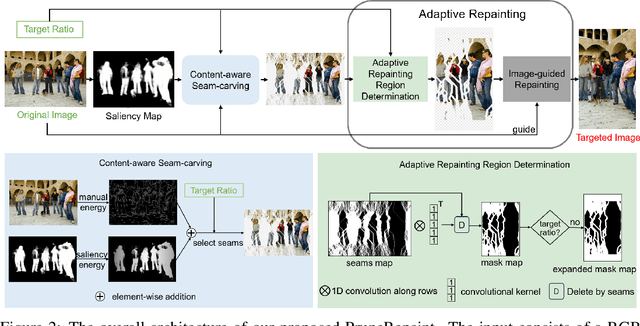
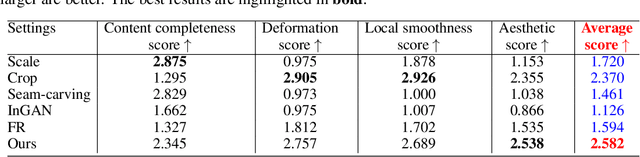
Image retargeting is the task of adjusting the aspect ratio of images to suit different display devices or presentation environments. However, existing retargeting methods often struggle to balance the preservation of key semantics and image quality, resulting in either deformation or loss of important objects, or the introduction of local artifacts such as discontinuous pixels and inconsistent regenerated content. To address these issues, we propose a content-aware retargeting method called PruneRepaint. It incorporates semantic importance for each pixel to guide the identification of regions that need to be pruned or preserved in order to maintain key semantics. Additionally, we introduce an adaptive repainting module that selects image regions for repainting based on the distribution of pruned pixels and the proportion between foreground size and target aspect ratio, thus achieving local smoothness after pruning. By focusing on the content and structure of the foreground, our PruneRepaint approach adaptively avoids key content loss and deformation, while effectively mitigating artifacts with local repainting. We conduct experiments on the public RetargetMe benchmark and demonstrate through objective experimental results and subjective user studies that our method outperforms previous approaches in terms of preserving semantics and aesthetics, as well as better generalization across diverse aspect ratios. Codes will be available at https://github.com/fhshen2022/PruneRepaint.
FeBiM: Efficient and Compact Bayesian Inference Engine Empowered with Ferroelectric In-Memory Computing
Oct 25, 2024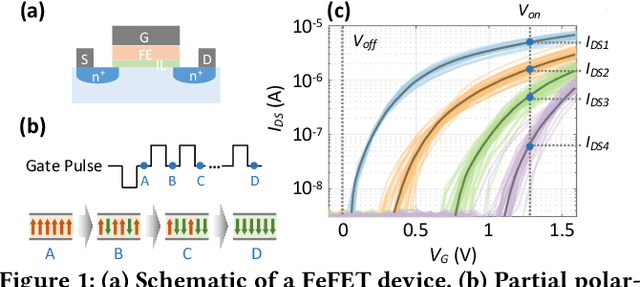
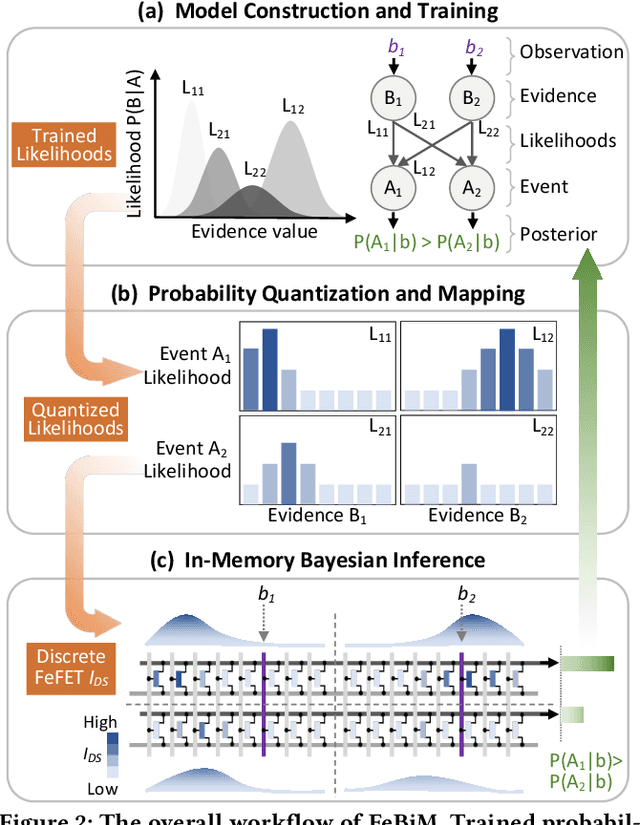
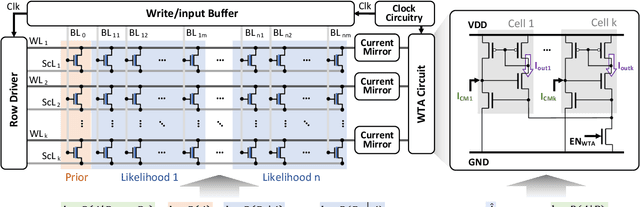
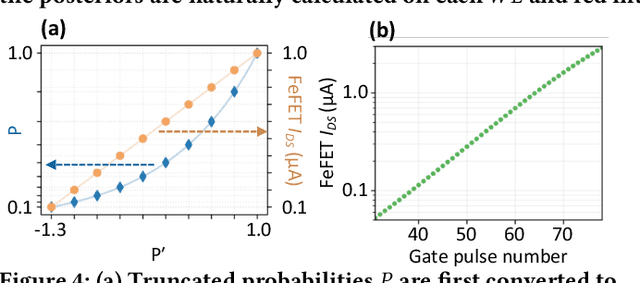
In scenarios with limited training data or where explainability is crucial, conventional neural network-based machine learning models often face challenges. In contrast, Bayesian inference-based algorithms excel in providing interpretable predictions and reliable uncertainty estimation in these scenarios. While many state-of-the-art in-memory computing (IMC) architectures leverage emerging non-volatile memory (NVM) technologies to offer unparalleled computing capacity and energy efficiency for neural network workloads, their application in Bayesian inference is limited. This is because the core operations in Bayesian inference differ significantly from the multiplication-accumulation (MAC) operations common in neural networks, rendering them generally unsuitable for direct implementation in most existing IMC designs. In this paper, we propose FeBiM, an efficient and compact Bayesian inference engine powered by multi-bit ferroelectric field-effect transistor (FeFET)-based IMC. FeBiM effectively encodes the trained probabilities of a Bayesian inference model within a compact FeFET-based crossbar. It maps quantized logarithmic probabilities to discrete FeFET states. As a result, the accumulated outputs of the crossbar naturally represent the posterior probabilities, i.e., the Bayesian inference model's output given a set of observations. This approach enables efficient in-memory Bayesian inference without the need for additional calculation circuitry. As the first FeFET-based in-memory Bayesian inference engine, FeBiM achieves an impressive storage density of 26.32 Mb/mm$^{2}$ and a computing efficiency of 581.40 TOPS/W in a representative Bayesian classification task. These results demonstrate 10.7$\times$/43.4$\times$ improvement in compactness/efficiency compared to the state-of-the-art hardware implementation of Bayesian inference.