 Add to Chrome
 Add to Firefox
 Add to Edge
Infinite-ID: Identity-preserved Personalization via ID-semantics Decoupling Paradigm
Mar 18, 2024


Drawing on recent advancements in diffusion models for text-to-image generation, identity-preserved personalization has made significant progress in accurately capturing specific identities with just a single reference image. However, existing methods primarily integrate reference images within the text embedding space, leading to a complex entanglement of image and text information, which poses challenges for preserving both identity fidelity and semantic consistency. To tackle this challenge, we propose Infinite-ID, an ID-semantics decoupling paradigm for identity-preserved personalization. Specifically, we introduce identity-enhanced training, incorporating an additional image cross-attention module to capture sufficient ID information while deactivating the original text cross-attention module of the diffusion model. This ensures that the image stream faithfully represents the identity provided by the reference image while mitigating interference from textual input. Additionally, we introduce a feature interaction mechanism that combines a mixed attention module with an AdaIN-mean operation to seamlessly merge the two streams. This mechanism not only enhances the fidelity of identity and semantic consistency but also enables convenient control over the styles of the generated images. Extensive experimental results on both raw photo generation and style image generation demonstrate the superior performance of our proposed method.

Learning-augmented Online Minimization of Age of Information and Transmission Costs
Mar 05, 2024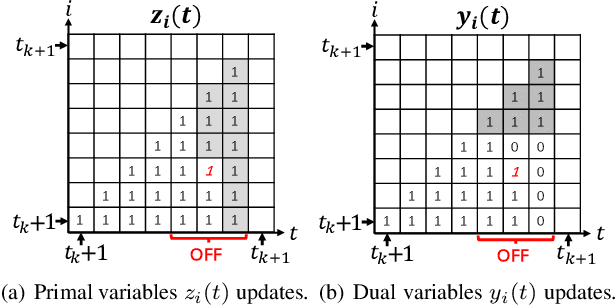
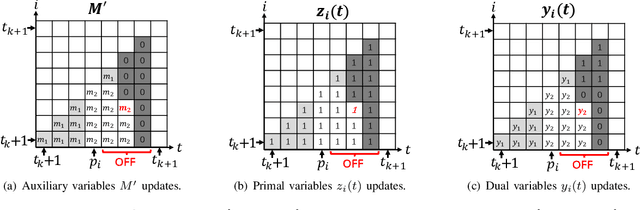
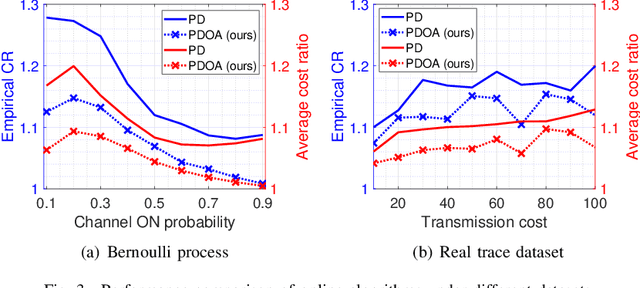
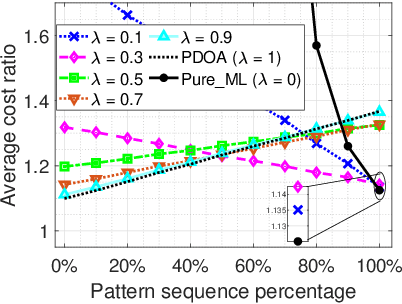
We consider a discrete-time system where a resource-constrained source (e.g., a small sensor) transmits its time-sensitive data to a destination over a time-varying wireless channel. Each transmission incurs a fixed transmission cost (e.g., energy cost), and no transmission results in a staleness cost represented by the Age-of-Information. The source must balance the tradeoff between transmission and staleness costs. To address this challenge, we develop a robust online algorithm to minimize the sum of transmission and staleness costs, ensuring a worst-case performance guarantee. While online algorithms are robust, they are usually overly conservative and may have a poor average performance in typical scenarios. In contrast, by leveraging historical data and prediction models, machine learning (ML) algorithms perform well in average cases. However, they typically lack worst-case performance guarantees. To achieve the best of both worlds, we design a learning-augmented online algorithm that exhibits two desired properties: (i) consistency: closely approximating the optimal offline algorithm when the ML prediction is accurate and trusted; (ii) robustness: ensuring worst-case performance guarantee even ML predictions are inaccurate. Finally, we perform extensive simulations to show that our online algorithm performs well empirically and that our learning-augmented algorithm achieves both consistency and robustness.
Neural Video Compression with Feature Modulation
Feb 29, 2024The emerging conditional coding-based neural video codec (NVC) shows superiority over commonly-used residual coding-based codec and the latest NVC already claims to outperform the best traditional codec. However, there still exist critical problems blocking the practicality of NVC. In this paper, we propose a powerful conditional coding-based NVC that solves two critical problems via feature modulation. The first is how to support a wide quality range in a single model. Previous NVC with this capability only supports about 3.8 dB PSNR range on average. To tackle this limitation, we modulate the latent feature of the current frame via the learnable quantization scaler. During the training, we specially design the uniform quantization parameter sampling mechanism to improve the harmonization of encoding and quantization. This results in a better learning of the quantization scaler and helps our NVC support about 11.4 dB PSNR range. The second is how to make NVC still work under a long prediction chain. We expose that the previous SOTA NVC has an obvious quality degradation problem when using a large intra-period setting. To this end, we propose modulating the temporal feature with a periodically refreshing mechanism to boost the quality. %Besides solving the above two problems, we also design a single model that can support both RGB and YUV colorspaces. Notably, under single intra-frame setting, our codec can achieve 29.7\% bitrate saving over previous SOTA NVC with 16\% MACs reduction. Our codec serves as a notable landmark in the journey of NVC evolution. The codes are at https://github.com/microsoft/DCVC.
Unsupervised Cross-Domain Image Retrieval via Prototypical Optimal Transport
Feb 28, 2024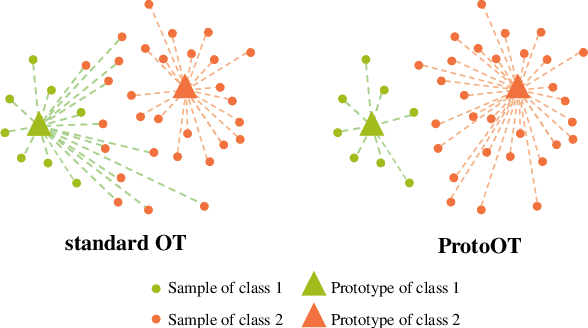
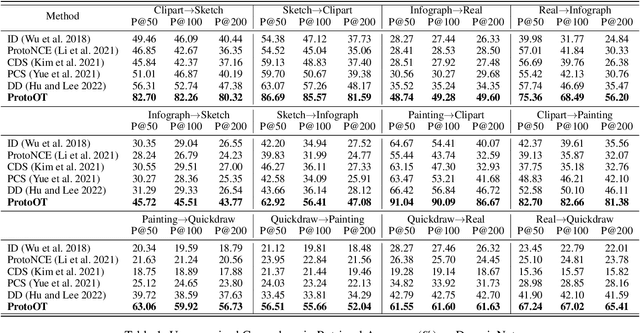
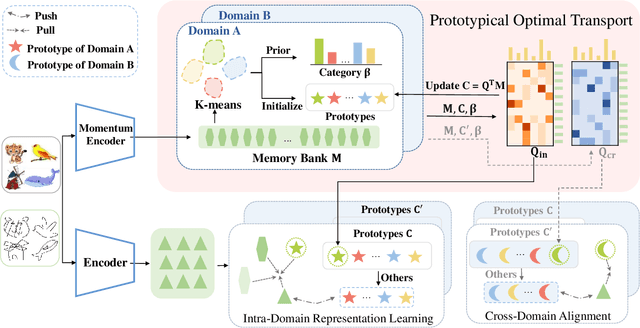
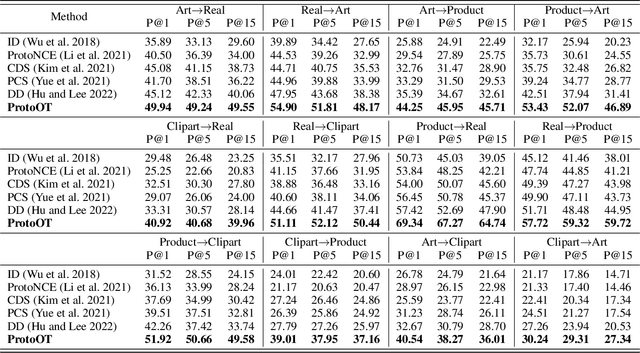
Unsupervised cross-domain image retrieval (UCIR) aims to retrieve images sharing the same category across diverse domains without relying on labeled data. Prior approaches have typically decomposed the UCIR problem into two distinct tasks: intra-domain representation learning and cross-domain feature alignment. However, these segregated strategies overlook the potential synergies between these tasks. This paper introduces ProtoOT, a novel Optimal Transport formulation explicitly tailored for UCIR, which integrates intra-domain feature representation learning and cross-domain alignment into a unified framework. ProtoOT leverages the strengths of the K-means clustering method to effectively manage distribution imbalances inherent in UCIR. By utilizing K-means for generating initial prototypes and approximating class marginal distributions, we modify the constraints in Optimal Transport accordingly, significantly enhancing its performance in UCIR scenarios. Furthermore, we incorporate contrastive learning into the ProtoOT framework to further improve representation learning. This encourages local semantic consistency among features with similar semantics, while also explicitly enforcing separation between features and unmatched prototypes, thereby enhancing global discriminativeness. ProtoOT surpasses existing state-of-the-art methods by a notable margin across benchmark datasets. Notably, on DomainNet, ProtoOT achieves an average P@200 enhancement of 24.44%, and on Office-Home, it demonstrates a P@15 improvement of 12.12%. Code is available at https://github.com/HCVLAB/ProtoOT.
Global Tropical Cyclone Intensity Forecasting with Multi-modal Multi-scale Causal Autoregressive Model
Feb 16, 2024Accurate forecasting of Tropical cyclone (TC) intensity is crucial for formulating disaster risk reduction strategies. Current methods predominantly rely on limited spatiotemporal information from ERA5 data and neglect the causal relationships between these physical variables, failing to fully capture the spatial and temporal patterns required for intensity forecasting. To address this issue, we propose a Multi-modal multi-Scale Causal AutoRegressive model (MSCAR), which is the first model that combines causal relationships with large-scale multi-modal data for global TC intensity autoregressive forecasting. Furthermore, given the current absence of a TC dataset that offers a wide range of spatial variables, we present the Satellite and ERA5-based Tropical Cyclone Dataset (SETCD), which stands as the longest and most comprehensive global dataset related to TCs. Experiments on the dataset show that MSCAR outperforms the state-of-the-art methods, achieving maximum reductions in global and regional forecast errors of 9.52% and 6.74%, respectively. The code and dataset are publicly available at https://anonymous.4open.science/r/MSCAR.
SA-MDKIF: A Scalable and Adaptable Medical Domain Knowledge Injection Framework for Large Language Models
Feb 01, 2024Recent advances in large language models (LLMs) have demonstrated exceptional performance in various natural language processing (NLP) tasks. However, their effective application in the medical domain is hampered by a lack of medical domain knowledge. In this study, we present SA-MDKIF, a scalable and adaptable framework that aims to inject medical knowledge into general-purpose LLMs through instruction tuning, thereby enabling adaptability for various downstream tasks. SA-MDKIF consists of two stages: skill training and skill adaptation. In the first stage, we define 12 basic medical skills and use AdaLoRA to train these skills based on uniformly formatted instructional datasets that we have constructed. In the next stage, we train the skill router using task-specific downstream data and use this router to integrate the acquired skills with LLMs during inference. Experimental results on 9 different medical tasks show that SA-MDKIF improves performance by 10-20% compared to the original LLMs. Notably, this improvement is particularly pronounced for unseen medical tasks, showing an improvement of up to 30%.
A Systematic Literature Review on Explainability for Machine/Deep Learning-based Software Engineering Research
Jan 26, 2024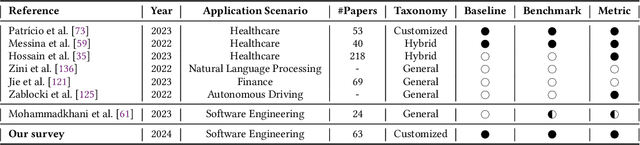

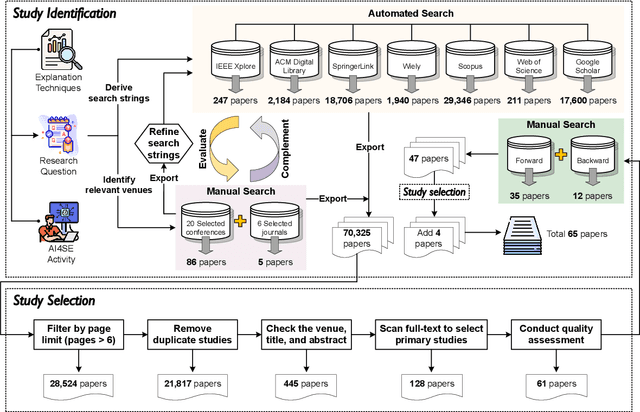
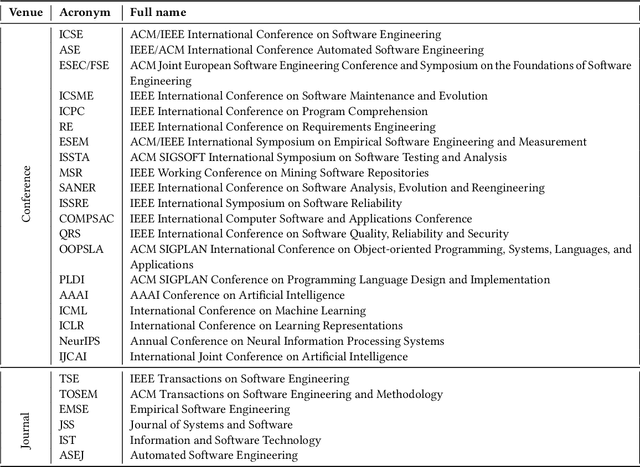
The remarkable achievements of Artificial Intelligence (AI) algorithms, particularly in Machine Learning (ML) and Deep Learning (DL), have fueled their extensive deployment across multiple sectors, including Software Engineering (SE). However, due to their black-box nature, these promising AI-driven SE models are still far from being deployed in practice. This lack of explainability poses unwanted risks for their applications in critical tasks, such as vulnerability detection, where decision-making transparency is of paramount importance. This paper endeavors to elucidate this interdisciplinary domain by presenting a systematic literature review of approaches that aim to improve the explainability of AI models within the context of SE. The review canvasses work appearing in the most prominent SE & AI conferences and journals, and spans 63 papers across 21 unique SE tasks. Based on three key Research Questions (RQs), we aim to (1) summarize the SE tasks where XAI techniques have shown success to date; (2) classify and analyze different XAI techniques; and (3) investigate existing evaluation approaches. Based on our findings, we identified a set of challenges remaining to be addressed in existing studies, together with a roadmap highlighting potential opportunities we deemed appropriate and important for future work.
Towards Generative Abstract Reasoning: Completing Raven's Progressive Matrix via Rule Abstraction and Selection
Jan 18, 2024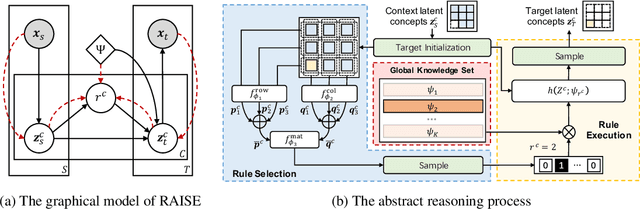
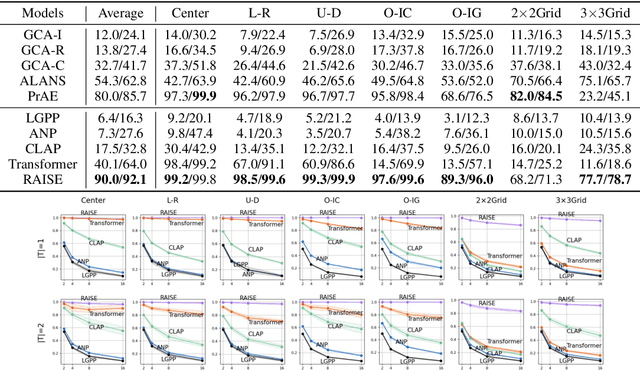

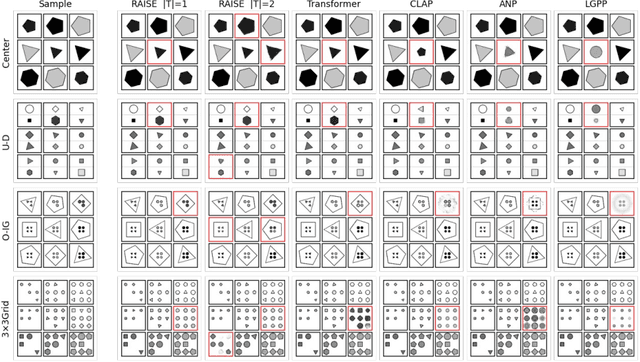
Endowing machines with abstract reasoning ability has been a long-term research topic in artificial intelligence. Raven's Progressive Matrix (RPM) is widely used to probe abstract visual reasoning in machine intelligence, where models need to understand the underlying rules and select the missing bottom-right images out of candidate sets to complete image matrices. The participators can display powerful reasoning ability by inferring the underlying attribute-changing rules and imagining the missing images at arbitrary positions. However, existing solvers can hardly manifest such an ability in realistic RPM problems. In this paper, we propose a conditional generative model to solve answer generation problems through Rule AbstractIon and SElection (RAISE) in the latent space. RAISE encodes image attributes as latent concepts and decomposes underlying rules into atomic rules by means of concepts, which are abstracted as global learnable parameters. When generating the answer, RAISE selects proper atomic rules out of the global knowledge set for each concept and composes them into the integrated rule of an RPM. In most configurations, RAISE outperforms the compared generative solvers in tasks of generating bottom-right and arbitrary-position answers. We test RAISE in the odd-one-out task and two held-out configurations to demonstrate how learning decoupled latent concepts and atomic rules helps find the image breaking the underlying rules and handle RPMs with unseen combinations of rules and attributes.
Accelerating Data Generation for Neural Operators via Krylov Subspace Recycling
Jan 17, 2024Learning neural operators for solving partial differential equations (PDEs) has attracted great attention due to its high inference efficiency. However, training such operators requires generating a substantial amount of labeled data, i.e., PDE problems together with their solutions. The data generation process is exceptionally time-consuming, as it involves solving numerous systems of linear equations to obtain numerical solutions to the PDEs. Many existing methods solve these systems independently without considering their inherent similarities, resulting in extremely redundant computations. To tackle this problem, we propose a novel method, namely Sorting Krylov Recycling (SKR), to boost the efficiency of solving these systems, thus significantly accelerating data generation for neural operators training. To the best of our knowledge, SKR is the first attempt to address the time-consuming nature of data generation for learning neural operators. The working horse of SKR is Krylov subspace recycling, a powerful technique for solving a series of interrelated systems by leveraging their inherent similarities. Specifically, SKR employs a sorting algorithm to arrange these systems in a sequence, where adjacent systems exhibit high similarities. Then it equips a solver with Krylov subspace recycling to solve the systems sequentially instead of independently, thus effectively enhancing the solving efficiency. Both theoretical analysis and extensive experiments demonstrate that SKR can significantly accelerate neural operator data generation, achieving a remarkable speedup of up to 13.9 times.
A Study on Training and Developing Large Language Models for Behavior Tree Generation
Jan 16, 2024This paper presents an innovative exploration of the application potential of large language models (LLM) in addressing the challenging task of automatically generating behavior trees (BTs) for complex tasks. The conventional manual BT generation method is inefficient and heavily reliant on domain expertise. On the other hand, existing automatic BT generation technologies encounter bottlenecks related to task complexity, model adaptability, and reliability. In order to overcome these challenges, we propose a novel methodology that leverages the robust representation and reasoning abilities of LLMs. The core contribution of this paper lies in the design of a BT generation framework based on LLM, which encompasses the entire process, from data synthesis and model training to application developing and data verification. Synthetic data is introduced to train the BT generation model (BTGen model), enhancing its understanding and adaptability to various complex tasks, thereby significantly improving its overall performance. In order to ensure the effectiveness and executability of the generated BTs, we emphasize the importance of data verification and introduce a multilevel verification strategy. Additionally, we explore a range of agent design and development schemes with LLM as the central element. We hope that the work in this paper may provide a reference for the researchers who are interested in BT generation based on LLMs.