 Add to Chrome
 Add to Firefox
 Add to Edge
Expanding the Lexicon of Ge'ez Based African Languages: A Comparative Study of Amharic and Tigrinya
Jul 16, 2026
Multilingual pre-trained language models (PLMs) exhibit degraded performance on low-resource, non-Latin-script languages, driven by high out-of-vocabulary (OOV) rates and excessive subword fragmentation that result from Latin-script-centric tokenizer training. We introduce VEXMLM, a vocabulary-extended variant of XLM-R targeting the two highest-resource Ge'ez-script languages, Amharic and Tigrinya, and further evaluated on 17 additional low-resource African languages (19 total). We train a language-specific SentencePiece tokenizer on curated Amharic and Tigrinya monolingual corpora, extend XLM-R's vocabulary with 30,000 Ge'ez-script subwords derived from this tokenizer, and initialize their embeddings by averaging the embeddings of their constituent subwords under XLM-R's original tokenizer. VEXMLM is trained in two stages: (1) continued masked language modeling over the extended vocabulary on the curated corpora, and (2) supervised fine-tuning on question answering (QA), named entity recognition (NER), and sentiment analysis (SA). On Amharic/Tigrinya QA, VEXMLM achieves 87.0 EM /90.0 F1, versus 66.0 EM/78.0 F1 for XLM-R and 74.0 EM/ 78.0 F1 for Glot500. On SA, VEXMLM reaches 80.0\% accuracy versus 77.0\% (XLM-R) and 46.0\% (Glot500). On NER, VEXMLM raises OOV-token entity accuracy from 81.4\% to 94.3\%, averaged over 11 of the 19 evaluated languages for which OOV analysis was possible. Our contributions are: (i) a vocabulary-extension and embedding-initialization procedure tailored to Ge'ez script; (ii) a two-stage training strategy under which vocabulary and continued-pretraining gains on Amharic/Tigrinya transfer to 17 typologically related, unaugmented African languages; and (iii) an evaluation spanning both intrinsic tokenization metrics (vocabulary coverage, fertility, OOV rate) and extrinsic task performance across all 19 languages.

A Sovereign, Open-Source Foundation Model for German and English
Jul 13, 2026We present Soofi S 30B-A3B, a sovereign, open-source Mixture-of-Experts (MoE) hybrid Mamba Transformer foundation model for German and English. Its hybrid design activates only 3B of 30B parameters per token and keeps the inference cache near-constant as context grows, giving it a decisive throughput advantage over dense models for long-context, high-concurrency deployment. Pretrained on roughly 27 trillion tokens with deliberately up-weighted German, Soofi S matches dense 14 to 27B models on aggregate English and German benchmarks while achieving the best code aggregates in both languages among 17 open base models, and outperforms every European sovereign baseline in our comparison, including ones far larger in active parameters. Among fully open models, Soofi S obtains the highest English and German evaluation scores, ahead of Olmo 3 32B and Apertus 70B. Soofi S was built end-to-end on the German Industrial AI Cloud, a sovereign HPC scale AI infrastructure operated by Deutsche Telekom in Munich. Soofi S will be released under highly permissive, open-access terms: weights, selected intermediate checkpoints, full per-source data accounting, hyperparameters, and training and evaluation code. Where source licenses permit, data-construction artifacts are released under permissive licenses; commercially licensed sources are documented with aggregate statistics and exact mixture accounting.
Decomposing the Generalization Gap in PROTAC Activity Prediction: Variance Attribution and the Inter-Laboratory Ceiling
May 12, 2026Machine-learning predictors of biochemical activity often exhibit large random-split-to-leave-one-target-out generalisation gaps that have been documented but not decomposed. We frame this as an evaluation-science question and use targeted protein degradation as the empirical test bed. PROTACs (proteolysis-targeting chimeras) are heterobifunctional small molecules that induce targeted protein degradation, with more than forty candidates currently in clinical trials; published predictors report AUROC of 0.85 to 0.91 under random-split cross-validation, while the leave-one-target-out (LOTO) protocol of Ribes et al. reduces performance to approximately 0.67. Random splits reward within-target interpolation, whereas LOTO measures the novel-target prediction that de-novo design depends on. We decompose this gap and identify inter-laboratory measurement variance as the dominant component, anchored by a within-target cross-laboratory cascade bounding the inter-laboratory contribution at 0.124 AUROC, well above the 0.05 contribution from binarisation-threshold choice. Across eight published architectures and ESM-2 protein language models up to 3B parameters, LOTO AUROC plateaus near 0.67, with a comparable plateau under SMILES-level deduplication; a 21-dimensional 2000-trial hyperparameter optimisation cannot break this ceiling, and the rank-1 single-seed configuration regresses by 0.161 AUROC under multi-seed validation, matching a closed-form selection-bias prediction (Bailey and Lopez de Prado, 2014). Few-shot k=5 stratified per-target retraining combined with ADMET features lifts 65-target LOTO AUROC from 0.668 to 0.7050, and post-hoc Platt scaling recovers raw output to within the 0.05 well-calibrated threshold. We release PROTAC-Bench (10,748 measurements, 173 targets, 65 LOTO folds), the variance-decomposition framework, the per-target calibration protocol, and the evaluation code.
LLM Probe: Evaluating LLMs for Low-Resource Languages
Mar 31, 2026Despite rapid advances in large language models (LLMs), their linguistic abilities in low-resource and morphologically rich languages are still not well understood due to limited annotated resources and the absence of standardized evaluation frameworks. This paper presents LLM Probe, a lexicon-based assessment framework designed to systematically evaluate the linguistic skills of LLMs in low-resource language environments. The framework analyzes models across four areas of language understanding: lexical alignment, part-of-speech recognition, morphosyntactic probing, and translation accuracy. To illustrate the framework, we create a manually annotated benchmark dataset using a low-resource Semitic language as a case study. The dataset comprises bilingual lexicons with linguistic annotations, including part-of-speech tags, grammatical gender, and morphosyntactic features, which demonstrate high inter-annotator agreement to ensure reliable annotations. We test a variety of models, including causal language models and sequence-to-sequence architectures. The results reveal notable differences in performance across various linguistic tasks: sequence-to-sequence models generally excel in morphosyntactic analysis and translation quality, whereas causal models demonstrate strong performance in lexical alignment but exhibit weaker translation accuracy. Our results emphasize the need for linguistically grounded evaluation to better understand LLM limitations in low-resource settings. We release LLM Probe and the accompanying benchmark dataset as open-source tools to promote reproducible benchmarking and to support the development of more inclusive multilingual language technologies.
LGSE: Lexically Grounded Subword Embedding Initialization for Low-Resource Language Adaptation
Mar 23, 2026Adapting pretrained language models to low-resource, morphologically rich languages remains a significant challenge. Existing vocabulary expansion methods typically rely on arbitrarily segmented subword units, resulting in fragmented lexical representations and loss of critical morphological information. To address this limitation, we propose the Lexically Grounded Subword Embedding Initialization (LGSE) framework, which introduces morphologically informed segmentation for initializing embeddings of novel tokens. Instead of using random vectors or arbitrary subwords, LGSE decomposes words into their constituent morphemes and constructs semantically coherent embeddings by averaging pretrained subword or FastText-based morpheme representations. When a token cannot be segmented into meaningful morphemes, its embedding is constructed using character n-gram representations to capture structural information. During Language-Adaptive Pretraining, we apply a regularization term that penalizes large deviations of newly introduced embeddings from their initialized values, preserving alignment with the original pretrained embedding space while enabling adaptation to the target language. To isolate the effect of initialization, we retain the original pre-trained model vocabulary and tokenizer and update only the new embeddings during adaptation. We evaluate LGSE on three NLP tasks: Question Answering, Named Entity Recognition, and Text Classification, in two morphologically rich, low-resource languages: Amharic and Tigrinya, where morphological segmentation resources are available. Experimental results show that LGSE consistently outperforms baseline methods across all tasks, demonstrating the effectiveness of morphologically grounded embedding initialization for improving representation quality in underrepresented languages. Project resources are available in the GitHub link.
Cross-Modal Rationale Transfer for Explainable Humanitarian Classification on Social Media
Mar 19, 2026Advances in social media data dissemination enable the provision of real-time information during a crisis. The information comes from different classes, such as infrastructure damages, persons missing or stranded in the affected zone, etc. Existing methods attempted to classify text and images into various humanitarian categories, but their decision-making process remains largely opaque, which affects their deployment in real-life applications. Recent work has sought to improve transparency by extracting textual rationales from tweets to explain predicted classes. However, such explainable classification methods have mostly focused on text, rather than crisis-related images. In this paper, we propose an interpretable-by-design multimodal classification framework. Our method first learns the joint representation of text and image using a visual language transformer model and extracts text rationales. Next, it extracts the image rationales via the mapping with text rationales. Our approach demonstrates how to learn rationales in one modality from another through cross-modal rationale transfer, which saves annotation effort. Finally, tweets are classified based on extracted rationales. Experiments are conducted over CrisisMMD benchmark dataset, and results show that our proposed method boosts the classification Macro-F1 by 2-35% while extracting accurate text tokens and image patches as rationales. Human evaluation also supports the claim that our proposed method is able to retrieve better image rationale patches (12%) that help to identify humanitarian classes. Our method adapts well to new, unseen datasets in zero-shot mode, achieving an accuracy of 80%.
Training-Induced Bias Toward LLM-Generated Content in Dense Retrieval
Feb 11, 2026Dense retrieval is a promising approach for acquiring relevant context or world knowledge in open-domain natural language processing tasks and is now widely used in information retrieval applications. However, recent reports claim a broad preference for text generated by large language models (LLMs). This bias is called "source bias", and it has been hypothesized that lower perplexity contributes to this effect. In this study, we revisit this claim by conducting a controlled evaluation to trace the emergence of such preferences across training stages and data sources. Using parallel human- and LLM-generated counterparts of the SciFact and Natural Questions (NQ320K) datasets, we compare unsupervised checkpoints with models fine-tuned using in-domain human text, in-domain LLM-generated text, and MS MARCO. Our results show the following: 1) Unsupervised retrievers do not exhibit a uniform pro-LLM preference. The direction and magnitude depend on the dataset. 2) Across the settings tested, supervised fine-tuning on MS MARCO consistently shifts the rankings toward LLM-generated text. 3) In-domain fine-tuning produces dataset-specific and inconsistent shifts in preference. 4) Fine-tuning on LLM-generated corpora induces a pronounced pro-LLM bias. Finally, a retriever-centric perplexity probe involving the reattachment of a language modeling head to the fine-tuned dense retriever encoder indicates agreement with relevance near chance, thereby weakening the explanatory power of perplexity. Our study demonstrates that source bias is a training-induced phenomenon rather than an inherent property of dense retrievers.
Investigating the Impact of Histopathological Foundation Models on Regressive Prediction of Homologous Recombination Deficiency
Jan 29, 2026Foundation models pretrained on large-scale histopathology data have found great success in various fields of computational pathology, but their impact on regressive biomarker prediction remains underexplored. In this work, we systematically evaluate histopathological foundation models for regression-based tasks, demonstrated through the prediction of homologous recombination deficiency (HRD) score - a critical biomarker for personalized cancer treatment. Within multiple instance learning frameworks, we extract patch-level features from whole slide images (WSI) using five state-of-the-art foundation models, and evaluate their impact compared to contrastive learning-based features. Models are trained to predict continuous HRD scores based on these extracted features across breast, endometrial, and lung cancer cohorts from two public medical data collections. Extensive experiments demonstrate that models trained on foundation model features consistently outperform the baseline in terms of predictive accuracy and generalization capabilities while exhibiting systematic differences among the foundation models. Additionally, we propose a distribution-based upsampling strategy to mitigate target imbalance in these datasets, significantly improving the recall and balanced accuracy for underrepresented but clinically important patient populations. Furthermore, we investigate the impact of different sampling strategies and instance bagsizes by ablation studies. Our results highlight the benefits of large-scale histopathological pretraining for more precise and transferable regressive biomarker prediction, showcasing its potential to advance AI-driven precision oncology.
MedAI: Evaluating TxAgent's Therapeutic Agentic Reasoning in the NeurIPS CURE-Bench Competition
Dec 12, 2025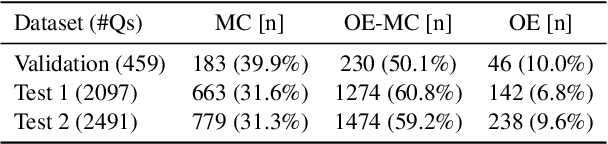
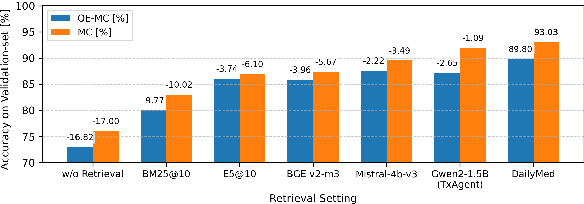
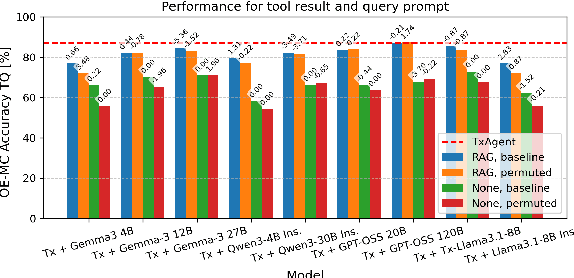
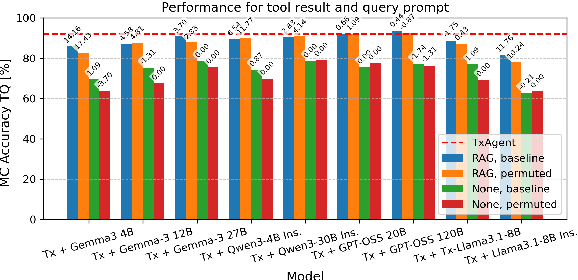
Therapeutic decision-making in clinical medicine constitutes a high-stakes domain in which AI guidance interacts with complex interactions among patient characteristics, disease processes, and pharmacological agents. Tasks such as drug recommendation, treatment planning, and adverse-effect prediction demand robust, multi-step reasoning grounded in reliable biomedical knowledge. Agentic AI methods, exemplified by TxAgent, address these challenges through iterative retrieval-augmented generation (RAG). TxAgent employs a fine-tuned Llama-3.1-8B model that dynamically generates and executes function calls to a unified biomedical tool suite (ToolUniverse), integrating FDA Drug API, OpenTargets, and Monarch resources to ensure access to current therapeutic information. In contrast to general-purpose RAG systems, medical applications impose stringent safety constraints, rendering the accuracy of both the reasoning trace and the sequence of tool invocations critical. These considerations motivate evaluation protocols treating token-level reasoning and tool-usage behaviors as explicit supervision signals. This work presents insights derived from our participation in the CURE-Bench NeurIPS 2025 Challenge, which benchmarks therapeutic-reasoning systems using metrics that assess correctness, tool utilization, and reasoning quality. We analyze how retrieval quality for function (tool) calls influences overall model performance and demonstrate performance gains achieved through improved tool-retrieval strategies. Our work was awarded the Excellence Award in Open Science. Complete information can be found at https://curebench.ai/.
Towards Transparent Stance Detection: A Zero-Shot Approach Using Implicit and Explicit Interpretability
Nov 05, 2025Zero-Shot Stance Detection (ZSSD) identifies the attitude of the post toward unseen targets. Existing research using contrastive, meta-learning, or data augmentation suffers from generalizability issues or lack of coherence between text and target. Recent works leveraging large language models (LLMs) for ZSSD focus either on improving unseen target-specific knowledge or generating explanations for stance analysis. However, most of these works are limited by their over-reliance on explicit reasoning, provide coarse explanations that lack nuance, and do not explicitly model the reasoning process, making it difficult to interpret the model's predictions. To address these issues, in our study, we develop a novel interpretable ZSSD framework, IRIS. We provide an interpretable understanding of the attitude of the input towards the target implicitly based on sequences within the text (implicit rationales) and explicitly based on linguistic measures (explicit rationales). IRIS considers stance detection as an information retrieval ranking task, understanding the relevance of implicit rationales for different stances to guide the model towards correct predictions without requiring the ground-truth of rationales, thus providing inherent interpretability. In addition, explicit rationales based on communicative features help decode the emotional and cognitive dimensions of stance, offering an interpretable understanding of the author's attitude towards the given target. Extensive experiments on the benchmark datasets of VAST, EZ-STANCE, P-Stance, and RFD using 50%, 30%, and even 10% training data prove the generalizability of our model, benefiting from the proposed architecture and interpretable design.