 Add to Chrome
 Add to Firefox
 Add to Edge
RUFNet: Query-Guided Support Mask Refinement and Uncertainty Fusion based on Hybrid Mamba for Few-Shot Brain Tumor Segmentation
Jul 06, 2026
Few-shot brain tumor segmentation remains challenging due to noisy support masks, inter-patient variations between support and query images, and the lack of pixel-wise confidence estimation. This study proposes RUFNet, a Hybrid Mamba-based few-shot framework that combines support mask refinement with uncertainty-aware posterior fusion. To preserve support-query dependencies with manageable cost, RUFNet adopts a Hybrid Mamba interaction backbone with linear complexity. To reduce support-mask noise, an Attention-Guided Mask Refinement module (AGMR) uses query features to recalibrate support masks and improve prototype consistency. To handle ambiguous predictions, an Uncertainty-Aware Posterior Fusion module (UAPF) estimates pixel-wise variance and adaptively balances few-shot predictions with query-aligned priors. On the Brain Tumor Segmentation Challenge (BraTS) 2020 dataset, RUFNet achieves Dice coefficients of 84.3% and 86.1% in the 1-way 1-shot and 1-way 5-shot settings, respectively, outperforming the compared state-of-the-art methods. These results suggest that Hybrid Mamba interaction, mask refinement and uncertainty modelling can improve the robustness of few-shot medical image segmentation. The official implementation code is available at https://github.com/hdy6438/RUFNet.

JuZhou 1.0 Technical Report: The First Edge-Native Text-to-Image Foundation Model Trained Entirely on China-Developed AI Accelerators
Jun 25, 2026Text-to-image (T2I) diffusion models typically require substantial computational resources and cloud infrastructure, posing significant challenges for edge deployment in terms of latency, cost, and user privacy. We present JuZhou 1.0, an ultra-lightweight T2I foundation model designed for fully offline, on-device execution. JuZhou 1.0 achieves its efficiency through four key designs: (1) a compact image-generation backbone consisting of a 0.385B-parameter denoising U-Net and a 1.90M-parameter distilled decoder, totaling approximately 0.387B parameters; (2) Rectified Flow training combined with DMD2 distillation, reducing inference to 4 sampling steps; (3) Chinese semantic alignment trained on 9M curated image-text pairs, enabling direct Chinese prompting without external translation at inference time; and (4) a training and distillation pipeline completed on domestically developed Sugon K100 AI accelerators without relying on NVIDIA GPUs for training or distillation. Despite its compact scale, the 28-step base model of JuZhou 1.0 achieves an overall GenEval score of 0.69, outperforming published baselines including SDXL (2.6B, 0.55), SD3-Medium (2B, 0.62), and IF-XL (4.3B, 0.61). We further validate the full poetry-to-image pipeline on Android and the core CLIP-U-Net-VAE generation branch on iOS. On a smartphone powered by the Snapdragon 8 Elite Gen 5 Mobile Platform, the 4-step U-Net denoising branch runs in approximately 1.6 seconds, while the full Android poetry-to-image pipeline takes 4.5 seconds with on-device prompt refinement on Xiaomi 17 Pro Max. These results position JuZhou 1.0 as a practical approach to mobile text-to-image generation and provide a concrete reference for Chinese-native generation, domestic-compute training, and fully offline on-device deployment after one-time installation.
Multi-proposal Collaboration and Multi-task Training for Weakly-supervised Video Moment Retrieval
May 14, 2026This study focuses on weakly-supervised Video Moment Retrieval (VMR), aiming to identify a moment semantically similar to the given query within an untrimmed video using only video-level correspondences, without relying on temporal annotations during training. Previous methods either aggregate predictions for all instances in the video, or indirectly address the task by proposing reconstructions for the query. However, these methods often produce low-quality temporal proposals, struggle with distinguishing misaligned moments in the same video, or lack stability due to a reliance on a single auxiliary task. To address these limitations, we present a novel weakly-supervised method called Multi-proposal Collaboration and Multi-task Training (MCMT). Initially, we generate multiple proposals and derive corresponding learnable Gaussian masks from them. These masks are then combined to create a high-quality positive sample mask, highlighting video clips most relevant to the query. Concurrently, we classify other clips in the same video as the easy negative sample and the entire video as the hard negative sample. During training, we introduce forward and inverse masked query reconstruction tasks to impose more substantial constraints on the network, promoting more robust and stable retrieval performance. Extensive experiments on two standard benchmarks affirm the effectiveness of the proposed method in VMR.
* 26 pages, 4 figures. Preprint version of the article published in International Journal of Machine Learning and Cybernetics
CFSPMNet: Cross-subject Fourier-guided Spatial-Patch Mamba Network for EEG Motor Imagery Decoding in Stroke Patients
May 11, 2026Motor imagery electroencephalography (MI-EEG) decoding offers a non-invasive route for post-stroke rehabilitation, but cross-patient use remains difficult because pathological neural reorganization changes task-related EEG dynamics, aperiodic activity, local excitability, cross-regional coordination, and trial-level brain-state context. This makes source-learned MI representations unreliable for unseen patients. To address this problem, we propose CFSPMNet, a cross-patient adaptation framework that models post-stroke MI-EEG as latent neural-state organization. CFSPMNet combines a Fourier-Reorganized State Mamba Network (FRSM) with Shared-Private Prototype Matching (SPPM). FRSM represents each trial as a latent physiological token sequence, reorganizes token states in the Fourier domain, and uses Fourier-derived trial context to guide Mamba state-space propagation. SPPM improves target pseudo-label updating by combining semantic confidence with shared-private physiological consistency, filtering confident but physiologically inconsistent target predictions. Leave-one-subject-out experiments on two stroke MI-EEG datasets show that CFSPMNet outperforms representative CNN-, Transformer-, Mamba-, and adaptation-based baselines, achieving average accuracies of 68.23% on XW-Stroke and 73.33% on 2019-Stroke, with gains of 5.63 and 8.25 percentage points over the strongest competitors. Ablation, sensitivity, feature-alignment, pseudo-label selection, and neurophysiological visualization analyses further support the roles of Fourier-domain token-state reorganization and calibrated pseudo-label updating. These results suggest that latent neural-state modeling can improve rehabilitation-oriented cross-patient BCI decoding. Code is available at https://github.com/wxk1224/CFSPMNet.
Non-Invasive Reconstruction of Intracranial EEG Across the Deep Temporal Lobe from Scalp EEG based on Conditional Normalizing Flow
Feb 27, 2026Although obtaining deep brain activity from non-invasive scalp electroencephalography (sEEG) is crucial for neuroscience and clinical diagnosis, directly generating high-fidelity intracranial electroencephalography (iEEG) signals remains a largely unexplored field, limiting our understanding of deep brain dynamics. Current research primarily focuses on traditional signal processing or source localization methods, which struggle to capture the complex waveforms and random characteristics of iEEG. To address this critical challenge, this paper introduces NeuroFlowNet, a novel cross-modal generative framework whose core contribution lies in the first-ever reconstruction of iEEG signals from the entire deep temporal lobe region using sEEG signals. NeuroFlowNet is built on Conditional Normalizing Flow (CNF), which directly models complex conditional probability distributions through reversible transformations, thereby explicitly capturing the randomness of brain signals and fundamentally avoiding the pattern collapse issues common in existing generative models. Additionally, the model integrates a multi-scale architecture and self-attention mechanisms to robustly capture fine-grained temporal details and long-range dependencies. Validation results on a publicly available synchronized sEEG-iEEG dataset demonstrate NeuroFlowNet's effectiveness in terms of temporal waveform fidelity, spectral feature reproduction, and functional connectivity restoration. This study establishes a more reliable and scalable new paradigm for non-invasive analysis of deep brain dynamics. The code of this study is available in https://github.com/hdy6438/NeuroFlowNet
Efficient Parallelization of Message Passing Neural Networks
May 15, 2025Machine learning potentials have achieved great success in accelerating atomistic simulations. Many of them rely on local descriptors that readily allow parallelization. More recent message passing neural network (MPNN) models have demonstrated their superior accuracy and become increasingly popular. However, parallelizing MPNN models for large-scale simulations across compute nodes remains a challenge, as the previously argued poor scalability with the number of MP layers and the necessity of data communication. Here, we propose an efficient parallel algorithm for MPNN models, in which additional data communication is minimized among local atoms only in each MP layer without redundant computation, thus scaling linearly with the layer number. Integrated with our recursively embedded atom neural network model, this algorithm demonstrates excellent strong scaling and weak scaling behaviors in several benchmark systems. This approach enables massive molecular dynamics simulations on MPNN models for hundreds of millions of atoms as fast as on strictly local models, vastly extending the applicability of the MPNN potential to an unprecedented scale. This general parallelization framework can empower various MPNN models to efficiently simulate very large and complex systems.
Spec2VolCAMU-Net: A Spectrogram-to-Volume Model for EEG-to-fMRI Reconstruction based on Multi-directional Time-Frequency Convolutional Attention Encoder and Vision-Mamba U-Net
May 14, 2025High-resolution functional magnetic resonance imaging (fMRI) is essential for mapping human brain activity; however, it remains costly and logistically challenging. If comparable volumes could be generated directly from widely available scalp electroencephalography (EEG), advanced neuroimaging would become significantly more accessible. Existing EEG-to-fMRI generators rely on plain CNNs that fail to capture cross-channel time-frequency cues or on heavy transformer/GAN decoders that strain memory and stability. We propose Spec2VolCAMU-Net, a lightweight spectrogram-to-volume generator that confronts these issues via a Multi-directional Time-Frequency Convolutional Attention Encoder, stacking temporal, spectral and joint convolutions with self-attention, and a Vision-Mamba U-Net decoder whose linear-time state-space blocks enable efficient long-range spatial modelling. Trained end-to-end with a hybrid SSI-MSE loss, Spec2VolCAMU-Net achieves state-of-the-art fidelity on three public benchmarks, recording SSIMs of 0.693 on NODDI, 0.725 on Oddball and 0.788 on CN-EPFL, representing improvements of 14.5%, 14.9%, and 16.9% respectively over previous best SSIM scores. Furthermore, it achieves competitive PSNR scores, particularly excelling on the CN-EPFL dataset with a 4.6% improvement over the previous best PSNR, thus striking a better balance in reconstruction quality. The proposed model is lightweight and efficient, making it suitable for real-time applications in clinical and research settings. The code is available at https://github.com/hdy6438/Spec2VolCAMU-Net.
Generative Modeling of Adversarial Lane-Change Scenario
Mar 15, 2025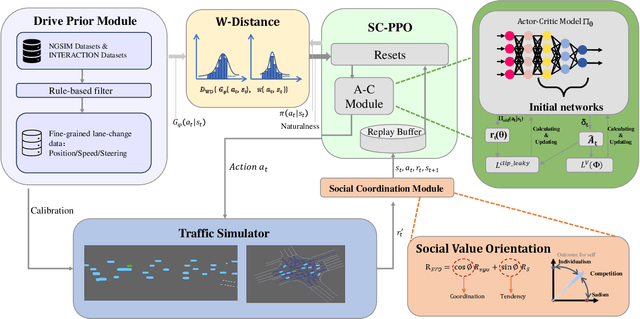
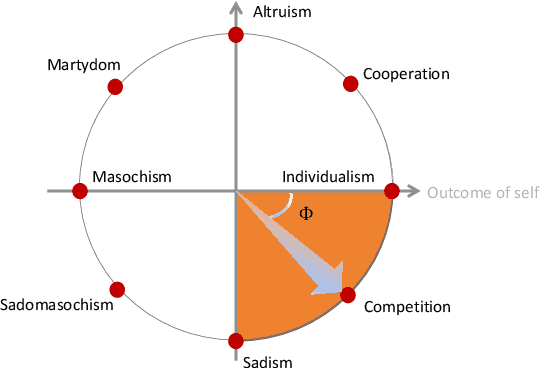
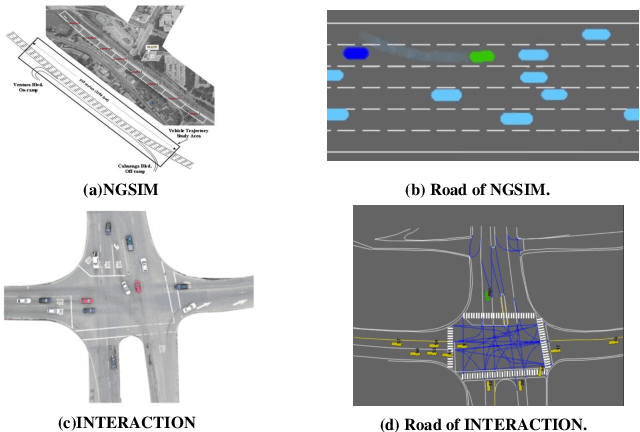
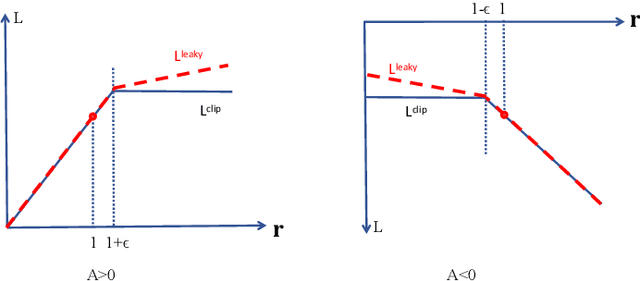
Decision-making in long-tail scenarios is crucial to autonomous driving development, with realistic and challenging simulations playing a pivotal role in testing safety-critical situations. However, the current open-source datasets do not systematically include long-tail distributed scenario data, making acquiring such scenarios a formidable task. To address this problem, a data mining framework is proposed, which performs in-depth analysis on two widely-used datasets, NGSIM and INTERACTION, to pinpoint data with hazardous behavioral traits, aiming to bridge the gap in these overlooked scenarios. The approach utilizes Generative Adversarial Imitation Learning (GAIL) based on an enhanced Proximal Policy Optimization (PPO) model, integrated with the vehicle's environmental analysis, to iteratively refine and represent the newly generated vehicle trajectory. Innovatively, the solution optimizes the generation of adversarial scenario data from the perspectives of sensitivity and reasonable adversarial. It is demonstrated through experiments that, compared to the unfiltered data and baseline models, the approach exhibits more adversarial yet natural behavior regarding collision rate, acceleration, and lane changes, thereby validating its suitability for generating scenario data and providing constructive insights for the development of future scenarios and subsequent decision training.
Beautimeter: Harnessing GPT for Assessing Architectural and Urban Beauty based on the 15 Properties of Living Structure
Nov 28, 2024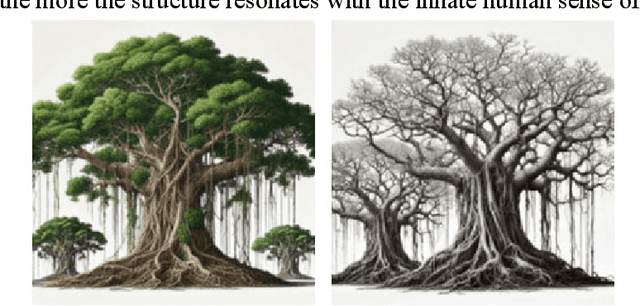
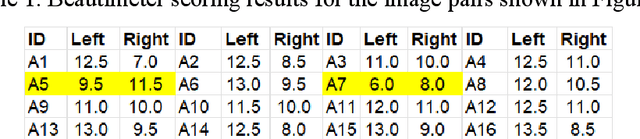
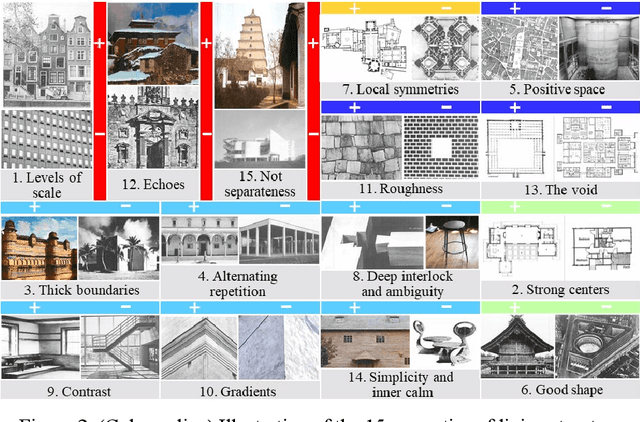

Beautimeter is a new tool powered by generative pre-trained transformer (GPT) technology, designed to evaluate architectural and urban beauty. Rooted in Christopher Alexander's theory of centers, this work builds on the idea that all environments possess, to varying degrees, an innate sense of life. Alexander identified 15 fundamental properties, such as levels of scale and thick boundaries, that characterize living structure, which Beautimeter uses as a basis for its analysis. By integrating GPT's advanced natural language processing capabilities, Beautimeter assesses the extent to which a structure embodies these 15 properties, enabling a nuanced evaluation of architectural and urban aesthetics. Using ChatGPT, the tool helps users generate insights into the perceived beauty and coherence of spaces. We conducted a series of case studies, evaluating images of architectural and urban environments, as well as carpets, paintings, and other artifacts. The results demonstrate Beautimeter's effectiveness in analyzing aesthetic qualities across diverse contexts. Our findings suggest that by leveraging GPT technology, Beautimeter offers architects, urban planners, and designers a powerful tool to create spaces that resonate deeply with people. This paper also explores the implications of such technology for architecture and urban design, highlighting its potential to enhance both the design process and the assessment of built environments. Keywords: Living structure, structural beauty, Christopher Alexander, AI in Design, human centered design
Enhancing Long Video Understanding via Hierarchical Event-Based Memory
Sep 10, 2024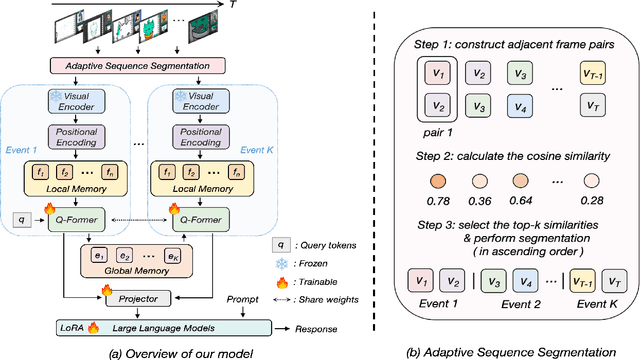


Recently, integrating visual foundation models into large language models (LLMs) to form video understanding systems has attracted widespread attention. Most of the existing models compress diverse semantic information within the whole video and feed it into LLMs for content comprehension. While this method excels in short video understanding, it may result in a blend of multiple event information in long videos due to coarse compression, which causes information redundancy. Consequently, the semantics of key events might be obscured within the vast information that hinders the model's understanding capabilities. To address this issue, we propose a Hierarchical Event-based Memory-enhanced LLM (HEM-LLM) for better understanding of long videos. Firstly, we design a novel adaptive sequence segmentation scheme to divide multiple events within long videos. In this way, we can perform individual memory modeling for each event to establish intra-event contextual connections, thereby reducing information redundancy. Secondly, while modeling current event, we compress and inject the information of the previous event to enhance the long-term inter-event dependencies in videos. Finally, we perform extensive experiments on various video understanding tasks and the results show that our model achieves state-of-the-art performances.