 Add to Chrome
 Add to Firefox
 Add to Edge
JuZhou 1.0 Technical Report: The First Edge-Native Text-to-Image Foundation Model Trained Entirely on China-Developed AI Accelerators
Jun 25, 2026
Text-to-image (T2I) diffusion models typically require substantial computational resources and cloud infrastructure, posing significant challenges for edge deployment in terms of latency, cost, and user privacy. We present JuZhou 1.0, an ultra-lightweight T2I foundation model designed for fully offline, on-device execution. JuZhou 1.0 achieves its efficiency through four key designs: (1) a compact image-generation backbone consisting of a 0.385B-parameter denoising U-Net and a 1.90M-parameter distilled decoder, totaling approximately 0.387B parameters; (2) Rectified Flow training combined with DMD2 distillation, reducing inference to 4 sampling steps; (3) Chinese semantic alignment trained on 9M curated image-text pairs, enabling direct Chinese prompting without external translation at inference time; and (4) a training and distillation pipeline completed on domestically developed Sugon K100 AI accelerators without relying on NVIDIA GPUs for training or distillation. Despite its compact scale, the 28-step base model of JuZhou 1.0 achieves an overall GenEval score of 0.69, outperforming published baselines including SDXL (2.6B, 0.55), SD3-Medium (2B, 0.62), and IF-XL (4.3B, 0.61). We further validate the full poetry-to-image pipeline on Android and the core CLIP-U-Net-VAE generation branch on iOS. On a smartphone powered by the Snapdragon 8 Elite Gen 5 Mobile Platform, the 4-step U-Net denoising branch runs in approximately 1.6 seconds, while the full Android poetry-to-image pipeline takes 4.5 seconds with on-device prompt refinement on Xiaomi 17 Pro Max. These results position JuZhou 1.0 as a practical approach to mobile text-to-image generation and provide a concrete reference for Chinese-native generation, domestic-compute training, and fully offline on-device deployment after one-time installation.

RefSAM: Efficiently Adapting Segmenting Anything Model for Referring Video Object Segmentation
Jul 03, 2023The Segment Anything Model (SAM) has gained significant attention for its impressive performance in image segmentation. However, it lacks proficiency in referring video object segmentation (RVOS) due to the need for precise user-interactive prompts and limited understanding of different modalities, such as language and vision. This paper presents the RefSAM model, which for the first time explores the potential of SAM for RVOS by incorporating multi-view information from diverse modalities and successive frames at different timestamps. Our proposed approach adapts the original SAM model to enhance cross-modality learning by employing a lightweight Cross-Modal MLP that projects the text embedding of the referring expression into sparse and dense embeddings, serving as user-interactive prompts. Subsequently, a parameter-efficient tuning strategy is employed to effectively align and fuse the language and vision features. Through comprehensive ablation studies, we demonstrate the practical and effective design choices of our strategy. Extensive experiments conducted on Ref-Youtu-VOS and Ref-DAVIS17 datasets validate the superiority and effectiveness of our RefSAM model over existing methods. The code and models will be made publicly at \href{https://github.com/LancasterLi/RefSAM}{github.com/LancasterLi/RefSAM}.
1st Workshop on Maritime Computer Vision 2023: Challenge Results
Nov 28, 2022
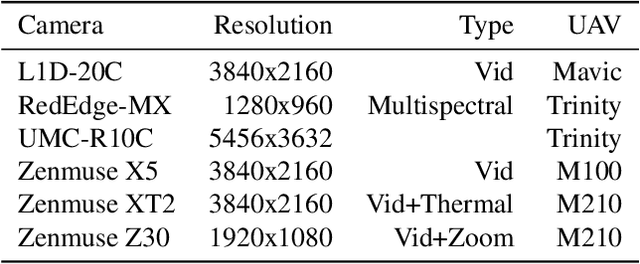
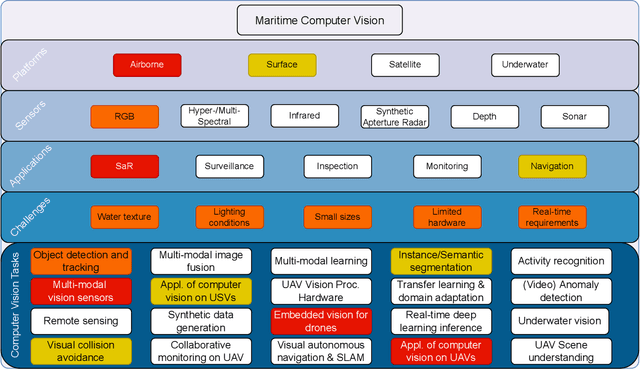
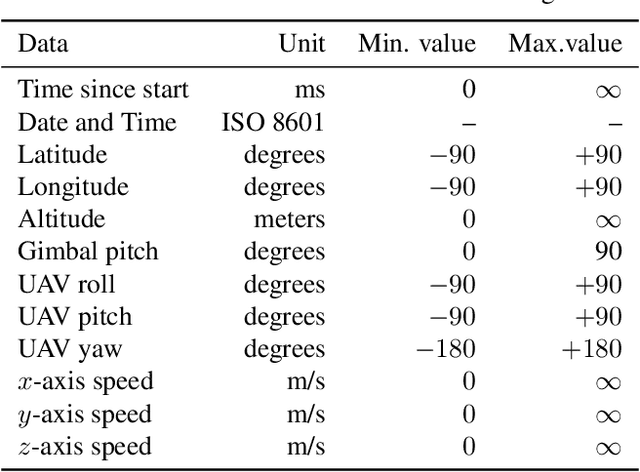
The 1$^{\text{st}}$ Workshop on Maritime Computer Vision (MaCVi) 2023 focused on maritime computer vision for Unmanned Aerial Vehicles (UAV) and Unmanned Surface Vehicle (USV), and organized several subchallenges in this domain: (i) UAV-based Maritime Object Detection, (ii) UAV-based Maritime Object Tracking, (iii) USV-based Maritime Obstacle Segmentation and (iv) USV-based Maritime Obstacle Detection. The subchallenges were based on the SeaDronesSee and MODS benchmarks. This report summarizes the main findings of the individual subchallenges and introduces a new benchmark, called SeaDronesSee Object Detection v2, which extends the previous benchmark by including more classes and footage. We provide statistical and qualitative analyses, and assess trends in the best-performing methodologies of over 130 submissions. The methods are summarized in the appendix. The datasets, evaluation code and the leaderboard are publicly available at https://seadronessee.cs.uni-tuebingen.de/macvi.