 Add to Chrome
 Add to Firefox
 Add to Edge
Detecting natural disasters, damage, and incidents in the wild
Aug 20, 2020
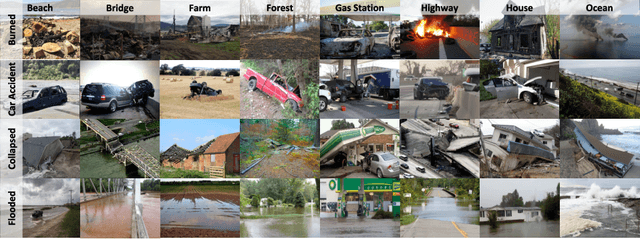
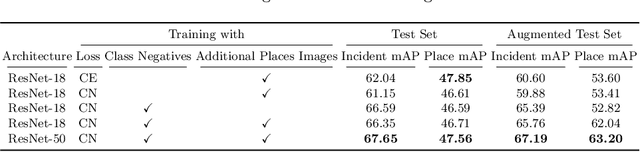
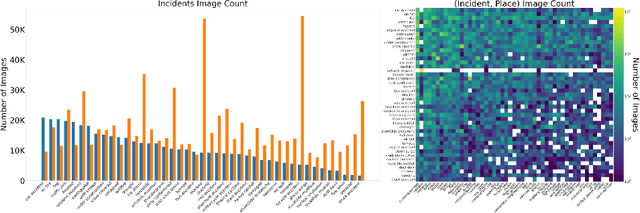
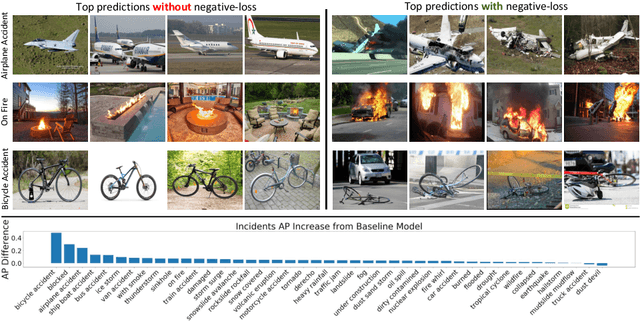
Responding to natural disasters, such as earthquakes, floods, and wildfires, is a laborious task performed by on-the-ground emergency responders and analysts. Social media has emerged as a low-latency data source to quickly understand disaster situations. While most studies on social media are limited to text, images offer more information for understanding disaster and incident scenes. However, no large-scale image datasets for incident detection exists. In this work, we present the Incidents Dataset, which contains 446,684 images annotated by humans that cover 43 incidents across a variety of scenes. We employ a baseline classification model that mitigates false-positive errors and we perform image filtering experiments on millions of social media images from Flickr and Twitter. Through these experiments, we show how the Incidents Dataset can be used to detect images with incidents in the wild. Code, data, and models are available online at http://incidentsdataset.csail.mit.edu.

Rewriting a Deep Generative Model
Jul 30, 2020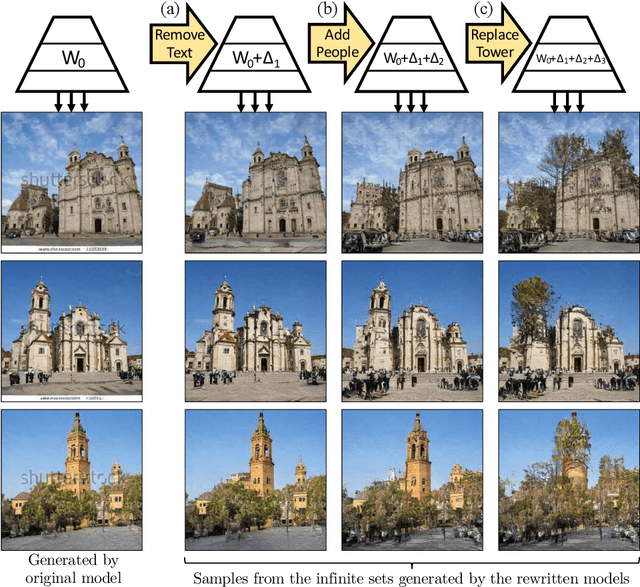
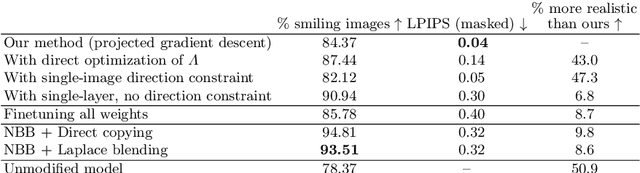
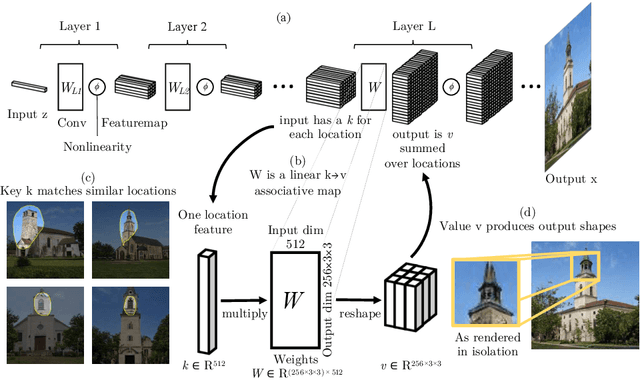
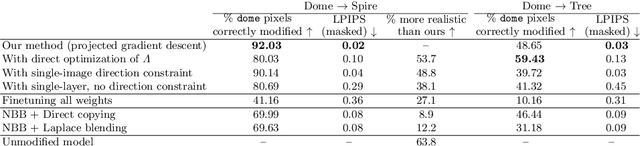
A deep generative model such as a GAN learns to model a rich set of semantic and physical rules about the target distribution, but up to now, it has been obscure how such rules are encoded in the network, or how a rule could be changed. In this paper, we introduce a new problem setting: manipulation of specific rules encoded by a deep generative model. To address the problem, we propose a formulation in which the desired rule is changed by manipulating a layer of a deep network as a linear associative memory. We derive an algorithm for modifying one entry of the associative memory, and we demonstrate that several interesting structural rules can be located and modified within the layers of state-of-the-art generative models. We present a user interface to enable users to interactively change the rules of a generative model to achieve desired effects, and we show several proof-of-concept applications. Finally, results on multiple datasets demonstrate the advantage of our method against standard fine-tuning methods and edit transfer algorithms.
Noisy Agents: Self-supervised Exploration by Predicting Auditory Events
Jul 27, 2020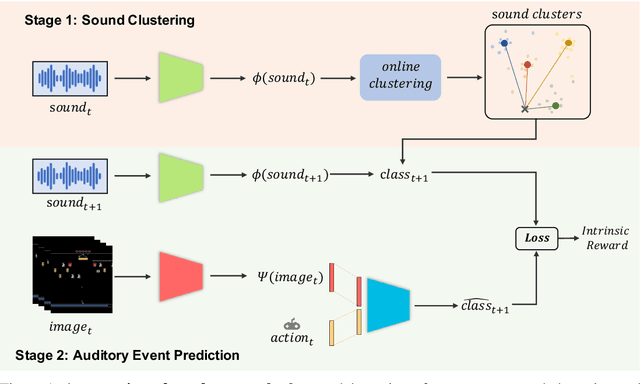

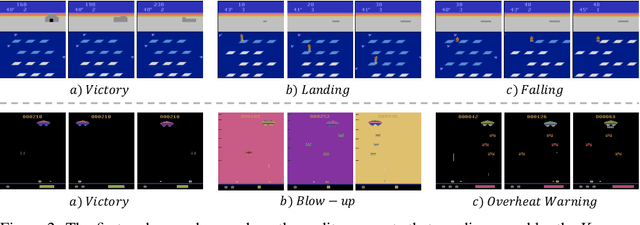
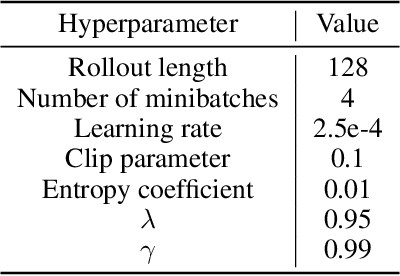
Humans integrate multiple sensory modalities (e.g. visual and audio) to build a causal understanding of the physical world. In this work, we propose a novel type of intrinsic motivation for Reinforcement Learning (RL) that encourages the agent to understand the causal effect of its actions through auditory event prediction. First, we allow the agent to collect a small amount of acoustic data and use K-means to discover underlying auditory event clusters. We then train a neural network to predict the auditory events and use the prediction errors as intrinsic rewards to guide RL exploration. Experimental results on Atari games show that our new intrinsic motivation significantly outperforms several state-of-the-art baselines. We further visualize our noisy agents' behavior in a physics environment and demonstrate that our newly designed intrinsic reward leads to the emergence of physical interaction behaviors (e.g. contact with objects).
Foley Music: Learning to Generate Music from Videos
Jul 21, 2020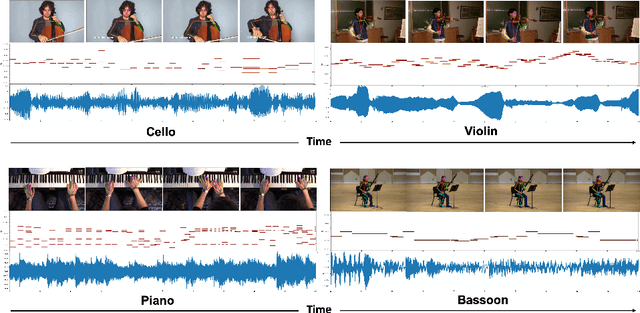
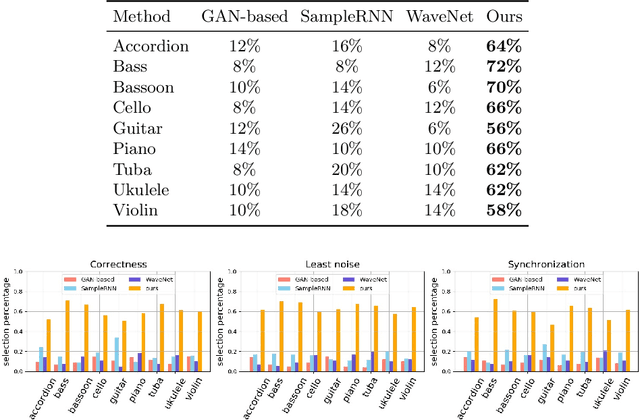
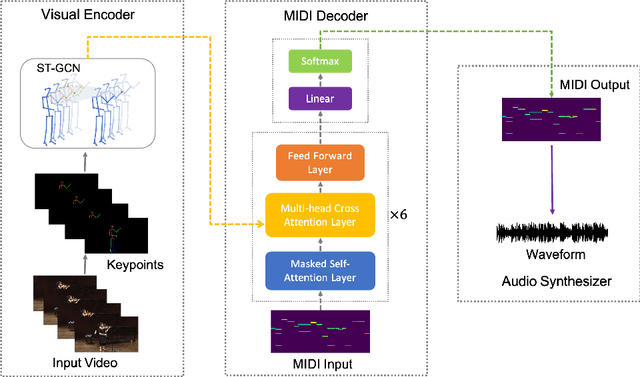
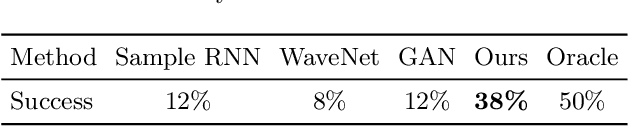
In this paper, we introduce Foley Music, a system that can synthesize plausible music for a silent video clip about people playing musical instruments. We first identify two key intermediate representations for a successful video to music generator: body keypoints from videos and MIDI events from audio recordings. We then formulate music generation from videos as a motion-to-MIDI translation problem. We present a Graph$-$Transformer framework that can accurately predict MIDI event sequences in accordance with the body movements. The MIDI event can then be converted to realistic music using an off-the-shelf music synthesizer tool. We demonstrate the effectiveness of our models on videos containing a variety of music performances. Experimental results show that our model outperforms several existing systems in generating music that is pleasant to listen to. More importantly, the MIDI representations are fully interpretable and transparent, thus enabling us to perform music editing flexibly. We encourage the readers to watch the demo video with audio turned on to experience the results.
Estimating Generalization under Distribution Shifts via Domain-Invariant Representations
Jul 06, 2020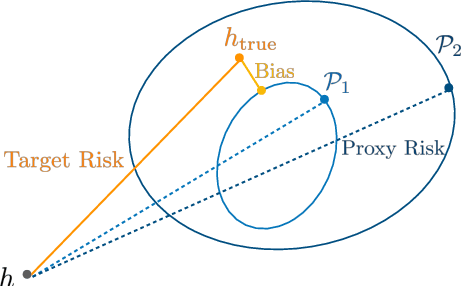
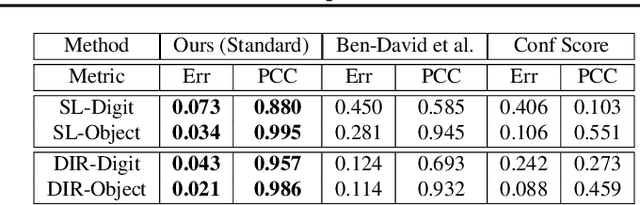
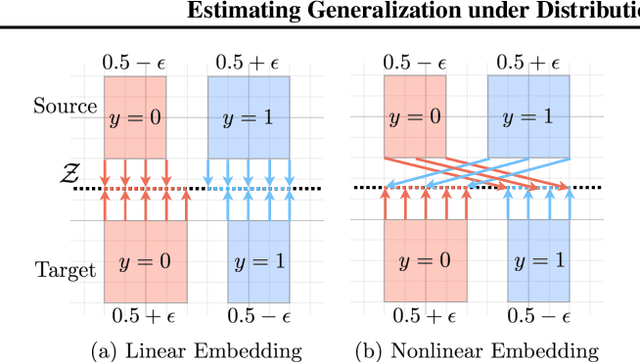
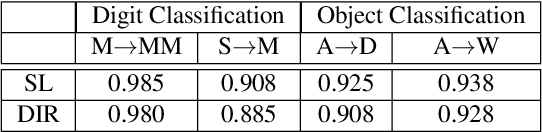
When machine learning models are deployed on a test distribution different from the training distribution, they can perform poorly, but overestimate their performance. In this work, we aim to better estimate a model's performance under distribution shift, without supervision. To do so, we use a set of domain-invariant predictors as a proxy for the unknown, true target labels. Since the error of the resulting risk estimate depends on the target risk of the proxy model, we study generalization of domain-invariant representations and show that the complexity of the latent representation has a significant influence on the target risk. Empirically, our approach (1) enables self-tuning of domain adaptation models, and (2) accurately estimates the target error of given models under distribution shift. Other applications include model selection, deciding early stopping and error detection.
* arXiv admin note: text overlap with arXiv:1910.05804
Debiased Contrastive Learning
Jul 05, 2020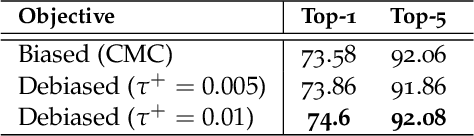
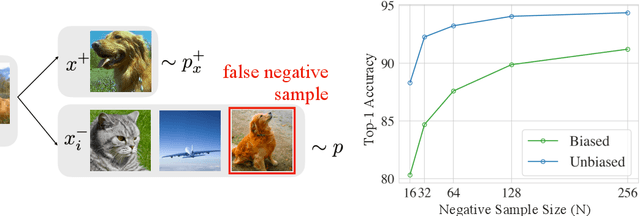
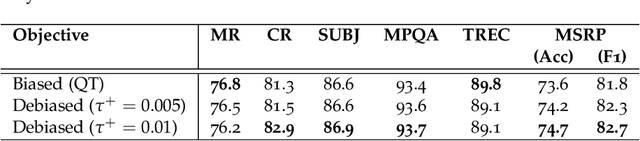
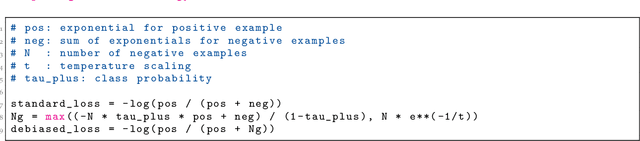
A prominent technique for self-supervised representation learning has been to contrast semantically similar and dissimilar pairs of samples. Without access to labels, dissimilar (negative) points are typically taken to be randomly sampled datapoints, implicitly accepting that these points may, in reality, actually have the same label. Perhaps unsurprisingly, we observe that sampling negative examples from truly different labels improves performance, in a synthetic setting where labels are available. Motivated by this observation, we develop a debiased contrastive objective that corrects for the sampling of same-label datapoints, even without knowledge of the true labels. Empirically, the proposed objective consistently outperforms the state-of-the-art for representation learning in vision, language, and reinforcement learning benchmarks. Theoretically, we establish generalization bounds for the downstream classification task.
Causal Discovery in Physical Systems from Videos
Jul 02, 2020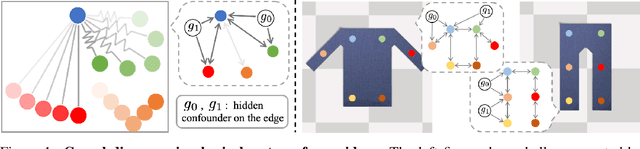
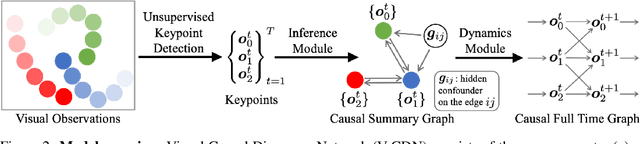
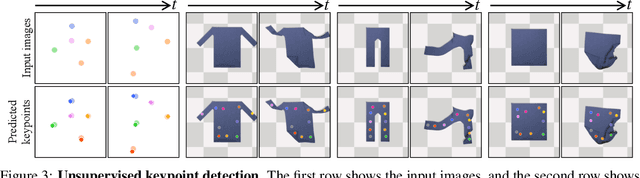
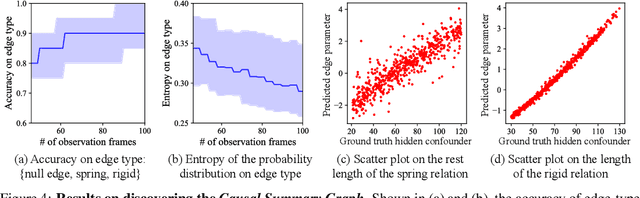
Causal discovery is at the core of human cognition. It enables us to reason about the environment and make counterfactual predictions about unseen scenarios, that can vastly differ from our previous experiences. We consider the task of causal discovery from videos in an end-to-end fashion without supervision on the ground-truth graph structure. In particular, our goal is to discover the structural dependencies among environmental and object variables: inferring the type and strength of interactions that have a causal effect on the behavior of the dynamical system. Our model consists of (a) a perception module that extracts a semantically meaningful and temporally consistent keypoint representation from images, (b) an inference module for determining the graph distribution induced by the detected keypoints, and (c) a dynamics module that can predict the future by conditioning on the inferred graph. We assume access to different configurations and environmental conditions, i.e., data from unknown interventions on the underlying system; thus, we can hope to discover the correct underlying causal graph without explicit interventions. We evaluate our method in a planar multi-body interaction environment and scenarios involving fabrics of different shapes like shirts and pants. Experiments demonstrate that our model can correctly identify the interactions from a short sequence of images and make long-term future predictions. The causal structure assumed by the model also allows it to make counterfactual predictions and extrapolate to systems of unseen interaction graphs or graphs of various sizes.
Diverse Image Generation via Self-Conditioned GANs
Jun 18, 2020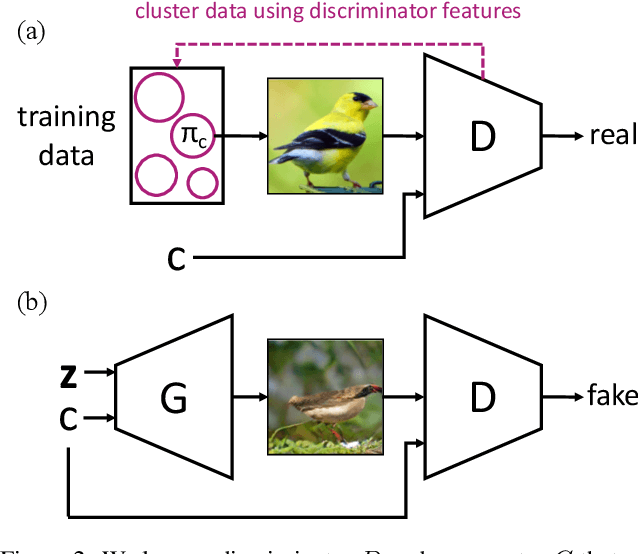
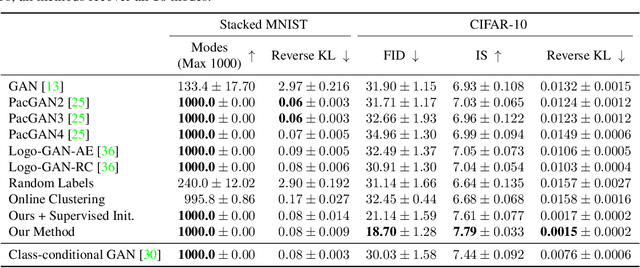
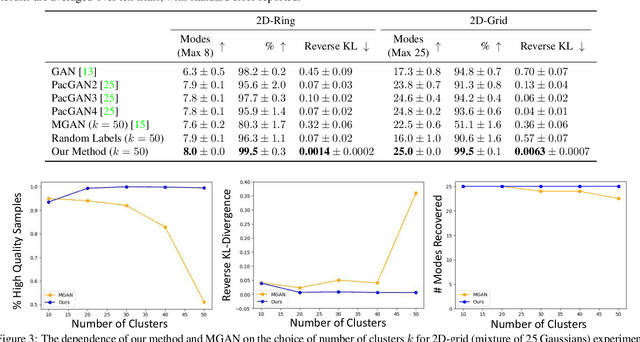
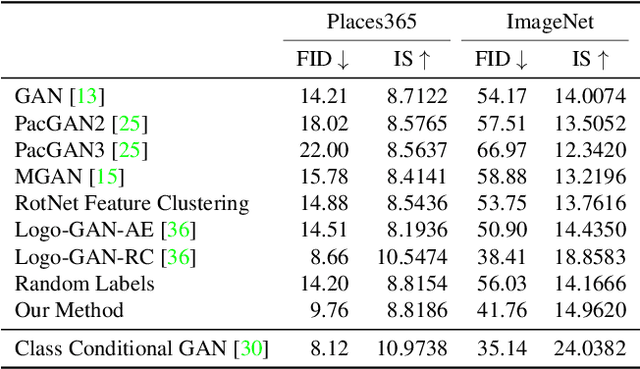
We introduce a simple but effective unsupervised method for generating realistic and diverse images. We train a class-conditional GAN model without using manually annotated class labels. Instead, our model is conditional on labels automatically derived from clustering in the discriminator's feature space. Our clustering step automatically discovers diverse modes, and explicitly requires the generator to cover them. Experiments on standard mode collapse benchmarks show that our method outperforms several competing methods when addressing mode collapse. Our method also performs well on large-scale datasets such as ImageNet and Places365, improving both image diversity and standard quality metrics, compared to previous methods.
AVLnet: Learning Audio-Visual Language Representations from Instructional Videos
Jun 16, 2020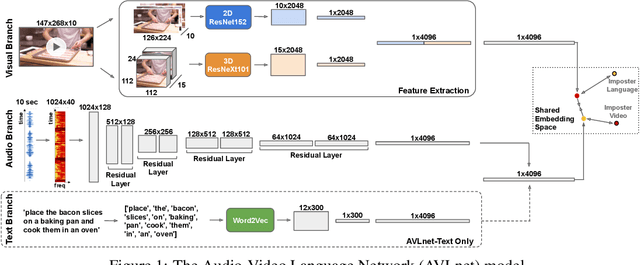
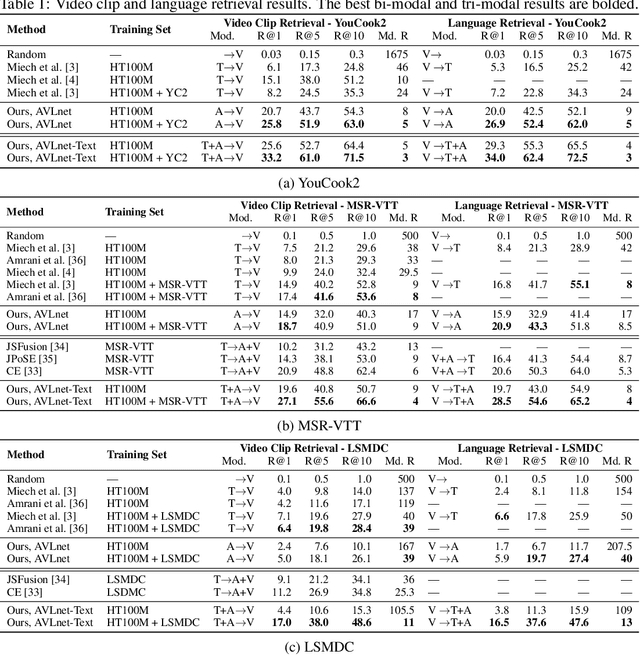
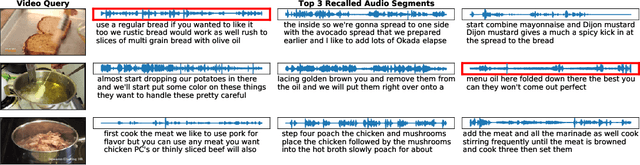
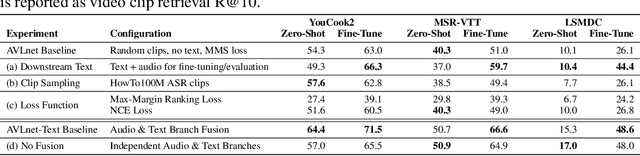
Current methods for learning visually grounded language from videos often rely on time-consuming and expensive data collection, such as human annotated textual summaries or machine generated automatic speech recognition transcripts. In this work, we introduce Audio-Video Language Network (AVLnet), a self-supervised network that learns a shared audio-visual embedding space directly from raw video inputs. We circumvent the need for annotation and instead learn audio-visual language representations directly from randomly segmented video clips and their raw audio waveforms. We train AVLnet on publicly available instructional videos and evaluate our model on video clip and language retrieval tasks on three video datasets. Our proposed model outperforms several state-of-the-art text-video baselines by up to 11.8% in a video clip retrieval task, despite operating on the raw audio instead of manually annotated text captions. Further, we show AVLnet is capable of integrating textual information, increasing its modularity and improving performance by up to 20.3% on the video clip retrieval task. Finally, we perform analysis of AVLnet's learned representations, showing our model has learned to relate visual objects with salient words and natural sounds.
Learning to Simulate Dynamic Environments with GameGAN
May 25, 2020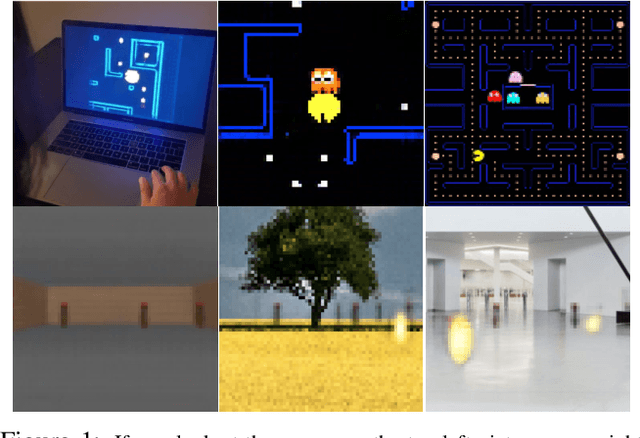
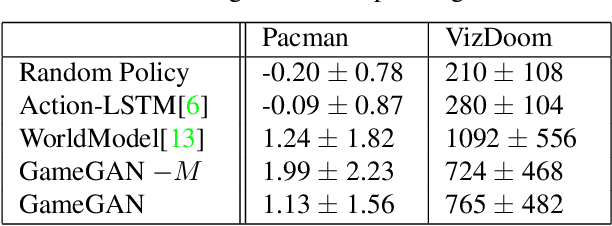
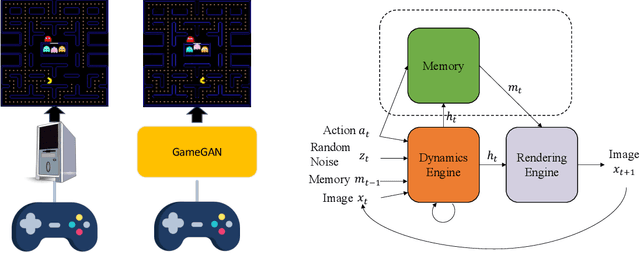
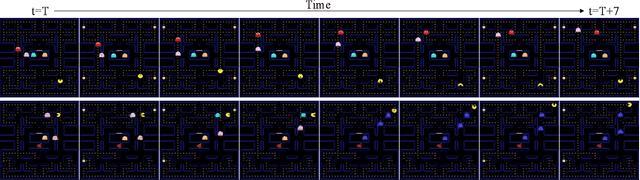
Simulation is a crucial component of any robotic system. In order to simulate correctly, we need to write complex rules of the environment: how dynamic agents behave, and how the actions of each of the agents affect the behavior of others. In this paper, we aim to learn a simulator by simply watching an agent interact with an environment. We focus on graphics games as a proxy of the real environment. We introduce GameGAN, a generative model that learns to visually imitate a desired game by ingesting screenplay and keyboard actions during training. Given a key pressed by the agent, GameGAN "renders" the next screen using a carefully designed generative adversarial network. Our approach offers key advantages over existing work: we design a memory module that builds an internal map of the environment, allowing for the agent to return to previously visited locations with high visual consistency. In addition, GameGAN is able to disentangle static and dynamic components within an image making the behavior of the model more interpretable, and relevant for downstream tasks that require explicit reasoning over dynamic elements. This enables many interesting applications such as swapping different components of the game to build new games that do not exist.