 Add to Chrome
 Add to Firefox
 Add to Edge
Instance Segmentation
Papers and Code
ChartAgent: A Chart Understanding Framework with Tool Integrated Reasoning
Dec 16, 2025
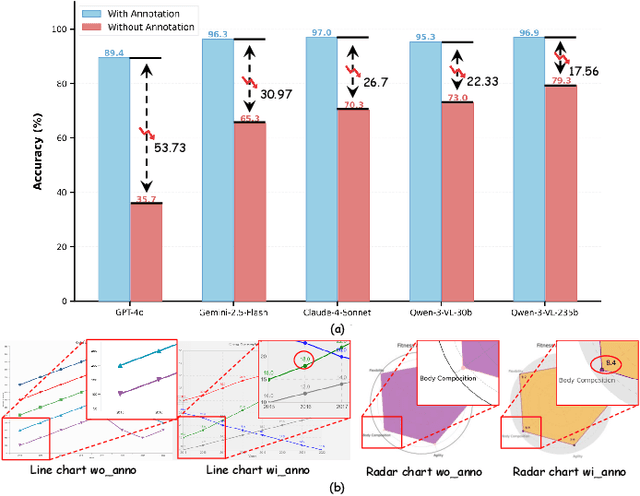
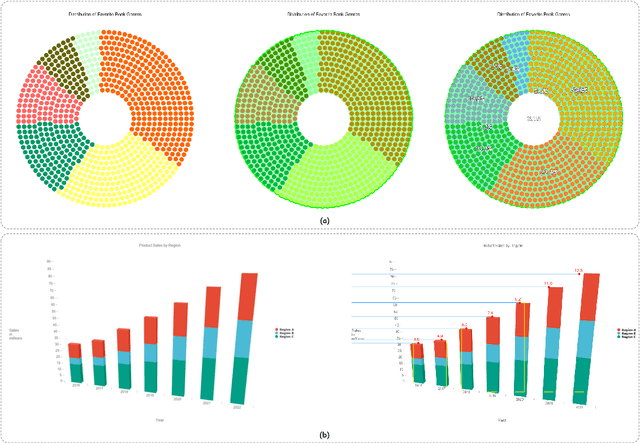
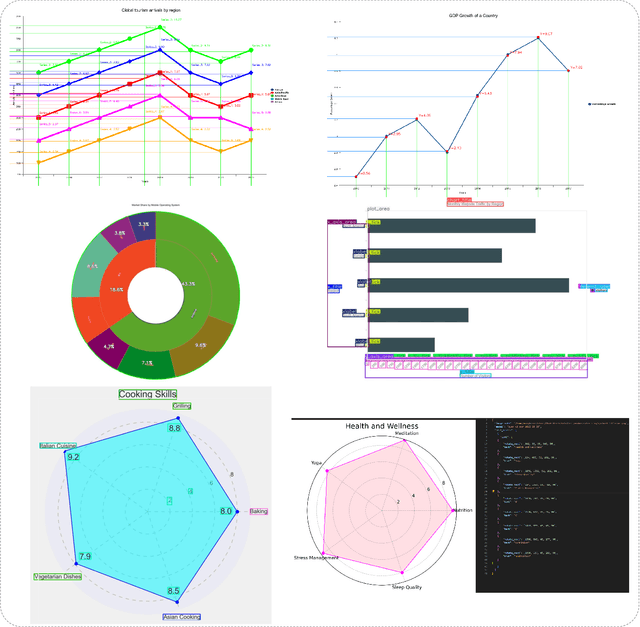
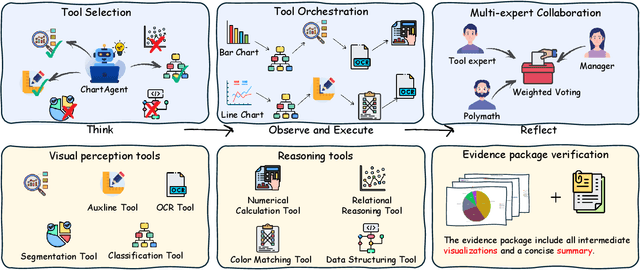
With their high information density and intuitive readability, charts have become the de facto medium for data analysis and communication across disciplines. Recent multimodal large language models (MLLMs) have made notable progress in automated chart understanding, yet they remain heavily dependent on explicit textual annotations and the performance degrades markedly when key numerals are absent. To address this limitation, we introduce ChartAgent, a chart understanding framework grounded in Tool-Integrated Reasoning (TIR). Inspired by human cognition, ChartAgent decomposes complex chart analysis into a sequence of observable, replayable steps. Supporting this architecture is an extensible, modular tool library comprising more than a dozen core tools, such as keyelement detection, instance segmentation, and optical character recognition (OCR), which the agent dynamically orchestrates to achieve systematic visual parsing across diverse chart types. Leveraging TIRs transparency and verifiability, ChartAgent moves beyond the black box paradigm by standardizing and consolidating intermediate outputs into a structured Evidence Package, providing traceable and reproducible support for final conclusions. Experiments show that ChartAgent substantially improves robustness under sparse annotation settings, offering a practical path toward trustworthy and extensible systems for chart understanding.

Bridging Semantics and Geometry: A Decoupled LVLM-SAM Framework for Reasoning Segmentation in Remote Sensing
Dec 22, 2025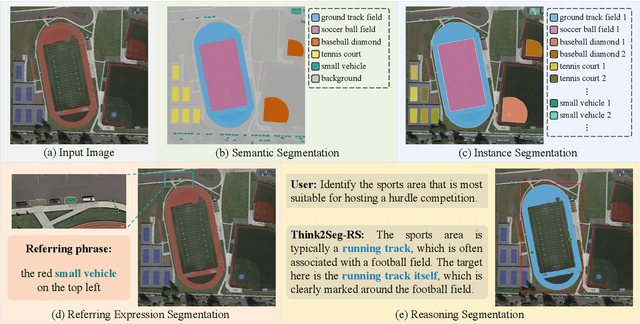
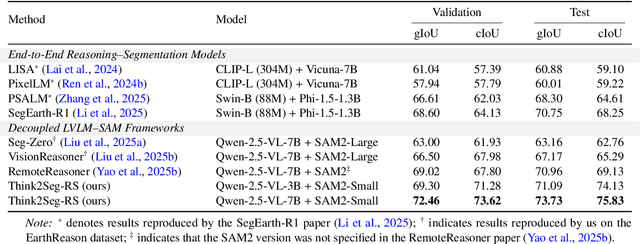
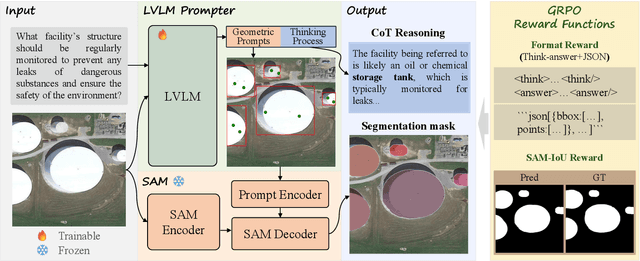
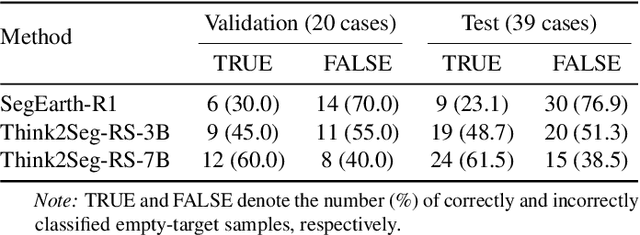
Large Vision-Language Models (LVLMs) hold great promise for advancing remote sensing (RS) analysis, yet existing reasoning segmentation frameworks couple linguistic reasoning and pixel prediction through end-to-end supervised fine-tuning, leading to weak geometric grounding and limited generalization across tasks. To address this, we developed Think2Seg-RS, a decoupled framework that trains an LVLM prompter to control a frozen Segment Anything Model (SAM) via structured geometric prompts. Through a mask-only reinforcement learning objective, the LVLM learns to translate abstract semantic reasoning into spatially grounded actions, achieving state-of-the-art performance on the EarthReason dataset. Remarkably, the learned prompting policy generalizes zero-shot to multiple referring segmentation benchmarks, exposing a distinct divide between semantic-level and instance-level grounding. We further found that compact segmenters outperform larger ones under semantic-level supervision, and that negative prompts are ineffective in heterogeneous aerial backgrounds. Together, these findings establish semantic-level reasoning segmentation as a new paradigm for geospatial understanding, opening the way toward unified, interpretable LVLM-driven Earth observation. Our code and model are available at https://github.com/Ricardo-XZ/Think2Seg-RS.
ASSIST-3D: Adapted Scene Synthesis for Class-Agnostic 3D Instance Segmentation
Dec 10, 2025Class-agnostic 3D instance segmentation tackles the challenging task of segmenting all object instances, including previously unseen ones, without semantic class reliance. Current methods struggle with generalization due to the scarce annotated 3D scene data or noisy 2D segmentations. While synthetic data generation offers a promising solution, existing 3D scene synthesis methods fail to simultaneously satisfy geometry diversity, context complexity, and layout reasonability, each essential for this task. To address these needs, we propose an Adapted 3D Scene Synthesis pipeline for class-agnostic 3D Instance SegmenTation, termed as ASSIST-3D, to synthesize proper data for model generalization enhancement. Specifically, ASSIST-3D features three key innovations, including 1) Heterogeneous Object Selection from extensive 3D CAD asset collections, incorporating randomness in object sampling to maximize geometric and contextual diversity; 2) Scene Layout Generation through LLM-guided spatial reasoning combined with depth-first search for reasonable object placements; and 3) Realistic Point Cloud Construction via multi-view RGB-D image rendering and fusion from the synthetic scenes, closely mimicking real-world sensor data acquisition. Experiments on ScanNetV2, ScanNet++, and S3DIS benchmarks demonstrate that models trained with ASSIST-3D-generated data significantly outperform existing methods. Further comparisons underscore the superiority of our purpose-built pipeline over existing 3D scene synthesis approaches.
Generalization vs. Specialization: Evaluating Segment Anything Model (SAM3) Zero-Shot Segmentation Against Fine-Tuned YOLO Detectors
Dec 09, 2025Deep learning has advanced two fundamentally different paradigms for instance segmentation: specialized models optimized through task-specific fine-tuning and generalist foundation models capable of zero-shot segmentation. This work presents a comprehensive comparison between SAM3 (Segment Anything Model, also called SAMv3) operating in zero-shot mode and three variants of Ultralytics YOLO11 (nano, medium, and large) fine-tuned for instance segmentation. The evaluation is conducted on the MinneApple dataset, a dense benchmark comprising 670 orchard images with 28,179 annotated apple instances, enabling rigorous validation of model behavior under high object density and occlusion. Our analysis shows IoU choices can inflate performance gaps by up to 30%. At the appropriate IoU = 0.15 threshold, YOLO models achieve 68.9%, 72.2%, and 71.9% F1, while SAM3 reaches 59.8% in pure zero-shot mode. However, YOLO exhibits steep degradation 48-50 points across IoU ranges whereas SAM3 drops only 4 points, revealing 12 times superior boundary stability of SAM3. This highlights the strength of SAMv3 in mask precision versus specialization in detection completeness of YOLO11. We provide open-source code, evaluation pipelines, and methodological recommendations, contributing to a deeper understanding of when specialized fine-tuned models or generalist foundation models are preferable for dense instance segmentation tasks. This project repository is available on GitHub as https://github.com/Applied-AI-Research-Lab/Segment-Anything-Model-SAM3-Zero-Shot-Segmentation-Against-Fine-Tuned-YOLO-Detectors
IMILIA: interpretable multiple instance learning for inflammation prediction in IBD from H&E whole slide images
Dec 15, 2025As the therapeutic target for Inflammatory Bowel Disease (IBD) shifts toward histologic remission, the accurate assessment of microscopic inflammation has become increasingly central for evaluating disease activity and response to treatment. In this work, we introduce IMILIA (Interpretable Multiple Instance Learning for Inflammation Analysis), an end-to-end framework designed for the prediction of inflammation presence in IBD digitized slides stained with hematoxylin and eosin (H&E), followed by the automated computation of markers characterizing tissue regions driving the predictions. IMILIA is composed of an inflammation prediction module, consisting of a Multiple Instance Learning (MIL) model, and an interpretability module, divided in two blocks: HistoPLUS, for cell instance detection, segmentation and classification; and EpiSeg, for epithelium segmentation. IMILIA achieves a cross-validation ROC-AUC of 0.83 on the discovery cohort, and a ROC-AUC of 0.99 and 0.84 on two external validation cohorts. The interpretability module yields biologically consistent insights: tiles with higher predicted scores show increased densities of immune cells (lymphocytes, plasmocytes, neutrophils and eosinophils), whereas lower-scored tiles predominantly contain normal epithelial cells. Notably, these patterns were consistent across all datasets. Code and models to partially replicate the results on the public IBDColEpi dataset can be found at https://github.com/owkin/imilia.
DDAVS: Disentangled Audio Semantics and Delayed Bidirectional Alignment for Audio-Visual Segmentation
Dec 23, 2025Audio-Visual Segmentation (AVS) aims to localize sound-producing objects at the pixel level by jointly leveraging auditory and visual information. However, existing methods often suffer from multi-source entanglement and audio-visual misalignment, which lead to biases toward louder or larger objects while overlooking weaker, smaller, or co-occurring sources. To address these challenges, we propose DDAVS, a Disentangled Audio Semantics and Delayed Bidirectional Alignment framework. To mitigate multi-source entanglement, DDAVS employs learnable queries to extract audio semantics and anchor them within a structured semantic space derived from an audio prototype memory bank. This is further optimized through contrastive learning to enhance discriminability and robustness. To alleviate audio-visual misalignment, DDAVS introduces dual cross-attention with delayed modality interaction, improving the robustness of multimodal alignment. Extensive experiments on the AVS-Objects and VPO benchmarks demonstrate that DDAVS consistently outperforms existing approaches, exhibiting strong performance across single-source, multi-source, and multi-instance scenarios. These results validate the effectiveness and generalization ability of our framework under challenging real-world audio-visual segmentation conditions. Project page: https://trilarflagz.github.io/DDAVS-page/
Pancakes: Consistent Multi-Protocol Image Segmentation Across Biomedical Domains
Dec 15, 2025A single biomedical image can be meaningfully segmented in multiple ways, depending on the desired application. For instance, a brain MRI can be segmented according to tissue types, vascular territories, broad anatomical regions, fine-grained anatomy, or pathology, etc. Existing automatic segmentation models typically either (1) support only a single protocol, the one they were trained on, or (2) require labor-intensive manual prompting to specify the desired segmentation. We introduce Pancakes, a framework that, given a new image from a previously unseen domain, automatically generates multi-label segmentation maps for multiple plausible protocols, while maintaining semantic consistency across related images. Pancakes introduces a new problem formulation that is not currently attainable by existing foundation models. In a series of experiments on seven held-out datasets, we demonstrate that our model can significantly outperform existing foundation models in producing several plausible whole-image segmentations, that are semantically coherent across images.
ICP-4D: Bridging Iterative Closest Point and LiDAR Panoptic Segmentation
Dec 22, 2025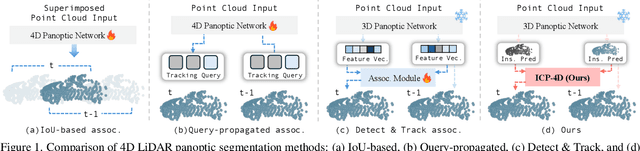
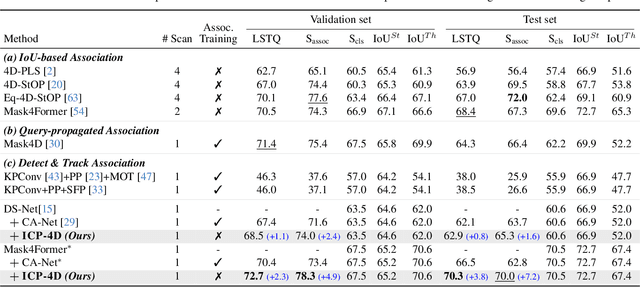
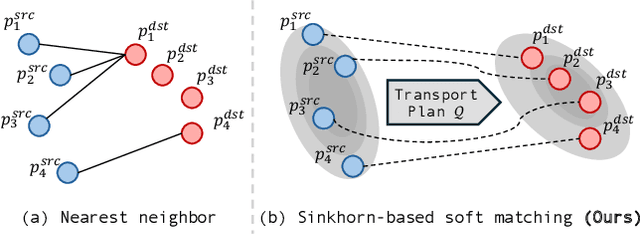
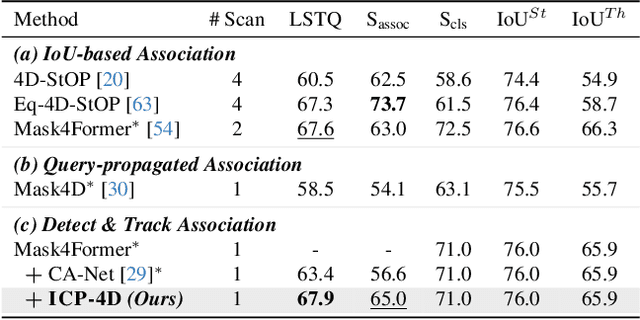
Dominant paradigms for 4D LiDAR panoptic segmentation are usually required to train deep neural networks with large superimposed point clouds or design dedicated modules for instance association. However, these approaches perform redundant point processing and consequently become computationally expensive, yet still overlook the rich geometric priors inherently provided by raw point clouds. To this end, we introduce ICP-4D, a simple yet effective training-free framework that unifies spatial and temporal reasoning through geometric relations among instance-level point sets. Specifically, we apply the Iterative Closest Point (ICP) algorithm to directly associate temporally consistent instances by aligning the source and target point sets through the estimated transformation. To stabilize association under noisy instance predictions, we introduce a Sinkhorn-based soft matching. This exploits the underlying instance distribution to obtain accurate point-wise correspondences, resulting in robust geometric alignment. Furthermore, our carefully designed pipeline, which considers three instance types-static, dynamic, and missing-offers computational efficiency and occlusion-aware matching. Our extensive experiments across both SemanticKITTI and panoptic nuScenes demonstrate that our method consistently outperforms state-of-the-art approaches, even without additional training or extra point cloud inputs.
A graph generation pipeline for critical infrastructures based on heuristics, images and depth data
Dec 08, 2025Virtual representations of physical critical infrastructures, such as water or energy plants, are used for simulations and digital twins to ensure resilience and continuity of their services. These models usually require 3D point clouds from laser scanners that are expensive to acquire and require specialist knowledge to use. In this article, we present a graph generation pipeline based on photogrammetry. The pipeline detects relevant objects and predicts their relation using RGB images and depth data generated by a stereo camera. This more cost-effective approach uses deep learning for object detection and instance segmentation of the objects, and employs user-defined heuristics or rules to infer their relations. Results of two hydraulic systems show that this strategy can produce graphs close to the ground truth while its flexibility allows the method to be tailored to specific applications and its transparency qualifies it to be used in the high stakes decision-making that is required for critical infrastructures.
ROI-Packing: Efficient Region-Based Compression for Machine Vision
Dec 10, 2025This paper introduces ROI-Packing, an efficient image compression method tailored specifically for machine vision. By prioritizing regions of interest (ROI) critical to end-task accuracy and packing them efficiently while discarding less relevant data, ROI-Packing achieves significant compression efficiency without requiring retraining or fine-tuning of end-task models. Comprehensive evaluations across five datasets and two popular tasks-object detection and instance segmentation-demonstrate up to a 44.10% reduction in bitrate without compromising end-task accuracy, along with an 8.88 % improvement in accuracy at the same bitrate compared to the state-of-the-art Versatile Video Coding (VVC) codec standardized by the Moving Picture Experts Group (MPEG).