 Add to Chrome
 Add to Firefox
 Add to Edge
Hype
Papers and Code
Hybrid Linear Attention Done Right: Efficient Distillation and Effective Architectures for Extremely Long Contexts
Jan 29, 2026
Hybrid Transformer architectures, which combine softmax attention blocks and recurrent neural networks (RNNs), have shown a desirable performance-throughput tradeoff for long-context modeling, but their adoption and studies are hindered by the prohibitive cost of large-scale pre-training from scratch. Some recent studies have shown that pre-trained softmax attention blocks can be converted into RNN blocks through parameter transfer and knowledge distillation. However, these transfer methods require substantial amounts of training data (more than 10B tokens), and the resulting hybrid models also exhibit poor long-context performance, which is the scenario where hybrid models enjoy significant inference speedups over Transformer-based models. In this paper, we present HALO (Hybrid Attention via Layer Optimization), a pipeline for distilling Transformer models into RNN-attention hybrid models. We then present HypeNet, a hybrid architecture with superior length generalization enabled by a novel position encoding scheme (named HyPE) and various architectural modifications. We convert the Qwen3 series into HypeNet using HALO, achieving performance comparable to the original Transformer models while enjoying superior long-context performance and efficiency. The conversion requires just 2.3B tokens, less than 0.01% of their pre-training data

HYPE-EDIT-1: Benchmark for Measuring Reliability in Frontier Image Editing Models
Jan 25, 2026Public demos of image editing models are typically best-case samples; real workflows pay for retries and review time. We introduce HYPE-EDIT-1, a 100-task benchmark of reference-based marketing/design edits with binary pass/fail judging. For each task we generate 10 independent outputs to estimate per-attempt pass rate, pass@10, expected attempts under a retry cap, and an effective cost per successful edit that combines model price with human review time. We release 50 public tasks and maintain a 50-task held-out private split for server-side evaluation, plus a standardized JSON schema and tooling for VLM and human-based judging. Across the evaluated models, per-attempt pass rates span 34-83 percent and effective cost per success spans USD 0.66-1.42. Models that have low per-image pricing are more expensive when you consider the total effective cost of retries and human reviews.
The Bitter Lesson of Diffusion Language Models for Agentic Workflows: A Comprehensive Reality Check
Jan 19, 2026The pursuit of real-time agentic interaction has driven interest in Diffusion-based Large Language Models (dLLMs) as alternatives to auto-regressive backbones, promising to break the sequential latency bottleneck. However, does such efficiency gains translate into effective agentic behavior? In this work, we present a comprehensive evaluation of dLLMs (e.g., LLaDA, Dream) across two distinct agentic paradigms: Embodied Agents (requiring long-horizon planning) and Tool-Calling Agents (requiring precise formatting). Contrary to the efficiency hype, our results on Agentboard and BFCL reveal a "bitter lesson": current dLLMs fail to serve as reliable agentic backbones, frequently leading to systematically failure. (1) In Embodied settings, dLLMs suffer repeated attempts, failing to branch under temporal feedback. (2) In Tool-Calling settings, dLLMs fail to maintain symbolic precision (e.g. strict JSON schemas) under diffusion noise. To assess the potential of dLLMs in agentic workflows, we introduce DiffuAgent, a multi-agent evaluation framework that integrates dLLMs as plug-and-play cognitive cores. Our analysis shows that dLLMs are effective in non-causal roles (e.g., memory summarization and tool selection) but require the incorporation of causal, precise, and logically grounded reasoning mechanisms into the denoising process to be viable for agentic tasks.
Are Language Models Models?
Jan 15, 2026Futrell and Mahowald claim LMs "serve as model systems", but an assessment at each of Marr's three levels suggests the claim is clearly not true at the implementation level, poorly motivated at the algorithmic-representational level, and problematic at the computational theory level. LMs are good candidates as tools; calling them cognitive models overstates the case and unnecessarily feeds LLM hype.
Counterfactual LLM-based Framework for Measuring Rhetorical Style
Dec 22, 2025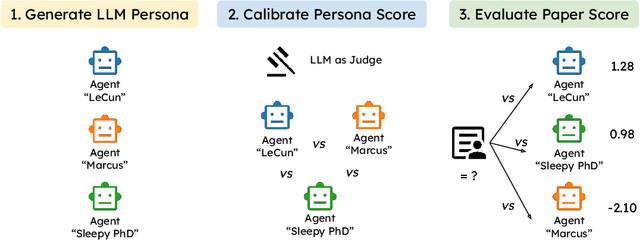
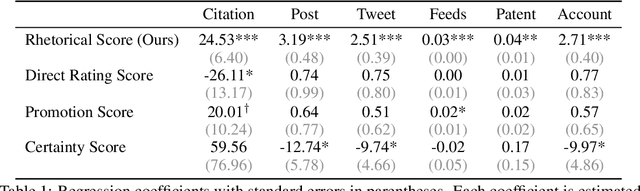
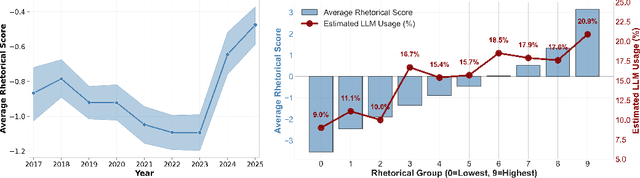
The rise of AI has fueled growing concerns about ``hype'' in machine learning papers, yet a reliable way to quantify rhetorical style independently of substantive content has remained elusive. Because bold language can stem from either strong empirical results or mere rhetorical style, it is often difficult to distinguish between the two. To disentangle rhetorical style from substantive content, we introduce a counterfactual, LLM-based framework: multiple LLM rhetorical personas generate counterfactual writings from the same substantive content, an LLM judge compares them through pairwise evaluations, and the outcomes are aggregated using a Bradley--Terry model. Applying this method to 8,485 ICLR submissions sampled from 2017 to 2025, we generate more than 250,000 counterfactual writings and provide a large-scale quantification of rhetorical style in ML papers. We find that visionary framing significantly predicts downstream attention, including citations and media attention, even after controlling for peer-review evaluations. We also observe a sharp rise in rhetorical strength after 2023, and provide empirical evidence showing that this increase is largely driven by the adoption of LLM-based writing assistance. The reliability of our framework is validated by its robustness to the choice of personas and the high correlation between LLM judgments and human annotations. Our work demonstrates that LLMs can serve as instruments to measure and improve scientific evaluation.
AI Needs Physics More Than Physics Needs AI
Dec 18, 2025Artificial intelligence (AI) is commonly depicted as transformative. Yet, after more than a decade of hype, its measurable impact remains modest outside a few high-profile scientific and commercial successes. The 2024 Nobel Prizes in Chemistry and Physics recognized AI's potential, but broader assessments indicate the impact to date is often more promotional than technical. We argue that while current AI may influence physics, physics has significantly more to offer this generation of AI. Current architectures - large language models, reasoning models, and agentic AI - can depend on trillions of meaningless parameters, suffer from distributional bias, lack uncertainty quantification, provide no mechanistic insights, and fail to capture even elementary scientific laws. We review critiques of these limits, highlight opportunities in quantum AI and analogue computing, and lay down a roadmap for the adoption of 'Big AI': a synthesis of theory-based rigour with the flexibility of machine learning.
Foundation Models in Biomedical Imaging: Turning Hype into Reality
Dec 17, 2025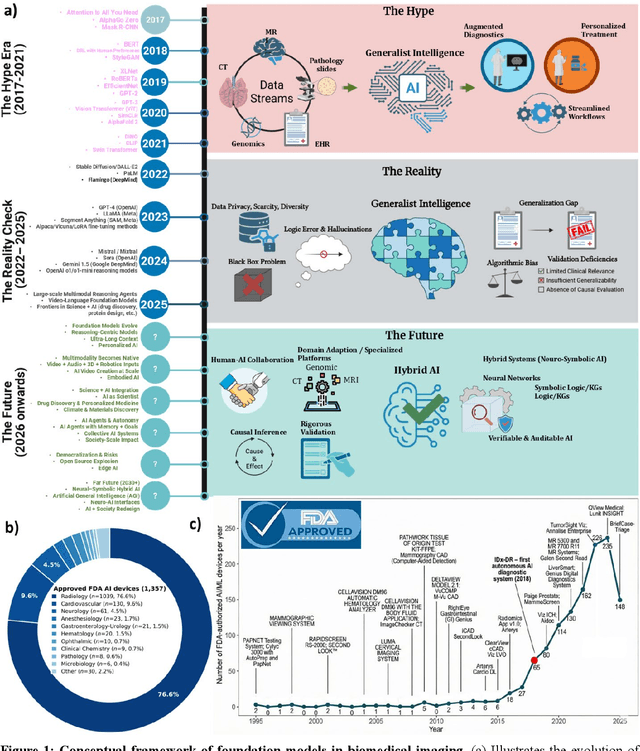
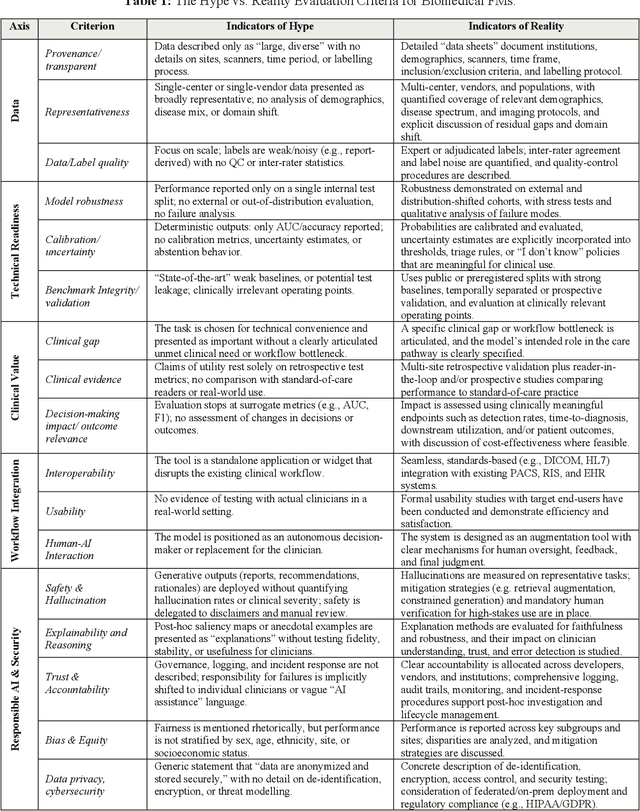
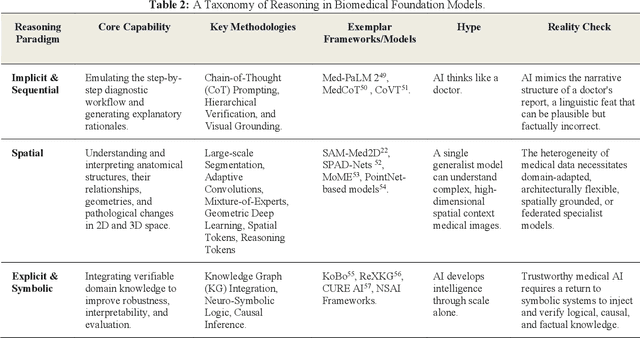
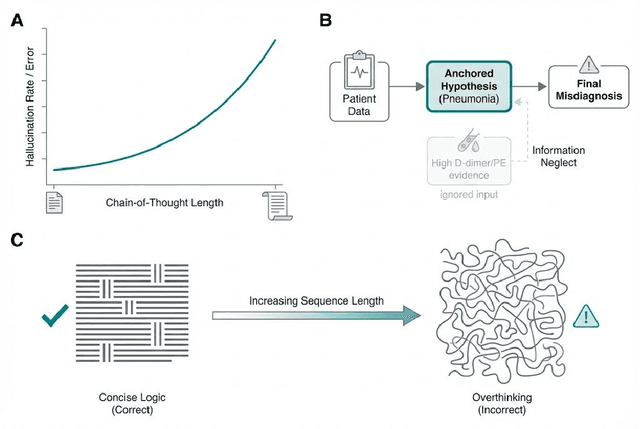
Foundation models (FMs) are driving a prominent shift in artificial intelligence across different domains, including biomedical imaging. These models are designed to move beyond narrow pattern recognition towards emulating sophisticated clinical reasoning, understanding complex spatial relationships, and integrating multimodal data with unprecedented flexibility. However, a critical gap exists between this potential and the current reality, where the clinical evaluation and deployment of FMs are hampered by significant challenges. Herein, we critically assess the current state-of-the-art, analyzing hype by examining the core capabilities and limitations of FMs in the biomedical domain. We also provide a taxonomy of reasoning, ranging from emulated sequential logic and spatial understanding to the integration of explicit symbolic knowledge, to evaluate whether these models exhibit genuine cognition or merely mimic surface-level patterns. We argue that a critical frontier lies beyond statistical correlation, in the pursuit of causal inference, which is essential for building robust models that understand cause and effect. Furthermore, we discuss the paramount issues in deployment stemming from trustworthiness, bias, and safety, dissecting the challenges of algorithmic bias, data bias and privacy, and model hallucinations. We also draw attention to the need for more inclusive, rigorous, and clinically relevant validation frameworks to ensure their safe and ethical application. We conclude that while the vision of autonomous AI-doctors remains distant, the immediate reality is the emergence of powerful technology and assistive tools that would benefit clinical practice. The future of FMs in biomedical imaging hinges not on scale alone, but on developing hybrid, causally aware, and verifiably safe systems that augment, rather than replace, human expertise.
Beyond the Hype: Comparing Lightweight and Deep Learning Models for Air Quality Forecasting
Dec 09, 2025Accurate forecasting of urban air pollution is essential for protecting public health and guiding mitigation policies. While Deep Learning (DL) and hybrid pipelines dominate recent research, their complexity and limited interpretability hinder operational use. This study investigates whether lightweight additive models -- Facebook Prophet (FBP) and NeuralProphet (NP) -- can deliver competitive forecasts for particulate matter (PM$_{2.5}$, PM$_{10}$) in Beijing, China. Using multi-year pollutant and meteorological data, we applied systematic feature selection (correlation, mutual information, mRMR), leakage-safe scaling, and chronological data splits. Both models were trained with pollutant and precursor regressors, with NP additionally leveraging lagged dependencies. For context, two machine learning baselines (LSTM, LightGBM) and one traditional statistical model (SARIMAX) were also implemented. Performance was evaluated on a 7-day holdout using MAE, RMSE, and $R^2$. Results show that FBP consistently outperformed NP, SARIMAX, and the learning-based baselines, achieving test $R^2$ above 0.94 for both pollutants. These findings demonstrate that interpretable additive models remain competitive with both traditional and complex approaches, offering a practical balance of accuracy, transparency, and ease of deployment.
HYPE: Hybrid Planning with Ego Proposal-Conditioned Predictions
Oct 14, 2025Safe and interpretable motion planning in complex urban environments needs to reason about bidirectional multi-agent interactions. This reasoning requires to estimate the costs of potential ego driving maneuvers. Many existing planners generate initial trajectories with sampling-based methods and refine them by optimizing on learned predictions of future environment states, which requires a cost function that encodes the desired vehicle behavior. Designing such a cost function can be very challenging, especially if a wide range of complex urban scenarios has to be considered. We propose HYPE: HYbrid Planning with Ego proposal-conditioned predictions, a planner that integrates multimodal trajectory proposals from a learned proposal model as heuristic priors into a Monte Carlo Tree Search (MCTS) refinement. To model bidirectional interactions, we introduce an ego-conditioned occupancy prediction model, enabling consistent, scene-aware reasoning. Our design significantly simplifies cost function design in refinement by considering proposal-driven guidance, requiring only minimalistic grid-based cost terms. Evaluations on large-scale real-world benchmarks nuPlan and DeepUrban show that HYPE effectively achieves state-of-the-art performance, especially in safety and adaptability.
DP-HYPE: Distributed Differentially Private Hyperparameter Search
Oct 06, 2025The tuning of hyperparameters in distributed machine learning can substantially impact model performance. When the hyperparameters are tuned on sensitive data, privacy becomes an important challenge and to this end, differential privacy has emerged as the de facto standard for provable privacy. A standard setting when performing distributed learning tasks is that clients agree on a shared setup, i.e., find a compromise from a set of hyperparameters, like the learning rate of the model to be trained. Yet, prior work on differentially private hyperparameter tuning either uses computationally expensive cryptographic protocols, determines hyperparameters separately for each client, or applies differential privacy locally, which can lead to undesirable utility-privacy trade-offs. In this work, we present our algorithm DP-HYPE, which performs a distributed and privacy-preserving hyperparameter search by conducting a distributed voting based on local hyperparameter evaluations of clients. In this way, DP-HYPE selects hyperparameters that lead to a compromise supported by the majority of clients, while maintaining scalability and independence from specific learning tasks. We prove that DP-HYPE preserves the strong notion of differential privacy called client-level differential privacy and, importantly, show that its privacy guarantees do not depend on the number of hyperparameters. We also provide bounds on its utility guarantees, that is, the probability of reaching a compromise, and implement DP-HYPE as a submodule in the popular Flower framework for distributed machine learning. In addition, we evaluate performance on multiple benchmark data sets in iid as well as multiple non-iid settings and demonstrate high utility of DP-HYPE even under small privacy budgets.