 Add to Chrome
 Add to Firefox
 Add to Edge
Strategic Apple Tasting
Jun 09, 2023
Algorithmic decision-making in high-stakes domains often involves assigning decisions to agents with incentives to strategically modify their input to the algorithm. In addition to dealing with incentives, in many domains of interest (e.g. lending and hiring) the decision-maker only observes feedback regarding their policy for rounds in which they assign a positive decision to the agent; this type of feedback is often referred to as apple tasting (or one-sided) feedback. We formalize this setting as an online learning problem with apple-tasting feedback where a principal makes decisions about a sequence of $T$ agents, each of which is represented by a context that may be strategically modified. Our goal is to achieve sublinear strategic regret, which compares the performance of the principal to that of the best fixed policy in hindsight, if the agents were truthful when revealing their contexts. Our main result is a learning algorithm which incurs $\tilde{\mathcal{O}}(\sqrt{T})$ strategic regret when the sequence of agents is chosen stochastically. We also give an algorithm capable of handling adversarially-chosen agents, albeit at the cost of $\tilde{\mathcal{O}}(T^{(d+1)/(d+2)})$ strategic regret (where $d$ is the dimension of the context). Our algorithms can be easily adapted to the setting where the principal receives bandit feedback -- this setting generalizes both the linear contextual bandit problem (by considering agents with incentives) and the strategic classification problem (by allowing for partial feedback).

Generating Private Synthetic Data with Genetic Algorithms
Jun 05, 2023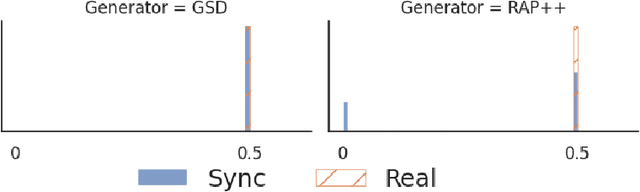
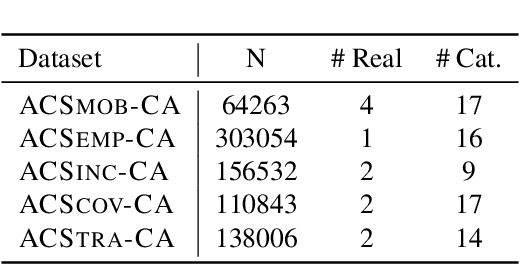
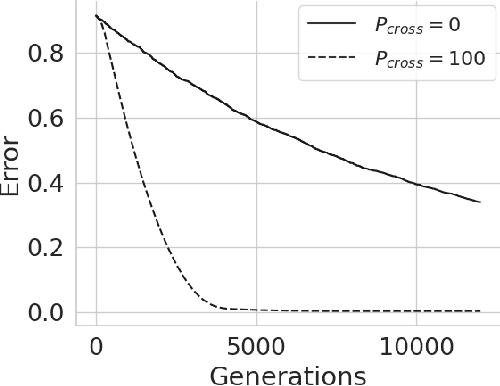
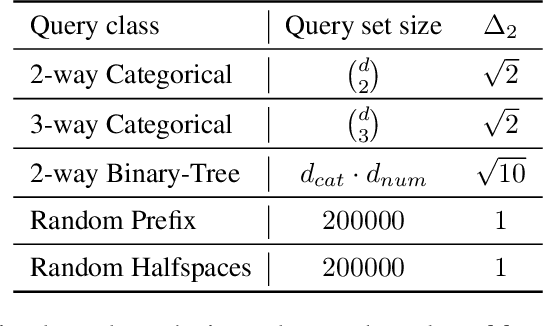
We study the problem of efficiently generating differentially private synthetic data that approximate the statistical properties of an underlying sensitive dataset. In recent years, there has been a growing line of work that approaches this problem using first-order optimization techniques. However, such techniques are restricted to optimizing differentiable objectives only, severely limiting the types of analyses that can be conducted. For example, first-order mechanisms have been primarily successful in approximating statistical queries only in the form of marginals for discrete data domains. In some cases, one can circumvent such issues by relaxing the task's objective to maintain differentiability. However, even when possible, these approaches impose a fundamental limitation in which modifications to the minimization problem become additional sources of error. Therefore, we propose Private-GSD, a private genetic algorithm based on zeroth-order optimization heuristics that do not require modifying the original objective. As a result, it avoids the aforementioned limitations of first-order optimization. We empirically evaluate Private-GSD against baseline algorithms on data derived from the American Community Survey across a variety of statistics--otherwise known as statistical queries--both for discrete and real-valued attributes. We show that Private-GSD outperforms the state-of-the-art methods on non-differential queries while matching accuracy in approximating differentiable ones.
Inverse Reinforcement Learning without Reinforcement Learning
Mar 26, 2023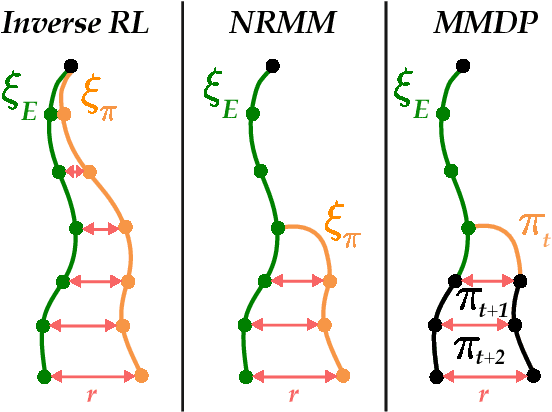
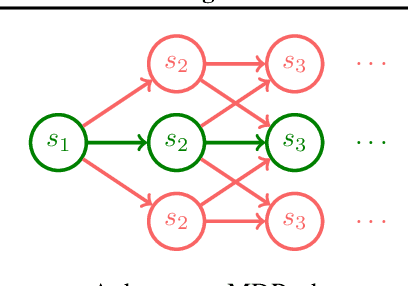
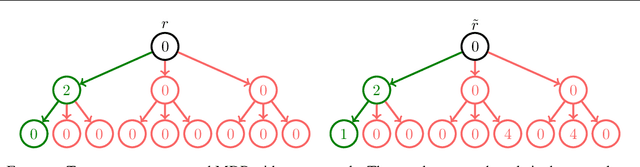
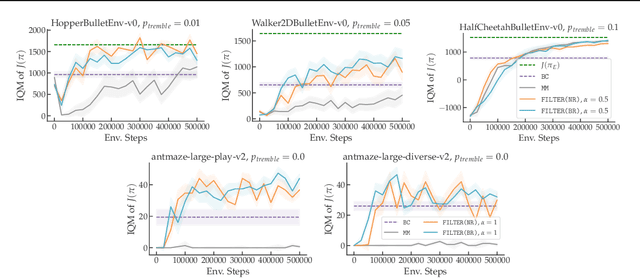
Inverse Reinforcement Learning (IRL) is a powerful set of techniques for imitation learning that aims to learn a reward function that rationalizes expert demonstrations. Unfortunately, traditional IRL methods suffer from a computational weakness: they require repeatedly solving a hard reinforcement learning (RL) problem as a subroutine. This is counter-intuitive from the viewpoint of reductions: we have reduced the easier problem of imitation learning to repeatedly solving the harder problem of RL. Another thread of work has proved that access to the side-information of the distribution of states where a strong policy spends time can dramatically reduce the sample and computational complexities of solving an RL problem. In this work, we demonstrate for the first time a more informed imitation learning reduction where we utilize the state distribution of the expert to alleviate the global exploration component of the RL subroutine, providing an exponential speedup in theory. In practice, we find that we are able to significantly speed up the prior art on continuous control tasks.
Improved Differentially Private Regression via Gradient Boosting
Mar 06, 2023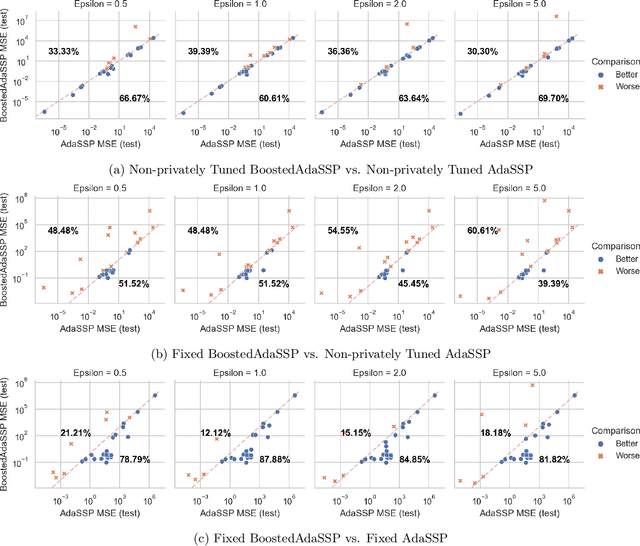
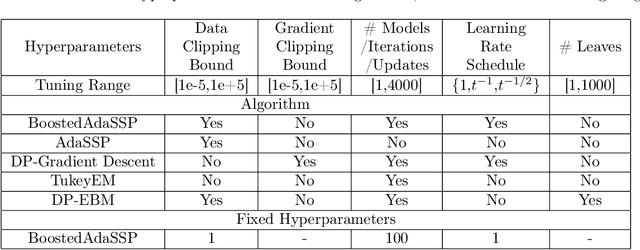


We revisit the problem of differentially private squared error linear regression. We observe that existing state-of-the-art methods are sensitive to the choice of hyper-parameters -- including the ``clipping threshold'' that cannot be set optimally in a data-independent way. We give a new algorithm for private linear regression based on gradient boosting. We show that our method consistently improves over the previous state of the art when the clipping threshold is taken to be fixed without knowledge of the data, rather than optimized in a non-private way -- and that even when we optimize the clipping threshold non-privately, our algorithm is no worse. In addition to a comprehensive set of experiments, we give theoretical insights to explain this behavior.
Choosing Public Datasets for Private Machine Learning via Gradient Subspace Distance
Mar 02, 2023Differentially private stochastic gradient descent privatizes model training by injecting noise into each iteration, where the noise magnitude increases with the number of model parameters. Recent works suggest that we can reduce the noise by leveraging public data for private machine learning, by projecting gradients onto a subspace prescribed by the public data. However, given a choice of public datasets, it is not a priori clear which one may be most appropriate for the private task. We give an algorithm for selecting a public dataset by measuring a low-dimensional subspace distance between gradients of the public and private examples. We provide theoretical analysis demonstrating that the excess risk scales with this subspace distance. This distance is easy to compute and robust to modifications in the setting. Empirical evaluation shows that trained model accuracy is monotone in this distance.
Ground Truth: A Causal Framework for Proxy Labels in Human-Algorithm Decision-Making
Feb 22, 2023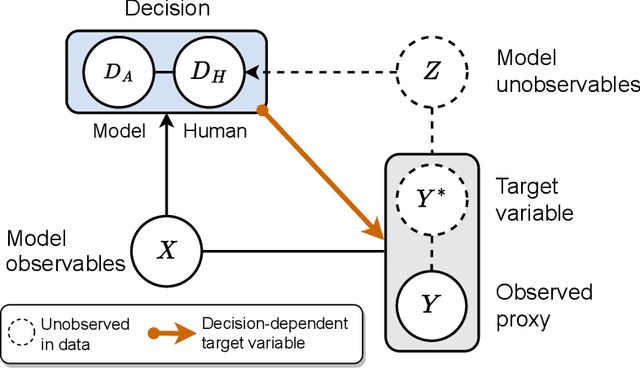
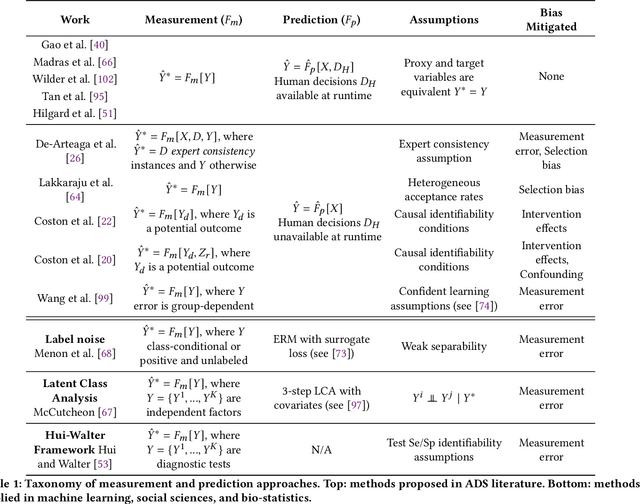
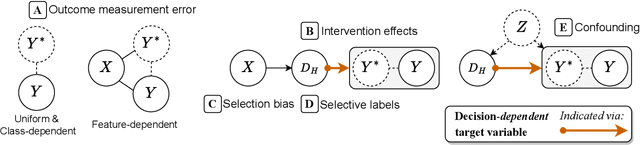
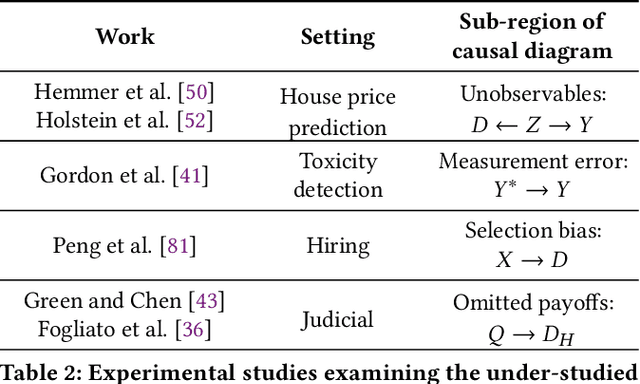
A growing literature on human-AI decision-making investigates strategies for combining human judgment with statistical models to improve decision-making. Research in this area often evaluates proposed improvements to models, interfaces, or workflows by demonstrating improved predictive performance on "ground truth" labels. However, this practice overlooks a key difference between human judgments and model predictions. Whereas humans reason about broader phenomena of interest in a decision -- including latent constructs that are not directly observable, such as disease status, the "toxicity" of online comments, or future "job performance" -- predictive models target proxy labels that are readily available in existing datasets. Predictive models' reliance on simplistic proxies makes them vulnerable to various sources of statistical bias. In this paper, we identify five sources of target variable bias that can impact the validity of proxy labels in human-AI decision-making tasks. We develop a causal framework to disentangle the relationship between each bias and clarify which are of concern in specific human-AI decision-making tasks. We demonstrate how our framework can be used to articulate implicit assumptions made in prior modeling work, and we recommend evaluation strategies for verifying whether these assumptions hold in practice. We then leverage our framework to re-examine the designs of prior human subjects experiments that investigate human-AI decision-making, finding that only a small fraction of studies examine factors related to target variable bias. We conclude by discussing opportunities to better address target variable bias in future research.
Counterfactual Prediction Under Outcome Measurement Error
Feb 22, 2023Across domains such as medicine, employment, and criminal justice, predictive models often target labels that imperfectly reflect the outcomes of interest to experts and policymakers. For example, clinical risk assessments deployed to inform physician decision-making often predict measures of healthcare utilization (e.g., costs, hospitalization) as a proxy for patient medical need. These proxies can be subject to outcome measurement error when they systematically differ from the target outcome they are intended to measure. However, prior modeling efforts to characterize and mitigate outcome measurement error overlook the fact that the decision being informed by a model often serves as a risk-mitigating intervention that impacts the target outcome of interest and its recorded proxy. Thus, in these settings, addressing measurement error requires counterfactual modeling of treatment effects on outcomes. In this work, we study intersectional threats to model reliability introduced by outcome measurement error, treatment effects, and selection bias from historical decision-making policies. We develop an unbiased risk minimization method which, given knowledge of proxy measurement error properties, corrects for the combined effects of these challenges. We also develop a method for estimating treatment-dependent measurement error parameters when these are unknown in advance. We demonstrate the utility of our approach theoretically and via experiments on real-world data from randomized controlled trials conducted in healthcare and employment domains. As importantly, we demonstrate that models correcting for outcome measurement error or treatment effects alone suffer from considerable reliability limitations. Our work underscores the importance of considering intersectional threats to model validity during the design and evaluation of predictive models for decision support.
Federated Learning as a Network Effects Game
Feb 16, 2023

Federated Learning (FL) aims to foster collaboration among a population of clients to improve the accuracy of machine learning without directly sharing local data. Although there has been rich literature on designing federated learning algorithms, most prior works implicitly assume that all clients are willing to participate in a FL scheme. In practice, clients may not benefit from joining in FL, especially in light of potential costs related to issues such as privacy and computation. In this work, we study the clients' incentives in federated learning to help the service provider design better solutions and ensure clients make better decisions. We are the first to model clients' behaviors in FL as a network effects game, where each client's benefit depends on other clients who also join the network. Using this setup we analyze the dynamics of clients' participation and characterize the equilibrium, where no client has incentives to alter their decision. Specifically, we show that dynamics in the population naturally converge to equilibrium without needing explicit interventions. Finally, we provide a cost-efficient payment scheme that incentivizes clients to reach a desired equilibrium when the initial network is empty.
Strategyproof Decision-Making in Panel Data Settings and Beyond
Nov 25, 2022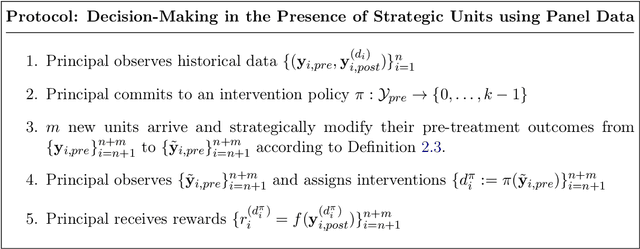
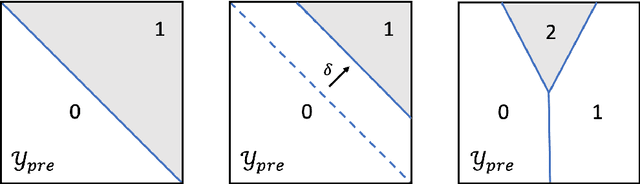

We propose a framework for decision-making in the presence of strategic agents with panel data, a standard setting in econometrics and statistics where one gets noisy, repeated measurements of multiple units. We consider a setup where there is a pre-intervention period, when the principal observes the outcomes of each unit, after which the principal uses these observations to assign treatment to each unit. Our model can be thought of as a generalization of the synthetic controls and synthetic interventions frameworks, where units (or agents) may strategically manipulate pre-intervention outcomes to receive a more desirable intervention. We identify necessary and sufficient conditions under which a strategyproof mechanism that assigns interventions in the post-intervention period exists. Under a latent factor model assumption, we show that whenever a strategyproof mechanism exists, there is one with a simple closed form. In the setting where there is a single treatment and control (i.e., no other interventions), we establish that there is always a strategyproof mechanism, and provide an algorithm for learning such a mechanism. For the setting of multiple interventions, we provide an algorithm for learning a strategyproof mechanism, if there exists a sufficiently large gap in rewards between the different interventions. Along the way, we prove impossibility results for multi-class strategic classification, which may be of independent interest.
Reinforcement Learning with Stepwise Fairness Constraints
Nov 08, 2022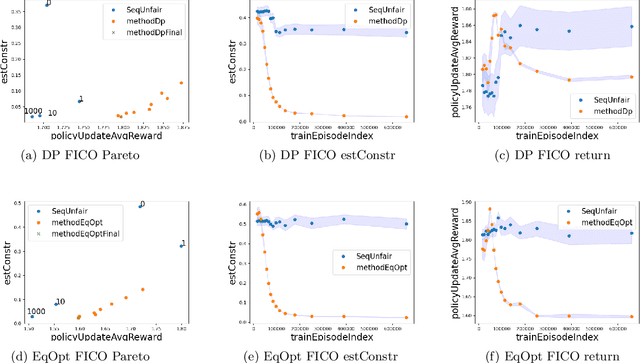
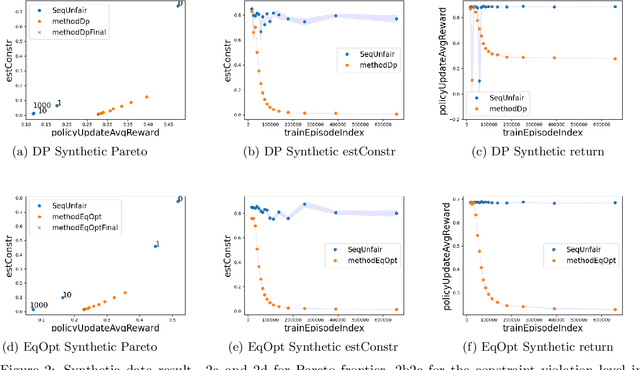
AI methods are used in societally important settings, ranging from credit to employment to housing, and it is crucial to provide fairness in regard to algorithmic decision making. Moreover, many settings are dynamic, with populations responding to sequential decision policies. We introduce the study of reinforcement learning (RL) with stepwise fairness constraints, requiring group fairness at each time step. Our focus is on tabular episodic RL, and we provide learning algorithms with strong theoretical guarantees in regard to policy optimality and fairness violation. Our framework provides useful tools to study the impact of fairness constraints in sequential settings and brings up new challenges in RL.