 Add to Chrome
 Add to Firefox
 Add to Edge
Learning to Price with Persuasion
Aug 17, 2026
Motivated by modern marketplaces, where the platform or the seller routinely gathers detailed user profiles, we study a novel learning theoretic model that simultaneously involves information and mechanism design. Specifically, we consider the economic setting recently introduced by Bergemann et al. (2022), where in addition to the menu of quality-price pairs, the seller offers information on the value of the match between product quality and buyer's taste via a signaling scheme. We relax the assumption that the seller knows the buyers' belief about the distribution of tastes and study the sample requirements of designing a revenue maximizing scheme. We consider both the batch setting where we have access to data from a set of i.i.d. buyers and an online demand query model where we observe the buyers' behaviors to seller's schemes. Despite the apparent non-convexity of the problem, we also give the first FPTAS to compute a scheme that maximizes the revenue within an arbitrarily small additive loss, which was left open by Bergemann et al. (2022). Overall, this brings a new learning perspective in asymmetric economic settings where buyers and sellers know different types of information.

Efficient Online Proportional Sampling with Applications to Smoothed Online Learning
Jul 13, 2026We study the problem of efficient online proportional sampling from a high-dimensional domain under a $σ$-smoothed adversary, where the sampling distribution is induced by a dynamically evolving weight function defined over a sequence of piecewise-structured partitions. This setting captures a broad range of applications, including principal-agent games (e.g., pricing and contract design), and algorithm configuration and parameter tuning. The central challenge is maintaining an efficient data structure as the induced partition grows increasingly complex over time -- naively, the number of subregions can grow as $O(t^d)$ by round $t$ in $d$ dimensions. We design a data structure that supports efficient updates and proportional sampling while avoiding the cost of explicitly maintaining this exponential growth, where the discontinuities are structured from axis-parallel hyperplanes. Under a $σ$-smoothed adaptive adversary, we prove a tight $O(\sqrt{σT})$ bound on the depth of our data structure, and an $O(\log T)$ bound under a random-order adversary -- to our knowledge, the first such results for this class of problems. We apply this framework to online learning with piecewise-structured rewards, obtaining efficient no-regret algorithms under both full-information and bandit feedback, with provable sublinear regret guarantees.
Reward Learning from Best-of-$N$ Preference Data: Targets, Tradeoffs, and Design Principles
May 28, 2026Best-of-$N$ sampling is widely used to construct pairwise preference data: $N$ candidates are drawn from a base distribution, and the best is paired with a rejected response. Despite its widespread use, what Bradley--Terry (BT) reward learning extracts from such data, and how to choose $N$ and the base distribution, remain unclear. We specialize a recent analysis of preference data via its induced conditional distribution to Best-of-$N$. For independent-reference variants, we derive closed-form reward targets as explicit functions of $N$ and the base distribution, and show that they preserve the latent reward ranking. For the practical Best-vs-Random and Best-vs-Worst variants, chosen and rejected responses are coupled through the same candidate set, so exact BT representability generally fails; nevertheless, bounded-class minimizers approach the reference targets as $N$ grows. Although margin and connectivity are known to govern sample efficiency in pairwise preference learning, Best-of-$N$ couples them through $N$ in opposing directions: larger $N$ widens pairwise margins but reduces connectivity. This trade-off yields two design principles: use larger $N$ when preference labels are the bottleneck, smaller $N$ when generation is the bottleneck; and shape the base distribution to place mass between the responses whose comparison matters most at test time. Experiments on synthetic and real preference data support the predicted dependence on sample size and base-distribution shape.
Online Learnability of Chain-of-Thought Verifiers: Soundness and Completeness Trade-offs
Mar 03, 2026Large language models with chain-of-thought generation have demonstrated great potential for producing complex mathematical proofs. However, their reasoning can often go astray, leading to increasing interest in formal and learned verifiers. A major challenge in learning verifiers, especially when their output will be used by the prover, is that this feedback loop may produce substantial distribution shift. Motivated by this challenge, we propose an online learning framework for learning chain-of-thought verifiers that, given a problem and a sequence of reasoning steps, check the correctness of the solution. Highlighting the asymmetric role of soundness (failure in catching errors in a proof) and completeness (flagging correct proofs as wrong) mistakes of the verifier, we introduce novel extensions of the Littlestone dimension which tightly characterize the mistake bounds for learning a verifier in the realizable setting. We provide optimal algorithms for finding the Pareto-frontier (the smallest total number of mistakes given a budget of soundness mistakes) as well as minimizing a linear combination of asymmetric costs. We further show how our learned verifiers can be used to boost the accuracy of a collection of weak provers, and enable generation of proofs beyond what they were trained on. With the mild assumption that one of the provers can generate the next reasoning step correctly with some minimal probability, we show how to learn a strong prover with small error and abstention rates.
What Does Preference Learning Recover from Pairwise Comparison Data?
Feb 10, 2026Pairwise preference learning is central to machine learning, with recent applications in aligning language models with human preferences. A typical dataset consists of triplets $(x, y^+, y^-)$, where response $y^+$ is preferred over response $y^-$ for context $x$. The Bradley--Terry (BT) model is the predominant approach, modeling preference probabilities as a function of latent score differences. Standard practice assumes data follows this model and learns the latent scores accordingly. However, real data may violate this assumption, and it remains unclear what BT learning recovers in such cases. Starting from triplet comparison data, we formalize the preference information it encodes through the conditional preference distribution (CPRD). We give precise conditions for when BT is appropriate for modeling the CPRD, and identify factors governing sample efficiency -- namely, margin and connectivity. Together, these results offer a data-centric foundation for understanding what preference learning actually recovers.
On Learning Verifiers for Chain-of-Thought Reasoning
May 28, 2025Chain-of-Thought reasoning has emerged as a powerful approach for solving complex mathematical and logical problems. However, it can often veer off track through incorrect or unsubstantiated inferences. Formal mathematical reasoning, which can be checked with a formal verifier, is one approach to addressing this issue. However, currently LLMs are simply not good enough to solve complex problems in a formal way, and even just formalizing an informal problem statement can be challenging. Motivated by this fact, in this work we consider the problem of learning reliable verifiers for natural language Chain-of-Thought reasoning. That is, given a problem statement and step-by-step solution in natural language, the aim of the verifier is to output [Yes] if the reasoning steps in the solution are all valid, and [No] otherwise. In this work we give a formal PAC-learning framework for studying this problem. We propose and analyze several natural verification goals, at different levels of strength, in this framework. We provide sample complexity upper-bounds for learning verifiers satisfying these goals, as well as lower-bound and impossibility results for learning other natural verification objectives without additional assumptions.
Learning in Structured Stackelberg Games
Apr 11, 2025We study structured Stackelberg games, in which both players (the leader and the follower) observe information about the state of the world at time of play. Importantly, this information may contain information about the follower, which the leader may use when deciding her strategy. Under this setting, we show that no-regret learning is possible if and only if the set of mappings from contexts to follower types that the leader uses to learn is not ``too complex''. Specifically, we find that standard learning theoretic measures of complexity do not characterize learnability in our setting and we give a new dimension which does, which we term the Stackelberg-Littlestone dimension. In the distributional setting, we give analogous results by showing that standard complexity measures do not characterize the sample complexity of learning, but a new dimension called the Stackelberg-Natarajan dimension does. We then show that an appropriate empirical risk minimization procedure achieves the corresponding sample complexity.
Sample complexity of data-driven tuning of model hyperparameters in neural networks with structured parameter-dependent dual function
Jan 23, 2025
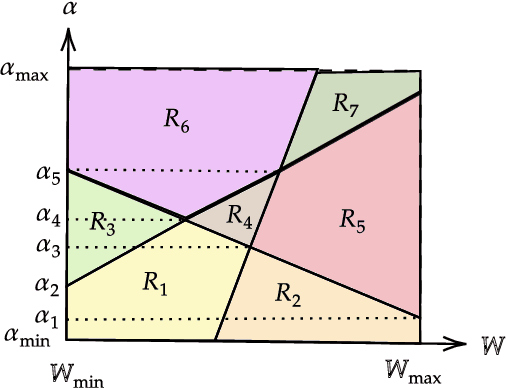
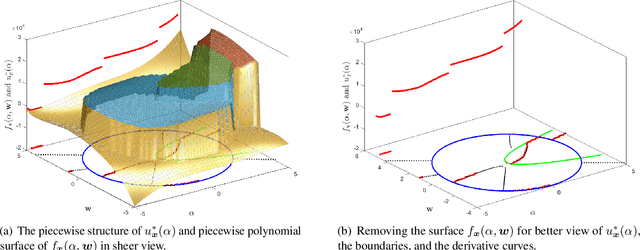
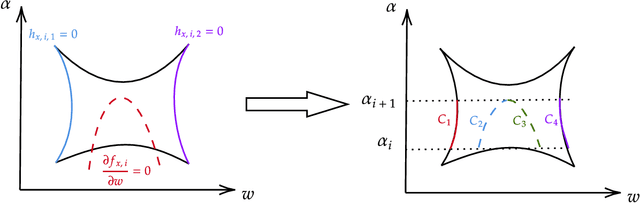
Modern machine learning algorithms, especially deep learning based techniques, typically involve careful hyperparameter tuning to achieve the best performance. Despite the surge of intense interest in practical techniques like Bayesian optimization and random search based approaches to automating this laborious and compute-intensive task, the fundamental learning theoretic complexity of tuning hyperparameters for deep neural networks is poorly understood. Inspired by this glaring gap, we initiate the formal study of hyperparameter tuning complexity in deep learning through a recently introduced data driven setting. We assume that we have a series of deep learning tasks, and we have to tune hyperparameters to do well on average over the distribution of tasks. A major difficulty is that the utility function as a function of the hyperparameter is very volatile and furthermore, it is given implicitly by an optimization problem over the model parameters. This is unlike previous work in data driven design, where one can typically explicitly model the algorithmic behavior as a function of the hyperparameters. To tackle this challenge, we introduce a new technique to characterize the discontinuities and oscillations of the utility function on any fixed problem instance as we vary the hyperparameter, our analysis relies on subtle concepts including tools from differential/algebraic geometry and constrained optimization. This can be used to show that the learning theoretic complexity of the corresponding family of utility functions is bounded. We instantiate our results and provide sample complexity bounds for concrete applications tuning a hyperparameter that interpolates neural activation functions and setting the kernel parameter in graph neural networks.
Provable Hyperparameter Tuning for Structured Pfaffian Settings
Sep 06, 2024Data-driven algorithm design automatically adapts algorithms to specific application domains, achieving better performance. In the context of parameterized algorithms, this approach involves tuning the algorithm parameters using problem instances drawn from the problem distribution of the target application domain. While empirical evidence supports the effectiveness of data-driven algorithm design, providing theoretical guarantees for several parameterized families remains challenging. This is due to the intricate behaviors of their corresponding utility functions, which typically admit piece-wise and discontinuity structures. In this work, we present refined frameworks for providing learning guarantees for parameterized data-driven algorithm design problems in both distributional and online learning settings. For the distributional learning setting, we introduce the Pfaffian GJ framework, an extension of the classical GJ framework, capable of providing learning guarantees for function classes for which the computation involves Pfaffian functions. Unlike the GJ framework, which is limited to function classes with computation characterized by rational functions, our proposed framework can deal with function classes involving Pfaffian functions, which are much more general and widely applicable. We then show that for many parameterized algorithms of interest, their utility function possesses a refined piece-wise structure, which automatically translates to learning guarantees using our proposed framework. For the online learning setting, we provide a new tool for verifying dispersion property of a sequence of loss functions. This sufficient condition allows no-regret learning for sequences of piece-wise structured loss functions where the piece-wise structure involves Pfaffian transition boundaries.
Subsidy design for better social outcomes
Sep 04, 2024Overcoming the impact of selfish behavior of rational players in multiagent systems is a fundamental problem in game theory. Without any intervention from a central agent, strategic users take actions in order to maximize their personal utility, which can lead to extremely inefficient overall system performance, often indicated by a high Price of Anarchy. Recent work (Lin et al. 2021) investigated and formalized yet another undesirable behavior of rational agents, that of avoiding freely available information about the game for selfish reasons, leading to worse social outcomes. A central planner can significantly mitigate these issues by injecting a subsidy to reduce certain costs associated with the system and obtain net gains in the system performance. Crucially, the planner needs to determine how to allocate this subsidy effectively. We formally show that designing subsidies that perfectly optimize the social good, in terms of minimizing the Price of Anarchy or preventing the information avoidance behavior, is computationally hard under standard complexity theoretic assumptions. On the positive side, we show that we can learn provably good values of subsidy in repeated games coming from the same domain. This data-driven subsidy design approach avoids solving computationally hard problems for unseen games by learning over polynomially many games. We also show that optimal subsidy can be learned with no-regret given an online sequence of games, under mild assumptions on the cost matrix. Our study focuses on two distinct games: a Bayesian extension of the well-studied fair cost-sharing game, and a component maintenance game with engineering applications.