 Add to Chrome
 Add to Firefox
 Add to Edge
A Scalable Matrix Visualization for Understanding Tree Ensemble Classifiers
Sep 05, 2024
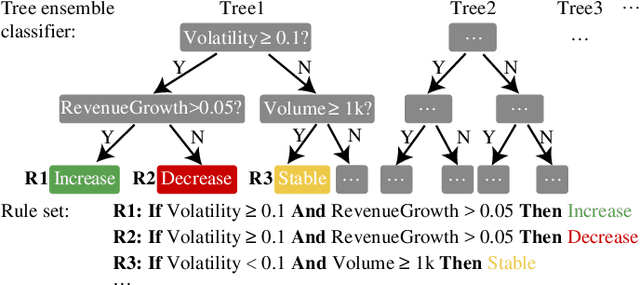
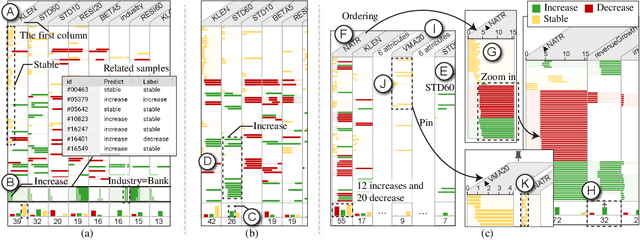
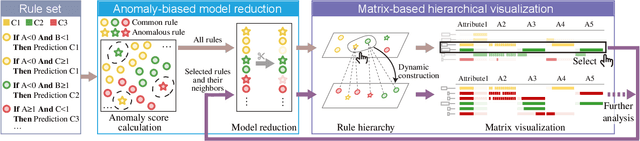
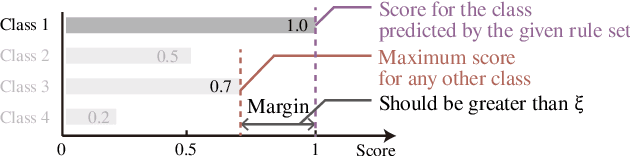
The high performance of tree ensemble classifiers benefits from a large set of rules, which, in turn, makes the models hard to understand. To improve interpretability, existing methods extract a subset of rules for approximation using model reduction techniques. However, by focusing on the reduced rule set, these methods often lose fidelity and ignore anomalous rules that, despite their infrequency, play crucial roles in real-world applications. This paper introduces a scalable visual analysis method to explain tree ensemble classifiers that contain tens of thousands of rules. The key idea is to address the issue of losing fidelity by adaptively organizing the rules as a hierarchy rather than reducing them. To ensure the inclusion of anomalous rules, we develop an anomaly-biased model reduction method to prioritize these rules at each hierarchical level. Synergized with this hierarchical organization of rules, we develop a matrix-based hierarchical visualization to support exploration at different levels of detail. Our quantitative experiments and case studies demonstrate how our method fosters a deeper understanding of both common and anomalous rules, thereby enhancing interpretability without sacrificing comprehensiveness.

Let Video Teaches You More: Video-to-Image Knowledge Distillation using DEtection TRansformer for Medical Video Lesion Detection
Aug 26, 2024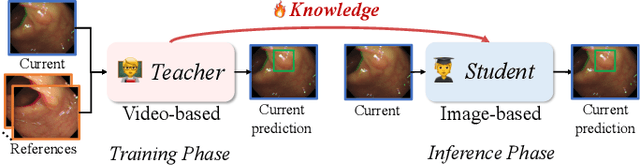
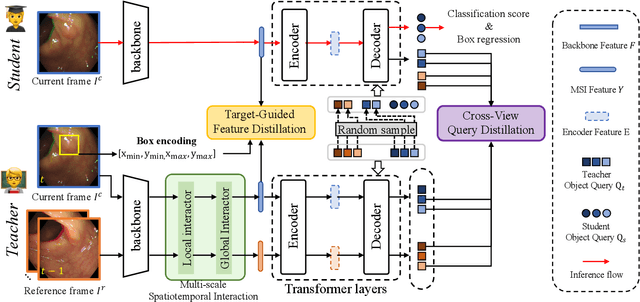

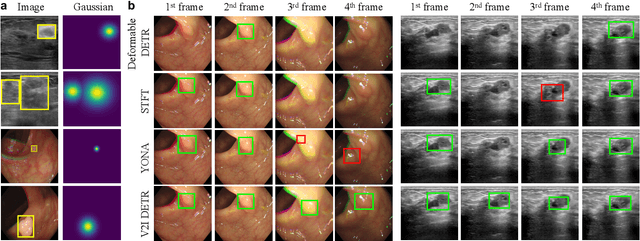
AI-assisted lesion detection models play a crucial role in the early screening of cancer. However, previous image-based models ignore the inter-frame contextual information present in videos. On the other hand, video-based models capture the inter-frame context but are computationally expensive. To mitigate this contradiction, we delve into Video-to-Image knowledge distillation leveraging DEtection TRansformer (V2I-DETR) for the task of medical video lesion detection. V2I-DETR adopts a teacher-student network paradigm. The teacher network aims at extracting temporal contexts from multiple frames and transferring them to the student network, and the student network is an image-based model dedicated to fast prediction in inference. By distilling multi-frame contexts into a single frame, the proposed V2I-DETR combines the advantages of utilizing temporal contexts from video-based models and the inference speed of image-based models. Through extensive experiments, V2I-DETR outperforms previous state-of-the-art methods by a large margin while achieving the real-time inference speed (30 FPS) as the image-based model.
Towards a Benchmark for Colorectal Cancer Segmentation in Endorectal Ultrasound Videos: Dataset and Model Development
Aug 19, 2024Endorectal ultrasound (ERUS) is an important imaging modality that provides high reliability for diagnosing the depth and boundary of invasion in colorectal cancer. However, the lack of a large-scale ERUS dataset with high-quality annotations hinders the development of automatic ultrasound diagnostics. In this paper, we collected and annotated the first benchmark dataset that covers diverse ERUS scenarios, i.e. colorectal cancer segmentation, detection, and infiltration depth staging. Our ERUS-10K dataset comprises 77 videos and 10,000 high-resolution annotated frames. Based on this dataset, we further introduce a benchmark model for colorectal cancer segmentation, named the Adaptive Sparse-context TRansformer (ASTR). ASTR is designed based on three considerations: scanning mode discrepancy, temporal information, and low computational complexity. For generalizing to different scanning modes, the adaptive scanning-mode augmentation is proposed to convert between raw sector images and linear scan ones. For mining temporal information, the sparse-context transformer is incorporated to integrate inter-frame local and global features. For reducing computational complexity, the sparse-context block is introduced to extract contextual features from auxiliary frames. Finally, on the benchmark dataset, the proposed ASTR model achieves a 77.6% Dice score in rectal cancer segmentation, largely outperforming previous state-of-the-art methods.
Exploring Query Understanding for Amazon Product Search
Aug 05, 2024


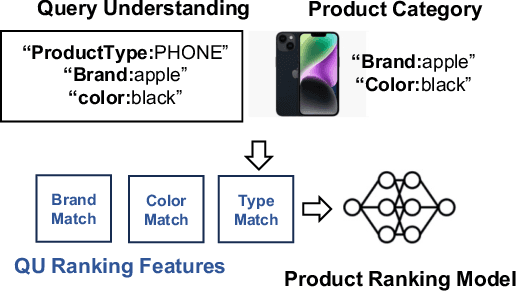
Online shopping platforms, such as Amazon, offer services to billions of people worldwide. Unlike web search or other search engines, product search engines have their unique characteristics, primarily featuring short queries which are mostly a combination of product attributes and structured product search space. The uniqueness of product search underscores the crucial importance of the query understanding component. However, there are limited studies focusing on exploring this impact within real-world product search engines. In this work, we aim to bridge this gap by conducting a comprehensive study and sharing our year-long journey investigating how the query understanding service impacts Amazon Product Search. Firstly, we explore how query understanding-based ranking features influence the ranking process. Next, we delve into how the query understanding system contributes to understanding the performance of a ranking model. Building on the insights gained from our study on the evaluation of the query understanding-based ranking model, we propose a query understanding-based multi-task learning framework for ranking. We present our studies and investigations using the real-world system on Amazon Search.
Improve ROI with Causal Learning and Conformal Prediction
Jul 01, 2024In the commercial sphere, such as operations and maintenance, advertising, and marketing recommendations, intelligent decision-making utilizing data mining and neural network technologies is crucial, especially in resource allocation to optimize ROI. This study delves into the Cost-aware Binary Treatment Assignment Problem (C-BTAP) across different industries, with a focus on the state-of-the-art Direct ROI Prediction (DRP) method. However, the DRP model confronts issues like covariate shift and insufficient training data, hindering its real-world effectiveness. Addressing these challenges is essential for ensuring dependable and robust predictions in varied operational contexts. This paper presents a robust Direct ROI Prediction (rDRP) method, designed to address challenges in real-world deployment of neural network-based uplift models, particularly under conditions of covariate shift and insufficient training data. The rDRP method, enhancing the standard DRP model, does not alter the model's structure or require retraining. It utilizes conformal prediction and Monte Carlo dropout for interval estimation, adapting to model uncertainty and data distribution shifts. A heuristic calibration method, inspired by a Kaggle competition, combines point and interval estimates. The effectiveness of these approaches is validated through offline tests and online A/B tests in various settings, demonstrating significant improvements in target rewards compared to the state-of-the-art method.
DV-3DLane: End-to-end Multi-modal 3D Lane Detection with Dual-view Representation
Jun 23, 2024Accurate 3D lane estimation is crucial for ensuring safety in autonomous driving. However, prevailing monocular techniques suffer from depth loss and lighting variations, hampering accurate 3D lane detection. In contrast, LiDAR points offer geometric cues and enable precise localization. In this paper, we present DV-3DLane, a novel end-to-end Dual-View multi-modal 3D Lane detection framework that synergizes the strengths of both images and LiDAR points. We propose to learn multi-modal features in dual-view spaces, i.e., perspective view (PV) and bird's-eye-view (BEV), effectively leveraging the modal-specific information. To achieve this, we introduce three designs: 1) A bidirectional feature fusion strategy that integrates multi-modal features into each view space, exploiting their unique strengths. 2) A unified query generation approach that leverages lane-aware knowledge from both PV and BEV spaces to generate queries. 3) A 3D dual-view deformable attention mechanism, which aggregates discriminative features from both PV and BEV spaces into queries for accurate 3D lane detection. Extensive experiments on the public benchmark, OpenLane, demonstrate the efficacy and efficiency of DV-3DLane. It achieves state-of-the-art performance, with a remarkable 11.2 gain in F1 score and a substantial 53.5% reduction in errors. The code is available at \url{https://github.com/JMoonr/dv-3dlane}.
EndoUIC: Promptable Diffusion Transformer for Unified Illumination Correction in Capsule Endoscopy
Jun 19, 2024



Wireless Capsule Endoscopy (WCE) is highly valued for its non-invasive and painless approach, though its effectiveness is compromised by uneven illumination from hardware constraints and complex internal dynamics, leading to overexposed or underexposed images. While researchers have discussed the challenges of low-light enhancement in WCE, the issue of correcting for different exposure levels remains underexplored. To tackle this, we introduce EndoUIC, a WCE unified illumination correction solution using an end-to-end promptable diffusion transformer (DFT) model. In our work, the illumination prompt module shall navigate the model to adapt to different exposure levels and perform targeted image enhancement, in which the Adaptive Prompt Integration (API) and Global Prompt Scanner (GPS) modules shall further boost the concurrent representation learning between the prompt parameters and features. Besides, the U-shaped restoration DFT model shall capture the long-range dependencies and contextual information for unified illumination restoration. Moreover, we present a novel Capsule-endoscopy Exposure Correction (CEC) dataset, including ground-truth and corrupted image pairs annotated by expert photographers. Extensive experiments against a variety of state-of-the-art (SOTA) methods on four datasets showcase the effectiveness of our proposed method and components in WCE illumination restoration, and the additional downstream experiments further demonstrate its utility for clinical diagnosis and surgical assistance.
GUI-WORLD: A Dataset for GUI-oriented Multimodal LLM-based Agents
Jun 16, 2024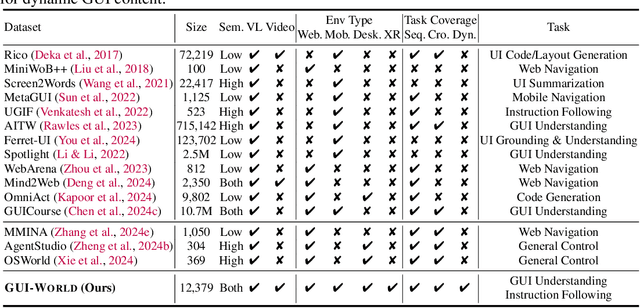
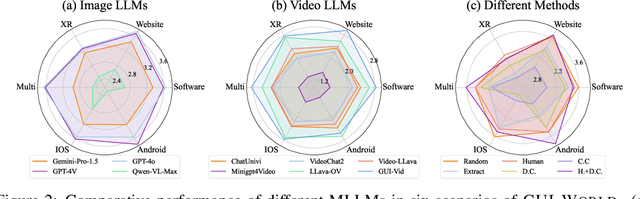
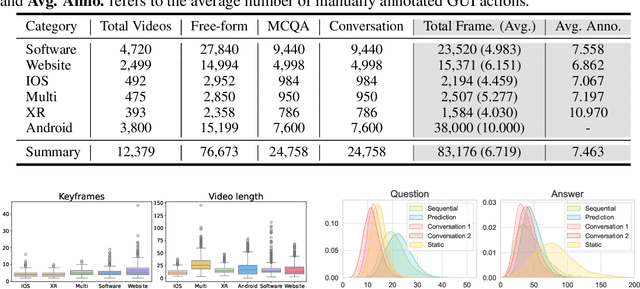
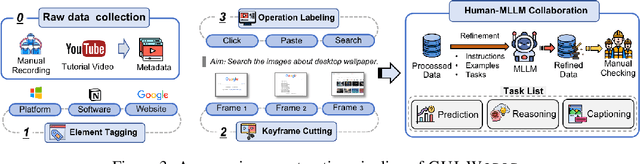
Recently, Multimodal Large Language Models (MLLMs) have been used as agents to control keyboard and mouse inputs by directly perceiving the Graphical User Interface (GUI) and generating corresponding code. However, current agents primarily exhibit excellent understanding capabilities in static environments and are predominantly applied in relatively simple domains, such as Web or mobile interfaces. We argue that a robust GUI agent should be capable of perceiving temporal information on the GUI, including dynamic Web content and multi-step tasks. Additionally, it should possess a comprehensive understanding of various GUI scenarios, including desktop software and multi-window interactions. To this end, this paper introduces a new dataset, termed GUI-World, which features meticulously crafted Human-MLLM annotations, extensively covering six GUI scenarios and eight types of GUI-oriented questions in three formats. We evaluate the capabilities of current state-of-the-art MLLMs, including ImageLLMs and VideoLLMs, in understanding various types of GUI content, especially dynamic and sequential content. Our findings reveal that ImageLLMs struggle with dynamic GUI content without manually annotated keyframes or operation history. On the other hand, VideoLLMs fall short in all GUI-oriented tasks given the sparse GUI video dataset. Based on GUI-World, we take the initial step of leveraging a fine-tuned VideoLLM as a GUI agent, demonstrating an improved understanding of various GUI tasks. However, due to the limitations in the performance of base LLMs, we conclude that using VideoLLMs as GUI agents remains a significant challenge. We believe our work provides valuable insights for future research in dynamic GUI content understanding. The code and dataset are publicly available at our project homepage: https://gui-world.github.io/.
Fully Test-Time Adaptation for Monocular 3D Object Detection
May 30, 2024Monocular 3D object detection (Mono 3Det) aims to identify 3D objects from a single RGB image. However, existing methods often assume training and test data follow the same distribution, which may not hold in real-world test scenarios. To address the out-of-distribution (OOD) problems, we explore a new adaptation paradigm for Mono 3Det, termed Fully Test-time Adaptation. It aims to adapt a well-trained model to unlabeled test data by handling potential data distribution shifts at test time without access to training data and test labels. However, applying this paradigm in Mono 3Det poses significant challenges due to OOD test data causing a remarkable decline in object detection scores. This decline conflicts with the pre-defined score thresholds of existing detection methods, leading to severe object omissions (i.e., rare positive detections and many false negatives). Consequently, the limited positive detection and plenty of noisy predictions cause test-time adaptation to fail in Mono 3Det. To handle this problem, we propose a novel Monocular Test-Time Adaptation (MonoTTA) method, based on two new strategies. 1) Reliability-driven adaptation: we empirically find that high-score objects are still reliable and the optimization of high-score objects can enhance confidence across all detections. Thus, we devise a self-adaptive strategy to identify reliable objects for model adaptation, which discovers potential objects and alleviates omissions. 2) Noise-guard adaptation: since high-score objects may be scarce, we develop a negative regularization term to exploit the numerous low-score objects via negative learning, preventing overfitting to noise and trivial solutions. Experimental results show that MonoTTA brings significant performance gains for Mono 3Det models in OOD test scenarios, approximately 190% gains by average on KITTI and 198% gains on nuScenes.
SA-GS: Semantic-Aware Gaussian Splatting for Large Scene Reconstruction with Geometry Constrain
May 28, 2024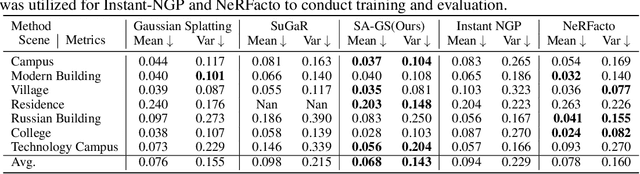
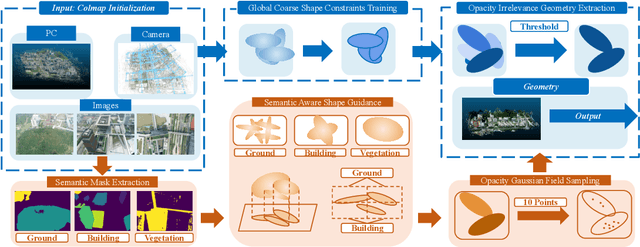
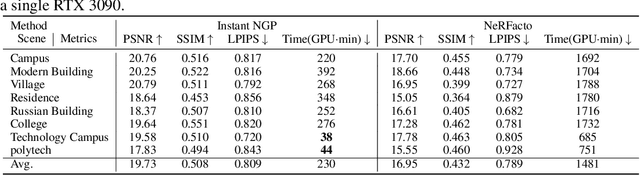
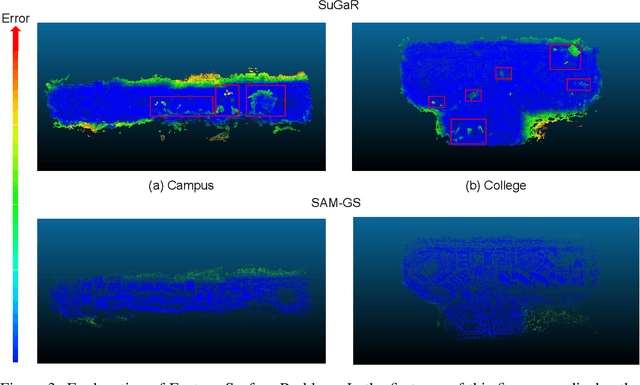
With the emergence of Gaussian Splats, recent efforts have focused on large-scale scene geometric reconstruction. However, most of these efforts either concentrate on memory reduction or spatial space division, neglecting information in the semantic space. In this paper, we propose a novel method, named SA-GS, for fine-grained 3D geometry reconstruction using semantic-aware 3D Gaussian Splats. Specifically, we leverage prior information stored in large vision models such as SAM and DINO to generate semantic masks. We then introduce a geometric complexity measurement function to serve as soft regularization, guiding the shape of each Gaussian Splat within specific semantic areas. Additionally, we present a method that estimates the expected number of Gaussian Splats in different semantic areas, effectively providing a lower bound for Gaussian Splats in these areas. Subsequently, we extract the point cloud using a novel probability density-based extraction method, transforming Gaussian Splats into a point cloud crucial for downstream tasks. Our method also offers the potential for detailed semantic inquiries while maintaining high image-based reconstruction results. We provide extensive experiments on publicly available large-scale scene reconstruction datasets with highly accurate point clouds as ground truth and our novel dataset. Our results demonstrate the superiority of our method over current state-of-the-art Gaussian Splats reconstruction methods by a significant margin in terms of geometric-based measurement metrics. Code and additional results will soon be available on our project page.