 Add to Chrome
 Add to Firefox
 Add to Edge
MMAE: A Massive Multitask Audio Editing Benchmark
Jun 05, 2026
We introduce MMAE, a Massive Multitask Audio Editing benchmark, serving as the first comprehensive evaluation testbed designed for general-purpose instruction-based audio editing. Spurred by the shift toward intelligent creation, interactive editing has rapidly expanded from visual domains, pioneered by models like Nano-banana 2 for images and Gemini-Omni for video, into audio. However, the current evaluation infrastructure lags severely, remaining highly fragmented and restricted to specific subdomains or basic operations. Unlike existing benchmarks that are limited in scope, MMAE extends to a broad spectrum of real-world scenarios, encompassing 7 distinct audio modalities, including sound, speech, music, and their mixtures. Furthermore, we establish a comprehensive taxonomy spanning 6 levels of task complexity, from basic modifications to multi-hop reasoning and multi-round editing, 2 levels of granularity, and 8 distinct operation types. Meticulously curated through human-agent collaboration, MMAE comprises 2,000 high-fidelity samples paired with a pioneering rubric-based evaluation framework. By decomposing free-form tasks into 17,741 verifiable criteria, this robust rubric-based paradigm enables a precise, multi-dimensional assessment of both instruction following and context consistency. Our extensive evaluation of leading models reveals that current systems remain far from achieving reliable edits. Strikingly, the Exact Match Rate (EMR) consistently falls below 5% and plummets to an absolute 0% in complex, mixed-modality tasks, exposing critical bottlenecks in precise execution and structural robustness. We hope MMAE will serve as a catalyst for future advances in the intelligent creation community, providing a clear diagnostic roadmap and establishing a standardized, long-lasting evaluation paradigm for next-generation audio editing systems.

WavCube: Unifying Speech Representation for Understanding and Generation via Semantic-Acoustic Joint Modeling
May 07, 2026Integrating speech understanding and generation is a pivotal step toward building unified speech models. However, the different representations required for these two tasks currently pose significant compatibility challenges. Typically, semantics-oriented features are learned from self-supervised learning (SSL), and acoustic-oriented features from reconstruction. Such fragmented representations hinder the realization of truly unified speech systems. We present WavCube, a compact continuous latent derived from an SSL speech encoder that simultaneously supports speech understanding, reconstruction, and generation. WavCube employs a two-stage training scheme. Stage 1 trains a semantic bottleneck to filter off-manifold redundancy that makes raw SSL features intractable for diffusion. Stage 2 injects fine-grained acoustic details via end-to-end reconstruction, while a semantic anchoring loss ensures the representation remains grounded within its original semantic manifold. Comprehensive experiments show that WavCube closely approaches WavLM performance on SUPERB despite an 8x dimensional compression, attains reconstruction quality on par with existing acoustic representations, delivers state-of-the-art zero-shot TTS performance with markedly faster training convergence, and excels in speech enhancement, separation, and voice conversion tasks on the SUPERB-SG benchmark. Systematic ablations reveal that WavCube's two-stage recipe resolves two intrinsic flaws of SSL features for generative modeling, paving the way for future unified speech systems. Codes and checkpoints are available at https://github.com/yanghaha0908/WavCube.
Covo-Audio Technical Report
Feb 10, 2026In this work, we present Covo-Audio, a 7B-parameter end-to-end LALM that directly processes continuous audio inputs and generates audio outputs within a single unified architecture. Through large-scale curated pretraining and targeted post-training, Covo-Audio achieves state-of-the-art or competitive performance among models of comparable scale across a broad spectrum of tasks, including speech-text modeling, spoken dialogue, speech understanding, audio understanding, and full-duplex voice interaction. Extensive evaluations demonstrate that the pretrained foundation model exhibits strong speech-text comprehension and semantic reasoning capabilities on multiple benchmarks, outperforming representative open-source models of comparable scale. Furthermore, Covo-Audio-Chat, the dialogue-oriented variant, demonstrates strong spoken conversational abilities, including understanding, contextual reasoning, instruction following, and generating contextually appropriate and empathetic responses, validating its applicability to real-world conversational assistant scenarios. Covo-Audio-Chat-FD, the evolved full-duplex model, achieves substantially superior performance on both spoken dialogue capabilities and full-duplex interaction behaviors, demonstrating its competence in practical robustness. To mitigate the high cost of deploying end-to-end LALMs for natural conversational systems, we propose an intelligence-speaker decoupling strategy that separates dialogue intelligence from voice rendering, enabling flexible voice customization with minimal text-to-speech (TTS) data while preserving dialogue performance. Overall, our results highlight the strong potential of 7B-scale models to integrate sophisticated audio intelligence with high-level semantic reasoning, and suggest a scalable path toward more capable and versatile LALMs.
Overview of the Amphion Toolkit (v0.2)
Jan 26, 2025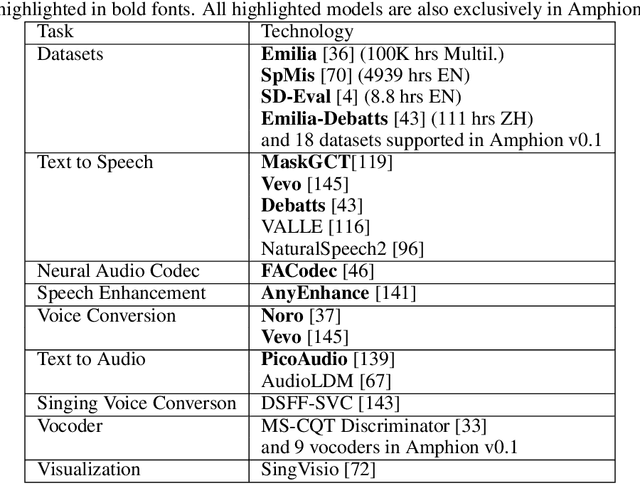
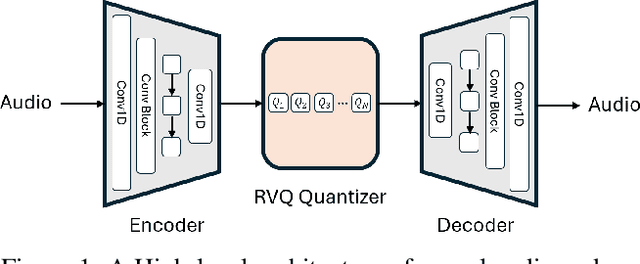
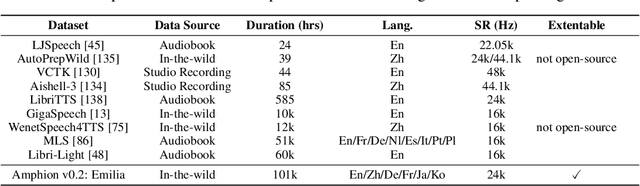
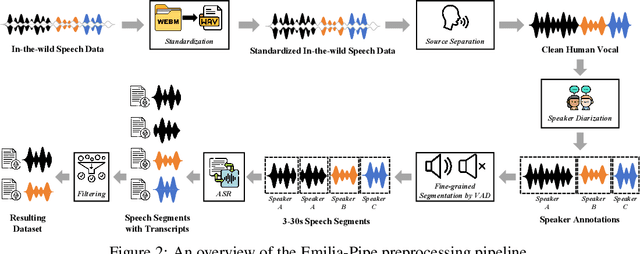
Amphion is an open-source toolkit for Audio, Music, and Speech Generation, designed to lower the entry barrier for junior researchers and engineers in these fields. It provides a versatile framework that supports a variety of generation tasks and models. In this report, we introduce Amphion v0.2, the second major release developed in 2024. This release features a 100K-hour open-source multilingual dataset, a robust data preparation pipeline, and novel models for tasks such as text-to-speech, audio coding, and voice conversion. Furthermore, the report includes multiple tutorials that guide users through the functionalities and usage of the newly released models.
DiveSound: LLM-Assisted Automatic Taxonomy Construction for Diverse Audio Generation
Jul 18, 2024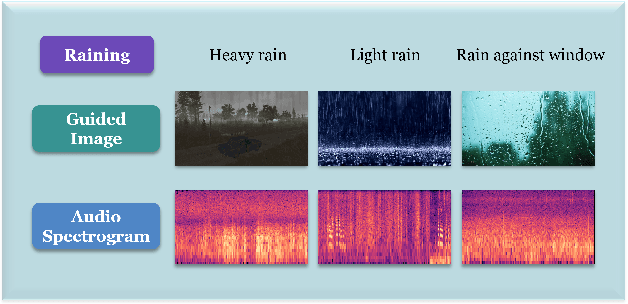
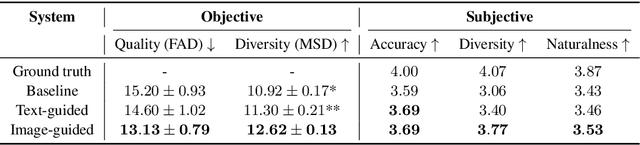
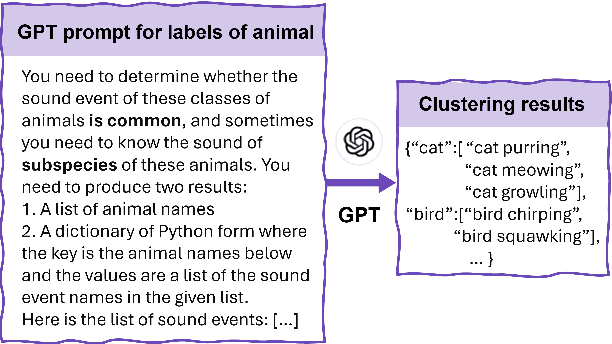
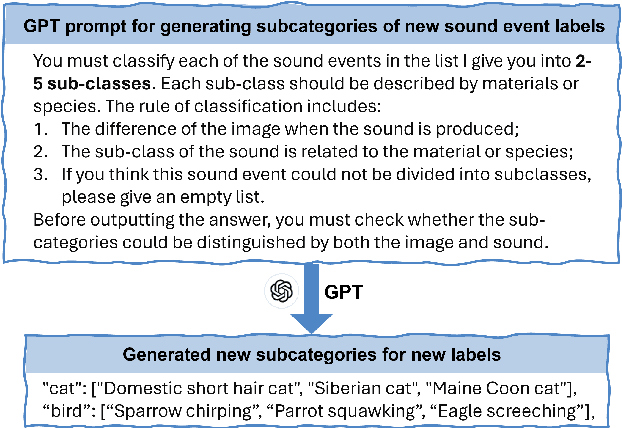
Audio generation has attracted significant attention. Despite remarkable enhancement in audio quality, existing models overlook diversity evaluation. This is partially due to the lack of a systematic sound class diversity framework and a matching dataset. To address these issues, we propose DiveSound, a novel framework for constructing multimodal datasets with in-class diversified taxonomy, assisted by large language models. As both textual and visual information can be utilized to guide diverse generation, DiveSound leverages multimodal contrastive representations in data construction. Our framework is highly autonomous and can be easily scaled up. We provide a textaudio-image aligned diversity dataset whose sound event class tags have an average of 2.42 subcategories. Text-to-audio experiments on the constructed dataset show a substantial increase of diversity with the help of the guidance of visual information.
AudioTime: A Temporally-aligned Audio-text Benchmark Dataset
Jul 03, 2024


Recent advancements in audio generation have enabled the creation of high-fidelity audio clips from free-form textual descriptions. However, temporal relationships, a critical feature for audio content, are currently underrepresented in mainstream models, resulting in an imprecise temporal controllability. Specifically, users cannot accurately control the timestamps of sound events using free-form text. We acknowledge that a significant factor is the absence of high-quality, temporally-aligned audio-text datasets, which are essential for training models with temporal control. The more temporally-aligned the annotations, the better the models can understand the precise relationship between audio outputs and temporal textual prompts. Therefore, we present a strongly aligned audio-text dataset, AudioTime. It provides text annotations rich in temporal information such as timestamps, duration, frequency, and ordering, covering almost all aspects of temporal control. Additionally, we offer a comprehensive test set and evaluation metric to assess the temporal control performance of various models. Examples are available on the https://zeyuxie29.github.io/AudioTime/
PicoAudio: Enabling Precise Timestamp and Frequency Controllability of Audio Events in Text-to-audio Generation
Jul 03, 2024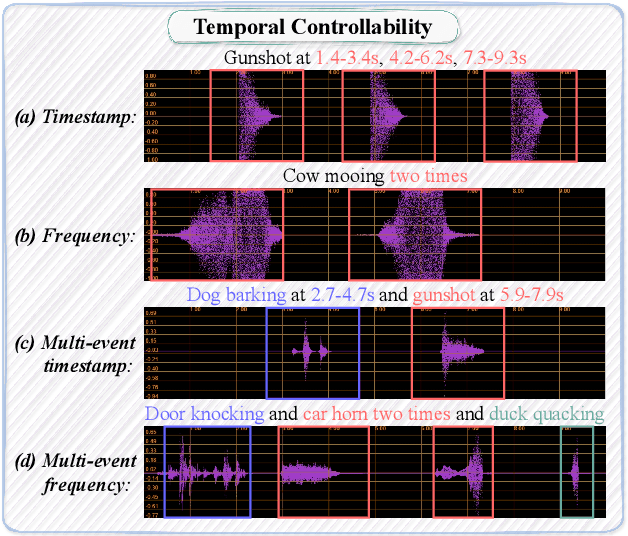
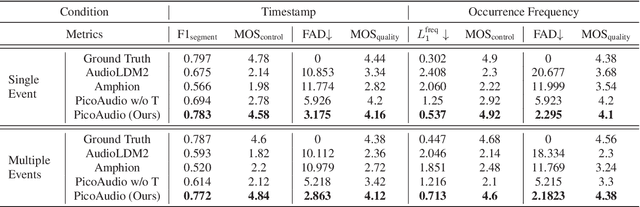
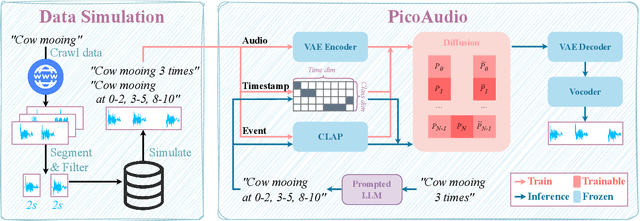
Recently, audio generation tasks have attracted considerable research interests. Precise temporal controllability is essential to integrate audio generation with real applications. In this work, we propose a temporal controlled audio generation framework, PicoAudio. PicoAudio integrates temporal information to guide audio generation through tailored model design. It leverages data crawling, segmentation, filtering, and simulation of fine-grained temporally-aligned audio-text data. Both subjective and objective evaluations demonstrate that PicoAudio dramantically surpasses current state-of-the-art generation models in terms of timestamp and occurrence frequency controllability. The generated samples are available on the demo website https://PicoAudio.github.io.
FakeSound: Deepfake General Audio Detection
Jun 12, 2024
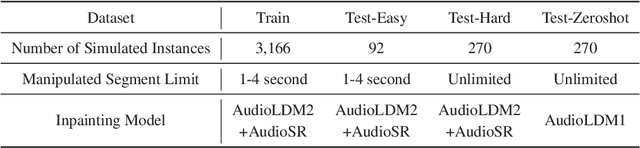

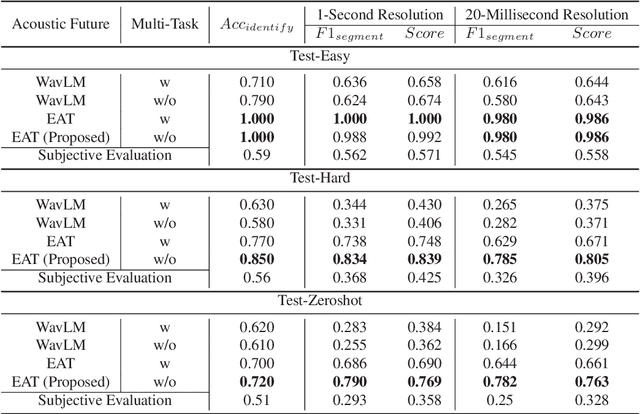
With the advancement of audio generation, generative models can produce highly realistic audios. However, the proliferation of deepfake general audio can pose negative consequences. Therefore, we propose a new task, deepfake general audio detection, which aims to identify whether audio content is manipulated and to locate deepfake regions. Leveraging an automated manipulation pipeline, a dataset named FakeSound for deepfake general audio detection is proposed, and samples can be viewed on website https://FakeSoundData.github.io. The average binary accuracy of humans on all test sets is consistently below 0.6, which indicates the difficulty humans face in discerning deepfake audio and affirms the efficacy of the FakeSound dataset. A deepfake detection model utilizing a general audio pre-trained model is proposed as a benchmark system. Experimental results demonstrate that the performance of the proposed model surpasses the state-of-the-art in deepfake speech detection and human testers.
A Detailed Audio-Text Data Simulation Pipeline using Single-Event Sounds
Mar 07, 2024


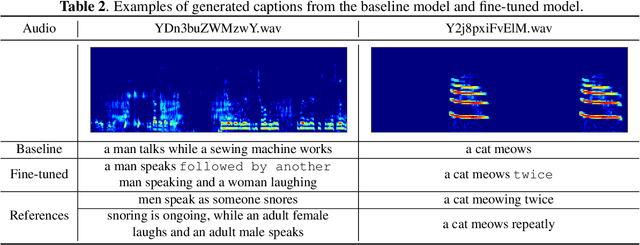
Recently, there has been an increasing focus on audio-text cross-modal learning. However, most of the existing audio-text datasets contain only simple descriptions of sound events. Compared with classification labels, the advantages of such descriptions are significantly limited. In this paper, we first analyze the detailed information that human descriptions of audio may contain beyond sound event labels. Based on the analysis, we propose an automatic pipeline for curating audio-text pairs with rich details. Leveraging the property that sounds can be mixed and concatenated in the time domain, we control details in four aspects: temporal relationship, loudness, speaker identity, and occurrence number, in simulating audio mixtures. Corresponding details are transformed into captions by large language models. Audio-text pairs with rich details in text descriptions are thereby obtained. We validate the effectiveness of our pipeline with a small amount of simulated data, demonstrating that the simulated data enables models to learn detailed audio captioning.
Enhancing Audio Generation Diversity with Visual Information
Mar 02, 2024Audio and sound generation has garnered significant attention in recent years, with a primary focus on improving the quality of generated audios. However, there has been limited research on enhancing the diversity of generated audio, particularly when it comes to audio generation within specific categories. Current models tend to produce homogeneous audio samples within a category. This work aims to address this limitation by improving the diversity of generated audio with visual information. We propose a clustering-based method, leveraging visual information to guide the model in generating distinct audio content within each category. Results on seven categories indicate that extra visual input can largely enhance audio generation diversity. Audio samples are available at https://zeyuxie29.github.io/DiverseAudioGeneration.