 Add to Chrome
 Add to Firefox
 Add to Edge
Estimating Neural Orientation Distribution Fields on High Resolution Diffusion MRI Scans
Sep 14, 2024
The Orientation Distribution Function (ODF) characterizes key brain microstructural properties and plays an important role in understanding brain structural connectivity. Recent works introduced Implicit Neural Representation (INR) based approaches to form a spatially aware continuous estimate of the ODF field and demonstrated promising results in key tasks of interest when compared to conventional discrete approaches. However, traditional INR methods face difficulties when scaling to large-scale images, such as modern ultra-high-resolution MRI scans, posing challenges in learning fine structures as well as inefficiencies in training and inference speed. In this work, we propose HashEnc, a grid-hash-encoding-based estimation of the ODF field and demonstrate its effectiveness in retaining structural and textural features. We show that HashEnc achieves a 10% enhancement in image quality while requiring 3x less computational resources than current methods. Our code can be found at https://github.com/MunzerDw/NODF-HashEnc.

PRIME: Phase Reversed Interleaved Multi-Echo acquisition enables highly accelerated distortion-free diffusion MRI
Sep 11, 2024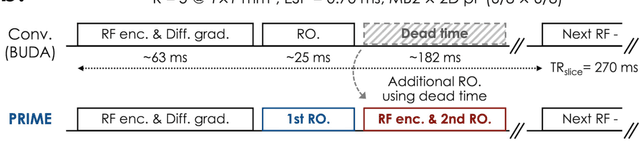
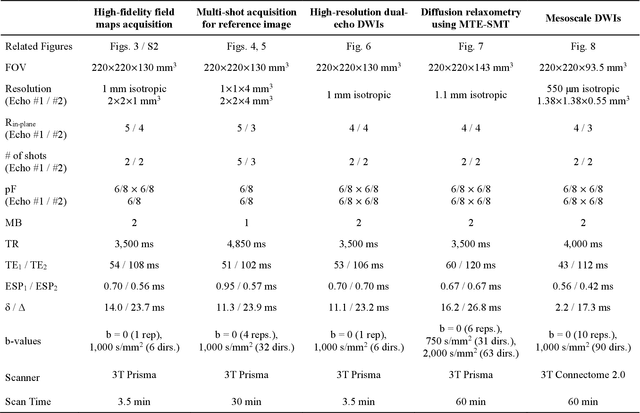
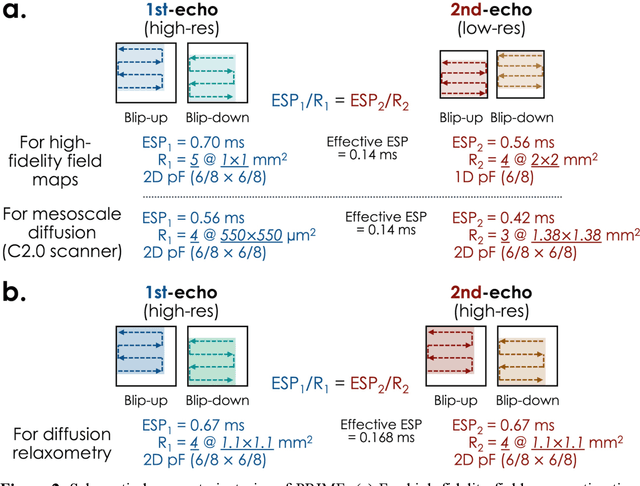
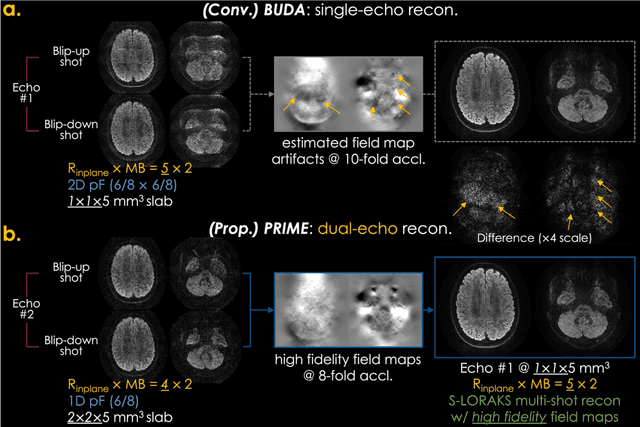
Purpose: To develop and evaluate a new pulse sequence for highly accelerated distortion-free diffusion MRI (dMRI) by inserting an additional echo without prolonging TR, when generalized slice dithered enhanced resolution (gSlider) radiofrequency encoding is used for volumetric acquisition. Methods: A phase-reversed interleaved multi-echo acquisition (PRIME) was developed for rapid, high-resolution, and distortion-free dMRI, which includes two echoes where the first echo is for target diffusion-weighted imaging (DWI) acquisition with high-resolution and the second echo is acquired with either 1) lower-resolution for high-fidelity field map estimation, or 2) matching resolution to enable efficient diffusion relaxometry acquisitions. The sequence was evaluated on in vivo data acquired from healthy volunteers on clinical and Connectome 2.0 scanners. Results: In vivo experiments demonstrated that 1) high in-plane acceleration (Rin-plane of 5-fold with 2D partial Fourier) was achieved using the high-fidelity field maps estimated from the second echo, which was made at a lower resolution/acceleration to increase its SNR while matching the effective echo spacing of the first readout, 2) high-resolution diffusion relaxometry parameters were estimated from dual-echo PRIME data using a white matter model of multi-TE spherical mean technique (MTE-SMT), and 3) high-fidelity mesoscale DWI at 550 um isotropic resolution could be obtained in vivo by capitalizing on the high-performance gradients of the Connectome 2.0 scanner. Conclusion: The proposed PRIME sequence enabled highly accelerated, high-resolution, and distortion-free dMRI using an additional echo without prolonging scan time when gSlider encoding is utilized.
EVENet: Evidence-based Ensemble Learning for Uncertainty-aware Brain Parcellation Using Diffusion MRI
Sep 11, 2024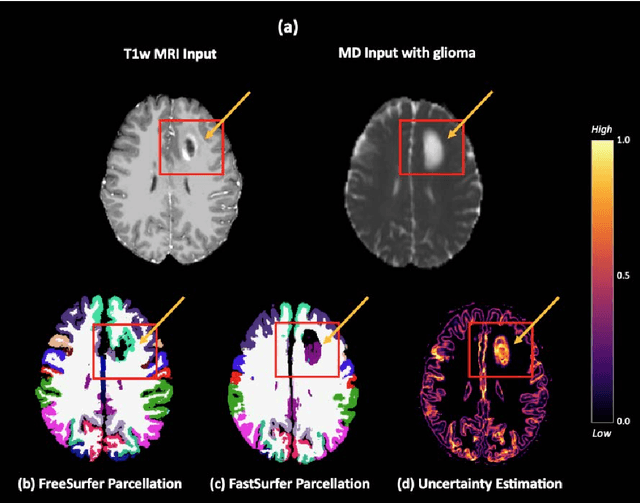
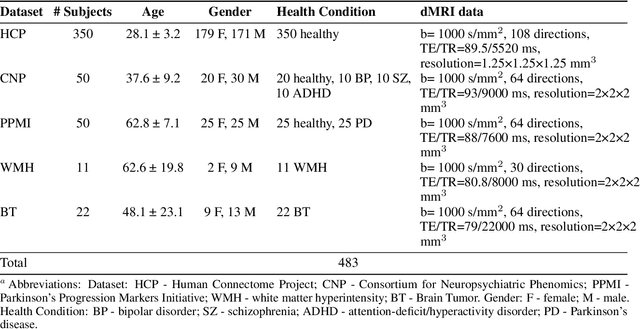
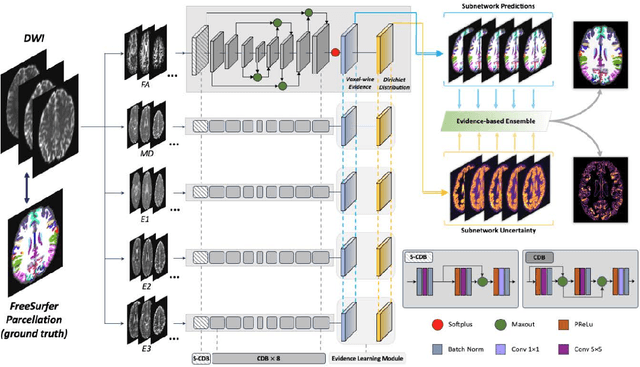
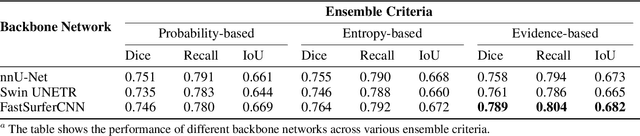
In this study, we developed an Evidence-based Ensemble Neural Network, namely EVENet, for anatomical brain parcellation using diffusion MRI. The key innovation of EVENet is the design of an evidential deep learning framework to quantify predictive uncertainty at each voxel during a single inference. Using EVENet, we obtained accurate parcellation and uncertainty estimates across different datasets from healthy and clinical populations and with different imaging acquisitions. The overall network includes five parallel subnetworks, where each is dedicated to learning the FreeSurfer parcellation for a certain diffusion MRI parameter. An evidence-based ensemble methodology is then proposed to fuse the individual outputs. We perform experimental evaluations on large-scale datasets from multiple imaging sources, including high-quality diffusion MRI data from healthy adults and clinically diffusion MRI data from participants with various brain diseases (schizophrenia, bipolar disorder, attention-deficit/hyperactivity disorder, Parkinson's disease, cerebral small vessel disease, and neurosurgical patients with brain tumors). Compared to several state-of-the-art methods, our experimental results demonstrate highly improved parcellation accuracy across the multiple testing datasets despite the differences in dMRI acquisition protocols and health conditions. Furthermore, thanks to the uncertainty estimation, our EVENet approach demonstrates a good ability to detect abnormal brain regions in patients with lesions, enhancing the interpretability and reliability of the segmentation results.
White Matter Geometry-Guided Score-Based Diffusion Model for Tissue Microstructure Imputation in Tractography Imaging
Jul 28, 2024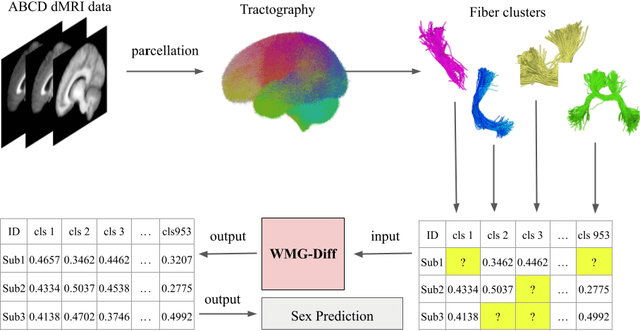

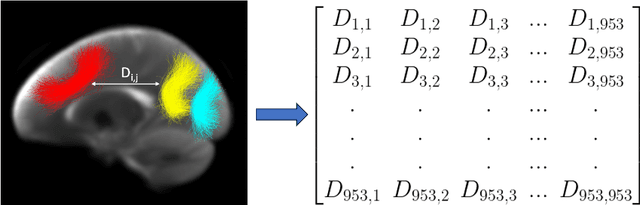
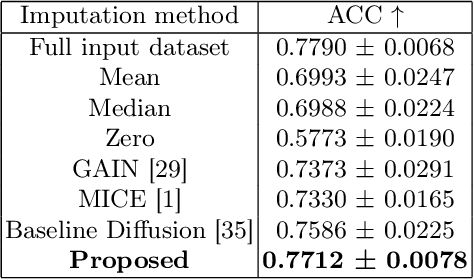
Parcellation of white matter tractography provides anatomical features for disease prediction, anatomical tract segmentation, surgical brain mapping, and non-imaging phenotype classifications. However, parcellation does not always reach 100% accuracy due to various factors, including inter-individual anatomical variability and the quality of neuroimaging scan data. The failure to identify parcels causes a problem of missing microstructure data values, which is especially challenging for downstream tasks that analyze large brain datasets. In this work, we propose a novel deep-learning model to impute tissue microstructure: the White Matter Geometry-guided Diffusion (WMG-Diff) model. Specifically, we first propose a deep score-based guided diffusion model to impute tissue microstructure for diffusion magnetic resonance imaging (dMRI) tractography fiber clusters. Second, we propose a white matter atlas geometric relationship-guided denoising function to guide the reverse denoising process at the subject-specific level. Third, we train and evaluate our model on a large dataset with 9342 subjects. Comprehensive experiments for tissue microstructure imputation and a downstream non-imaging phenotype prediction task demonstrate that our proposed WMG-Diff outperforms state-of-the-art methods.
Deep multimodal saliency parcellation of cerebellar pathways: linking microstructure and individual function through explainable multitask learning
Jul 21, 2024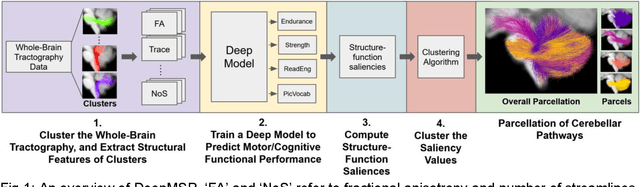
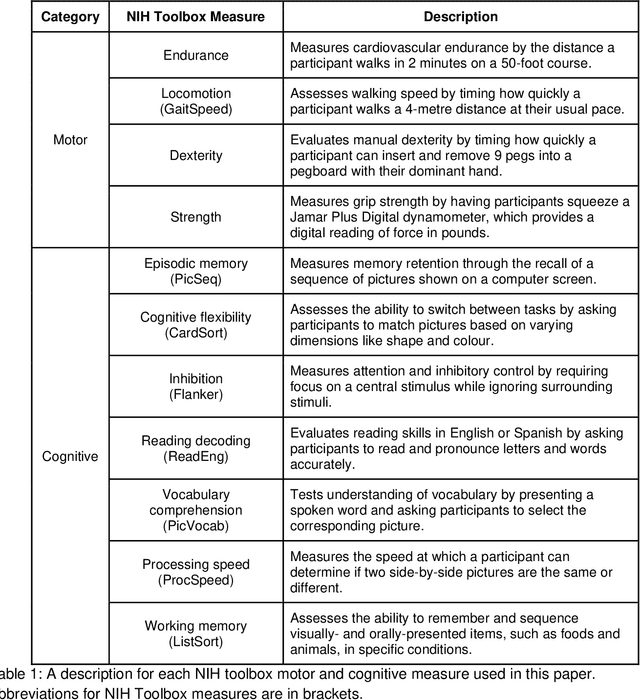

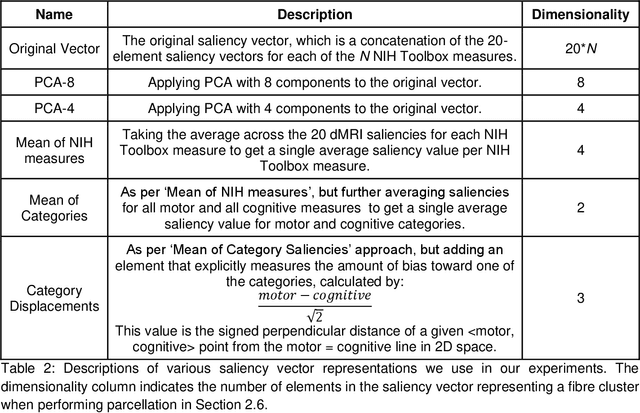
Parcellation of human cerebellar pathways is essential for advancing our understanding of the human brain. Existing diffusion MRI tractography parcellation methods have been successful in defining major cerebellar fibre tracts, while relying solely on fibre tract structure. However, each fibre tract may relay information related to multiple cognitive and motor functions of the cerebellum. Hence, it may be beneficial for parcellation to consider the potential importance of the fibre tracts for individual motor and cognitive functional performance measures. In this work, we propose a multimodal data-driven method for cerebellar pathway parcellation, which incorporates both measures of microstructure and connectivity, and measures of individual functional performance. Our method involves first training a multitask deep network to predict various cognitive and motor measures from a set of fibre tract structural features. The importance of each structural feature for predicting each functional measure is then computed, resulting in a set of structure-function saliency values that are clustered to parcellate cerebellar pathways. We refer to our method as Deep Multimodal Saliency Parcellation (DeepMSP), as it computes the saliency of structural measures for predicting cognitive and motor functional performance, with these saliencies being applied to the task of parcellation. Applying DeepMSP we found that it was feasible to identify multiple cerebellar pathway parcels with unique structure-function saliency patterns that were stable across training folds.
TractGraphFormer: Anatomically Informed Hybrid Graph CNN-Transformer Network for Classification from Diffusion MRI Tractography
Jul 11, 2024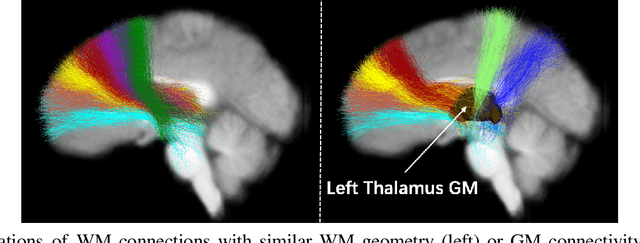

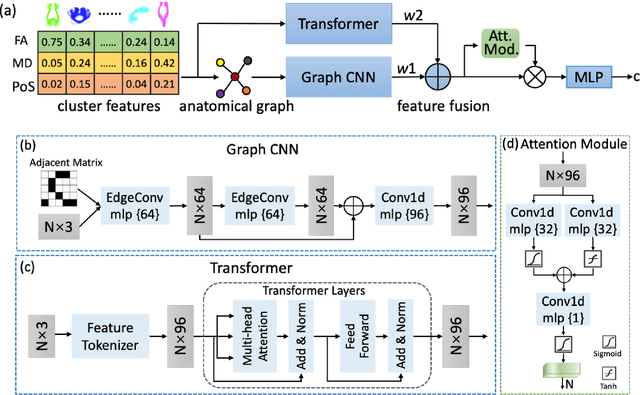
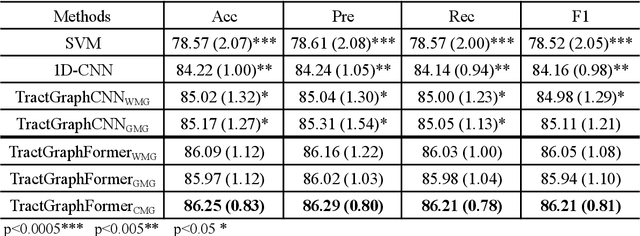
The relationship between brain connections and non-imaging phenotypes is increasingly studied using deep neural networks. However, the local and global properties of the brain's white matter networks are often overlooked in convolutional network design. We introduce TractGraphFormer, a hybrid Graph CNN-Transformer deep learning framework tailored for diffusion MRI tractography. This model leverages local anatomical characteristics and global feature dependencies of white matter structures. The Graph CNN module captures white matter geometry and grey matter connectivity to aggregate local features from anatomically similar white matter connections, while the Transformer module uses self-attention to enhance global information learning. Additionally, TractGraphFormer includes an attention module for interpreting predictive white matter connections. In sex prediction tests, TractGraphFormer shows strong performance in large datasets of children (n=9345) and young adults (n=1065). Overall, our approach suggests that widespread connections in the WM are predictive of the sex of an individual, and consistent predictive anatomical tracts are identified across the two datasets. The proposed approach highlights the potential of integrating local anatomical information and global feature dependencies to improve prediction performance in machine learning with diffusion MRI tractography.
Cross-domain Fiber Cluster Shape Analysis for Language Performance Cognitive Score Prediction
Mar 30, 2024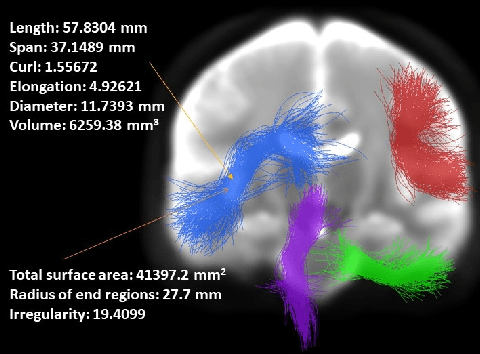
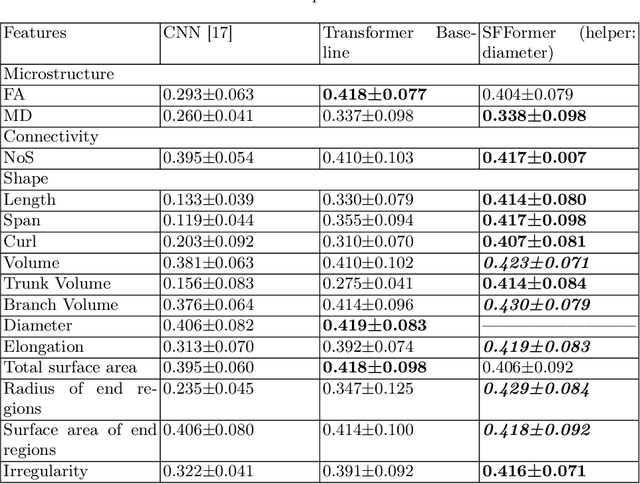
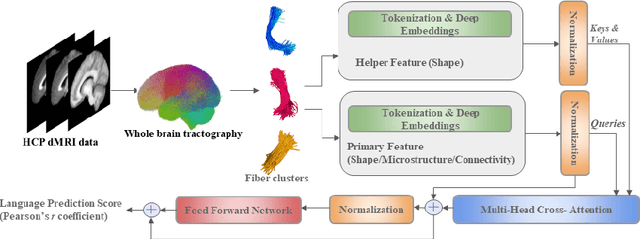
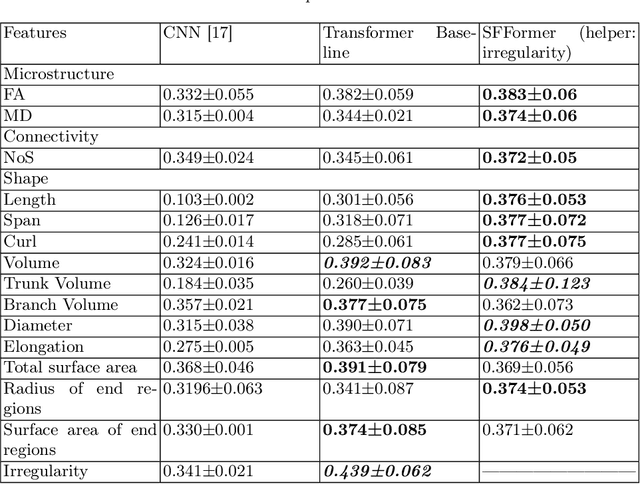
Shape plays an important role in computer graphics, offering informative features to convey an object's morphology and functionality. Shape analysis in brain imaging can help interpret structural and functionality correlations of the human brain. In this work, we investigate the shape of the brain's 3D white matter connections and its potential predictive relationship to human cognitive function. We reconstruct brain connections as sequences of 3D points using diffusion magnetic resonance imaging (dMRI) tractography. To describe each connection, we extract 12 shape descriptors in addition to traditional dMRI connectivity and tissue microstructure features. We introduce a novel framework, Shape--fused Fiber Cluster Transformer (SFFormer), that leverages a multi-head cross-attention feature fusion module to predict subject-specific language performance based on dMRI tractography. We assess the performance of the method on a large dataset including 1065 healthy young adults. The results demonstrate that both the transformer-based SFFormer model and its inter/intra feature fusion with shape, microstructure, and connectivity are informative, and together, they improve the prediction of subject-specific language performance scores. Overall, our results indicate that the shape of the brain's connections is predictive of human language function.
A Deep Network for Explainable Prediction of Non-Imaging Phenotypes using Anatomical Multi-View Data
Jan 13, 2024Large datasets often contain multiple distinct feature sets, or views, that offer complementary information that can be exploited by multi-view learning methods to improve results. We investigate anatomical multi-view data, where each brain anatomical structure is described with multiple feature sets. In particular, we focus on sets of white matter microstructure and connectivity features from diffusion MRI, as well as sets of gray matter area and thickness features from structural MRI. We investigate machine learning methodology that applies multi-view approaches to improve the prediction of non-imaging phenotypes, including demographics (age), motor (strength), and cognition (picture vocabulary). We present an explainable multi-view network (EMV-Net) that can use different anatomical views to improve prediction performance. In this network, each individual anatomical view is processed by a view-specific feature extractor and the extracted information from each view is fused using a learnable weight. This is followed by a wavelet transform-based module to obtain complementary information across views which is then applied to calibrate the view-specific information. Additionally, the calibrator produces an attention-based calibration score to indicate anatomical structures' importance for interpretation.
A Novel Deep Clustering Framework for Fine-Scale Parcellation of Amygdala Using dMRI Tractography
Nov 25, 2023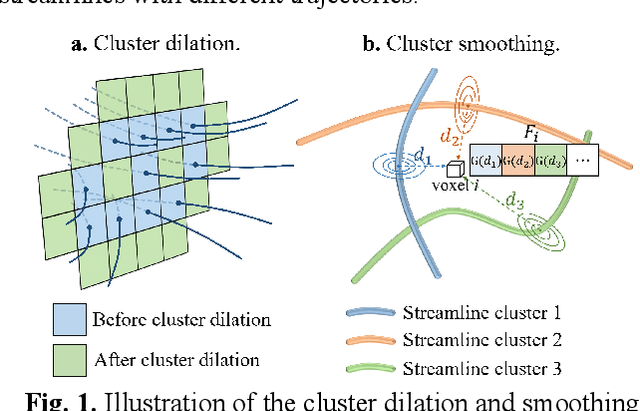
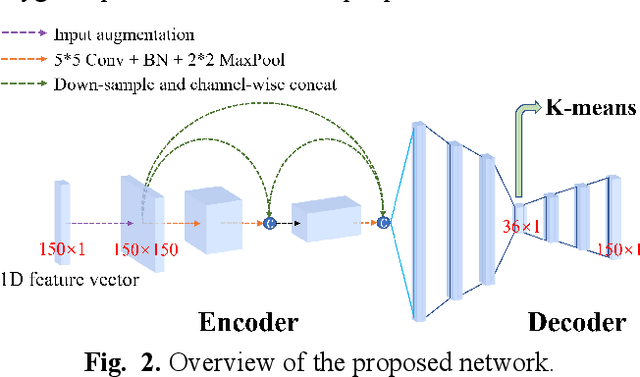
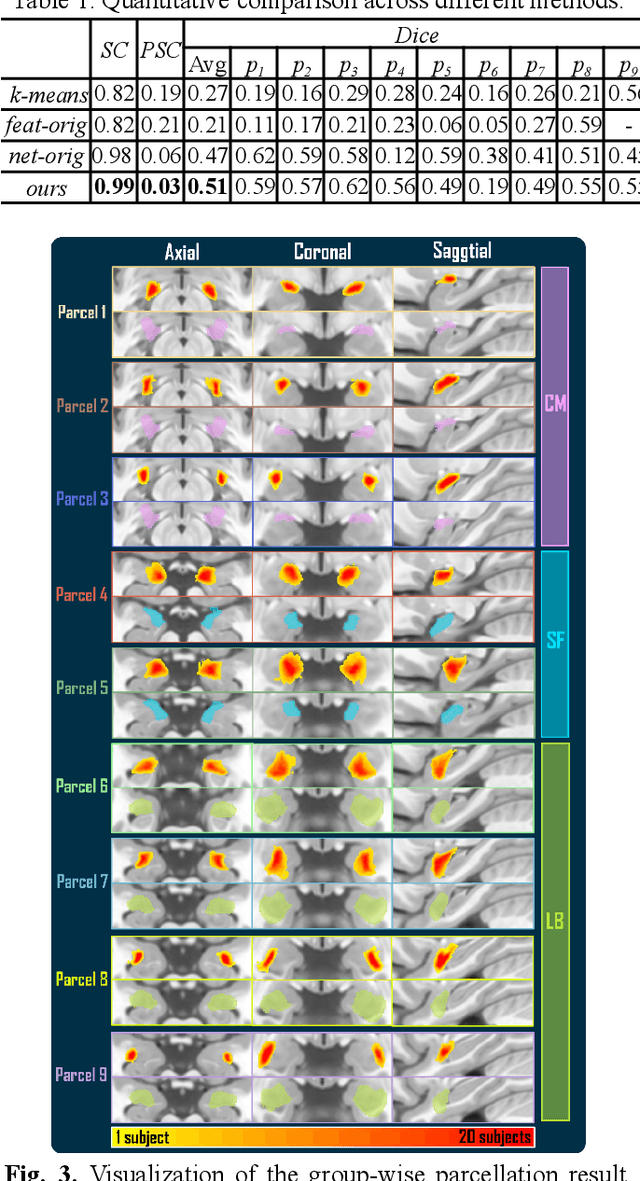

The amygdala plays a vital role in emotional processing and exhibits structural diversity that necessitates fine-scale parcellation for a comprehensive understanding of its anatomico-functional correlations. Diffusion MRI tractography is an advanced imaging technique that can estimate the brain's white matter structural connectivity to potentially reveal the topography of the amygdala for studying its subdivisions. In this work, we present a deep clustering pipeline to perform automated, fine-scale parcellation of the amygdala using diffusion MRI tractography. First, we incorporate a newly proposed deep learning approach to enable accurate segmentation of the amygdala directly on the dMRI data. Next, we design a novel streamline clustering-based structural connectivity feature for a robust representation of voxels within the amygdala. Finally, we improve the popular joint dimensionality reduction and k-means clustering approach to enable amygdala parcellation at a finer scale. With the proposed method, we obtain nine unique amygdala parcels. Experiments show that these parcels can be consistently identified across subjects and have good correspondence to the widely used coarse-scale amygdala parcellation.
TractCloud: Registration-free tractography parcellation with a novel local-global streamline point cloud representation
Jul 18, 2023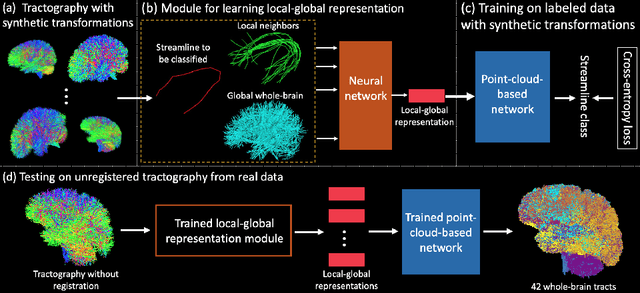
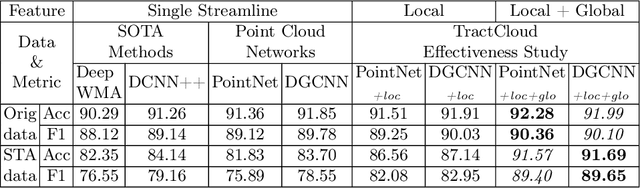
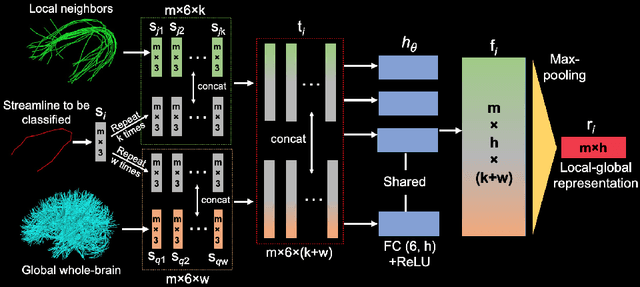
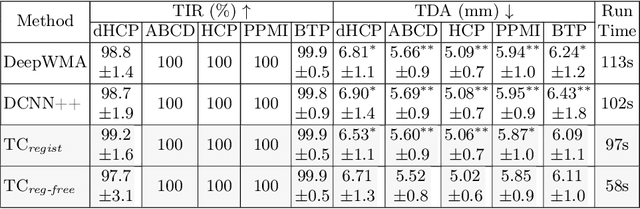
Diffusion MRI tractography parcellation classifies streamlines into anatomical fiber tracts to enable quantification and visualization for clinical and scientific applications. Current tractography parcellation methods rely heavily on registration, but registration inaccuracies can affect parcellation and the computational cost of registration is high for large-scale datasets. Recently, deep-learning-based methods have been proposed for tractography parcellation using various types of representations for streamlines. However, these methods only focus on the information from a single streamline, ignoring geometric relationships between the streamlines in the brain. We propose TractCloud, a registration-free framework that performs whole-brain tractography parcellation directly in individual subject space. We propose a novel, learnable, local-global streamline representation that leverages information from neighboring and whole-brain streamlines to describe the local anatomy and global pose of the brain. We train our framework on a large-scale labeled tractography dataset, which we augment by applying synthetic transforms including rotation, scaling, and translations. We test our framework on five independently acquired datasets across populations and health conditions. TractCloud significantly outperforms several state-of-the-art methods on all testing datasets. TractCloud achieves efficient and consistent whole-brain white matter parcellation across the lifespan (from neonates to elderly subjects, including brain tumor patients) without the need for registration. The robustness and high inference speed of TractCloud make it suitable for large-scale tractography data analysis. Our project page is available at https://tractcloud.github.io/.