 Add to Chrome
 Add to Firefox
 Add to Edge
Inference-Time Robot Behavior Steering through Physically-Aware Reconfiguration of Task-Structure
Jun 25, 2026
A central challenge in deploying learned robot policies is inference-time behavior steering: redirecting a policy at test time to satisfy user preferences not anticipated during training, without retraining. Existing methods fail in two modes: end-to-end methods require fine-tuning or expert-level guidance, while neuro-symbolic methods rely on predefined symbols whose edits can result in logically reasonable but physically infeasible plans. To address this challenge, we propose ReStruct, which builds upon a neural automaton policy that decomposes a visuomotor policy into a high-level state-machine skeleton capturing task structure and a low-level continuous controller represented as a residual policy. Specifically, ReStruct adopts the automaton to represent the preference and incorporates it into the skeleton through a synchronous product, thereby reconfiguring the task structure. With the controller kept frozen, the action priors provided by the skeleton are updated accordingly to enable physically-aware control under a modified task structure. Extensive experiments from simulation and real-world show that ReStruct steers a wide range of preferences, from object-centric specifications to temporal-logic constraints, and after steering surpasses existing methods, exceeding VLA models in both task success and preference-following by up to 25%.

G2G: Exploiting Intra-Group Geometry for Inter-Group Pose Estimation
Jun 06, 2026Recovering the relative 6-DoF pose between two image groups underlies cross-sequence relocalization and multi-camera rig odometry. Each group carries known intra-group geometry from visual odometry or rig calibration, and pretrained multi-view backbones already fuse such geometry into visual features. Yet current models treat all views as an unstructured set, leaving cross-group reasoning as the missing piece. We introduce \ours{}, which keeps the foundation model entirely frozen and adds three lightweight trainable modules to bridge the two groups: a perceiver resampler, a cross-group bridge with merged self-attention, and a multi-frame pose head. The trainable footprint totals about 32M parameters, under 6\% of the full model, and is supervised only by relative poses. Across four datasets that span indoor and outdoor simulation, real-world cross-season capture, and zero-shot sim-to-real transfer, \ours{} attains state-of-the-art accuracy on both tasks, while every baseline is retrained with its full original supervision. Code is available at https://github.com/WeiYuFei0217/G2G.
VLESA: Vision-Language Embodied Safety Agent for Human Activity Monitoring
Jun 02, 2026As AI systems increasingly assist humans in physical tasks, ensuring safety becomes paramount -- physical actions carry immediate and irreversible consequences that digital errors do not. We introduce the Vision-Language Embodied Safety Agent (VLESA), a framework that monitors human activities from egocentric video and triggers real-time safety interventions when dangerous actions are predicted. VLESA addresses intent-dependent safety where identical actions can be safe or dangerous depending on context. A dataset pairing egocentric frames with goal-conditioned safety annotations is introduced, enabling a goal-conditioned safety Q-filter trained via GRPO that evaluates actions with respect to inferred intent without retraining. On top of that, an intent-action prediction agent is proposed to jointly infer goals and predict future actions from video. On the ASIMOV-2.0 benchmark, VLESA achieves higher intervention accuracy at the exact ground-truth frame compared to baselines, while the GRPO-trained Q-filter improves action safety by over 41 percentage points through goal-conditioned constrained decoding. Code is available at https://github.com/HanjiangHu/VLESA.
Emergent Neural Automaton Policies: Learning Symbolic Structure from Visuomotor Trajectories
Mar 26, 2026Scaling robot learning to long-horizon tasks remains a formidable challenge. While end-to-end policies often lack the structural priors needed for effective long-term reasoning, traditional neuro-symbolic methods rely heavily on hand-crafted symbolic priors. To address the issue, we introduce ENAP (Emergent Neural Automaton Policy), a framework that allows a bi-level neuro-symbolic policy adaptively emerge from visuomotor demonstrations. Specifically, we first employ adaptive clustering and an extension of the L* algorithm to infer a Mealy state machine from visuomotor data, which serves as an interpretable high-level planner capturing latent task modes. Then, this discrete structure guides a low-level reactive residual network to learn precise continuous control via behavior cloning (BC). By explicitly modeling the task structure with discrete transitions and continuous residuals, ENAP achieves high sample efficiency and interpretability without requiring task-specific labels. Extensive experiments on complex manipulation and long-horizon tasks demonstrate that ENAP outperforms state-of-the-art (SoTA) end-to-end VLA policies by up to 27% in low-data regimes, while offering a structured representation of robotic intent (Fig. 1).
Learning Safe-Stoppability Monitors for Humanoid Robots
Mar 24, 2026Emergency stop (E-stop) mechanisms are the de facto standard for robot safety. However, for humanoid robots, abruptly cutting power can itself cause catastrophic failures; instead, an emergency stop must execute a predefined fallback controller that preserves balance and drives the robot toward a minimum-risk condition. This raises a critical question: from which states can a humanoid robot safely execute such a stop? In this work, we formalize emergency stopping for humanoids as a policy-dependent safe-stoppability problem and use data-driven approaches to characterize the safe-stoppable envelope. We introduce PRISM (Proactive Refinement of Importance-sampled Stoppability Monitor), a simulation-driven framework that learns a neural predictor for state-level stoppability. PRISM iteratively refines the decision boundary using importance sampling, enabling targeted exploration of rare but safety-critical states. This targeted exploration significantly improves data efficiency while reducing false-safe predictions under a fixed simulation budget. We further demonstrate sim-to-real transfer by deploying the pretrained monitor on a real humanoid platform. Results show that modeling safety as policy-dependent stoppability enables proactive safety monitoring and supports scalable certification of fail-safe behaviors for humanoid robots.
Multi-cam Multi-map Visual Inertial Localization: System, Validation and Dataset
Dec 05, 2024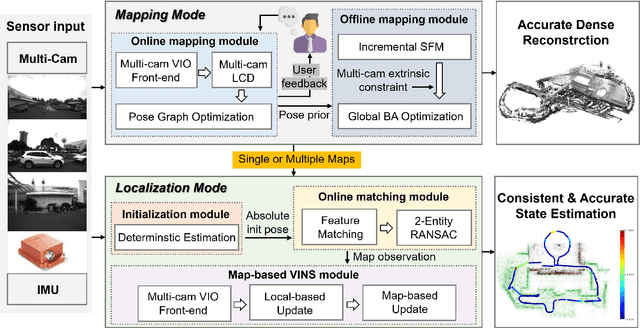
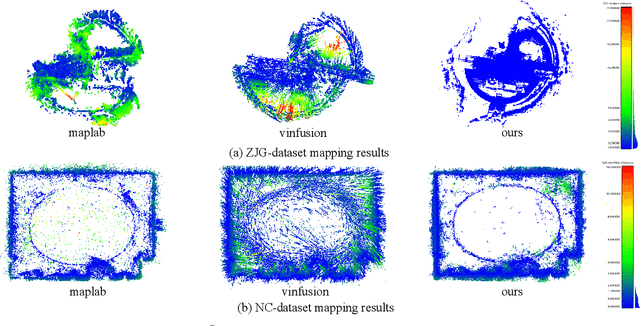
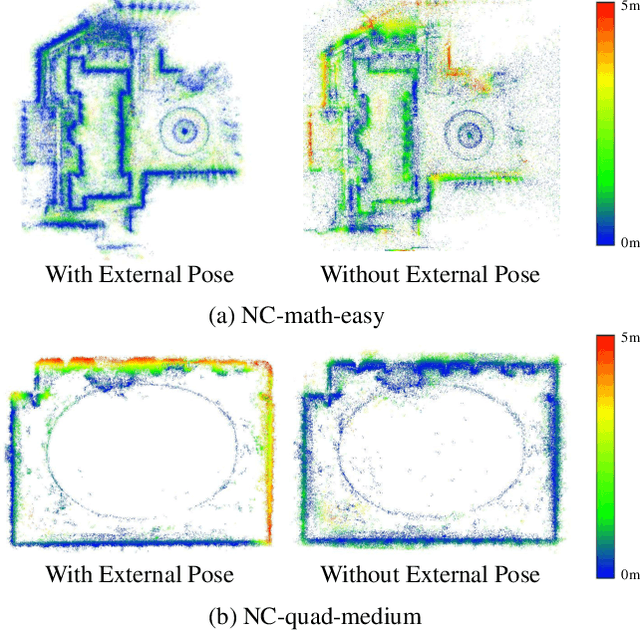
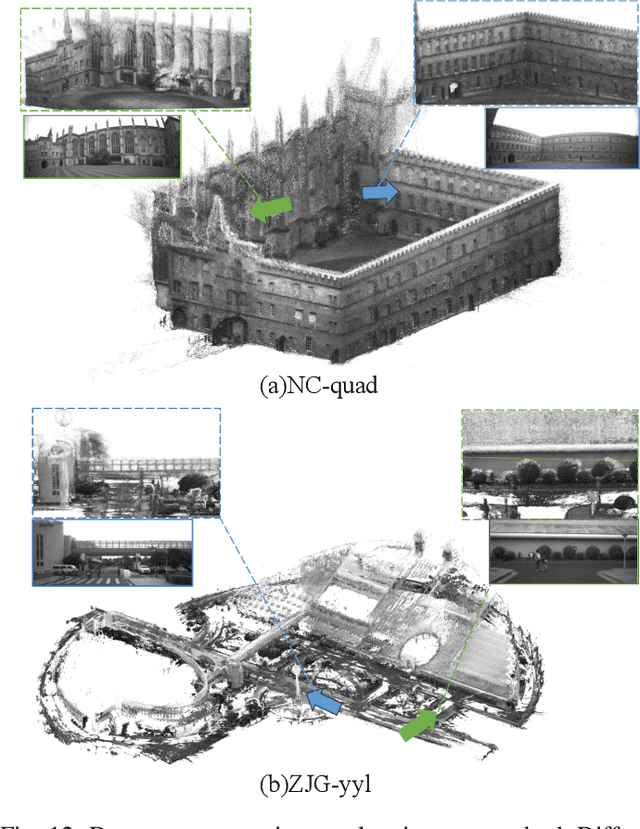
Map-based localization is crucial for the autonomous movement of robots as it provides real-time positional feedback. However, existing VINS and SLAM systems cannot be directly integrated into the robot's control loop. Although VINS offers high-frequency position estimates, it suffers from drift in long-term operation. And the drift-free trajectory output by SLAM is post-processed with loop correction, which is non-causal. In practical control, it is impossible to update the current pose with future information. Furthermore, existing SLAM evaluation systems measure accuracy after aligning the entire trajectory, which overlooks the transformation error between the odometry start frame and the ground truth frame. To address these issues, we propose a multi-cam multi-map visual inertial localization system, which provides real-time, causal and drift-free position feedback to the robot control loop. Additionally, we analyze the error composition of map-based localization systems and propose a set of evaluation metric suitable for measuring causal localization performance. To validate our system, we design a multi-camera IMU hardware setup and collect a long-term challenging campus dataset. Experimental results demonstrate the higher real-time localization accuracy of the proposed system. To foster community development, both the system and the dataset have been made open source https://github.com/zoeylove/Multi-cam-Multi-map-VILO/tree/main.
Planning from Imagination: Episodic Simulation and Episodic Memory for Vision-and-Language Navigation
Nov 30, 2024Humans navigate unfamiliar environments using the capabilities of episodic simulation and episodic memory. Developing imagination-based memory, analogous to episodic simulation and episodic memory, can enhance embodied agents' comprehension of the complex relationship between environments and objects. However, existing Vision-and-Language Navigation (VLN) agents fail to perform the aforementioned mechanism. We propose a novel architecture to help agents build a recurrent imaginative memory system. Specifically, the agent can maintain a reality-imagination hybrid global memory during navigation and expand the memory map through imaginative mechanisms and navigation actions. Correspondingly, we design a series of pre-training tasks to help the agent acquire fine-grained imaginative abilities. Our agents improve the state-of-the-art (SoTA) success rate (SR) by 7% while simultaneously imagining high-fidelity RGB representations for future scenes.
FLAME: Learning to Navigate with Multimodal LLM in Urban Environments
Aug 20, 2024Large Language Models (LLMs) have demonstrated potential in Vision-and-Language Navigation (VLN) tasks, yet current applications face challenges. While LLMs excel in general conversation scenarios, they struggle with specialized navigation tasks, yielding suboptimal performance compared to specialized VLN models. We introduce FLAME (FLAMingo-Architected Embodied Agent), a novel Multimodal LLM-based agent and architecture designed for urban VLN tasks that efficiently handles multiple observations. Our approach implements a three-phase tuning technique for effective adaptation to navigation tasks, including single perception tuning for street view description, multiple perception tuning for trajectory summarization, and end-to-end training on VLN datasets. The augmented datasets are synthesized automatically. Experimental results demonstrate FLAME's superiority over existing methods, surpassing state-of-the-art methods by a 7.3% increase in task completion rate on Touchdown dataset. This work showcases the potential of Multimodal LLMs (MLLMs) in complex navigation tasks, representing an advancement towards practical applications of MLLMs in embodied AI. Project page: https://flame-sjtu.github.io
CORAL: Colored structural representation for bi-modal place recognition
Nov 22, 2020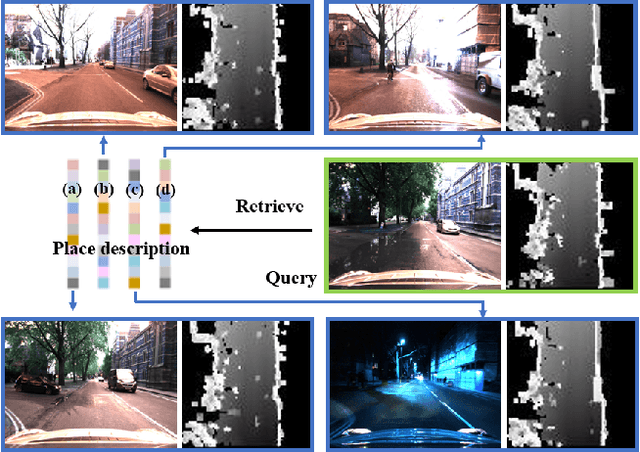
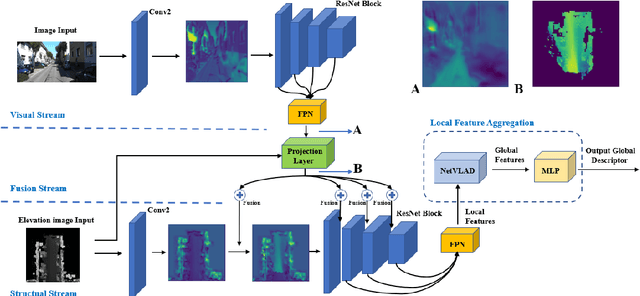
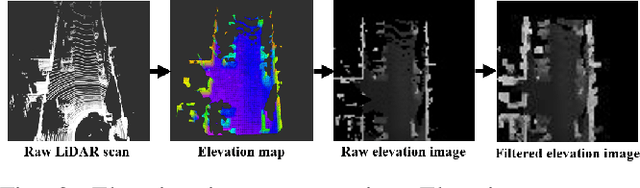
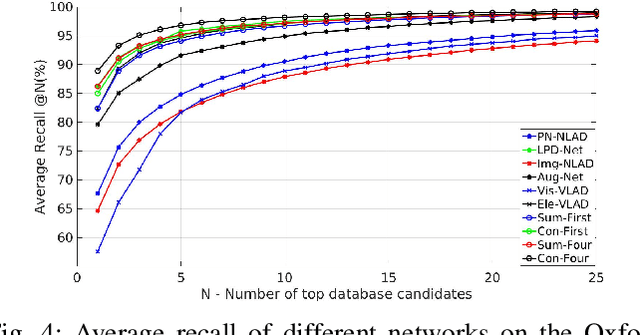
Place recognition is indispensable for drift-free localization system. Due to the variations of the environment, place recognition using single modality has limitations. In this paper, we propose a bi-modal place recognition method, which can extract compound global descriptor from the two modalities, vision and LiDAR. Specifically, we build elevation image generated from point cloud modality as a discriminative structural representation. Based on the 3D information, we derive the correspondences between 3D points and image pixels, by which the pixel-wise visual features can be inserted into the elevation map grids. In this way, we fuse the structural features and visual features in the consistent bird-eye view frame, yielding a semantic feature representation with sensible geometry, namely CORAL. Comparisons on the Oxford RobotCar show that CORAL has superior performance against other state-of-the-art methods. We also demonstrate that our network can be generalized to other scenes and sensor configurations using cross-city datasets.