 Add to Chrome
 Add to Firefox
 Add to Edge
Symbolic Music Generation with Non-Differentiable Rule Guided Diffusion
Feb 23, 2024



We study the problem of symbolic music generation (e.g., generating piano rolls), with a technical focus on non-differentiable rule guidance. Musical rules are often expressed in symbolic form on note characteristics, such as note density or chord progression, many of which are non-differentiable which pose a challenge when using them for guided diffusion. We propose Stochastic Control Guidance (SCG), a novel guidance method that only requires forward evaluation of rule functions that can work with pre-trained diffusion models in a plug-and-play way, thus achieving training-free guidance for non-differentiable rules for the first time. Additionally, we introduce a latent diffusion architecture for symbolic music generation with high time resolution, which can be composed with SCG in a plug-and-play fashion. Compared to standard strong baselines in symbolic music generation, this framework demonstrates marked advancements in music quality and rule-based controllability, outperforming current state-of-the-art generators in a variety of settings. For detailed demonstrations, code and model checkpoints, please visit our project website: https://scg-rule-guided-music.github.io/.

Distributionally Robust Policy Evaluation under General Covariate Shift in Contextual Bandits
Jan 21, 2024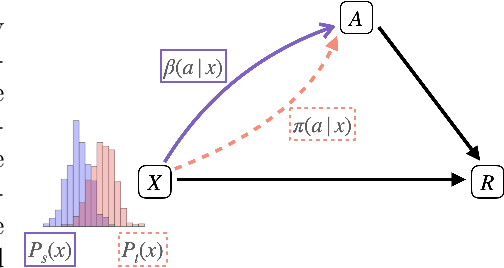

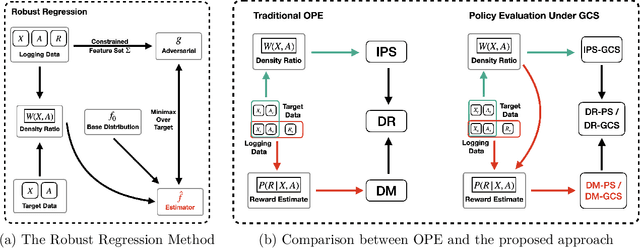

We introduce a distributionally robust approach that enhances the reliability of offline policy evaluation in contextual bandits under general covariate shifts. Our method aims to deliver robust policy evaluation results in the presence of discrepancies in both context and policy distribution between logging and target data. Central to our methodology is the application of robust regression, a distributionally robust technique tailored here to improve the estimation of conditional reward distribution from logging data. Utilizing the reward model obtained from robust regression, we develop a comprehensive suite of policy value estimators, by integrating our reward model into established evaluation frameworks, namely direct methods and doubly robust methods. Through theoretical analysis, we further establish that the proposed policy value estimators offer a finite sample upper bound for the bias, providing a clear advantage over traditional methods, especially when the shift is large. Finally, we designed an extensive range of policy evaluation scenarios, covering diverse magnitudes of shifts and a spectrum of logging and target policies. Our empirical results indicate that our approach significantly outperforms baseline methods, most notably in 90% of the cases under the policy shift-only settings and 72% of the scenarios under the general covariate shift settings.
SciGLM: Training Scientific Language Models with Self-Reflective Instruction Annotation and Tuning
Jan 15, 2024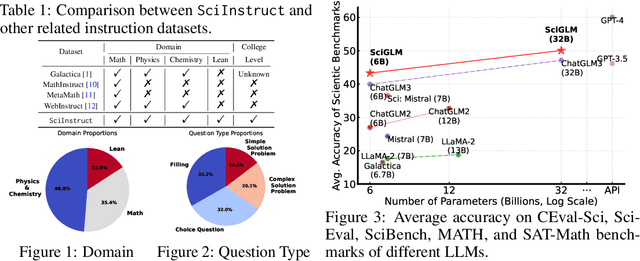

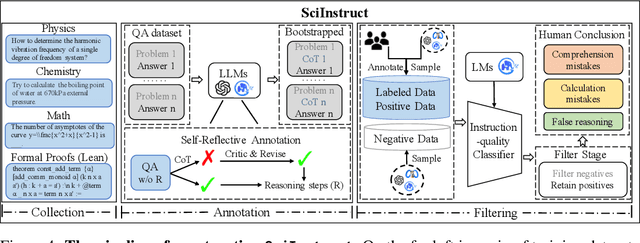
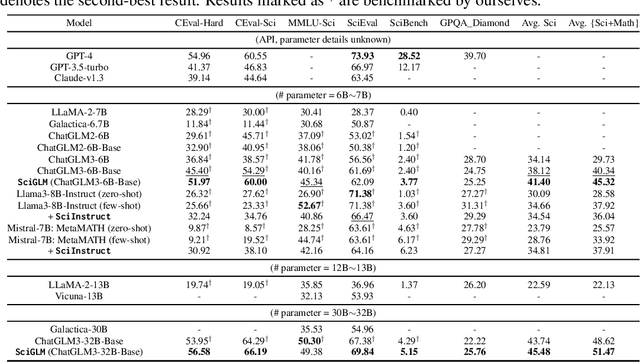
\label{sec:abstract} Large Language Models (LLMs) have shown promise in assisting scientific discovery. However, such applications are currently limited by LLMs' deficiencies in understanding intricate scientific concepts, deriving symbolic equations, and solving advanced numerical calculations. To bridge these gaps, we introduce SciGLM, a suite of scientific language models able to conduct college-level scientific reasoning. Central to our approach is a novel self-reflective instruction annotation framework to address the data scarcity challenge in the science domain. This framework leverages existing LLMs to generate step-by-step reasoning for unlabelled scientific questions, followed by a process of self-reflective critic-and-revise. Applying this framework, we curated SciInstruct, a diverse and high-quality dataset encompassing mathematics, physics, chemistry, and formal proofs. We fine-tuned the ChatGLM family of language models with SciInstruct, enhancing their capabilities in scientific and mathematical reasoning. Remarkably, SciGLM consistently improves both the base model (ChatGLM3-6B-Base) and larger-scale models (12B and 32B), without sacrificing the language understanding capabilities of the base model. This makes SciGLM a suitable foundational model to facilitate diverse scientific discovery tasks. For the benefit of the wider research community, we release SciInstruct, SciGLM, alongside a self-reflective framework and fine-tuning code at \url{https://github.com/THUDM/SciGLM}.
Hierarchical Meta-learning-based Adaptive Controller
Nov 23, 2023We study how to design learning-based adaptive controllers that enable fast and accurate online adaptation in changing environments. In these settings, learning is typically done during an initial (offline) design phase, where the vehicle is exposed to different environmental conditions and disturbances (e.g., a drone exposed to different winds) to collect training data. Our work is motivated by the observation that real-world disturbances fall into two categories: 1) those that can be directly monitored or controlled during training, which we call "manageable", and 2) those that cannot be directly measured or controlled (e.g., nominal model mismatch, air plate effects, and unpredictable wind), which we call "latent". Imprecise modeling of these effects can result in degraded control performance, particularly when latent disturbances continuously vary. This paper presents the Hierarchical Meta-learning-based Adaptive Controller (HMAC) to learn and adapt to such multi-source disturbances. Within HMAC, we develop two techniques: 1) Hierarchical Iterative Learning, which jointly trains representations to caption the various sources of disturbances, and 2) Smoothed Streaming Meta-Learning, which learns to capture the evolving structure of latent disturbances over time (in addition to standard meta-learning on the manageable disturbances). Experimental results demonstrate that HMAC exhibits more precise and rapid adaptation to multi-source disturbances than other adaptive controllers.
Joint-Space Multi-Robot Motion Planning with Learned Decentralized Heuristics
Nov 21, 2023In this paper, we present a method of multi-robot motion planning by biasing centralized, sampling-based tree search with decentralized, data-driven steer and distance heuristics. Over a range of robot and obstacle densities, we evaluate the plain Rapidly-expanding Random Trees (RRT), and variants of our method for double integrator dynamics. We show that whereas plain RRT fails in every instance to plan for $4$ robots, our method can plan for up to 16 robots, corresponding to searching through a very large 65-dimensional space, which validates the effectiveness of data-driven heuristics at combating exponential search space growth. We also find that the heuristic information is complementary; using both heuristics produces search trees with lower failure rates, nodes, and path costs when compared to using each in isolation. These results illustrate the effective decomposition of high-dimensional joint-space motion planning problems into local problems.
Learning Regions of Interest for Bayesian Optimization with Adaptive Level-Set Estimation
Jul 25, 2023We study Bayesian optimization (BO) in high-dimensional and non-stationary scenarios. Existing algorithms for such scenarios typically require extensive hyperparameter tuning, which limits their practical effectiveness. We propose a framework, called BALLET, which adaptively filters for a high-confidence region of interest (ROI) as a superlevel-set of a nonparametric probabilistic model such as a Gaussian process (GP). Our approach is easy to tune, and is able to focus on local region of the optimization space that can be tackled by existing BO methods. The key idea is to use two probabilistic models: a coarse GP to identify the ROI, and a localized GP for optimization within the ROI. We show theoretically that BALLET can efficiently shrink the search space, and can exhibit a tighter regret bound than standard BO without ROI filtering. We demonstrate empirically the effectiveness of BALLET on both synthetic and real-world optimization tasks.
Automatic Gradient Descent: Deep Learning without Hyperparameters
Apr 11, 2023The architecture of a deep neural network is defined explicitly in terms of the number of layers, the width of each layer and the general network topology. Existing optimisation frameworks neglect this information in favour of implicit architectural information (e.g. second-order methods) or architecture-agnostic distance functions (e.g. mirror descent). Meanwhile, the most popular optimiser in practice, Adam, is based on heuristics. This paper builds a new framework for deriving optimisation algorithms that explicitly leverage neural architecture. The theory extends mirror descent to non-convex composite objective functions: the idea is to transform a Bregman divergence to account for the non-linear structure of neural architecture. Working through the details for deep fully-connected networks yields automatic gradient descent: a first-order optimiser without any hyperparameters. Automatic gradient descent trains both fully-connected and convolutional networks out-of-the-box and at ImageNet scale. A PyTorch implementation is available at https://github.com/jxbz/agd and also in Appendix B. Overall, the paper supplies a rigorous theoretical foundation for a next-generation of architecture-dependent optimisers that work automatically and without hyperparameters.
Conformal Generative Modeling on Triangulated Surfaces
Mar 17, 2023We propose conformal generative modeling, a framework for generative modeling on 2D surfaces approximated by discrete triangle meshes. Our approach leverages advances in discrete conformal geometry to develop a map from a source triangle mesh to a target triangle mesh of a simple manifold such as a sphere. After accounting for errors due to the mesh discretization, we can use any generative modeling approach developed for simple manifolds as a plug-and-play subroutine. We demonstrate our framework on multiple complicated manifolds and multiple generative modeling subroutines, where we show that our approach can learn good estimates of distributions on meshes from samples, and can also learn simultaneously from multiple distinct meshes of the same underlying manifold.
Eventual Discounting Temporal Logic Counterfactual Experience Replay
Mar 03, 2023
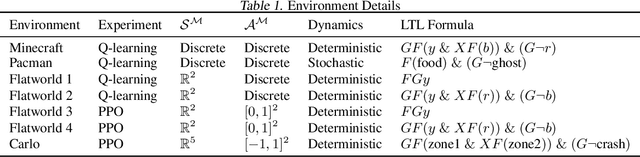
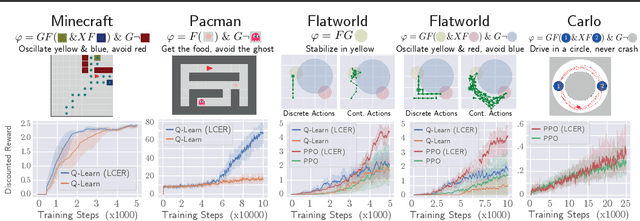

Linear temporal logic (LTL) offers a simplified way of specifying tasks for policy optimization that may otherwise be difficult to describe with scalar reward functions. However, the standard RL framework can be too myopic to find maximally LTL satisfying policies. This paper makes two contributions. First, we develop a new value-function based proxy, using a technique we call eventual discounting, under which one can find policies that satisfy the LTL specification with highest achievable probability. Second, we develop a new experience replay method for generating off-policy data from on-policy rollouts via counterfactual reasoning on different ways of satisfying the LTL specification. Our experiments, conducted in both discrete and continuous state-action spaces, confirm the effectiveness of our counterfactual experience replay approach.
BKinD-3D: Self-Supervised 3D Keypoint Discovery from Multi-View Videos
Dec 14, 2022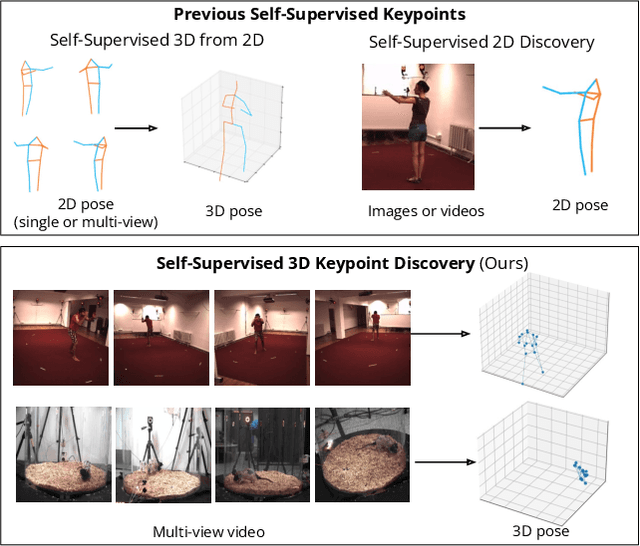
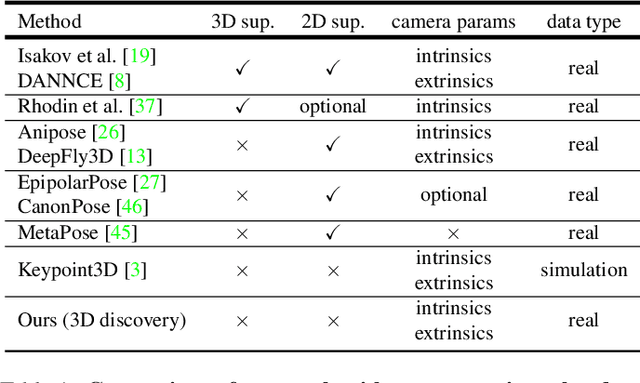
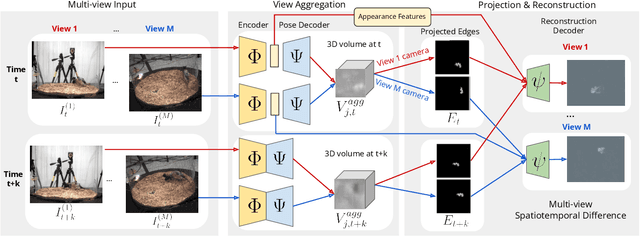
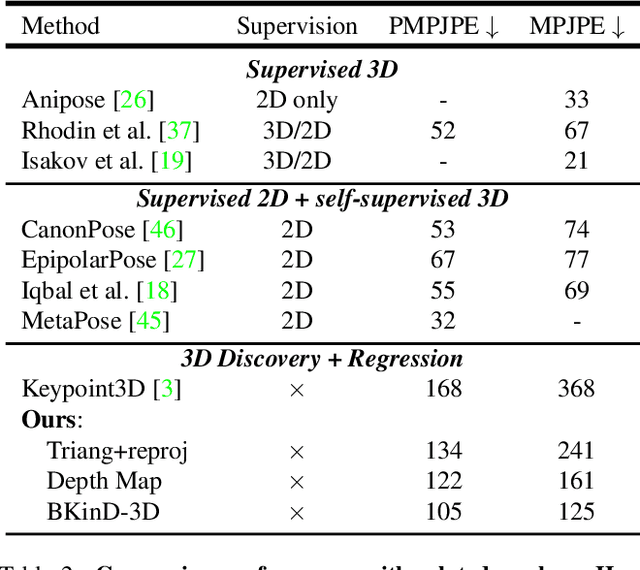
Quantifying motion in 3D is important for studying the behavior of humans and other animals, but manual pose annotations are expensive and time-consuming to obtain. Self-supervised keypoint discovery is a promising strategy for estimating 3D poses without annotations. However, current keypoint discovery approaches commonly process single 2D views and do not operate in the 3D space. We propose a new method to perform self-supervised keypoint discovery in 3D from multi-view videos of behaving agents, without any keypoint or bounding box supervision in 2D or 3D. Our method uses an encoder-decoder architecture with a 3D volumetric heatmap, trained to reconstruct spatiotemporal differences across multiple views, in addition to joint length constraints on a learned 3D skeleton of the subject. In this way, we discover keypoints without requiring manual supervision in videos of humans and rats, demonstrating the potential of 3D keypoint discovery for studying behavior.