 Add to Chrome
 Add to Firefox
 Add to Edge
SynWeather: Weather Observation Data Synthesis across Multiple Regions and Variables via a General Diffusion Transformer
Nov 15, 2025
With the advancement of meteorological instruments, abundant data has become available. Current approaches are typically focus on single-variable, single-region tasks and primarily rely on deterministic modeling. This limits unified synthesis across variables and regions, overlooks cross-variable complementarity and often leads to over-smoothed results. To address above challenges, we introduce SynWeather, the first dataset designed for Unified Multi-region and Multi-variable Weather Observation Data Synthesis. SynWeather covers four representative regions: the Continental United States, Europe, East Asia, and Tropical Cyclone regions, as well as provides high-resolution observations of key weather variables, including Composite Radar Reflectivity, Hourly Precipitation, Visible Light, and Microwave Brightness Temperature. In addition, we introduce SynWeatherDiff, a general and probabilistic weather synthesis model built upon the Diffusion Transformer framework to address the over-smoothed problem. Experiments on the SynWeather dataset demonstrate the effectiveness of our network compared with both task-specific and general models.

Phenotype discovery of traumatic brain injury segmentations from heterogeneous multi-site data
Nov 05, 2025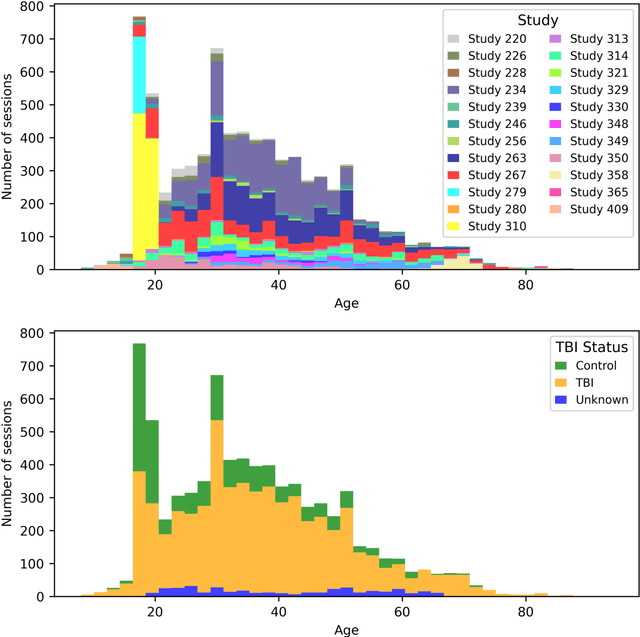
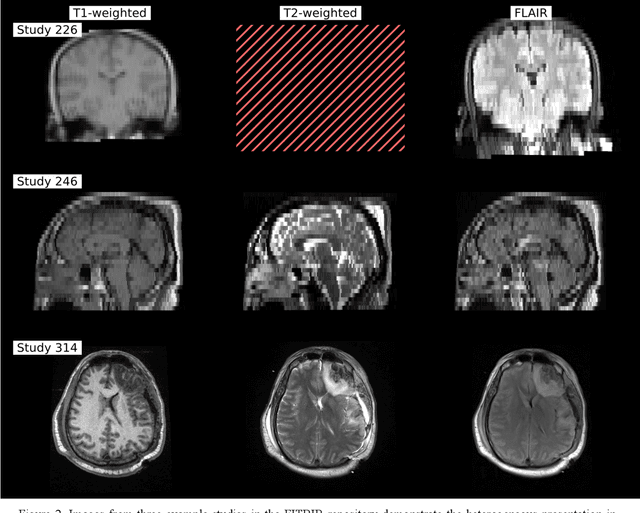
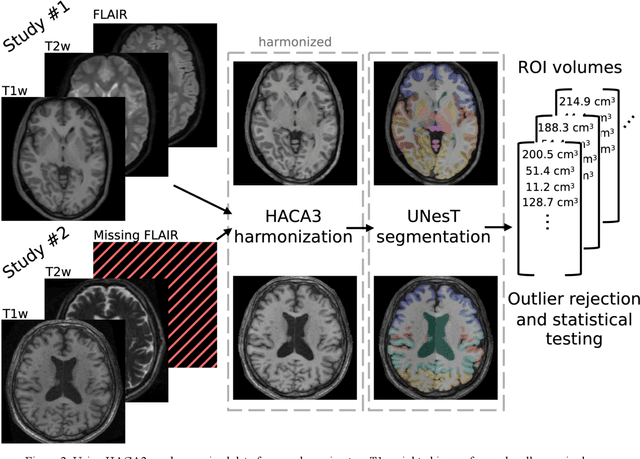
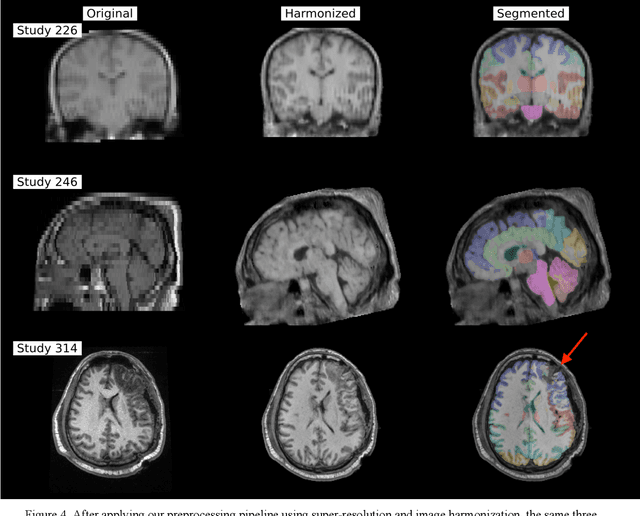
Traumatic brain injury (TBI) is intrinsically heterogeneous, and typical clinical outcome measures like the Glasgow Coma Scale complicate this diversity. The large variability in severity and patient outcomes render it difficult to link structural damage to functional deficits. The Federal Interagency Traumatic Brain Injury Research (FITBIR) repository contains large-scale multi-site magnetic resonance imaging data of varying resolutions and acquisition parameters (25 shared studies with 7,693 sessions that have age, sex and TBI status defined - 5,811 TBI and 1,882 controls). To reveal shared pathways of injury of TBI through imaging, we analyzed T1-weighted images from these sessions by first harmonizing to a local dataset and segmenting 132 regions of interest (ROIs) in the brain. After running quality assurance, calculating the volumes of the ROIs, and removing outliers, we calculated the z-scores of volumes for all participants relative to the mean and standard deviation of the controls. We regressed out sex, age, and total brain volume with a multivariate linear regression, and we found significant differences in 37 ROIs between subjects with TBI and controls (p < 0.05 with independent t-tests with false discovery rate correction). We found that differences originated in 1) the brainstem, occipital pole and structures posterior to the orbit, 2) subcortical gray matter and insular cortex, and 3) cerebral and cerebellar white matter using independent component analysis and clustering the component loadings of those with TBI.
Interact-RAG: Reason and Interact with the Corpus, Beyond Black-Box Retrieval
Oct 31, 2025Retrieval-Augmented Generation (RAG) has significantly enhanced LLMs by incorporating external information. However, prevailing agentic RAG approaches are constrained by a critical limitation: they treat the retrieval process as a black-box querying operation. This confines agents' actions to query issuing, hindering its ability to tackle complex information-seeking tasks. To address this, we introduce Interact-RAG, a new paradigm that elevates the LLM agent from a passive query issuer into an active manipulator of the retrieval process. We dismantle the black-box with a Corpus Interaction Engine, equipping the agent with a set of action primitives for fine-grained control over information retrieval. To further empower the agent on the entire RAG pipeline, we first develop a reasoning-enhanced workflow, which enables both zero-shot execution and the synthesis of interaction trajectories. We then leverage this synthetic data to train a fully autonomous end-to-end agent via Supervised Fine-Tuning (SFT), followed by refinement with Reinforcement Learning (RL). Extensive experiments across six benchmarks demonstrate that Interact-RAG significantly outperforms other advanced methods, validating the efficacy of our reasoning-interaction strategy.
Nirvana: A Specialized Generalist Model With Task-Aware Memory Mechanism
Oct 30, 2025Specialized Generalist Models (SGMs) aim to preserve broad capabilities while achieving expert-level performance in target domains. However, traditional LLM structures including Transformer, Linear Attention, and hybrid models do not employ specialized memory mechanism guided by task information. In this paper, we present Nirvana, an SGM with specialized memory mechanism, linear time complexity, and test-time task information extraction. Besides, we propose the Task-Aware Memory Trigger ($\textit{Trigger}$) that flexibly adjusts memory mechanism based on the current task's requirements. In Trigger, each incoming sample is treated as a self-supervised fine-tuning task, enabling Nirvana to adapt its task-related parameters on the fly to domain shifts. We also design the Specialized Memory Updater ($\textit{Updater}$) that dynamically memorizes the context guided by Trigger. We conduct experiments on both general language tasks and specialized medical tasks. On a variety of natural language modeling benchmarks, Nirvana achieves competitive or superior results compared to the existing LLM structures. To prove the effectiveness of Trigger on specialized tasks, we test Nirvana's performance on a challenging medical task, i.e., Magnetic Resonance Imaging (MRI). We post-train frozen Nirvana backbone with lightweight codecs on paired electromagnetic signals and MRI images. Despite the frozen Nirvana backbone, Trigger guides the model to adapt to the MRI domain with the change of task-related parameters. Nirvana achieves higher-quality MRI reconstruction compared to conventional MRI models as well as the models with traditional LLMs' backbone, and can also generate accurate preliminary clinical reports accordingly.
FlashVSR: Towards Real-Time Diffusion-Based Streaming Video Super-Resolution
Oct 14, 2025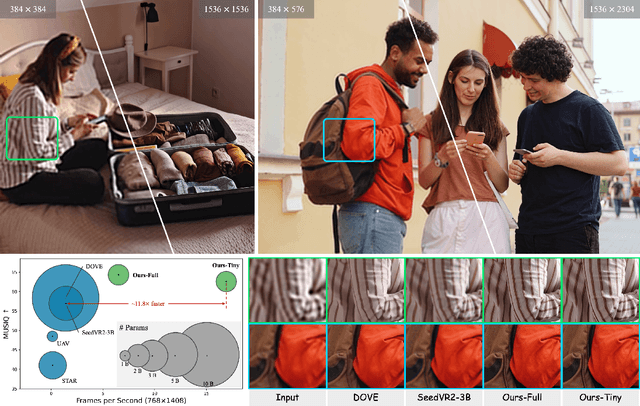
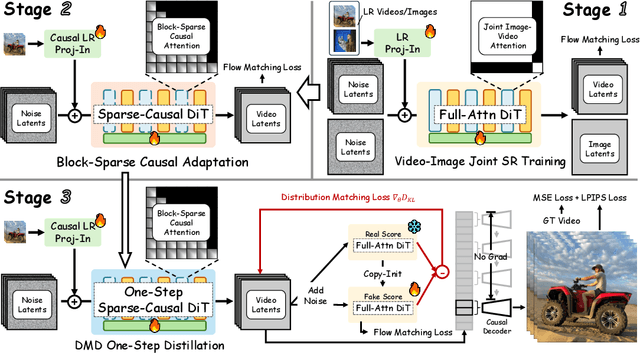
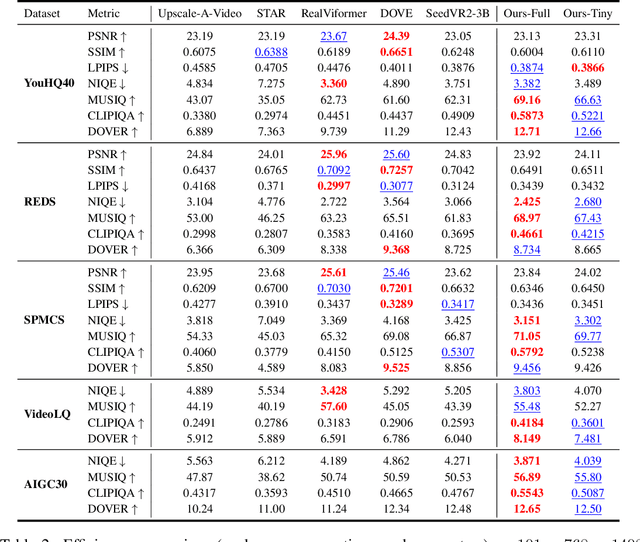
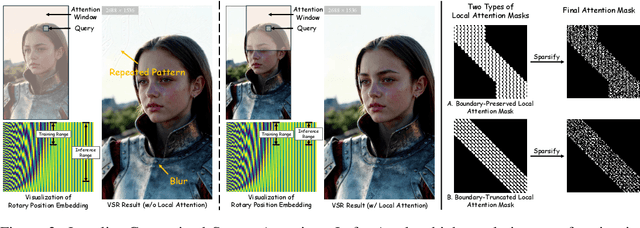
Diffusion models have recently advanced video restoration, but applying them to real-world video super-resolution (VSR) remains challenging due to high latency, prohibitive computation, and poor generalization to ultra-high resolutions. Our goal in this work is to make diffusion-based VSR practical by achieving efficiency, scalability, and real-time performance. To this end, we propose FlashVSR, the first diffusion-based one-step streaming framework towards real-time VSR. FlashVSR runs at approximately 17 FPS for 768x1408 videos on a single A100 GPU by combining three complementary innovations: (i) a train-friendly three-stage distillation pipeline that enables streaming super-resolution, (ii) locality-constrained sparse attention that cuts redundant computation while bridging the train-test resolution gap, and (iii) a tiny conditional decoder that accelerates reconstruction without sacrificing quality. To support large-scale training, we also construct VSR-120K, a new dataset with 120k videos and 180k images. Extensive experiments show that FlashVSR scales reliably to ultra-high resolutions and achieves state-of-the-art performance with up to 12x speedup over prior one-step diffusion VSR models. We will release the code, pretrained models, and dataset to foster future research in efficient diffusion-based VSR.
Factuality Matters: When Image Generation and Editing Meet Structured Visuals
Oct 06, 2025While modern visual generation models excel at creating aesthetically pleasing natural images, they struggle with producing or editing structured visuals like charts, diagrams, and mathematical figures, which demand composition planning, text rendering, and multimodal reasoning for factual fidelity. To address this, we present the first comprehensive, systematic investigation of this domain, encompassing data construction, model training, and an evaluation benchmark. First, we construct a large-scale dataset of 1.3 million high-quality structured image pairs derived from executable drawing programs and augmented with chain-of-thought reasoning annotations. Building on it, we train a unified model that integrates a VLM with FLUX.1 Kontext via a lightweight connector for enhanced multimodal understanding. A three-stage training curriculum enables progressive feature alignment, knowledge infusion, and reasoning-augmented generation, further boosted by an external reasoner at inference time. Finally, we introduce StructBench, a novel benchmark for generation and editing with over 1,700 challenging instances, and an accompanying evaluation metric, StructScore, which employs a multi-round Q\&A protocol to assess fine-grained factual accuracy. Evaluations of 15 models reveal that even leading closed-source systems remain far from satisfactory. Our model attains strong editing performance, and inference-time reasoning yields consistent gains across diverse architectures. By releasing the dataset, model, and benchmark, we aim to advance unified multimodal foundations for structured visuals.
MSRepaint: Multiple Sclerosis Repaint with Conditional Denoising Diffusion Implicit Model for Bidirectional Lesion Filling and Synthesis
Oct 02, 2025In multiple sclerosis, lesions interfere with automated magnetic resonance imaging analyses such as brain parcellation and deformable registration, while lesion segmentation models are hindered by the limited availability of annotated training data. To address both issues, we propose MSRepaint, a unified diffusion-based generative model for bidirectional lesion filling and synthesis that restores anatomical continuity for downstream analyses and augments segmentation through realistic data generation. MSRepaint conditions on spatial lesion masks for voxel-level control, incorporates contrast dropout to handle missing inputs, integrates a repainting mechanism to preserve surrounding anatomy during lesion filling and synthesis, and employs a multi-view DDIM inversion and fusion pipeline for 3D consistency with fast inference. Extensive evaluations demonstrate the effectiveness of MSRepaint across multiple tasks. For lesion filling, we evaluate both the accuracy within the filled regions and the impact on downstream tasks including brain parcellation and deformable registration. MSRepaint outperforms the traditional lesion filling methods FSL and NiftySeg, and achieves accuracy on par with FastSurfer-LIT, a recent diffusion model-based inpainting method, while offering over 20 times faster inference. For lesion synthesis, state-of-the-art MS lesion segmentation models trained on MSRepaint-synthesized data outperform those trained on CarveMix-synthesized data or real ISBI challenge training data across multiple benchmarks, including the MICCAI 2016 and UMCL datasets. Additionally, we demonstrate that MSRepaint's unified bidirectional filling and synthesis capability, with full spatial control over lesion appearance, enables high-fidelity simulation of lesion evolution in longitudinal MS progression.
ScaleDoc: Scaling LLM-based Predicates over Large Document Collections
Sep 16, 2025Predicates are foundational components in data analysis systems. However, modern workloads increasingly involve unstructured documents, which demands semantic understanding, beyond traditional value-based predicates. Given enormous documents and ad-hoc queries, while Large Language Models (LLMs) demonstrate powerful zero-shot capabilities, their high inference cost leads to unacceptable overhead. Therefore, we introduce \textsc{ScaleDoc}, a novel system that addresses this by decoupling predicate execution into an offline representation phase and an optimized online filtering phase. In the offline phase, \textsc{ScaleDoc} leverages a LLM to generate semantic representations for each document. Online, for each query, it trains a lightweight proxy model on these representations to filter the majority of documents, forwarding only the ambiguous cases to the LLM for final decision. Furthermore, \textsc{ScaleDoc} proposes two core innovations to achieve significant efficiency: (1) a contrastive-learning-based framework that trains the proxy model to generate reliable predicating decision scores; (2) an adaptive cascade mechanism that determines the effective filtering policy while meeting specific accuracy targets. Our evaluations across three datasets demonstrate that \textsc{ScaleDoc} achieves over a 2$\times$ end-to-end speedup and reduces expensive LLM invocations by up to 85\%, making large-scale semantic analysis practical and efficient.
Jupiter: Enhancing LLM Data Analysis Capabilities via Notebook and Inference-Time Value-Guided Search
Sep 11, 2025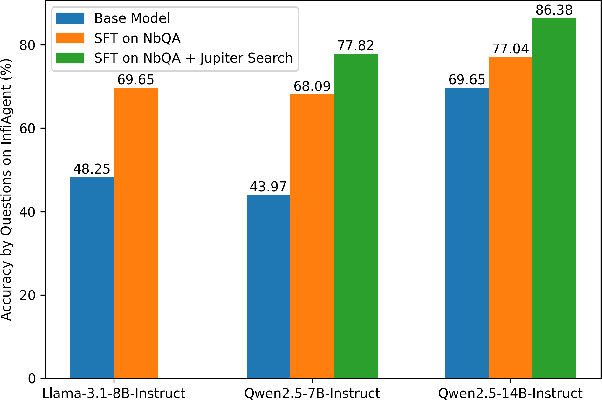
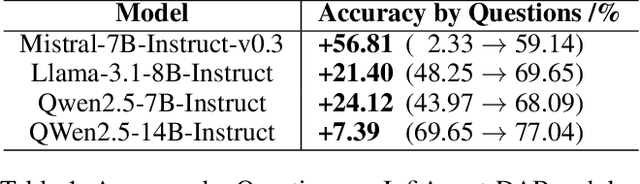
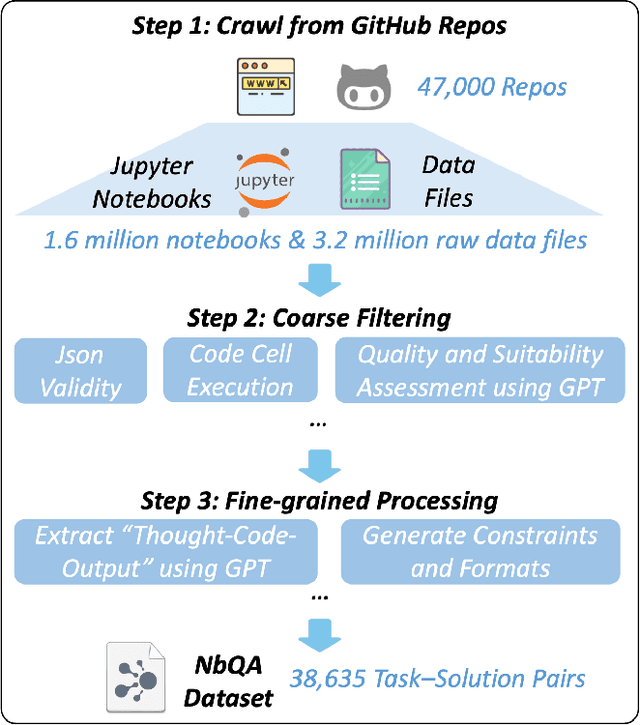
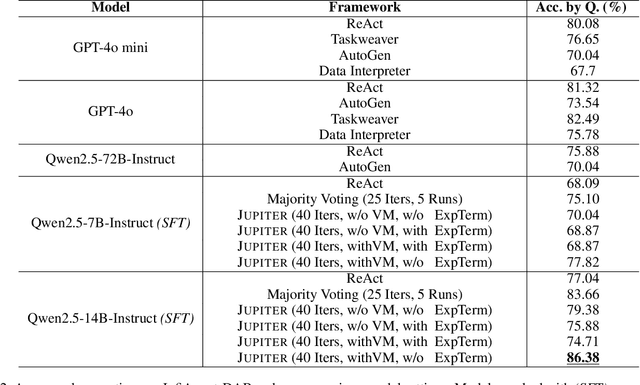
Large language models (LLMs) have shown great promise in automating data science workflows, but existing models still struggle with multi-step reasoning and tool use, which limits their effectiveness on complex data analysis tasks. To address this, we propose a scalable pipeline that extracts high-quality, tool-based data analysis tasks and their executable multi-step solutions from real-world Jupyter notebooks and associated data files. Using this pipeline, we introduce NbQA, a large-scale dataset of standardized task-solution pairs that reflect authentic tool-use patterns in practical data science scenarios. To further enhance multi-step reasoning, we present Jupiter, a framework that formulates data analysis as a search problem and applies Monte Carlo Tree Search (MCTS) to generate diverse solution trajectories for value model learning. During inference, Jupiter combines the value model and node visit counts to efficiently collect executable multi-step plans with minimal search steps. Experimental results show that Qwen2.5-7B and 14B-Instruct models on NbQA solve 77.82% and 86.38% of tasks on InfiAgent-DABench, respectively-matching or surpassing GPT-4o and advanced agent frameworks. Further evaluations demonstrate improved generalization and stronger tool-use reasoning across diverse multi-step reasoning tasks.
A Survey of Reinforcement Learning for Large Reasoning Models
Sep 10, 2025In this paper, we survey recent advances in Reinforcement Learning (RL) for reasoning with Large Language Models (LLMs). RL has achieved remarkable success in advancing the frontier of LLM capabilities, particularly in addressing complex logical tasks such as mathematics and coding. As a result, RL has emerged as a foundational methodology for transforming LLMs into LRMs. With the rapid progress of the field, further scaling of RL for LRMs now faces foundational challenges not only in computational resources but also in algorithm design, training data, and infrastructure. To this end, it is timely to revisit the development of this domain, reassess its trajectory, and explore strategies to enhance the scalability of RL toward Artificial SuperIntelligence (ASI). In particular, we examine research applying RL to LLMs and LRMs for reasoning abilities, especially since the release of DeepSeek-R1, including foundational components, core problems, training resources, and downstream applications, to identify future opportunities and directions for this rapidly evolving area. We hope this review will promote future research on RL for broader reasoning models. Github: https://github.com/TsinghuaC3I/Awesome-RL-for-LRMs