 Add to Chrome
 Add to Firefox
 Add to Edge
JTPRO: A Joint Tool-Prompt Reflective Optimization Framework for Language Agents
Apr 20, 2026
Large language model (LLM) agents augmented with external tools often struggle as number of tools grow large and become domain-specific. In such settings, ambiguous tool descriptions and under-specified agent instructions frequently lead to tool mis-selection and incorrect slot/value instantiation. We hypothesize that this is due to two root causes: generic, one-size-fits-all prompts that ignore tool-specific nuances, and underspecified tool schemas that lack clear guidance on when and how to use each tool and how to format its parameters. We introduce Joint Tool-Prompt Reflective Optimization (JTPRO), a framework for improving tool-calling reliability in trace-supervised settings by iteratively using rollout-driven reflection to co-optimize global instructions and per-tool schema/argument descriptions for accurate tool selection and argument instantiation in large tool inventories. JTPRO is designed to preserve only tool-local cues needed for correct disambiguation and slot filling. We evaluate JTPRO across multi-tool benchmarks, which account for different number of tools using three metrics: Tool Selection Accuracy (TSA), Slot Filling Accuracy(SFA), and Overall Success Rate(OSR) (correct tool + correct slots + correct values). JTPRO consistently outperforms strong baselines, including CoT-style agents, and reflective prompt optimizers such as GEPA by 5%-20% (relative) on OSR. Ablations show that joint optimization of instructions and tool schemas is more effective and robust than optimizing either component in isolation.

MT-OSC: Path for LLMs that Get Lost in Multi-Turn Conversation
Apr 09, 2026Large language models (LLMs) suffer significant performance degradation when user instructions and context are distributed over multiple conversational turns, yet multi-turn (MT) interactions dominate chat interfaces. The routine approach of appending full chat history to prompts rapidly exhausts context windows, leading to increased latency, higher computational costs, and diminishing returns as conversations extend. We introduce MT-OSC, a One-off Sequential Condensation framework that efficiently and automatically condenses chat history in the background without disrupting the user experience. MT-OSC employs a Condenser Agent that uses a few-shot inference-based Condenser and a lightweight Decider to selectively retain essential information, reducing token counts by up to 72% in 10-turn dialogues. Evaluated across 13 state-of-the-art LLMs and diverse multi-turn benchmarks, MT-OSC consistently narrows the multi-turn performance gap - yielding improved or preserved accuracy across datasets while remaining robust to distractors and irrelevant turns. Our results establish MT-OSC as a scalable solution for multi-turn chats, enabling richer context within constrained input spaces, reducing latency and operational cost, while balancing performance.
DiffuMask: Diffusion Language Model for Token-level Prompt Pruning
Apr 08, 2026In-Context Learning and Chain-of-Thought prompting improve reasoning in large language models (LLMs). These typically come at the cost of longer, more expensive prompts that may contain redundant information. Prompt compression based on pruning offers a practical solution, yet existing methods rely on sequential token removal which is computationally intensive. We present DiffuMask, a diffusion-based framework integrating hierarchical shot-level and token-level pruning signals, that enables rapid and parallel prompt pruning via iterative mask prediction. DiffuMask substantially accelerates the compression process via masking multiple tokens in each denoising step. It offers tunable control over retained content, preserving essential reasoning context and achieving up to 80\% prompt length reduction. Meanwhile, it maintains or improves accuracy across in-domain, out-of-domain, and cross-model settings. Our results show that DiffuMask provides a generalizable and controllable framework for prompt compression, facilitating faster and more reliable in-context reasoning in LLMs.
Towards Long Context Hallucination Detection
Apr 28, 2025Large Language Models (LLMs) have demonstrated remarkable performance across various tasks. However, they are prone to contextual hallucination, generating information that is either unsubstantiated or contradictory to the given context. Although many studies have investigated contextual hallucinations in LLMs, addressing them in long-context inputs remains an open problem. In this work, we take an initial step toward solving this problem by constructing a dataset specifically designed for long-context hallucination detection. Furthermore, we propose a novel architecture that enables pre-trained encoder models, such as BERT, to process long contexts and effectively detect contextual hallucinations through a decomposition and aggregation mechanism. Our experimental results show that the proposed architecture significantly outperforms previous models of similar size as well as LLM-based models across various metrics, while providing substantially faster inference.
MemInsight: Autonomous Memory Augmentation for LLM Agents
Mar 27, 2025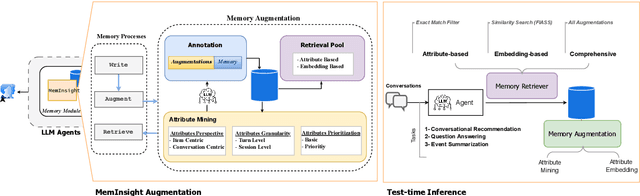
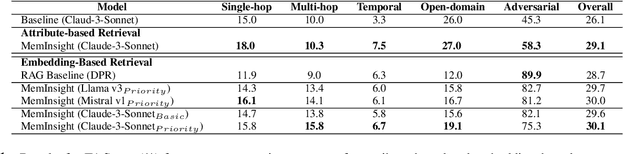


Large language model (LLM) agents have evolved to intelligently process information, make decisions, and interact with users or tools. A key capability is the integration of long-term memory capabilities, enabling these agents to draw upon historical interactions and knowledge. However, the growing memory size and need for semantic structuring pose significant challenges. In this work, we propose an autonomous memory augmentation approach, MemInsight, to enhance semantic data representation and retrieval mechanisms. By leveraging autonomous augmentation to historical interactions, LLM agents are shown to deliver more accurate and contextualized responses. We empirically validate the efficacy of our proposed approach in three task scenarios; conversational recommendation, question answering and event summarization. On the LLM-REDIAL dataset, MemInsight boosts persuasiveness of recommendations by up to 14%. Moreover, it outperforms a RAG baseline by 34% in recall for LoCoMo retrieval. Our empirical results show the potential of MemInsight to enhance the contextual performance of LLM agents across multiple tasks.
A Study on Leveraging Search and Self-Feedback for Agent Reasoning
Feb 17, 2025


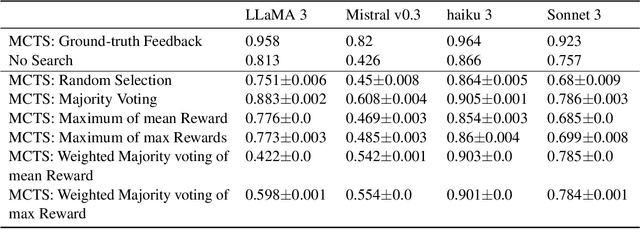
Recent works have demonstrated that incorporating search during inference can significantly improve reasoning capabilities of language agents. Some approaches may make use of the ground truth or rely on model's own generated feedback. The search algorithm uses this feedback to then produce values that will update its criterion for exploring and exploiting various reasoning paths. In this study, we investigate how search and model's self-feedback can be leveraged for reasoning tasks. First, we explore differences in ground-truth feedback and self-feedback during search for math reasoning. Second, we observe limitations in applying search techniques to more complex tasks like tool-calling and design domain-specific approaches to address these gaps. Our experiments reveal challenges related to generalization when solely relying on self-feedback during search. For search to work effectively, either access to the ground-truth is needed or feedback mechanisms need to be carefully designed for the specific task.
Self-supervised Analogical Learning using Language Models
Feb 03, 2025


Large language models have been shown to suffer from reasoning inconsistency issues. That is, they fail more in situations unfamiliar to the training data, even though exact or very similar reasoning paths exist in more common cases that they can successfully solve. Such observations motivate us to propose methods that encourage models to understand the high-level and abstract reasoning processes during training instead of only the final answer. This way, models can transfer the exact solution to similar cases, regardless of their relevance to the pre-training data distribution. In this work, we propose SAL, a self-supervised analogical learning framework. SAL mimics the human analogy process and trains models to explicitly transfer high-quality symbolic solutions from cases that they know how to solve to other rare cases in which they tend to fail more. We show that the resulting models after SAL learning outperform base language models on a wide range of reasoning benchmarks, such as StrategyQA, GSM8K, and HotpotQA, by 2% to 20%. At the same time, we show that our model is more generalizable and controllable through analytical studies.
TReMu: Towards Neuro-Symbolic Temporal Reasoning for LLM-Agents with Memory in Multi-Session Dialogues
Feb 03, 2025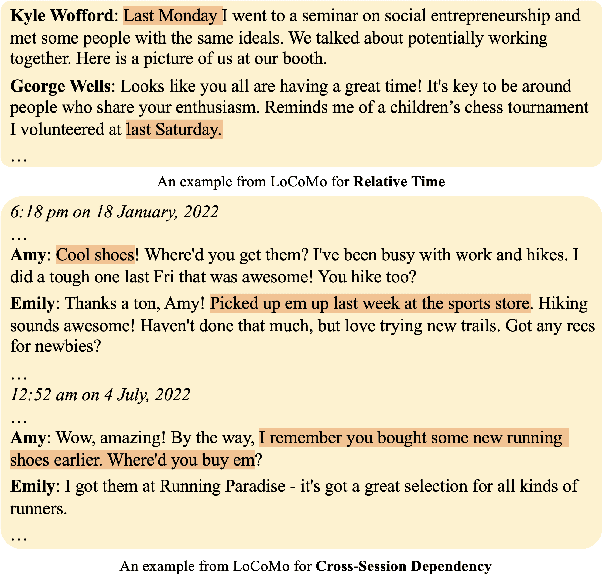

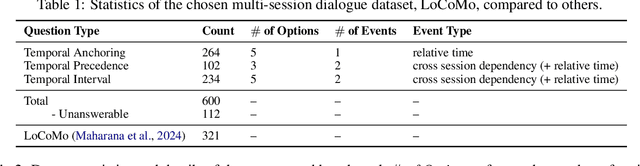
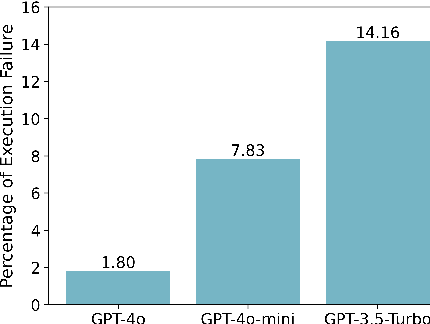
Temporal reasoning in multi-session dialogues presents a significant challenge which has been under-studied in previous temporal reasoning benchmarks. To bridge this gap, we propose a new evaluation task for temporal reasoning in multi-session dialogues and introduce an approach to construct a new benchmark by augmenting dialogues from LoCoMo and creating multi-choice QAs. Furthermore, we present TReMu, a new framework aimed at enhancing the temporal reasoning capabilities of LLM-agents in this context. Specifically, the framework employs \textit{time-aware memorization} through timeline summarization, generating retrievable memory by summarizing events in each dialogue session with their inferred dates. Additionally, we integrate \textit{neuro-symbolic temporal reasoning}, where LLMs generate Python code to perform temporal calculations and select answers. Experimental evaluations on popular LLMs demonstrate that our benchmark is challenging, and the proposed framework significantly improves temporal reasoning performance compared to baseline methods, raising from 29.83 on GPT-4o via standard prompting to 77.67 via our approach and highlighting its effectiveness in addressing temporal reasoning in multi-session dialogues.
DiverseAgentEntropy: Quantifying Black-Box LLM Uncertainty through Diverse Perspectives and Multi-Agent Interaction
Dec 12, 2024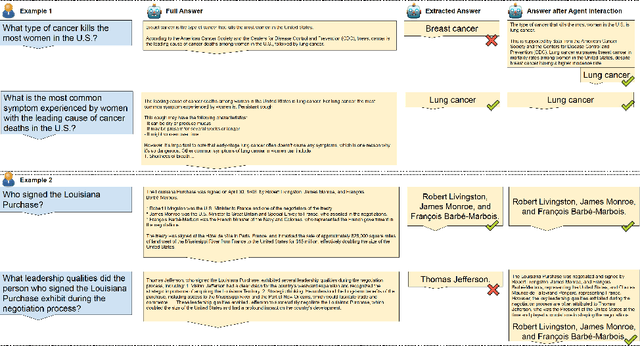
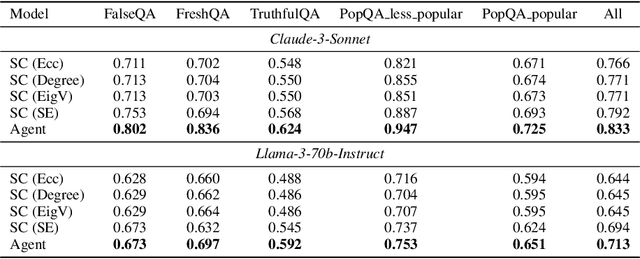
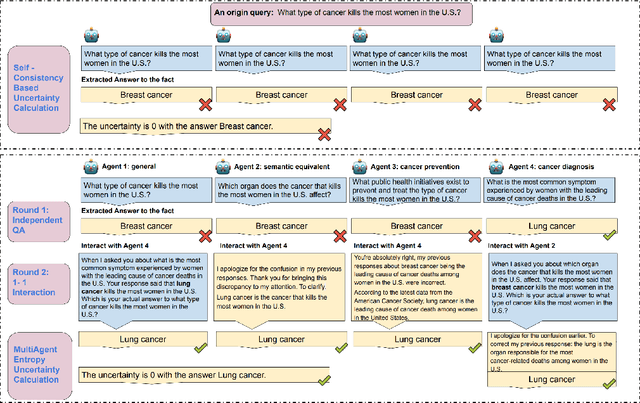

Quantifying the uncertainty in the factual parametric knowledge of Large Language Models (LLMs), especially in a black-box setting, poses a significant challenge. Existing methods, which gauge a model's uncertainty through evaluating self-consistency in responses to the original query, do not always capture true uncertainty. Models might respond consistently to the origin query with a wrong answer, yet respond correctly to varied questions from different perspectives about the same query, and vice versa. In this paper, we propose a novel method, DiverseAgentEntropy, for evaluating a model's uncertainty using multi-agent interaction under the assumption that if a model is certain, it should consistently recall the answer to the original query across a diverse collection of questions about the same original query. We further implement an abstention policy to withhold responses when uncertainty is high. Our method offers a more accurate prediction of the model's reliability and further detects hallucinations, outperforming other self-consistency-based methods. Additionally, it demonstrates that existing models often fail to consistently retrieve the correct answer to the same query under diverse varied questions even when knowing the correct answer.
Inference time LLM alignment in single and multidomain preference spectrum
Oct 24, 2024


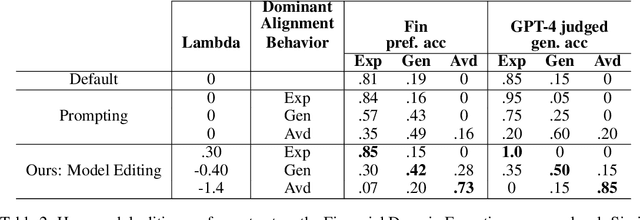
Aligning Large Language Models (LLM) to address subjectivity and nuanced preference levels requires adequate flexibility and control, which can be a resource-intensive and time-consuming procedure. Existing training-time alignment methods require full re-training when a change is needed and inference-time ones typically require access to the reward model at each inference step. To address these limitations, we introduce inference-time model alignment method that learns encoded representations of preference dimensions, called \textit{Alignment Vectors} (AV). These representations are computed by subtraction of the base model from the aligned model as in model editing enabling dynamically adjusting the model behavior during inference through simple linear operations. Even though the preference dimensions can span various granularity levels, here we focus on three gradual response levels across three specialized domains: medical, legal, and financial, exemplifying its practical potential. This new alignment paradigm introduces adjustable preference knobs during inference, allowing users to tailor their LLM outputs while reducing the inference cost by half compared to the prompt engineering approach. Additionally, we find that AVs are transferable across different fine-tuning stages of the same model, demonstrating their flexibility. AVs also facilitate multidomain, diverse preference alignment, making the process 12x faster than the retraining approach.