 Add to Chrome
 Add to Firefox
 Add to Edge
TongGu: Mastering Classical Chinese Understanding with Knowledge-Grounded Large Language Models
Jul 04, 2024
Classical Chinese is a gateway to the rich heritage and wisdom of ancient China, yet its complexities pose formidable comprehension barriers for most modern people without specialized knowledge. While Large Language Models (LLMs) have shown remarkable capabilities in Natural Language Processing (NLP), they struggle with Classical Chinese Understanding (CCU), especially in data-demanding and knowledge-intensive tasks. In response to this dilemma, we propose \textbf{TongGu} (mean understanding ancient and modern), the first CCU-specific LLM, underpinned by three core contributions. First, we construct a two-stage instruction-tuning dataset ACCN-INS derived from rich classical Chinese corpora, aiming to unlock the full CCU potential of LLMs. Second, we propose Redundancy-Aware Tuning (RAT) to prevent catastrophic forgetting, enabling TongGu to acquire new capabilities while preserving its foundational knowledge. Third, we present a CCU Retrieval-Augmented Generation (CCU-RAG) technique to reduce hallucinations based on knowledge-grounding. Extensive experiments across 24 diverse CCU tasks validate TongGu's superior ability, underscoring the effectiveness of RAT and CCU-RAG. The model and dataset will be public available.

UFRec: Integrating Uniformity and Frequency to Enhance Sequential Recommendations
Jul 03, 2024


Effective representation learning in sequential recommendation systems is pivotal for precisely capturing user interaction patterns and enhancing recommendation accuracy. Nonetheless, current methodologies largely focus on item-to-item transitions, frequently overlooking the time intervals between interactions, which are integral to understanding behavior pattern shifts. Moreover, critical interaction attributes like item frequency are often neglected. Our research indicates that sequences with more consistent time intervals and items with higher interaction frequency result in superior predictive performance. In contrast, sequences with non-uniform intervals contribute to user interest drift, and infrequently interacted items are challenging to model due to sparse data, posing unique challenges that existing methods fail to adequately address. In this study, we introduce UFRec, an innovative bidirectional enhancement method for sequential recommendations. UFRec harnesses sequence uniformity and item frequency to boost performance, particularly improving the representation of non-uniform sequences and less-frequent items. These two components synergistically enhance each other, driving holistic performance optimization in intricate sequential recommendation scenarios. Additionally, we introduce a multidimensional time module to further augment adaptability. To the best of our knowledge, UFRec is the pioneering method to exploit the properties of uniformity and frequency for feature augmentation. Through comparisons with eleven state-of-the-art models across four datasets, we demonstrate that UFRec significantly surpasses current leading models.
ESALE: Enhancing Code-Summary Alignment Learning for Source Code Summarization
Jul 01, 2024
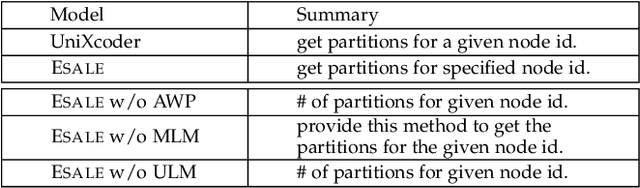
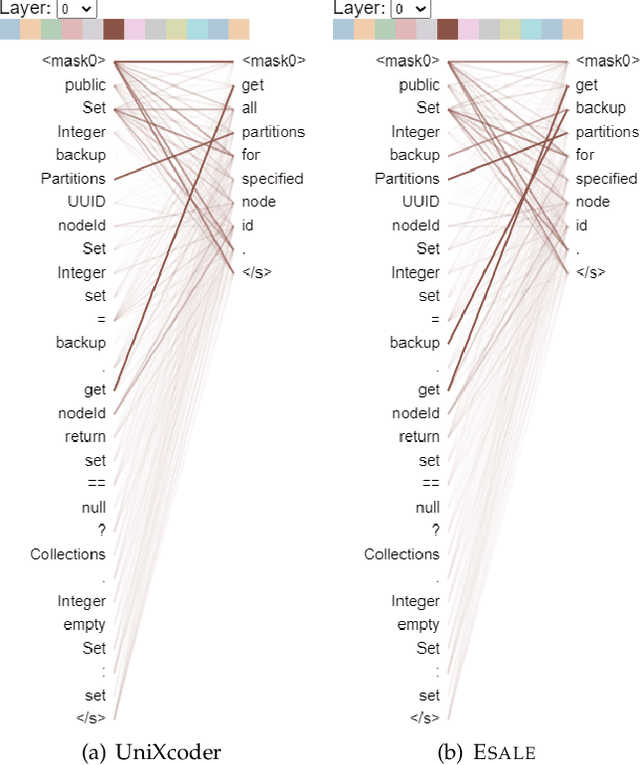
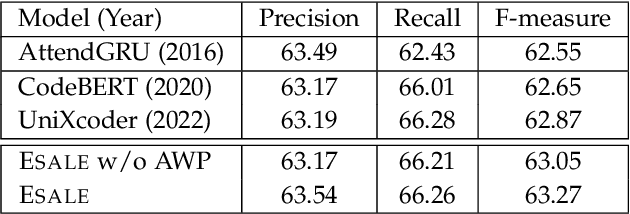
(Source) code summarization aims to automatically generate succinct natural language summaries for given code snippets. Such summaries play a significant role in promoting developers to understand and maintain code. Inspired by neural machine translation, deep learning-based code summarization techniques widely adopt an encoder-decoder framework, where the encoder transforms given code snippets into context vectors, and the decoder decodes context vectors into summaries. Recently, large-scale pre-trained models for source code are equipped with encoders capable of producing general context vectors and have achieved substantial improvements on code summarization. However, although they are usually trained mainly on code-focused tasks and can capture general code features, they still fall short in capturing specific features that need to be summarized. This paper proposes a novel approach to improve code summarization based on summary-focused tasks. Specifically, we exploit a multi-task learning paradigm to train the encoder on three summary-focused tasks to enhance its ability to learn code-summary alignment, including unidirectional language modeling (ULM), masked language modeling (MLM), and action word prediction (AWP). Unlike pre-trained models that mainly predict masked tokens in code snippets, we design ULM and MLM to predict masked words in summaries. Intuitively, predicting words based on given code snippets would help learn the code-summary alignment. Additionally, we introduce the domain-specific task AWP to enhance the ability of the encoder to learn the alignment between action words and code snippets. The extensive experiments on four datasets demonstrate that our approach, called ESALE significantly outperforms baselines in all three widely used metrics, including BLEU, METEOR, and ROUGE-L.
Single Parent Family: A Spectrum of Family Members from a Single Pre-Trained Foundation Model
Jun 28, 2024This paper introduces a novel method of Progressive Low Rank Decomposition (PLRD) tailored for the compression of large language models. Our approach leverages a pre-trained model, which is then incrementally decompressed to smaller sizes using progressively lower ranks. This method allows for significant reductions in computational overhead and energy consumption, as subsequent models are derived from the original without the need for retraining from scratch. We detail the implementation of PLRD, which strategically decreases the tensor ranks, thus optimizing the trade-off between model performance and resource usage. The efficacy of PLRD is demonstrated through extensive experiments showing that models trained with PLRD method on only 1B tokens maintain comparable performance with traditionally trained models while using 0.1% of the tokens. The versatility of PLRD is highlighted by its ability to generate multiple model sizes from a single foundational model, adapting fluidly to varying computational and memory budgets. Our findings suggest that PLRD could set a new standard for the efficient scaling of LLMs, making advanced AI more feasible on diverse platforms.
UniRec: A Dual Enhancement of Uniformity and Frequency in Sequential Recommendations
Jun 26, 2024Representation learning in sequential recommendation is critical for accurately modeling user interaction patterns and improving recommendation precision. However, existing approaches predominantly emphasize item-to-item transitions, often neglecting the time intervals between interactions, which are closely related to behavior pattern changes. Additionally, broader interaction attributes, such as item frequency, are frequently overlooked. We found that both sequences with more uniform time intervals and items with higher frequency yield better prediction performance. Conversely, non-uniform sequences exacerbate user interest drift and less-frequent items are difficult to model due to sparse sampling, presenting unique challenges inadequately addressed by current methods. In this paper, we propose UniRec, a novel bidirectional enhancement sequential recommendation method. UniRec leverages sequence uniformity and item frequency to enhance performance, particularly improving the representation of non-uniform sequences and less-frequent items. These two branches mutually reinforce each other, driving comprehensive performance optimization in complex sequential recommendation scenarios. Additionally, we present a multidimensional time module to further enhance adaptability. To the best of our knowledge, UniRec is the first method to utilize the characteristics of uniformity and frequency for feature augmentation. Comparing with eleven advanced models across four datasets, we demonstrate that UniRec outperforms SOTA models significantly. The code is available at https://github.com/Linxi000/UniRec.
Human-centered In-building Embodied Delivery Benchmark
Jun 25, 2024Recently, the concept of embodied intelligence has been widely accepted and popularized, leading people to naturally consider the potential for commercialization in this field. In this work, we propose a specific commercial scenario simulation, human-centered in-building embodied delivery. Furthermore, for this scenario, we have developed a brand-new virtual environment system from scratch, constructing a multi-level connected building space modeled after a polar research station. This environment also includes autonomous human characters and robots with grasping and mobility capabilities, as well as a large number of interactive items. Based on this environment, we have built a delivery dataset containing 13k language instructions to guide robots in providing services. We simulate human behavior through human characters and sample their various needs in daily life. Finally, we proposed a method centered around a large multimodal model to serve as the baseline system for this dataset. Compared to past embodied data work, our work focuses on a virtual environment centered around human-robot interaction for commercial scenarios. We believe this will bring new perspectives and exploration angles to the embodied community.
MLLM as Video Narrator: Mitigating Modality Imbalance in Video Moment Retrieval
Jun 25, 2024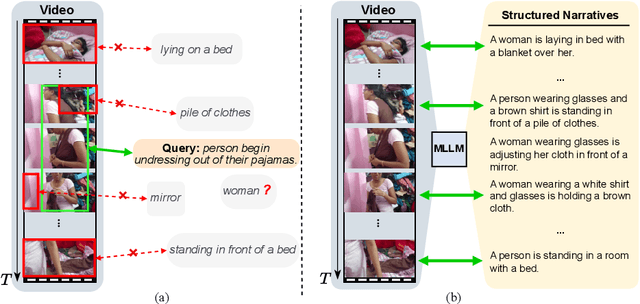

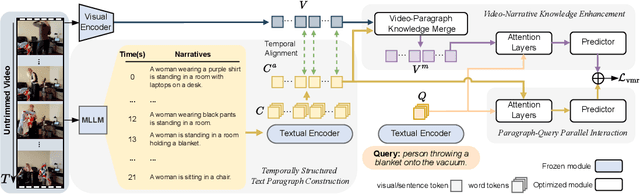
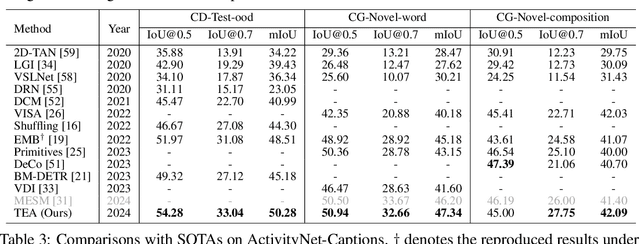
Video Moment Retrieval (VMR) aims to localize a specific temporal segment within an untrimmed long video given a natural language query. Existing methods often suffer from inadequate training annotations, i.e., the sentence typically matches with a fraction of the prominent video content in the foreground with limited wording diversity. This intrinsic modality imbalance leaves a considerable portion of visual information remaining unaligned with text. It confines the cross-modal alignment knowledge within the scope of a limited text corpus, thereby leading to sub-optimal visual-textual modeling and poor generalizability. By leveraging the visual-textual understanding capability of multi-modal large language models (MLLM), in this work, we take an MLLM as a video narrator to generate plausible textual descriptions of the video, thereby mitigating the modality imbalance and boosting the temporal localization. To effectively maintain temporal sensibility for localization, we design to get text narratives for each certain video timestamp and construct a structured text paragraph with time information, which is temporally aligned with the visual content. Then we perform cross-modal feature merging between the temporal-aware narratives and corresponding video temporal features to produce semantic-enhanced video representation sequences for query localization. Subsequently, we introduce a uni-modal narrative-query matching mechanism, which encourages the model to extract complementary information from contextual cohesive descriptions for improved retrieval. Extensive experiments on two benchmarks show the effectiveness and generalizability of our proposed method.
Addressing Polarization and Unfairness in Performative Prediction
Jun 24, 2024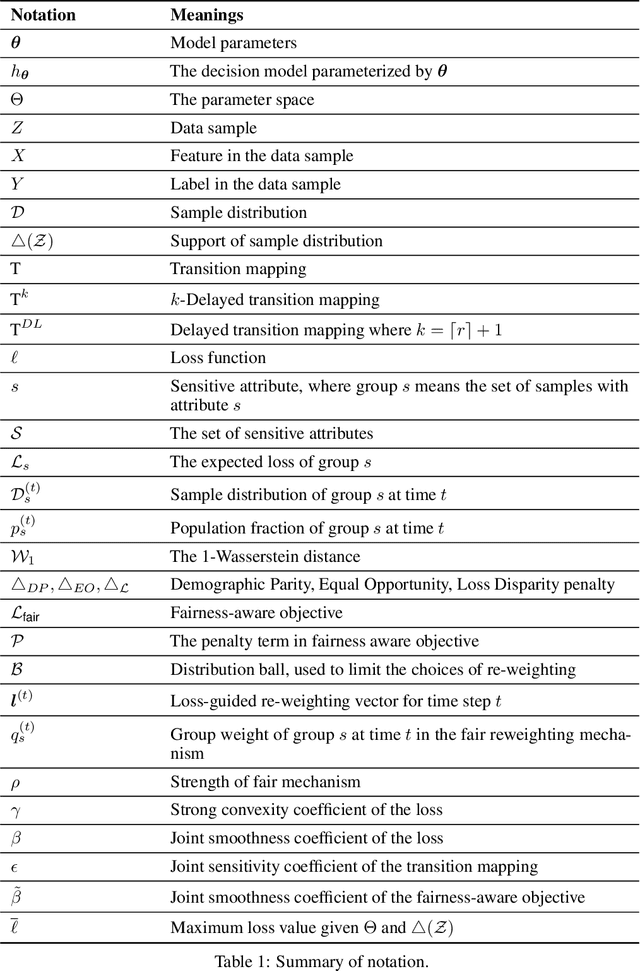
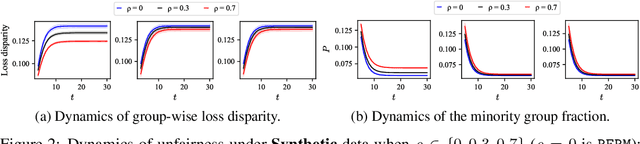

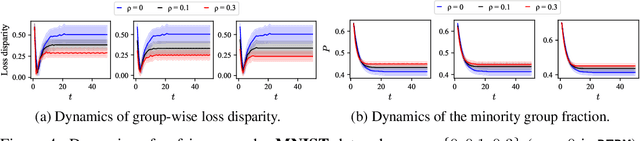
When machine learning (ML) models are used in applications that involve humans (e.g., online recommendation, school admission, hiring, lending), the model itself may trigger changes in the distribution of targeted data it aims to predict. Performative prediction (PP) is a framework that explicitly considers such model-dependent distribution shifts when learning ML models. While significant efforts have been devoted to finding performative stable (PS) solutions in PP for system robustness, their societal implications are less explored and it is unclear whether PS solutions are aligned with social norms such as fairness. In this paper, we set out to examine the fairness property of PS solutions in performative prediction. We first show that PS solutions can incur severe polarization effects and group-wise loss disparity. Although existing fairness mechanisms commonly used in literature can help mitigate unfairness, they may fail and disrupt the stability under model-dependent distribution shifts. We thus propose novel fairness intervention mechanisms that can simultaneously achieve both stability and fairness in PP settings. Both theoretical analysis and experiments are provided to validate the proposed method.
Relaxing Continuous Constraints of Equivariant Graph Neural Networks for Physical Dynamics Learning
Jun 24, 2024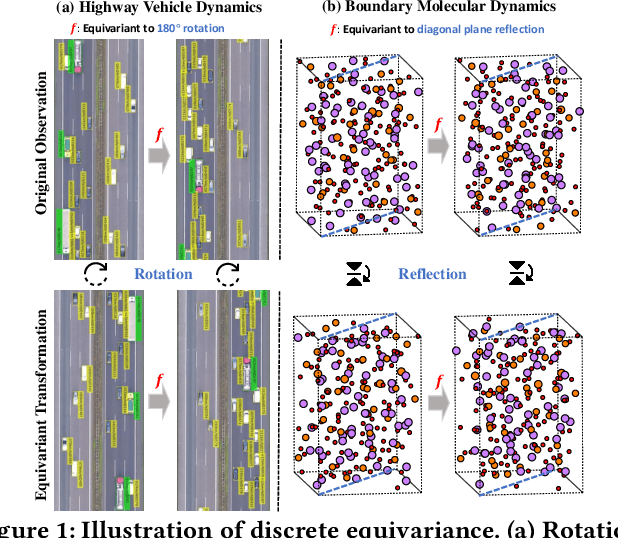
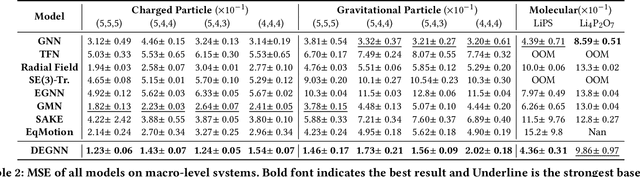

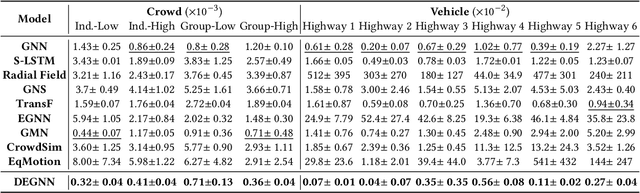
Incorporating Euclidean symmetries (e.g. rotation equivariance) as inductive biases into graph neural networks has improved their generalization ability and data efficiency in unbounded physical dynamics modeling. However, in various scientific and engineering applications, the symmetries of dynamics are frequently discrete due to the boundary conditions. Thus, existing GNNs either overlook necessary symmetry, resulting in suboptimal representation ability, or impose excessive equivariance, which fails to generalize to unobserved symmetric dynamics. In this work, we propose a general Discrete Equivariant Graph Neural Network (DEGNN) that guarantees equivariance to a given discrete point group. Specifically, we show that such discrete equivariant message passing could be constructed by transforming geometric features into permutation-invariant embeddings. Through relaxing continuous equivariant constraints, DEGNN can employ more geometric feature combinations to approximate unobserved physical object interaction functions. Two implementation approaches of DEGNN are proposed based on ranking or pooling permutation-invariant functions. We apply DEGNN to various physical dynamics, ranging from particle, molecular, crowd to vehicle dynamics. In twenty scenarios, DEGNN significantly outperforms existing state-of-the-art approaches. Moreover, we show that DEGNN is data efficient, learning with less data, and can generalize across scenarios such as unobserved orientation.
Speeding Up Image Classifiers with Little Companions
Jun 24, 2024Scaling up neural networks has been a key recipe to the success of large language and vision models. However, in practice, up-scaled models can be disproportionately costly in terms of computations, providing only marginal improvements in performance; for example, EfficientViT-L3-384 achieves <2% improvement on ImageNet-1K accuracy over the base L1-224 model, while requiring $14\times$ more multiply-accumulate operations (MACs). In this paper, we investigate scaling properties of popular families of neural networks for image classification, and find that scaled-up models mostly help with "difficult" samples. Decomposing the samples by difficulty, we develop a simple model-agnostic two-pass Little-Big algorithm that first uses a light-weight "little" model to make predictions of all samples, and only passes the difficult ones for the "big" model to solve. Good little companion achieve drastic MACs reduction for a wide variety of model families and scales. Without loss of accuracy or modification of existing models, our Little-Big models achieve MACs reductions of 76% for EfficientViT-L3-384, 81% for EfficientNet-B7-600, 71% for DeiT3-L-384 on ImageNet-1K. Little-Big also speeds up the InternImage-G-512 model by 62% while achieving 90% ImageNet-1K top-1 accuracy, serving both as a strong baseline and as a simple practical method for large model compression.