 Add to Chrome
 Add to Firefox
 Add to Edge
CollaMamba: Efficient Collaborative Perception with Cross-Agent Spatial-Temporal State Space Model
Sep 12, 2024
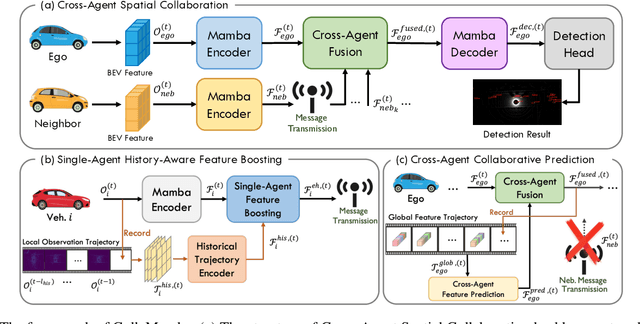

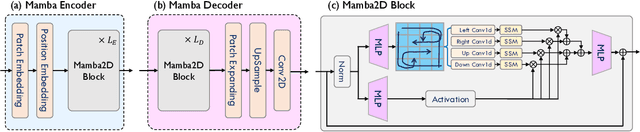
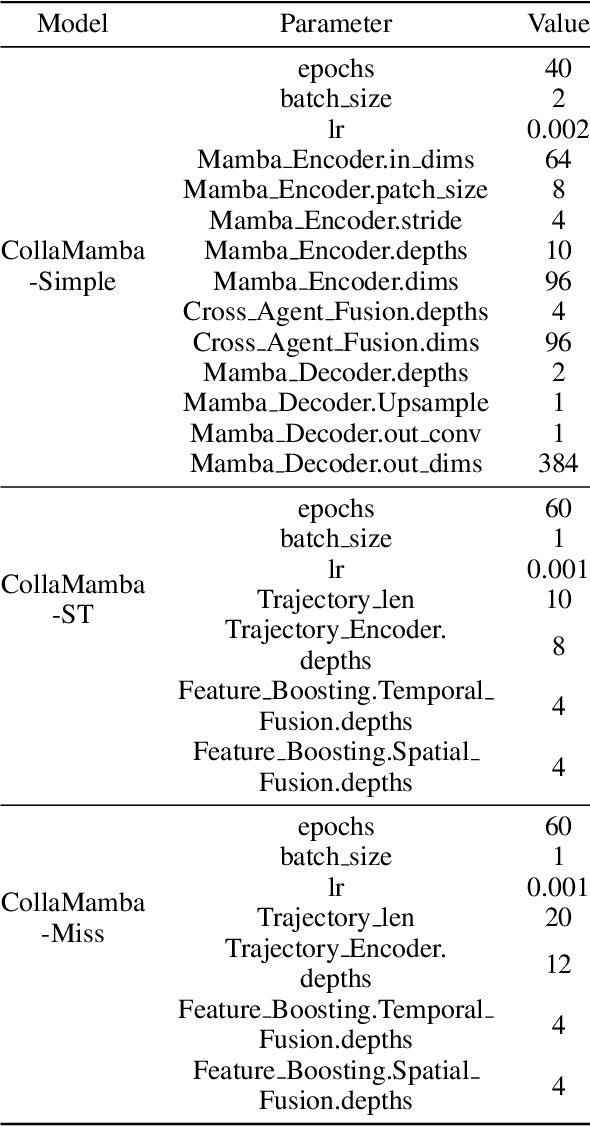
By sharing complementary perceptual information, multi-agent collaborative perception fosters a deeper understanding of the environment. Recent studies on collaborative perception mostly utilize CNNs or Transformers to learn feature representation and fusion in the spatial dimension, which struggle to handle long-range spatial-temporal features under limited computing and communication resources. Holistically modeling the dependencies over extensive spatial areas and extended temporal frames is crucial to enhancing feature quality. To this end, we propose a resource efficient cross-agent spatial-temporal collaborative state space model (SSM), named CollaMamba. Initially, we construct a foundational backbone network based on spatial SSM. This backbone adeptly captures positional causal dependencies from both single-agent and cross-agent views, yielding compact and comprehensive intermediate features while maintaining linear complexity. Furthermore, we devise a history-aware feature boosting module based on temporal SSM, extracting contextual cues from extended historical frames to refine vague features while preserving low overhead. Extensive experiments across several datasets demonstrate that CollaMamba outperforms state-of-the-art methods, achieving higher model accuracy while reducing computational and communication overhead by up to 71.9% and 1/64, respectively. This work pioneers the exploration of the Mamba's potential in collaborative perception. The source code will be made available.

Prim2Room: Layout-Controllable Room Mesh Generation from Primitives
Sep 09, 2024We propose Prim2Room, a novel framework for controllable room mesh generation leveraging 2D layout conditions and 3D primitive retrieval to facilitate precise 3D layout specification. Diverging from existing methods that lack control and precision, our approach allows for detailed customization of room-scale environments. To overcome the limitations of previous methods, we introduce an adaptive viewpoint selection algorithm that allows the system to generate the furniture texture and geometry from more favorable views than predefined camera trajectories. Additionally, we employ non-rigid depth registration to ensure alignment between generated objects and their corresponding primitive while allowing for shape variations to maintain diversity. Our method not only enhances the accuracy and aesthetic appeal of generated 3D scenes but also provides a user-friendly platform for detailed room design.
pFedGPA: Diffusion-based Generative Parameter Aggregation for Personalized Federated Learning
Sep 09, 2024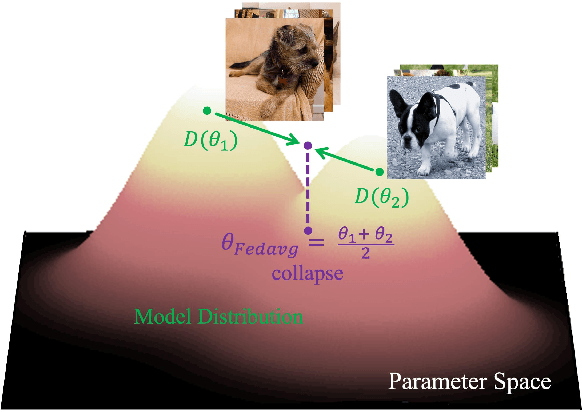
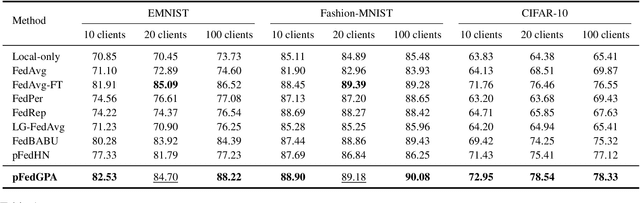


Federated Learning (FL) offers a decentralized approach to model training, where data remains local and only model parameters are shared between the clients and the central server. Traditional methods, such as Federated Averaging (FedAvg), linearly aggregate these parameters which are usually trained on heterogeneous data distributions, potentially overlooking the complex, high-dimensional nature of the parameter space. This can result in degraded performance of the aggregated model. While personalized FL approaches can mitigate the heterogeneous data issue to some extent, the limitation of linear aggregation remains unresolved. To alleviate this issue, we investigate the generative approach of diffusion model and propose a novel generative parameter aggregation framework for personalized FL, \texttt{pFedGPA}. In this framework, we deploy a diffusion model on the server to integrate the diverse parameter distributions and propose a parameter inversion method to efficiently generate a set of personalized parameters for each client. This inversion method transforms the uploaded parameters into a latent code, which is then aggregated through denoising sampling to produce the final personalized parameters. By encoding the dependence of a client's model parameters on the specific data distribution using the high-capacity diffusion model, \texttt{pFedGPA} can effectively decouple the complexity of the overall distribution of all clients' model parameters from the complexity of each individual client's parameter distribution. Our experimental results consistently demonstrate the superior performance of the proposed method across multiple datasets, surpassing baseline approaches.
TG-LMM: Enhancing Medical Image Segmentation Accuracy through Text-Guided Large Multi-Modal Model
Sep 05, 2024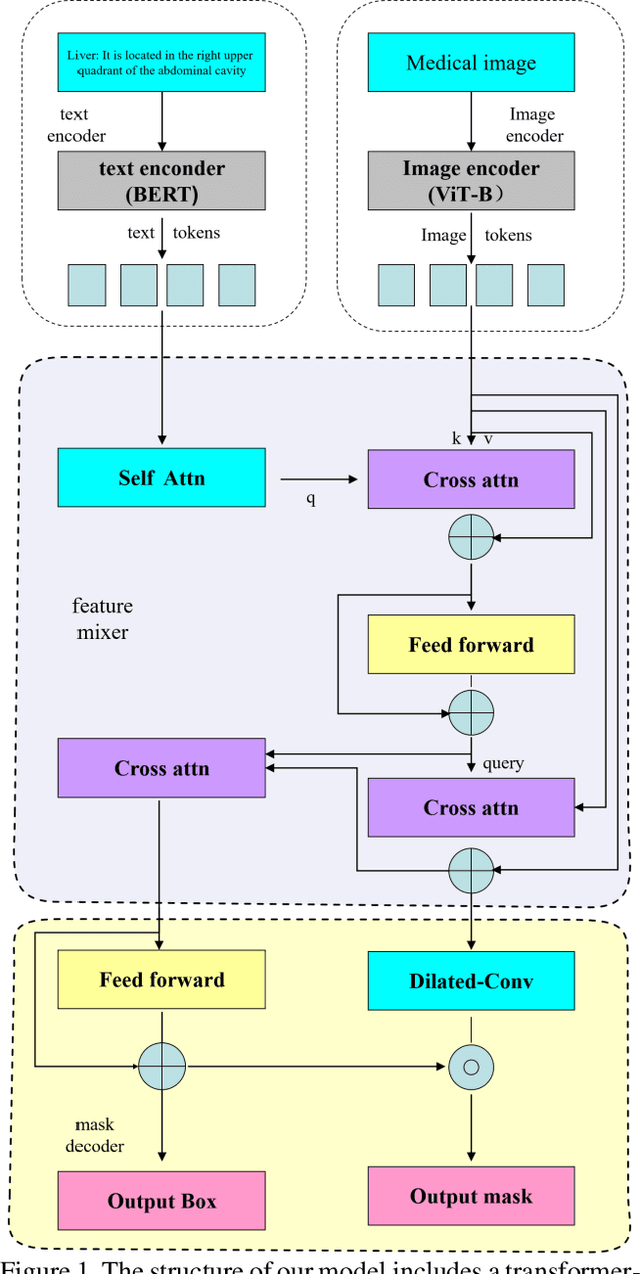
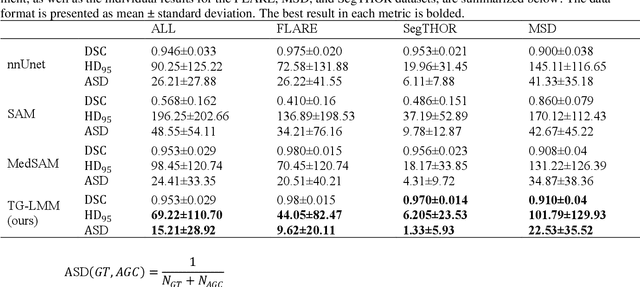
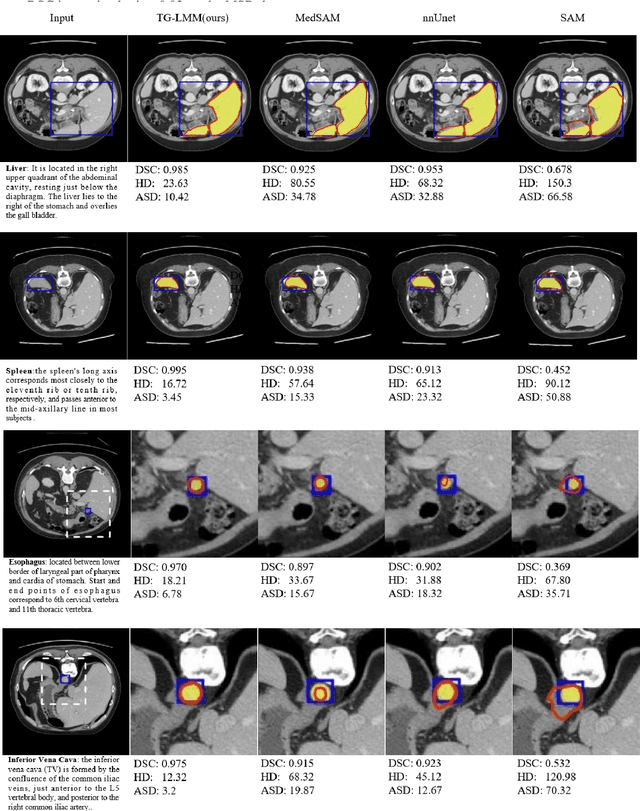
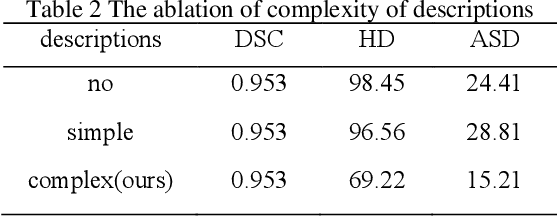
We propose TG-LMM (Text-Guided Large Multi-Modal Model), a novel approach that leverages textual descriptions of organs to enhance segmentation accuracy in medical images. Existing medical image segmentation methods face several challenges: current medical automatic segmentation models do not effectively utilize prior knowledge, such as descriptions of organ locations; previous text-visual models focus on identifying the target rather than improving the segmentation accuracy; prior models attempt to use prior knowledge to enhance accuracy but do not incorporate pre-trained models. To address these issues, TG-LMM integrates prior knowledge, specifically expert descriptions of the spatial locations of organs, into the segmentation process. Our model utilizes pre-trained image and text encoders to reduce the number of training parameters and accelerate the training process. Additionally, we designed a comprehensive image-text information fusion structure to ensure thorough integration of the two modalities of data. We evaluated TG-LMM on three authoritative medical image datasets, encompassing the segmentation of various parts of the human body. Our method demonstrated superior performance compared to existing approaches, such as MedSAM, SAM and nnUnet.
DS MYOLO: A Reliable Object Detector Based on SSMs for Driving Scenarios
Sep 02, 2024Accurate real-time object detection enhances the safety of advanced driver-assistance systems, making it an essential component in driving scenarios. With the rapid development of deep learning technology, CNN-based YOLO real-time object detectors have gained significant attention. However, the local focus of CNNs results in performance bottlenecks. To further enhance detector performance, researchers have introduced Transformer-based self-attention mechanisms to leverage global receptive fields, but their quadratic complexity incurs substantial computational costs. Recently, Mamba, with its linear complexity, has made significant progress through global selective scanning. Inspired by Mamba's outstanding performance, we propose a novel object detector: DS MYOLO. This detector captures global feature information through a simplified selective scanning fusion block (SimVSS Block) and effectively integrates the network's deep features. Additionally, we introduce an efficient channel attention convolution (ECAConv) that enhances cross-channel feature interaction while maintaining low computational complexity. Extensive experiments on the CCTSDB 2021 and VLD-45 driving scenarios datasets demonstrate that DS MYOLO exhibits significant potential and competitive advantage among similarly scaled YOLO series real-time object detectors.
Extraction of Typical Operating Scenarios of New Power System Based on Deep Time Series Aggregation
Aug 23, 2024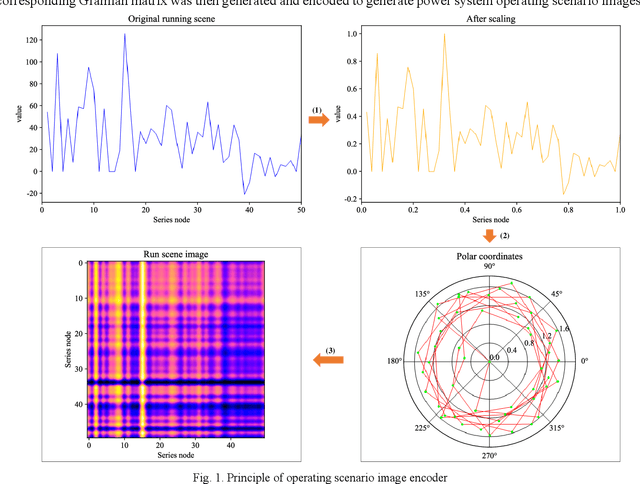
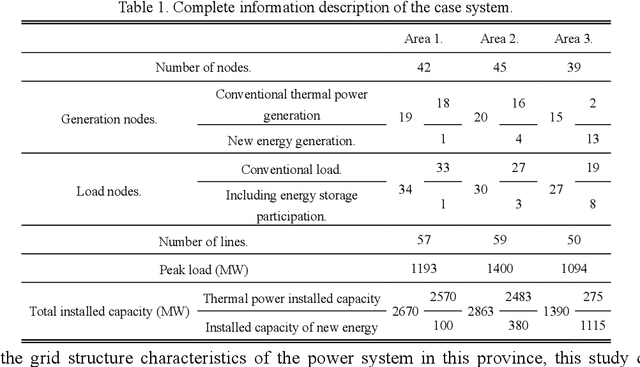
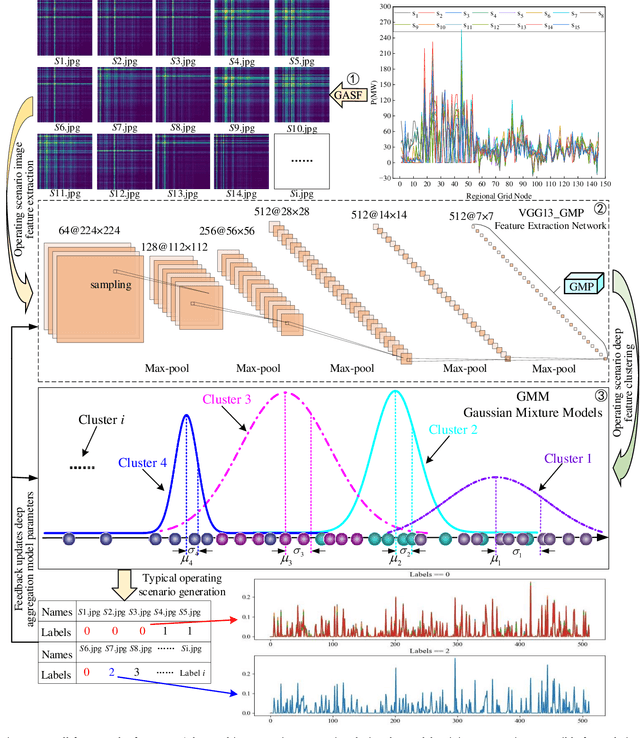
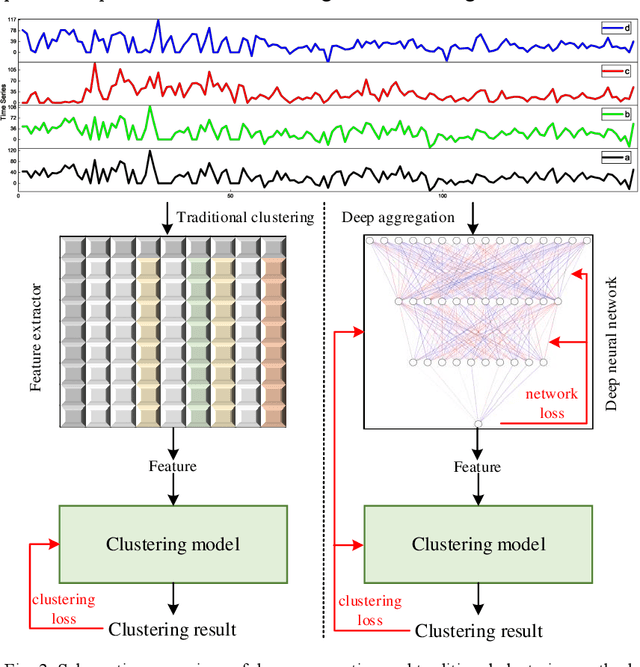
Extracting typical operational scenarios is essential for making flexible decisions in the dispatch of a new power system. This study proposed a novel deep time series aggregation scheme (DTSAs) to generate typical operational scenarios, considering the large amount of historical operational snapshot data. Specifically, DTSAs analyze the intrinsic mechanisms of different scheduling operational scenario switching to mathematically represent typical operational scenarios. A gramian angular summation field (GASF) based operational scenario image encoder was designed to convert operational scenario sequences into high-dimensional spaces. This enables DTSAs to fully capture the spatiotemporal characteristics of new power systems using deep feature iterative aggregation models. The encoder also facilitates the generation of typical operational scenarios that conform to historical data distributions while ensuring the integrity of grid operational snapshots. Case studies demonstrate that the proposed method extracted new fine-grained power system dispatch schemes and outperformed the latest high-dimensional featurescreening methods. In addition, experiments with different new energy access ratios were conducted to verify the robustness of the proposed method. DTSAs enables dispatchers to master the operation experience of the power system in advance, and actively respond to the dynamic changes of the operation scenarios under the high access rate of new energy.
P3P: Pseudo-3D Pre-training for Scaling 3D Masked Autoencoders
Aug 19, 20243D pre-training is crucial to 3D perception tasks. However, limited by the difficulties in collecting clean 3D data, 3D pre-training consistently faced data scaling challenges. Inspired by semi-supervised learning leveraging limited labeled data and a large amount of unlabeled data, in this work, we propose a novel self-supervised pre-training framework utilizing the real 3D data and the pseudo-3D data lifted from images by a large depth estimation model. Another challenge lies in the efficiency. Previous methods such as Point-BERT and Point-MAE, employ k nearest neighbors to embed 3D tokens, requiring quadratic time complexity. To efficiently pre-train on such a large amount of data, we propose a linear-time-complexity token embedding strategy and a training-efficient 2D reconstruction target. Our method achieves state-of-the-art performance in 3D classification and few-shot learning while maintaining high pre-training and downstream fine-tuning efficiency.
OU-CoViT: Copula-Enhanced Bi-Channel Multi-Task Vision Transformers with Dual Adaptation for OU-UWF Images
Aug 18, 2024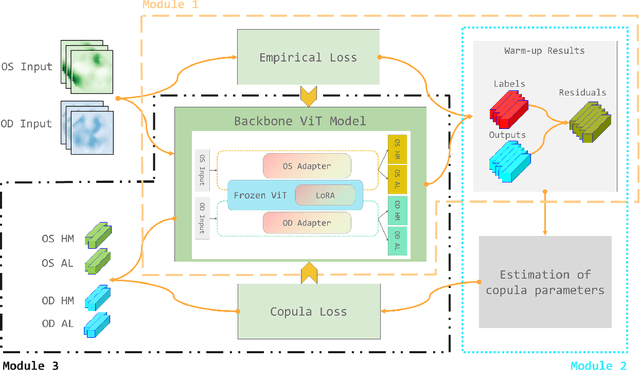
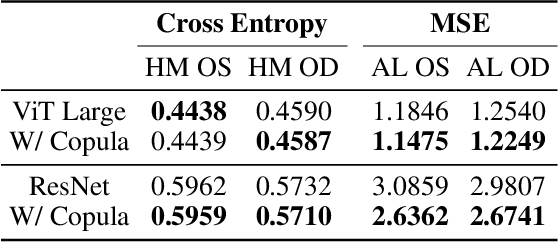
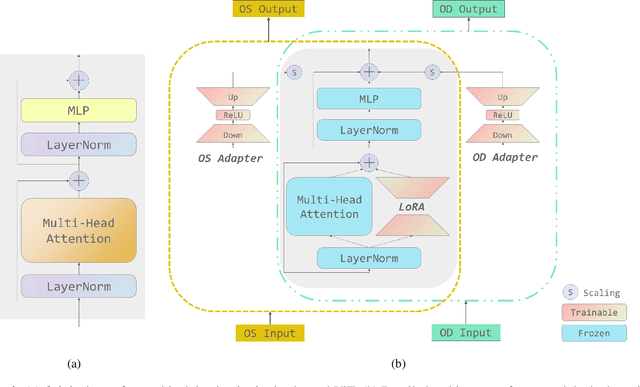
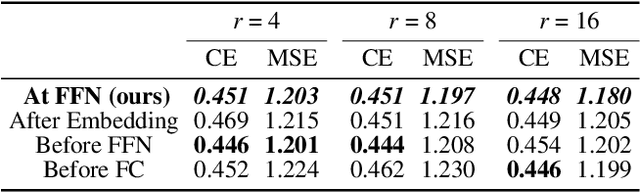
Myopia screening using cutting-edge ultra-widefield (UWF) fundus imaging and joint modeling of multiple discrete and continuous clinical scores presents a promising new paradigm for multi-task problems in Ophthalmology. The bi-channel framework that arises from the Ophthalmic phenomenon of ``interocular asymmetries'' of both eyes (OU) calls for new employment on the SOTA transformer-based models. However, the application of copula models for multiple mixed discrete-continuous labels on deep learning (DL) is challenging. Moreover, the application of advanced large transformer-based models to small medical datasets is challenging due to overfitting and computational resource constraints. To resolve these challenges, we propose OU-CoViT: a novel Copula-Enhanced Bi-Channel Multi-Task Vision Transformers with Dual Adaptation for OU-UWF images, which can i) incorporate conditional correlation information across multiple discrete and continuous labels within a deep learning framework (by deriving the closed form of a novel Copula Loss); ii) take OU inputs subject to both high correlation and interocular asymmetries using a bi-channel model with dual adaptation; and iii) enable the adaptation of large vision transformer (ViT) models to small medical datasets. Solid experiments demonstrate that OU-CoViT significantly improves prediction performance compared to single-channel baseline models with empirical loss. Furthermore, the novel architecture of OU-CoViT allows generalizability and extensions of our dual adaptation and Copula Loss to various ViT variants and large DL models on small medical datasets. Our approach opens up new possibilities for joint modeling of heterogeneous multi-channel input and mixed discrete-continuous clinical scores in medical practices and has the potential to advance AI-assisted clinical decision-making in various medical domains beyond Ophthalmology.
Flemme: A Flexible and Modular Learning Platform for Medical Images
Aug 18, 2024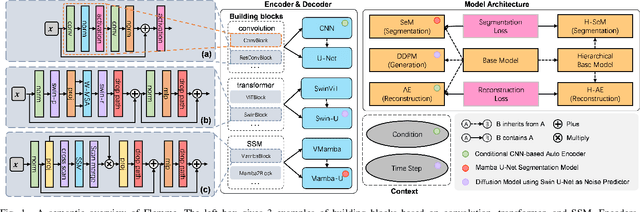
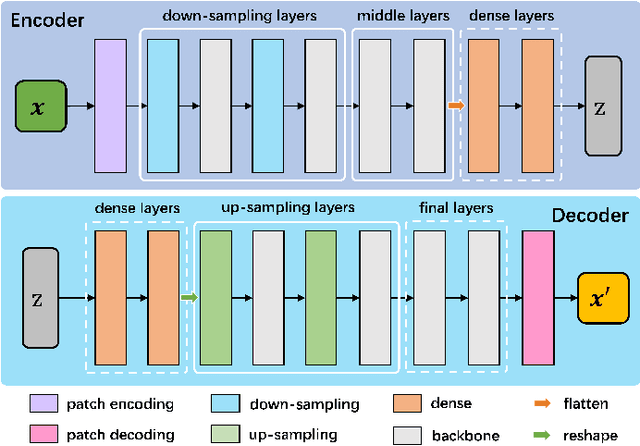


As the rapid development of computer vision and the emergence of powerful network backbones and architectures, the application of deep learning in medical imaging has become increasingly significant. Unlike natural images, medical images lack huge volumes of data but feature more modalities, making it difficult to train a general model that has satisfactory performance across various datasets. In practice, practitioners often suffer from manually creating and testing models combining independent backbones and architectures, which is a laborious and time-consuming process. We propose Flemme, a FLExible and Modular learning platform for MEdical images. Our platform separates encoders from the model architectures so that different models can be constructed via various combinations of supported encoders and architectures. We construct encoders using building blocks based on convolution, transformer, and state-space model (SSM) to process both 2D and 3D image patches. A base architecture is implemented following an encoder-decoder style, with several derived architectures for image segmentation, reconstruction, and generation tasks. In addition, we propose a general hierarchical architecture incorporating a pyramid loss to optimize and fuse vertical features. Experiments demonstrate that this simple design leads to an average improvement of 5.60% in Dice score and 7.81% in mean interaction of units (mIoU) for segmentation models, as well as an enhancement of 5.57% in peak signal-to-noise ratio (PSNR) and 8.22% in structural similarity (SSIM) for reconstruction models. We further utilize Flemme as an analytical tool to assess the effectiveness and efficiency of various encoders across different tasks. Code is available at https://github.com/wlsdzyzl/flemme.
Coordinated Spectral Efficiency Prediction for Real-World 5G CoMP Systems
Aug 14, 2024Coordinated multipoint (CoMP) systems incur substantial resource consumption due to the management of backhaul links and the coordination among various base stations (BSs). Accurate prediction of coordinated spectral efficiency (CSE) can guide the optimization of network parameters, resulting in enhanced resource utilization efficiency. However, characterizing the CSE is intractable due to the inherent complexity of the CoMP channel model and the diversity of the 5G dynamic network environment, which poses a great challenge for CSE prediction in real-world 5G CoMP systems. To address this challenge, in this letter, we propose a data-driven model-assisted approach. Initially, we leverage domain knowledge to preprocess the collected raw data, thereby creating a well-informed dataset. Within this dataset, we explicitly define the target variable and the input feature space relevant to channel statistics for CSE prediction. Subsequently, a residual-based network model is built to capture the high-dimensional non-linear mapping function from the channel statistics to the CSE. The effectiveness of the proposed approach is validated by experimental results on real-world data.