 Add to Chrome
 Add to Firefox
 Add to Edge
AnomExpert: Identifying and Selecting Anatomical Planes for Prenatal Ultrasound Anomaly Diagnosis
Jul 15, 2026
Life-limiting congenital anomalies require accurate prenatal diagnosis for appropriate clinical decision-making. Prenatal ultrasound (US) examinations involve multiple anatomical planes, and diagnosis depends on identifying anatomical planes and selecting diagnostically relevant planes for each anomaly. Existing automated methods either rely on plane-level annotations or aggregate heterogeneous images without explicitly modeling these diagnostic capabilities. We propose AnomExpert, a prototype-driven framework for prenatal US anomaly diagnosis using only case-level supervision. AnomExpert introduces learnable plane prototypes to organize unordered images into latent representations corresponding to anatomical planes without requiring plane annotations. A disease-aware sparse selection mechanism further selects diagnostically relevant planes for each anomaly. Experiments on a multi-center dataset of 3,654 cases show that AnomExpert consistently outperforms nine representative multi-instance learning methods. Using a ViT-small backbone, it achieves 86.9% accuracy and 84.2% F1-score while maintaining parameter efficiency. These findings indicate that modeling anatomical plane identification and disease-specific plane selection improves weakly supervised multi-plane prenatal US anomaly classification. The code is available at https://github.com/TIanCat/AnomExpert.

Prototype Memory-Guided Training-Free Anomaly Classification and Localization in Prenatal Ultrasound
Jul 01, 2026Prenatal anomaly classification and localization is of critical importance for fetal health and pregnancy management. Although ultrasound (US) is the primary modality for prenatal screening, accurate diagnosis remains challenging due to the low prevalence and high heterogeneity of anomalies. Existing deep learning methods for prenatal tasks rely on large-scale annotated datasets, which are difficult to obtain in practice. Although few-shot learning alleviates data scarcity, it typically requires fine-tuning for new categories, limiting its practicality in resource-limited clinical settings. To address these challenges, we propose a training-free framework for multi-class prenatal US anomaly classification and localization that operates with only a few reference images per class, representing the first exploration of this setting. Our framework comprises three key components: (1) a memory bank with multi-granular prototypes that explicitly models both class-level semantics and anomaly characteristics; (2) a prototype-driven soft merging mechanism that aggregates discriminative features to detect the anomaly region; and (3) a class-aware refinement strategy that leverages prototype consistency to improve category prediction. Extensively validated on a multi-center prenatal US dataset containing 1,149 cases, with a total of 2,357 images and 9 categories, our proposed method outperforms the competitors.
Foundation Model-driven Key Anatomy Frame Selection for Blind-sweep Ultrasound Fetal Birth Weight Estimation
Jul 01, 2026Accurate fetal birth weight (FBW) estimation shortly before delivery is clinically valuable yet challenging due to its reliance on operator expertise, particularly in low-resource settings. To reduce this reliance, we study near-term birth-weight regression from blind-sweep ultrasound (US) videos acquired within 48 hours prior to delivery, with post-delivery weighing as ground truth. Accordingly, we propose a foundation model-driven key anatomy frame selection framework that enables accurate FBW regression despite the absence of plane constraints in blind sweeps. Our highlights are as follows: (1) We believe this is the first work to estimate FBW using blind-sweep US videos, enabling operator-independent assessment. (2) An Anatomy-Guided Frame Selection module equipped with a vision-language foundation model is proposed for keyframe collection in unconstrained sweeps. (3) A Redundancy-Aware Feature Compression module is designed to compress frame features while preserving task-relevant information, alleviating temporal redundancy. Extensively validated on prospectively collected data from 839 patients, our method achieves an MAE of 161.3 g, with 90.23% and 100% of cases falling within 10% and 15% absolute percentage error, outperforming typical Hadlock estimation and strong competitors. Codes are available at https://github.com/ouleoule/BlindSweep-EBW.
Mitral Regurgitation Recogniton based on Unsupervised Out-of-Distribution Detection with Residual Diffusion Amplification
Jul 31, 2024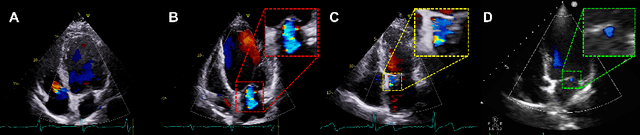
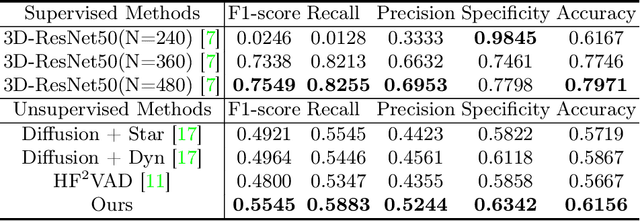
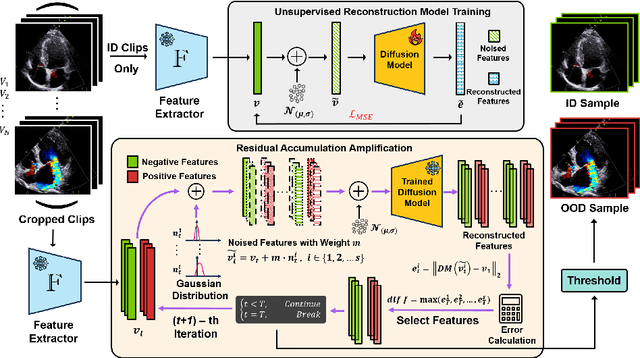

Mitral regurgitation (MR) is a serious heart valve disease. Early and accurate diagnosis of MR via ultrasound video is critical for timely clinical decision-making and surgical intervention. However, manual MR diagnosis heavily relies on the operator's experience, which may cause misdiagnosis and inter-observer variability. Since MR data is limited and has large intra-class variability, we propose an unsupervised out-of-distribution (OOD) detection method to identify MR rather than building a deep classifier. To our knowledge, we are the first to explore OOD in MR ultrasound videos. Our method consists of a feature extractor, a feature reconstruction model, and a residual accumulation amplification algorithm. The feature extractor obtains features from the video clips and feeds them into the feature reconstruction model to restore the original features. The residual accumulation amplification algorithm then iteratively performs noise feature reconstruction, amplifying the reconstructed error of OOD features. This algorithm is straightforward yet efficient and can seamlessly integrate as a plug-and-play component in reconstruction-based OOD detection methods. We validated the proposed method on a large ultrasound dataset containing 893 non-MR and 267 MR videos. Experimental results show that our OOD detection method can effectively identify MR samples.
The Model Arena for Cross-lingual Sentiment Analysis: A Comparative Study in the Era of Large Language Models
Jun 27, 2024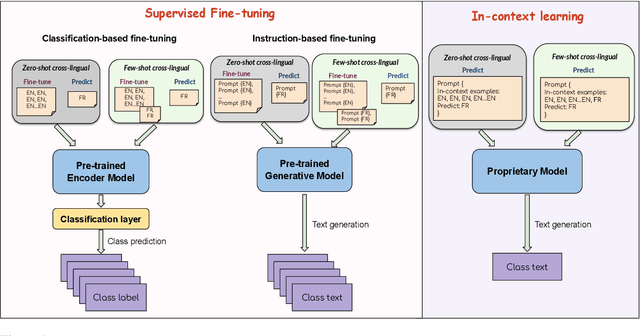
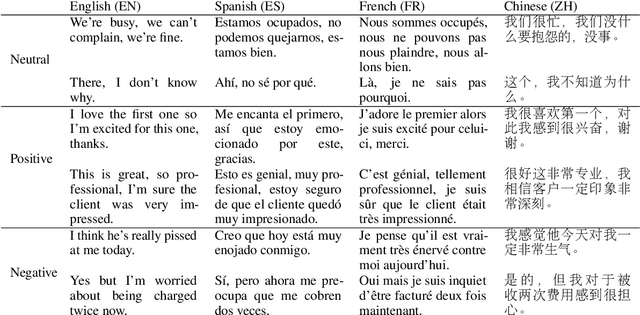
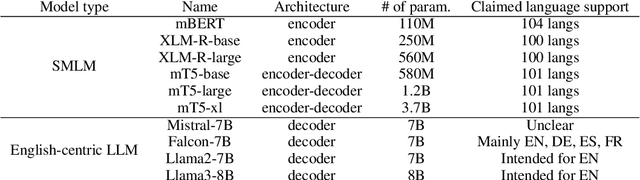
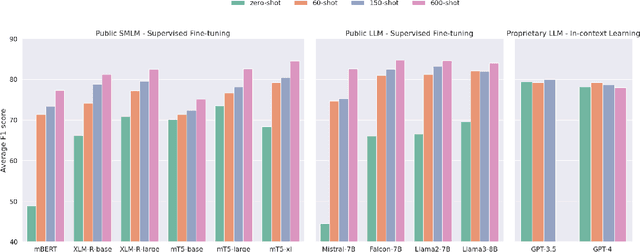
Sentiment analysis serves as a pivotal component in Natural Language Processing (NLP). Advancements in multilingual pre-trained models such as XLM-R and mT5 have contributed to the increasing interest in cross-lingual sentiment analysis. The recent emergence in Large Language Models (LLM) has significantly advanced general NLP tasks, however, the capability of such LLMs in cross-lingual sentiment analysis has not been fully studied. This work undertakes an empirical analysis to compare the cross-lingual transfer capability of public Small Multilingual Language Models (SMLM) like XLM-R, against English-centric LLMs such as Llama-3, in the context of sentiment analysis across English, Spanish, French and Chinese. Our findings reveal that among public models, SMLMs exhibit superior zero-shot cross-lingual performance relative to LLMs. However, in few-shot cross-lingual settings, public LLMs demonstrate an enhanced adaptive potential. In addition, we observe that proprietary GPT-3.5 and GPT-4 lead in zero-shot cross-lingual capability, but are outpaced by public models in few-shot scenarios.
Thyroid ultrasound diagnosis improvement via multi-view self-supervised learning and two-stage pre-training
Feb 18, 2024Thyroid nodule classification and segmentation in ultrasound images are crucial for computer-aided diagnosis; however, they face limitations owing to insufficient labeled data. In this study, we proposed a multi-view contrastive self-supervised method to improve thyroid nodule classification and segmentation performance with limited manual labels. Our method aligns the transverse and longitudinal views of the same nodule, thereby enabling the model to focus more on the nodule area. We designed an adaptive loss function that eliminates the limitations of the paired data. Additionally, we adopted a two-stage pre-training to exploit the pre-training on ImageNet and thyroid ultrasound images. Extensive experiments were conducted on a large-scale dataset collected from multiple centers. The results showed that the proposed method significantly improves nodule classification and segmentation performance with limited manual labels and outperforms state-of-the-art self-supervised methods. The two-stage pre-training also significantly exceeded ImageNet pre-training.
Resolving Transcription Ambiguity in Spanish: A Hybrid Acoustic-Lexical System for Punctuation Restoration
Feb 05, 2024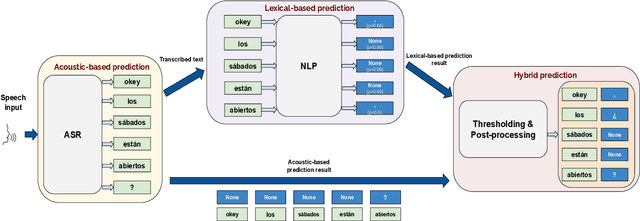

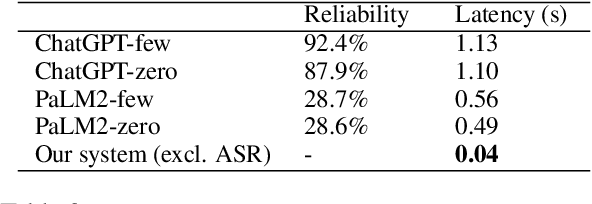
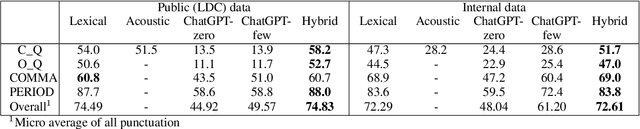
Punctuation restoration is a crucial step after Automatic Speech Recognition (ASR) systems to enhance transcript readability and facilitate subsequent NLP tasks. Nevertheless, conventional lexical-based approaches are inadequate for solving the punctuation restoration task in Spanish, where ambiguity can be often found between unpunctuated declaratives and questions. In this study, we propose a novel hybrid acoustic-lexical punctuation restoration system for Spanish transcription, which consolidates acoustic and lexical signals through a modular process. Our experiment results show that the proposed system can effectively improve F1 score of question marks and overall punctuation restoration on both public and internal Spanish conversational datasets. Additionally, benchmark comparison against LLMs (Large Language Model) indicates the superiority of our approach in accuracy, reliability and latency. Furthermore, we demonstrate that the Word Error Rate (WER) of the ASR module also benefits from our proposed system.
Extracting Similar Questions From Naturally-occurring Business Conversations
Jun 03, 2022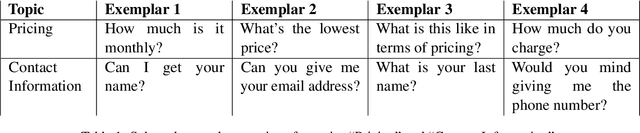
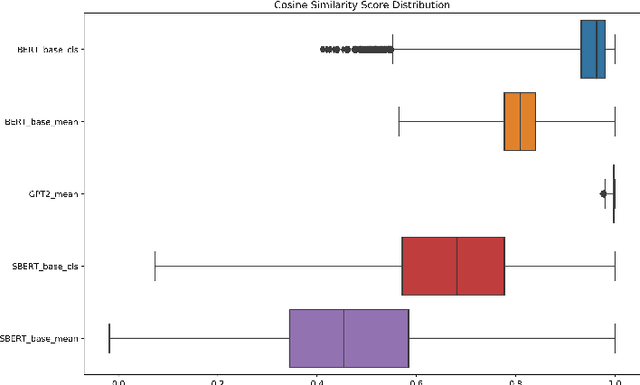

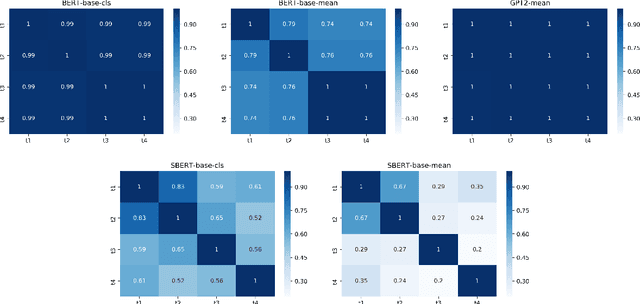
Pre-trained contextualized embedding models such as BERT are a standard building block in many natural language processing systems. We demonstrate that the sentence-level representations produced by some off-the-shelf contextualized embedding models have a narrow distribution in the embedding space, and thus perform poorly for the task of identifying semantically similar questions in real-world English business conversations. We describe a method that uses appropriately tuned representations and a small set of exemplars to group questions of interest to business users in a visualization that can be used for data exploration or employee coaching.
Punctuation Restoration in Spanish Customer Support Transcripts using Transfer Learning
May 27, 2022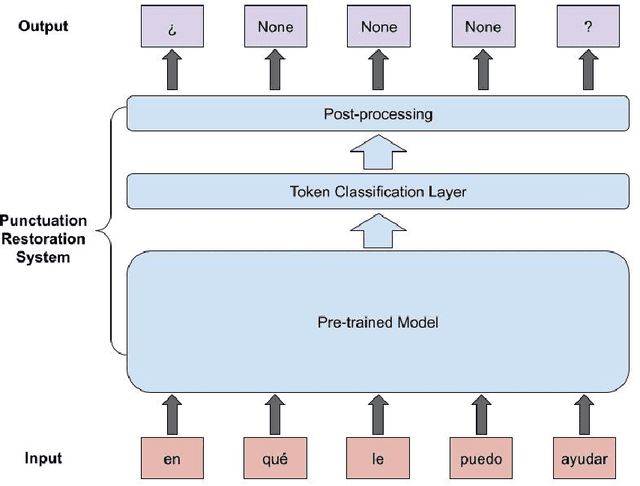
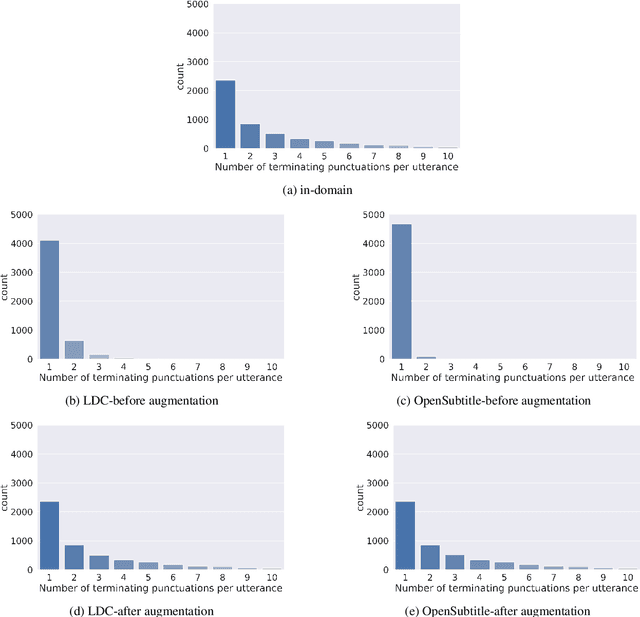

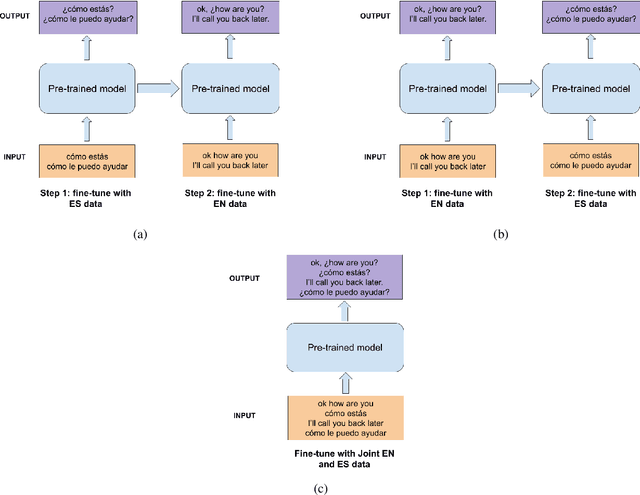
Automatic Speech Recognition (ASR) systems typically produce unpunctuated transcripts that have poor readability. In addition, building a punctuation restoration system is challenging for low-resource languages, especially for domain-specific applications. In this paper, we propose a Spanish punctuation restoration system designed for a real-time customer support transcription service. To address the data sparsity of Spanish transcripts in the customer support domain, we introduce two transfer-learning-based strategies: 1) domain adaptation using out-of-domain Spanish text data; 2) cross-lingual transfer learning leveraging in-domain English transcript data. Our experiment results show that these strategies improve the accuracy of the Spanish punctuation restoration system.