 Add to Chrome
 Add to Firefox
 Add to Edge
ResAware: Cross-Environment Website Fingerprinting via Resource-Privileged Distillation
Jun 16, 2026
While Website Fingerprinting (WF) attacks achieve high accuracy in controlled laboratory settings, they often degrade substantially in real-world environments due to spatio-temporal drift, browser heterogeneity, proxy obfuscation and etc. This limitation stems from their sole reliance on low-level traffic features that are noisy and highly sensitive to environmental perturbations. To address this problem, we propose \textbf{ResAware}, a cross-environment resource-aware distillation framework under a \textit{training-rich/inference-poor} asymmetric setting. Specifically, ResAware trains a teacher model on resource-level features, and then distills the resulting privileged knowledge into a student model through heterogeneous knowledge distillation. At deployment time, the student model performs inference using only encrypted traffic, incurring zero additional cost. We evaluate ResAware on a large-scale dataset collected over five months from six globally distributed vantage points, comprising more than $160{,}000$ paired samples. The results show that ResAware significantly enhances the cross-environment robustness of diverse WF baselines. Under a 150-day temporal drift, for example, ResAware improves the F1-score of Var-CNN from $72.77\%$ to $81.49\%$ and the open-world $TPR@1\%FPR$ from $22.40\%$ to $27.20\%$. Our results demonstrate that resource-level supervision improves WF robustness without expanding online observation capabilities.

Multiple-Debias: A Full-process Debiasing Method for Multilingual Pre-trained Language Models
Apr 03, 2026Multilingual Pre-trained Language Models (MPLMs) have become essential tools for natural language processing. However, they often exhibit biases related to sensitive attributes such as gender, race, and religion. In this paper, we introduce a comprehensive multilingual debiasing method named Multiple-Debias to address these issues across multiple languages. By incorporating multilingual counterfactual data augmentation and multilingual Self-Debias across both pre-processing and post-processing stages, alongside parameter-efficient fine-tuning, we significantly reduced biases in MPLMs across three sensitive attributes in four languages. We also extended CrowS-Pairs to German, Spanish, Chinese, and Japanese, validating our full-process multilingual debiasing method for gender, racial, and religious bias. Our experiments show that (i) multilingual debiasing methods surpass monolingual approaches in effectively mitigating biases, and (ii) integrating debiasing information from different languages notably improves the fairness of MPLMs.
Act Like a Pathologist: Tissue-Aware Whole Slide Image Reasoning
Feb 28, 2026Computational pathology has advanced rapidly in recent years, driven by domain-specific image encoders and growing interest in using vision-language models to answer natural-language questions about diseases. Yet, the core problem behind pathology question-answering remains unsolved, considering that a gigapixel slide contains far more information than necessary for a given question. Pathologists naturally navigate tissue and morphology complexity by scanning broadly, and zooming in selectively according to the clinical questions. Current models, in contrast, rely on uniform patch sampling or broad attention maps, often attending equally to irrelevant regions while overlooking key visual evidence. In this work, we try to bring models closer to how humans actually examine slides. We propose a question-guided, tissue-aware, and coarse-to-fine retrieval framework, HistoSelect, that consists of two key components: a group sampler that identifies question-relevant tissue regions, followed by a patch selector that retrieves the most informative patches within those regions. By selecting only the most informative patches, our method becomes significantly more efficient: reducing visual token usage by 70% on average, while improving accuracy across three pathology QA tasks. Evaluated on 356,000 question-answer pairs, our approach outperforms existing methods and produces answers grounded in interpretable, pathologist-consistent regions. Our results suggest that bringing human-like search and attention patterns into WSI reasoning is a promising direction for building practical and reliable pathology VLMs.
Debiasing Diffusion Priors via 3D Attention for Consistent Gaussian Splatting
Dec 16, 2025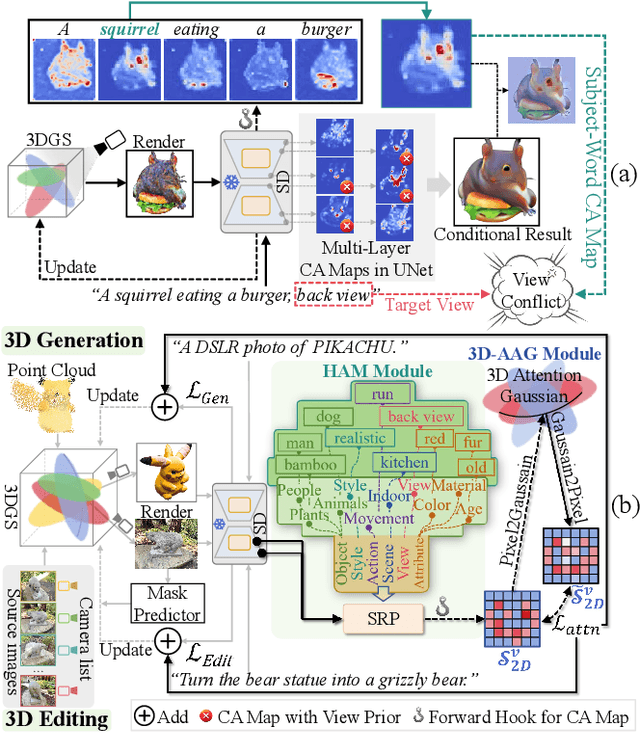
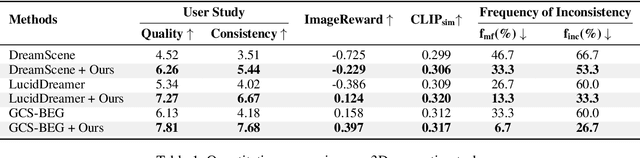
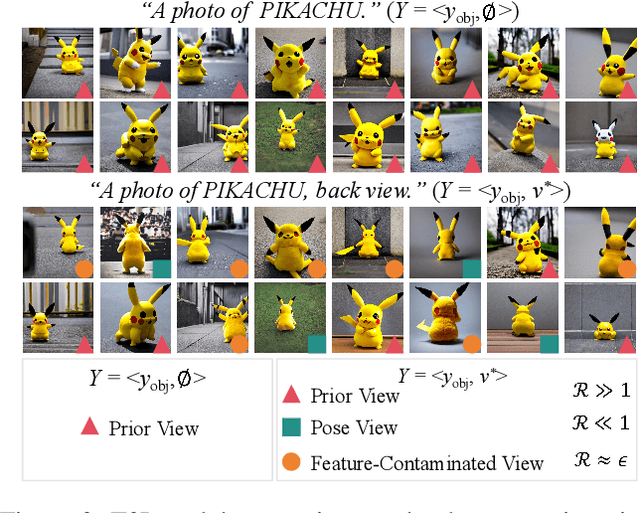
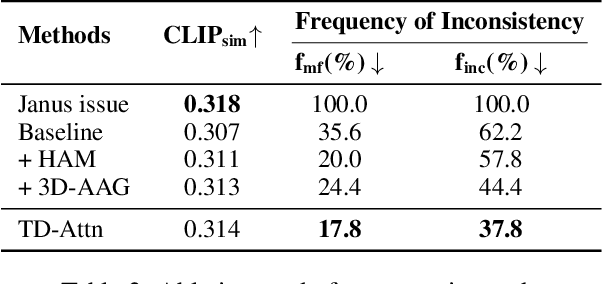
Versatile 3D tasks (e.g., generation or editing) that distill from Text-to-Image (T2I) diffusion models have attracted significant research interest for not relying on extensive 3D training data. However, T2I models exhibit limitations resulting from prior view bias, which produces conflicting appearances between different views of an object. This bias causes subject-words to preferentially activate prior view features during cross-attention (CA) computation, regardless of the target view condition. To overcome this limitation, we conduct a comprehensive mathematical analysis to reveal the root cause of the prior view bias in T2I models. Moreover, we find different UNet layers show different effects of prior view in CA. Therefore, we propose a novel framework, TD-Attn, which addresses multi-view inconsistency via two key components: (1) the 3D-Aware Attention Guidance Module (3D-AAG) constructs a view-consistent 3D attention Gaussian for subject-words to enforce spatial consistency across attention-focused regions, thereby compensating for the limited spatial information in 2D individual view CA maps; (2) the Hierarchical Attention Modulation Module (HAM) utilizes a Semantic Guidance Tree (SGT) to direct the Semantic Response Profiler (SRP) in localizing and modulating CA layers that are highly responsive to view conditions, where the enhanced CA maps further support the construction of more consistent 3D attention Gaussians. Notably, HAM facilitates semantic-specific interventions, enabling controllable and precise 3D editing. Extensive experiments firmly establish that TD-Attn has the potential to serve as a universal plugin, significantly enhancing multi-view consistency across 3D tasks.
ReaSon: Reinforced Causal Search with Information Bottleneck for Video Understanding
Nov 16, 2025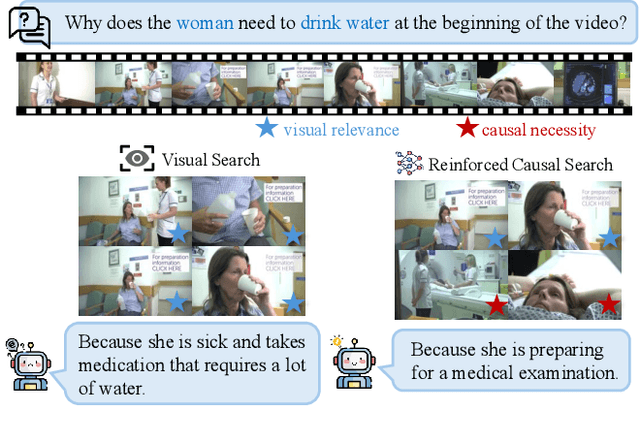
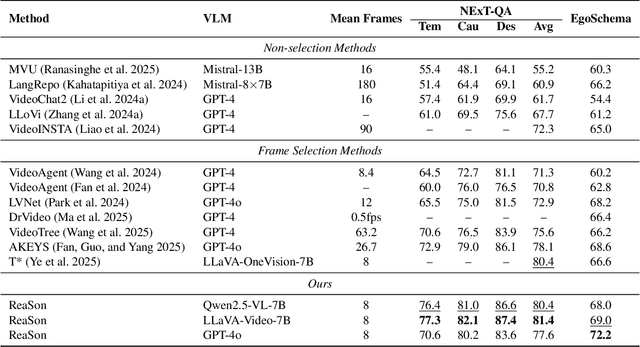
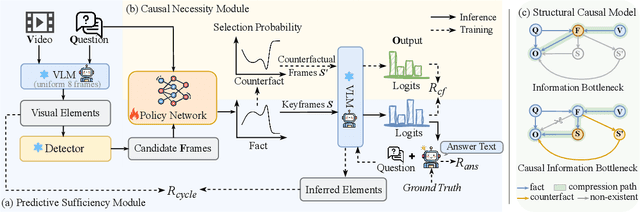
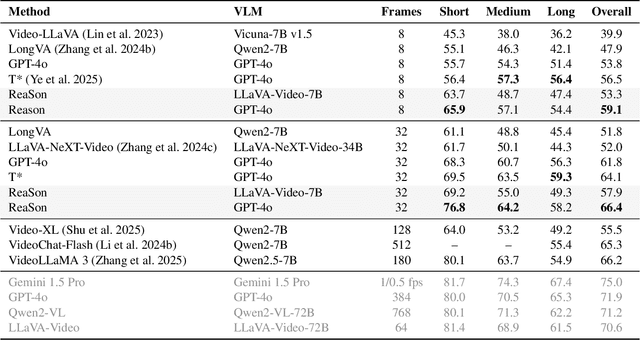
Keyframe selection has become essential for video understanding with vision-language models (VLMs) due to limited input tokens and the temporal sparsity of relevant information across video frames. Video understanding often relies on effective keyframes that are not only informative but also causally decisive. To this end, we propose Reinforced Causal Search with Information Bottleneck (ReaSon), a framework that formulates keyframe selection as an optimization problem with the help of a novel Causal Information Bottleneck (CIB), which explicitly defines keyframes as those satisfying both predictive sufficiency and causal necessity. Specifically, ReaSon employs a learnable policy network to select keyframes from a visually relevant pool of candidate frames to capture predictive sufficiency, and then assesses causal necessity via counterfactual interventions. Finally, a composite reward aligned with the CIB principle is designed to guide the selection policy through reinforcement learning. Extensive experiments on NExT-QA, EgoSchema, and Video-MME demonstrate that ReaSon consistently outperforms existing state-of-the-art methods under limited-frame settings, validating its effectiveness and generalization ability.
Predict-then-Optimize for Seaport Power-Logistics Scheduling: Generalization across Varying Tasks Stream
Nov 13, 2025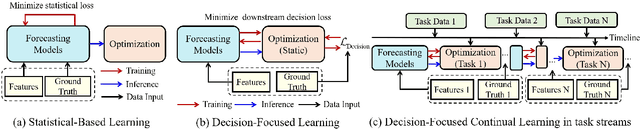
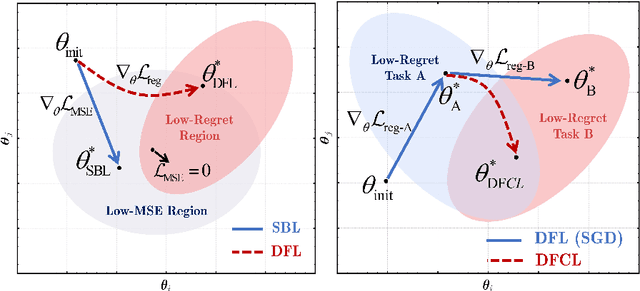
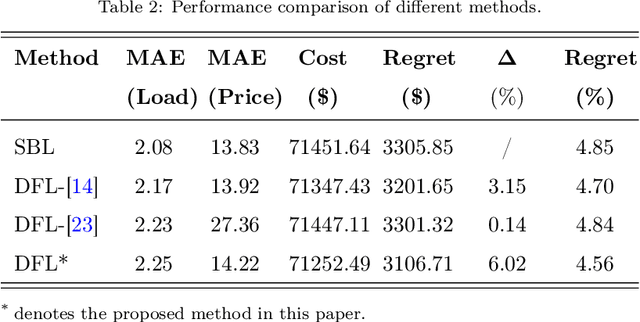
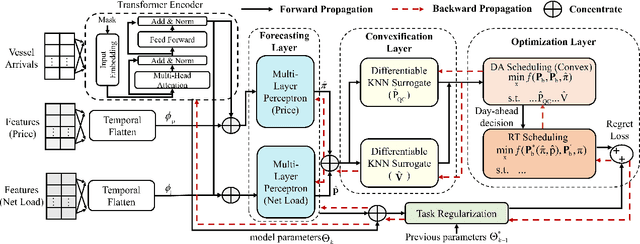
Power-logistics scheduling in modern seaports typically follow a predict-then-optimize pipeline. To enhance the decision quality of forecasts, decision-focused learning has been proposed, which aligns the training of forecasting models with downstream decision outcomes. However, this end-to-end design inherently restricts the value of forecasting models to only a specific task structure, and thus generalize poorly to evolving tasks induced by varying seaport vessel arrivals. We address this gap with a decision-focused continual learning framework that adapts online to a stream of scheduling tasks. Specifically, we introduce Fisher information based regularization to enhance cross-task generalization by preserving parameters critical to prior tasks. A differentiable convex surrogate is also developed to stabilize gradient backpropagation. The proposed approach enables learning a decision-aligned forecasting model across a varying tasks stream with a sustainable long-term computational burden. Experiments calibrated to the Jurong Port demonstrate superior decision performance and generalization over existing methods with reduced computational cost.
MERGE: Multi-faceted Hierarchical Graph-based GNN for Gene Expression Prediction from Whole Slide Histopathology Images
Dec 03, 2024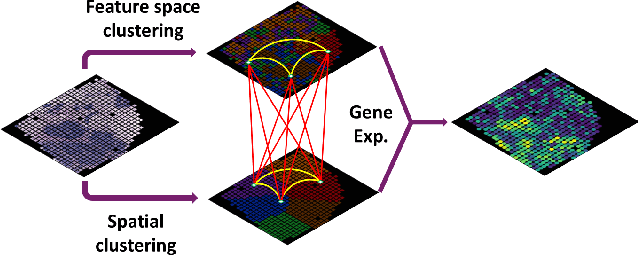
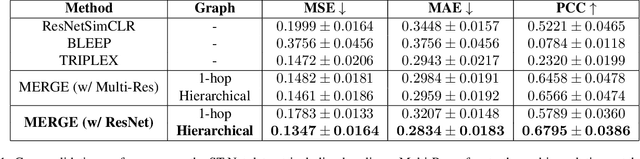
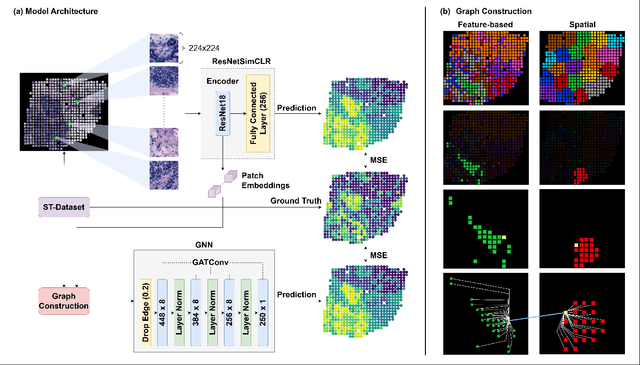
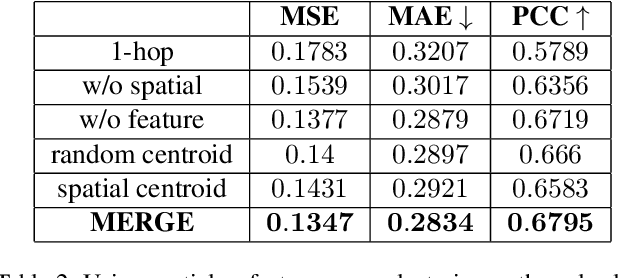
Recent advances in Spatial Transcriptomics (ST) pair histology images with spatially resolved gene expression profiles, enabling predictions of gene expression across different tissue locations based on image patches. This opens up new possibilities for enhancing whole slide image (WSI) prediction tasks with localized gene expression. However, existing methods fail to fully leverage the interactions between different tissue locations, which are crucial for accurate joint prediction. To address this, we introduce MERGE (Multi-faceted hiErarchical gRaph for Gene Expressions), which combines a multi-faceted hierarchical graph construction strategy with graph neural networks (GNN) to improve gene expression predictions from WSIs. By clustering tissue image patches based on both spatial and morphological features, and incorporating intra- and inter-cluster edges, our approach fosters interactions between distant tissue locations during GNN learning. As an additional contribution, we evaluate different data smoothing techniques that are necessary to mitigate artifacts in ST data, often caused by technical imperfections. We advocate for adopting gene-aware smoothing methods that are more biologically justified. Experimental results on gene expression prediction show that our GNN method outperforms state-of-the-art techniques across multiple metrics.
RankByGene: Gene-Guided Histopathology Representation Learning Through Cross-Modal Ranking Consistency
Nov 22, 2024Spatial transcriptomics (ST) provides essential spatial context by mapping gene expression within tissue, enabling detailed study of cellular heterogeneity and tissue organization. However, aligning ST data with histology images poses challenges due to inherent spatial distortions and modality-specific variations. Existing methods largely rely on direct alignment, which often fails to capture complex cross-modal relationships. To address these limitations, we propose a novel framework that aligns gene and image features using a ranking-based alignment loss, preserving relative similarity across modalities and enabling robust multi-scale alignment. To further enhance the alignment's stability, we employ self-supervised knowledge distillation with a teacher-student network architecture, effectively mitigating disruptions from high dimensionality, sparsity, and noise in gene expression data. Extensive experiments on gene expression prediction and survival analysis demonstrate our framework's effectiveness, showing improved alignment and predictive performance over existing methods and establishing a robust tool for gene-guided image representation learning in digital pathology.
A Simple Yet Effective Corpus Construction Framework for Indonesian Grammatical Error Correction
Oct 28, 2024Currently, the majority of research in grammatical error correction (GEC) is concentrated on universal languages, such as English and Chinese. Many low-resource languages lack accessible evaluation corpora. How to efficiently construct high-quality evaluation corpora for GEC in low-resource languages has become a significant challenge. To fill these gaps, in this paper, we present a framework for constructing GEC corpora. Specifically, we focus on Indonesian as our research language and construct an evaluation corpus for Indonesian GEC using the proposed framework, addressing the limitations of existing evaluation corpora in Indonesian. Furthermore, we investigate the feasibility of utilizing existing large language models (LLMs), such as GPT-3.5-Turbo and GPT-4, to streamline corpus annotation efforts in GEC tasks. The results demonstrate significant potential for enhancing the performance of LLMs in low-resource language settings. Our code and corpus can be obtained from https://github.com/GKLMIP/GEC-Construction-Framework.
Hard Negative Sample Mining for Whole Slide Image Classification
Oct 03, 2024
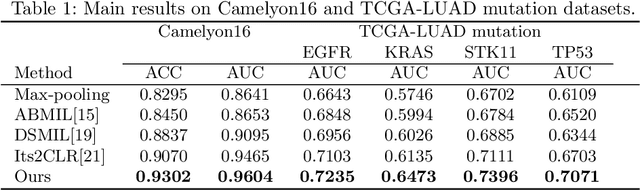


Weakly supervised whole slide image (WSI) classification is challenging due to the lack of patch-level labels and high computational costs. State-of-the-art methods use self-supervised patch-wise feature representations for multiple instance learning (MIL). Recently, methods have been proposed to fine-tune the feature representation on the downstream task using pseudo labeling, but mostly focusing on selecting high-quality positive patches. In this paper, we propose to mine hard negative samples during fine-tuning. This allows us to obtain better feature representations and reduce the training cost. Furthermore, we propose a novel patch-wise ranking loss in MIL to better exploit these hard negative samples. Experiments on two public datasets demonstrate the efficacy of these proposed ideas. Our codes are available at https://github.com/winston52/HNM-WSI