 Add to Chrome
 Add to Firefox
 Add to Edge
Skill-Augmented AI Agents for Medical Research Analysis: An Exploratory Multi-Model Human Evaluation in an NSCLC Transcriptomic Biomarker Task
Jun 10, 2026
Background. Large language models and AI agents are increasingly used to support biomedical research, but native model outputs may omit key analytical steps, misuse methods, or overstate conclusions. We evaluated whether autonomous access to a medical research skill package was associated with higher-quality AI-generated transcriptomic research-analysis outputs compared with native AI without skills. Methods. We conducted an exploratory multi-model human evaluation using a non-small cell lung cancer immunotherapy biomarker task. Six model backbones were tested. The evaluation included 21 anonymized outputs: 9 native-AI outputs and 12 skill-augmented outputs generated through an AI agent implementation represented by OpenClaw. Four non-expert biomedical reviewers and two blinded experts evaluated each output, with two ratings from each reviewer type. The primary outcome was expert-rated overall quality. Results. Skill-augmented outputs showed directionally higher expert overall quality than native-AI outputs (mean 5.50 vs 5.11; difference=0.39; bootstrap 95\% CI, -0.04 to 0.90; Welch p=0.156). Non-expert reviewer quality showed the same direction (mean 4.72 vs 4.47; difference=0.26; bootstrap 95\% CI, -0.25 to 0.80; Welch p=0.373). Expert agreement was limited (single-rating ICC=-0.15), and model-specific effects were descriptive and heterogeneous. Conclusions. Autonomous skill access showed a directional quality signal in this exploratory sample, but the signal was smaller than expert-rating noise and should not be interpreted as confirmatory evidence. The findings primarily motivate larger evaluations of skill-augmented AI agents with stronger reliability controls, platform replication, and biological-validity assessment.

AHA-WAM:Asynchronous Horizon-Adaptive World-Action Modeling with Observation-Guided Context Routing
Jun 08, 2026World-action models have emerged as a promising paradigm for robot manipulation, jointly modeling visual scene dynamics and actions to inject physical priors into policy learning. However, existing world-action models couple world prediction and action execution at the same temporal resolution, forcing the world branch to model near-term frame variations that are redundant and weakly informative. We posit that strictly binding world prediction and action execution to the same temporal rhythm may underutilize the potential of the video branch for embodied control. Therefore, we propose AHA-WAM, an Asynchronous Horizon-Adaptive World-Action Model built on a dual Diffusion Transformer (DiT) architecture that reorganizes world-action modeling around this temporal asymmetry. AHA-WAM instantiates the video DiT as a low-frequency world planner that maintains rolling key-value memory over past observations and exposes reusable layerwise latent context encoding long-horizon scene evolution, while a high-frequency action DiT executes short action chunks in closed loop by querying this context through layerwise joint attention. To support asynchronous execution, we introduce horizon-adaptive offset training and Observation-Guided Video-Context Routing (OVCR), which together let the action expert exploit long-horizon world context while remaining responsive to real-time execution state without rerunning the video DiT. Experiments on RoboTwin and real-world manipulation tasks show that AHA-WAM achieves state-of-the-art performance without any robot-data pretraining, attaining 92.80% average success on RoboTwin and 78.3% success across 4 real-world tasks, while reaching 24.17 Hz closed-loop control with a 4.59x speedup over Fast-WAM.
TKG-Thinker: Towards Dynamic Reasoning over Temporal Knowledge Graphs via Agentic Reinforcement Learning
Feb 05, 2026Temporal knowledge graph question answering (TKGQA) aims to answer time-sensitive questions by leveraging temporal knowledge bases. While Large Language Models (LLMs) demonstrate significant potential in TKGQA, current prompting strategies constrain their efficacy in two primary ways. First, they are prone to reasoning hallucinations under complex temporal constraints. Second, static prompting limits model autonomy and generalization, as it lack optimization through dynamic interaction with temporal knowledge graphs (TKGs) environments. To address these limitations, we propose \textbf{TKG-Thinker}, a novel agent equipped with autonomous planning and adaptive retrieval capabilities for reasoning over TKGs. Specifically, TKG-Thinker performs in-depth temporal reasoning through dynamic multi-turn interactions with TKGs via a dual-training strategy. We first apply Supervised Fine-Tuning (SFT) with chain-of thought data to instill core planning capabilities, followed by a Reinforcement Learning (RL) stage that leverages multi-dimensional rewards to refine reasoning policies under intricate temporal constraints. Experimental results on benchmark datasets with three open-source LLMs show that TKG-Thinker achieves state-of-the-art performance and exhibits strong generalization across complex TKGQA settings.
Dep-Search: Learning Dependency-Aware Reasoning Traces with Persistent Memory
Jan 26, 2026Large Language Models (LLMs) have demonstrated remarkable capabilities in complex reasoning tasks, particularly when augmented with search mechanisms that enable systematic exploration of external knowledge bases. The field has evolved from traditional retrieval-augmented generation (RAG) frameworks to more sophisticated search-based frameworks that orchestrate multi-step reasoning through explicit search strategies. However, existing search frameworks still rely heavily on implicit natural language reasoning to determine search strategies and how to leverage retrieved information across reasoning steps. This reliance on implicit reasoning creates fundamental challenges for managing dependencies between sub-questions, efficiently reusing previously retrieved knowledge, and learning optimal search strategies through reinforcement learning. To address these limitations, we propose Dep-Search, a dependency-aware search framework that advances beyond existing search frameworks by integrating structured reasoning, retrieval, and persistent memory through GRPO. Dep-Search introduces explicit control mechanisms that enable the model to decompose questions with dependency relationships, retrieve information when needed, access previously stored knowledge from memory, and summarize long reasoning contexts into reusable memory entries. Through extensive experiments on seven diverse question answering datasets, we demonstrate that Dep-Search significantly enhances LLMs' ability to tackle complex multi-hop reasoning tasks, achieving substantial improvements over strong baselines across different model scales.
Towards Explainable Temporal Reasoning in Large Language Models: A Structure-Aware Generative Framework
May 21, 2025While large language models (LLMs) show great potential in temporal reasoning, most existing work focuses heavily on enhancing performance, often neglecting the explainable reasoning processes underlying the results. To address this gap, we introduce a comprehensive benchmark covering a wide range of temporal granularities, designed to systematically evaluate LLMs' capabilities in explainable temporal reasoning. Furthermore, our findings reveal that LLMs struggle to deliver convincing explanations when relying solely on textual information. To address challenge, we propose GETER, a novel structure-aware generative framework that integrates Graph structures with text for Explainable TEmporal Reasoning. Specifically, we first leverage temporal knowledge graphs to develop a temporal encoder that captures structural information for the query. Subsequently, we introduce a structure-text prefix adapter to map graph structure features into the text embedding space. Finally, LLMs generate explanation text by seamlessly integrating the soft graph token with instruction-tuning prompt tokens. Experimental results indicate that GETER achieves state-of-the-art performance while also demonstrating its effectiveness as well as strong generalization capabilities. Our dataset and code are available at https://github.com/carryTatum/GETER.
Bayesian Optimization for Building Social-Influence-Free Consensus
Feb 11, 2025We introduce Social Bayesian Optimization (SBO), a vote-efficient algorithm for consensus-building in collective decision-making. In contrast to single-agent scenarios, collective decision-making encompasses group dynamics that may distort agents' preference feedback, thereby impeding their capacity to achieve a social-influence-free consensus -- the most preferable decision based on the aggregated agent utilities. We demonstrate that under mild rationality axioms, reaching social-influence-free consensus using noisy feedback alone is impossible. To address this, SBO employs a dual voting system: cheap but noisy public votes (e.g., show of hands in a meeting), and more accurate, though expensive, private votes (e.g., one-to-one interview). We model social influence using an unknown social graph and leverage the dual voting system to efficiently learn this graph. Our theoretical findigns show that social graph estimation converges faster than the black-box estimation of agents' utilities, allowing us to reduce reliance on costly private votes early in the process. This enables efficient consensus-building primarily through noisy public votes, which are debiased based on the estimated social graph to infer social-influence-free feedback. We validate the efficacy of SBO across multiple real-world applications, including thermal comfort, team building, travel negotiation, and energy trading collaboration.
Which price to pay? Auto-tuning building MPC controller for optimal economic cost
Jan 18, 2025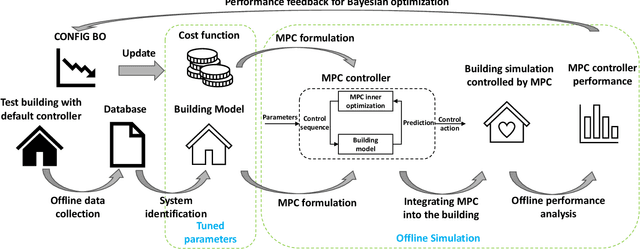
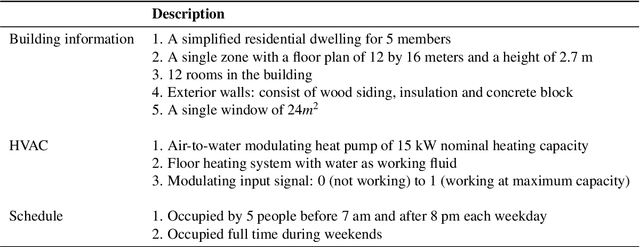
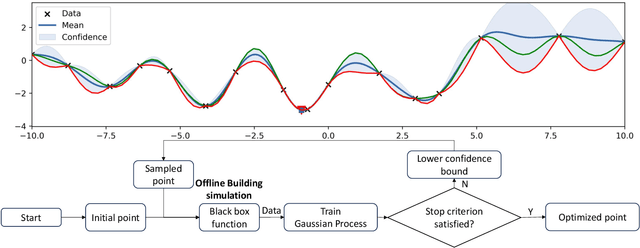
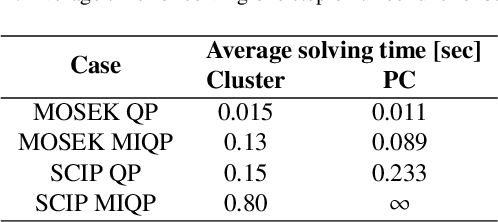
Model predictive control (MPC) controller is considered for temperature management in buildings but its performance heavily depends on hyperparameters. Consequently, MPC necessitates meticulous hyperparameter tuning to attain optimal performance under diverse contracts. However, conventional building controller design is an open-loop process without critical hyperparameter optimization, often leading to suboptimal performance due to unexpected environmental disturbances and modeling errors. Furthermore, these hyperparameters are not adapted to different pricing schemes and may lead to non-economic operations. To address these issues, we propose an efficient performance-oriented building MPC controller tuning method based on a cutting-edge efficient constrained Bayesian optimization algorithm, CONFIG, with global optimality guarantees. We demonstrate that this technique can be applied to efficiently deal with real-world DSM program selection problems under customized black-box constraints and objectives. In this study, a simple MPC controller, which offers the advantages of reduced commissioning costs, enhanced computational efficiency, was optimized to perform on a comparable level to a delicately designed and computationally expensive MPC controller. The results also indicate that with an optimized simple MPC, the monthly electricity cost of a household can be reduced by up to 26.90% compared with the cost when controlled by a basic rule-based controller under the same constraints. Then we compared 12 real electricity contracts in Belgium for a household family with customized black-box occupant comfort constraints. The results indicate a monthly electricity bill saving up to 20.18% when the most economic contract is compared with the worst one, which again illustrates the significance of choosing a proper electricity contract.
Principled Bayesian Optimisation in Collaboration with Human Experts
Oct 14, 2024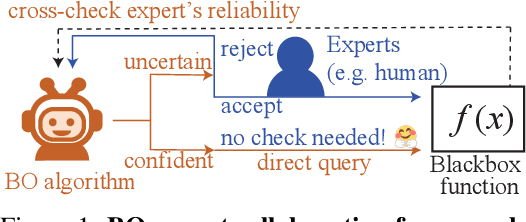


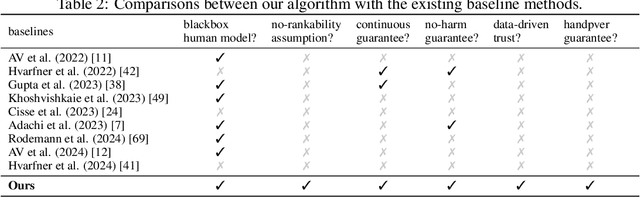
Bayesian optimisation for real-world problems is often performed interactively with human experts, and integrating their domain knowledge is key to accelerate the optimisation process. We consider a setup where experts provide advice on the next query point through binary accept/reject recommendations (labels). Experts' labels are often costly, requiring efficient use of their efforts, and can at the same time be unreliable, requiring careful adjustment of the degree to which any expert is trusted. We introduce the first principled approach that provides two key guarantees. (1) Handover guarantee: similar to a no-regret property, we establish a sublinear bound on the cumulative number of experts' binary labels. Initially, multiple labels per query are needed, but the number of expert labels required asymptotically converges to zero, saving both expert effort and computation time. (2) No-harm guarantee with data-driven trust level adjustment: our adaptive trust level ensures that the convergence rate will not be worse than the one without using advice, even if the advice from experts is adversarial. Unlike existing methods that employ a user-defined function that hand-tunes the trust level adjustment, our approach enables data-driven adjustments. Real-world applications empirically demonstrate that our method not only outperforms existing baselines, but also maintains robustness despite varying labelling accuracy, in tasks of battery design with human experts.
Deja vu: Contrastive Historical Modeling with Prefix-tuning for Temporal Knowledge Graph Reasoning
Mar 25, 2024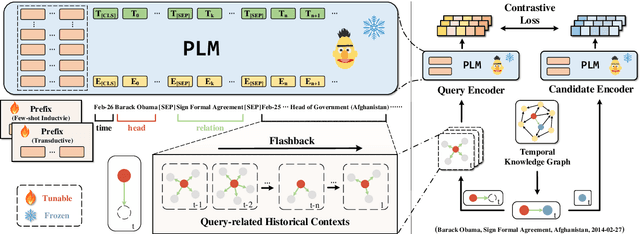
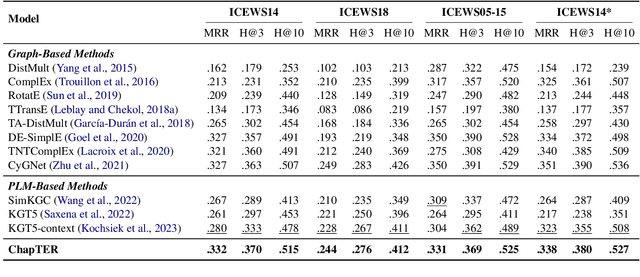
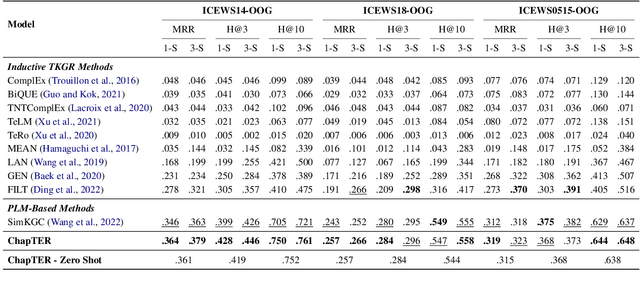
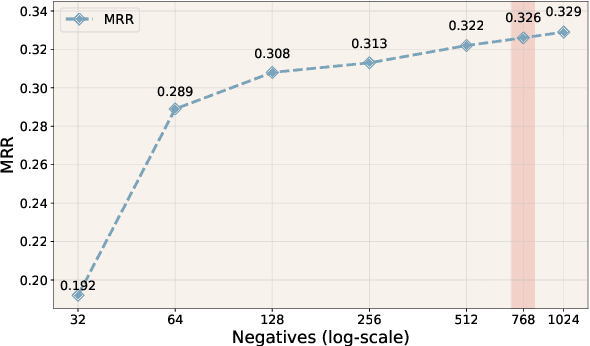
Temporal Knowledge Graph Reasoning (TKGR) is the task of inferring missing facts for incomplete TKGs in complex scenarios (e.g., transductive and inductive settings), which has been gaining increasing attention. Recently, to mitigate dependence on structured connections in TKGs, text-based methods have been developed to utilize rich linguistic information from entity descriptions. However, suffering from the enormous parameters and inflexibility of pre-trained language models, existing text-based methods struggle to balance the textual knowledge and temporal information with computationally expensive purpose-built training strategies. To tap the potential of text-based models for TKGR in various complex scenarios, we propose ChapTER, a Contrastive historical modeling framework with prefix-tuning for TEmporal Reasoning. ChapTER feeds history-contextualized text into the pseudo-Siamese encoders to strike a textual-temporal balance via contrastive estimation between queries and candidates. By introducing virtual time prefix tokens, it applies a prefix-based tuning method to facilitate the frozen PLM capable for TKGR tasks under different settings. We evaluate ChapTER on four transductive and three few-shot inductive TKGR benchmarks, and experimental results demonstrate that ChapTER achieves superior performance compared to competitive baselines with only 0.17% tuned parameters. We conduct thorough analysis to verify the effectiveness, flexibility and efficiency of ChapTER.
Principled Preferential Bayesian Optimization
Feb 08, 2024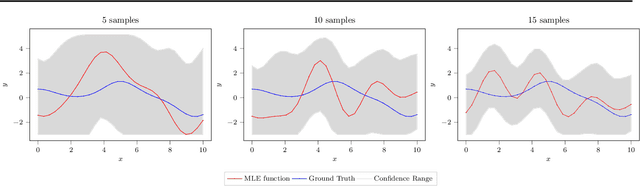
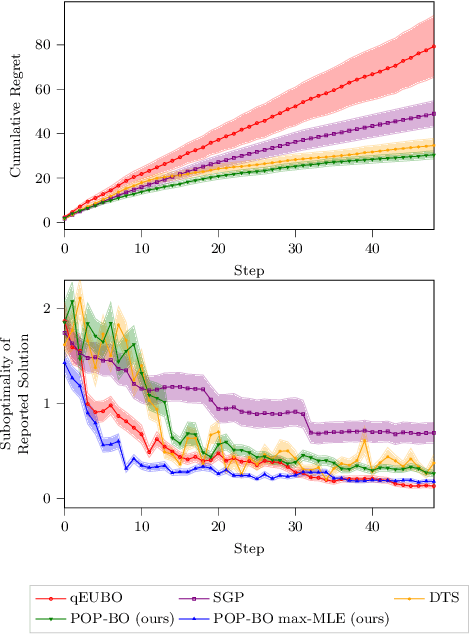

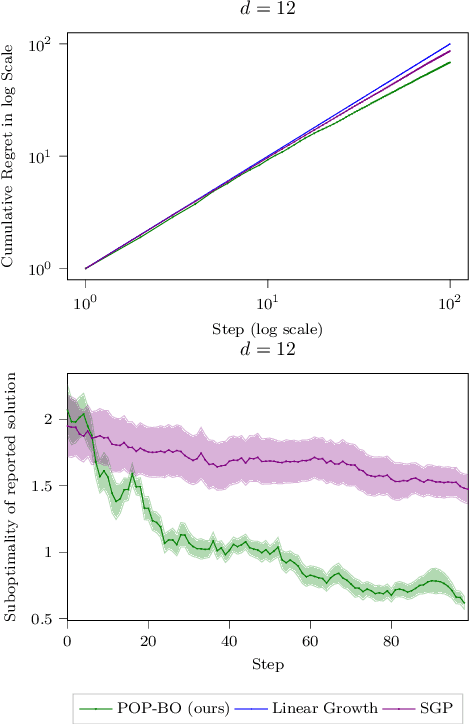
We study the problem of preferential Bayesian optimization (BO), where we aim to optimize a black-box function with only preference feedback over a pair of candidate solutions. Inspired by the likelihood ratio idea, we construct a confidence set of the black-box function using only the preference feedback. An optimistic algorithm with an efficient computational method is then developed to solve the problem, which enjoys an information-theoretic bound on the cumulative regret, a first-of-its-kind for preferential BO. This bound further allows us to design a scheme to report an estimated best solution, with a guaranteed convergence rate. Experimental results on sampled instances from Gaussian processes, standard test functions, and a thermal comfort optimization problem all show that our method stably achieves better or competitive performance as compared to the existing state-of-the-art heuristics, which, however, do not have theoretical guarantees on regret bounds or convergence.