 Add to Chrome
 Add to Firefox
 Add to Edge
Generalised Robust Bayes for Joint Inference of Model and Contamination
Jul 28, 2026
Generalised Bayesian inference (GBI) has emerged as a compelling robust alternative to standard Bayesian inference, mitigating sensitivity to data contamination by replacing the log-likelihood with a robust loss or divergence. However, existing robust GBI frameworks typically provide only qualitative robustness: while they can make posterior inference less sensitive to contamination, they lack an intrinsic mechanism to quantify the contamination proportion or identify anomalous observations. This paper introduces Hölder-Bayes, a GBI framework for joint inference of the model parameter and the contamination proportion. We construct a generalised joint posterior over both model and contamination parameter by applying the Hölder divergence to a scaled model density. Theoretically, we establish global bias-robustness via the uniform boundedness of the posterior influence function, derive a finite-sample excess-risk bound, and prove a Bernstein--von Mises approximation together with interpretable contamination-induced bias bounds under a heavy-contamination regime. We further show that, for the Hölder posterior, temperature calibration admits a direct interpretation as affine volume scaling of the data space. The resulting posterior yields a self-contained probabilistic mechanism for outlier detection: posterior uncertainty in both the model parameter and the contamination proportion is propagated to observation-level Frequency-of-Detection scores, without requiring an external anomaly-score threshold. Empirical evaluations demonstrate that Hölder-Bayes provides robust parameter inference, contamination-level recovery, and uncertainty-aware outlier detection.

LLM-Guided Test-Time Discovery of Quantum-Chemical Approximation Algorithms
Jun 17, 2026Quantum chemistry simulations underpin modern materials discovery, yet their impact is limited by steep computational cost and dependence on fixed approximation schemes. Foundation models, such as machine-learned interatomic potentials, have accelerated parts of this workflow, but their reliance on large-scale pretraining restricts adaptability at the frontier of chemical space, where methodological innovation and sparse data are the norm. Agentic AI systems can automate existing simulation pipelines, yet they remain constrained by the predefined tools and algorithms they orchestrate. In response, we introduce LADeQ, an LLM-guided workflow that discovers, implements, and benchmarks candidate approximation algorithms at test-time within existing quantum chemistry codes. Rather than selecting from a predefined repertoire, LADeQ constructs candidate approximation schemes on demand, drawing on techniques from disciplines such as spatial statistics, circuit simulation, and kernel methods that have had little prior presence in electronic-structure theory. Because it builds on an out-of-the-box language model, LADeQ requires no task-specific pretraining or curated data, and the resulting implementations are transparent and inspectable, with explicitly traceable approximation errors that enable principled control of accuracy--efficiency trade-offs. We show that LADeQ accelerates coupled cluster singles and doubles (CCSD) and configuration interaction singles and doubles (CISD) calculations while keeping correlation-energy errors within user-specified tolerances, demonstrating autonomous, objective-driven discovery of approximation algorithms inside existing electronic-structure solvers.
LapidaryEngine: Fully Conversational Crystal Generation
Jun 12, 2026The emergence of Large Language Models (LLMs) has inspired the vision of generating bespoke crystal materials directly from natural-language instructions, enabling users to design materials through intuitive, conversational interaction. Existing text-to-crystal generative models represent important early steps toward this goal, but they suffer from two critical limitations: (i) restricted input formats that require highly structured descriptions (e.g., chemical formulas), and (ii) one-directional generation, where models can map text to crystal but cannot perform the inverse. These limitations prevent fully conversational workflows and hinder alignment with users' inherently ambiguous and evolving desiderata. We address these challenges with LapidaryEngine, the first model to support fully conversational crystal generation. LapidaryEngine accepts free-form natural-language requests and performs iterative refinement and editing in a dialogue-like manner. The key innovation is a pivot representation, a third, intermediate form that enables bidirectional translation between text and crystal structures despite the absence of direct paired datasets. Leveraging this pivot allows robust interpretation of user feedback and precise structural control. We demonstrate LapidaryEngine across diverse tasks, including insulator discovery, stability optimization, compositional modification, and structural editing, showcasing its ability to align generated materials with user intent in an interactive manner.
Regret Analysis of Guided Diffusion for Black-Box Optimization over Structured Inputs
May 11, 2026Guided-diffusion black-box optimization (BO) has shown strong empirical performance on structured design problems such as molecules and crystals, but its regret behavior remains poorly understood. Existing BO regret analyses typically rely on maximum information gain, non-pretrained surrogate models, or exact acquisition maximization -- assumptions that break down in modern diffusion -- BO pipelines, where pretrained diffusion models serve as powerful priors over valid structures and acquisition maximization is replaced by approximate sampling over astronomically large discrete spaces. We develop a first certificate-based expected simple-regret framework for guided-diffusion BO that avoids maximum-information-gain bounds, RKHS assumptions, and exact acquisition maximization. The central quantity in our analysis is mass lift: the increase in probability mass assigned to near-optimal designs relative to the pretrained generator. This view explains how exponential-looking finite-budget convergence and polynomial acceleration can all arise from the same mechanism. We also give practical diagnostics for estimating search exponents from finite candidate pools and a proposal-corrected resampling construction that provides a fully certified sampler instance.
Verbalizing LLM's Higher-order Uncertainty via Imprecise Probabilities
Mar 11, 2026Despite the growing demand for eliciting uncertainty from large language models (LLMs), empirical evidence suggests that LLM behavior is not always adequately captured by the elicitation techniques developed under the classical probabilistic uncertainty framework. This mismatch leads to systematic failure modes, particularly in settings that involve ambiguous question-answering, in-context learning, and self-reflection. To address this, we propose novel prompt-based uncertainty elicitation techniques grounded in \emph{imprecise probabilities}, a principled framework for repesenting and eliciting higher-order uncertainty. Here, first-order uncertainty captures uncertainty over possible responses to a prompt, while second-order uncertainty (uncertainty about uncertainty) quantifies indeterminacy in the underlying probability model itself. We introduce general-purpose prompting and post-processing procedures to directly elicit and quantify both orders of uncertainty, and demonstrate their effectiveness across diverse settings. Our approach enables more faithful uncertainty reporting from LLMs, improving credibility and supporting downstream decision-making.
Natural Evolutionary Search meets Probabilistic Numerics
Jul 09, 2025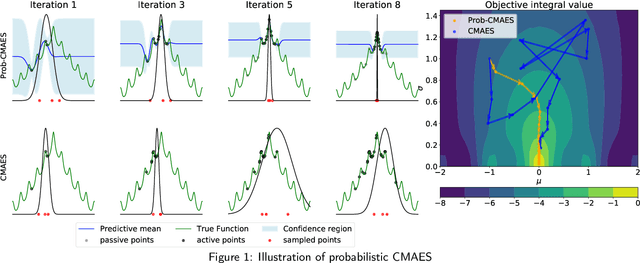
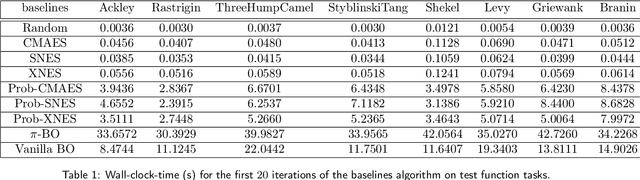
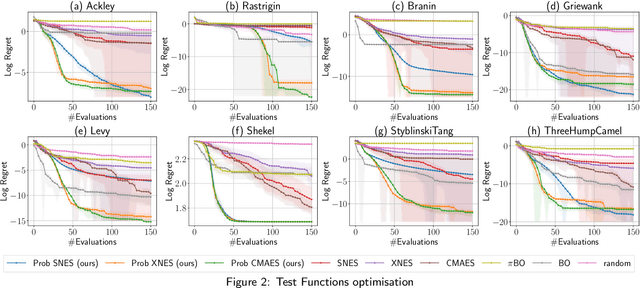
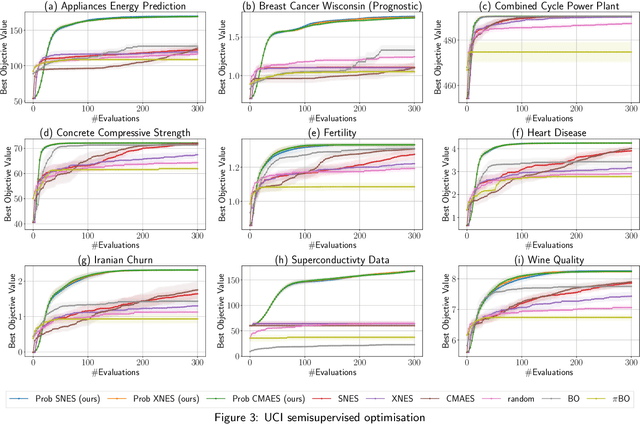
Zeroth-order local optimisation algorithms are essential for solving real-valued black-box optimisation problems. Among these, Natural Evolution Strategies (NES) represent a prominent class, particularly well-suited for scenarios where prior distributions are available. By optimising the objective function in the space of search distributions, NES algorithms naturally integrate prior knowledge during initialisation, making them effective in settings such as semi-supervised learning and user-prior belief frameworks. However, due to their reliance on random sampling and Monte Carlo estimates, NES algorithms can suffer from limited sample efficiency. In this paper, we introduce a novel class of algorithms, termed Probabilistic Natural Evolutionary Strategy Algorithms (ProbNES), which enhance the NES framework with Bayesian quadrature. We show that ProbNES algorithms consistently outperforms their non-probabilistic counterparts as well as global sample efficient methods such as Bayesian Optimisation (BO) or $\pi$BO across a wide range of tasks, including benchmark test functions, data-driven optimisation tasks, user-informed hyperparameter tuning tasks and locomotion tasks.
Scalable Valuation of Human Feedback through Provably Robust Model Alignment
May 23, 2025Despite the importance of aligning language models with human preferences, crowd-sourced human feedback is often noisy -- for example, preferring less desirable responses -- posing a fundamental challenge to alignment. A truly robust alignment objective should yield identical model parameters even under severe label noise, a property known as redescending. We prove that no existing alignment methods satisfy this property. To address this, we propose H\"older-DPO, the first principled alignment loss with a provable redescending property, enabling estimation of the clean data distribution from noisy feedback. The aligned model estimates the likelihood of clean data, providing a theoretically grounded metric for dataset valuation that identifies the location and fraction of mislabels. This metric is gradient-free, enabling scalable and automated human feedback valuation without costly manual verification or clean validation dataset. H\"older-DPO achieves state-of-the-art robust alignment performance while accurately detecting mislabels in controlled datasets. Finally, we apply H\"older-DPO to widely used alignment datasets, revealing substantial noise levels and demonstrating that removing these mislabels significantly improves alignment performance across methods.
Fixing the Pitfalls of Probabilistic Time-Series Forecasting Evaluation by Kernel Quadrature
Mar 08, 2025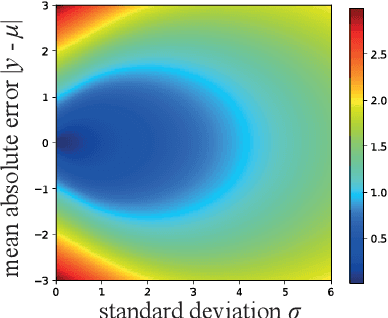
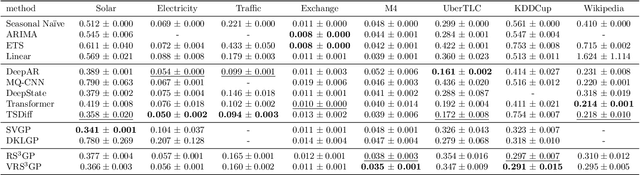
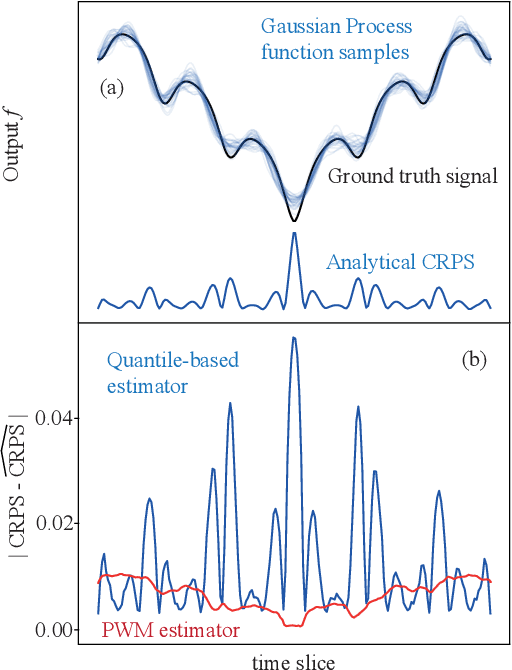
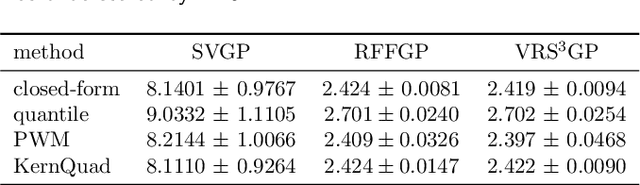
Despite the significance of probabilistic time-series forecasting models, their evaluation metrics often involve intractable integrations. The most widely used metric, the continuous ranked probability score (CRPS), is a strictly proper scoring function; however, its computation requires approximation. We found that popular CRPS estimators--specifically, the quantile-based estimator implemented in the widely used GluonTS library and the probability-weighted moment approximation--both exhibit inherent estimation biases. These biases lead to crude approximations, resulting in improper rankings of forecasting model performance when CRPS values are close. To address this issue, we introduced a kernel quadrature approach that leverages an unbiased CRPS estimator and employs cubature construction for scalable computation. Empirically, our approach consistently outperforms the two widely used CRPS estimators.
Bayesian Optimization for Building Social-Influence-Free Consensus
Feb 11, 2025We introduce Social Bayesian Optimization (SBO), a vote-efficient algorithm for consensus-building in collective decision-making. In contrast to single-agent scenarios, collective decision-making encompasses group dynamics that may distort agents' preference feedback, thereby impeding their capacity to achieve a social-influence-free consensus -- the most preferable decision based on the aggregated agent utilities. We demonstrate that under mild rationality axioms, reaching social-influence-free consensus using noisy feedback alone is impossible. To address this, SBO employs a dual voting system: cheap but noisy public votes (e.g., show of hands in a meeting), and more accurate, though expensive, private votes (e.g., one-to-one interview). We model social influence using an unknown social graph and leverage the dual voting system to efficiently learn this graph. Our theoretical findigns show that social graph estimation converges faster than the black-box estimation of agents' utilities, allowing us to reduce reliance on costly private votes early in the process. This enables efficient consensus-building primarily through noisy public votes, which are debiased based on the estimated social graph to infer social-influence-free feedback. We validate the efficacy of SBO across multiple real-world applications, including thermal comfort, team building, travel negotiation, and energy trading collaboration.
Learning to Forget: Bayesian Time Series Forecasting using Recurrent Sparse Spectrum Signature Gaussian Processes
Dec 27, 2024
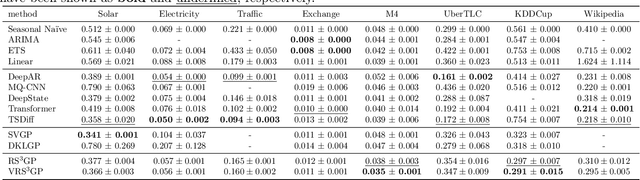
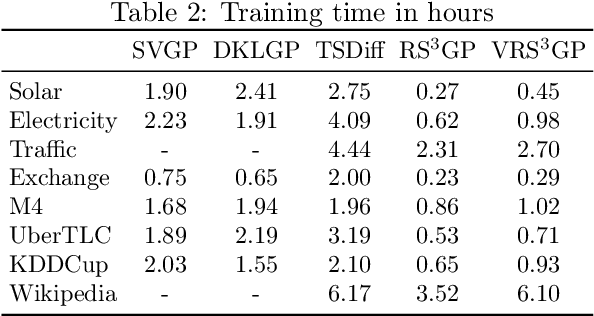
The signature kernel is a kernel between time series of arbitrary length and comes with strong theoretical guarantees from stochastic analysis. It has found applications in machine learning such as covariance functions for Gaussian processes. A strength of the underlying signature features is that they provide a structured global description of a time series. However, this property can quickly become a curse when local information is essential and forgetting is required; so far this has only been addressed with ad-hoc methods such as slicing the time series into subsegments. To overcome this, we propose a principled, data-driven approach by introducing a novel forgetting mechanism for signatures. This allows the model to dynamically adapt its context length to focus on more recent information. To achieve this, we revisit the recently introduced Random Fourier Signature Features, and develop Random Fourier Decayed Signature Features (RFDSF) with Gaussian processes (GPs). This results in a Bayesian time series forecasting algorithm with variational inference, that offers a scalable probabilistic algorithm that processes and transforms a time series into a joint predictive distribution over time steps in one pass using recurrence. For example, processing a sequence of length $10^4$ steps in $\approx 10^{-2}$ seconds and in $< 1\text{GB}$ of GPU memory. We demonstrate that it outperforms other GP-based alternatives and competes with state-of-the-art probabilistic time series forecasting algorithms.