 Add to Chrome
 Add to Firefox
 Add to Edge
Skill-Augmented AI Agents for Medical Research Analysis: An Exploratory Multi-Model Human Evaluation in an NSCLC Transcriptomic Biomarker Task
Jun 10, 2026
Background. Large language models and AI agents are increasingly used to support biomedical research, but native model outputs may omit key analytical steps, misuse methods, or overstate conclusions. We evaluated whether autonomous access to a medical research skill package was associated with higher-quality AI-generated transcriptomic research-analysis outputs compared with native AI without skills. Methods. We conducted an exploratory multi-model human evaluation using a non-small cell lung cancer immunotherapy biomarker task. Six model backbones were tested. The evaluation included 21 anonymized outputs: 9 native-AI outputs and 12 skill-augmented outputs generated through an AI agent implementation represented by OpenClaw. Four non-expert biomedical reviewers and two blinded experts evaluated each output, with two ratings from each reviewer type. The primary outcome was expert-rated overall quality. Results. Skill-augmented outputs showed directionally higher expert overall quality than native-AI outputs (mean 5.50 vs 5.11; difference=0.39; bootstrap 95\% CI, -0.04 to 0.90; Welch p=0.156). Non-expert reviewer quality showed the same direction (mean 4.72 vs 4.47; difference=0.26; bootstrap 95\% CI, -0.25 to 0.80; Welch p=0.373). Expert agreement was limited (single-rating ICC=-0.15), and model-specific effects were descriptive and heterogeneous. Conclusions. Autonomous skill access showed a directional quality signal in this exploratory sample, but the signal was smaller than expert-rating noise and should not be interpreted as confirmatory evidence. The findings primarily motivate larger evaluations of skill-augmented AI agents with stronger reliability controls, platform replication, and biological-validity assessment.

Unveil Benign Overfitting for Transformer in Vision: Training Dynamics, Convergence, and Generalization
Sep 28, 2024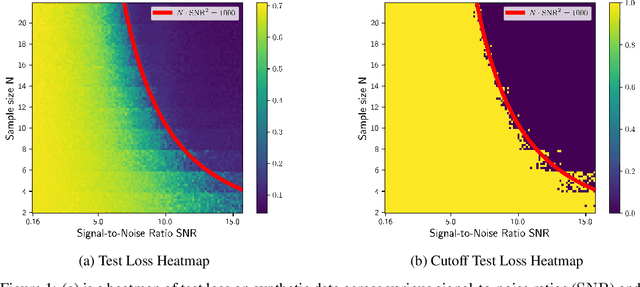
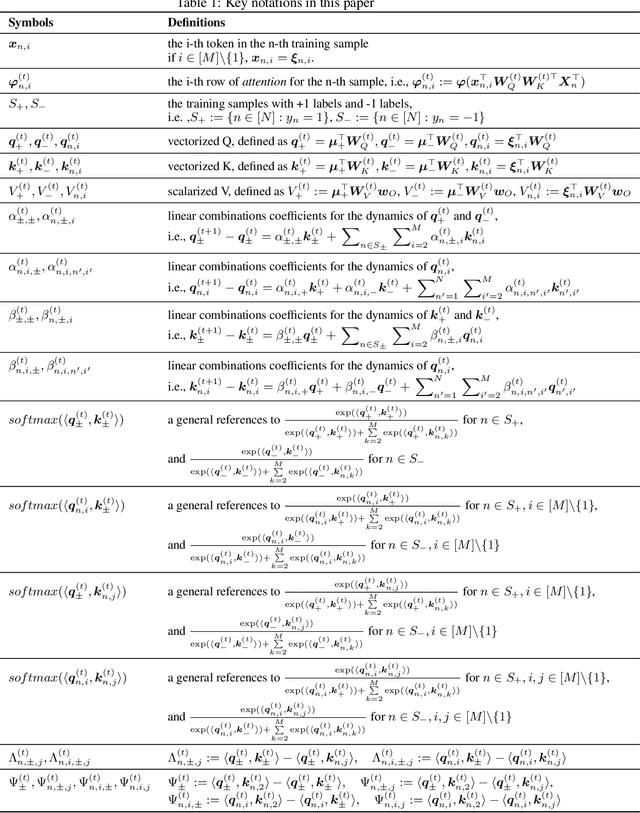
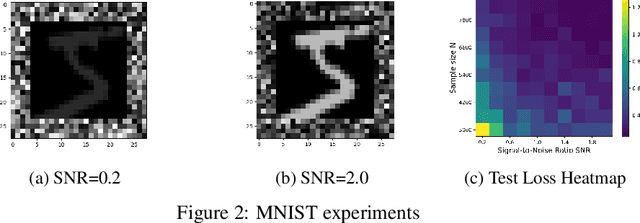

Transformers have demonstrated great power in the recent development of large foundational models. In particular, the Vision Transformer (ViT) has brought revolutionary changes to the field of vision, achieving significant accomplishments on the experimental side. However, their theoretical capabilities, particularly in terms of generalization when trained to overfit training data, are still not fully understood. To address this gap, this work delves deeply into the benign overfitting perspective of transformers in vision. To this end, we study the optimization of a Transformer composed of a self-attention layer with softmax followed by a fully connected layer under gradient descent on a certain data distribution model. By developing techniques that address the challenges posed by softmax and the interdependent nature of multiple weights in transformer optimization, we successfully characterized the training dynamics and achieved generalization in post-training. Our results establish a sharp condition that can distinguish between the small test error phase and the large test error regime, based on the signal-to-noise ratio in the data model. The theoretical results are further verified by experimental simulation.