 Add to Chrome
 Add to Firefox
 Add to Edge
DRL-Based Sidelobe Suppression for Multi-focus Reconfigurable Intelligent Surface
Dec 24, 2023
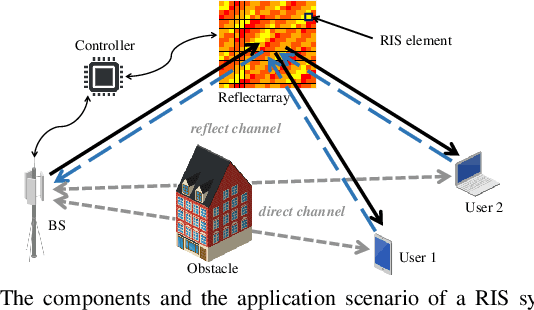
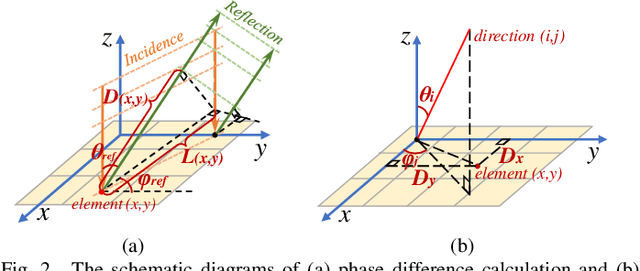


Reconfigurable intelligent surface (RIS) technology is receiving significant attention as a key enabling technology for 6G communications, with much attention given to coverage infill and wireless power transfer. However, relatively little attention has been paid to the radiation pattern fidelity, for example, sidelobe suppression. When considering multi-user coverage infill, direct beam pattern synthesis using superposition can result in undesirable sidelobe levels. To address this issue, this paper introduces and applies deep reinforcement learning (DRL) as a means to optimize the far-field pattern, offering a 4dB reduction in the unwanted sidelobe levels, thereby improving energy efficiency and decreasing the co-channel interference levels.

Learning Dense Correspondence for NeRF-Based Face Reenactment
Dec 19, 2023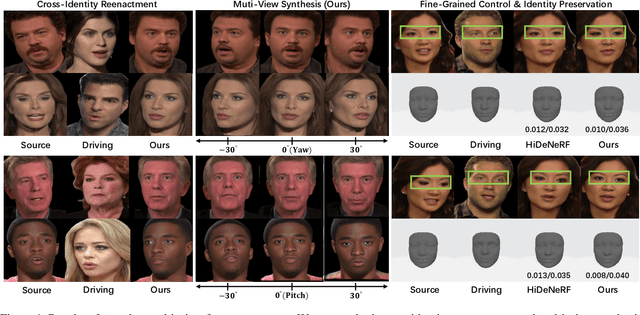
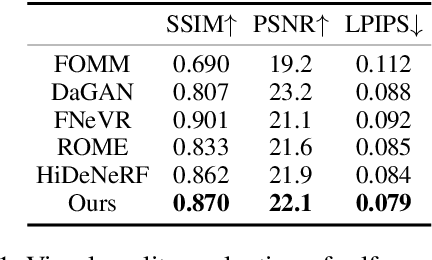
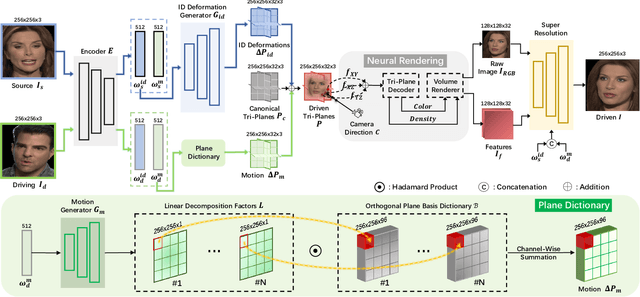
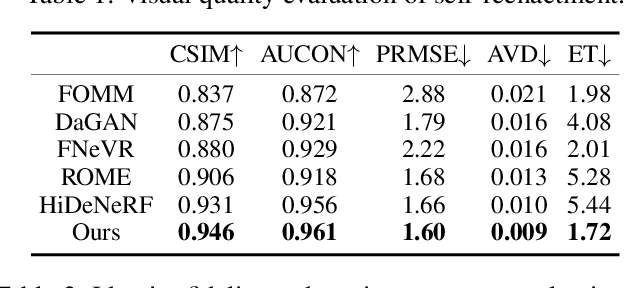
Face reenactment is challenging due to the need to establish dense correspondence between various face representations for motion transfer. Recent studies have utilized Neural Radiance Field (NeRF) as fundamental representation, which further enhanced the performance of multi-view face reenactment in photo-realism and 3D consistency. However, establishing dense correspondence between different face NeRFs is non-trivial, because implicit representations lack ground-truth correspondence annotations like mesh-based 3D parametric models (e.g., 3DMM) with index-aligned vertexes. Although aligning 3DMM space with NeRF-based face representations can realize motion control, it is sub-optimal for their limited face-only modeling and low identity fidelity. Therefore, we are inspired to ask: Can we learn the dense correspondence between different NeRF-based face representations without a 3D parametric model prior? To address this challenge, we propose a novel framework, which adopts tri-planes as fundamental NeRF representation and decomposes face tri-planes into three components: canonical tri-planes, identity deformations, and motion. In terms of motion control, our key contribution is proposing a Plane Dictionary (PlaneDict) module, which efficiently maps the motion conditions to a linear weighted addition of learnable orthogonal plane bases. To the best of our knowledge, our framework is the first method that achieves one-shot multi-view face reenactment without a 3D parametric model prior. Extensive experiments demonstrate that we produce better results in fine-grained motion control and identity preservation than previous methods.
ShuttleSHAP: A Turn-Based Feature Attribution Approach for Analyzing Forecasting Models in Badminton
Dec 18, 2023Agent forecasting systems have been explored to investigate agent patterns and improve decision-making in various domains, e.g., pedestrian predictions and marketing bidding. Badminton represents a fascinating example of a multifaceted turn-based sport, requiring both sophisticated tactic developments and alternate-dependent decision-making. Recent deep learning approaches for player tactic forecasting in badminton show promising performance partially attributed to effective reasoning about rally-player interactions. However, a critical obstacle lies in the unclear functionality of which features are learned for simulating players' behaviors by black-box models, where existing explainers are not equipped with turn-based and multi-output attributions. To bridge this gap, we propose a turn-based feature attribution approach, ShuttleSHAP, for analyzing forecasting models in badminton based on variants of Shapley values. ShuttleSHAP is a model-agnostic explainer that aims to quantify contribution by not only temporal aspects but also player aspects in terms of multifaceted cues. Incorporating the proposed analysis tool into the state-of-the-art turn-based forecasting model on the benchmark dataset reveals that it is, in fact, insignificant to reason about past strokes, while conventional sequential models have greater impacts. Instead, players' styles influence the models for the future simulation of a rally. On top of that, we investigate and discuss the causal analysis of these findings and demonstrate the practicability with local analysis.
Contextual Reinforcement Learning for Offshore Wind Farm Bidding
Dec 18, 2023We propose a framework for applying reinforcement learning to contextual two-stage stochastic optimization and apply this framework to the problem of energy market bidding of an off-shore wind farm. Reinforcement learning could potentially be used to learn close to optimal solutions for first stage variables of a two-stage stochastic program under different contexts. Under the proposed framework, these solutions would be learned without having to solve the full two-stage stochastic program. We present initial results of training using the DDPG algorithm and present intended future steps to improve performance.
AE-NeRF: Audio Enhanced Neural Radiance Field for Few Shot Talking Head Synthesis
Dec 18, 2023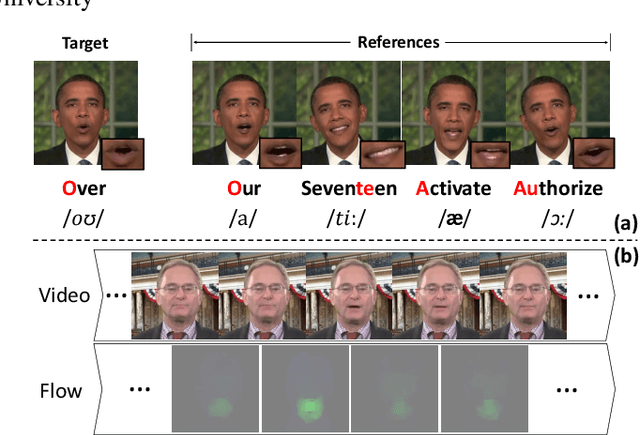
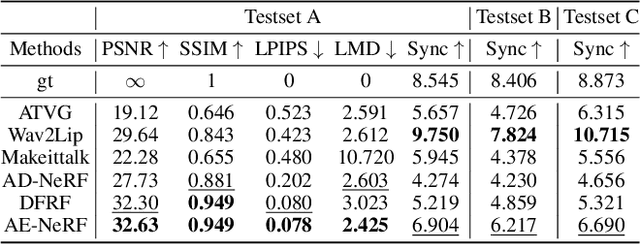
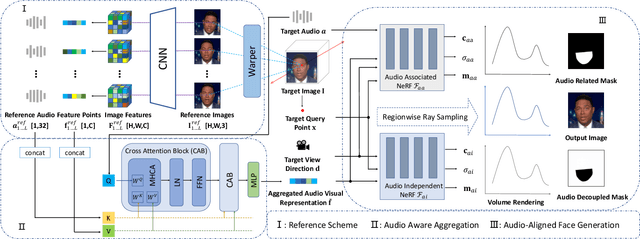
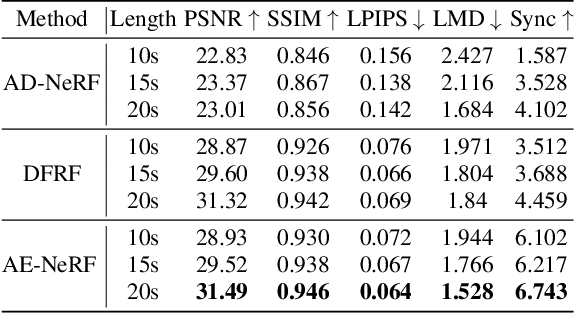
Audio-driven talking head synthesis is a promising topic with wide applications in digital human, film making and virtual reality. Recent NeRF-based approaches have shown superiority in quality and fidelity compared to previous studies. However, when it comes to few-shot talking head generation, a practical scenario where only few seconds of talking video is available for one identity, two limitations emerge: 1) they either have no base model, which serves as a facial prior for fast convergence, or ignore the importance of audio when building the prior; 2) most of them overlook the degree of correlation between different face regions and audio, e.g., mouth is audio related, while ear is audio independent. In this paper, we present Audio Enhanced Neural Radiance Field (AE-NeRF) to tackle the above issues, which can generate realistic portraits of a new speaker with fewshot dataset. Specifically, we introduce an Audio Aware Aggregation module into the feature fusion stage of the reference scheme, where the weight is determined by the similarity of audio between reference and target image. Then, an Audio-Aligned Face Generation strategy is proposed to model the audio related and audio independent regions respectively, with a dual-NeRF framework. Extensive experiments have shown AE-NeRF surpasses the state-of-the-art on image fidelity, audio-lip synchronization, and generalization ability, even in limited training set or training iterations.
Pedestrian Attribute Recognition via CLIP based Prompt Vision-Language Fusion
Dec 17, 2023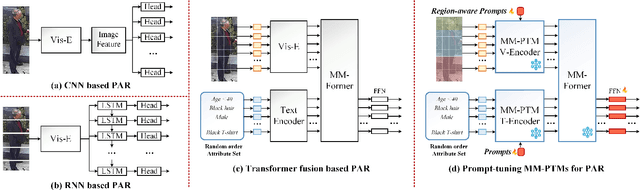
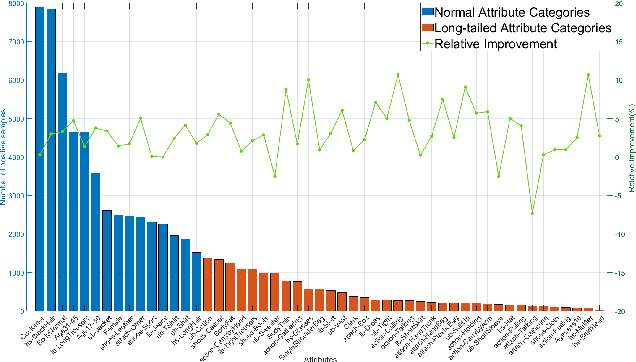
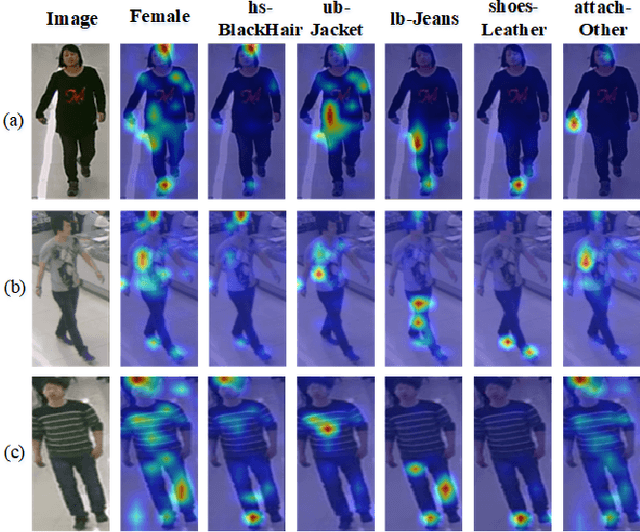
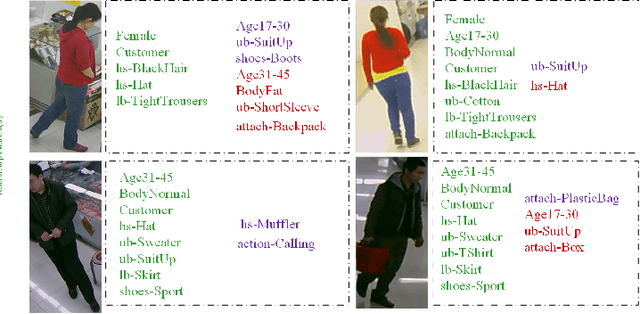
Existing pedestrian attribute recognition (PAR) algorithms adopt pre-trained CNN (e.g., ResNet) as their backbone network for visual feature learning, which might obtain sub-optimal results due to the insufficient employment of the relations between pedestrian images and attribute labels. In this paper, we formulate PAR as a vision-language fusion problem and fully exploit the relations between pedestrian images and attribute labels. Specifically, the attribute phrases are first expanded into sentences, and then the pre-trained vision-language model CLIP is adopted as our backbone for feature embedding of visual images and attribute descriptions. The contrastive learning objective connects the vision and language modalities well in the CLIP-based feature space, and the Transformer layers used in CLIP can capture the long-range relations between pixels. Then, a multi-modal Transformer is adopted to fuse the dual features effectively and feed-forward network is used to predict attributes. To optimize our network efficiently, we propose the region-aware prompt tuning technique to adjust very few parameters (i.e., only the prompt vectors and classification heads) and fix both the pre-trained VL model and multi-modal Transformer. Our proposed PAR algorithm only adjusts 0.75% learnable parameters compared with the fine-tuning strategy. It also achieves new state-of-the-art performance on both standard and zero-shot settings for PAR, including RAPv1, RAPv2, WIDER, PA100K, and PETA-ZS, RAP-ZS datasets. The source code and pre-trained models will be released on https://github.com/Event-AHU/OpenPAR.
Dataset Distillation via Adversarial Prediction Matching
Dec 14, 2023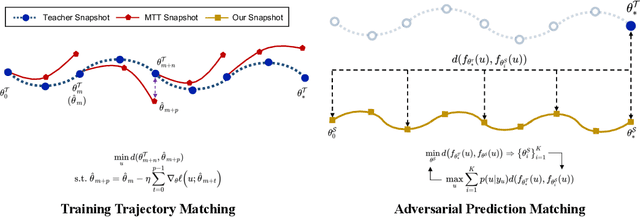
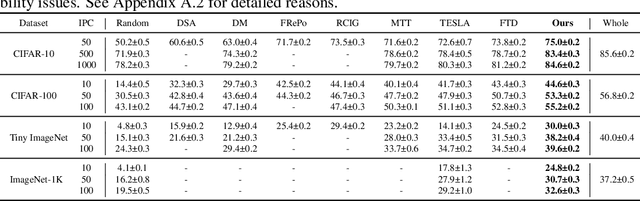

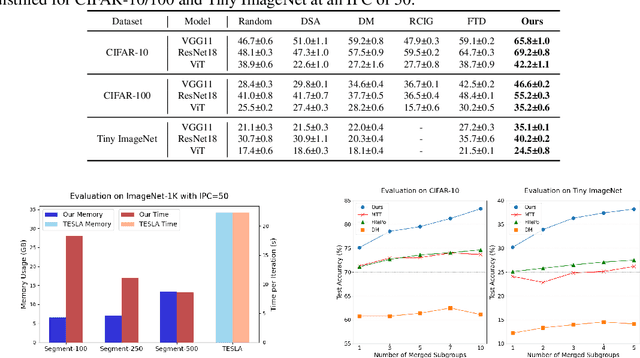
Dataset distillation is the technique of synthesizing smaller condensed datasets from large original datasets while retaining necessary information to persist the effect. In this paper, we approach the dataset distillation problem from a novel perspective: we regard minimizing the prediction discrepancy on the real data distribution between models, which are respectively trained on the large original dataset and on the small distilled dataset, as a conduit for condensing information from the raw data into the distilled version. An adversarial framework is proposed to solve the problem efficiently. In contrast to existing distillation methods involving nested optimization or long-range gradient unrolling, our approach hinges on single-level optimization. This ensures the memory efficiency of our method and provides a flexible tradeoff between time and memory budgets, allowing us to distil ImageNet-1K using a minimum of only 6.5GB of GPU memory. Under the optimal tradeoff strategy, it requires only 2.5$\times$ less memory and 5$\times$ less runtime compared to the state-of-the-art. Empirically, our method can produce synthetic datasets just 10% the size of the original, yet achieve, on average, 94% of the test accuracy of models trained on the full original datasets including ImageNet-1K, significantly surpassing state-of-the-art. Additionally, extensive tests reveal that our distilled datasets excel in cross-architecture generalization capabilities.
Diffusion for Natural Image Matting
Dec 10, 2023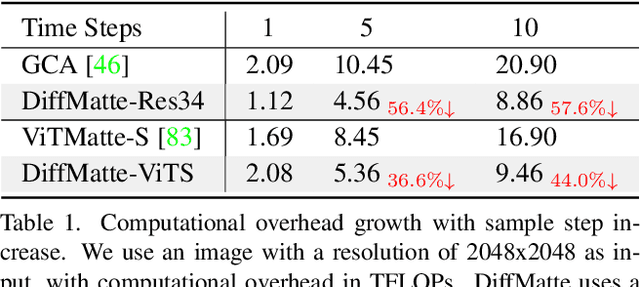
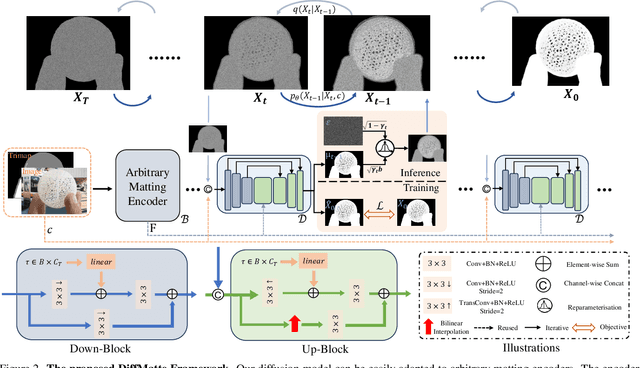
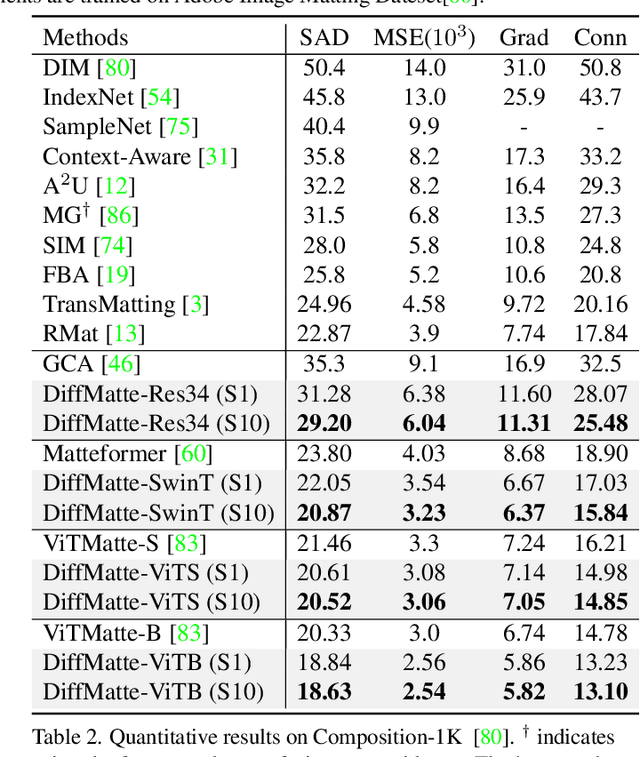
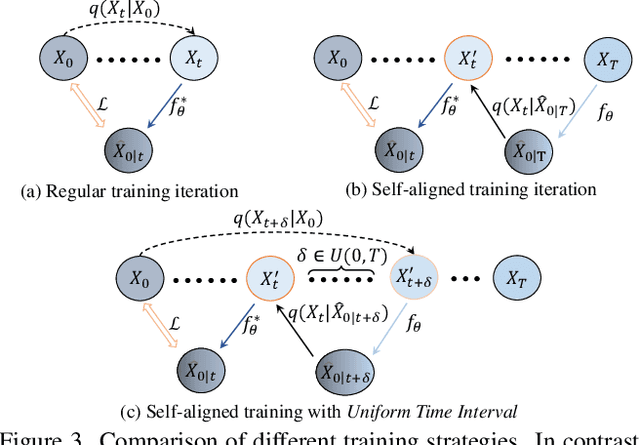
We aim to leverage diffusion to address the challenging image matting task. However, the presence of high computational overhead and the inconsistency of noise sampling between the training and inference processes pose significant obstacles to achieving this goal. In this paper, we present DiffMatte, a solution designed to effectively overcome these challenges. First, DiffMatte decouples the decoder from the intricately coupled matting network design, involving only one lightweight decoder in the iterations of the diffusion process. With such a strategy, DiffMatte mitigates the growth of computational overhead as the number of samples increases. Second, we employ a self-aligned training strategy with uniform time intervals, ensuring a consistent noise sampling between training and inference across the entire time domain. Our DiffMatte is designed with flexibility in mind and can seamlessly integrate into various modern matting architectures. Extensive experimental results demonstrate that DiffMatte not only reaches the state-of-the-art level on the Composition-1k test set, surpassing the best methods in the past by 5% and 15% in the SAD metric and MSE metric respectively, but also show stronger generalization ability in other benchmarks.
Singular Value Penalization and Semantic Data Augmentation for Fully Test-Time Adaptation
Dec 10, 2023
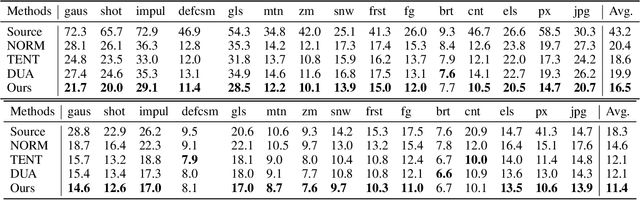


Fully test-time adaptation (FTTA) adapts a model that is trained on a source domain to a target domain during the testing phase, where the two domains follow different distributions and source data is unavailable during the training phase. Existing methods usually adopt entropy minimization to reduce the uncertainty of target prediction results, and improve the FTTA performance accordingly. However, they fail to ensure the diversity in target prediction results. Recent domain adaptation study has shown that maximizing the sum of singular values of prediction results can simultaneously enhance their confidence (discriminability) and diversity. However, during the training phase, larger singular values usually take up a dominant position in loss maximization. This results in the model being more inclined to enhance discriminability for easily distinguishable classes, and the improvement in diversity is insufficiently effective. Furthermore, the adaptation and prediction in FTTA only use data from the current batch, which may lead to the risk of overfitting. To address the aforementioned issues, we propose maximizing the sum of singular values while minimizing their variance. This enables the model's focus toward the smaller singular values, enhancing discriminability between more challenging classes and effectively increasing the diversity of prediction results. Moreover, we incorporate data from the previous batch to realize semantic data augmentation for the current batch, reducing the risk of overfitting. Extensive experiments on benchmark datasets show our proposed approach outperforms some compared state-of-the-art FTTA methods.
Riemannian Complex Matrix Convolution Network for PolSAR Image Classification
Dec 06, 2023Recently, deep learning methods have achieved superior performance for Polarimetric Synthetic Aperture Radar(PolSAR) image classification. Existing deep learning methods learn PolSAR data by converting the covariance matrix into a feature vector or complex-valued vector as the input. However, all these methods cannot learn the structure of complex matrix directly and destroy the channel correlation. To learn geometric structure of complex matrix, we propose a Riemannian complex matrix convolution network for PolSAR image classification in Riemannian space for the first time, which directly utilizes the complex matrix as the network input and defines the Riemannian operations to learn complex matrix's features. The proposed Riemannian complex matrix convolution network considers PolSAR complex matrix endowed in Riemannian manifold, and defines a series of new Riemannian convolution, ReLu and LogEig operations in Riemannian space, which breaks through the Euclidean constraint of conventional networks. Then, a CNN module is appended to enhance contextual Riemannian features. Besides, a fast kernel learning method is developed for the proposed method to learn class-specific features and reduce the computation time effectively. Experiments are conducted on three sets of real PolSAR data with different bands and sensors. Experiments results demonstrates the proposed method can obtain superior performance than the state-of-the-art methods.