 Add to Chrome
 Add to Firefox
 Add to Edge
Control3D: Towards Controllable Text-to-3D Generation
Nov 09, 2023
Recent remarkable advances in large-scale text-to-image diffusion models have inspired a significant breakthrough in text-to-3D generation, pursuing 3D content creation solely from a given text prompt. However, existing text-to-3D techniques lack a crucial ability in the creative process: interactively control and shape the synthetic 3D contents according to users' desired specifications (e.g., sketch). To alleviate this issue, we present the first attempt for text-to-3D generation conditioning on the additional hand-drawn sketch, namely Control3D, which enhances controllability for users. In particular, a 2D conditioned diffusion model (ControlNet) is remoulded to guide the learning of 3D scene parameterized as NeRF, encouraging each view of 3D scene aligned with the given text prompt and hand-drawn sketch. Moreover, we exploit a pre-trained differentiable photo-to-sketch model to directly estimate the sketch of the rendered image over synthetic 3D scene. Such estimated sketch along with each sampled view is further enforced to be geometrically consistent with the given sketch, pursuing better controllable text-to-3D generation. Through extensive experiments, we demonstrate that our proposal can generate accurate and faithful 3D scenes that align closely with the input text prompts and sketches.

ControlStyle: Text-Driven Stylized Image Generation Using Diffusion Priors
Nov 09, 2023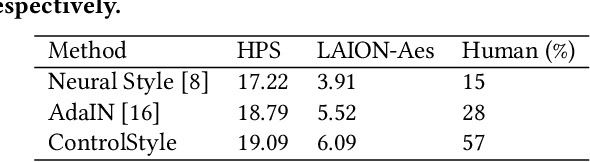

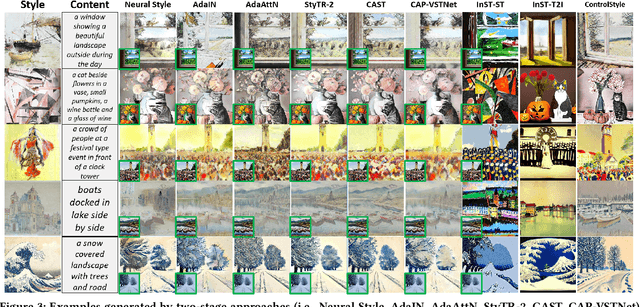
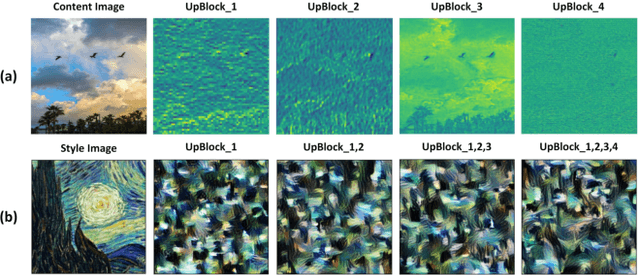
Recently, the multimedia community has witnessed the rise of diffusion models trained on large-scale multi-modal data for visual content creation, particularly in the field of text-to-image generation. In this paper, we propose a new task for ``stylizing'' text-to-image models, namely text-driven stylized image generation, that further enhances editability in content creation. Given input text prompt and style image, this task aims to produce stylized images which are both semantically relevant to input text prompt and meanwhile aligned with the style image in style. To achieve this, we present a new diffusion model (ControlStyle) via upgrading a pre-trained text-to-image model with a trainable modulation network enabling more conditions of text prompts and style images. Moreover, diffusion style and content regularizations are simultaneously introduced to facilitate the learning of this modulation network with these diffusion priors, pursuing high-quality stylized text-to-image generation. Extensive experiments demonstrate the effectiveness of our ControlStyle in producing more visually pleasing and artistic results, surpassing a simple combination of text-to-image model and conventional style transfer techniques.
Bidirectional Knowledge Reconfiguration for Lightweight Point Cloud Analysis
Oct 08, 2023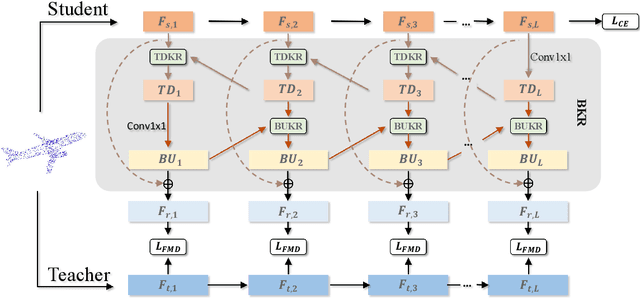
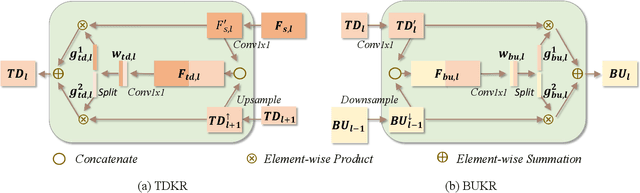
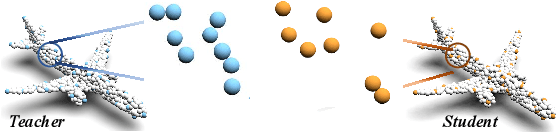
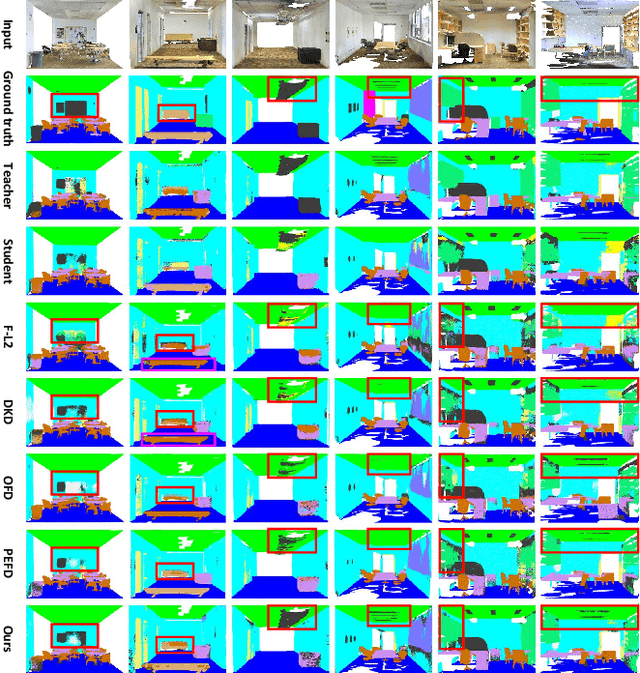
Point cloud analysis faces computational system overhead, limiting its application on mobile or edge devices. Directly employing small models may result in a significant drop in performance since it is difficult for a small model to adequately capture local structure and global shape information simultaneously, which are essential clues for point cloud analysis. This paper explores feature distillation for lightweight point cloud models. To mitigate the semantic gap between the lightweight student and the cumbersome teacher, we propose bidirectional knowledge reconfiguration (BKR) to distill informative contextual knowledge from the teacher to the student. Specifically, a top-down knowledge reconfiguration and a bottom-up knowledge reconfiguration are developed to inherit diverse local structure information and consistent global shape knowledge from the teacher, respectively. However, due to the farthest point sampling in most point cloud models, the intermediate features between teacher and student are misaligned, deteriorating the feature distillation performance. To eliminate it, we propose a feature mover's distance (FMD) loss based on optimal transportation, which can measure the distance between unordered point cloud features effectively. Extensive experiments conducted on shape classification, part segmentation, and semantic segmentation benchmarks demonstrate the universality and superiority of our method.
* Accepted by IEEE Transactions on Multimedia (TMM)
Selective Volume Mixup for Video Action Recognition
Sep 18, 2023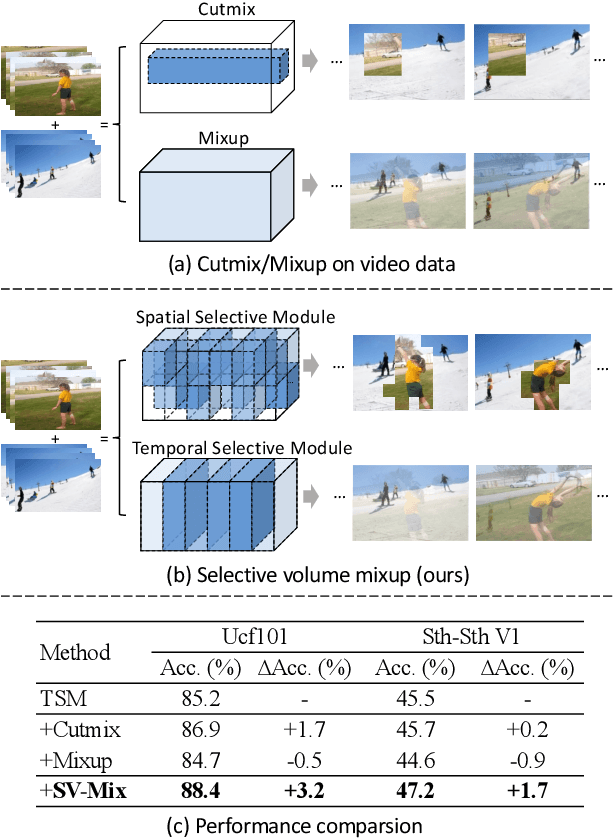

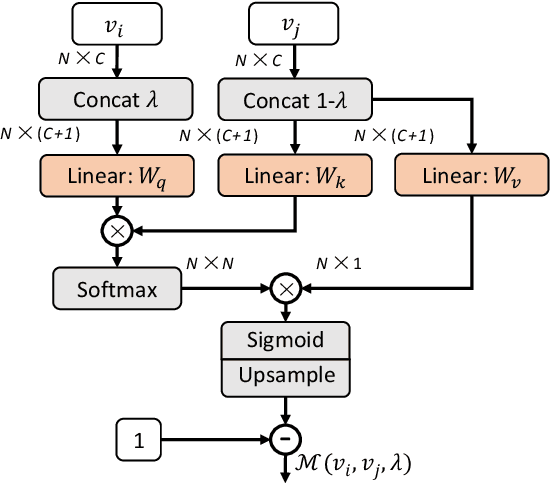
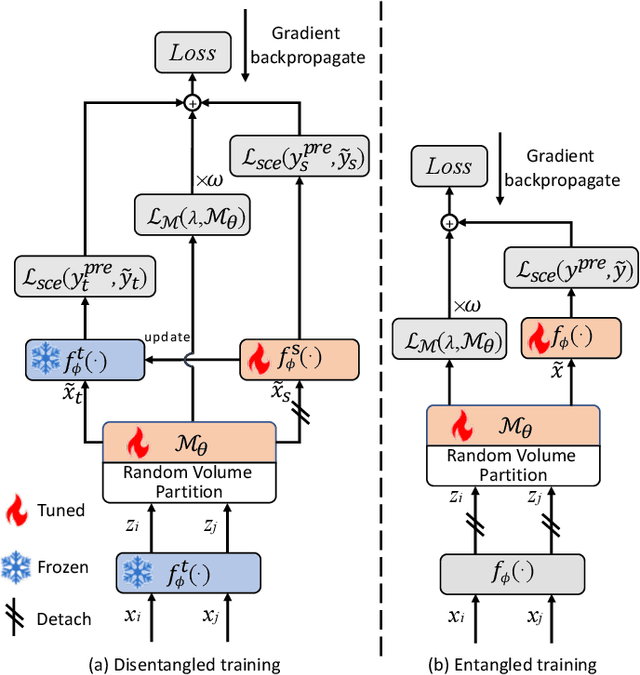
The recent advances in Convolutional Neural Networks (CNNs) and Vision Transformers have convincingly demonstrated high learning capability for video action recognition on large datasets. Nevertheless, deep models often suffer from the overfitting effect on small-scale datasets with a limited number of training videos. A common solution is to exploit the existing image augmentation strategies for each frame individually including Mixup, Cutmix, and RandAugment, which are not particularly optimized for video data. In this paper, we propose a novel video augmentation strategy named Selective Volume Mixup (SV-Mix) to improve the generalization ability of deep models with limited training videos. SV-Mix devises a learnable selective module to choose the most informative volumes from two videos and mixes the volumes up to achieve a new training video. Technically, we propose two new modules, i.e., a spatial selective module to select the local patches for each spatial position, and a temporal selective module to mix the entire frames for each timestamp and maintain the spatial pattern. At each time, we randomly choose one of the two modules to expand the diversity of training samples. The selective modules are jointly optimized with the video action recognition framework to find the optimal augmentation strategy. We empirically demonstrate the merits of the SV-Mix augmentation on a wide range of video action recognition benchmarks and consistently boot the performances of both CNN-based and transformer-based models.
Learning and Evaluating Human Preferences for Conversational Head Generation
Aug 02, 2023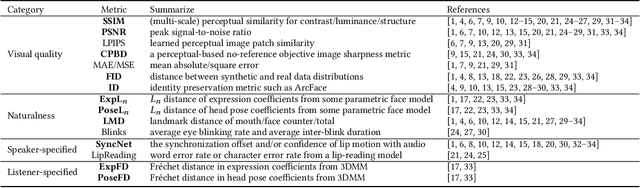
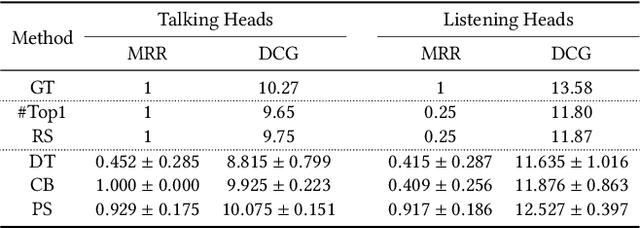
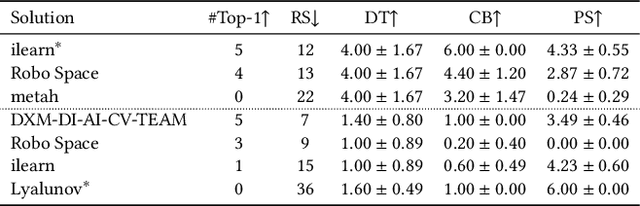
A reliable and comprehensive evaluation metric that aligns with manual preference assessments is crucial for conversational head video synthesis methods development. Existing quantitative evaluations often fail to capture the full complexity of human preference, as they only consider limited evaluation dimensions. Qualitative evaluations and user studies offer a solution but are time-consuming and labor-intensive. This limitation hinders the advancement of conversational head generation algorithms and systems. In this paper, we propose a novel learning-based evaluation metric named Preference Score (PS) for fitting human preference according to the quantitative evaluations across different dimensions. PS can serve as a quantitative evaluation without the need for human annotation. Experimental results validate the superiority of Preference Score in aligning with human perception, and also demonstrate robustness and generalizability to unseen data, making it a valuable tool for advancing conversation head generation. We expect this metric could facilitate new advances in conversational head generation. Project Page: https://https://github.com/dc3ea9f/PreferenceScore.
Interactive Conversational Head Generation
Jul 05, 2023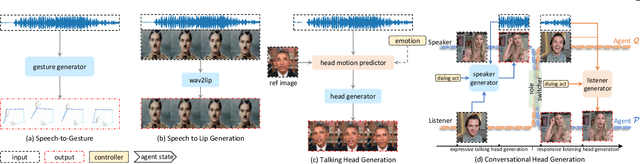
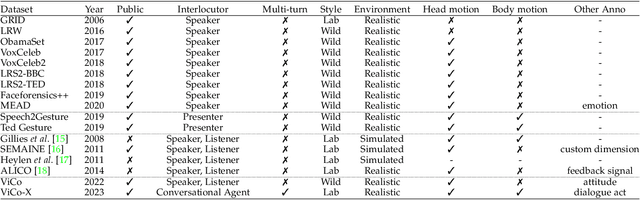
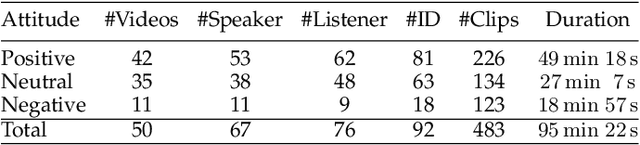
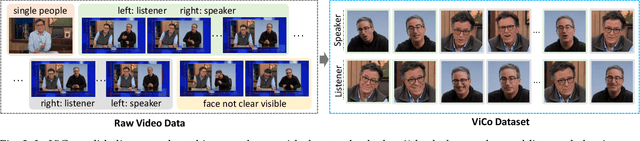
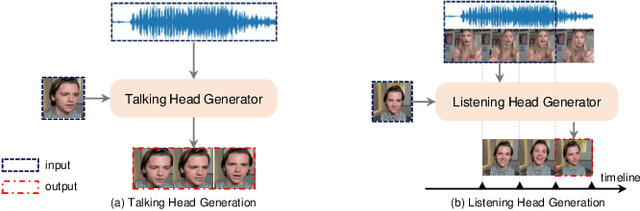
We introduce a new conversation head generation benchmark for synthesizing behaviors of a single interlocutor in a face-to-face conversation. The capability to automatically synthesize interlocutors which can participate in long and multi-turn conversations is vital and offer benefits for various applications, including digital humans, virtual agents, and social robots. While existing research primarily focuses on talking head generation (one-way interaction), hindering the ability to create a digital human for conversation (two-way) interaction due to the absence of listening and interaction parts. In this work, we construct two datasets to address this issue, ``ViCo'' for independent talking and listening head generation tasks at the sentence level, and ``ViCo-X'', for synthesizing interlocutors in multi-turn conversational scenarios. Based on ViCo and ViCo-X, we define three novel tasks targeting the interaction modeling during the face-to-face conversation: 1) responsive listening head generation making listeners respond actively to the speaker with non-verbal signals, 2) expressive talking head generation guiding speakers to be aware of listeners' behaviors, and 3) conversational head generation to integrate the talking/listening ability in one interlocutor. Along with the datasets, we also propose corresponding baseline solutions to the three aforementioned tasks. Experimental results show that our baseline method could generate responsive and vivid agents that can collaborate with real person to fulfil the whole conversation. Project page: https://vico.solutions/.
Deep Equilibrium Multimodal Fusion
Jun 29, 2023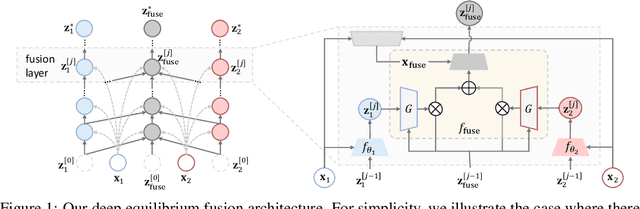

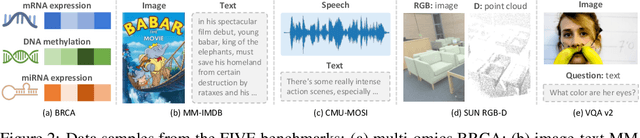
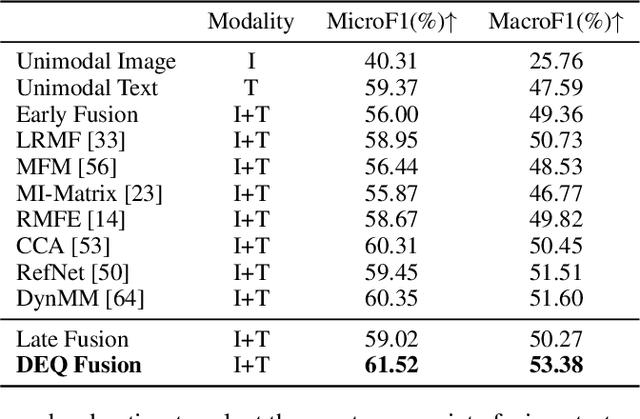
Multimodal fusion integrates the complementary information present in multiple modalities and has gained much attention recently. Most existing fusion approaches either learn a fixed fusion strategy during training and inference, or are only capable of fusing the information to a certain extent. Such solutions may fail to fully capture the dynamics of interactions across modalities especially when there are complex intra- and inter-modality correlations to be considered for informative multimodal fusion. In this paper, we propose a novel deep equilibrium (DEQ) method towards multimodal fusion via seeking a fixed point of the dynamic multimodal fusion process and modeling the feature correlations in an adaptive and recursive manner. This new way encodes the rich information within and across modalities thoroughly from low level to high level for efficacious downstream multimodal learning and is readily pluggable to various multimodal frameworks. Extensive experiments on BRCA, MM-IMDB, CMU-MOSI, SUN RGB-D, and VQA-v2 demonstrate the superiority of our DEQ fusion. More remarkably, DEQ fusion consistently achieves state-of-the-art performance on multiple multimodal benchmarks. The code will be released.
Visual-Aware Text-to-Speech
Jun 21, 2023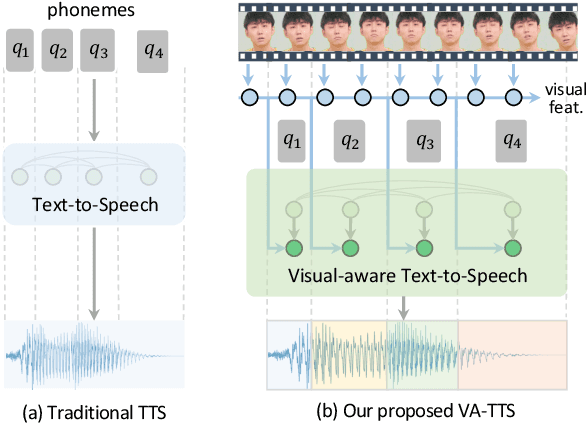
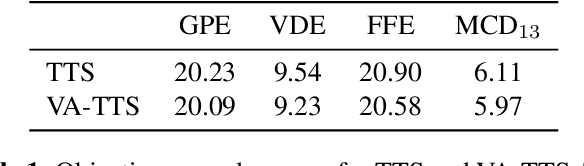
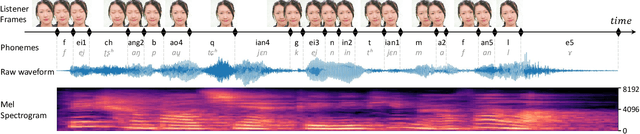
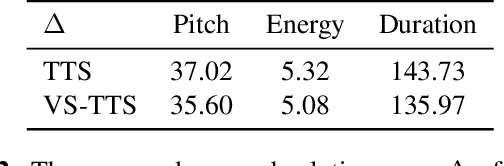
Dynamically synthesizing talking speech that actively responds to a listening head is critical during the face-to-face interaction. For example, the speaker could take advantage of the listener's facial expression to adjust the tones, stressed syllables, or pauses. In this work, we present a new visual-aware text-to-speech (VA-TTS) task to synthesize speech conditioned on both textual inputs and sequential visual feedback (e.g., nod, smile) of the listener in face-to-face communication. Different from traditional text-to-speech, VA-TTS highlights the impact of visual modality. On this newly-minted task, we devise a baseline model to fuse phoneme linguistic information and listener visual signals for speech synthesis. Extensive experiments on multimodal conversation dataset ViCo-X verify our proposal for generating more natural audio with scenario-appropriate rhythm and prosody.
* accepted as oral and top 3% paper by ICASSP 2023
T2Ranking: A large-scale Chinese Benchmark for Passage Ranking
Apr 07, 2023


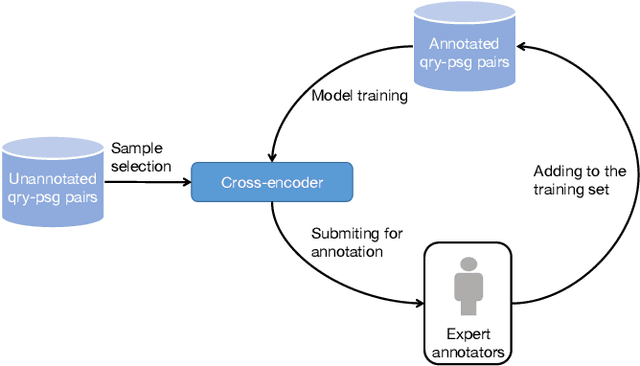
Passage ranking involves two stages: passage retrieval and passage re-ranking, which are important and challenging topics for both academics and industries in the area of Information Retrieval (IR). However, the commonly-used datasets for passage ranking usually focus on the English language. For non-English scenarios, such as Chinese, the existing datasets are limited in terms of data scale, fine-grained relevance annotation and false negative issues. To address this problem, we introduce T2Ranking, a large-scale Chinese benchmark for passage ranking. T2Ranking comprises more than 300K queries and over 2M unique passages from real-world search engines. Expert annotators are recruited to provide 4-level graded relevance scores (fine-grained) for query-passage pairs instead of binary relevance judgments (coarse-grained). To ease the false negative issues, more passages with higher diversities are considered when performing relevance annotations, especially in the test set, to ensure a more accurate evaluation. Apart from the textual query and passage data, other auxiliary resources are also provided, such as query types and XML files of documents which passages are generated from, to facilitate further studies. To evaluate the dataset, commonly used ranking models are implemented and tested on T2Ranking as baselines. The experimental results show that T2Ranking is challenging and there is still scope for improvement. The full data and all codes are available at https://github.com/THUIR/T2Ranking/
Transforming Radiance Field with Lipschitz Network for Photorealistic 3D Scene Stylization
Mar 23, 2023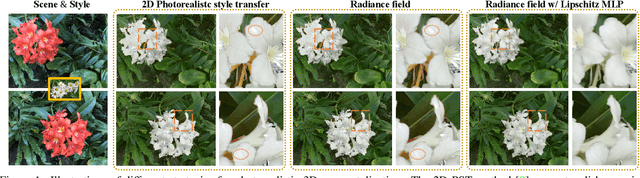
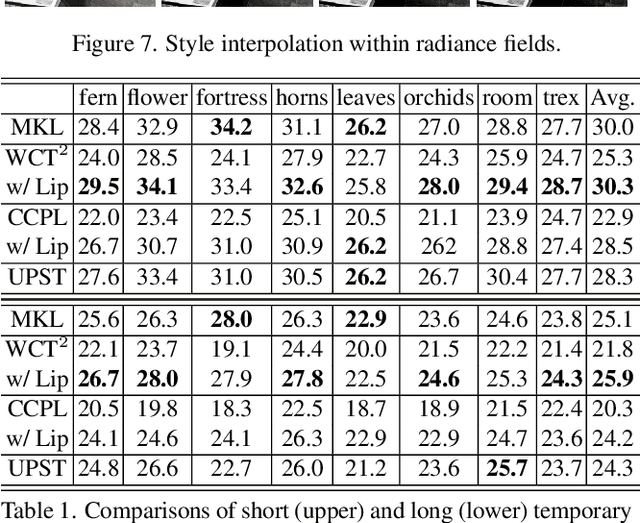
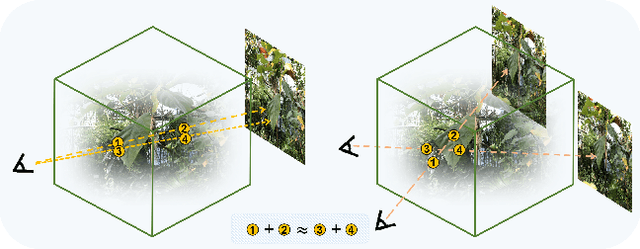
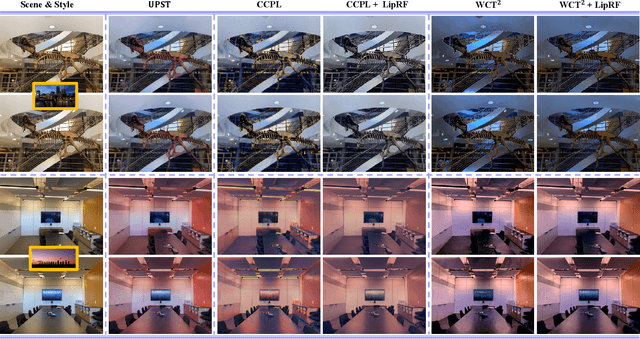
Recent advances in 3D scene representation and novel view synthesis have witnessed the rise of Neural Radiance Fields (NeRFs). Nevertheless, it is not trivial to exploit NeRF for the photorealistic 3D scene stylization task, which aims to generate visually consistent and photorealistic stylized scenes from novel views. Simply coupling NeRF with photorealistic style transfer (PST) will result in cross-view inconsistency and degradation of stylized view syntheses. Through a thorough analysis, we demonstrate that this non-trivial task can be simplified in a new light: When transforming the appearance representation of a pre-trained NeRF with Lipschitz mapping, the consistency and photorealism across source views will be seamlessly encoded into the syntheses. That motivates us to build a concise and flexible learning framework namely LipRF, which upgrades arbitrary 2D PST methods with Lipschitz mapping tailored for the 3D scene. Technically, LipRF first pre-trains a radiance field to reconstruct the 3D scene, and then emulates the style on each view by 2D PST as the prior to learn a Lipschitz network to stylize the pre-trained appearance. In view of that Lipschitz condition highly impacts the expressivity of the neural network, we devise an adaptive regularization to balance the reconstruction and stylization. A gradual gradient aggregation strategy is further introduced to optimize LipRF in a cost-efficient manner. We conduct extensive experiments to show the high quality and robust performance of LipRF on both photorealistic 3D stylization and object appearance editing.