 Add to Chrome
 Add to Firefox
 Add to Edge
A Review of Artificial Intelligence based Biological-Tree Construction: Priorities, Methods, Applications and Trends
Oct 07, 2024
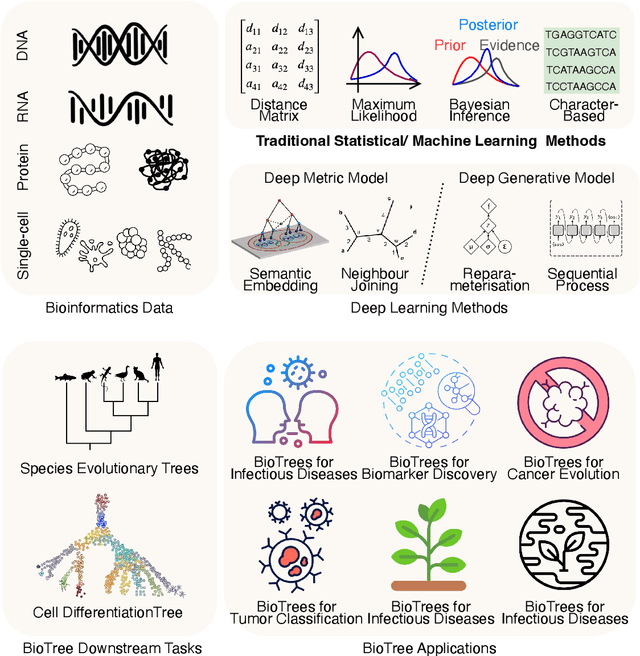

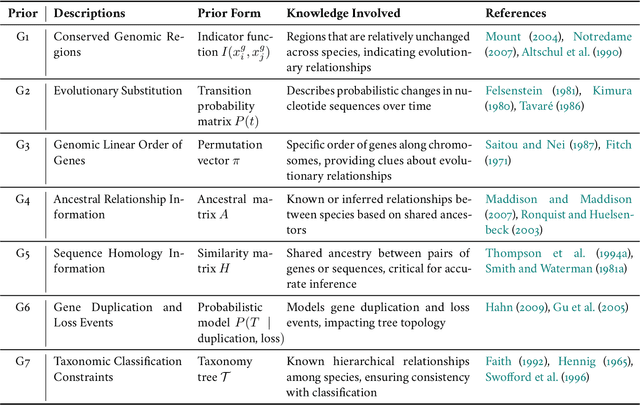

Biological tree analysis serves as a pivotal tool in uncovering the evolutionary and differentiation relationships among organisms, genes, and cells. Its applications span diverse fields including phylogenetics, developmental biology, ecology, and medicine. Traditional tree inference methods, while foundational in early studies, face increasing limitations in processing the large-scale, complex datasets generated by modern high-throughput technologies. Recent advances in deep learning offer promising solutions, providing enhanced data processing and pattern recognition capabilities. However, challenges remain, particularly in accurately representing the inherently discrete and non-Euclidean nature of biological trees. In this review, we first outline the key biological priors fundamental to phylogenetic and differentiation tree analyses, facilitating a deeper interdisciplinary understanding between deep learning researchers and biologists. We then systematically examine the commonly used data formats and databases, serving as a comprehensive resource for model testing and development. We provide a critical analysis of traditional tree generation methods, exploring their underlying biological assumptions, technical characteristics, and limitations. Current developments in deep learning-based tree generation are reviewed, highlighting both recent advancements and existing challenges. Furthermore, we discuss the diverse applications of biological trees across various biological domains. Finally, we propose potential future directions and trends in leveraging deep learning for biological tree research, aiming to guide further exploration and innovation in this field.

Learning to Model Graph Structural Information on MLPs via Graph Structure Self-Contrasting
Sep 09, 2024


Recent years have witnessed great success in handling graph-related tasks with Graph Neural Networks (GNNs). However, most existing GNNs are based on message passing to perform feature aggregation and transformation, where the structural information is explicitly involved in the forward propagation by coupling with node features through graph convolution at each layer. As a result, subtle feature noise or structure perturbation may cause severe error propagation, resulting in extremely poor robustness. In this paper, we rethink the roles played by graph structural information in graph data training and identify that message passing is not the only path to modeling structural information. Inspired by this, we propose a simple but effective Graph Structure Self-Contrasting (GSSC) framework that learns graph structural information without message passing. The proposed framework is based purely on Multi-Layer Perceptrons (MLPs), where the structural information is only implicitly incorporated as prior knowledge to guide the computation of supervision signals, substituting the explicit message propagation as in GNNs. Specifically, it first applies structural sparsification to remove potentially uninformative or noisy edges in the neighborhood, and then performs structural self-contrasting in the sparsified neighborhood to learn robust node representations. Finally, structural sparsification and self-contrasting are formulated as a bi-level optimization problem and solved in a unified framework. Extensive experiments have qualitatively and quantitatively demonstrated that the GSSC framework can produce truly encouraging performance with better generalization and robustness than other leading competitors.
A Survey on Mixup Augmentations and Beyond
Sep 08, 2024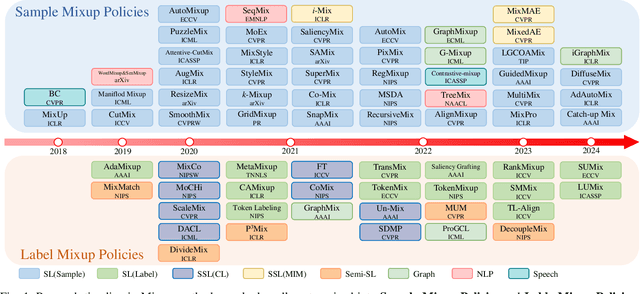

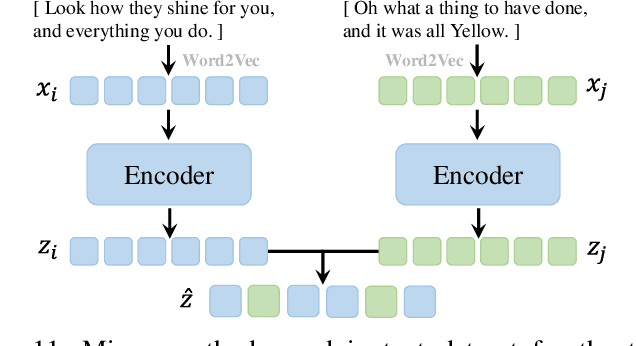
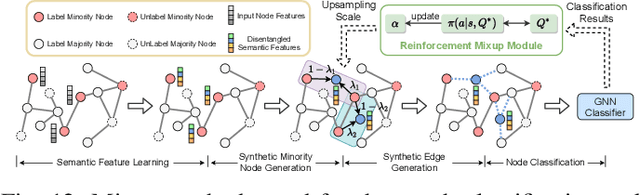
As Deep Neural Networks have achieved thrilling breakthroughs in the past decade, data augmentations have garnered increasing attention as regularization techniques when massive labeled data are unavailable. Among existing augmentations, Mixup and relevant data-mixing methods that convexly combine selected samples and the corresponding labels are widely adopted because they yield high performances by generating data-dependent virtual data while easily migrating to various domains. This survey presents a comprehensive review of foundational mixup methods and their applications. We first elaborate on the training pipeline with mixup augmentations as a unified framework containing modules. A reformulated framework could contain various mixup methods and give intuitive operational procedures. Then, we systematically investigate the applications of mixup augmentations on vision downstream tasks, various data modalities, and some analysis \& theorems of mixup. Meanwhile, we conclude the current status and limitations of mixup research and point out further work for effective and efficient mixup augmentations. This survey can provide researchers with the current state of the art in mixup methods and provide some insights and guidance roles in the mixup arena. An online project with this survey is available at \url{https://github.com/Westlake-AI/Awesome-Mixup}.
MetaEnzyme: Meta Pan-Enzyme Learning for Task-Adaptive Redesign
Aug 05, 2024
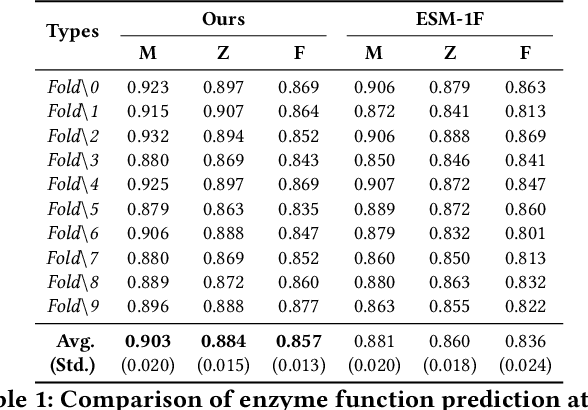

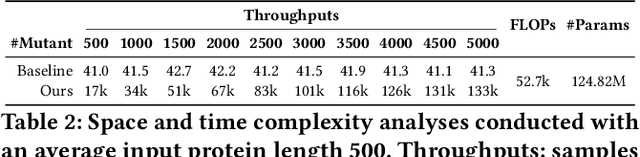
Enzyme design plays a crucial role in both industrial production and biology. However, this field faces challenges due to the lack of comprehensive benchmarks and the complexity of enzyme design tasks, leading to a dearth of systematic research. Consequently, computational enzyme design is relatively overlooked within the broader protein domain and remains in its early stages. In this work, we address these challenges by introducing MetaEnzyme, a staged and unified enzyme design framework. We begin by employing a cross-modal structure-to-sequence transformation architecture, as the feature-driven starting point to obtain initial robust protein representation. Subsequently, we leverage domain adaptive techniques to generalize specific enzyme design tasks under low-resource conditions. MetaEnzyme focuses on three fundamental low-resource enzyme redesign tasks: functional design (FuncDesign), mutation design (MutDesign), and sequence generation design (SeqDesign). Through novel unified paradigm and enhanced representation capabilities, MetaEnzyme demonstrates adaptability to diverse enzyme design tasks, yielding outstanding results. Wet lab experiments further validate these findings, reinforcing the efficacy of the redesign process.
SSPA: Split-and-Synthesize Prompting with Gated Alignments for Multi-Label Image Recognition
Jul 30, 2024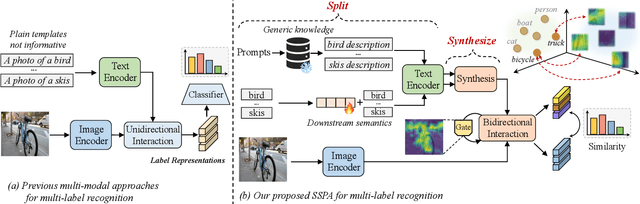
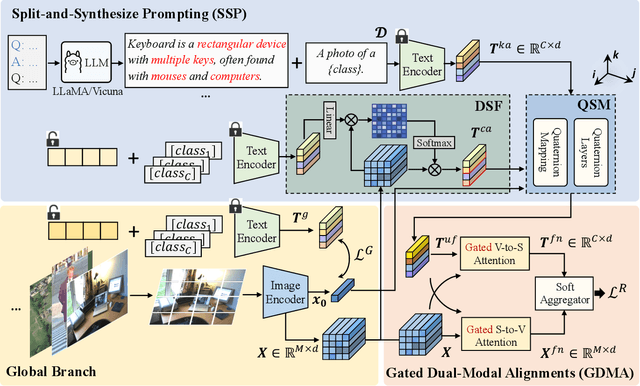
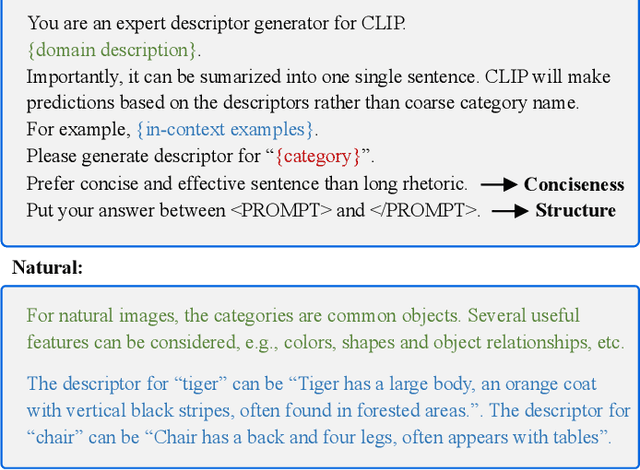
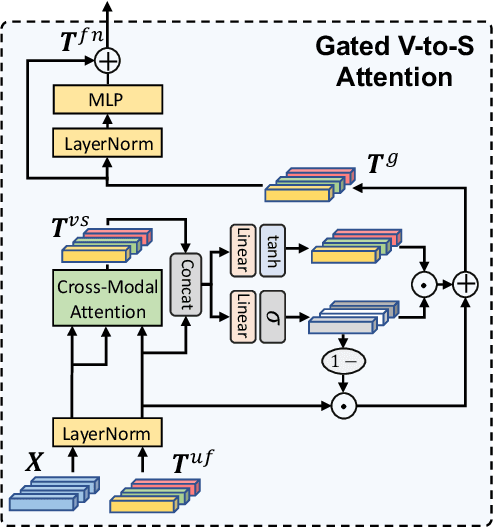
Multi-label image recognition is a fundamental task in computer vision. Recently, Vision-Language Models (VLMs) have made notable advancements in this area. However, previous methods fail to effectively leverage the rich knowledge in language models and often incorporate label semantics into visual features unidirectionally. To overcome these problems, we propose a Split-and-Synthesize Prompting with Gated Alignments (SSPA) framework to amplify the potential of VLMs. Specifically, we develop an in-context learning approach to associate the inherent knowledge from LLMs. Then we propose a novel Split-and-Synthesize Prompting (SSP) strategy to first model the generic knowledge and downstream label semantics individually and then aggregate them carefully through the quaternion network. Moreover, we present Gated Dual-Modal Alignments (GDMA) to bidirectionally interact visual and linguistic modalities while eliminating redundant cross-modal information, enabling more efficient region-level alignments. Rather than making the final prediction by a sharp manner in previous works, we propose a soft aggregator to jointly consider results from all image regions. With the help of flexible prompting and gated alignments, SSPA is generalizable to specific domains. Extensive experiments on nine datasets from three domains (i.e., natural, pedestrian attributes and remote sensing) demonstrate the state-of-the-art performance of SSPA. Further analyses verify the effectiveness of SSP and the interpretability of GDMA. The code will be made public.
Teach Harder, Learn Poorer: Rethinking Hard Sample Distillation for GNN-to-MLP Knowledge Distillation
Jul 20, 2024
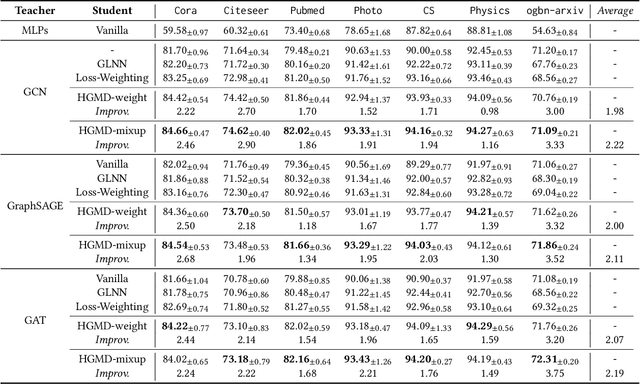

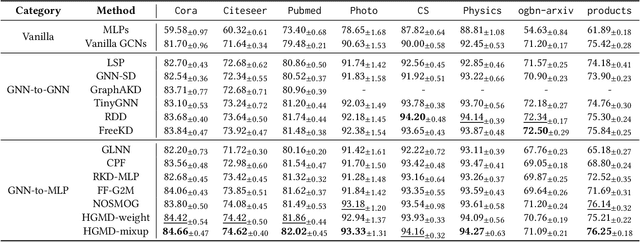
To bridge the gaps between powerful Graph Neural Networks (GNNs) and lightweight Multi-Layer Perceptron (MLPs), GNN-to-MLP Knowledge Distillation (KD) proposes to distill knowledge from a well-trained teacher GNN into a student MLP. In this paper, we revisit the knowledge samples (nodes) in teacher GNNs from the perspective of hardness, and identify that hard sample distillation may be a major performance bottleneck of existing graph KD algorithms. The GNN-to-MLP KD involves two different types of hardness, one student-free knowledge hardness describing the inherent complexity of GNN knowledge, and the other student-dependent distillation hardness describing the difficulty of teacher-to-student distillation. However, most of the existing work focuses on only one of these aspects or regards them as one thing. This paper proposes a simple yet effective Hardness-aware GNN-to-MLP Distillation (HGMD) framework, which decouples the two hardnesses and estimates them using a non-parametric approach. Finally, two hardness-aware distillation schemes (i.e., HGMD-weight and HGMD-mixup) are further proposed to distill hardness-aware knowledge from teacher GNNs into the corresponding nodes of student MLPs. As non-parametric distillation, HGMD does not involve any additional learnable parameters beyond the student MLPs, but it still outperforms most of the state-of-the-art competitors. HGMD-mixup improves over the vanilla MLPs by 12.95% and outperforms its teacher GNNs by 2.48% averaged over seven real-world datasets.
The Heterophilic Graph Learning Handbook: Benchmarks, Models, Theoretical Analysis, Applications and Challenges
Jul 12, 2024


Homophily principle, \ie{} nodes with the same labels or similar attributes are more likely to be connected, has been commonly believed to be the main reason for the superiority of Graph Neural Networks (GNNs) over traditional Neural Networks (NNs) on graph-structured data, especially on node-level tasks. However, recent work has identified a non-trivial set of datasets where GNN's performance compared to the NN's is not satisfactory. Heterophily, i.e. low homophily, has been considered the main cause of this empirical observation. People have begun to revisit and re-evaluate most existing graph models, including graph transformer and its variants, in the heterophily scenario across various kinds of graphs, e.g. heterogeneous graphs, temporal graphs and hypergraphs. Moreover, numerous graph-related applications are found to be closely related to the heterophily problem. In the past few years, considerable effort has been devoted to studying and addressing the heterophily issue. In this survey, we provide a comprehensive review of the latest progress on heterophilic graph learning, including an extensive summary of benchmark datasets and evaluation of homophily metrics on synthetic graphs, meticulous classification of the most updated supervised and unsupervised learning methods, thorough digestion of the theoretical analysis on homophily/heterophily, and broad exploration of the heterophily-related applications. Notably, through detailed experiments, we are the first to categorize benchmark heterophilic datasets into three sub-categories: malignant, benign and ambiguous heterophily. Malignant and ambiguous datasets are identified as the real challenging datasets to test the effectiveness of new models on the heterophily challenge. Finally, we propose several challenges and future directions for heterophilic graph representation learning.
BioKGBench: A Knowledge Graph Checking Benchmark of AI Agent for Biomedical Science
Jun 29, 2024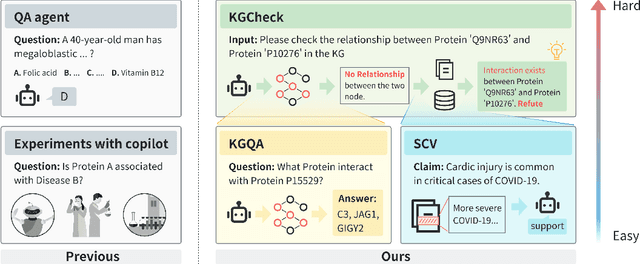
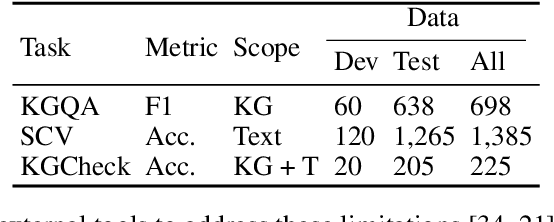

Pursuing artificial intelligence for biomedical science, a.k.a. AI Scientist, draws increasing attention, where one common approach is to build a copilot agent driven by Large Language Models (LLMs). However, to evaluate such systems, people either rely on direct Question-Answering (QA) to the LLM itself, or in a biomedical experimental manner. How to precisely benchmark biomedical agents from an AI Scientist perspective remains largely unexplored. To this end, we draw inspiration from one most important abilities of scientists, understanding the literature, and introduce BioKGBench. In contrast to traditional evaluation benchmark that only focuses on factual QA, where the LLMs are known to have hallucination issues, we first disentangle "Understanding Literature" into two atomic abilities, i) "Understanding" the unstructured text from research papers by performing scientific claim verification, and ii) Ability to interact with structured Knowledge-Graph Question-Answering (KGQA) as a form of "Literature" grounding. We then formulate a novel agent task, dubbed KGCheck, using KGQA and domain-based Retrieval-Augmented Generation (RAG) to identify the factual errors of existing large-scale knowledge graph databases. We collect over two thousand data for two atomic tasks and 225 high-quality annotated data for the agent task. Surprisingly, we discover that state-of-the-art agents, both daily scenarios and biomedical ones, have either failed or inferior performance on our benchmark. We then introduce a simple yet effective baseline, dubbed BKGAgent. On the widely used popular knowledge graph, we discover over 90 factual errors which provide scenarios for agents to make discoveries and demonstrate the effectiveness of our approach. The code and data are available at https://github.com/westlake-autolab/BioKGBench.
NovoBench: Benchmarking Deep Learning-based De Novo Peptide Sequencing Methods in Proteomics
Jun 16, 2024Tandem mass spectrometry has played a pivotal role in advancing proteomics, enabling the high-throughput analysis of protein composition in biological tissues. Many deep learning methods have been developed for \emph{de novo} peptide sequencing task, i.e., predicting the peptide sequence for the observed mass spectrum. However, two key challenges seriously hinder the further advancement of this important task. Firstly, since there is no consensus for the evaluation datasets, the empirical results in different research papers are often not comparable, leading to unfair comparison. Secondly, the current methods are usually limited to amino acid-level or peptide-level precision and recall metrics. In this work, we present the first unified benchmark NovoBench for \emph{de novo} peptide sequencing, which comprises diverse mass spectrum data, integrated models, and comprehensive evaluation metrics. Recent impressive methods, including DeepNovo, PointNovo, Casanovo, InstaNovo, AdaNovo and $\pi$-HelixNovo are integrated into our framework. In addition to amino acid-level and peptide-level precision and recall, we evaluate the models' performance in terms of identifying post-tranlational modifications (PTMs), efficiency and robustness to peptide length, noise peaks and missing fragment ratio, which are important influencing factors while seldom be considered. Leveraging this benchmark, we conduct a large-scale study of current methods, report many insightful findings that open up new possibilities for future development. The benchmark will be open-sourced to facilitate future research and application.
CBGBench: Fill in the Blank of Protein-Molecule Complex Binding Graph
Jun 16, 2024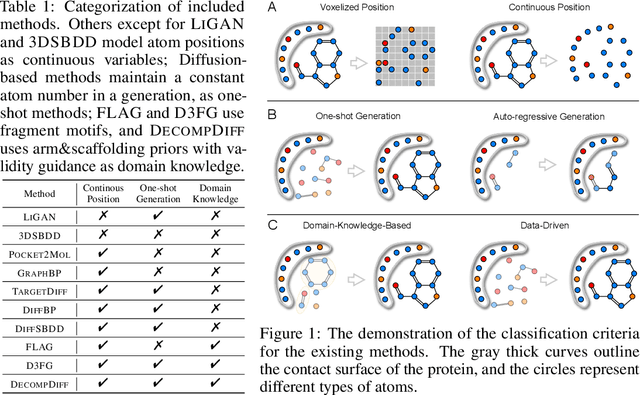
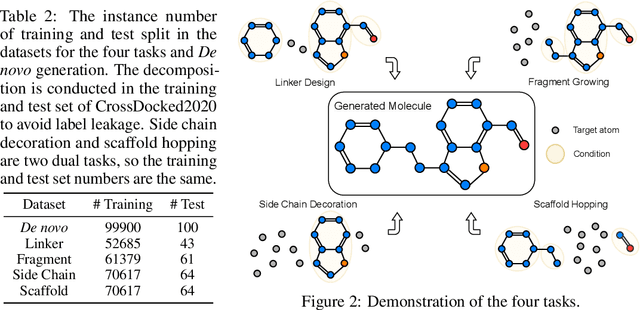
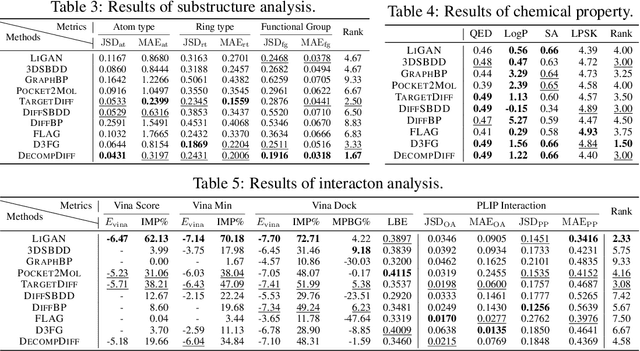
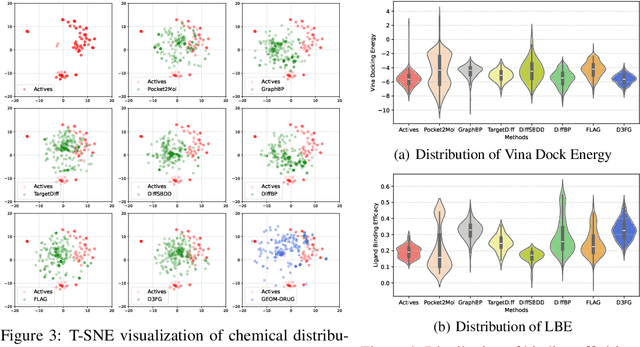
Structure-based drug design (SBDD) aims to generate potential drugs that can bind to a target protein and is greatly expedited by the aid of AI techniques in generative models. However, a lack of systematic understanding persists due to the diverse settings, complex implementation, difficult reproducibility, and task singularity. Firstly, the absence of standardization can lead to unfair comparisons and inconclusive insights. To address this dilemma, we propose CBGBench, a comprehensive benchmark for SBDD, that unifies the task as a generative heterogeneous graph completion, analogous to fill-in-the-blank of the 3D complex binding graph. By categorizing existing methods based on their attributes, CBGBench facilitates a modular and extensible framework that implements various cutting-edge methods. Secondly, a single task on \textit{de novo} molecule generation can hardly reflect their capabilities. To broaden the scope, we have adapted these models to a range of tasks essential in drug design, which are considered sub-tasks within the graph fill-in-the-blank tasks. These tasks include the generative designation of \textit{de novo} molecules, linkers, fragments, scaffolds, and sidechains, all conditioned on the structures of protein pockets. Our evaluations are conducted with fairness, encompassing comprehensive perspectives on interaction, chemical properties, geometry authenticity, and substructure validity. We further provide the pre-trained versions of the state-of-the-art models and deep insights with analysis from empirical studies. The codebase for CBGBench is publicly accessible at \url{https://github.com/Edapinenut/CBGBench}.