 Add to Chrome
 Add to Firefox
 Add to Edge
When Eavesdroppers Reason: Agentic Eavesdropping Attacks on Semantic Communication
May 04, 2026
Semantic communication (SemCom) has emerged as a promising paradigm for next-generation networks. However, its typical end-to-end joint source--channel coding (JSCC) architecture also raises serious privacy concerns. To guide future secure SemCom design, it is important to understand how serious such leakage can be. Nevertheless, existing eavesdropping attacks mainly rely on fixed-configuration solvers and often require instantaneous wiretap channel state information (CSI) to achieve effective privacy inference. This may lead future secure SemCom designs to overlook potentially severe risks. To address this, we propose a large language model (LLM)-orchestrated agentic eavesdropper. Specifically, the proposed eavesdropper forms a closed-loop workflow with three functional agents. The optimization agent adaptively performs joint semantic-and-channel inversion to recover private information from the intercepted signal without requiring wiretap CSI. The perception agent evaluates the effectiveness of the optimization agent and assesses whether the recovered private semantics are reasonable, providing feedback to the optimization agent. The refinement agent further analyzes the recovered content and uses a generative prior to refine promising candidates into more realistic and complete private reconstructions while preserving consistency with the intercepted signal. Simulation results over a MIMO Rayleigh fading channel show that the proposed eavesdropper achieves more than $75\%$ eavesdropping success rate at $\mathrm{SNR}\geq 5$~dB even without wiretap CSI, highlighting a severe privacy threat that future secure SemCom systems must address.

CoVSpec: Efficient Device-Edge Co-Inference for Vision-Language Models via Speculative Decoding
May 04, 2026Vision-language models (VLMs) have demonstrated strong capabilities in multimodal perception and reasoning. However, deploying large VLMs on mobile devices remains challenging due to their substantial computational and memory demands. A practical alternative is device-edge co-inference, where a lightweight draft VLM on the mobile device collaborates with a larger target VLM on the edge server via speculative decoding. Nevertheless, directly extending speculative decoding to VLMs suffers from severe inefficiency due to excessive visual-token computation and high communication overhead. To address these challenges, we propose CoVSpec, an efficient collaborative speculative decoding framework for VLM inference. Specifically, we first develop a training-free visual token reduction framework that prunes redundant visual tokens on the mobile device by jointly considering query relevance, token activity, and low-rank dependency. Moreover, we design an adaptive drafting strategy that dynamically adjusts both the verification frequency and the draft length. In addition, we introduce a parallel branching mechanism with decoupled verification-correction to improve draft-side utilization during target-side verification and reduce correction-related transmission overhead. Experiments on multiple benchmarks show that CoVSpec achieves up to 2.21x higher throughput than target-only inference and reduces communication overhead by more than 96% compared with baselines, without compromising task accuracy.
Cache-enabled Generative Joint Source-Channel Coding for Evolving Semantic Communications
Mar 18, 2026Learning-based semantic communication (SemCom) has recently emerged as a promising paradigm for improving the transmission efficiency of wireless networks. However, existing methods typically rely on extensive end-to-end training, which is both inflexible and computationally expensive in dynamic wireless environments. Moreover, they fail to exploit redundancy across multiple transmissions of semantically similar content, limiting overall efficiency. To overcome these limitations, we propose a channel-aware generative adversarial network (GAN) inversion-based joint source-channel coding (CAGI-JSCC) framework that enables training-free SemCom by leveraging a pre-trained SemanticStyleGAN model. By explicitly incorporating wireless channel characteristics into the GAN inversion process, CAGI-JSCC adapts to varying channel conditions without additional training. Furthermore, we introduce a cache-enabled dynamic codebook (CDC) that caches disentangled semantic components at both the transmitter and receiver, allowing the system to reuse previously transmitted content. This semantic-level caching can continuously reduce redundant transmissions as experience accumulates. Extensive experiments on image transmission demonstrate the effectiveness of the proposed framework. In particular, our system achieves comparable perceptual quality with an average bandwidth compression ratio (BCR) of 1/224, and as low as 1/1024 for a single image, significantly outperforming baselines with a BCR of 1/128.
Rethinking Secure Semantic Communications in the Age of Generative and Agentic AI: Threats and Opportunities
Jan 06, 2026Semantic communication (SemCom) improves communication efficiency by transmitting task-relevant information instead of raw bits and is expected to be a key technology for 6G networks. Recent advances in generative AI (GenAI) further enhance SemCom by enabling robust semantic encoding and decoding under limited channel conditions. However, these efficiency gains also introduce new security and privacy vulnerabilities. Due to the broadcast nature of wireless channels, eavesdroppers can also use powerful GenAI-based semantic decoders to recover private information from intercepted signals. Moreover, rapid advances in agentic AI enable eavesdroppers to perform long-term and adaptive inference through the integration of memory, external knowledge, and reasoning capabilities. This allows eavesdroppers to further infer user private behavior and intent beyond the transmitted content. Motivated by these emerging challenges, this paper comprehensively rethinks the security and privacy of SemCom systems in the age of generative and agentic AI. We first present a systematic taxonomy of eavesdropping threat models in SemCom systems. Then, we provide insights into how GenAI and agentic AI can enhance eavesdropping threats. Meanwhile, we also highlight potential opportunities for leveraging GenAI and agentic AI to design privacy-preserving SemCom systems.
Enabling Training-Free Semantic Communication Systems with Generative Diffusion Models
May 05, 2025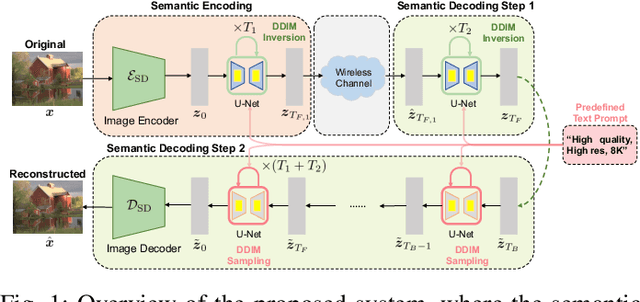
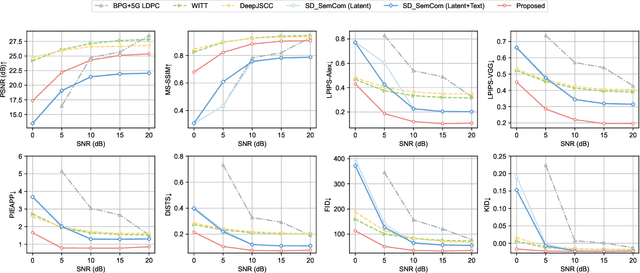
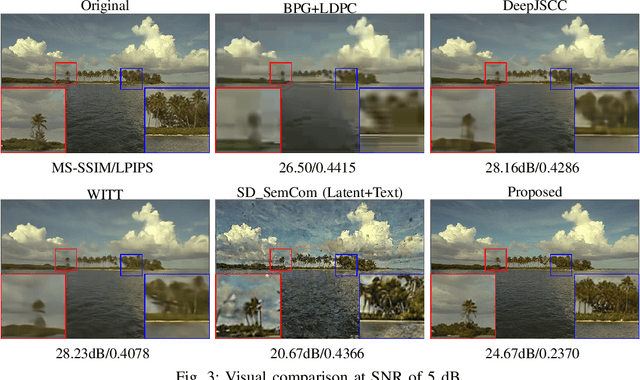

Semantic communication (SemCom) has recently emerged as a promising paradigm for next-generation wireless systems. Empowered by advanced artificial intelligence (AI) technologies, SemCom has achieved significant improvements in transmission quality and efficiency. However, existing SemCom systems either rely on training over large datasets and specific channel conditions or suffer from performance degradation under channel noise when operating in a training-free manner. To address these issues, we explore the use of generative diffusion models (GDMs) as training-free SemCom systems. Specifically, we design a semantic encoding and decoding method based on the inversion and sampling process of the denoising diffusion implicit model (DDIM), which introduces a two-stage forward diffusion process, split between the transmitter and receiver to enhance robustness against channel noise. Moreover, we optimize sampling steps to compensate for the increased noise level caused by channel noise. We also conduct a brief analysis to provide insights about this design. Simulations on the Kodak dataset validate that the proposed system outperforms the existing baseline SemCom systems across various metrics.
Enhancing Privacy in Semantic Communication over Wiretap Channels leveraging Differential Privacy
Apr 23, 2025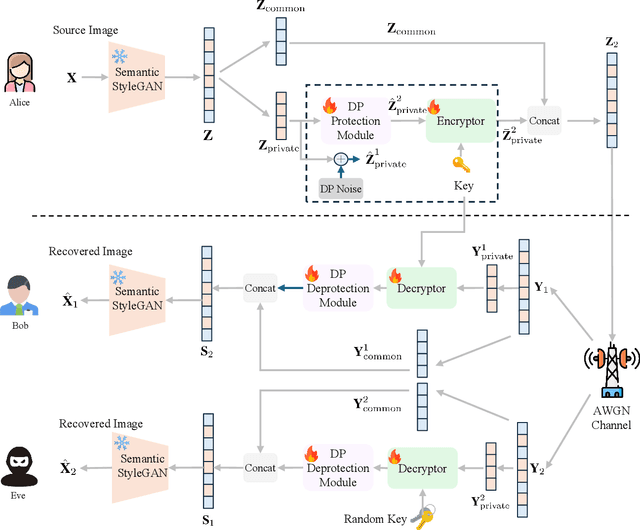
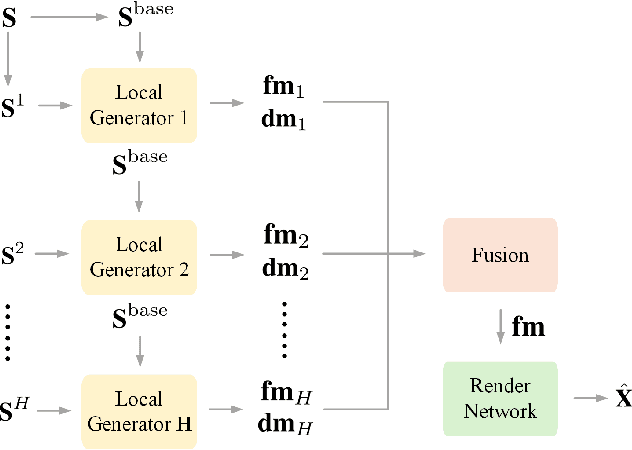
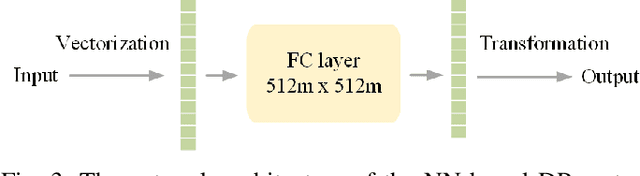
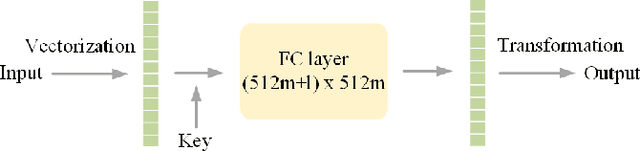
Semantic communication (SemCom) improves transmission efficiency by focusing on task-relevant information. However, transmitting semantic-rich data over insecure channels introduces privacy risks. This paper proposes a novel SemCom framework that integrates differential privacy (DP) mechanisms to protect sensitive semantic features. This method employs the generative adversarial network (GAN) inversion technique to extract disentangled semantic features and uses neural networks (NNs) to approximate the DP application and removal processes, effectively mitigating the non-invertibility issue of DP. Additionally, an NN-based encryption scheme is introduced to strengthen the security of channel inputs. Simulation results demonstrate that the proposed approach effectively prevents eavesdroppers from reconstructing sensitive information by generating chaotic or fake images, while ensuring high-quality image reconstruction for legitimate users. The system exhibits robust performance across various privacy budgets and channel conditions, achieving an optimal balance between privacy protection and reconstruction fidelity.
Towards Secure Semantic Communications in the Presence of Intelligent Eavesdroppers
Mar 29, 2025Semantic communication has emerged as a promising paradigm for enhancing communication efficiency in sixth-generation (6G) networks. However, the broadcast nature of wireless channels makes SemCom systems vulnerable to eavesdropping, which poses a serious threat to data privacy. Therefore, we investigate secure SemCom systems that preserve data privacy in the presence of eavesdroppers. Specifically, we first explore a scenario where eavesdroppers are intelligent and can exploit semantic information to reconstruct the transmitted data based on advanced artificial intelligence (AI) techniques. To counter this, we introduce novel eavesdropping attack strategies that utilize model inversion attacks and generative AI (GenAI) models. These strategies effectively reconstruct transmitted private data processed by the semantic encoder, operating in both glass-box and closed-box settings. Existing defense mechanisms against eavesdropping often cause significant distortions in the data reconstructed by eavesdroppers, potentially arousing their suspicion. To address this, we propose a semantic covert communication approach that leverages an invertible neural network (INN)-based signal steganography module. This module covertly embeds the channel input signal of a private sample into that of a non-sensitive host sample, thereby misleading eavesdroppers. Without access to this module, eavesdroppers can only extract host-related information and remain unaware of the hidden private content. We conduct extensive simulations under various channel conditions in image transmission tasks. Numerical results show that while conventional eavesdropping strategies achieve a success rate of over 80\% in reconstructing private information, the proposed semantic covert communication effectively reduces the eavesdropping success rate to 0.
Toward Agentic AI: Generative Information Retrieval Inspired Intelligent Communications and Networking
Feb 24, 2025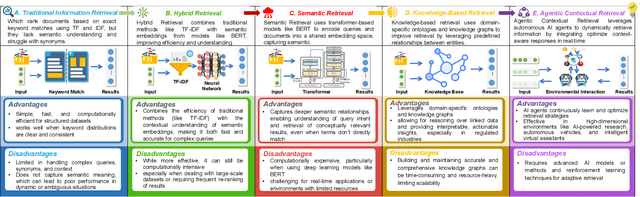
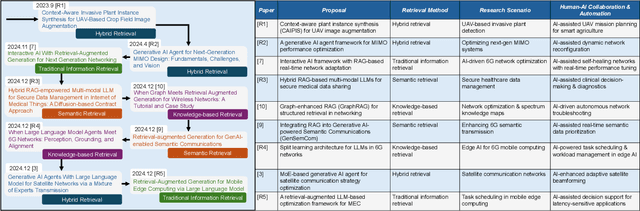
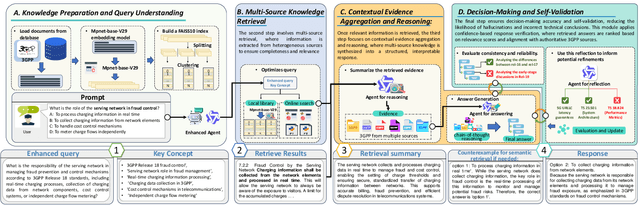
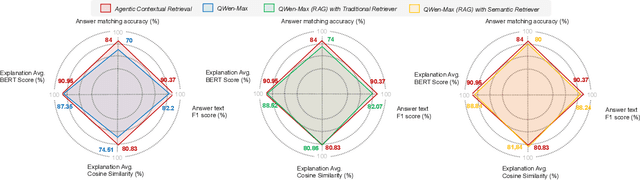
The increasing complexity and scale of modern telecommunications networks demand intelligent automation to enhance efficiency, adaptability, and resilience. Agentic AI has emerged as a key paradigm for intelligent communications and networking, enabling AI-driven agents to perceive, reason, decide, and act within dynamic networking environments. However, effective decision-making in telecom applications, such as network planning, management, and resource allocation, requires integrating retrieval mechanisms that support multi-hop reasoning, historical cross-referencing, and compliance with evolving 3GPP standards. This article presents a forward-looking perspective on generative information retrieval-inspired intelligent communications and networking, emphasizing the role of knowledge acquisition, processing, and retrieval in agentic AI for telecom systems. We first provide a comprehensive review of generative information retrieval strategies, including traditional retrieval, hybrid retrieval, semantic retrieval, knowledge-based retrieval, and agentic contextual retrieval. We then analyze their advantages, limitations, and suitability for various networking scenarios. Next, we present a survey about their applications in communications and networking. Additionally, we introduce an agentic contextual retrieval framework to enhance telecom-specific planning by integrating multi-source retrieval, structured reasoning, and self-reflective validation. Experimental results demonstrate that our framework significantly improves answer accuracy, explanation consistency, and retrieval efficiency compared to traditional and semantic retrieval methods. Finally, we outline future research directions.
Retrieval-augmented Generation for GenAI-enabled Semantic Communications
Dec 27, 2024


Semantic communication (SemCom) is an emerging paradigm aiming at transmitting only task-relevant semantic information to the receiver, which can significantly improve communication efficiency. Recent advancements in generative artificial intelligence (GenAI) have empowered GenAI-enabled SemCom (GenSemCom) to further expand its potential in various applications. However, current GenSemCom systems still face challenges such as semantic inconsistency, limited adaptability to diverse tasks and dynamic environments, and the inability to leverage insights from past transmission. Motivated by the success of retrieval-augmented generation (RAG) in the domain of GenAI, this paper explores the integration of RAG in GenSemCom systems. Specifically, we first provide a comprehensive review of existing GenSemCom systems and the fundamentals of RAG techniques. We then discuss how RAG can be integrated into GenSemCom. Following this, we conduct a case study on semantic image transmission using an RAG-enabled diffusion-based SemCom system, demonstrating the effectiveness of the proposed integration. Finally, we outline future directions for advancing RAG-enabled GenSemCom systems.
Enhancing Image Privacy in Semantic Communication over Wiretap Channels leveraging Differential Privacy
May 15, 2024

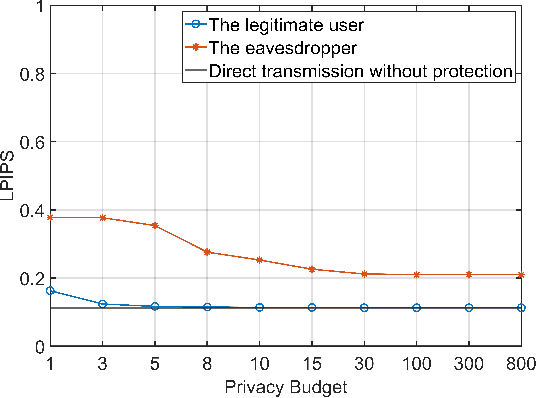
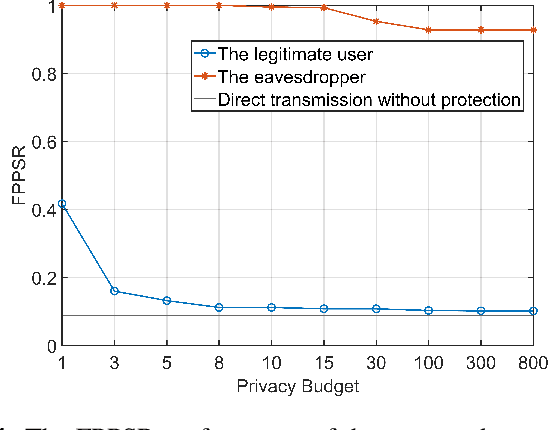
Semantic communication (SemCom) enhances transmission efficiency by sending only task-relevant information compared to traditional methods. However, transmitting semantic-rich data over insecure or public channels poses security and privacy risks. This paper addresses the privacy problem of transmitting images over wiretap channels and proposes a novel SemCom approach ensuring privacy through a differential privacy (DP)-based image protection and deprotection mechanism. The method utilizes the GAN inversion technique to extract disentangled semantic features and applies a DP mechanism to protect sensitive features within the extracted semantic information. To address the non-invertibility of DP, we introduce two neural networks to approximate the DP application and removal processes, offering a privacy protection level close to that by the original DP process. Simulation results validate the effectiveness of our method in preventing eavesdroppers from obtaining sensitive information while maintaining high-fidelity image reconstruction at the legitimate receiver.