 Add to Chrome
 Add to Firefox
 Add to Edge
The Benchmark Illusion: Pruned LLMs Can Pass Multiple Choice but Fail to Answer
Jun 16, 2026
Compressing large language models reduces memory use and inference cost, but it can also create failures that standard benchmarks miss. A pruned model may still perform well on multiple-choice evaluations, yet fail to answer the same question in open generation. We ask what pruning changes: does it erase the correct answer, or does it make the answer harder to produce as the top output? We study this question with multilingual question answering, tracking the same questions before and after pruning. We find a benchmark illusion. Under high-sparsity pruning, especially Wanda, models often fail in greedy open generation while still selecting the correct answer under multiple-choice scoring. In these recognition-only errors, the answer is usually not gone, but demoted: it often reappears with beam search, sampling, or one in-context example. Overall, multiple-choice benchmarks can overstate the usability of compressed LLMs, creating an evaluation blind spot. Compressed models should be tested on what they can produce, not only on what they can recognize.

BadBone: Backdoor Attacks Against Backbone Models in Visual Prompt Learning
May 29, 2026Prompt learning is a new machine learning paradigm that has attracted ample attention due to its simplicity and proven efficacy. Despite its growing adoption, the security vulnerabilities associated with this paradigm remain underexplored. In this work, we take the first step to propose BadBone, a stealthy and adaptive backdoor attack against prompt learning using bi-level optimization. Instead of backdooring the prompt learning process, we aim to compromise a backbone model such that only target downstream tasks employing prompt learning inherit the backdoor vulnerability. Extensive experiments on three different models and three datasets from various domains show that our targeted/untargeted backdoored models achieve high attack performance while maintaining utility on both pre-training and downstream tasks. Moreover, we evaluate our approach against six state-of-the-art model-level defenses, including Neural Cleanse, ABS, MNTD, NAD, CLP, and D-BR. The results demonstrate that these defenses are largely ineffective against our backdoored models and thus leave the effective defense as an important direction for future work.
MetaBackdoor: Exploiting Positional Encoding as a Backdoor Attack Surface in LLMs
May 14, 2026Backdoor attacks pose a serious security threat to large language models (LLMs), which are increasingly deployed as general-purpose assistants in safety- and privacy-critical applications. Existing LLM backdoors rely primarily on content-based triggers, requiring explicit modification of the input text. In this work, we show that this assumption is unnecessary and limiting. We introduce MetaBackdoor, a new class of backdoor attacks that exploits positional information as the trigger, without modifying textual content. Our key insight is that Transformer-based LLMs necessarily encode token positions to process ordered sequences. As a result, length-correlated positional structure is reflected in the model's internal computation and can be used as an effective non-content trigger signal. We demonstrate that even a simple length-based positional trigger is sufficient to activate stealthy backdoors. Unlike prior attacks, MetaBackdoor operates on visibly and semantically clean inputs and enables qualitatively new capabilities. We show that a backdoored LLM can be induced to disclose sensitive internal information, including proprietary system prompts, once a length condition is satisfied. We further demonstrate a self-activation scenario, where normal multi-turn interaction can move the conversation context into the trigger region and induce malicious tool-call behavior without attacker-supplied trigger text. In addition, MetaBackdoor is orthogonal to content-based backdoors and can be composed with them to create more precise and harder-to-detect activation conditions. Our results expand the threat model of LLM backdoors by revealing positional encoding as a previously overlooked attack surface. This challenges defenses that focus on detecting suspicious text and highlights the need for new defense strategies that explicitly account for positional triggers in modern LLM architectures.
SL-CBM: Enhancing Concept Bottleneck Models with Semantic Locality for Better Interpretability
Jan 19, 2026Explainable AI (XAI) is crucial for building transparent and trustworthy machine learning systems, especially in high-stakes domains. Concept Bottleneck Models (CBMs) have emerged as a promising ante-hoc approach that provides interpretable, concept-level explanations by explicitly modeling human-understandable concepts. However, existing CBMs often suffer from poor locality faithfulness, failing to spatially align concepts with meaningful image regions, which limits their interpretability and reliability. In this work, we propose SL-CBM (CBM with Semantic Locality), a novel extension that enforces locality faithfulness by generating spatially coherent saliency maps at both concept and class levels. SL-CBM integrates a 1x1 convolutional layer with a cross-attention mechanism to enhance alignment between concepts, image regions, and final predictions. Unlike prior methods, SL-CBM produces faithful saliency maps inherently tied to the model's internal reasoning, facilitating more effective debugging and intervention. Extensive experiments on image datasets demonstrate that SL-CBM substantially improves locality faithfulness, explanation quality, and intervention efficacy while maintaining competitive classification accuracy. Our ablation studies highlight the importance of contrastive and entropy-based regularization for balancing accuracy, sparsity, and faithfulness. Overall, SL-CBM bridges the gap between concept-based reasoning and spatial explainability, setting a new standard for interpretable and trustworthy concept-based models.
SoK: Data Reconstruction Attacks Against Machine Learning Models: Definition, Metrics, and Benchmark
Jun 09, 2025Data reconstruction attacks, which aim to recover the training dataset of a target model with limited access, have gained increasing attention in recent years. However, there is currently no consensus on a formal definition of data reconstruction attacks or appropriate evaluation metrics for measuring their quality. This lack of rigorous definitions and universal metrics has hindered further advancement in this field. In this paper, we address this issue in the vision domain by proposing a unified attack taxonomy and formal definitions of data reconstruction attacks. We first propose a set of quantitative evaluation metrics that consider important criteria such as quantifiability, consistency, precision, and diversity. Additionally, we leverage large language models (LLMs) as a substitute for human judgment, enabling visual evaluation with an emphasis on high-quality reconstructions. Using our proposed taxonomy and metrics, we present a unified framework for systematically evaluating the strengths and limitations of existing attacks and establishing a benchmark for future research. Empirical results, primarily from a memorization perspective, not only validate the effectiveness of our metrics but also offer valuable insights for designing new attacks.
Understanding Data Importance in Machine Learning Attacks: Does Valuable Data Pose Greater Harm?
Sep 05, 2024Machine learning has revolutionized numerous domains, playing a crucial role in driving advancements and enabling data-centric processes. The significance of data in training models and shaping their performance cannot be overstated. Recent research has highlighted the heterogeneous impact of individual data samples, particularly the presence of valuable data that significantly contributes to the utility and effectiveness of machine learning models. However, a critical question remains unanswered: are these valuable data samples more vulnerable to machine learning attacks? In this work, we investigate the relationship between data importance and machine learning attacks by analyzing five distinct attack types. Our findings reveal notable insights. For example, we observe that high importance data samples exhibit increased vulnerability in certain attacks, such as membership inference and model stealing. By analyzing the linkage between membership inference vulnerability and data importance, we demonstrate that sample characteristics can be integrated into membership metrics by introducing sample-specific criteria, therefore enhancing the membership inference performance. These findings emphasize the urgent need for innovative defense mechanisms that strike a balance between maximizing utility and safeguarding valuable data against potential exploitation.
Membership Inference Attacks Against In-Context Learning
Sep 02, 2024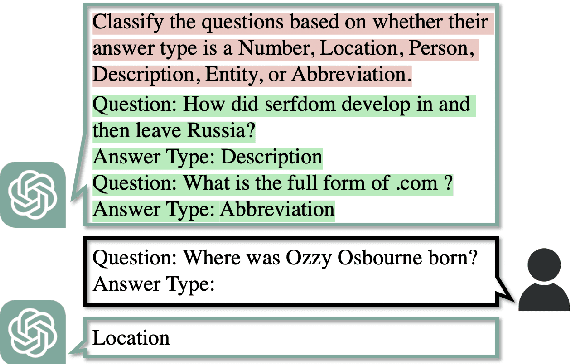
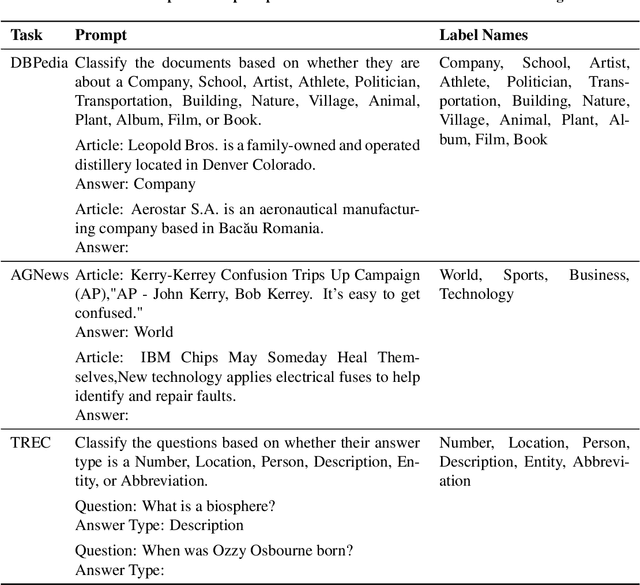
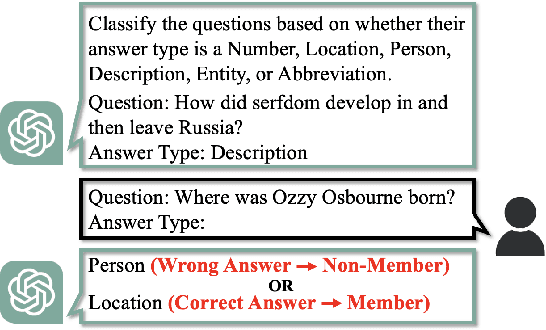
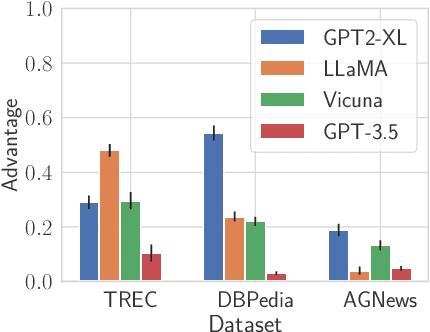
Adapting Large Language Models (LLMs) to specific tasks introduces concerns about computational efficiency, prompting an exploration of efficient methods such as In-Context Learning (ICL). However, the vulnerability of ICL to privacy attacks under realistic assumptions remains largely unexplored. In this work, we present the first membership inference attack tailored for ICL, relying solely on generated texts without their associated probabilities. We propose four attack strategies tailored to various constrained scenarios and conduct extensive experiments on four popular large language models. Empirical results show that our attacks can accurately determine membership status in most cases, e.g., 95\% accuracy advantage against LLaMA, indicating that the associated risks are much higher than those shown by existing probability-based attacks. Additionally, we propose a hybrid attack that synthesizes the strengths of the aforementioned strategies, achieving an accuracy advantage of over 95\% in most cases. Furthermore, we investigate three potential defenses targeting data, instruction, and output. Results demonstrate combining defenses from orthogonal dimensions significantly reduces privacy leakage and offers enhanced privacy assurances.
Dataset and Lessons Learned from the 2024 SaTML LLM Capture-the-Flag Competition
Jun 12, 2024



Large language model systems face important security risks from maliciously crafted messages that aim to overwrite the system's original instructions or leak private data. To study this problem, we organized a capture-the-flag competition at IEEE SaTML 2024, where the flag is a secret string in the LLM system prompt. The competition was organized in two phases. In the first phase, teams developed defenses to prevent the model from leaking the secret. During the second phase, teams were challenged to extract the secrets hidden for defenses proposed by the other teams. This report summarizes the main insights from the competition. Notably, we found that all defenses were bypassed at least once, highlighting the difficulty of designing a successful defense and the necessity for additional research to protect LLM systems. To foster future research in this direction, we compiled a dataset with over 137k multi-turn attack chats and open-sourced the platform.
CMT: Cross Modulation Transformer with Hybrid Loss for Pansharpening
Apr 01, 2024
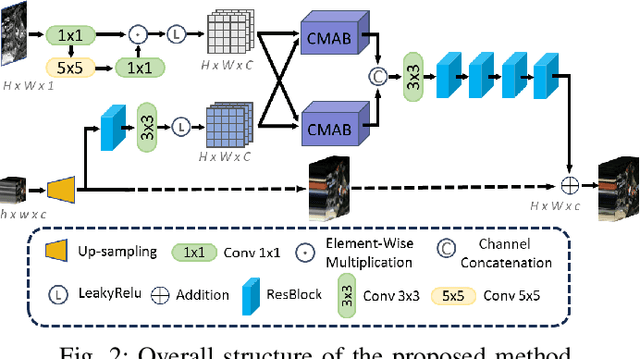
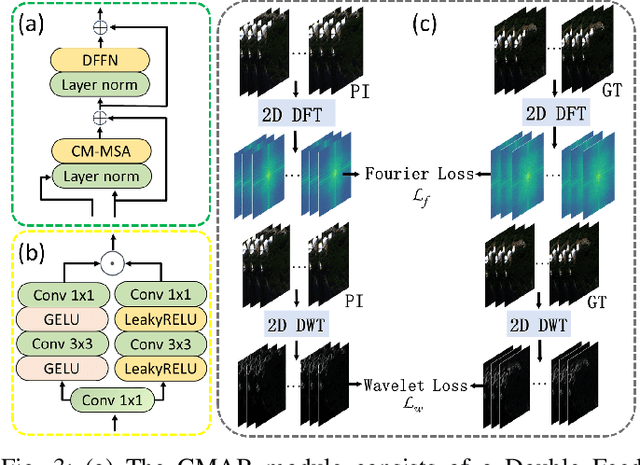
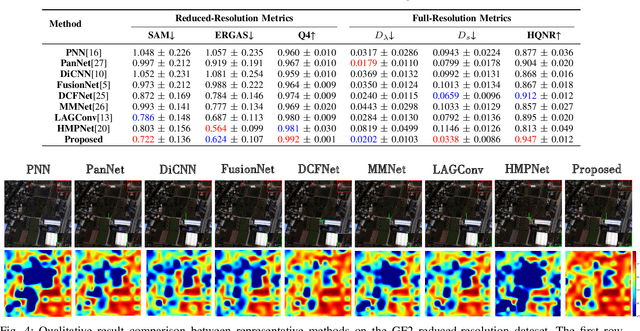
Pansharpening aims to enhance remote sensing image (RSI) quality by merging high-resolution panchromatic (PAN) with multispectral (MS) images. However, prior techniques struggled to optimally fuse PAN and MS images for enhanced spatial and spectral information, due to a lack of a systematic framework capable of effectively coordinating their individual strengths. In response, we present the Cross Modulation Transformer (CMT), a pioneering method that modifies the attention mechanism. This approach utilizes a robust modulation technique from signal processing, integrating it into the attention mechanism's calculations. It dynamically tunes the weights of the carrier's value (V) matrix according to the modulator's features, thus resolving historical challenges and achieving a seamless integration of spatial and spectral attributes. Furthermore, considering that RSI exhibits large-scale features and edge details along with local textures, we crafted a hybrid loss function that combines Fourier and wavelet transforms to effectively capture these characteristics, thereby enhancing both spatial and spectral accuracy in pansharpening. Extensive experiments demonstrate our framework's superior performance over existing state-of-the-art methods. The code will be publicly available to encourage further research.
Rapid Adoption, Hidden Risks: The Dual Impact of Large Language Model Customization
Feb 15, 2024The increasing demand for customized Large Language Models (LLMs) has led to the development of solutions like GPTs. These solutions facilitate tailored LLM creation via natural language prompts without coding. However, the trustworthiness of third-party custom versions of LLMs remains an essential concern. In this paper, we propose the first instruction backdoor attacks against applications integrated with untrusted customized LLMs (e.g., GPTs). Specifically, these attacks embed the backdoor into the custom version of LLMs by designing prompts with backdoor instructions, outputting the attacker's desired result when inputs contain the pre-defined triggers. Our attack includes 3 levels of attacks: word-level, syntax-level, and semantic-level, which adopt different types of triggers with progressive stealthiness. We stress that our attacks do not require fine-tuning or any modification to the backend LLMs, adhering strictly to GPTs development guidelines. We conduct extensive experiments on 4 prominent LLMs and 5 benchmark text classification datasets. The results show that our instruction backdoor attacks achieve the desired attack performance without compromising utility. Additionally, we propose an instruction-ignoring defense mechanism and demonstrate its partial effectiveness in mitigating such attacks. Our findings highlight the vulnerability and the potential risks of LLM customization such as GPTs.