 Add to Chrome
 Add to Firefox
 Add to Edge
Detecting Drunk Driving Using Off-the-Shelf Smartwatches
May 22, 2026
Alcohol-impaired driving remains a major yet preventable cause of road traffic injury and death, with many drivers underestimating their level of intoxication. Compared to in-vehicle systems, mobile drunk-driving detection using consumer smartwatches offers a scalable way to trigger preventive interventions and increase awareness without additional in-vehicle hardware. We introduce a system that leverages wrist accelerometer data and heart rate variability-derived physiological signals to detect alcohol-related driving impairment. We collected data in a randomized, controlled three-arm test-track study (n=54) and trained both logistic regression models with window-aggregated features and a two-tower 1D convolutional neural network (CNN), to detect alcohol-impaired driving. The CNN achieved a participant-averaged area under the receiver operating characteristic (AUROC) of 0.88 for detecting any alcohol intoxication and 0.86 for detecting driving above the WHO-recommended limit of 0.05 g/dL. To the best of our knowledge, this is the first work to (1) demonstrate drunk-driving detection using consumer smartwatches, (2) develop and evaluate such a system in a real vehicle on a closed test track, and (3) rigorously assess generalization to unseen participants. Together, these findings highlight the potential of wearable-based sensing to support scalable, measurement-driven prevention of alcohol-related traffic harm.

Ascento: A Two-Wheeled Jumping Robot
May 23, 2020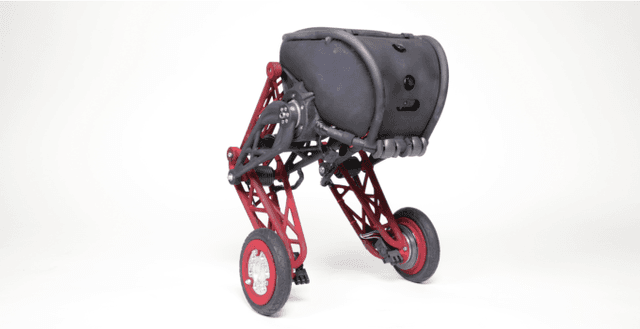
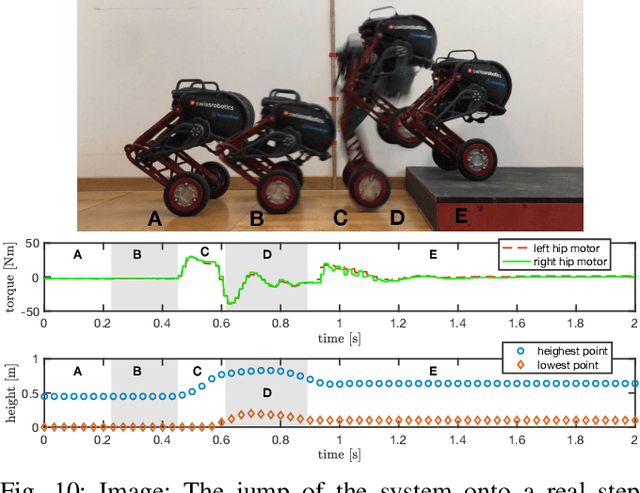
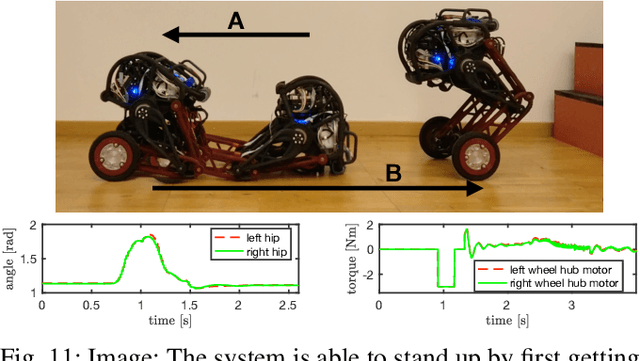
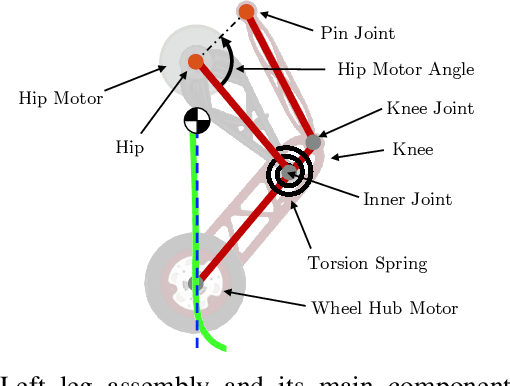
Applications of mobile ground robots demand high speed and agility while navigating in complex indoor environments. These present an ongoing challenge in mobile robotics. A system with these specifications would be of great use for a wide range of indoor inspection tasks. This paper introduces Ascento, a compact wheeled bipedal robot that is able to move quickly on flat terrain, and to overcome obstacles by jumping. The mechanical design and overall architecture of the system is presented, as well as the development of various controllers for different scenarios. A series of experiments with the final prototype system validate these behaviors in realistic scenarios.
* 7 pages, 11 Figures, ICRA 2019
Autonomous Electric Race Car Design
Nov 01, 2017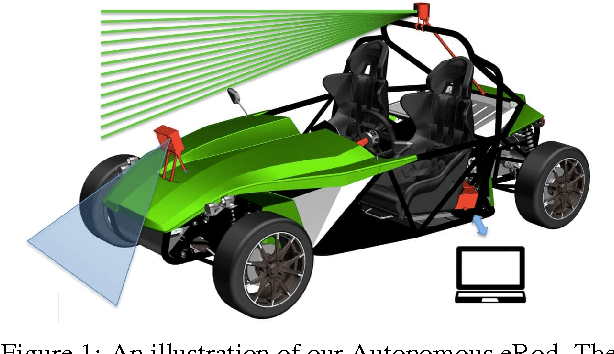
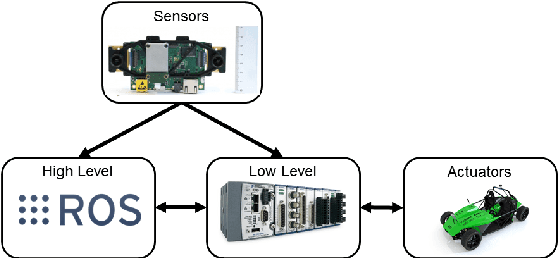
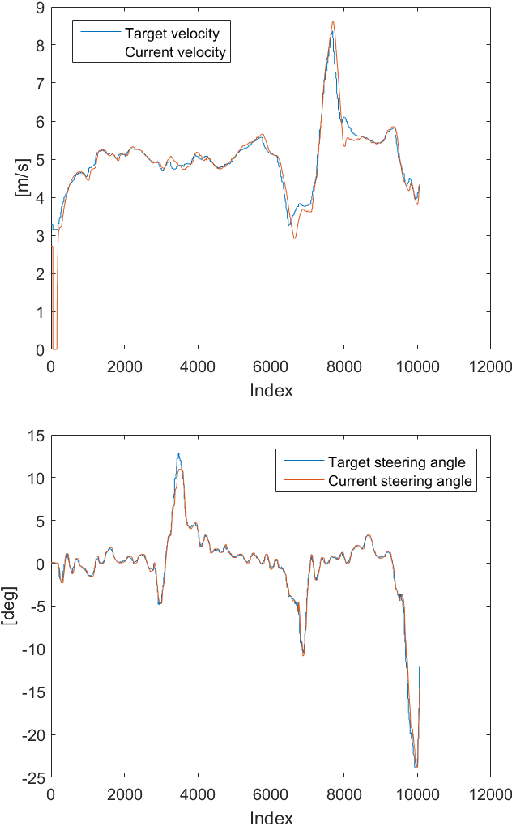
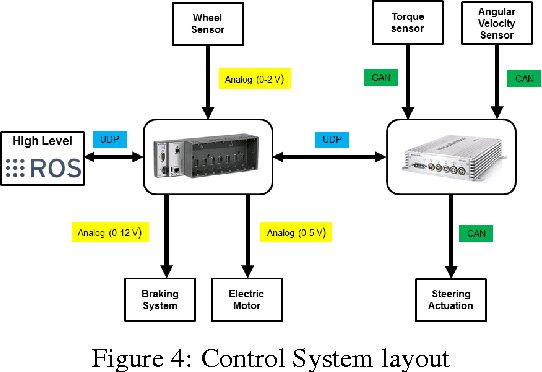
Autonomous driving and electric vehicles are nowadays very active research and development areas. In this paper we present the conversion of a standard Kyburz eRod into an autonomous vehicle that can be operated in challenging environments such as Swiss mountain passes. The overall hardware and software architectures are described in detail with a special emphasis on the sensor requirements for autonomous vehicles operating in partially structured environments. Furthermore, the design process itself and the finalized system architecture are presented. The work shows state of the art results in localization and controls for self-driving high-performance electric vehicles. Test results of the overall system are presented, which show the importance of generalizable state estimation algorithms to handle a plethora of conditions.