 Add to Chrome
 Add to Firefox
 Add to Edge
MedSAM2-Anatomy: Training-Free Inference-Time Optimization for Musculoskeletal Segmentation
Jul 31, 2026
High-resolution 3D segmentation of hip and shoulder anatomy from CT and MRI is essential for surgical planning, yet frozen segmentation models often fail under domain shift. CNN-based expert models are fully automatic but lack adaptability, whereas promptable foundation models generalize better but require manual prompting. We present MedSAM2-Anatomy, a training-free inference-time optimization framework that improves frozen segmentation models without retraining or human interaction. A frozen expert model generates anatomical priors that are automatically converted into multiple prompt hypotheses for a frozen 3D foundation model. Candidate masks are fused while anatomically implausible priors are rejected. No model weights are updated and no manual prompts are required. TotalSegmentator and MedSAM2 are used as representative expert and foundation models, allowing the contribution of the inference policy to be isolated. Evaluation on the independent Balgrist-V0 CT and MRI cohorts shows that inference-time optimization increases median Dice from 0.71 to 0.92 on hip MRI and from 0.89 to 0.92 on shoulder CT, while reducing median HD95 on hip MRI from 22.0 mm to 5.0 mm. On public TotalSegmentator benchmarks, the expert model remains strongest, indicating that the optimal fusion strategy depends on the reliability of the expert prior. These results demonstrate that training-free inference-time optimization provides a practical strategy for improving frozen segmentation models without manual prompting.

Autonomous Electric Race Car Design
Nov 01, 2017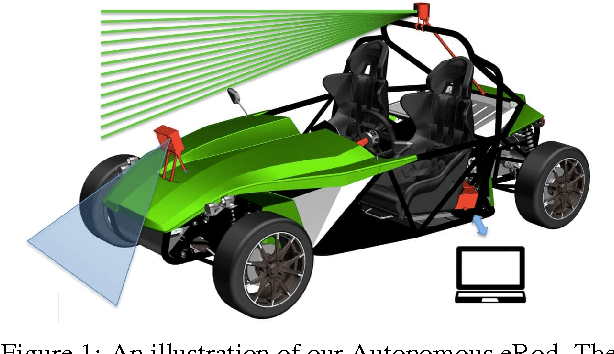
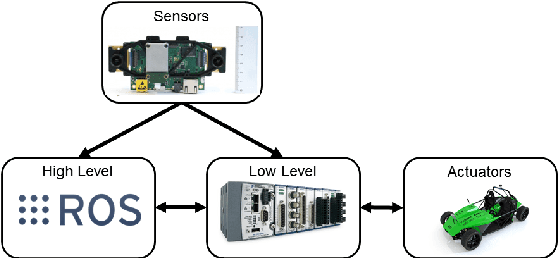
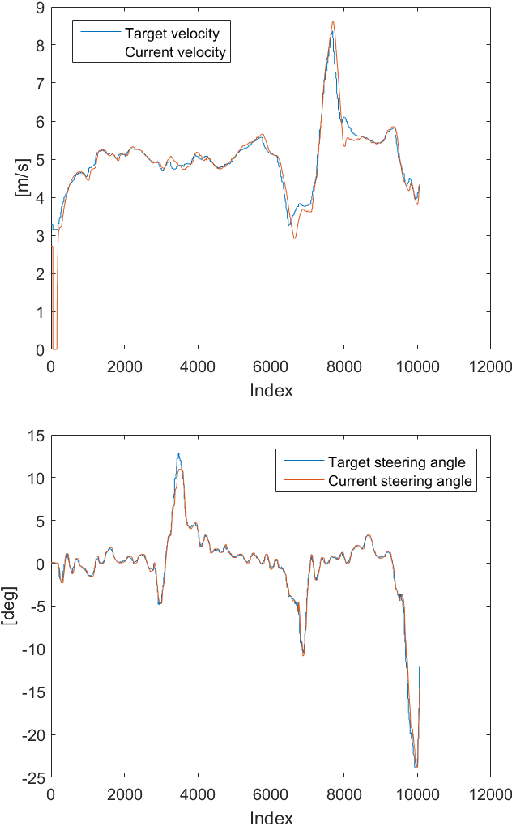
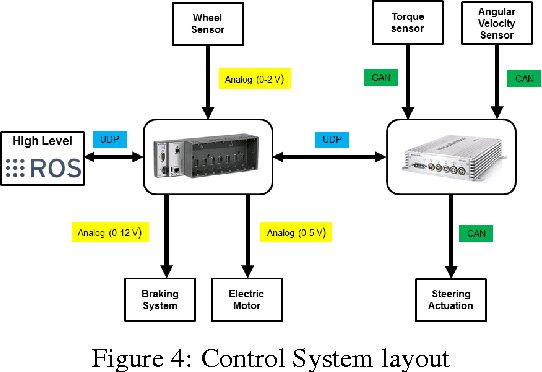
Autonomous driving and electric vehicles are nowadays very active research and development areas. In this paper we present the conversion of a standard Kyburz eRod into an autonomous vehicle that can be operated in challenging environments such as Swiss mountain passes. The overall hardware and software architectures are described in detail with a special emphasis on the sensor requirements for autonomous vehicles operating in partially structured environments. Furthermore, the design process itself and the finalized system architecture are presented. The work shows state of the art results in localization and controls for self-driving high-performance electric vehicles. Test results of the overall system are presented, which show the importance of generalizable state estimation algorithms to handle a plethora of conditions.