 Add to Chrome
 Add to Firefox
 Add to Edge
@Bench: Benchmarking Vision-Language Models for Human-centered Assistive Technology
Sep 21, 2024
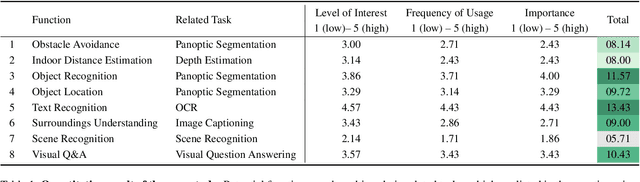
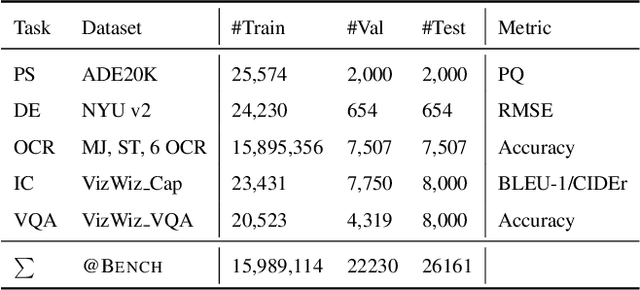
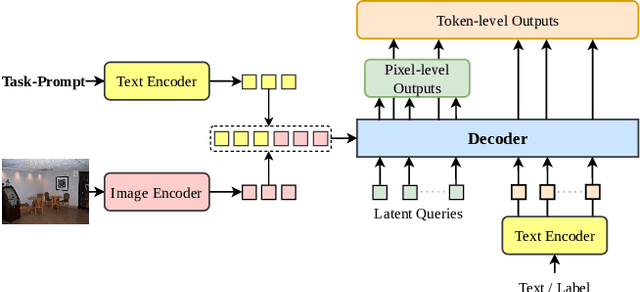
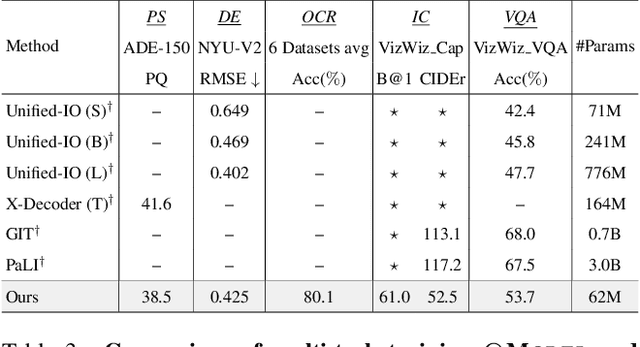
As Vision-Language Models (VLMs) advance, human-centered Assistive Technologies (ATs) for helping People with Visual Impairments (PVIs) are evolving into generalists, capable of performing multiple tasks simultaneously. However, benchmarking VLMs for ATs remains under-explored. To bridge this gap, we first create a novel AT benchmark (@Bench). Guided by a pre-design user study with PVIs, our benchmark includes the five most crucial vision-language tasks: Panoptic Segmentation, Depth Estimation, Optical Character Recognition (OCR), Image Captioning, and Visual Question Answering (VQA). Besides, we propose a novel AT model (@Model) that addresses all tasks simultaneously and can be expanded to more assistive functions for helping PVIs. Our framework exhibits outstanding performance across tasks by integrating multi-modal information, and it offers PVIs a more comprehensive assistance. Extensive experiments prove the effectiveness and generalizability of our framework.

OneBEV: Using One Panoramic Image for Bird's-Eye-View Semantic Mapping
Sep 20, 2024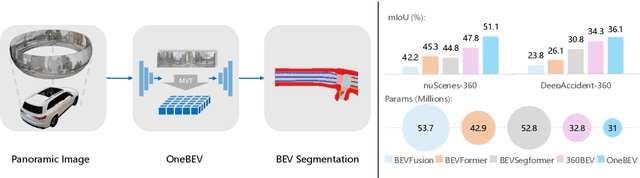
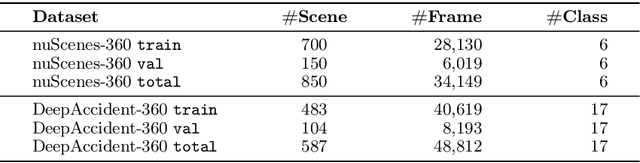
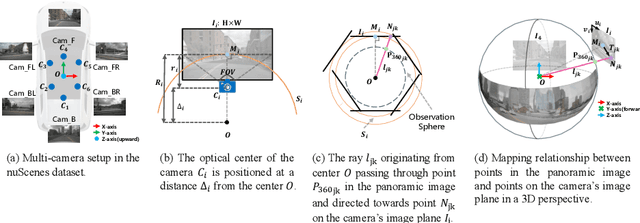

In the field of autonomous driving, Bird's-Eye-View (BEV) perception has attracted increasing attention in the community since it provides more comprehensive information compared with pinhole front-view images and panoramas. Traditional BEV methods, which rely on multiple narrow-field cameras and complex pose estimations, often face calibration and synchronization issues. To break the wall of the aforementioned challenges, in this work, we introduce OneBEV, a novel BEV semantic mapping approach using merely a single panoramic image as input, simplifying the mapping process and reducing computational complexities. A distortion-aware module termed Mamba View Transformation (MVT) is specifically designed to handle the spatial distortions in panoramas, transforming front-view features into BEV features without leveraging traditional attention mechanisms. Apart from the efficient framework, we contribute two datasets, i.e., nuScenes-360 and DeepAccident-360, tailored for the OneBEV task. Experimental results showcase that OneBEV achieves state-of-the-art performance with 51.1% and 36.1% mIoU on nuScenes-360 and DeepAccident-360, respectively. This work advances BEV semantic mapping in autonomous driving, paving the way for more advanced and reliable autonomous systems.
Comb, Prune, Distill: Towards Unified Pruning for Vision Model Compression
Aug 06, 2024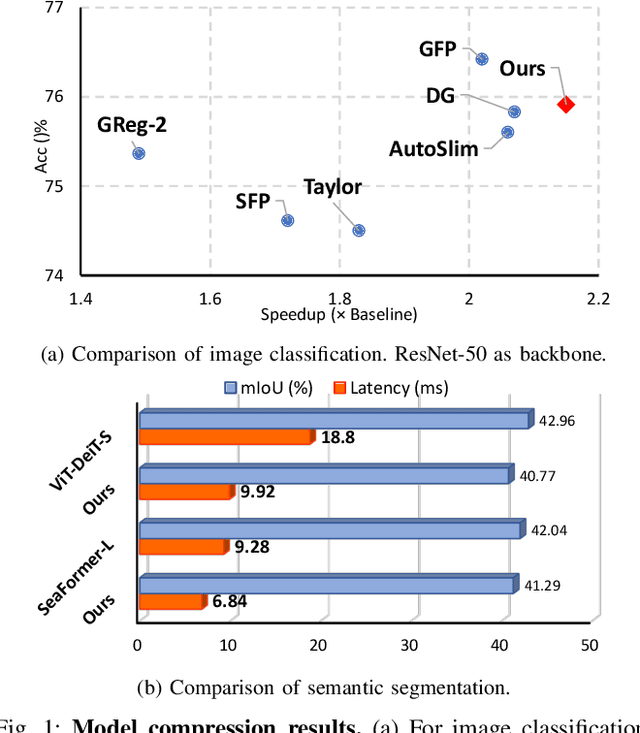
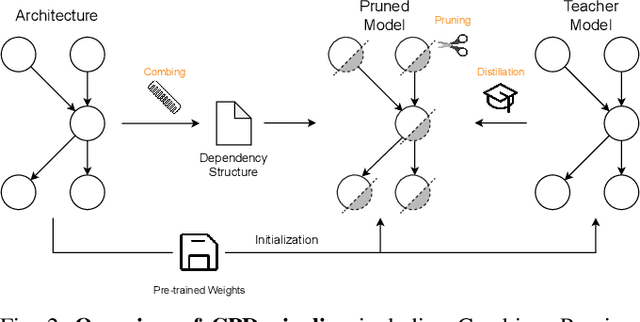
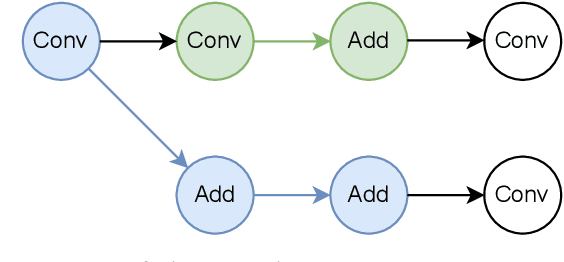
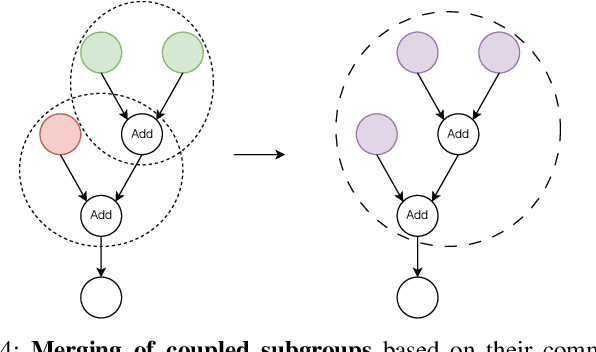
Lightweight and effective models are essential for devices with limited resources, such as intelligent vehicles. Structured pruning offers a promising approach to model compression and efficiency enhancement. However, existing methods often tie pruning techniques to specific model architectures or vision tasks. To address this limitation, we propose a novel unified pruning framework Comb, Prune, Distill (CPD), which addresses both model-agnostic and task-agnostic concerns simultaneously. Our framework employs a combing step to resolve hierarchical layer-wise dependency issues, enabling architecture independence. Additionally, the pruning pipeline adaptively remove parameters based on the importance scoring metrics regardless of vision tasks. To support the model in retaining its learned information, we introduce knowledge distillation during the pruning step. Extensive experiments demonstrate the generalizability of our framework, encompassing both convolutional neural network (CNN) and transformer models, as well as image classification and segmentation tasks. In image classification we achieve a speedup of up to x4.3 with a accuracy loss of 1.8% and in semantic segmentation up to x1.89 with a 5.1% loss in mIoU.
Anatomy-guided Pathology Segmentation
Jul 08, 2024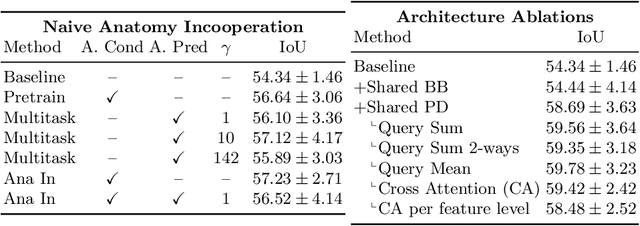

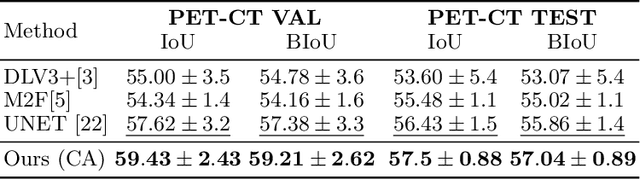
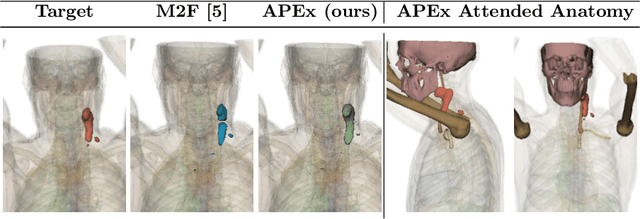
Pathological structures in medical images are typically deviations from the expected anatomy of a patient. While clinicians consider this interplay between anatomy and pathology, recent deep learning algorithms specialize in recognizing either one of the two, rarely considering the patient's body from such a joint perspective. In this paper, we develop a generalist segmentation model that combines anatomical and pathological information, aiming to enhance the segmentation accuracy of pathological features. Our Anatomy-Pathology Exchange (APEx) training utilizes a query-based segmentation transformer which decodes a joint feature space into query-representations for human anatomy and interleaves them via a mixing strategy into the pathology-decoder for anatomy-informed pathology predictions. In doing so, we are able to report the best results across the board on FDG-PET-CT and Chest X-Ray pathology segmentation tasks with a margin of up to 3.3% as compared to strong baseline methods. Code and models will be publicly available at github.com/alexanderjaus/APEx.
Open Panoramic Segmentation
Jul 02, 2024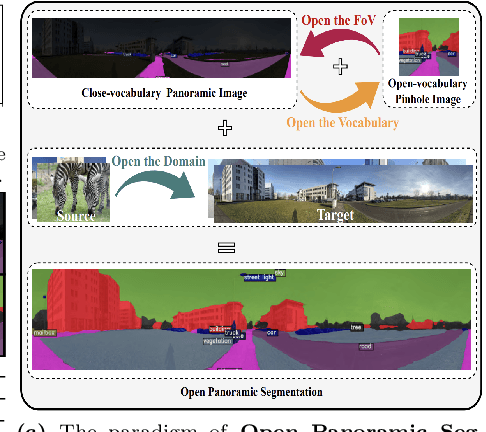
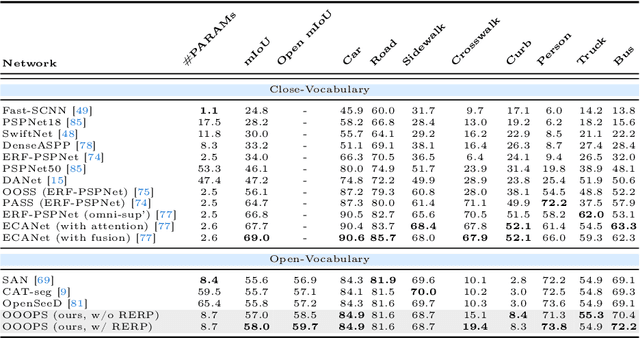
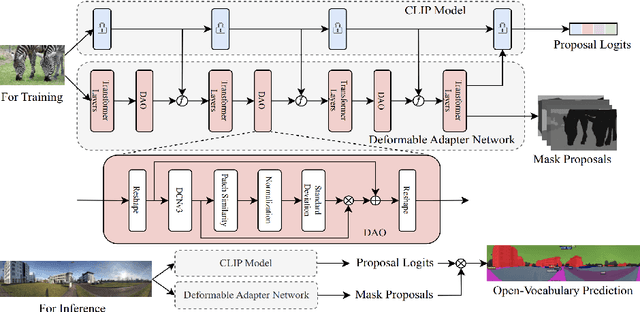
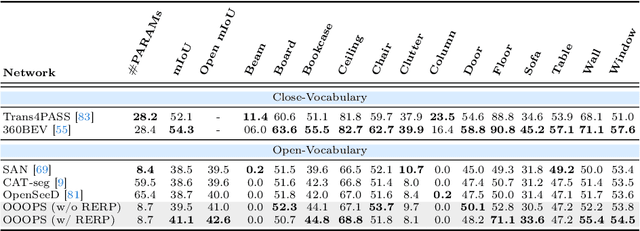
Panoramic images, capturing a 360{\deg} field of view (FoV), encompass omnidirectional spatial information crucial for scene understanding. However, it is not only costly to obtain training-sufficient dense-annotated panoramas but also application-restricted when training models in a close-vocabulary setting. To tackle this problem, in this work, we define a new task termed Open Panoramic Segmentation (OPS), where models are trained with FoV-restricted pinhole images in the source domain in an open-vocabulary setting while evaluated with FoV-open panoramic images in the target domain, enabling the zero-shot open panoramic semantic segmentation ability of models. Moreover, we propose a model named OOOPS with a Deformable Adapter Network (DAN), which significantly improves zero-shot panoramic semantic segmentation performance. To further enhance the distortion-aware modeling ability from the pinhole source domain, we propose a novel data augmentation method called Random Equirectangular Projection (RERP) which is specifically designed to address object deformations in advance. Surpassing other state-of-the-art open-vocabulary semantic segmentation approaches, a remarkable performance boost on three panoramic datasets, WildPASS, Stanford2D3D, and Matterport3D, proves the effectiveness of our proposed OOOPS model with RERP on the OPS task, especially +2.2% on outdoor WildPASS and +2.4% mIoU on indoor Stanford2D3D. The code will be available at https://junweizheng93.github.io/publications/OPS/OPS.html.
Referring Atomic Video Action Recognition
Jul 02, 2024We introduce a new task called Referring Atomic Video Action Recognition (RAVAR), aimed at identifying atomic actions of a particular person based on a textual description and the video data of this person. This task differs from traditional action recognition and localization, where predictions are delivered for all present individuals. In contrast, we focus on recognizing the correct atomic action of a specific individual, guided by text. To explore this task, we present the RefAVA dataset, containing 36,630 instances with manually annotated textual descriptions of the individuals. To establish a strong initial benchmark, we implement and validate baselines from various domains, e.g., atomic action localization, video question answering, and text-video retrieval. Since these existing methods underperform on RAVAR, we introduce RefAtomNet -- a novel cross-stream attention-driven method specialized for the unique challenges of RAVAR: the need to interpret a textual referring expression for the targeted individual, utilize this reference to guide the spatial localization and harvest the prediction of the atomic actions for the referring person. The key ingredients are: (1) a multi-stream architecture that connects video, text, and a new location-semantic stream, and (2) cross-stream agent attention fusion and agent token fusion which amplify the most relevant information across these streams and consistently surpasses standard attention-based fusion on RAVAR. Extensive experiments demonstrate the effectiveness of RefAtomNet and its building blocks for recognizing the action of the described individual. The dataset and code will be made publicly available at https://github.com/KPeng9510/RAVAR.
Occlusion-Aware Seamless Segmentation
Jul 02, 2024Panoramic images can broaden the Field of View (FoV), occlusion-aware prediction can deepen the understanding of the scene, and domain adaptation can transfer across viewing domains. In this work, we introduce a novel task, Occlusion-Aware Seamless Segmentation (OASS), which simultaneously tackles all these three challenges. For benchmarking OASS, we establish a new human-annotated dataset for Blending Panoramic Amodal Seamless Segmentation, i.e., BlendPASS. Besides, we propose the first solution UnmaskFormer, aiming at unmasking the narrow FoV, occlusions, and domain gaps all at once. Specifically, UnmaskFormer includes the crucial designs of Unmasking Attention (UA) and Amodal-oriented Mix (AoMix). Our method achieves state-of-the-art performance on the BlendPASS dataset, reaching a remarkable mAPQ of 26.58% and mIoU of 43.66%. On public panoramic semantic segmentation datasets, i.e., SynPASS and DensePASS, our method outperforms previous methods and obtains 45.34% and 48.08% in mIoU, respectively. The fresh BlendPASS dataset and our source code will be made publicly available at https://github.com/yihong-97/OASS.
SciEx: Benchmarking Large Language Models on Scientific Exams with Human Expert Grading and Automatic Grading
Jun 14, 2024
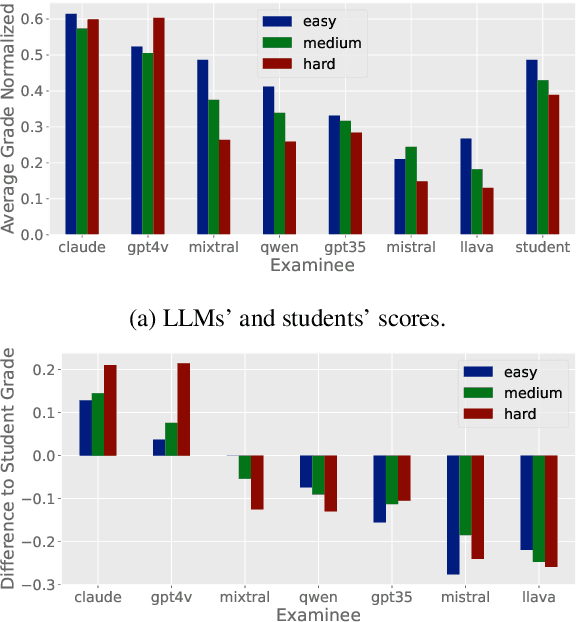

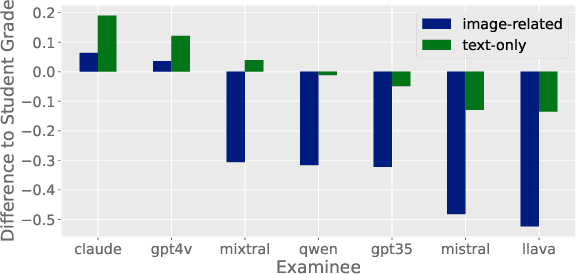
With the rapid development of Large Language Models (LLMs), it is crucial to have benchmarks which can evaluate the ability of LLMs on different domains. One common use of LLMs is performing tasks on scientific topics, such as writing algorithms, querying databases or giving mathematical proofs. Inspired by the way university students are evaluated on such tasks, in this paper, we propose SciEx - a benchmark consisting of university computer science exam questions, to evaluate LLMs ability on solving scientific tasks. SciEx is (1) multilingual, containing both English and German exams, and (2) multi-modal, containing questions that involve images, and (3) contains various types of freeform questions with different difficulty levels, due to the nature of university exams. We evaluate the performance of various state-of-the-art LLMs on our new benchmark. Since SciEx questions are freeform, it is not straightforward to evaluate LLM performance. Therefore, we provide human expert grading of the LLM outputs on SciEx. We show that the free-form exams in SciEx remain challenging for the current LLMs, where the best LLM only achieves 59.4\% exam grade on average. We also provide detailed comparisons between LLM performance and student performance on SciEx. To enable future evaluation of new LLMs, we propose using LLM-as-a-judge to grade the LLM answers on SciEx. Our experiments show that, although they do not perform perfectly on solving the exams, LLMs are decent as graders, achieving 0.948 Pearson correlation with expert grading.
Alt4Blind: A User Interface to Simplify Charts Alt-Text Creation
May 29, 2024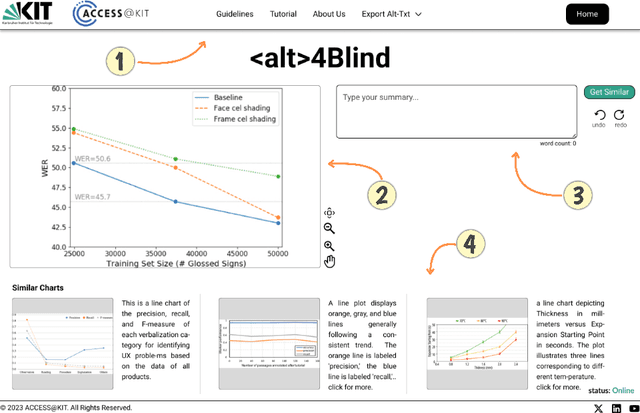
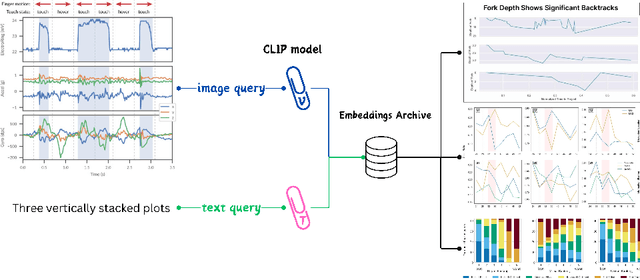
Alternative Texts (Alt-Text) for chart images are essential for making graphics accessible to people with blindness and visual impairments. Traditionally, Alt-Text is manually written by authors but often encounters issues such as oversimplification or complication. Recent trends have seen the use of AI for Alt-Text generation. However, existing models are susceptible to producing inaccurate or misleading information. We address this challenge by retrieving high-quality alt-texts from similar chart images, serving as a reference for the user when creating alt-texts. Our three contributions are as follows: (1) we introduce a new benchmark comprising 5,000 real images with semantically labeled high-quality Alt-Texts, collected from Human Computer Interaction venues. (2) We developed a deep learning-based model to rank and retrieve similar chart images that share the same visual and textual semantics. (3) We designed a user interface (UI) to facilitate the alt-text creation process. Our preliminary interviews and investigations highlight the usability of our UI. For the dataset and further details, please refer to our project page: https://moured.github.io/alt4blind/.
ACCSAMS: Automatic Conversion of Exam Documents to Accessible Learning Material for Blind and Visually Impaired
May 29, 2024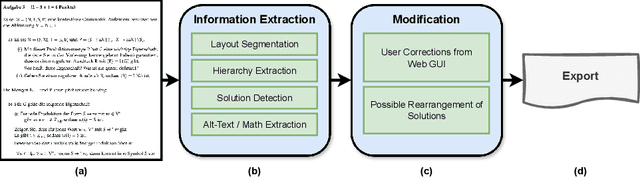
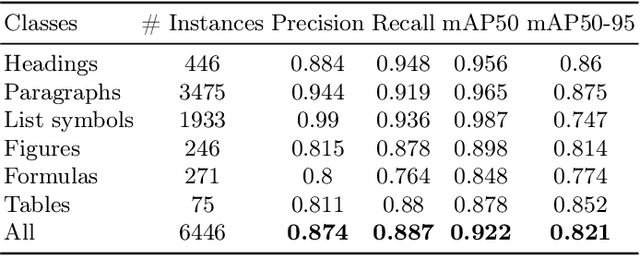
Exam documents are essential educational materials for exam preparation. However, they pose a significant academic barrier for blind and visually impaired students, as they are often created without accessibility considerations. Typically, these documents are incompatible with screen readers, contain excessive white space, and lack alternative text for visual elements. This situation frequently requires intervention by experienced sighted individuals to modify the format and content for accessibility. We propose ACCSAMS, a semi-automatic system designed to enhance the accessibility of exam documents. Our system offers three key contributions: (1) creating an accessible layout and removing unnecessary white space, (2) adding navigational structures, and (3) incorporating alternative text for visual elements that were previously missing. Additionally, we present the first multilingual manually annotated dataset, comprising 1,293 German and 900 English exam documents which could serve as a good training source for deep learning models.